
I. INTRODUCTION
Endocrine disruptors (EDs) affect the normal function of the endocrine system, by interfering with the synthesis, storage, transport, circulating levels, peripheral action and catabolism of hormones. Thyroid disruptors (TDs) are a group of chemical substances that affect the hypothalamus-pituitary-thyroid (HPT) axis in different ways, for example through their capacity to decrease the circulating levels of thyroid hormones (Brucker-Davis F. 1998), or acting directly on their receptors as well as on the enzyme or plasmatic carriers which play a significant role in the mediation of its action (Howdeshell KL. 2022) in humans as well as in animals (Colborn T. et al. 1993).
Contaminated groundwater could vehicle different EDs as nitrates, perchlorates and thiocynates, among others (Zewdie T. et al 2010). Endemic areas of hypothyroidism and goiter with no iodine deficit have been described, being a probable cause the presence of EDs in the water drank by the population living in those areas (Andrada I. et al. 2009).
The correct thyroid function involves a proper activity of the sodium/iodide symporter (NIS) at thyroid follicular cells. In mammals and amphibians, thyrotropin (TSH) stimulates NIS expression being involved in this transcription factors as PAX-8, TFF-1 and TTF-2 (Dohan O. et al. 2003). The NIS symporter inhibition interferes with iodine uptake, decreasing the synthesis of triiodothyronine and thyroxine which results in a TSH increase. Consequently, a higher stimulation in an attempt to compensate the hormone synthesis, leads to the development of goiter (Crofton K. et al. 2005).
During the spontaneous amphibian metamorphosis, the NIS mRNA expression is low in premetamorphous tadpoles and it increases throughout prometamorphosis, as the same time as the increase of mRNA expression of TSH beta subunit (TSHb) at tadpole hypophysitis, thus suggesting a TSH regulation in the NIS expression (Opitz R. et al. 2006). Moreover, thyroid hormones play a fundamental role in amphibian and on human fetus development (Zoeller RT. et al. 2004).
Amphibian larvae are used as bioassays for being highly sensitive to the action of different substances present in water, even in LOAEL (Lowest Observed Adverse Effect Level) and NOAEL (No Observed Adverse Effect) concentrations (FETAX.
2000). The metamorphosis of these animals is a process that depends on thyroid hormones, being this influence higher during the prometamorphosis and climax stages (Tietge JE. et al. 2005). In a short period of time larvae suffer structural, physiological, biochemical and behavioral transformations due to action and to the conversion of into in the target organs. These alterations are accompanied by changes in thyroid gland volume, height of follicular epithelium, colloid reabsorption level and iodine uptake. These processes are regulated by which secretion increases at prometamorphosis onset and continues rising up to the end of metamorphosis (Miranda LA. 1995), to achieve tail resorption. In the case of Xenopus laevis the thyroid gland becomes operational at prometamorphosis onset (Nieuwkoop PD et al. 1967), similar to what happens with other anurans (Saxen L. et al. 1957).
Disorders which involve iodine transport and lead to a change in the thyroid hormone synthesis, may cause changes in the growth and metabolism during amphibian metamorphosis, as well as in humans (Shi YB. et al. 1996). Because of this, Xenopus laevis larvae can be used as a biologic model to study "in vivo" the biological effect of endocrine disruptors (EDs), by evaluating the morphological and functional changes normally induced by thyroid hormones (THs).
This study proposes that the immersion of Xenopus laevis larvae "in vivo" in groundwater could cause morphological, histological and biomolecular changes which are the result of the presence of endocrine disruptors (EDs) in such water under study (Modarelli MF. and Ponzo OJ. 2018).
II. METHODS
We experimented with Xenopus laevis larvae from the Endocrinology Laboratory of the Institute of Physiology, School of Medicine, University of Buenos Aires. Larvae used for this experiment were obtained after amplexus (of adult specimens), of only one spawn. Samples from healthy specimens with no malformations and with a homogenous size were selected in accordance with ANFICOR guidelines (Herkovits J. et al. 1999). Selected specimens were placed in transparent containers; one larva by each of water, held in stable conditions on a light: darkness photoperiod, temperature: and pH: 7.2 to 8, in filtered drinking water with extraction of chlorine by carbon filter, and were fed ad libitum with balanced feeds (Sera Micron). To reduce specimen stress, the same person changed the water and controlled larvae each . The protocol was approved by institutional animal care and use committee (CICUAL/UBA: 0003598/2013. Res. 700).
a) Experimental Design
Larvae were divided into 3 treatment groups: a) Control group (C) immersed in filtered drinking water;
b) Exposed group (E): immersed in 30-meter-depth well groundwater from the southern suburbs of Buenos Aires, Argentina ; Positive Control group (PC): immersed in filtered drinking water added with potassium perchlorate (KCIO4) as NIS-inhibiting thyroid disruptor . All animals underwent 70-day-period treatment. Partial study cuts were made at premetamorphosis, prometamorphosis and climax stages, using Niewkoop and Faber (NF) criteria (Nieuwkoop PD et al. 1967) to determine those different stages. Mortality per group was recorded and morphological changes in larvae such as: total time of metamorphosis, time of premetamorphosis, prometamorphosis, climax, weight and height (Organization for economic Co-Operation and Development. (OECD). 2004) were analyzed. Moreover, thyroid gland histological changes were evaluated like colloid area, height of follicular cell, number of follicles per field, hyperplasia and hypertrophy (Grim C. 2007). Finally, NIS symporter protein expression in the thyroid tissue was studied using Western Blot technique.
b) Histological Technique
Larvae were sacrificed by immersion in MS222 (200mg/l) solution for later histological and biomolecular evaluation. For histological analysis after specimen sacrifice, tissues were fixed in Bouin solution during 24 h and then subjected to a dehydration process with successive passages of 15 min each in increasing alcohol concentrations (70%, 96%, 90%, 100% and Xilol) to be finally embedded in paraffin blocks for staining. The histological slices were 5-micron-thick and dewaxed with Xilol for 15 min, to be later rehydrated by successive passages of 10 min each in decreasing alcohol concentrations (100%, 96%, 90%, 70%). For staining it was used the Hematoxylin and eosin technique.
c) Western Blot
After thyroid extraction by removing lower jaw and a small part of the hyoid bone, samples were homogenized by sonication under refrigeration in lysis buffer (Tris 1,514 g, SDS 6 g and 2 beta mercaptoethanol 5 ml for 200 ml, pH 6.8) and Protease Inhibitor Cocktail (Pierce Biotechnology Inc., Massachusetts, USA) in a ratio of per 1 ml of tissue. The supernatant solution was placed at (boiled in water) for 5 min and then centrifuged at 1600 rpm. The sample protein quantity was measured with Bradford method. Then it was carried out an SDS-PAGE in polyacrylamide gel under denaturing conditions, in an electrophoresis cell (BioRad Mini Protean 3 Cell) for 90 min at 120 volts with transfer buffer (Tris 25mM; glycine 0.2 M; SDS 0.1% and pH 8.3). The loading volume per each sample was 10 to . The volume was decided in relation with the protein quantity present in each sample. Each sample was diluted in loading buffer in a ratio of 1:2 (Tris-HCl 0.065 M, SDS 3%, bromophenol blue 0.1%, β-mercaptoethanol 5% and 10% glycerol, pH 6.8). Beta actin was used as loading control. Afterwards humid electro transference and immunoblotting were performed. For the electroblotting (electrotransfer) a Polyvinylidene difluoride (PVDF) membrane (Amersham, UK) and a cell with transfer buffer were used (25 mM Tris, 192 mM glycine and 20% methanol) for 1 h at 100 mv. Subsequently, three washes were carried out of 5 min each with TBS 1X (TrisHCl 20 mM, NaCl 150 mM pH 7.8) and it was blocked with a TBS solution with Tween-20 0.2% (TBS-T) and 5% p/v of skim milk (Svelty) for 1 h at room temperature (shaking). The membrane was incubated with rabbit polyclonal primary Anti COOH-terminus NIS antibody (Millipore Corp. USA, CAT #ABC1453) at a 1:500 dilution overnight at and subsequent three washes with TBS-T and one with TBS of 5 min each. After blocking the membrane during 30 to 40 min and subsequent washes with TBS-T of 5 min each, it was incubated for 1 h at room temperature (shaking) with secondary antibody conjugated with peroxidase 1:1.500 of mouse anti-rabbit polyclonal. Finally, in order to perform detection by chemiluminescence three washes with TBS-T and one with TBS of 7 min each were carried out. After the last wash the membrane was incubated for 5 min with the reagent for enhanced chemiluminescence (ECL) (Biorad, cat #170-5060 USA) and it was exposed to X-ray plate (Kodak and GE) during 1 to 5 min and further plate development in darkroom. The developed signal was quantified with software for image analysis Scion Image Version beta 4.0.2.
d) Water analysis
A groundwater sampling from wells of different depth (30 to 60 meter-depth) located in the studied area (Pampeano aquifer) was carried out. The different types of analyzed water (groundwater and filtered drinking water) used in the experiments were storage and transported, sealed and refrigerated to the place where the experiments were performed in new plastic bottles of mineral water emptied and later rinsed with the collected water. Then, the bottles were filled up to the total capacity, no air gap between the lid and the content, and transported refrigerated to the place of processing. All water samples underwent a microbiologic and physiochemical analysis at the National Institute of Industrial Technology (INTI-Parque Tecnológico Miguelete, Argentina).
To determine the presence of nitrates it was used ion chromatography technique by Metrohm's 881 Compact, column Metrosep A 150/4mm, with carbonate /bicarbonate eluent, chemical suppression with conductivity detection, and calibration by peak area. For other analyzed parameter APHA-methods 2340 were used according to the standard analysis of water for human consumption (Standard Methods for Examination of Water and Washwater. 1995). Reference values for water for human consumption are those of the Argentine Food Regulations. The term Undetectable was used for concentrations below the detection limit (DL) of the method of analysis.
e) Statistical analysis
Parametric one-way ANOVA tests were performed for the statistical analysis regarding morphology, histology and biomolecular parameters. The normal distribution was verified by means of Kolmogorov-Smirnov and Bartlett tests, and Tukey and Bonferroni post tests were carried out for the analysis of differences. A non-parametric ANOVA with Kruskal-Wallis and Dunn tests were performed for those small and asymmetric samples. For the qualitative variable analysis reflected in the contingency tables as a percentage, it was used as statistical test the Exact Fisher Test and the Katz's numerical approximation to evaluate the relative risk. In all cases it was considered as significant with confidence intervals (CI), and in each case it was determined the interval, the average, the standard deviation; and for the percentage analysis it was used the relative risk. For that purpose, statistical GraphPad Software (Inc. San Diego, California USA, www.graphpad.com) and Infostat (statistical program, digital version 2015. www.infostat.com.) were used.
III. RESULTS
a) Physicochemical analysis results of studied area water
Regarding the nitrate analysis, Sample (from 60-meter-depth wells) showed a value of , exceeding EPA regulations as safety limit for water for human consumption (EPA, 2016) and Sample (from 30-meter-depth wells) showed a concentration of 83 mg/l exceeding the maximum limit of safety for water for human consumption (CAA, 2021) established in the Argentine Food Regulations (Table 1). These results should be analyzed in connection with the rest of the determinations, as nitrates may be acting per se or in synergy with other components, generating the thyroid disruptive effect observed in the population of those areas.
The samples from well groundwater (1 and 2) showed a higher conductivity (Table 1) which indicates an increase in salinity, probably generated by the presence of septic tanks in the vicinity (between 1 and 3 meters) of sampling areas and for the possible existence of industries near the studied area which dump liquids such as cleaning water. On the other hand, the total hardness of Sample N°3, being over 330 mg/l, is highly superior to the others, so those may be considered hard waters. This fact could favor the reactivity of substances with possible disruptive action (De Groef et al. 2006).
High levels of arsenic, above safety level for human health by the Argentine Food Regulations (up to 0.01 mg/l), were observed in the samples of groundwater as well as in purified bottled water drunk by the population living in the area of the study (Table 2).
b) Morphological changes
i. Total time of metamorphosis. Weight and Height
Regarding the number of animals which completed metamorphosis in all before mentioned three groups, a very significant difference was observed among the groups. Larvae immer in filtered drinking water (C) completed metamorphosis in a but just a for those animals in the group exposed to groundwater (E), and none in the positive control group (PC) (filtered drinking water with ) . Larvae growth delay was particularly observed in the transition from stage 58NF to 60NF . This delay was too evident and progressive in group PC from stage 54NF , with a confidence interval (CI) (0.6368 - 0.7923) and a relative risk that tends to infinity for the relation C Vs E. And for E vs PC the CI was (0.2077 - 0.3632).
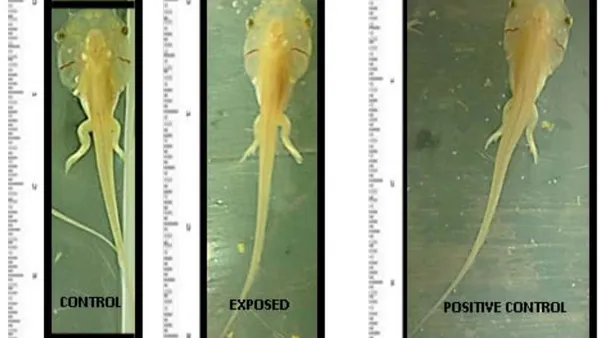
Total time of metamorphosis in group C was 56 1.95 days, and days in group E. In PC this time could not be determined due to the fact that larvae reached metamorphosis stage 62NF but none of them reached stage 66NF, time when the metamorphosis process is completed. This happened due to the addition of a constant dose of potassium perchlorate , which caused a total stop of metamorphosis at stage 62NF (Fig. 1). Mortality per group was in group E larvae exclusively .
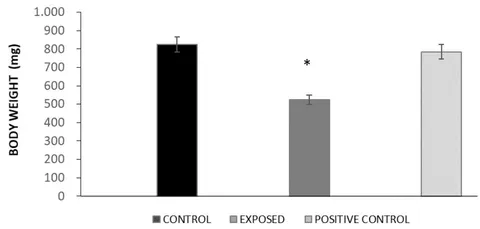
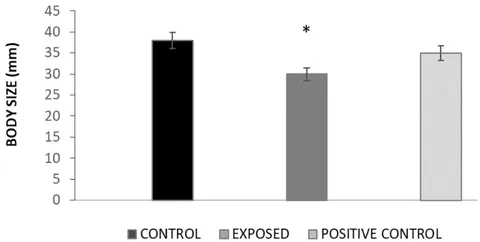
The stage affected was prometamorphosis which is controlled by . It was observed a slower larval growth in group E represented by a delay in the transition from one stage to the following during the prometamorphosis process. This difference was significant in groups E and PC vs group C during transition from stage 58NF to 60NF and it was noticed a significant larval growth delay in group E Vs C during the transition from stage 54NF to 60NF with 0.69 relative risk (RR). The delay was even more pronounced in PC group larvae vs C, , with a 0.46 RR. The weight at stage 58NF was significantly lower in group E Vs C and PC , with a confidence interval (CI) (54.157 - 364.69) (Fig. 2). It was noticed a significant difference in height, but this difference was smaller in group E and PC vs C , with a confidence interval (CI) (8.667 - 5.448: E vs C, -6.750 - 4.619: PC vs C). No significant difference was observed between groups C and PC (Fig. 2).
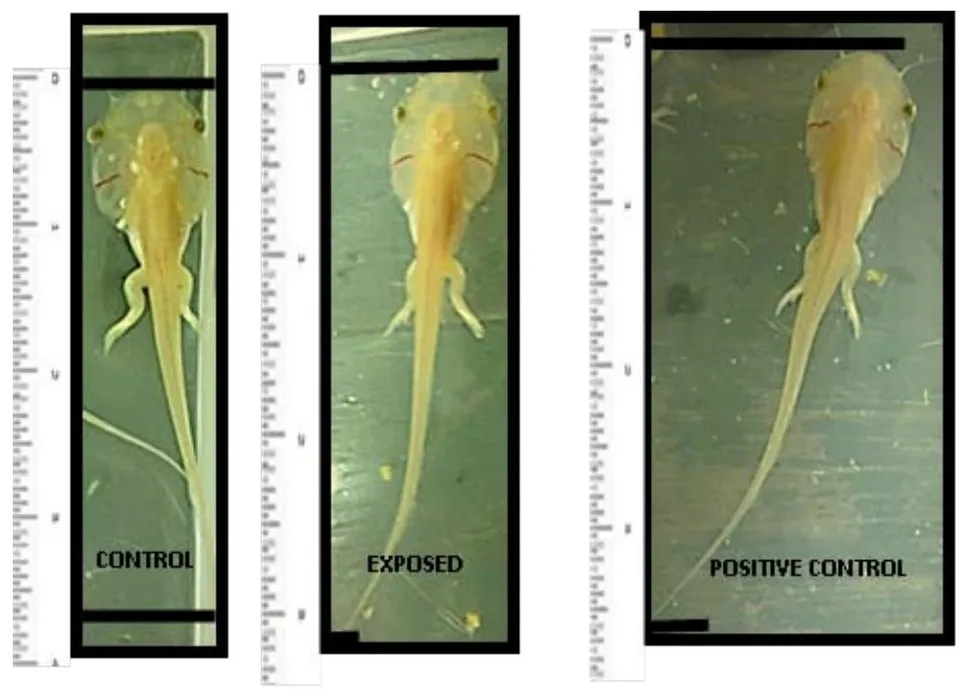
From the above analyzed we conclude that the delay occurs in the transition from stage 54NF to 60NF in group E and PC vs C, with a larval growth delay in groups E and PC. In group E this delay is evidenced by a decrease in the final size of animals, which achieved less weight and height than the ones in the other two groups (C and PC) (Picture 1).
c) Histological changes
i. Follicular colloidal area
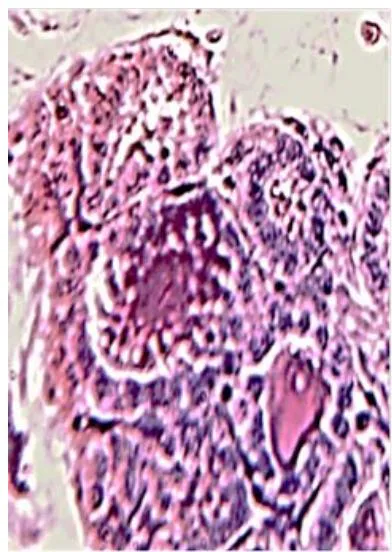
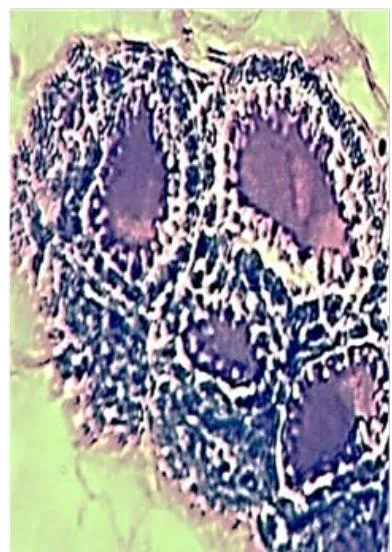
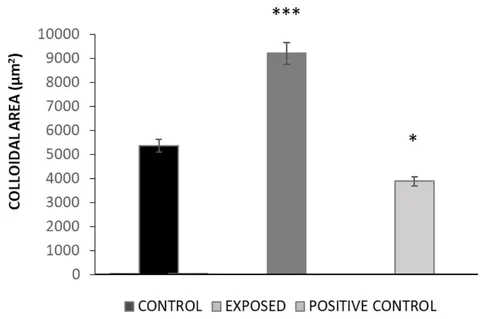
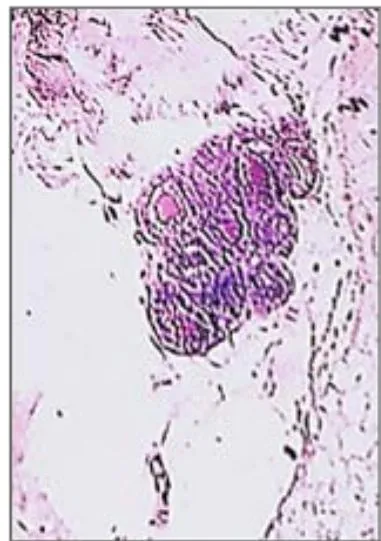
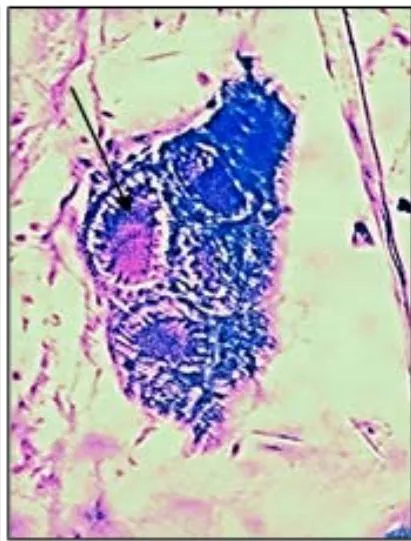
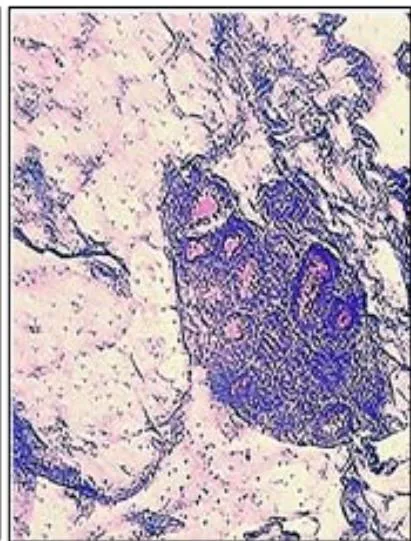
During 58NF stage metamorphosis it was observed an increase in the colloid area size in group E Vs C and PC with a CI (E vs C: -9184.7 - 179.62 and E vs PC: 2252.2 - 9253) (Fig. 3) . On the other hand, the colloidal area was smaller in group C vs PC with a CI (-2336.2 - 4.477) (Pic.2).
ii. Glandular hyperplasia degree
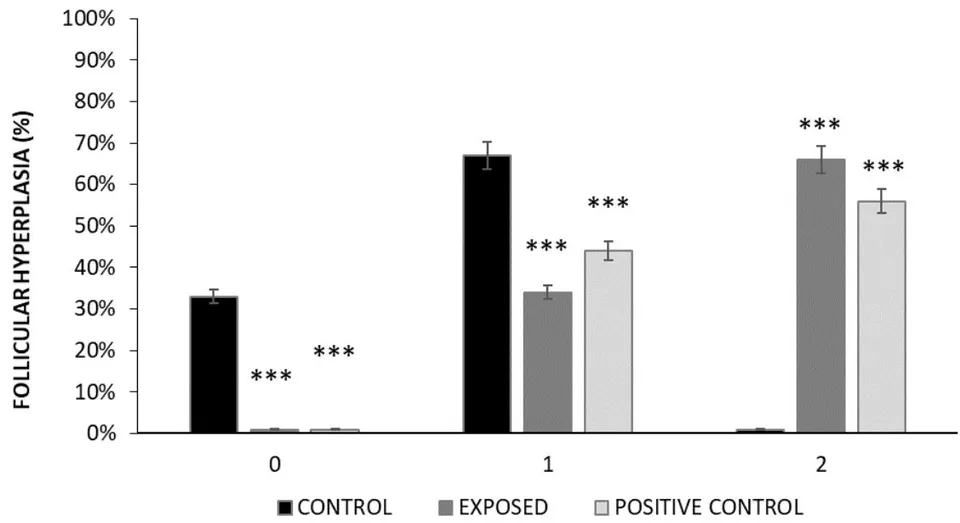
Thyroid gland hyperplasia during stage 58NF was degree 1 in group C, degree 2 in groups E and PC. The differences observed in group C Vs E were highly significant , with a CI (0.3680 - 0.6860) and 0.33 RR. There were also significant differences between groups C and PC with CI (0.2708 - 0.4799). No significant differences were observed between groups E and PC (Fig. 4).
iii. Number of filled follicles
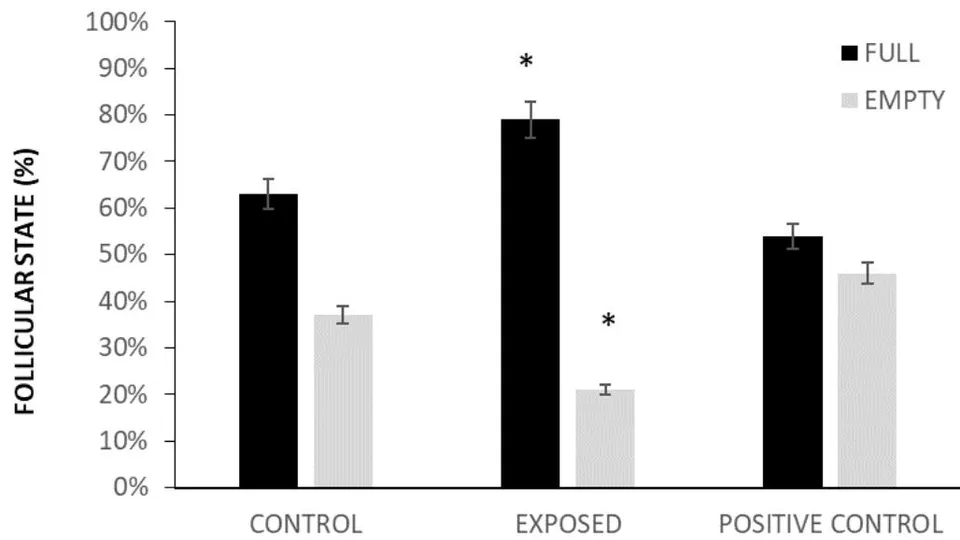
The number of filled and empty follicles per gland was also significantly different being the number of filled follicles higher in group E Vs C and PC with CI (0.4906 - 0.8303) and 0.66 RR. Nevertheless, there were no significant differences between C and PC groups (Fig. 5).
iv. Height of follicular epithelium
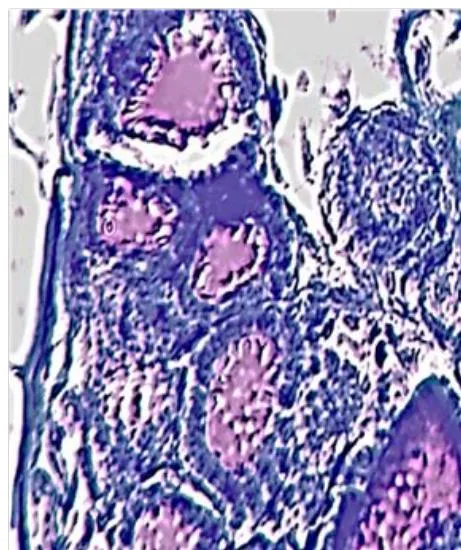
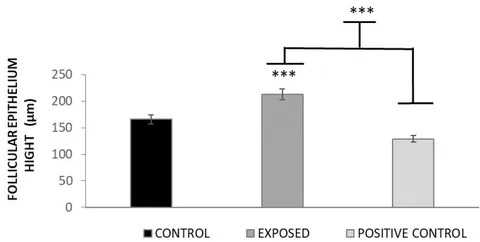
The height of the follicular epithelium showed significant differences in groups C vs E with a IC (-181.22 - 96.084) and in groups E Vs PC with a CI (130.56-202.21). In increasing order, the height was less in group PC than in C and in group C than in E (Pic. 3). The average height of the follicular epithelium for each group was: C: ; E: ; PC: um (Fig. 6).
d) Molecular changes
i. NIS expression analysis
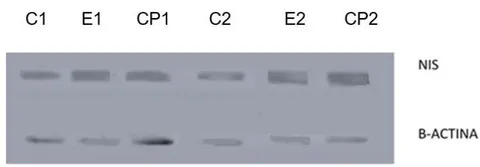
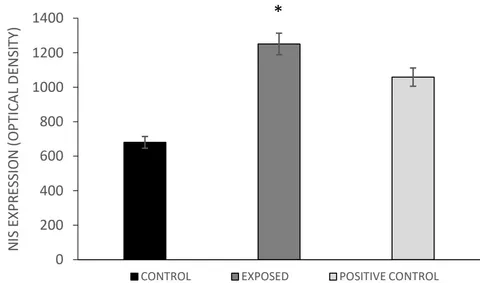
When data logarithmic correction was made it showed that NIS protein expression increases in groups E and PC being this a significant difference (Fig. 7). The average in increasing order was . Registered values measured in optical density were: C: , E: , PC: (Fig. 6).
IV. DISCUSSION
Endemic regions of hypothyroidism and goiter without iodine deficiency have been described, suggesting the consumption of EDs by the population living in these areas as a predisposing factor. (Blount
BC. et al. 2006). Our study, carried out in the southern suburbs of Buenos Aires, found levels of nitrates and arsenic in the groundwater above the safety limit for human consumption. Furthermore, in studies made in nearby rivers, other pollutants with endocrine disruptive action were detected, among them: lead, chrome, hydrocarbon and polychlorinated biphenyls (PCBs) (Janiot L. 2000). These elements may contaminate the groundwater layers, specially the superficial ones by runoff from water tables in low-gradient streams. In the area of study, the water to drink or to irrigate is obtained from these water layers, being the Pampeano and Puelche aquifers the sources from where most of the population gets their water. The superficial Pampeano aquifer is free and often contaminates the deep Puelche aquifer which is semi confined. The last one represents one of the drinking water reservoirs most important of Argentina and Latin America (Adema MP. 2017 and Ingeniería Geotécnica y Ambiental. 2005).
The action of thyroid endocrine disruptors (TEDs) may alter the synthesis, storage, transport and catabolism of hormone homeostasis (Colborn T. et al 1993) and may decrease the production of thyroid hormones (Kleiman DL. et al. 1989) by acting on membrane transporters such as NIS. In the case of nitrates, the inhibition of the sodium-iodide symporter (NIS) interferes with iodine uptake at thyrocyte level, first step in thyroid hormone synthesis (De Groef B. et al 2006). This leads to hypothyroxinemia with the following increase of TSH (Manzon RG. et al. 2004), which induces cell proliferation as an adaptive response. Thus, generating an increase in gland size and changes in gland histoarchitecture, which in humans may cause goiter development (Brauer VF. et al. 2006).
The decrease in thyroid hormone levels affects human development, as well as it does in larvae metamorphosis. In this study we have shown a delay in the development, and changes in the body morphology during larvae metamorphosis of Xenopus laevis exposed to contaminated water, causing caused by thyroid disruption. We have demonstrated a longer period of prometamorphosis and smaller weight and height of specimens at stage 58NF. These differences could be explained by the need to reach a metabolic threshold, which allows them to complete the morphological changes of this stage. This could be determined by the acquisition of an adequate level of thyroid hormones. In case that this does not happen, it can cause a stop in larval development. This fact has been observed in other amphibians and urodele, which develops a state called neoteny (Galton VA. 1992), determined by a complete brake on the metamorphic process in adverse environmental situations. This fact is similar to the one observed in our experimental Positive Control (PC) group, in which larvae were exposed to a constant dose of potassium perchlorate (known as a NIS inhibitor), suffering a complete stop of its metamorphic development; therefore, no larvae completed the metamorphosis process.
The observed differences could be explained by the negative feed-back made by the and at tadpole hypophysis level which is operational at prometamorphosis onset. Thyroid hormones may negatively regulate the mRNA expression for the TSH synthesis during metamorphosis. The mRNA expression for the thyroid hormone receptor increases during the larval development throughout prometamorphosis and peaks at climax (Opitz R. et al. 2006). The presence in water of NIS inhibitors, such as nitrates, could be interfering with the proper production of thyroid hormones in larvae.
We have known for years that Xenopus laevis are extremely sensitive to water soluble substances as nitrates and perchlorates, even in low concentration, due to their aquatic life. For this reason, Xenopus laevis was chosen as experimental model in this work (Kloas W. 2002).
Histologically, the follicles constitute the anatomical functional unit of the thyroid gland in amphibians and in humans. Its follicular epithelium and the colloid constituted by thyroglobulin change their histological appearance depending on the secretory phase. These events may be altered by thyroid disruptors, being the histologic changes a sensitive parameter to determine the level of action of this disruptor (Wolff J. 1998). Our analysis showed a change in gland histoarchitecture like hyperplasia and hypertrophy of the follicular epithelium and an increase of the colloid volume in the thyroid gland follicles in prometamorphic larvae.
The thyrocyste uptake iodine against gradient by the sodium-iodide symporter (NIS) located at the basement membrane, with energy expenditure. This transporter is inhibited by nitrates and other disruptors. The NIS expression is stimulated by the TSH, which involves the regulation of transcription factor as TTF1, TTF2 and PAX8 (Rivolta CM. et al. 2005).
The inhibitory action of thyroid disruptors on the NIS co-transporter and the changes on the metamorphosis (Furlow JD. et al. 2006 and Degitz S. et al 2006), as well as histological and biomolecular thyroid changes, have been assessed (Hood A. et al. 1999; Below H. et al 2008 and Mukhopadhyay S. et al. 2005). The increase in the NIS protein expression level noticed during larvae prometamorphosis exposed to nitrate contaminated water, could be the result of an adaptive mechanism trying to compensate its functional state.
Differences observed in our study in larval morphology as well as in glandular histoarchitecture during the different stages of Xenopus laevis metamorphosis between E and C groups may be explained by the presence of one or more substances with a thyroid disruptive action in groundwater of the studied area. These substances could be interacting in a synergetic way on more than one level on the thyroid gland. This could explain what happens with arsenic. The arsenic, as the nitrates, was detected in concentrations considered as unfit for human consumption by the Argentine Food Regulations. The chronic exposure to an excess of arsenic in drinking water has been strongly linked to higher risk in humans. Arsenic has been shown to be a powerful endocrine disruptor in low levels, changing the genic regulation mediated by thyroid receptors (Davey JC. 2008). The synergistic action of nitrates and arsenic could explain the mortality observed exclusively in this group.
V. CONCLUSION
The nitrates present in groundwater, as well as other possible endocrine disruptors such as arsenic, produce morphological alteration in the Xenopus laevis tadpoles, as well as histological and molecular thyroid changes when exposed to this type of water during their metamorphosis. These events are related to an increase of the NIS expression levels during prometamorphosis stage. Despite this adaptive change, it is not possible to compensate for the thyroid alteration generated by nitrates, thus not achieving the morphological changes necessary to adequately complete this stage. New studies must be carried out to better understand the mechanisms that lead to these alterations.
Declaration of interests
The authors declare that they have no known competing financial interests or personal relationships that could have appeared to influence the work reported in this paper.
ACKNOWLEDGEMENTS
- This work was supported by a Grant of the University of Buenos Aires (UBACYT 20020130 100439BA).
- We are grateful to: Dr. J. J. Lopez and his team (Department of Histology, School of Medicine, University of Buenos Aires) for his contribution in the histological analysis.
- We thank Angela Ciocca Ortuzar for the manuscript revision.

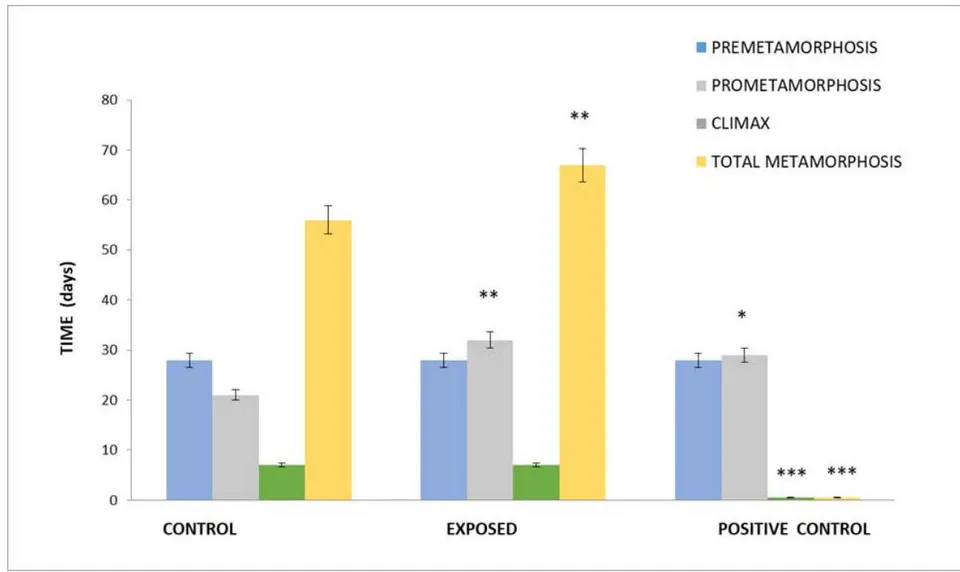
***p<0.0001 vs Control.