When Language Meet History in Chinese as a Second Language Classroom: Teaching Chinese History with Genre Pedagogy in Chinese as a Second Language Classroom
Research from the fields of second language education and genre pedagogy indicates that students, including those from culturally diverse backgrounds, will improve their achievement if they engage with the meaning-making conventions of disciplinary texts. However, there is no current study on the nature of teaching practices for supporting such work in Hong Kong. The purpose of this study is to investigate how frontline teachers can use Genre pedagogy with an interdisciplinary teaching model to enhance culturally diverse students’ motivation to learn Chinese History and deepen their understanding of history concepts. The research team worked with the teachers to design the teaching materials and learning activities in a Hong Kong secondary school. Then, they investigated the students’ perception of the pedagogy by questionnaire, conducted interviews with the teacher, and evaluated and reflected on the whole design of Genre pedagogy in Chinese History classrooms. 80 NCS secondary school students (N = 80), with an average age of 14, participated in this study.
## I. BACKGROUND OF RESEARCH
The Hong Kong Education Bureau (EDB) confirmed in 2017 that Chinese History became an independent core subject in the junior secondary curriculum. Studying Chinese history can also help culturally diverse students or non-Chinese-speaking (NCS) students gain a deeper understanding of Chinese History and culture.
Chinese History has been implemented as an independent core subject in the junior secondary curriculum since 2007. NCS students can deepen their understanding of Chinese History and culture through the study of Chinese History.
However, the Chinese language has long been considered a very difficult language to learn, particularly for those L2 students with alphabetic language background (e.g. Leong et al., 2019; Loh & Tam, 2017; Shum, Zhang, Zhang, Ki, & Ng, 2012). In fact, their learning difficulties are manifold. First, the Chinese History texts are incomprehensible to CSL students as the genre and vocabulary used are unfamiliar and not explicitly taught. Second, it is difficult for them to discuss historical events with their Chinese classmates in class as they have neither related background nor cultural understanding. Third, the expressions of their interpretation of historic events require both advanced Chinese language proficiency and higher-order thinking skills. Fourth, historical concepts can be pretty abstract, and using a second language to explain them is difficult. Furthermore, considering their cultural background and the involvement of their own countries in different historical events being taught in the Chinese History curriculum, their interpretation and evaluation of specific events may differ from that of textbooks and the perceptions of their Chinese peers and teachers.
Thus, Chinese proficiency has become one of the factors hindering NCS students' learning Chinese History in Chinese as a second language. In view of this, this study attempts to design an interdisciplinary model for teaching Chinese History in Chinese as a second language, incorporating a Genre approach, to help NCS students learn Chinese History in Chinese as a second language.
### a) Research Questions
Language is integral to the learning of every subject, and every subject's language takes its cues from the subject. For example, in Chinese, students are taught the linguistic feature explicitly, which can be used in Chinese History to illustrate the impact of events by applying what they have learnt from the language subject.
The Genre pedagogical design adopted in this project is based on culturally diverse secondary students' Chinese proficiency and learning abilities. It aims to enable all of them to systematically learn Chinese History, so they can have a more complete understanding of Chinese culture. It also provides training on the student's language abilities, including speaking, reading and writing. Teaching activities were conducted through the Genre pedagogy while teaching materials were designed with reference to the Adapted Framework of the Chinese History Curriculum (Secondary 1-3) (2019) (for Non-Chinese Speaking Students). The questions of this study are as follows:
1. What are the difficulties for culturally diverse students in learning Chinese history in Chinese as a second language?
2. Does the Genre pedagogy with an interdisciplinary teaching model improve culturally diverse students' ability to express themselves in Chinese History? What are the perceptions of teachers and students of this teaching model?
## II. LITERATURE REVIEW
### a) Language support in CSL Chinese History classroom: Systemic Functional Linguistics
Systemic Functional Linguistics (SFL) model can reveal features of the discourse of their discipline to teachers. Linguistic analysis of students' and teachers' language use can make them aware of how meanings are made in their discipline. (SFL) also provides tools for educational researchers and teachers to 1) analyse how language builds academic knowledge in different school subjects and 2) use such analysis to inform teaching-learning activities and strategies. In particular, this knowledge would allow teachers to intervene at the right moment students need support in order to construct the meanings they need in the subject, explicit information about the language required, and information not limited to the technical vocabulary of the subject.
An important academic function in history is explaining the causes and consequences of historical events. SFL research (e.g. Christie and Derewianka, 2008; Coffin, 2006) has found a progression in the grammatical expression of cause linked to the development of nominalised language. As SFG's work on history has shown (Coffin 2006), the more advanced history genres not only explain causes and consequences of historical events but also take a stance towards them. Writers, then, have to take on the historical role; to do this, they need to control the grammar and lexis of evaluation.
For the language used in Chinese History classrooms, this study will adopt Genre Theory developed from Systemic Functional Linguistics (SFL) to develop culturally diverse students' Chinese knowledge about the grammatical patterning and structure of Chinese historical texts, which is found to be central to the construction of Chinese History concepts within the secondary school context. By doing so, culturally diverse students will be able to make choices in genre and language resources that are important in reading and writing Chinese History. In light of this, our research team designed the teaching materials as well as the assessment tools with reference to Genre Theory.
### b) Genre pedagogy in CSL Chinese History classroom
According to a Genre study by Hong Kong scholars (Shum, 2006), the subject of History can be divided into four main categories according to the nature of the subject and its expressive function. They are:
1) Chronicling History (記述語體)
2) Reporting History (報告語體)
3) Explaining History (解說語體)
4) Arguing History (論辯語體)
There are significant differences in the structure of the various genres, and the linguistic features are also different. For example, the Chronicling History is more concrete, with more temporal conjunctions; the Arguing History is more abstract, with more cause-and-effect conjunctions. Below is the Chinese History Genre for Hong Kong Secondary School (See Figure. 1)


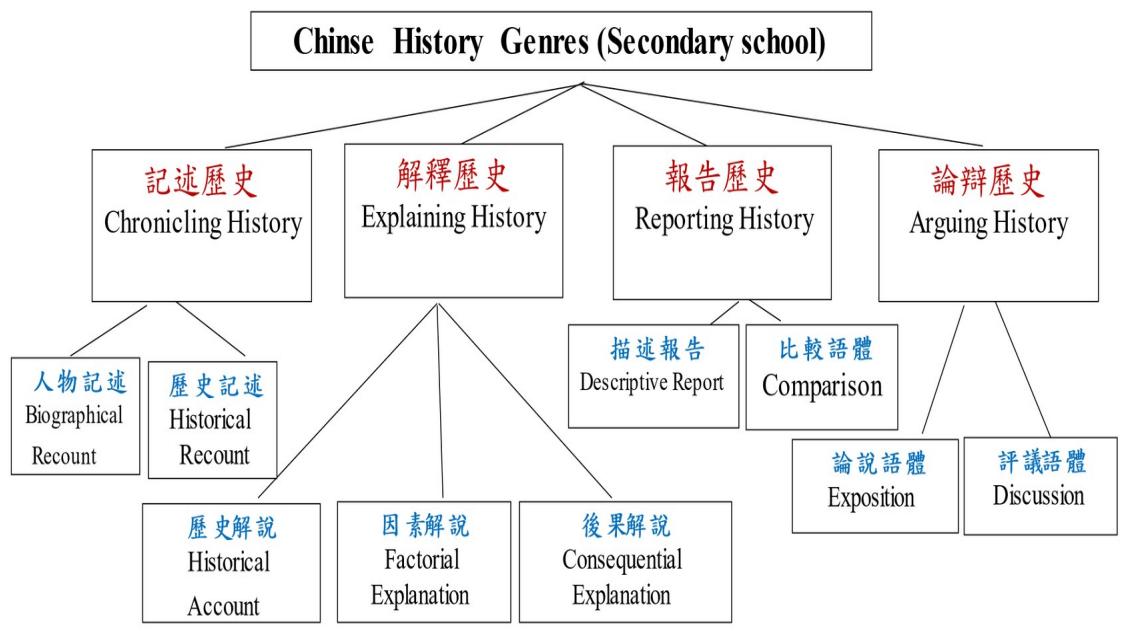 Figure 1: Chinese History Genre for Hong Kong Secondday school (Unsworth 2001, Shum 2006, 2020)
### c) Genre Pedagogy and scaffolding
It was found that if the pictorial structure and linguistic features of these corpora were taught to students with more practical examples in an explicit way, students would be better able to grasp the presentation skills of the History subject, which would greatly help their learning. (Shum 2010:237) In terms of teaching strategies, this study combines Genre pedagogy and scaffolding theory, whereby teachers will use facilitated learning to cater for the learning differences and language limitations of NCS students. Scaffolding originally refers to a facility that is erected on the exterior of a building to aid construction. Scholars have applied the concept of scaffolding to teaching and learning (Wood et al., 1976) as a strategy to support learning.
Vygotsky argued that learning and mental development need to be viewed as a social process: it is through the interaction we enter into with other members of our culture, particularly those more knowledgeable or proficient, that we make sense of the world and learn new (usually culturally and socially specific) ways of seeing, doing and being. Thus, a Pattern of interaction between teachers and students can be a powerful resource in scaffolding students' learning of language and their learning about and through language.
## III. RESEARCH METHODOLOGY
This study adopted design-based research. The entire study was carried out in a real teaching environment to understand how students learn, develop pedagogical theories, and design teaching materials that can improve teaching quality.
Design-based research is composed of three levels: theory generation, product design, and refinement (Cobb et al., 2003; Shavelson et al., 2003). It aims to promote close collaboration between educational researchers and teachers. They build students' learning paths together to solve pedagogical issues and enhance learning effectiveness.
The research process included four stages: preparation, implementation, evaluation and promotion. The stages of preparation and implementation can be considered as research results and form an iterative cycle. The theoretical basis can then become more complete, and the ecological validity can be ensured during promotion.
### a) Participants
Participants of this research included culturally diverse students from a secondary school in Hong Kong. There were 2 Secondary one classes in total with 80 students per class $(N = 80)$, and one teacher who teach both Chinese and Chinese History.
The student participants came from Nepal, Pakistan, the Philippines and India. This school uses English as the medium of instruction in non-language subjects to suit the student's needs. The teacher flexibly adopts teaching languages suitable for students to acquire an understanding of Chinese History on the principle that students are taught according to their abilities and in a progressive approach.
### b) Research process
Our research team collaborated with the teacher to design teaching materials for Chinese History with reference to Genre pedagogy. A student reflection questionnaire will elicit the teacher and students' perceptions about the learning materials and the function of Genre pedagogy. An interview with the teacher was also conducted. The entire research process includes (1) Design/redesign, (2) Implementation, (3) Evaluation, and (4) Promotion. Details of each stage are listed in Figure 2.
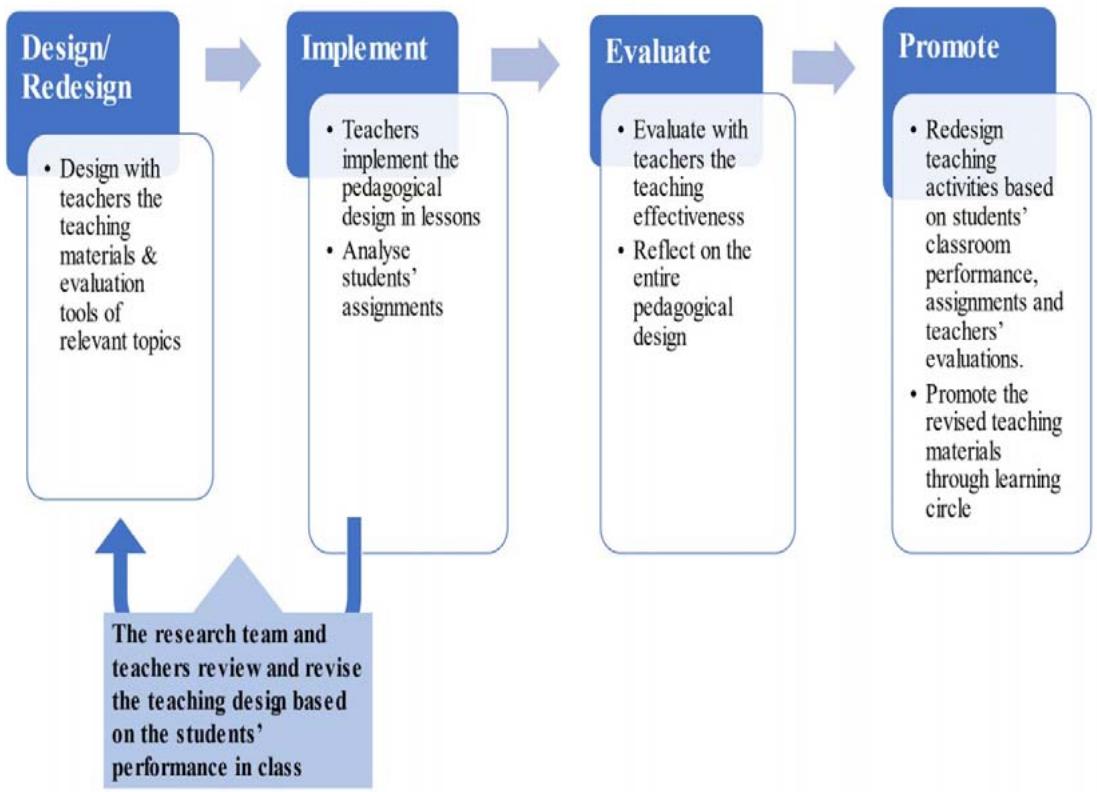 Figure 2: Research process of this study.
## IV. DATA COLLECTION
## V. DATA ANALYSIS
### a) Student's Questionnaire
An online questionnaire was sent to 80 students from two classes, and 68 students have completed it.
## i. Semi-structured interview
A semi-structured interview was conducted after the completion of the research. Sets of questions about the impact of genre pedagogy with interdisciplinary models upon CSL students' understanding of history concepts as well as their learning motivation were constructed for the interview. The researchers did not strictly follow a formalised list of questions. However, they asked more open-ended questions, allowing for a discussion with the interviewee rather than following a straightforward question-and-answer format. The interview lasted for approximately one hour. One Chinese History teacher was invited for the interview.
## ii. Students' assignments
Students' assignments (written worksheets) were collected upon completion of the activities for in-depth text analysis. Their works were evaluated to assess their understanding of the history concepts and their performance in Genre pedagogy-related activities.
### a) Text analysis
This study applied text analysis to analyze protocols of teacher interviews, as well as students' written assignments. Text analysis is mainly used to process and interpret large volumes of unstructured text data, extracting meaningful patterns, trends, and insights (Feldman & Sanger, 2007). In the present study, the research team first extracted keywords from the transcribed interview protocols for topic modelling, then summarized and classified significant findings from the entire data set. Furthermore, students' written assignments completed in different learning stages were also collected for in-depth text analysis to identify the changes in their learning performance across time, particularly the construction and interpretations of historical knowledge being taught.
### b) Genre-based text analysis
Genre-based text analysis is an approach to studying and interpreting textual data by focusing on the text genre (Biber, Conrad, 2009). As genre-based pedagogy is the key component in the present study, genre-based text analysis allowed the research team to evaluate how well this pedagogy helped students master the appropriate genre to present their learning outcomes by analyzing their written assignments submitted at different learning stages.
### c) Implementation of an interdisciplinary teaching model in a CSL Chinese History classroom
- As culturally diverse students need more support in Chinese as a second language classrooms, based on the above scholars' studies on the pedagogy of Genre, this study tried to design teaching materials using the Chinese History genre. One of the major features is the collaboration between Chinese History and Chinese Language so that students can have greater language support in learning Chinese History.
- For example, before teaching the topic of "The impact of the two Han dynasties on cultural exchanges between China and the West" in Chinese History, the teacher arranged for culturally diverse students to learn the explanatory genre, such as the structure of the text and the relevant grammar and vocabularies in Chinese Language to consolidate their language skills and prepare them for reading and writing Chinese History texts. This is to strengthen students' language skills and to prepare them for reading and writing Chinese History texts.
d) Teaching procedure
The teaching procedure has six stages, with teaching activities arranged for each stage (See
Figure 3: The interdisciplinary teaching process in a CSL Chinese History classroom).
The teaching procedure consisted of three main stages. The inclusive pedagogy mainly applied during the teaching process:
#### 1) Pre-lesson preparation:
- The teacher distributed genre-based texts, videos, and soundtracks to students for preview and self-study; students completed online preparatory exercises (mainly multiple-choice questions) that assessed their basic understanding of the texts.
- Based on students' performance, the research team assisted the teacher in fine-tuning the teaching designs (e.g., using multimedia resources to assist teaching, providing supplementary information when explaining the texts and so on);
2) Teaching:
- Teacher applied genre-based pedagogy to teach the texts in which students learnt the explanatory genre, related historical sentence patterns and vocabulary from the texts;
3) Post-Lesson Assignments: Teacher-assigned homework (e.g., Students provided their understanding and comments about the historical events being taught and discussed by applying the historical sentence patterns and vocabulary).
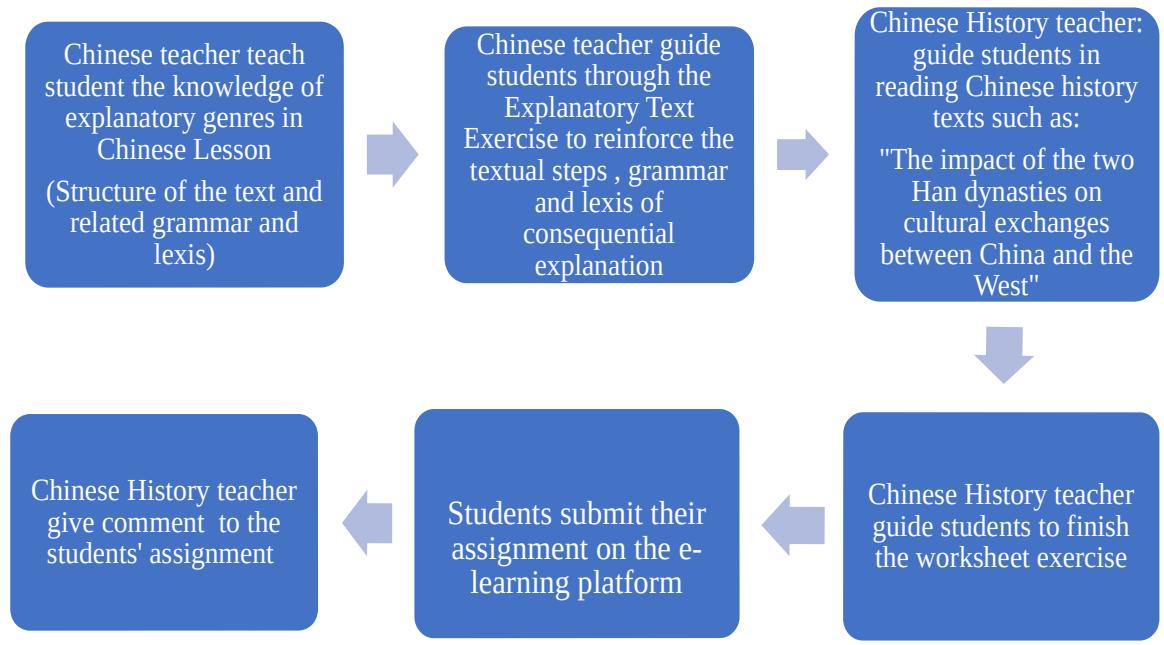 Figure 3: The interdisciplinary teaching process in a CSL Chinese History classroom
### 二、請從題目一的詞語翻譯中,選擇合適的中文詞語填在下列的橫線上。
<table><tr><td>圈式結構 (文步)</td><td>小明的壞習慣</td></tr><tr><td>事件: 小明有一個 壓習慣。</td><td>小明有一個___習慣,他每晚玩完手機 (mobile phone)______。(again) 達到了。方老師問他昨天幾點睡覺?他回答晚上十二 點。方老師說太晚(too late)___(bad) 的___:</td></tr><tr><td>後果一: 上學__</td><td>___,你今天上學遲到。媽媽叫你起床 (wake up)時,你早上不___起來。</td></tr></table>
2
<table><tr><td>後果二:
上課時</td><td>____________________,(in lesson)。
中文課時,你睡覺了。</td></tr><tr><td>後果三:
眼睛疼</td><td>____________________,你上英文課____,你說你的眼睛
____。因為太晚睡覺____你的眼睛____。</td></tr><tr><td>總結</td><td>方老師說__________,太晚睡覺有三個不好的影
effect),______、、
眼睛疼。方老師說你______太晚睡覺了。小
明說好的。</td></tr></table>

### e) Genre pedagogy in CSL Chinese History classroom
This study primes that Genre pedagogy with an interdisciplinary teaching model in the CSL Chinese History lessons has the following functions of scaffolding:
1) The text is designed with the curriculum and according to historical facts—analysis of popular textbooks and references to authentic history (e.g., Historical Records, General Annals, Chronicles, etc.)
2) A detailed version and an easy-to-read version for teachers to adapt to students' abilities
3) Easy-to-read text, suitable for GCSE/GCE Chinese level
4) Providing QR code for reading aloud to facilitate self-learning
5) Illustrations beside the text to help students understand the meaning of the text
6) A QR code with audio clips is available for students to preview and revisit the text
7) English translation of the text is available
8) A picture is provided alongside the text to help students understand the Historical concepts are organised in Chinese and historical contexts
In addition to the scaffolding of Genre pedagogy, we had designed the assessment tools with the teachers as below:
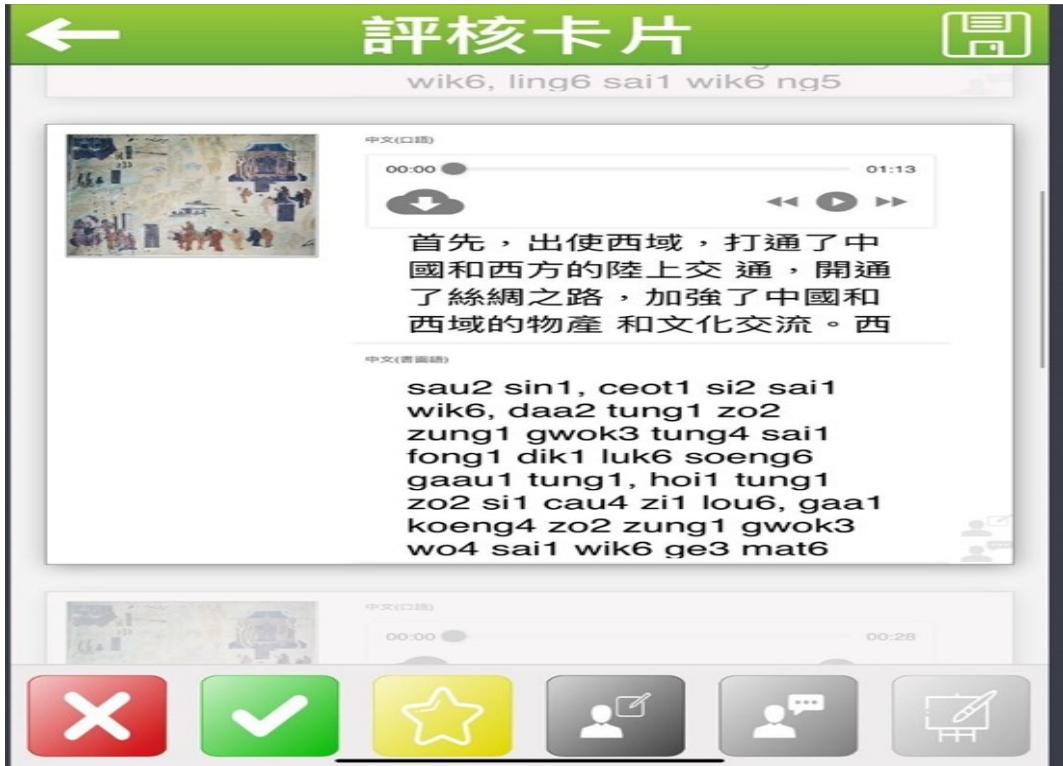
Figure 5: The e-learning assignment submitted by NCS students: mLang card
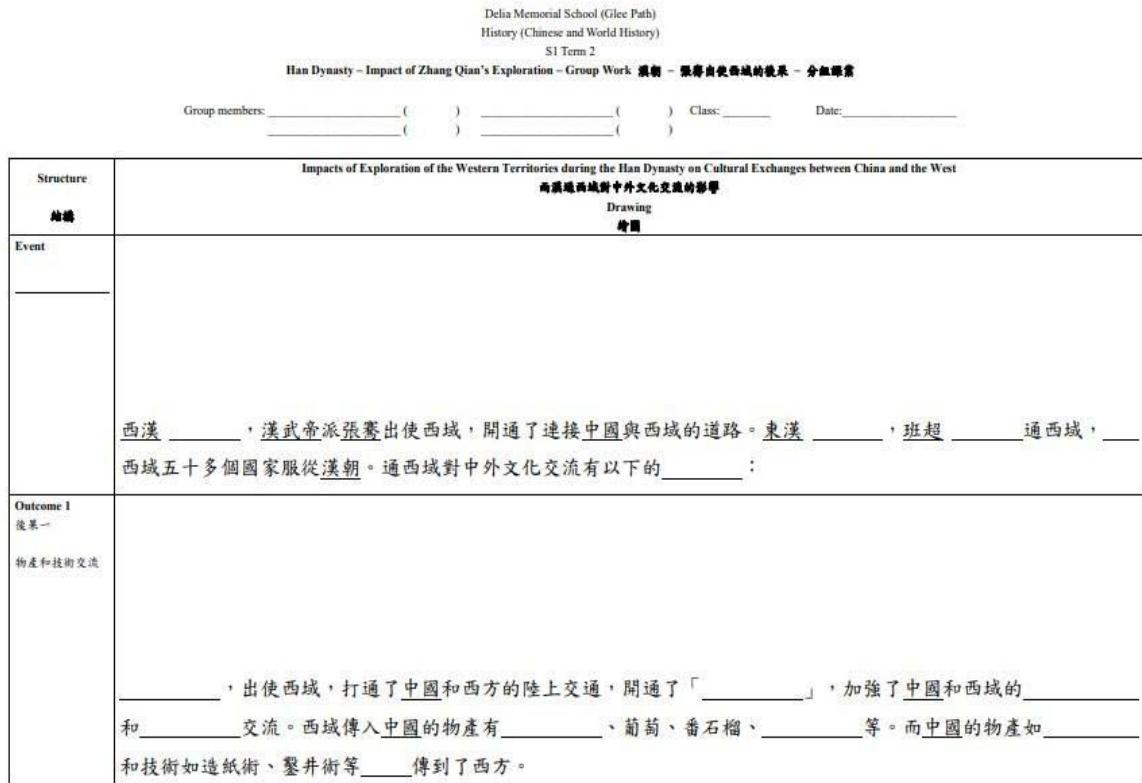 Figure 6: Chinese and Chinese History Interdisciplinary Worksheet Exercise
## VI. RESEARCH FINDING
### a) Difficulties of culturally diverse students in learning Chinese History
Lack of interest in learning Chinese history due to cultural differences
According to the teachers' interviews, students' motivation to learn Chinese History was affected by ethnic and cultural differences:
"I think the first difficulty for students to learn Chinese History in Chinese is that they are not interested in Chinese History because they do not have an identity, maybe they think they are Filipino, Indian or Pakistani, why should they learn Chinese History? So they will feel a sense of distance and less motivated to learn."
b) Can Genre pedagogy with an interdisciplinary teaching model improve culturally diverse students' ability to express themselves in Chinese History?
After one year's intervention, based on the student's performance in assignments, opinions from the interviewed teachers and students' questionnaire, it was found that Genre pedagogy with an interdisciplinary teaching model has effects on culturally diverse students' Chinese history learning in the following four aspects:
With the use of language teaching, students can understand the content of the chapters more easily and, therefore, have a higher self-efficacy in learning Chinese history in Chinese.
(2) Promote reading comprehension –
It was found that students' knowledge of the Chinese Language will help them understand the consequences of explaining relevant topics in Chinese History lessons.
(3) Enhancement of students' Chinese language speaking standards -
The interdisciplinary teaching model provides students more opportunities to learn and express themselves in Chinese in the classroom.
Language teaching allows students to learn many conjunctions required for writing in Chinese. The grammatical knowledge will greatly help them in writing Chinese, and will also enhance students' ability to write in Chinese.
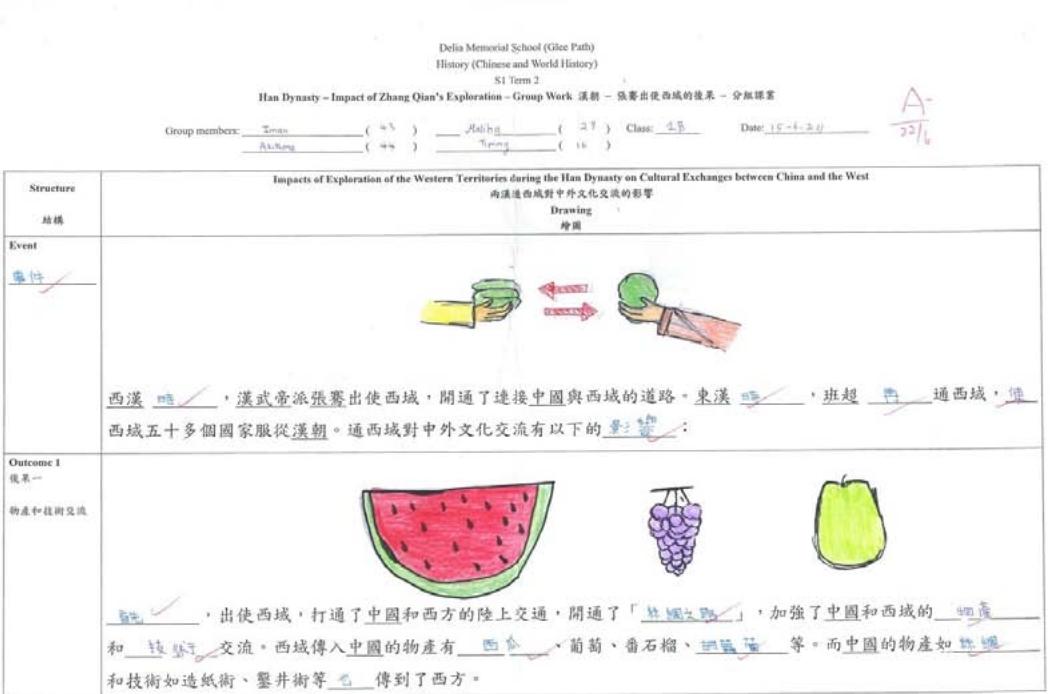
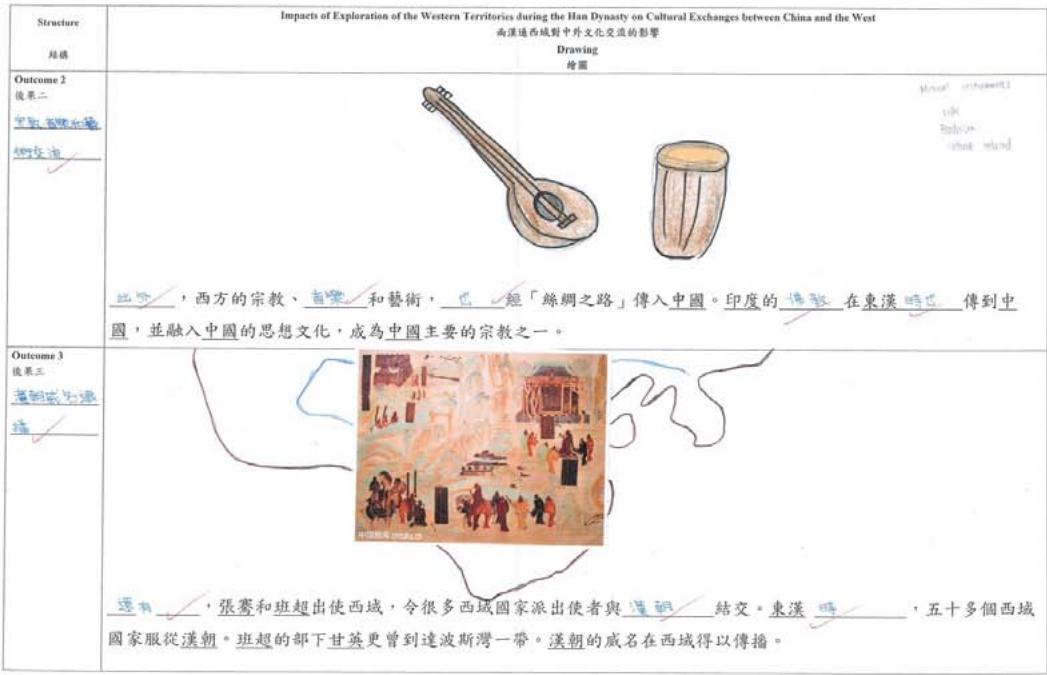
Figure 7: The student's assignment of Chinese History (From high-efficiency student)
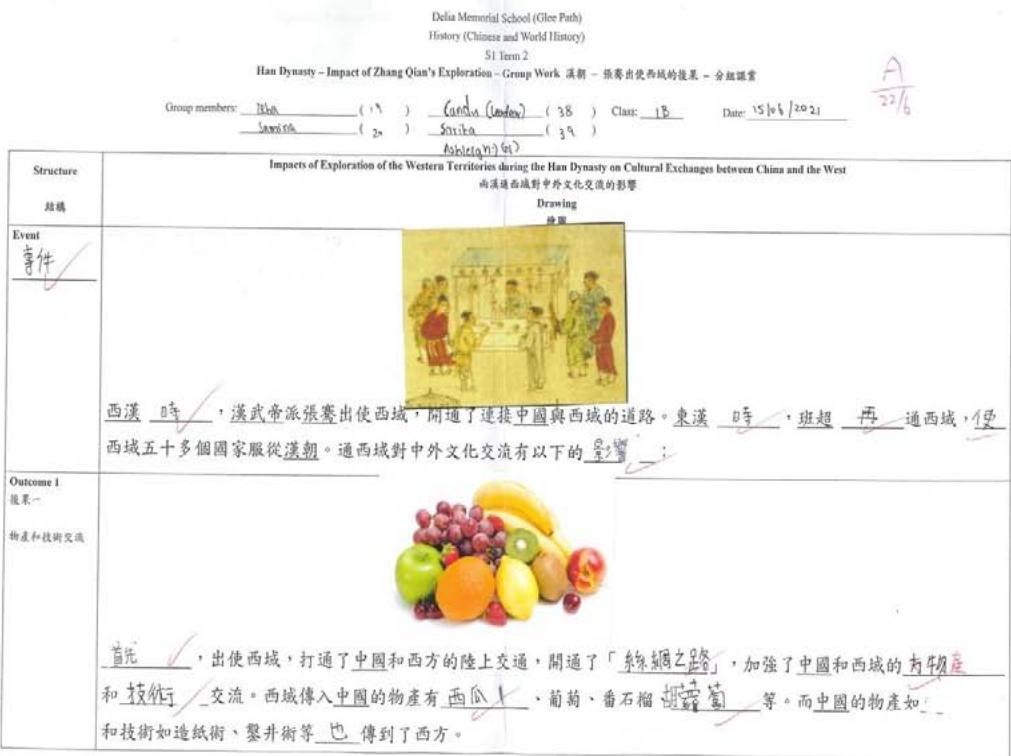
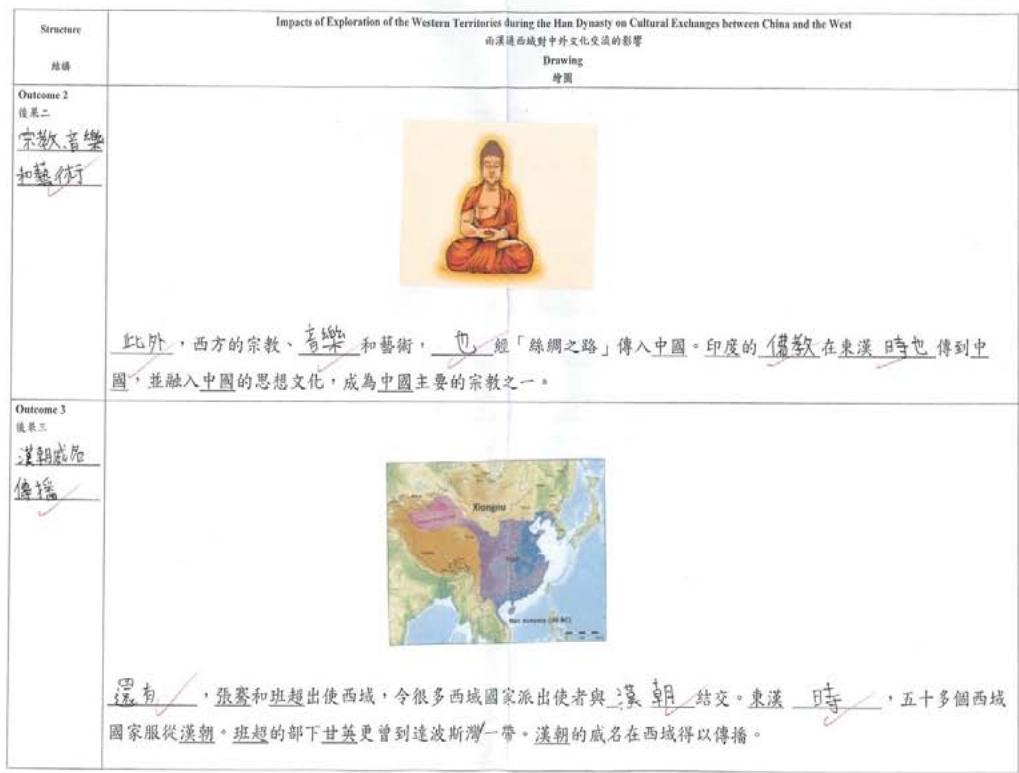 Figure 8: The student's assignment of Chinese History (From middle efficiency student)
The Genre pedagogy with an interdisciplinary teaching model has made it easier for culturally diverse students to understand the knowledge of Chinese History and complete related tasks, as they have already mastered the language in Chinese lessons. The following are the teachers' comments:
"The advantage of the collaboration between Chinese Language and Chinese History is the division of labour in teaching. If students already know key terms, such as sentence order, logical relationships and text structure, before they read a Chinese History text, they can use their previous knowledge of the structure of the explanatory text in Chinese History to read the text with these consequences, so we can spend less time explaining it and they can follow the lesson more easily.
"Therefore, we think the advantage is that the teaching load of Chinese History is reduced, and the Chinese History
### c) Findings from the student's questionnaire
teacher can concentrate on teaching more Chinese History content, such as the reasons why Zhang Qian had to go to the West and the difficulties he encountered on the way. If we hadn't input this knowledge of Chinese History before, we would have had to spend a lot of time on vocabulary and less time teaching Chinese History.
 Figure 9: Result of the student questionnaire
Coding scheme: Strongly agree $= 5$; Agree $= 4$; neutral: 3; disagree $= 2$; strongly agree:1
(1) Enhancing culturally diverse students' self-efficacy in learning Chinese History
First of all, it was revealed that students' knowledge of the language and body in the Chinese
Language of explanation text facilitated them to understand the Genre of relevant topics in Chinese History lessons. (See Figure 10)
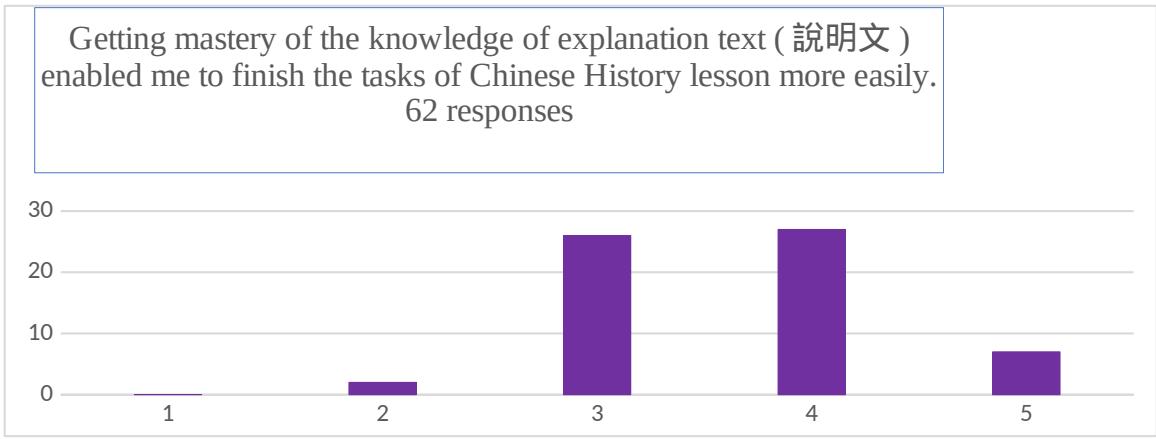 Figure 10: Distribution of respondents' learning efficiency owing to the mastery of Genre knowledge
According to the data from the questionnaire, it was found that students' knowledge of the genre in the Chinese language will enable them to feel more confident in expressing their opinions in CSL Chinese History lessons. (See Figure 11)
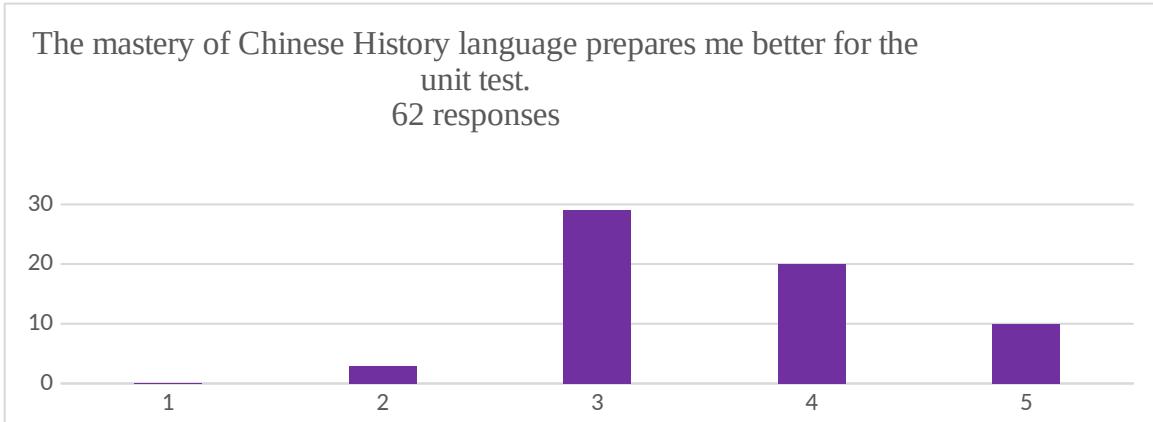 Figure 11: Distribution of respondents 'confidence in assessment owning to the mastery of language
(3) Promoting culturally diverse students' reading comprehension in Chinese On the other hand, according to the questionnaire, students' reading comprehension skills of Chinese History materials had been improved due to the knowledge of Genre.
### d) Findings from the Semi-structured interview
After completing the research, the researcher invited the teacher for the semistructured interview. In the semi-structured interview, the teacher reflected that Genre pedagogy with an interdisciplinary teaching model has the following functions:
(1) Promote students' ability to read and understand in Chinese
Once students have mastered the knowledge of Genre, including the structure of the text and the characteristic sentences, they can move on to read other Chinese history texts in the same language, thus enhancing students' ability to learn Chinese history in Chinese; here is the comment form teacher:
"For example, Zhang Qian's biggest contribution was the exchange of materials, such as watermelon and grapes. This shows that they can apply what they have learnt, and this is actually in line with our expectations, because after we have taught the students about the logic of sentences, such as in the Chinese Language lesson, we find that they can really migrate to the learning of Chinese History, so we think that the knowledge of corpora they have learnt in the Chinese Language lesson and the Chinese History lesson will be useful for their future learning of Chinese."
Besides, the language knowledge that students have acquired in Chinese Language will help them to understand and interpret texts and complete tasks related to topics in Chinese History lessons:
"As they have already done similar text structures in Chinese lessons, the students will know and follow the tasks we want them to do sooner; for example, they will be able to fill in the correct words in the word choice filler exercise when they see a similar text."
(2) Improving students' proficiency in speaking in Chinese
Genre pedagogy with an interdisciplinary teaching model enables students to learn Chinese in Chinese History on the one hand and gives students more time to learn and express themselves in Chinese on the other, which helps to improve their Chinese standards:
"It will also be beneficial for them to learn language knowledge in the Chinese subject, more time in Chinese will improve their Chinese standard, and the teaching of Chinese History and Chinese is also relevant, and they will find it worthwhile, it is a win-win situation."
(3) Improve the ability to use sentences and express themselves more logically
Genre pedagogy with an interdisciplinary teaching model enables students to learn different grammatical knowledge, such as conjunctions and related grammatical knowledge in the Chinese Language, through the use of Genre knowledge, which helps to enhance student's ability to express and organise themselves in sentences. The following are the comments from the post-event teacher interviews:
"In writing, they do learn; for example, we have taught them Genre-related conjunctions, and they can be seen using them in some of the sentence exercises, such as the word 'time', which they can use such as 'I went to the toilet', 'I played my teacher punished basketball at lunchtime' and 'I because I was late today'. In their writing, they can also be seen trying to use different conjunctions to express the logical relationship of time.
According to the teachers interviewed, the teaching of Genre allows students to learn a lot of conjunctions and related grammatical knowledge necessary for writing Chinese, which is very helpful for their Chinese writing:
"I found that linking words such as because, therefore, secondly, then, etc. was helpful. This knowledge helps students to organise sentences and explain the logic of relationships. For example, when we refer to the Eastern
Han period and the Han Dynasty in the Chinese History curriculum, we can also use the words "at rest" and "at lunchtime". Hence, regarding language expression, we would recognise that this grammatical knowledge can be transferred to other subjects, whether we are studying in Chinese History or Chinese.
## VII. DISCUSSION AND IMPLICATION
This study proves that if teachers can integrate the language of Chinese History with Genre pedagogy, culturally diverse students can not only enhance their ability to read Chinese History materials after acquiring the relevant language knowledge but also help them to understand the consequences and explain the relevant topics and historical concepts in Chinese History lessons. On the other hand, students can apply the relevant knowledge learnt in Chinese to illustrate the impact of events and, at the same time, enhance their confidence in using Chinese to learn Chinese history and express themselves. In addition, language teaching enables students to learn many of the conjunctions required for writing Chinese, and the related grammatical knowledge is of great help to their Chinese writing, as well as facilitating culturally diverse students' ability to write in Chinese.
After a year's practice, the research team found that the interdisciplinary teaching model in Chinese History classrooms, on the one hand, facilitates collaborative learning, including peer assessment, and serves as a scaffold, and on the other hand, this approach with Genre pedagogy could help students construct a schematic structure for writing explanatory texts and enhance their confidence in reading Chinese historical materials.
According to the evaluation of the teacher's interviews, culturally diverse students were more confident in reading aloud in Chinese with the aid of electronic tools, such as the use of consequential explanatory genre to illustrate the impact of the two Han dynasties on the electronic platform, and they generally preferred the use of electronic word and phrase cards as an assessment task than paper and pencil examinations.
In view of this, the research team suggests that Chinese History teaching should be combined with an interdisciplinary teaching approach. This will not only enhance the motivation of culturally diverse students to learn Chinese History in Chinese as a second language but also cater for their learning diversity and facilitate Chinese History teachers to assess their performance and progress more flexibly. For this reason, we propose that teachers can stratify the teaching according to the different cognitive abilities of students; for example, at the basic level of cognition, students can recall history through a storytelling approach; for the higher level of understanding, it is suggested that students are required to report the historical event through role play, this may create a broader horizon for students to discuss various historical events, introduce different perspectives, and make Chinese History learning more diversity. For the cognition level of applying History, students may be assigned to provide their understanding and comments about the historical events being taught and discussed by applying the historical sentence patterns and vocabulary through essay writing. For the higher level of Redefining History, the teacher may lead students to read different genres, such as Chinese fiction and poems, and then discuss ancient historical characters with the students in different ways. For the highest level of Evaluating History, it is recommended that teachers conduct different kinds of debate activity according to historical events and characters it was suggested. (See Figure 12: An interdisciplinary teaching model in CSL Chinese History classroom.)
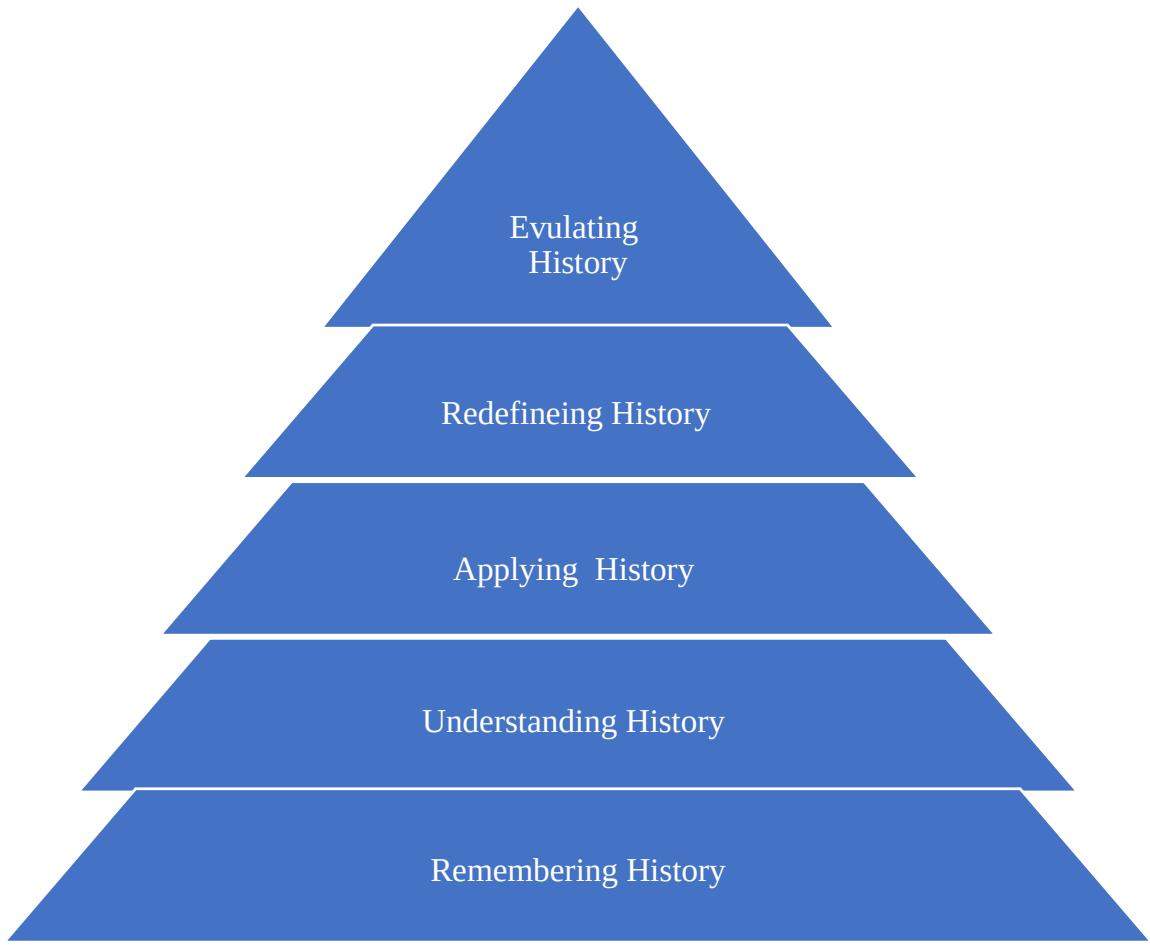 Figure 12: An interdisciplinary teaching model in CSL Chinese History classroom
This study proves that both the teacher and students reflected positive feedback towards the Genre pedagogy; the research team proposed an interdisciplinary teaching approach for culturally diverse students' root learning in History lessons and assessments, which could not only help teachers to cater for students with different language proficiency levels but also facilitate the interaction with the students by scaffolding them with Genre knowledge in Chinese as a second language classroom.
## VIII. CONCLUSION
This study aims to investigate whether Genre pedagogy with an interdisciplinary approach could enhance culturally diverse students' understanding of Chinese History and teachers' and students' perceptions of the approach. The case study of one Chinese and Chinese History teacher discussed here demonstrates that students enhance their knowledge about the language patterns of Historical texts when the teacher uses genre pedagogy during Chinese History lessons. The interdisciplinary approach enhanced students' ability to read Chinese History materials and their understanding of the historical concepts.
### Limitation
The present study is subject to several limitations. It adopted the single case and investigated the impact of pedagogy with a small number of CSL students in one secondary school. The findings cannot be generalized to other school contexts. Therefore, it is recommended that the scope of future study be extended to a larger group of CSL students and their teachers so as to examine the impact of a wider range of Genre pedagogies on diverse types of texts for a longer period of time.
#### Funding
The data for this study was collected as part of the research project: Provision of Services on Professional Support Scheme for S1 NCS students studying Junior Secondary Chinese History" (2020-21) Funded by Hong Kong Education Bureau.
#### ACKNOWLEDGMENT
Special thanks for Dr. Lau Yee Chang and Dr. Lau Kwok Chang for their invaluable support to this study and we are all grateful to Almighty God who has given equal learning opportunities to children of different ethnic through education.
Generating HTML Viewer...
References
27 Cites in Article
A Bakker (2004). Design research in statistics education: On symbolizing and computer tools.
B Bloom,) Ed,M Engelhart,E Furst,W Hill,D Krathwohl (1956). Taxonomy of educational objectives: The classification of educational goals.
David Mckay (2019). Pacific Apostle.
Brenda Bannan-Ritland (2002). COMPUTER-MEDIATED COMMUNICATION, ELEARNING, AND INTERACTIVITY.
Brenda Bannan-Ritland (2002). Literacy access online:.
Brenda Bannan-Ritland (2003). The Role of Design in Research: The Integrative Learning Design Framework.
B Bannan-Ritland,D Harvey,W Milheim (1998). A general framework for the development of web-based instruction.
Douglas Biber,Susan Conrad (2009). Register, Genre, and Style.
Christie Derewianka,B (2008). Reconstructing the Past: Recording and Describing Historical Events.
Christie Derewianka,B (2008). Reviewing the Past: Interpreting, Explaining, Arguing and Debating Historical Event.
C Coffin (1997). Constructing and giving value to the past: An investigation into secondary school history.
Caroline Coffin (2002). Historical Discourse: The Language of Time, Cause and Evaluation.
R Veel,C Coffin (1996). Learning to think like an historian: the language of secondary school History.
Colin Sparks (1979). Book reviews : Newspaper History: From the 17th Century to the Present Day, G. Boyce, J. Curran and P. Wingate (eds), Sage/Constable, London, £7.95 hardback/£4.95 paperback. The Press and Society: From Caxton to Northcliffe, G. A. Crandfield, Longmans, London, £7.95 hardback/£3.95 paperback.
P Cobb (2001). Supporting the improvement of learning and teaching in social and institutional context.
P Cobb,J Confrey,A Disessa,R Lehrer,L Schauble (2003). Design experiments in educational research.
P Cobb,M Stephan,K Mcclain,C Gravemeijer (2001). Participating in classroom mathematical practices.
A Collins,D Joseph,K Bielaczyc (2004). Design research: Theoretical and methodological issues.
Daniel Edelson (2001). Learning-for-use: A framework for the design of technology-supported inquiry activities.
Daniel Edelson (2002). Design Research: What We Learn When We Engage in Design.
D Edelson,D Gordin,R Pea (1999). Addressing the challenges of inquiry -based learning through technology and curriculum design.
R Feldman,J Sanger (2007). The text mining handbook: Advanced approaches to analyzing unstructured data.
Anthony Kelly (2003). Theme Issue: The Role of Design in Educational Research.
J Lobato (2003). How design experiments can inform a rethinking of transfer and vice versa.
Wing-Tat Lee (2006). Discussions On the Difficulties and Teaching Strategies of Classical Chinese Teaching in Hong Kong Secondary School.
No ethics committee approval was required for this article type.
Data Availability
Not applicable for this article.
How to Cite This Article
Karen Cheung. 2026. \u201cWhen Language Meet History in Chinese as a Second Language Classroom: Teaching Chinese History with Genre Pedagogy in Chinese as a Second Language Classroom\u201d. Global Journal of Human-Social Science - G: Linguistics & Education GJHSS-G Volume 24 (GJHSS Volume 24 Issue G8): .
Explore published articles in an immersive Augmented Reality environment. Our platform converts research papers into interactive 3D books, allowing readers to view and interact with content using AR and VR compatible devices.
Your published article is automatically converted into a realistic 3D book. Flip through pages and read research papers in a more engaging and interactive format.
Research from the fields of second language education and genre pedagogy indicates that students, including those from culturally diverse backgrounds, will improve their achievement if they engage with the meaning-making conventions of disciplinary texts. However, there is no current study on the nature of teaching practices for supporting such work in Hong Kong. The purpose of this study is to investigate how frontline teachers can use Genre pedagogy with an interdisciplinary teaching model to enhance culturally diverse students’ motivation to learn Chinese History and deepen their understanding of history concepts. The research team worked with the teachers to design the teaching materials and learning activities in a Hong Kong secondary school. Then, they investigated the students’ perception of the pedagogy by questionnaire, conducted interviews with the teacher, and evaluated and reflected on the whole design of Genre pedagogy in Chinese History classrooms. 80 NCS secondary school students (N = 80), with an average age of 14, participated in this study.
Our website is actively being updated, and changes may occur frequently. Please clear your browser cache if needed. For feedback or error reporting, please email [email protected]
Thank you for connecting with us. We will respond to you shortly.
Lorem ipsum dolor sit amet, consectetur adipiscing elit. Ut elit tellus, luctus nec ullamcorper mattis, pulvinar dapibus leo.
When Language Meet History in Chinese as a Second Language Classroom: Teaching Chinese History with Genre Pedagogy in Chinese as a Second Language Classroom