
I. INTRODUCTION
Dictionary is treasure of information that can facilitate foreign language learning. As the learners need to learn the vocabulary which are the most important sources to make them proficient in language learning (Carter & McCarthy, 1988). Dictionary is real tool and dependable source for learning vocabulary in second or foreign language (Ali,2012). Li (1998) referred to the role of dictionaries indicating that the dictionaries among the most successful books about languages learning. Languages cannot be learnt without mastery of its vocabulary as the language cannot be used or conveyed without understanding and using its vocabulary appropriately. This fact was confirmed by Wilkins' (1972, p. 111) who indicated that "without grammar very little can be conveyed, without vocabulary nothing can be conveyed". Consequently, the foreign language learners should realize the fundamental role of the vocabulary in language learning which can be difficult process without using the dictionary which facilitates the process of learning vocabulary. Although the importance of dictionary use in foreign language learning and although the development of dictionaries and their types and although the huge increase of Saudi learners for learning English, the question which raises itself why Saudi Learners of English use bilingual dictionary. This study will be conducted to identify the reasons behind the preference of using bilingual dictionary.
II. LITERATURE REVIEW
a) Studies of bilingual dictionary: Uses and Preferences
Many studies have been conducted on dictionaries in general and on bilingual dictionaries in particular. These studies conducted included various EFL contexts. Most of these studies confirmed the preference of using bilingual dictionaries among foreign language learners in general and Saudi learners in particular. Al-Smael (2000) conducted his study on the Saudi learners discovering that the bilingual dictionary was the most preferred dictionary by his Saudi undergraduate English major students as comparison to the monolingual dictionary. Al-Fuhaid (2004) discovered that the most of his Saudi English major university students used the bilingual dictionary more than other types of dictionaries. El-badry (1990) conducted a study on Arab leaders in both Egypt and the UK. El-badry (1990) wanted through her study to identify the fact of bilingual Arab-English dictionary and the habits of dictionary users toward this issue. El-badrys' findings discovered that most of her participants used bilingual English-Arabic dictionaries more frequently used than monolingual English dictionaries and bilingual Arabic-English ones. Albesbasi(1991) conducted on translation task and how the students use their dictionaries and what types of dictionaries used by the participants. Albesbasi observed that the learners used bilingual dictionaries more often than monolingual dictionaries. Almjlad (2017) conducted his study on Saudi EFL learners who were studying in University of Salford investigating a number of areas in dictionary use. Almjlads' study discovered that most of Saudi learners of English used their dictionaries for checking the Arabic meaning of the target words. Moreover, Almjlad also through his study discovered that the Saudi learners of English preferred using bilingual dictionary in its paper format.
b) Studies of bilingual dictionary: Reasons and Justifications
Bilingual dictionaries as stated above the most important dictionaries and frequently used among EFL learners. However, the question which raises itself what is the purpose of using bilingual dictionary? It is undoubtedly that there are reasons and motivations may lead the EFL learners to use this type of dictionaries frequently. There are a number of the studies which investigated this question to discover more reasons for using bilingual dictionary by foreign learners. Scholfield (1982) justified using bilingual dictionaries by saying that the meaning of unfamiliar L2 words can be found by the learner easily because of inclusion the first language as work as facilitator to the learner as comparison to monolingual dictionary. Stein (1989, p.41) attribute using bilingual dictionaries frequently because they offer 'quick general understanding' for certain elements, such as the names of plants, animals, cultural institutions, technical and scientific terms. Carter and McCarthy (1988) justified using bilingual dictionaries by foreign language learners by saying that the learners can understand the bilingual dictionary when searching for the meaning of new words without consuming more time, unlike the monolingual dictionaries containing some clues and definitions which cannot be deduced by the learners. Hopfling (2006) provided justification behind using bilingual dictionary by foreign learner indicating that bilingual dictionary can enable the EFL learners to reach quickly the correct information. Al-Fuhaid (2004) conducted a study on Saudi learners of English majors. His study indicated that the monolingual dictionaries were moderately used by his Saudi English major students attributing this fact to the frequent use of bilingual dictionary by Saudi learners. Moreover, one reason can be considered as vital reason of using bilingual dictionary frequently which is the learner's proficiency level of English. Many studies refer to this issue confirming that the reason behind using the learner's bilingual dictionary their English level proficiency. Al-Ajmi (1992) discovered that advanced English major students used the monolingual dictionaries more than the bilingual dictionaries. Ahmed (1989) conducted a study on Sudanese EFL learners of English and found that lower level learners used the bilingual dictionaries more than the monolingual ones while good university students relied heavily on the monolingual dictionaries Alqahtani (2005) discovered that those students with advanced level of language used the monolingual dictionary more frequently than did less proficient students.
The world's most trusted dictionaries
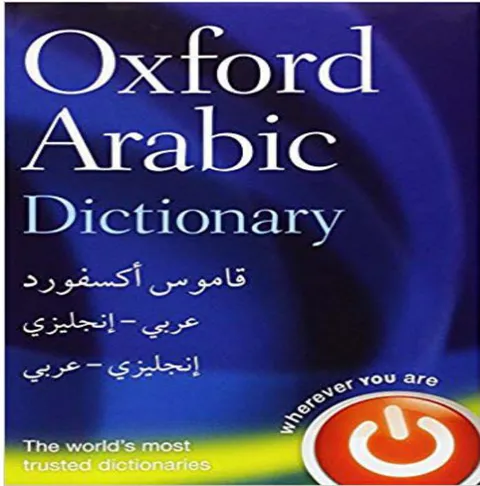
Figure 2: Picture of the cover of Arabic- English Oxford dictionary
III. RESEARCH METHODS
a) Participants
The participants included in this study were 30 Saudi males postgraduate and undergraduate students. The two groups were studying in Manchester's universities namely university of Manchester and University of Salfordin the United Kingdom. All the Saudi students who participated in the present study were holders of the Saudi government scholarship to study in the UK. The students were studying in different specialisms in both universities. All the participants were selected randomly, subject to willingness to participate in the current study.
| University name | Academic level | Total | ||
| Undergraduate students | Postgraduate students | |||
| 1 | University of Salford | 8 | 6 | 14 |
| 2 | University of Manchester | 7 | 9 | 16 |
| 15 | 15 | 30 | ||
All the participants had passed IELTS proficiency test between 2012 and 2014 and average overall score was 5.83 (MIN=5, MAX=7, SD=.56). The proficiency level of the participants in the communication skills of English was between bad to excellent according to the self-assessments of these skills. However, their skills assessment was ranging between satisfactory and good in their self-assessments of the four communication skills of English. The details of self-reported assessment of the students in the communication skills of English are given in the table 3.2.
Table
| Assessment | Writing | Reading | Listening | Speaking | |
| bad | 5 | 7 | 8 | 0 | |
| satisfactory | 10 | 8 | 12 | 11 | |
| good | 11 | 11 | 4 | 14 | |
| excellent | 4 | 4 | 6 | 5 | |
| Total | 30 | 30 | 30 | 30 | |
b) Instruments
The study used a mixed-method approach, employing both qualitative and quantitative techniques. Ivankova et al. (2006) indicate that the application of a mixed method approach improves the reliability of research in the sense that it helps in measuring the degree to which the research instruments yield consistent results after repeated administration. The first instrument was the questionnaire to gather information about the reasons of preference of using bilingual dictionary. The questionnaire was summarized to two sections. The first section was related to personal information and English language proficiency level. The second section was directly related to answer the research question which is identifying the reasons behind the preference of Saudi learners using bilingual dictionary over other dictionaries types. To answer research question, the questionnaire included a list of reasons of preference bilingual dictionary. The answer of this question in the questionnaire was based on 5 likert scale ranging from always to never and each one of these items given number from 1 to 5 as it is given in the table 3.2. The second collecting data tool was the interview as the interview can work after the questionnaire to give further detail on the same issue. a great deal of information was obtained through semi-structured interviews with the participating students.
| Answers | Always | Often | Sometimes | Rare | Never |
| Scores | 5 | 4 | 3 | 2 | 1 |
c) Procedure
The present study was conducted on Saudi undergraduate and postgraduate students who were studying in university of Manchester and university of Salford in the UK. The researcher, after explained everything related to the study for the participants, he started distributing the questionnaires individually for all the participants who agreed to take part in the study. The distribution of the questionnaires took place in different locations of inside and outside the University. The period of completion of the questionnaires to be answered fully and then returned to the researcher consumed about two weeks. Regarding the interviews, the participants were asked kindly upon their desire to provide the researcher with their contact details if they accept to take part in the interviews or if they wish to obtain a report of the final results of the study after collecting and analysing the data. The interviews were made after questionnaires were answered by the participants. The interviews were conducted by coordinating between both the researcher and the participants who already accepted to take part in the audio-recorded interviews showed their approval through ticking the statement 'yes, I agree to take part in audio-recorded interview' mentioned in the bottom of the questionnaire in order to meet them and discuss with them the reasons of using bilingual dictionaries. The period of time for each interview ranged between 30-35 minutes. The interviews were conducted with the participants outside the two universities campuses.
d) Data Analysis Procedure
The study adopted two research methods(i.e. mixed methods approach): questionnaire and interview. The results of the questionnaire has been analyzed depending on the answers of the students as they were recorded from 1(never) to 5(always). The results discussed in the results and discussion section with using the numbers of the respondents on each item of the questionnaire. Regarding interviews, the interview were recorded, translated and transcribed. Some excerpts of the interviews were used to support the answers obtained from the questionnaire to answer the research question directly.
IV. RESULTS AND DISCUSSION
In this chapter, the data will be presented and discussed. The research question will be presented in this section in order to be answered based on the findings of the participants of the study. The findings of both questionnaire and interview will be presented in this section.
a) Research question of the study
What are the main reasons of preference of bilingual paper dictionaries by Saudi learners of English?
i. The fact of using bilingual dictionary confirmed by Saudi EFL learners
This question, which the study was attempting to answer was representing in showing the reasons and motives to use bilingual paper dictionary by Saudi EFL learners. The questionnaire included a list of reasons as the learners were given the questions to choose their real reasons behind their preference for using bilingual paper dictionary. Most of the learners of language answered that they mainly use it in their translation tasks to check the equivalents of the target words. They answered in the questionnaire that they always use bilingual paper dictionary in their translation activities and when they want to check the words in Arabic of the target English words. Approximately25 respondents answered the questionnaire with the option of always for translation task and checking equivalents of the target words. This result was not new as it was discovered by a number of studies conducted in this area, which confirmed this factual result that most of EFL learners including Saudi learners used their bilingual dictionaries for checking the equivalents of the target words. Because A bilingual dictionary involves providing equivalents to the lexical units of one language by the lexical units of another language i.e. "coordinate with lexical units of one language those lexical units of another language which are equivalent in their lexical meaning." (Zgusta, 1971: 274). This result was actual in translation tasks when the majority of Saudi participants confirmed that they use their bilingual dictionaries for checking the Arabic equivalents of the target English words. Two of the participants were majoring in English language and were pursuing their postgraduate studies in TESOL and Applied Linguistics confirmed that they always use their bilingual dictionaries in both translation tests and assignments.
ii. The reasons of using bilingual dictionaries by Saudi EFL
The reasons which made the Saudi learners prefer using bilingual paper dictionaries were circling about the use of native Arabic language in the dictionary. Most of Saudi learners indicated that they iii. Some excerpts from interviews with the participants prefer using this kind of dictionaries because of inclusion of native language which facilitate finding the equivalents of the target words rapidly. This reason referred to by Scholfield (1982) by saying that the main reason behind using bilingual dictionaries is that the meaning of unknown second language words can be checked more easily because the dictionary contain the first language which is the native language of the EFL learner. The Saudi learners preferred bilingual dictionary in its paper format over electronic format for some reasons which they consider it as advantages of using paper format over electronic format. The Saudi EFL learners preferred paper format of bilingual dictionary over electronic because it is more comprehensive and detailed than the electronic ones. However, the electronic dictionaries with all its formats suffer from lack of sufficient information about words that searched by users. Moreover, the electronic dictionaries may depend on manufacture factors such as amount of memory, storage capacity, batteries capacity etc. All these factors may make the electronic dictionaries not practical for foreign languages learner's needs. Kent (2001) indicates that electronic dictionaries require power so batteries must be recharged after use.
R: Why do you prefer using bilingual dictionary?
P1: I prefer bilingual dictionary because can facilitate the process of finding the equivalent meaning of the target words.
R: Which format of bilingual dictionary do you prefer?
P2: I prefer paper bilingual dictionary.
R: Why do you prefer this format?
P2: Because it contains large quantities of information as comparison to electronic dictionaries.
R: What are the activities and tasks do you mostly use bilingual paper dictionaries?
P3: I mostly use this type of dictionaries for translation, when I am given translation homework from the teacher, I greatly depend on the bilingual paper dictionary.
R: Do you use it for other activities otherwise translation activities?
P3:I, generally use to check the Arabic meaning of the new and unfamiliar words whether for myself or for any formal translation task in classroom or at home.
R: What are the best advantages of using bilingual paper dictionaries as comparison to electronic ones for example.
P4: I prefer using bilingual paper dictionary for one advantage which is that bilingual dictionary in its paper format can provide more details and information can make the learning of new vocabulary more useful as comparison to electronic ones.
V. CONCLUSION
This study investigated the reasons and the facts of Saudi EFL learner's preferences towards bilingual paper dictionary. The study confirmed very important fact which is using bilingual paper dictionary for translation tasks as the most participants referred to this fact. Moreover, the study indicated that the reasons behind using paper bilingual dictionary over other electronic dictionaries were related to rich content of information. The study stated that the paper dictionary can provide more details regarding the vocabulary such as examples, collocations, grammatical, syntactic and phonological aspects contrary to the electronic dictionaries which only provide the meaning of the new words without giving any further details for clarification and usage. Moreover, the findings of the study showed the crucial reason for preference of using bilingual paper dictionary over monolingual dictionaries namely using the mother language of the target learners(e.g. Arabic-English Dictionary) for Arab learners of English.
a) Limitations of the study
This study, like all studies, has limitations. These limitations and weaknesses were limited to the following points:
The number of the participants was very few from only two universities and consequently the results of this study cannot be generalized.
The subjects of the study were male only. The results would be more practical if female students were included in the study with male counterparts.
The study could provide more valuable findings if all the participants were majoring in English language.
b) Recommendations for future research
The researcher recommends the future researchers who are interested to conduct their studies in the area of dictionaries to focus on the perceptions of the EFL learners and experience of EFL teachers. Moreover, the researchers in this area are advised to use a mixed research approach to provide more valid and reliable results. The researcher also recommends for the future research to include English language majoring students with larger samples. Moreover, The researchers interested in dictionary use are strongly advised to recruit learners from various proficiency levels of English to study of impact of the proficiency level on the dictionary use, as this will provide valuable results.