I. EULER NUMBERS
Euler's numbers are e:
2.718281828459045235360287471352662497757247093699959574966967627724076630353547594571382178525166427427466391932003059921817413596629043572900334295260595630738132328627943490763233829880753195251019011573834187930702154089149934884167509244761460668082264800168477411853 [1]
II. METHODS AND DISCUSSION
The chemical structures of bases include Carbon(C), Nitrogen (N), Oxygen (O), and Hydrogen (H). Calculation of bases with chemical atoms (See also Table-1). (Ölmez T, 2020).
| ATOMS/NUCLEOTIDE BASES | C=6 | H=1 | O=8 | N=7 | SUM |
| ADENINE: C5H5N5 | 5 | 5 | - | 5 | 70 |
| THYMINE: C5H6N2O2 | 5 | 6 | 2 | 2 | 66 |
| CYTOSINE: C4H5N3O1 | 4 | 5 | 1 | 3 | 64 |
| GUANINE: C5H5N5O1 | 5 | 5 | 1 | 5 | 78 |
| URACIL: C4H4N2O2 | 4 | 4 | 2 | 2 | 58 |
Ref
The atomic numbers of them: Carbon(C): 6, Nitrogen (N): 7, Oxygen (O): 8, Hydrogen (H): 1 (Wieser E M et al, 2013).
The chemical structures of bases (A, T, C, G, and U) are shown at below. (Ölmez T, 2020)
(A) Adenine: C5H5N5:70;
(T) Thymine: C5H6N2O2:66,
(C) Cytosine: C4H5N3O1:64,
(G) Guanine: C5H5N5O1:78, and
(U) Uracil: C4H4N2O2: 58
(Lodish H et al, 2018).
III. CALCULATION OF EULER NUMBERS AND GENETIC CODES
Euler's numbers are e:
2.718281828459045235360287471352662497757247093699959574966967627724076630353547594571382178525166427427466391932003059921817413596629043572900334295260595630738132328627943490763233829880753195251019011573834187930702154089149934884167509244761460668082264800168477411853 [1]
Euler's numbers fifteen groups can be shown as [AUGUUGAUAUTAAUCATC]
The first fifteen groups of Euler's numbers after the comma:
Just like as in Adenine (A): 70.
The second fifteen groups of Euler's numbers after the comma: . Just like as in Uracil (U): 58.
The third fifteen groups of Euler's numbers after the comma: . Just like as in Guanine (G): 78
The fourth fifteen groups of Euler's numbers after the comma: . Just like as in Uracil (U):
The fifth fifteen groups of Euler's numbers after the comma: . Just like as in Uracil (U): 58.
The tenth fifteen groups of Euler's numbers after the comma: . Just like as in Uracil (U): 58.
The eleventh fifteen groups of Euler's numbers after the comma: . Just like as in Thymine (T): 66
The twelfth fifteen groups of Euler's numbers after the comma: . Just like as in Adenine (A): 70
The thirteenth fifteen groups of Euler's numbers after the comma: . Just like as in Adenine (A): 70
The fourteenth fifteen groups of Euler's numbers after the comma: . Just like as in Adenine (U): 58
The fifteenth fifteen groups of Euler's numbers after the comma: . Just like as in Uracil (C): 64
The sixteenth fifteen groups of Euler's numbers after the comma: . Just like as in Adenine (A): 70
The seventeenth fifteen groups of Euler's numbers after the comma: . Just like as in Thymine (T): 66
The eighteenth fifteen groups of Euler's numbers after the comma: . Just like as in Cytosine(C): 64
This sequence is" [AUGUUGAUAUTAAUCATC]. Let me try to explain this sequence with the "Quantum Perspective Model." For example, The first fifteen groups of Euler's numbers after comma equal to Adenine (A):68 with the lack of two"2" Hydrogen bonds(H:1).(Remember, See Table-1; (A)Adenine:70) This result could be the meaning of Euler's numbers sequence in fifteen groups. [AUGUUGAUAUTAAUCATC]. The fourth fifteen groups of Euler's numbers after the comma is regarded as Uracil (U). Because Phosphate group "PO4"(P:151+O:84=47) and Uracil (U): 58 and one
After searching Euler's numbers result [AUGUUGAUAUTAAUCATC] in NCBI databases, some conceptual relationships can be found with bony fish. Types of bony fish are based on Zebra fish(DANIO RERIO) (See FIGURE -4), European star fish, blunt-snouted clingfish, pinecone soldierfish, orbiculate cardinal fish and crown of thorns star fish (See FIGURE -1). Types of other living creatures are human chromosome18, domestic cat, European eel, domestic cat, American alligator, common sunflower, wine grape, golden and black snub-nosed monkey, green monkey, Rhesus monkey, house fly, giant panda, fall armyworm, Porchine epidemic diarrhea virusan, and chinese hamster[4](See FIGURE -2). The most interesting result of this research result is bat coronavirus(spike protein –chaerephon bat coronavirus ADX59458.1) [11](See FIGURE -3).
Figure 1: The NCBI (National Biotechnology Information Center) Result for Nucleotide Sequence "AUGUUGAUAUTAAUCATC" [4]
| neogenin-like isoform X11 [Acanthaster planci] | crown-of-thorns starfish | 33.3 | 84.6 | 100% | 13 | 30.00% | 2112 | XP_022084118.1 |
| neogenin-like isoform X10 [Acanthaster planci] | crown-of-thorns starfish | 33.3 | 84.6 | 100% | 13 | 30.00% | 2114 | XP_022084109.1 |
| neogenin-like isoform X9 [Acanthaster planci] | crown-of-thorns starfish | 33.3 | 84.6 | 100% | 13 | 30.00% | 2117 | XP_022084103.1 |
| neogenin-like isoform X8 [Acanthaster planci] | crown-of-thorns starfish | 33.3 | 84.6 | 100% | 13 | 30.00% | 2130 | XP_022084096.1 |
| neogenin-like isoform X7 [Acanthaster planci] | crown-of-thorns starfish | 33.3 | 84.6 | 100% | 13 | 30.00% | 2162 | XP_022084087.1 |
| neogenin-like isoform X6 [Acanthaster planci] | crown-of-thorns starfish | 33.3 | 84.6 | 100% | 13 | 30.00% | 2166 | XP_022084078.1 |
| neogenin-like isoform X5 [Acanthaster planci] | crown-of-thorns starfish | 33.3 | 84.6 | 100% | 13 | 30.00% | 2171 | XP_022084069.1 |
| neogenin-like isoform X4 [Acanthaster planci] | crown-of-thorns starfish | 33.3 | 84.6 | 100% | 13 | 30.00% | 2180 | XP_022084061.1 |
| neogenin-like isoform X3 [Acanthaster planci] | crown-of-thorns starfish | 33.3 | 84.6 | 100% | 13 | 30.00% | 2182 | XP_022084052.1 |
| neogenin-like isoform X2 [Acanthaster planci] | crown-of-thorns starfish | 33.3 | 84.6 | 100% | 13 | 30.00% | 2184 | XP_022084043.1 |
| neogenin-like isoform X1 [Acanthaster planci] | crown-of-thorns starfish | 33.3 | 84.6 | 100% | 13 | 30.00% | 2198 | XP_022084033.1 |
| hypothetical protein [Legionella hackeliae] | Legionella hackeliae | 32.9 | 32.9 | 83% | 17 | 28.57% | 45 | WP_172480797.1 |
| PREDICTED: uncharacterized protein LOC104816379 [Tarenaya hassleriana] | Tarenaya hassleriana | 32.9 | 32.9 | 83% | 18 | 30.43% | 101 | XP_010543517.1 |
| hypothetical protein VOLCADRAFT_58884 [Volvox carteri f. nagariensis] | Volvox carteri f. nagariensis | 32.9 | 32.9 | 94% | 18 | 29.41% | 116 | XP_002948916.1 |
| hypothetical protein FM113_14290 [Leucobacter sp_7(1)] | Leucobacter sp_7(1) | 32.9 | 32.9 | 83% | 18 | 29.41% | 159 | SJN12217.1 |
| hypothetical protein [Rhodopirellula sp_JC645] | Rhodopirellula sp_JC645 | 32.9 | 32.9 | 88% | 18 | 28.57% | 275 | WP_150078846.1 |
| spike protein [Porcine epidemic diarrhea virus] | Porcine epidemic diarrhea virus | 32.9 | 60.7 | 83% | 18 | 26.67% | 1386 | AEW24858.1 |
| spike protein [Chaerephon bat coronavirus/Kenya/KY41/2006] | Chaerephon bat coronavirus/Kenya/KY4... | 32.9 | 32.9 | 88% | 18 | 31.25% | 1386 | ADX59458.1 |
| hypothetical protein RSAG8_03191 [Rhizoctonia solani AG-8 WAC10335] | Rhizoctonia solani AG-8 WAC10335 | 32.5 | 32.5 | 77% | 22 | 26.67% | 40 | KDN47771.1 |
| hypothetical protein [Salmonella enterica subsp_salamae] | Salmonella enterica subsp_salamae | 32.5 | 92.7 | 83% | 25 | 21.74% | 68 | EDU0501388.1 |
| hypothetical protein [Bacteroidales bacterium] | Bacteroidales bacterium | 32.5 | 32.5 | 100% | 25 | 28.00% | 78 | MBE6332989.1 |
| keratin-associated protein 17-1 [Cricetulus griseus] | Chinese hamster | 32.5 | 58.5 | 94% | 25 | 21.05% | 112 | XP_035317626.1 |
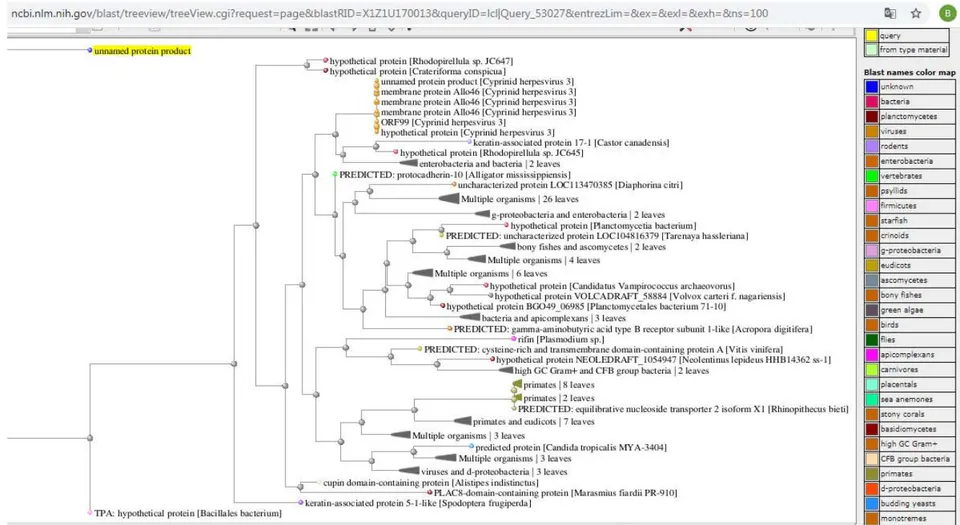
Figure 3: The NCBI (National Biotechnology Information Center) Result for bat coronavirus [4]
| neogenin-like isoform X10 [Acanthaster planci] | crown-of-thorns starfish | 33.3 | 84.6 | 100% | 13 | 30.00% | 2114 | XP_022084109.1 |
| neogenin-like isoform X9 [Acanthaster planci] | crown-of-thorns starfish | 33.3 | 84.6 | 100% | 13 | 30.00% | 2117 | XP_022084103.1 |
| neogenin-like isoform X8 [Acanthaster planci] | crown-of-thorns starfish | 33.3 | 84.6 | 100% | 13 | 30.00% | 2130 | XP_022084096.1 |
| neogenin-like isoform X7 [Acanthaster planci] | crown-of-thorns starfish | 33.3 | 84.6 | 100% | 13 | 30.00% | 2162 | XP_022084087.1 |
| neogenin-like isoform X6 [Acanthaster planci] | crown-of-thorns starfish | 33.3 | 84.6 | 100% | 13 | 30.00% | 2166 | XP_022084078.1 |
| neogenin-like isoform X5 [Acanthaster planci] | crown-of-thorns starfish | 33.3 | 84.6 | 100% | 13 | 30.00% | 2171 | XP_022084069.1 |
| neogenin-like isoform X4 [Acanthaster planci] | crown-of-thorns starfish | 33.3 | 84.6 | 100% | 13 | 30.00% | 2180 | XP_022084061.1 |
| neogenin-like isoform X3 [Acanthaster planci] | crown-of-thorns starfish | 33.3 | 84.6 | 100% | 13 | 30.00% | 2182 | XP_022084052.1 |
| neogenin-like isoform X2 [Acanthaster planci] | crown-of-thorns starfish | 33.3 | 84.6 | 100% | 13 | 30.00% | 2184 | XP_022084043.1 |
| neogenin-like isoform X1 [Acanthaster planci] | crown-of-thorns starfish | 33.3 | 84.6 | 100% | 13 | 30.00% | 2198 | XP_022084033.1 |
| hypothetical protein [Legionella hackeliae] | Legionella hackeliae | 32.9 | 32.9 | 83% | 17 | 28.57% | 45 | WP_172480797.1 |
| PREDICTED: uncharacterized protein LOC104816379 [Tarenaya hassleriana] | Tarenaya hassleriana | 32.9 | 32.9 | 83% | 18 | 30.43% | 101 | XP_010543517.1 |
| hypothetical protein VOLCADRAFT_58884 [Volvox carteri f. nagariensis] | Volvox carteri f. nagariensis | 32.9 | 32.9 | 94% | 18 | 29.41% | 116 | XP_002948916.1 |
| hypothetical protein FM113_14290 [Leucobacter sp_7(1)] | Leucobacter sp_7(1) | 32.9 | 32.9 | 83% | 18 | 29.41% | 159 | SJN12217.1 |
| hypothetical protein [Rhodopirellula sp_JC645] | Rhodopirellula sp_JC645 | 32.9 | 32.9 | 88% | 18 | 28.57% | 275 | WP_150078846.1 |
| spike protein [Porcine epidemic diarrhea virus] | Porcine epidemic diarrhea virus | 32.9 | 60.7 | 83% | 18 | 26.67% | 1386 | AEW24858.1 |
| spike protein [Chaerephon bat coronavirus/Kenya/KY41/2006] | Chaerephon bat coronavirus/Kenya/KY4... | 32.9 | 32.9 | 88% | 18 | 31.25% | 1386 | ADX59458.1 |
| hypothetical protein RSAG8_03191 [Rhizoctonia solani AG-8 WAC10335] | Rhizoctonia solani AG-8 WAC10335 | 32.5 | 32.5 | 77% | 23 | 26.67% | 40 | KDN47771.1 |
| hypothetical protein [Salmonella enterica subsp_salamae] | Salmonella enterica subsp_salamae | 32.5 | 92.7 | 83% | 25 | 21.74% | 68 | EDU0501388.1 |
| hypothetical protein [Bacteroidales bacterium] | Bacteroidales bacterium | 32.5 | 32.5 | 100% | 25 | 28.00% | 78 | MBE6332989.1 |
| keratin-associated protein 17-1 [Cricetulus griseus] | Chinese hamster | 32.5 | 58.5 | 94% | 25 | 21.05% | 112 | XP_035317626.1 |
IV. RESULTS
The relationships between the numerical value of the numbers of light velocities against genetic codes were researched based on the quantum perspective model (Köklü K, 2019b). Further, after the manual division of Twenty-Two (22) to seven (7) numbers, each of the fourteen (14) number sequences obtained after the comma was followed by approximately continuously same nucleotide base codes (Köklü K, 2019a). If you take Pi numbers as fourteen sequences a hundred times, The output of the genetic code is [ATU]. this result is similar to ZEBRAFISH-DANIO RERIO in NCBI Blast. (See FIGURE -4). [4](NCBI: The National Center for Biotechnology). This fish is a perfect favorite example of many experiments related to biology and gene sequences. [2] The square of the speed of light is written just like those gene sequences: [UUATACCTC] or [UUAUACCTC]. After searching three times this sequence (27), the output of this nucleotide blast is similar to Zebrafish-Danio Rerio. (Köklü K, 2019b). In other words, the output of this nucleotide blast is common to Zebra fish in groups of fourteen pi numbers and Euler numbers in groups of fifteen. In sum, the common feature of the square of the speed of light and pi numbers and Euler numbers is Zebra fish. Insulin receptor (IR) signaling is thought to be important in growth and development. The role of insulin receptor signaling in Zebrafish embryogenesis has vital roles in vertebrate embryogenesis and growth [9]. Also, new genetic models have been produced to study resistance to the thyroid hormone receptor in Zebrafish [10]. Besides, even both the CAAT Box and TATA Box NCBI results in consist of bony fishes(Denticle Herring). In other words, CAAT Box and TATA Box are also related to the golden ratio. Remember, the NCBI result of Euler's numbers also consist of bony fishes (Zebrafish), too. (Ölmez T, 2020). Denticle Herring is the most primitive living clupeiform. [6]. Interestingly, it also consists of "phosphoserine phosphatase" protein-coding [7]. Let alone, the length of it's 15(fifteen)cm.[8] Remember, this research is taken Euler's numbers as fifteen groups, too. Monkeys and humans have a different number of chromosomes, but they probably have the same number of genes. [12] This similarity can be regarded as a Quantum Perspective Model. In summary, this similarity may be the beginning of the mutual relations of the sciences based on the Quantum Perspective Model at minor level systems. Namely, atoms with the smallest base structure can be taken as a small unit of analysis from the same point of view as mathematical numbers. As a result, with this quantum perspective model, the relationships between chemical formulas and numbers have introduced different paradigms to obtain new clues.
Ref
| 4_Tbi_b3v08 | Timema bart... | 34.2 | 34.2 | 94% | 36 | 100.00% | 353296 | OD564569.1 |
| PREDICTED: Patiria miniata uncharacterized LOC119723493 (LOC119723493). transcript variant X1... | bat star | 34.2 | 34.2 | 94% | 36 | 100.00% | 3973 | XM_038194174.1 |
| Moraxella nonliquefaciens strain FDAARGOS_869 chromosome, complete genome | Moraxella no... | 34.2 | 34.2 | 94% | 36 | 100.00% | 2272684 | CP065728.1 |
| PREDICTED: Glossina fuscipes uncharacterized LOC119642928 (LOC119642928). transcript variant X... | Glossina fusc... | 34.2 | 34.2 | 94% | 36 | 100.00% | 1955 | XM_038042244.1 |
| PREDICTED: Glossina fuscipes uncharacterized LOC119642928 (LOC119642928). transcript variant X... | Glossina fusc... | 34.2 | 34.2 | 94% | 36 | 100.00% | 2049 | XM_038042243.1 |
| 2_Tsi_b3v08 | Timema shep... | 34.2 | 34.2 | 94% | 36 | 100.00% | 113746 | OC002461.1 |
| 2_Tsi_b3v08 | Timema shep... | 34.2 | 34.2 | 94% | 36 | 100.00% | 184815 | OC001171.1 |
| Darwinula stevensoni | Darwinula ste... | 34.2 | 34.2 | 94% | 36 | 100.00% | 30022 | LR903044.1 |
| Corylus avellana genome assembly, chromosome, ca2 | Corylus avell... | 34.2 | 136 | 94% | 36 | 100.00% | 50858233 | LR899424.1 |
| Homo sapiens DNA, chromosome 18, nearly complete genome | human | 34.2 | 34.2 | 94% | 36 | 100.00% | 77846715 | AP023478.1 |
| Vagococcus carniphilus strain ATCC BAA-640 chromosome, complete genome | Vagococcus c... | 34.2 | 34.2 | 94% | 36 | 100.00% | 3020833 | CP060720.1 |
| Staphylococcus epidermidis strain LM087, complete genome | Staphylococc... | 34.2 | 34.2 | 94% | 36 | 100.00% | 2494355 | CP060528.1 |
| Torulaspora sp. CBS 2947 strain CBS2947 chromosome 1 | Torulaspora s... | 34.2 | 34.2 | 94% | 36 | 100.00% | 1700142 | CP059267.1 |
| PREDICTED: Anguilla anguilla major histocompatibility complex class I-related gene protein-like (LOC1... | European eel | 34.2 | 34.2 | 94% | 36 | 100.00% | 4118 | XM_035425578.1 |
| Danio rerio genome assembly, chromosome_21 | zebrafish | 34.2 | 66.4 | 94% | 36 | 100.00% | 48052324 | LR812058.1 |
| Danio rerio genome assembly, chromosome_21 | zebrafish | 34.2 | 66.4 | 94% | 36 | 100.00% | 43492497 | LR812614.1 |
| Danio rerio strain Nadia (NA), genome assembly, chromosome: 21 | zebrafish | 34.2 | 34.2 | 94% | 36 | 100.00% | 44761126 | LR812589.1 |
| Danio rerio genome assembly, chromosome: 8 | zebrafish | 34.2 | 34.2 | 94% | 36 | 100.00% | 55327790 | LR812070.1 |
| Carpoglyphus lactis mitochondrion, complete genome | prune mite | 34.2 | 34.2 | 94% | 36 | 100.00% | 14060 | MN073839.1 |
| Felis catus Senzu DNA, chromosome: D2, American Shorthair breed | domestic cat | 34.2 | 66.4 | 94% | 36 | 100.00% | 90643714 | AP023162.1 |
| PREDICTED: Cyclopterus lumpus A-kinase anchoring protein 13 (akap13), transcript variant X6, mRNA | lumpfish | 34.2 | 34.2 | 94% | 36 | 100.00% | 7215 | XM_034536038.1 |
| PREDICTED: Cyclopterus lumpus A-kinase anchoring protein 13 (akap13), transcript variant X5, mRNA | lumpfish | 34.2 | 34.2 | 94% | 36 | 100.00% | 7638 | XM_034536036.1 |
Figure 4: The NCBI (National Biotechnology Information Center) Result for Zebra fish [4]
V. CONCLUSION
First, the results of this research can be summarized by obtaining Euler's numbers through the chemical structure of chemical elements. At a minor level, Euler's numbers can be thought of as an indicator of chemical formulas. One of the results of both Biochemistry and Mathematics common feature is NCBI blast results. Because these are bony fishes especially DANIO RERIO. Even not only the NCBI result of pi and square number of light is DANIO RERIO, but also NCBI result of Euler's numbers is DANIO RERIO. Since fish are one of the vertebrates that make the most eggs, this is similar to Euler's numbers in terms of multifunctional. This may be an indicator of the Euler's numbers for living things, especially fish.
Finally, at a macro level, the calculation results of Euler's numbers with chemical structures (especially A, T, C, G, and U) are related to both Biochemistry and Mathematics. Briefly, Euler's numbers are not only attributed to numbers in Mathematics but also attributed to chemical formulas of Biochemistry (Carbon(C), Nitrogen (N), Oxygen (O), and Hydrogen (H)). In summary, this similarity may be the beginning of the mutual relations of the sciences on based on Quantum Perspective Model at minor level systems. Namely, atoms with the smallest base structure can be taken as a small unit of analysis from the same point of view as mathematical numbers.