
I. THEORETICAL FRAMEWORK OF KNOWLEDGE
a) The
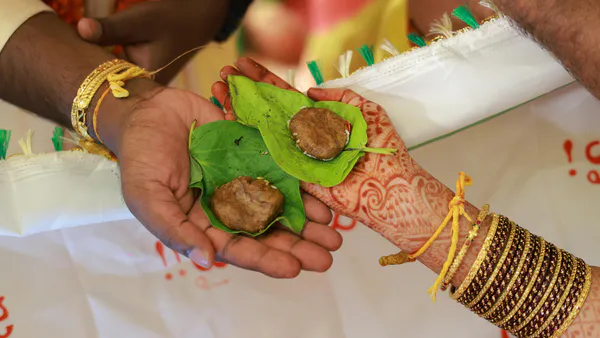
Aceremonial act predominantly conducted for societal approval, marriages in India have come to signify the very purpose and 'must be' desired attainment of a woman's life. The deep rooted and deliberately unobstructed assimilation of religious and by extension, patriarchal laws leads most women in India to believe marriage as the hallmark of utmost fulfilment (Bhattacharyya, 2020). The intolerance towards and stigmatisation of pre-marital affairs and repression of a woman's sexuality, makes marriage the only avenue to engage in 'permissible' sexual relations (Singh & Jaswal, 2021). Breach of this societal norm is met with absolute social ostracisation and inescapably causes irreparable reputational damage to the woman's family as opposed to the man's. It is no surprise that until September of 2018, adultery law in India unjustifiably and arbitrarily protected men and extremely penalised women (Babar, 2016; Hajare, 2018). As a result of such social contract, it is regrettably common for women found pregnant outside of wedlock, to meet with the fate of either suicide or honor killing (Kalyanwala et al., 2010; Dublishh & Khan, 2021).
The satisfaction and wellness of people bound by arranged marriages in India is often viewed with much curiosity and suspicion by westerners (Nanda, 2015). Factors of love, trust, loyalty and compatibility play an important role in the selection of potential mates in the West (Asoodeh et al., 2010). Individuality is premised on and love is undisputedly considered as the precursor of marriage (Desai & Andrist, 2010). In contrast, the Indian society views marriages as a familiar affair, wherein family values are given precedence over individual choice (Sonpar, 2005). While this arrangement may ostensibly seem as overstepping individual will, these cultural values form a concrete part of an individual's conscience. Such shared beliefs and ideas then converge to form the collective conscience of society, which has the effect of stifling individual free will and unceasingly demanding conformity to the common will of the group (Barnwell, 2017). The enforcement of such collective conscience within the framework of patriarchal laws and societal norms results in the concretised belief that engaging in socially approved marriage is the only means to attain a respectable status in society (Dhar, 2013).
Recourse must be unmistakably taken to Hindu scriptures that outline and dictate the purpose of the institution of marriage and its participants. According to the Satapatha Brahmana, wives are considered as 'the half of the husband', whereby completeness can only be achieved upon unison in marriage (Dhand, 2002; Sharma et al., 2013). In Hinduism, such unison is considered the only means to the end of performing religious and sacramental duties and symbolises the relationship of souls which extends beyond a single life through incarnations (Bhattacharyya, 2020). Accordingly, marriage is not only a ritualistic practice but the solemn duty of a Hindu. This sacramental union once entered into cannot be rescinded and is to be sustained throughout one's life and the lives upon one's reincarnation (Darin, 2019). Self-interest is frowned upon and self-restraint is celebrated and deemed indispensable for the fostering of love and unison between the families - "enjoy the heat of a log, and heed the advice of the elders" (McKendry-Smith, 2017). The Hindu scriptures such as Manu, Dharma Shastras and Puranas dictate that a woman has no claim to divorce (Rangarao & Sekhar, 2002). Even in the event of the husband leaving her deserted, she is expected to be a faithful wife because her mind is never permitted to be freed from the thoughts of her husband. It thus, becomes blatantly apparent that divorce has no place in Hinduism's conceptualisation of marriage (Mukherjee, 2013).
b) Divorce in India: hidden truths
The proportion of divorced or separated Indians is below 1 percent for Hindu men and women in both rural and urban areas, which contrasts with the worldwide statistics of (Dommaraju, 2016; Zineldin, 2019). Even with divorce cases increasing over the last decades, the Indian sub-continent has the lowest divorce rate in the world and credits the culture's emphasis on family and togetherness as the glue holding distressed marriages together (Cherlin, 2013). Most divorce cases in India are filed by women despite them being required to produce more reasons to divorce (mainly interpersonal problems between partners, extramarital affairs and domestic violence) and being aware of the consequences such as social stigma or financial issues, will be worse solely because of gender (Faye et al., 2013; Shaifali, 2009). Under such circumstances, it is no mystery why the population that is separated almost trebles the divorced (Jacob & Chattopadhyay, 2016). References to the legal and societal implications of divorce, especially on women, is a carefully kept national and cultural secret. In a society where marriage is the holiest of all sacraments, divorce unquestionably becomes a rarely committed sacrilege regardless of the household situation.
In Indian culture, the woman is expected to move into the groom's house post their nuptials and studies reveal that this societal norm results in more than of married women beginning their marital life at their husbands' home (Sonalde & Andrist, 2010). Apart from the apparent patriarchal implications, such migration also implies the symbolic severance of the woman's life from her maiden family. She is then expected to 'submit' herself to the caretaking of her new family and procreate. Such severance is expected to be effected on both ends - from the maiden family and herself (Rajamickam et al., 2012). Accordingly, in the event of a divorce, the woman has no recourse to her maiden family. She remains shunned not only by the society but also by the very family that birthed her. The woman may lose common friends of the former couple, as they perceive her divorce status as a threat to the status-quo of married couples (Gerstel, 1987). She may also be given the status of a woman who failed to serve and satisfy her husband's needs, someone with a 'sexual vacuum', who would be tempted to interfere with other families' relationships (Agra et al., 2018). There is no honourable outcome for a woman after a divorce in Indian society; if the husband asks for the divorce, it is understood that his woman failed at satisfying him and their marriage. On the other hand, if the woman asks for the divorce she failed at her very main life goal of enduring her relationship. Thus, the Indian patriarchal system is unapologetically 'regressive' and inextricably ties divorce to the lack of family honour.
Divorced women face the risk of sexual harassment, social ostracisation, have limited rights to access psychological and legal support and have no right to claim assets or properties earned during marriage (Dommaraju, 2016; Mehta, 2016). In 2020, a man was found guilty of throwing a starving cobra onto his sleeping 25 years old wife to induce death by snakebite because she asked him for a divorce (TNN a, 2021). Even when women survive the period of finalising divorce and make it through, their nightmare rarely ends there. In many cases, former husbands may deem it necessary to assert their 'right' to sexually and physically abuse, harass, persecute and kill their ex-wife. If the woman enters into a new relationship (which is another reason for social rejection), it may be perceived as an extra-marriage affair by the ex-husband. Accordingly, women may never truly be free and often run the risk of being continuously exposed to their ex-husbands' belief of ownership over them and his pursuant actions being morally acceptable in society. In 2021, a man stabbed to death his ex-wife after harassing her for months because of his suspicion that she was with another man. With satisfaction and no sign of remorse, the man himself called the police and told them, "I have gotten rid of my characterless wife" and showed them her dead body (TNN b, 2021).
While India may have the lowest divorce rate, this doesn't translate into an increase of the happiness of women in marriages (Myers, 2005). As discussed in the preceding section, women are brought up with constant reminders of their place and purpose in society - one of selflessness in marriage and childbearing. Longing for happiness, compatibility and equality in the marital sphere is vehemently frowned upon, while compromise and purity are considered the greatest virtues of Indian womanhood. The wife is expected to adjust and comply, regardless of the nature of oppression, whether it be in terms of domestic violence or infidelity. The Indian states with the highest rate of prevalence of domestic violence by husband or relatives, have the lowest rate of reported cases. In Lakshadweep and Nagaland, the reporting of domestic violence cases stands at 0 (NCRB, 2019). This systematic under-reporting of cases by women has a direct correlation to the imminent possibility of retaliation from the husband as well as society. Gender-based violence is often approved and enforced by the mother-in-law, the sister-in-law and the rest of the husband's family system. The lack of allies in the wife's environment is absolutely asphyxiating and devaluing (Rastogi, 2006). As a result, we have a society with the lowest divorce rates but the highest suicide rates of married women.
Dowry-related issues (8%), other marriage-related issues (7%), love affairs (6%) and family problems (32%) were exposed as the reason for the majority of suicide cases in 18-29 years old females in India. In contrast to many other societies where old people are the most vulnerable to suicide population,
18-39 years old women are more at risk of suicide than any other in India and suicide is their foremost cause of death (Snowdon, 2019). The fact that mean age at marriage in India is 17.39 years, the very beginning of such period of vulnerability, illustrates a strong cause-effect relationship between marriage and the act of suicide (Desai & Andrist, 2010). The consequence is that married women account for the highest proportions of suicide deaths among women in India. Arranged and early marriage, wife-husband age gap, young motherhood, low social status, family separation, domestic violence and economic dependence are all factors that contribute to making marriage way less protective than in other countries (Dandona, 2018). There is also research evidence to suggest that in countries such as India, where arranged marriages are common, the social and familial insistence on maintaining marital harmony despite presence of overt abuse is a factor that increases the risk of suicide for married women (Gururaj et al., 2004). In essence, the longevity of marriages is nothing but a facade to the societal and legal protection of rigid patriarchal values premised on the systemic oppression of women. The suicide phenomena amongst young married women in India is nothing but a camouflaged form of gender-based violence. Such suicide by housewives is an important reminder that homicide is not the only potential outcome of domestic violence and gender-based abuses (Sabri et al., 2015).
c) Financial dependence: the deterrent to seeking divorce
The statistics on the financial independence of women in India, brings forth another tale of economic abuse by husbands. A recent survey by SBI General Insurance revealed that of women in India were not financially independent (Express News Service, 2022). One in every 4 women claimed that their economic liberation remained shackled to the patriarchal chain of command, whereby women were relegated to the private sphere of household chores and child nurturing. Women are excluded and not permitted to partake in any financial matters, even if it pertains to the family unit. The forced exclusion from routine tasks such as visiting the bank, leaves them financially illiterate. A majority of women usually do not own property in their own name (Rastogi, 2006). The mixture of such patriarchal ideals with a generous dollop of economic barriers placed and vigorously guarded by husbands, leads women to uncontestedly prioritise family over any self-financial needs (Shobha & Shalini, 2015). The economic decision making power of wives, regardless of their education and profession, remains clenched in the hands of the husband (Sharma & Kota, 2019). This is a classic case of concretely established gender roles defining the limits of a woman's capability and decision-making power. Many regard education as the ticket to their liberation from dictated ideals and choices. However, for most women in India, education only translates into their earning power, rarely into the power to manage their finances (Baluja, 2016). In summary, the factors that contribute to the lack of financial literacy of women compared to men include lack of access to basic education, dearth of independent financial resources, lack of accessibility to financial institutions and the social stigma that withholds women from financial decision-making and discourages women from acquiring financial knowledge and independence (Siddiqui, 2012).
As a precursor to finalising an arranged marriage, families often have discussions concerning the economic status of the woman after marriage. As the woman is expected to move into the groom's family, main considerations include the willingness of the woman to follow the 'rules' and satisfy the 'wants' of her new family. The woman is expected to uninhibitedly compromise her personal and financial needs, including her career, for the betterment of the family unit. The bride's family is also expected to give the son-in-law's family a dowry (properties or valuables) as an appreciation of the man's will to marry their daughter. Dowry-related violence, as a consequence of dowry promises not being fulfilled due to financial incapacity, puts women at a severe danger of being abused, harassed, deserted and killed during their marriage (Rastogi, 2006). Working women are considered less capable of fulfilling their domestic duties and are thus, less preferred. Given that unmarried women face brutally unapologetic social rejection for 'failing' to conform to the conventional life pathway, women often are left with no choice but to give up their earning power to enter into marriage. This is one of the most predominant sociological factors that results in of Indian women never seeking work (Misra, 2021). It is no surprise that India has the lowest female participation rate in the world.
The lack of financial freedom is an often overlooked factor that plays an important, almost decisive role in determining the feasibility of a woman seeking divorce (Hilton & Anderson, 2009). Women in dysfunctional marriages who once put their careers on hold to look after their children or those who chose to not seek work by obeying their husband's wishes or those who have never entered the workforce or those who simply do not have a financial backing, face a unique conundrum - to suffer in the marriage, to divorce and face the known consequences or to kill themselves. Women who choose to divorce have to necessarily re-enter the workforce, with a reduced earning potential and even more reduced self-confidence. The unflinching patience required to endure the years of struggle to click reset and begin from the very bottom rung coupled with the years of economic dependence on their spouse and the persistently induced belief of worthlessness outside of the role that has been ordained, heavily dissuades women from seeking divorce (Thakur, 2009). Moreover, the psychological and economic burden of initiating and sustaining a divorce, the uncertainty and longevity of court proceedings and questions concerning child support, are factors that tip the scales towards the decision to stay in a marriage (Trivedi et al., 2009). Studies have brought to light empirical data to substantiate the aforementioned hypothesis. The data suggests that economic inequality and dependence is associated with lower likelihood of the dependent initiating divorce (Rogers, 2004). There is a direct positive linear correlation between a wife's economic resources and the likelihood of her initiating divorce. Further, a study conducted on the divorce cases in the family court at Visakhapatnam revealed that the foremost reason for women not seeking divorce is financial dependence (Rangarao & Sekhar, 2002). Thus, women are faced with the fate of choosing either to stay in a prolonged unhappy and abusive marriage or risk being left destitute.
d) Justice obstructed is justice denied: divorce proceedings in family courts
Seeking divorce in India implies going through a complex judicial process that poses its own challenges and high barriers to entry, in addition to all the other mentioned persuasive factors. The feminist movement of the 1970s and 1980s, led to the enactment of the Family Courts Act in 1984, which laid down the judicial framework for specialised courts to adjudicate family matters such as divorce, succession, custody, maintenance and adoption (Vanka & Kumari, 2008). Such an alternative, non-conventional legal framework aimed to increase the access to justice, by eliminating the need for lawyers to facilitate proceedings. Precedence is given to conciliation in divorce petitions, with counsellors advising and mediating the marital dispute. The language of the law in relation to the conciliation process reads "preserv[ing] the institution of marriage and promot[ing] the welfare of children" (Department of Justice, 1984). In line with the larger societal conception of sacrosanctity of marriage, the very law that attempts to provide justice based on objective facts and circumstances, makes an unconcealed one-sided attempt to preserve the institution of marriage at all costs. Within this legal framework, conciliation is often interpreted as reconciliation whereby women are vulnerable to continued violence and oppression (Jogani, 2018). The research on the ethnography of family courts in Kolkata revealed that counsellors often cite parables wherein they negotiated the contours of the woman's freedom married to an obsessive and routinely violent husband. For instance, as part of a settlement, the woman was 'allowed' to pick up her daughter from school (Basu, 2012). Instead of seeking an absolute end to the cycle of physical and psychological abuse, women are left at the mercy of unreliable promises made by the man (Basu, 2006). The triumph of marriage over divorce by skilled negotiation is celebrated, whereas the potential of violence upon reconciliation is blissfully ignored.
The informal system of adjudicating disputes in the family court, attempting to resolve both emotional and legal issues, seeks to carve out matrimonial disputes from the public sphere and place it back into the private sphere, albeit being operational within the legal framework. Such a shift is fuelled by the notion that matrimonial disputes are private matters that concern individuals and not the society at large (Nagasaila, 1992). On paper, this shift is perceived as easing the access to justice, however, the underlying assumption of equal bargaining power between the parties to the negotiation is cause for concern. Men are more often than not in a powerful position, which leads to the power imbalance to shift the scales in favour of them (Nagasaila, 1992). The result of such inequality and the emphasis on reconciling marital discord, implies that settlements may force women to compromise their interests and well-being. The informal set-up also allows for the subjectivities and social values of the judges and counsellors to influence settlements. For instance, women who registered a complaint of domestic abuse with the police and later approached the family courts, were declared self-defeating and vindictive by the judges and counsellors (Basu, 2012). Any departure from the conventional vulnerable woman needy of the court's paternalistic protection is seen with disdain. Thus, the informal system often validates patriarchal values and reinforces the gender roles that dictate a woman's place in society (Eaton, 1986).
e) On the cusp of sanity: women divorce seekers and mental health
Women seeking divorce have to encounter and deal with three aspects of the process: the human-emotional, the formal-legal, the societal stigma and status related exposure (Waseem et al., 2020). The interaction of women with these dimensions of obtaining divorce, has significant implications for their mental health. Moreover, the nature of the divorce process implies important effects on each of the above mentioned aspects simultaneously and at high intensity for a brief period of time (9 to 18 months). Consequently for women, divorce often implies the feeling of anxiety, helplessness, aggression, sadness, guilt, regret, shame, lack of self-esteem, emptiness, loneliness, and uncertainty about the outcome of divorce proceedings (Mendoza et al., 2019). In such a state of vulnerability, social judgement (especially strong in women with children) often converges with the divorce-seeking women's self-judgement, which leads into an internal battle of two contradictory thoughts of success, "I will become an independent human and be free" vs. failure,
"I have not been able to continue my marriage and I'm responsible for it" (Gerstel, 1987).
A study conducted in India by Faye et al. (2013) concluded that divorce-seeking women had significantly higher psychopathology compared to men as a consequence of the divorce process. The most prevalent psychiatric diagnoses associated with this phenomena include post-traumatic disorder, major depression disorder, somatization disorder, anxiety disorders, interpersonal sensitivity, self-harming behaviours and suicide attempts (Faye et al., 2013; Pachauri & Rathi, 2018). Mental health is strongly impacted by the opinion of the family of the woman seeking divorce, and having children is a risk factor for the occurrence and the worsening of psychopathological symptoms (Trivedi et al., 2009). There is also research evidence to suggest that in countries such as India, where arranged marriages are common, the social and familial insistence on maintaining marital harmony despite presence of overt abuse, is a factor that increases the risk of suicide for married women (Gururaj et al., 2004).
Having a mental illness is one of the three main aspects that lead people to suffer stigmatisation and marginalisation in India, with the other two being the gender status (being a female) and the marital status (being divorced) (Moorkath et al., 2019). The vulnerability of facing a mental illness due to the divorce process leaves them in a "triple tragedy" of being a "divorced mentally ill woman". This label makes the discrimination and abandonment from the Indian society completely unbearable for the individual, which may lead to institutionalization in case of family rejection (Sharma et al., 2013; Srivastava & Kumar, 2021). Moreover, women's mental illness is a socially accepted reason for the husband to ask for a divorce, as well as finds support in the legal grounds for divorce in India (Narayan & Shikha, 2013; Corrigan & Rao, 2012). Considering that the resulting process has significant negative effects on women's mental health, those women who are already ailing from mental illness are susceptible to compounded suffering which may lead to devastating consequences (Bhugra et al., 2003).
In the long-term, literature reveals a significant difference in the treatment of divorces' in the Indian context compared to the western culture. A study that was conducted in Canada concluded that the lives of those individuals who got divorced 20 years ago did not improve, and their mental health got worse or continued to be in a similar state (Waite, 2002). In the United States, Avison et al. (2007) studied the evolution of the mental health of people who sought divorce due to unhappiness in marriage and found that the symptoms of depression and low self-esteem did not reduce for two out of three of the participants after two decades. On the other hand, Sharma (2011) studied the progression of the mental health of women in Indian society and concluded that the harmful effects of divorce on mental health decreased over time and their extraversion increases as they become more capable of developing a social network. The authors also exposed that the divorce-seeking process in India causes a much more severe impact on mental health than in the west because of the social stigma and greater economic hardship associated with it. This data summarises the 'funnel effect' of divorce-seeking in India, which represents an impassable barrier for the vast majority of Indian women, and the small minority who manage to survive the traumatic experience, have a significantly better mental state as years pass by (Sharma, 2011).
Divorce is an expensive affair. Moreover, as indicated in the preceding section, a staggering amount of Indian women are financially dependent on their husbands. By logical extension and supported by empirical evidence, divorced women are more likely to face financial hardships (Trivedi et al., 2009). Studies have shown that the income levels of divorced women could fall by , even if they remarried (Madara, 2020). Research has also consistently shown that in virtually every society, economic hardship and low socioeconomic status are associated with high rates of mental disorder (Trived, 2009). Thus, it is fairly established that the mental health of women is likely to be impacted by economic hardship faced as a direct result of seeking divorce.
Many researchers have studied the effect of divorce on mental health, however, there is an absolute lack of research on the mental health of women seeking divorce in India. While welfare, financial and legal services are available for women undergoing divorce, there are barely any organisations that provide psychological support (Akter & Begum, 2012). Conducting research on the psychological effects on women undergoing divorce, can offer valuable insights and probe the availability of psychological services or help integrate psychological support in existing organisations that assist divorce seeking women.
II. METHODS
A single case study approach has been adopted to critically analyse the multiple axes of oppression and discrimination faced by women seeking divorce in India. Single case studies have particular value in research areas which have not been systematically studied on a group basis and carry the potential to probe the scientific task of generating novel and innovative hypotheses (Persons & Jensen, 2018). In this paper, the single case study approach adopted, allows for detailed inspection of an unexplored field of study - the personal, familial, financial, societal and legal variables that influence and dictate the experience of divorcing women and the resulting effect on their mental health.
Yin defines a case study as an 'empirical inquiry that investigates a contemporary phenomenon within its real-life context, especially when the boundaries between phenomenon and context are not clearly evident' (Yin, 2014). Accordingly, this paper attempts to sew together the existing research studies that are isolated and dispersed, in order to exhibit a cohesive pattern of causes and effects of marriage dissolution initiated by women in India. The case is fitting as it encompasses and provides real-life, subjective insight to all the variables that theoretical and empirical research, along with personal accounts of women released through newspaper reports and blogs have shown to pose a deterrent to women seeking divorce in India. The review of existing literature and the peculiarities of the case provides an all-encompassing understanding of the intersection of gender, marriage and divorce in India and has exposed several interrelations that warrant critical examination and empirical studies.
III. A LIVED EXPERIENCE FRAMEWORK OF KNOWLEDGE: A CASE STUDY
The case study is a narration of the experience of Archana, a divorce seeking woman in India. As requested by her, the names of the parties have been changed.
The marriage of Archana and Vivek was arranged by Vivek's sister and Archana's mother. At first the marriage was arranged without any conditions from either party. However, after a few days passed, a relative informed Archana's mother that Vivek's mother had demanded a car as dowry, a prerequisite to the consummation of the marriage. Archana's mother responded affirmatively. Further demands were made by Vivek's father to send more valuable items in a truck to his residence.
During the marriage, Archana was expected to always cover her head with a scarf. During her visits to Vivek's native village, she was also expected to cover her face. It was her duty to massage the feet of her in-laws as well as their guests or relatives that visited. Her sister in-laws would make constant demands for money and humiliate her in front of people on many occasions. In Archana's opinion, the jealousy stemming from the unmarried status of the elder sister in-law, caused her sister in-law to belittle and emotionally as well as physically abuse her. "My experience was horrible... more than horrible. I was never loved by that family, not for a single day. I had to beg for money, even for household expenses. He often threw money at my face."
Despite sex determination being illegal in India, Vivek had pregnant Archana determine the sex of her second child. On discovering that the child was female, Vivek verbally abused Archana for her 'inability' to give him a son and even made attempts to kill the foetus. In response to this incident, Archana returned to her maiden home in March 2008 and lived with them for a period of 1 year 8 months. In November 2009, she returned to Vivek and that is when the cycle of physical assault began. Her injuries included chipped and broken teeth, several bruises, six stitches on her eyebrow and short-term memory loss as a result of her head being banged against the wall. The physical and mental harassment continued for more than 11 years and in 2020, Archana filed for divorce on the grounds of physical, mental, emotional, and financial cruelty.
"I did not file for divorce for 22 years because my two young girls were completely dependent on me. I had no work, no money and Vivek did not take on any parental responsibilities. I could not just leave my girls behind and go to work. However, in 2020 my younger daughter attempted suicide. That is when I decided that come what may, I will leave this man. My life ever since has not been easy, this divorce has affected a lot of my relationships. I haven't even received a call from so many of my friends because they are aware of my situation and neither have I called them. I never visit any of my neighbours who have men in their house. I am afraid for my safety and always prefer people coming to my house instead of me visiting them."
Vivek approached Archana's family members and pressured them to dissuade her from pursuing the divorce. He bugged their house and her phone to intercept all her conversations. He approached the bank manager of the bank with which Archana stored her personal finances and ever since, the bank manager has severely restricted her access to her own account. Vivek also approached the landlady of the house in which Archana resided with her children and informed her that since Archana has filed for divorce, she will no longer have his economic support and will be unable to pay rent. Archana was forced to vacate. Archana notes, "Of course he doesn't want to leave a free of cost 24x7 servant so he was very agitated and told my daughter that his ego was hurt."
"The legal system is very frustrating and tiring. It's been almost two years since I filed for divorce and I have yet not received maintenance. The judge keeps unnecessarily shouting at me but does not say a word to Vivek." Vivek has been intentionally delaying the proceedings by not appearing before the court, concocting lies and restricting Archana's access to finances. Archana also suspects that he has bribed her lawyers to present weak arguments or not appear before the court. Consequently, Archana had to change her representation a couple of times and is now being represented by her daughter's friend. "The case affects my mental health a lot and as well as those involved. A couple of days before the date of hearing, I am unable to sleep and even after the hearing, I am completely disturbed by the fact that things are just not moving. We invest so much of our time - physical, mental and emotional energy into preparing for court that we are unable to focus on our work and move ahead in life." The divorce is presently sub judice and the next date of hearing has been set for June 7, 2022.
IV. DISCUSSION
Archana faced domestic violence for about 11 years during her marriage to Vivek. The systematic under-reporting of domestic violence cases in India and this unreported domestic abuse that sustained itself for over a decade, depicts the familial and societal expectation from the wife to maintain marital harmony de hors of domestic violence (Sabri et al., 2015; Gururaj et al., 2004). This deliberate suppression and oppression has the effect of inciting fear of retaliation by the husband, his family and society. Moreover, the validation of the violence inflicted by Vivek on Archana by her in-laws and the harassment faced by her at the hands of them, depicts the rigid enforcement of patriarchal rules within the family system, and by extension, takes the form of socially approved violence against women (Rastogi, 2006). However, the cycle of harassment and violence does not end with divorce. As witnessed through Archana's case, men often continue to assert their 'right' over their wives by creating social, financial and legal obstacles in the process of obtaining divorce. Such deliberately placed roadblocks may include delaying judicial proceedings, mounting pressure on the woman's family to dissuade her from seeking divorce, restricting access to financial resources and instigating social disapproval. Thus, the behaviour of the domestic violence perpetrator post-divorce is another factor that significantly influences the woman's decision to divorce or return to their violent relationship (Rhodes & McKenzie, 1998).
The complete relegation of child-bearing and rearing duties to the woman and the absolute exclusion of them from financial resources and decisions, is yet another dissuading factor from seeking divorce that plays out in the case study. Archana was responsible for fulfilling parental duties in the private sphere and was completely kept out of the reach of economic resources. Every time she wished to make an expense, she had to beg Vivek to provide financially. The lack of financial support and independence to sustain herself and her children and the inability to bear the costs of obtaining divorce, in this case, was one of the main factors that led Archana to continue in an abusive marriage for several years. Accordingly, the research findings as well as the lived experience of Archana, exhibit an association of high financial dependence on the husband with lower likelihood of the dependent wife initiating divorce (Rangarao & Sekhar, 2002).
It is common for women to stay in an abusive marriage for the sake of their children. Such women often make the decision to stay based on a belief that maintaining the marriage may benefit their children and their family unit (Choice & Lamke, 1997). It is pertinent to note that such reasoning is qualitatively different from the reasoning to stay in a marriage due to the woman's inability to financially support her children. However, this case study brings to the forefront an interesting dimension to this two-sided approach to divorce decision making in relation to children. After 11 years of enduring domestic abuse, it was her daughter's attempt to suicide that impelled Archana to file for divorce. While researchers have studied the effects of divorce on the mental health of children and shown that women whose parents are divorced are at an elevated risk of suicide (Kleinsorge et al., 2012; Gould et al., 1998), there is an absolute dearth of research on the correlation between the mental health of children in abusive marriages and the decision of the woman to seek divorce.
Archana notes, "I am afraid for my safety". This fear is not irrational, rather has ample grounding in the lived experience of divorce seeking women (TNN a, 2021). The sociological implications of seeking divorce for Archana in terms of reduction of social network, lack of social acceptance and support from existing social relationships coupled with the fear of societal violence for breaking the conventional mould of marriages, aptly depicts the manner in which theoretical frameworks and researched hypothesis exhibit the sociological effects of seeking divorce (Dommaraju, 2016; Mehta, 2016). The belief of ownership of the man over his wife and the attempt at liberation through divorce, often translates into the "right" of the society to avenge such transgression by married women. The statement, "I never visit any of my neighbours who have men in their house", is indicative of Archana's acute understanding of how her status as a "divorce seeking woman" is perceived as a threat to married couples by society (Agra et al., 2018). Thus, divorce for women in India translates not only into the cutting of ties from the husband but also from the society at large.
As highlighted in this paper, the process to arrive at the decision to seek divorce for women in India is a vexed experience of the interplay between power dynamics, personal tragedies and social norms. However, arriving at the decision to divorce rarely signifies the end to the cycle of mental agony for the woman. The professional bias of the legal system towards marriage reconstruction over termination coupled with the socially sanctioned tool of oppression i.e. money, which is more often than not in the hands of the man, makes the process of obtaining divorce extremely arduous and disappointing (Black & Joffee 1978). Arandhya notes that her mental health has suffered a lot as a direct consequence to the court proceedings. Her experience converges with the research finding of divorce-seeking women having significantly higher psychopathology compared to men as a consequence of the divorce process (Faye et al., 2013).
V. CONCLUSION
As depicted in the preceding section, the single case study approach adopted in this research paper has enabled its authors to examine a subjective experience through the lens of the theoretical and experimental framework of knowledge concerning marriage, divorce and mental health in India. The focus on a single case has allowed for deeper exploration of an understudied area i.e. the multifaceted experience of women seeking divorce in India. The authors have attempted to take a deep dive into the subjective lived experience of a woman seeking divorce in India and have utilised the personal, familial, societal, financial and legal aspects of her lived experience to fill in the gaps of existing theories and research. Accordingly, the study has brought to light deficiencies in existing theory and uncovered new theoretical relationships that are worthy of scientific exploration.
The likelihood of lack of social support for women seeking divorce in India.
The correlation between low divorce rates and marital happiness and satisfaction of couples in India.
The likelihood of violence by husband against his wife seeking divorce in India.
The mortality risk of women seeking divorce in India.
The association between financial dependence of women in India and their willingness to seek divorce.
The association between low divorce rates and high suicide rates amongst married women in India.
The likelihood of women being dissuaded from seeking divorce in India due to the emphasis on reconciliation of marriage by the legal system.
Psychological effects on the mental health of women seeking divorce in India.
The association between family honour and the likelihood of women seeking divorce in India.
The association between the phenomenon of arranged marriages and the insistence on maintaining marital harmony by families of women seeking divorce in India.