The unprecedented number of working mothers pursuing master’s education this year is captivating. This reality triggered a closer look to scrutinize underlying motives behind this undertaking. A mixed-method was used to capture the incentives for the satisfactory educational results achieved by this category of students. Five older learners, out of twenty-five enrolling in a master’s degree at Dr. Tahar Moulay University of Saida, Algeria, are the focus of this study. The prominence was in favor of adults, rather than youngsters. The findings postulate that, the following dual consideration is worth pointing out: the extrinsic reward/motivation, which surfaces, besides, brain maturation, appears of paramount importance in academic engagement.
## I. INTRODUCTION
The advent of working mothers studying for a master's degree in education is becoming a worth investigating issue nowadays. This understanding is particularly important when there is a congruence between the amount of sacrifice a woman can make, and educational expectations. Job ambitions might be a significant boost for a better job career. Therefore, the realm of education encompasses a wide range of job prospects e.g., inspection or educational consultancy, etc. The concept of extrinsic reward/motivation seems relevant to the statement mentioned earlier. This research study is an unbiased analysis that stands on the two following questions: 1- Is the extrinsic reward, a considerable motivator to a satisfactory academic performance? 2- Does brain maturation stimulate task involvement? It is hypothesized that, 1-The extrinsic reward makes sense in good educational outcomes. 2- The maturation of the brain is a remarkable variable to language attainment.
The question of age effect on ultimate attainment of EFL, presumably, interweaves with brain maturation. A parallel consideration can be drawn in pursuing education that is driven by extrinsic reward. The present paper is an unbiased exploratory research study examining two independent variables, age and motivation/reward. Thus, the terms: reward and motivation are employed interchangeably in the course of this manuscript. The methodology used is quantitative and qualitative; the data is collected, analyzed, and presented in the results section.
## II. LITERATURE REVIEW
Scientists generally mark three age categories of a language learner: Children (until puberty), adolescent (after puberty until 19), and adults (after 19) (Hyland, 2019; Spinner & Gass, 2019). A broad assumption is that, adults have different purposes for learning a language. In most cases, their motivation is instrumental, which is characterized by willingness to learn a language to get a job, enrol in a university, or raise qualifications. In this instance, language-teaching instruction should include working on practical knowledge of a target language. Thereby, adult learners would be to satisfy their needs, especially in terms of academic purposes. Besides, (Zhang, 2009: 135) stated, "teaching adults is easier and less stressful". Because they take more responsibility and are more disciplined.
However, some requirements exist for instructors who teach adult learners. These include the fact that adults need to feel accepted, secure, and supported in the classroom. They feel better, when collaborating with each other. To foster cooperation, teacher should ask questions, elicit, and invite students to share experiences. Adult learners prefer a formal style of language learning like comparable analyses, and analytical thinking. Linguists say that adults feel frustrated when using a language incorrectly, or being misunderstood. As a result of their consciousness, they always analyze their language performance. Conversely, the cognitive maturity of adults turns the natural way of acquisition into intellectual practice. Likewise, (Zhang, 2009) gives some advantages and disadvantages of language learning in adulthood. Adults are motivated, experienced, have both short-term and long-term memories, and possess meta-language awareness, and common sense. In addition, adults excel in reading and writing (Bialystok, 2011). Language learning methods for adults are characterized by rule-based activities and conceptuality (Andrews, 2019). Furthermore, they are self-directed, building higher level of thinking; and tend to layer different options and capabilities (A. Solorio, 2019).
The prominent theme of the current paper resonates with andragogy, which is the mere theory addressing ways to teach, and deal with adult learners. Accordingly, if the students are encouraged to interact, and if the curriculum is inclusive and relevant to their past experiences and future goals; as a result, they will be self-motivated, and able to reflect on the material being taught (Chen, 2014). Furthermore, more recent research agrees that instructors should acknowledge students' life experiences, and prior knowledge (Day et al, 2011); and empower them in their learning.
Each category thence, has its specificities and ways of teaching. Appropriate instructional methods for children, adolescents, and adults are different because of the experience, cognitive abilities, and aptitudes. Therefore, adults are considered as older learners in terms of cognitive maturity. As they need a calibrated treatment, a safe space, and sympathetic atmosphere to flourish. In this paper, we will be focusing on the third category, its motives, achievements, assets, and language learning strategies as well.
## III. METHOD
### a) Participants
The population of this study is divided into two age groups, younger and older. Out of total 25, 05 older students range from 41-42, while 20 younger students range from 21-22 years old. All of them enrolled in master's education, didactics of the FL. Therefore, the sake of this paper is not comparative, but to highlight two significant variables in learning: brain maturation, which is related to age; and the strength of the motivation/reward. It is important to mention that, working mothers, whose fraction, is the one fifth, have been teaching English for over 10 years in high school, and aspiring to get better professional position.
Moreover, older learners are proficient at methodological subjects, like; methodology, project proposal, and research techniques. In addition, their racehorse is educational activities, like TEFL, educational psychology, psycholinguistics, and psychology. However, those do not seem to be the youngsters' playing ground, this culminates in remaining defenseless. A priori, the years of teaching served greatly the adults' distinction, because the taxonomy says that, the more knowledgeable, and skilful language learners are the more chances they will get in acquiring expertise, and prominence. Conventionally, proficiency occurs when linguistic competence overlaps disciplinary knowledge.
### b) Procedure
The number of older students, registered this year outnumbered the usual, and this permits to see in bold the potential they have, as well as, the academic performance they have shown during one semester length. To investigate further, a semi-structured questionnaire was administered targeting their learning approaches, what stimulates, and hinders them. Besides, a semi-structured interview inspected in-depth, the nature of motivators boosting them to accomplish gratifying yield. The focal point was, therefore, instrumental; this means that, this sub-population has a very sharp objective to reach. Accordingly, working mothers articulated the massiveness of the external reward for them, i.e., for acquiring leadership roles within education, as it can be financially beneficial.
i. Working Mothers' Learning Assets 1. Interest 2. Attentiveness 3. Course-belonging 4. Volition, responsibility, discipline 5. Language accuracy 6. Reasoning 7. Cognitive maturity 8. Critical thinking ii. Working Mothers' Learning Strategies 1. Note-taking; day planners/schedule; rehearsals 2. Further research undertaking 3. Reviewing
## IV. RESULTS
In tertiary education, categorizing learners into older and younger was sporadic; therefore, research studies in that field have been scarce. Regardless of their age-related profiles, older students are showing a great sense of commitment to the task, and relentlessness. Adults are driven by extrinsic reward, which is a motivational factor. Brain maturation eventually, seems to be the subversive in such undertakings. Contrastively, youngsters are demonstrating vulnerability in several scopes and domains in language. They are less responsible, and disciplined as well as less tenacious. To move the research agenda forward, learners' areas of strength and areas of weakness are tabulated in the following:
<table><tr><td colspan="2">Area</td><td>Age Category</td></tr><tr><td colspan="2">Youngsters</td><td>Adults</td></tr><tr><td>Responsibility and discipline</td><td>5 out of 5</td><td>1 out of 20</td></tr><tr><td>Meta-language awareness</td><td>5 out of 5</td><td>1 out of 20</td></tr><tr><td>Analytical thinking</td><td>5 out of 5</td><td>1 out of 20</td></tr><tr><td>Conceptuality</td><td>5 out of 5</td><td>1 out of 20</td></tr><tr><td>Short-term and long-term memories</td><td>5 out of 5</td><td>3 out of 20</td></tr><tr><td>Style formality</td><td>5 out of 5</td><td>1 out of 20</td></tr><tr><td>Cooperative strategy</td><td>5 out of 5</td><td>0 out of 20</td></tr></table>
Figure 1: Adults' & amp; Youngsters' Language Learning Areas
The questionnaire revelations postulate that, among the most powerful adults' boosters, are the classroom acceptance and the teachers' consideration. These surface, when comparing them with family encouragement, and workplace understanding and helpfulness. A priori, the instructional environment and its membership has a tremendous part to play for an adult in his forties; despite the challenges confronted such as: compromising family conditions, caregiving responsibilities, and work constraints. Likewise, the questionnaire recorded that 02 out of 05; working mothers are suffering from the nearby surrounding unsupportiveness. This implies that, the compensation is outer, when the undertaking is important. The table below recapitulates in number what has been said:
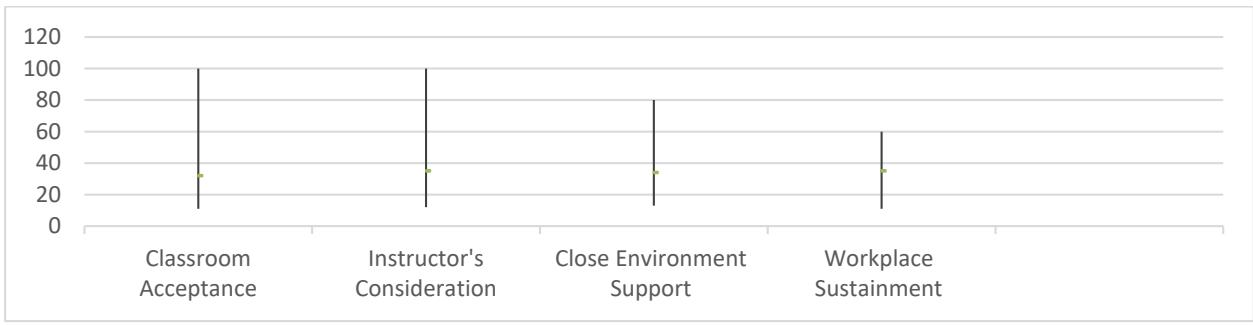 Figure 2: Adults' Psychological Boosters Figure 1 and 2 are the researcher's own elaboration.
## V. DISCUSSION
This study posits that adults are more organized, self-motivated and responsible, which makes the teaching process easier (Ziglari & Ozfidan, 2016). They profit from a cooperative environment and formal instructions. Additionally, the adult differences in ultimate attainment are due to changes in the neuronal structure of the brain, as one gets older. However, as (Stowe & Sabourin, 2005) observed in their contribution, there seems to be a lack of consensus on some fundamental questions. For example, on the nature of neuronal changes and on the time course over which these changes take place.
Evidence suggests that, these skills primarily reside in the frontal lobes and develop over time. Executive functions are those skills that allow a person to evaluate what has happened, to review what was done, and to change course to an alternative or different response (Diamond, 2006). Similarly, in a lecture format, information needs to be provided both visually and orally in order for sufficient material to make it into the working memory buffer. Additionally, the use of lists, rehearsals and day planners have all been found to be helpful in remembering information that would otherwise overload working memory (Diamond, & Lee, 2011). Still, there are differences in favor of relatively older students, responsible for better educational attainment.
For younger students, as Singleton's study (2001) concluded that, fascination with language, and the desire to be understood by native speakers facilitates learning. Besides, it opens up lots of opportunities in getting a job. Furthermore, broadening knowledge considerably, if they wish to pursue doctoral research. In this context, some arguments are rejected on grounds of poor evidence, when it comes to surrender, and give the floor to adults. Younger students have to be more resilient in the face of change, if they wish to prosper. This corroborates with (Dweck and Yeager's, 2019) stance, adopting a growth mindset can help students to interpret challenges and efforts as opportunities for improvement, rather than markers of low fixed ability. It would be very instrumental, in the understanding of the mechanisms, and associations between brain maturation, and academic undertaking to make the link between the sense of responsibility and task adherence. Staying on task, then, might tremendously impact the outcomes, a parallel attention is attributed also to mastery goals, volition, and extrinsic reward.
## VI. CONCLUSION
According to older students, enrolling in a master's degree can help one's career; in the sense that, it enhances professional practice relevant to the field of study. Moreover, it makes the holder a significant asset to the workplace, as well as ensuring more professional inclusion. In addition, having a wider skillset prepares to apply for leadership roles within education. Notwithstanding the hurdles, the working mothers are endeavoring to fulfil goals mentioned before. Thanks to their prerequisites and assets, they are equipped with the survival kit that enables them flourishing. Eventually, good command of language and volition, are the game-gangers, when it comes to academic success. Ultimately, this paper considered the increasing number of older learners in higher education enrolment, and their educational status. It identifies as well, the need for further studies addressing adults in instruction.
Generating HTML Viewer...
References
14 Cites in Article
D Allen-Solorio (2019). Applying Adult Learning Theory to Onboarding.
C Andrews,C Mccall,Padron,M,L Neville (2019). Evidence-Based Instructional Strategies for Adult Learners: A Review of the Literature.
E Bialystok (2011). Reshaping the Mind: The Benefits of Bilingualism.
Joseph Chen (2014). Teaching nontraditional adult students: adult learning theories in practice.
Beverly Day,Stella Lovato,Candace Tull,Jovita Ross-Gordon (2011). Faculty Perceptions of Adult Learners in College Classrooms.
Adele Diamond (2006). The Early Development of Executive Functions.
Adele Diamond,Kathleen Lee (2011). Interventions Shown to Aid Executive Function Development in Children 4 to 12 Years Old.
Carol Dweck,David Yeager (2019). Mindsets: A View From Two Eras.
K Hyland (2019). Feedback in Second Language Writing.
(2019). Feedback in Second Language Writing.
David Singleton (2001). Age and second language acquisition.
Patti Spinner,Susan Gass (2019). Using Judgments in Second Language Acquisition Research.
L Stowe,L Sabourin (2005). Imaging the processing of a second language: effects of maturation and proficiency on the neural processes involved.
Leily Ziglari,Burhan Ozfidan,Quentin Dixon (2016). Self- and Other-Repairs in Child-Adult Interaction: A Case Study of a Pair of Persian-Speaking Twins.
Explore published articles in an immersive Augmented Reality environment. Our platform converts research papers into interactive 3D books, allowing readers to view and interact with content using AR and VR compatible devices.
Your published article is automatically converted into a realistic 3D book. Flip through pages and read research papers in a more engaging and interactive format.
The unprecedented number of working mothers pursuing master’s education this year is captivating. This reality triggered a closer look to scrutinize underlying motives behind this undertaking. A mixed-method was used to capture the incentives for the satisfactory educational results achieved by this category of students. Five older learners, out of twenty-five enrolling in a master’s degree at Dr. Tahar Moulay University of Saida, Algeria, are the focus of this study. The prominence was in favor of adults, rather than youngsters. The findings postulate that, the following dual consideration is worth pointing out: the extrinsic reward/motivation, which surfaces, besides, brain maturation, appears of paramount importance in academic engagement.
Our website is actively being updated, and changes may occur frequently. Please clear your browser cache if needed. For feedback or error reporting, please email [email protected]
Thank you for connecting with us. We will respond to you shortly.