This article results from the master’s thesis “Food practices and food sovereignty in the Xavante Indigenous Land: challenges and perspectives”. The objective was to understand food practices, especially those considered traditional, such as hunting and gathering; the process of food transition, with the changes in eating habits, both in the way of obtaining food, and the food itself, and its consequences, discussing the possibilities of enabling a scenario of security and food sovereignty. The methodology used was documentary analysis, and an interview with the head of the village Etenhiritipá, the study site, to validate and complement the data. The most relevant points of discussion on the relationship between food practices and the environment will be presented, considering the perspective of the anthropologist Tim Ingold of the engagement and relationship of the subjects with their environment, challenges, and the complex context in which the Xavante find themselves.
## I. INTRODUCTION
The present article aims to understand the feeding of the Xavante people of Aldeia Etenhirtipá, Terra Indígena Pimentel Barbosa, in the State of Mato Grosso, Brazil, through the perspective of the group's relationship with its environment.
Traditionally hunter-gatherers and with spatial mobility, Xavante eating habits began to change after the intensification of contact with non-indigenous people, from the mid-1940s. Therefore, the current context in which they find themselves is the result of years of contact and the sum of facts that have happened over the years, including the demarcation of land; the advance of the agricultural frontier in the region; and access to new technologies and new markets, especially for the younger generations. The main consequences include the settlement and consequent sedentarization; the reduction of available natural goods, including species for gathering and fauna for hunting; the consumption of industrialized food, malnutrition, and hunger, culminating in a scenario of insecurity and no food sovereignty.
In other words, the Xavante have not secured their right to healthy and culturally appropriate food, nor the possibility of defining their own food and production systems, respecting their livelihoods and livelihoods. The factors mentioned interfere with and limit their adaptation possibilities.
Therefore, three objectives supported the analysis and discussion: to understand food practices through the relationships between the subjects and the environment; to analyze the transition process and its implications; and to discuss the process of food transition and their ways of life in the current scenario, considering the environment as crucial for survival Xavante."
From the link between food and territory, it is possible to understand the multiplicity of food traditions, which must be known to subsidize the proposition of strategies aimed at the viability of food security and sovereignty. In this logic, anthropologist Tim Ingold's theory proved relevant to the construction of the discussion, since it presents the environment as a complex system, far beyond its biotic and abiotic gradients, maintaining a holistic view of what is intended to be studied. Moreover, it works by revalorizing what is called[^7] "traditional knowledge" not only based on what human groups "think" about the natural and social environment, but mainly, based on what they do in it.
The case of the Xavante is valuable because it has significant implications for understanding the food dynamics of indigenous peoples in Brazil in a broader context. The remarkable internal heterogeneity of a group that results in a food mosaic is far from random. It is the result of the history of contact and interaction with non-indigenous people, especially socio-environmental pressures and the introduction of a western and industrialized diet, which produces particular configurations.
### a) Methodology
The initial methodology included field techniques, but due to the COVID-19 pandemic, which made it impossible to enter the village during the years 2020 and 2021, the initial project was adapted, relying only on the methodology of documentary analysis, also known as documentary research.
This methodology includes bibliographic analysis, or literature review. Documents such as bibliographic reviews, historiographical research, and secondary data were used. The documents were organized and interpreted according to the proposed objective, using instruments for the generation of new information.
In addition, an interview was conducted with the chief of the village Etenhiritipá, Jurandir Siridiwé Xavante, in July 2022. The focus of the interview was to discuss, based on the information obtained through documentary analysis, which traditional eating practices were still present and to what extent. That is, the data were validated and complemented by the chief.
From this, it was possible to establish a concrete relationship between food and the environment, paying attention to the process of building perceptions, attitudes, and social representations of the group about the practices and the process of food transition, considering the relationship with the territory. The discussion culminates in the analysis of the challenges and prospects of enabling the security and food sovereignty of the group through the context in which they are and all their complexities.
## II. THE A'UWE UPTABI: A BRIEF CONTEXTUALIZATION
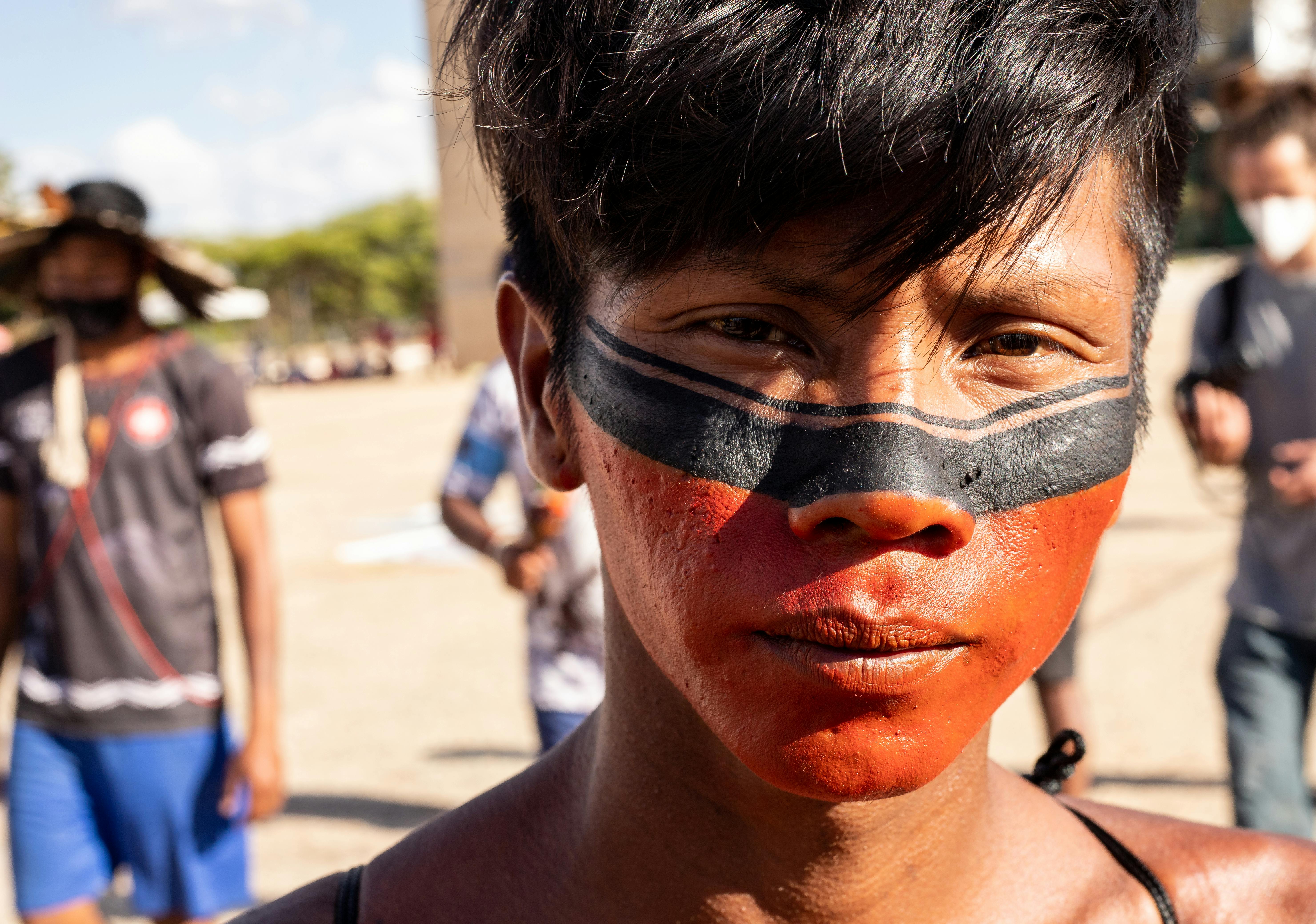
The contact of the Xavante, self-appointed A'uwē uptabi[^1], with the non-indigenous, occurred at different times, determining different migratory fronts. This study refers to the group that migrated during the nineteenth century from the State of Goiás and began to live in the State of Mato Grosso, after the crossings of the Araguaia, Cristalino, and Mortes rivers in the region of Wedeze (Maybury-Lewis, 1984; Lachnitt, 1987; Coimbra Jr. et al., 2002; ISA, 2010).
The first official contact with non-indigenous people occurred in 1946. A group led by chief Apowé agreed to establish relations with the team of the then Indian Protection Service (Servico de Proteção ao Indio, in the original), headed by Sertanist Francisco Meirelles, who acted according to the direct guidance of Marechal Rondon himself (Silva, 1992; Coimbra Jr., Welch, 2014). The interest in the A'uwé uptabi was associated with the state campaign for the opening of the interior of the country, and the process of colonization for occupation of "empty" spaces and conquest of territories, the so-called "March to the West" (Marcha para o Oeste, in the original) (Silva, 1992).
The Xavante resisted contact until the mid-1960s. Exhausted by disease, hunger, and conflict, "pacification" was, in fact, consumed by the Brazilian State (Silva, 1992; Coimbra Jr., Welch, 2014). This is the period of contact in which relations with Brazilian society intensified and materialized. The first years following the so-called "pacification" were arduous and they began to experience territorial confinement and constant contact with the surrounding society." According to Silva (1992), the "micro universe" came to be characterized by routine coexistence with indigenous posts and missions, defining the interethnic relations that they began to experience.
In general, the Xavante were a people with spatial mobility and their economy was sustained through hunting and gathering (Maybury-Lewis, 1984; Coimbra Jr. et al., 2002; ISA, 2010; Welch et al., 2013). Before the intensification of agriculture in recent decades, the A'uwē uptabi, besides hunting and gathering, had a small agricultural production. They used for the subsistence gardens the best lands that were located in gallery forests. Fishing has also intensified in recent decades, due to the intermediary of the then Indian Protection Service in the 1950s, responsible for providing nylon lines and hooks (Silva, 2008).
As a consequence of contact and later land demarcation, agricultural activities intensified through the efforts of the indigenist agents to persuade the Xavante to devote themselves more to agriculture and gradually abandon their nomadic habits. The assumption, according to Flowers (2014), was to contain the group within a more limited territory.
Prior to the settlement and intensification of agriculture, the Xavante seasonally organizing their system of obtaining food, including a diversity of wild products, as well as limited agricultural production. According to Flowers (2014), this strategy is similar to that of many indigenous peoples in the past, suggesting that, from the moment human groups become dependent on agriculture based on cultivation, mainly grain, are subject to some pressure to intensify production in order to ensure sufficient provisions for the whole year.
The intensification of agriculture brought changes in everyday life and altered agricultural practices, causing the abandonment of many traditional crops, with the consequent disappearance of native seeds, and the introduction of new crops, such as cassava and banana. These introduced crops have acquired an important role in the daily food of the Xavante. Moreover, in the late 1970s, the National Indigenous People Foundation (Fundação Nacional dos Povos Indígenas, in the original), which will be referred here as FUNAI, developed the so-called "Xavante Project", which introduced mechanized cultivation of white rice on a large scale in the Xavante lands.
It is important to emphasize that, unlike the 1950s, the Xavante no longer had the same freedom to circulate in their territory, because in the 1970s they were already confined to a small fraction of demarcated land, surrounded by agricultural and livestock farms (Flowers, 2014). That is, the limitations imposed by the surrounding society were increasingly accentuated.
The result was an even greater imbalance in subsistence and diet patterns, transforming a non- nutritious variety of rice into the basis of the food diet (Graham, 1995; ISA, 2017; Reichardt, Garavello, 2017).
During the 1990s, according to Santos et al. (2014), transformations in subsistence and food were further stimulated by the new economic resources available and the political ties developed. The Xavante now have sources of income that they did not have in previous decades and much of this money is destined for the purchase of industrialized food (Santos et al., 2014).
Moreover, even with the demarcation of indigenous lands, due to the flatter relief, the good physical characteristics of the soil and the low price of land compared to the south and southeast of Brazil, large-scale production becomes more competitive in the cerrado in relation to small-scale production, resulting in the advance of the agricultural frontier. According to Leite (2007), in many indigenous areas it is no longer possible to hunt, collect, fish or even make use of agriculture, due to the scarcity of available territory. In addition to the depletion of natural resources, there are other factors that threaten the food security of indigenous peoples, such as disputes over the proper ownership of land and natural assets located on these lands, resulting in a series of conflicts with farmers, miners, loggers, hunters and fishermen.
The long history of contact with non-indigenous people was responsible for the reduction of their territories, the instability of the guarantee of their rights, and the transformation of their productive principles. This structure led to the situation of compromising food security and sovereignty, as the group became unable to meet their food needs through their traditional activities, depending on a monetary income often insufficient. Finally, it changed the way the Xavante relate to their environment, forcing them to adapt to the new reality that involved them.
The A'uwē uptabi eating habits are peculiar and intertwine with a whole cultural contingent, reproduced and reworked between generations, and directly related to a dynamic of the territory's use. It is through their food practices that the Xavante express who they are in the world, being also central in this determination.
## III. THE ANTHROPOLOGICAL
### CONTRIBUTION: THE PERSPECTIVE OF
#### TIMINGOLD
For the british anthropologist Timothy Ingold, better known as Tim Ingold, anthropology should be thought of as a speculative discipline that sees beyond the possibilities and potentialities of human beings. Thus, one of its main tasks is to demonstrate that there are different ways of looking at things, breaking with the more classical view, considering that it should not be only an empirical discipline, "anthropology, in my definition, is philosophy with the people in" (Ingold, 2018, p. 4).
The so-called dwelling perspective deals with the immersion of subjects in a world that continuously arises around, and its multiple constituents acquire meaning through experiences, in a regular pattern of life activity. Unlike the western notion of territory as a kind of "blank canvas" for man, the environment is the world as it exists and that is gaining meaning in relation to the subject/group, being an inescapable condition of existence.
In short, the way one perceives the world is a result of the way the subject relates to this same world, and vice versa. That is, the way one inhabits a place is directly related to the way one perceives that place. So what we call "ways of life" should be understood literally, not as a body of received tradition, delivered independently and anticipated to its promulgation in the world, but as a creative and improvised process of finding a way through, in a world of relationships and processes that are always unfolding.
For the A'uwē uptabi the spaces within their territory are represented by the idea of the spaces of Ró. These spaces are the representation of their world and place where interactions with the environment occur (Lachnitt, 1987; Gomide, 2011). In summary, this is a concentric complex to which value is attributed and where food, culture, rest, reproduction, among other needs are met (Gomide, 2011; Welch et al., 2013). The interior is the village with the yard, and soon after the swaddens, followed by the cerrados, with the plants, animals and with the spirits.
There is also the orientation of the Sarewa, which is the people who do not let themselves be seen, to continue building the world. It is these invisible beings who are the owners of the natural goods necessary for the survival of the A'uwe uptabi. According to Silva (2016), they are the owners of animals, plants, rivers and the cerrado. According to the elder Cidanere2 reported to Silva (2016), the Sarewa live in the mountains, but are traveling all over Ró. He also states that only older people have the power to see and learn from the Sarewa (Silva, 2016).
Also according to reports from the Xavante, the Sarewa protect the hunters A'uwe uptabi., being able to transform into animals during the night, which is why hunters do not hunt at night, in respect of the Sarewa. It is necessary to ask permission from them, and it is during dreams that some Xavante manage to converse with these beings (Gomide, 2011). In addition, it is believed that all the rituals and first chants came from the Sarewa spirit-people, who invented what did not exist (Santos, 2020).
This complexity of relationships built in an environment, should be treated as the indivisible totality that is the system of development of a given group. Therefore, the way one perceives a world is a result of the way one relates to this same world. In view of this, the way the world is inhabited would not be innate or merely acquired, on the contrary, the skills of this inhabit would be cultivated and incorporated into the subject through the practice and engagement of him in that environment (Ingold, 2008).
Knowledge, therefore, is a reflection of certain elements of the environment that historically are central in a particular experience of the subjects in the landscape (Ingold, 2000). In the specific case of the Xavante, hunting and gathering activities assume this centrality in the definition of their ways of life, as well as in the ways of experiencing the landscape and elaborating a regime of knowledge linked to this experience. There is, then, a natural direction for certain aspects, the result of this engagement with the environment (Prado, Murrieta, 2017).
The ingoldian debate on the relations between nature and culture presupposes an indivisibility between organism and environment, giving rise to a monistic vision, advocating action and consciousness in terms of a continuous process of life (Silva, 2011). Thus, his ontology offers an alternative to the "western" worldview, questioning the representations that dissociate the organic condition of the human being and his potential as an active, imaginative and intentional subject (Ingold, 1986, 1999, 2000).
For Ingold (2010, p. 7), "it is through a process of enskilment[^3], not enculturation, that each generation reaches and surpasses the wisdom of its predecessors. This leads me to conclude that, in the growth of human knowledge, the contribution that each generation gives to the next is not an accumulated supply of representations, but an education of attention".
Relations are not unidirectional, they are mutual, and there is a mutual relationship between physical space and subject (Carvalho, Steil, 2013). Building is a continuous process and happens while inhabiting the environment. It does not begin with a pre-formed plan and ends as a finished artifact, the "final form" is just a fleeting moment in life of any characteristic, combined with a human purpose, center of a stream of intentional activities (Ingold, 2000, 2010, 2011).
"(...) the world is not a determined state of affairs but a "going on", which is constantly being furthered by agents within it. And these agents are not only human, but include other organisms as well. The world is not "there" for us or anyone else to represent or to fail to represent; the world is come into being through our activities [...] we cannot exclusively privilege us human beings with this world-producing ef- fort –for the world is coming into being through the activities of all living agencies. At the root of the argument, then, is a question about our understanding of human uniqueness" (Ingold, 1990, p. 155).
Hunter-gatherer peoples do not interact with their environment as with an external world to be conceptually dominated or symbolically appropriate. For Ingold (2000), the way these groups exist cannot be considered a representation of their worldview, their cultural tradition, or their folklore. They are ways in which subjects engage with their environment, and how, from this involvement, perceive their environment and develop relationships based on this dwelling, which leads to the construction of knowledge associated with this system of perceptions and relationships, creating a "reality" in particular.
The radicalism proposed by Ingold lies in the understanding of these distinct flows, lines and configurations that life assumes in its various material forms. Furthermore, by questioning the relations between humans and nonhumans, subjects and environment, he puts in question a re-evaluation of the anthropological concepts themselves, proposing to overcome their dualisms, opening new possibilities, instigating to go beyond the crystallized traditions, place the subject immersed in an environment, thus inaugurating an anthropology of life.
## IV. THE IMPORTANCE AND RELATIONSHIP BETWEEN HUNTING, GATHERING AND TERRITORY FOR XAVANTE COSMOLOGY
The A'uwē uptabi establish an order to describe what they call Ró, meaning "cerrados, worlds, our land, everything" (Gomide, 2011, p. 117). As mentioned earlier, Ró spaces are the representation of his world, conceived through concentric circles, with fluid and continuous limits (Gomide, 2011).
According to Gomide (2011), Ró is not only a source of resources. It must be understood as the spatialization of relations between the different subjects that inhabit the cosmos. "The cerrados are conceived by the Xavante as an indispensable condition for the exercise of their way of life". In this logic, the importance of the cerrados in the Xavante culture lies in material and symbolic appropriation, whose interaction is responsible for physical and cultural survival. Thus, the set of spaces that shape the territory express the survival needs of the group, understood in a broad sense and not simply material. The territory is physical-material, symbolic, economic and, mainly, political.
The occupation and use of the territory is the result of a context of non-linear and heterogeneous historical transformations, SUCH AS MIGRATION AND LAND USE CHANGE, producing antagonistic forms of territorialization, applied in different parts of the national political space and at various moments of history (Pacheco de Oliveira, 2016). In the case of indigenous peoples, the very condition of indigenous "necessarily presupposes a trajectory (which is historical and determined by multiple factors) and an origin (which is a primary, individual experience, but which is also translated into collective knowledge and narratives to which it is coupled). (...) It is precisely the elaboration of utopias (religious, moral, political) that allows the overcoming of the contradiction between the historical objectives and the feeling of loyalty to the origins" (Pacheco de Oliveira, 2016, p. 215-217).
According to Pacheco de Oliveira (1993 apud Pacheco de Oliveira, 2016, p. 203), the notion of territorialization is defined as "(...) a process of social reorganization involving: 1) the creation of a new socio-cultural unit by establishing a differentiating ethnic identity; 2) the establishment of specialized political mechanisms; 3) the redefinition of social control over environmental resources; and 4) the re-elaboration of culture and the relationship with the past". The territorialization process is precisely the movement by which, in this case, the A'uwê uptabi, comes to become an organized collectivity, formulating its own identity, instituting decision-making mechanisms and representation, and restructuring their cultural forms.
By organizing for the right to land, the Xavante are not only fighting for land demarcation, to which they are entitled, but above all, they are enforcing their rights to a way of life in their space of reproduction, their autonomy and existence as A'uwē uptabi, collective subject, transforming the political struggle in struggle for territory.
The intense devastation of the cerrados has caused numerous socio-environmental impacts on indigenous lands, and especially on the Xavante culture, which, as seen, has a fundamental relationship with its territory (Gomide, 2011). By having their basic rights assured, such as the right to land and proper food, the Xavante guarantee greater autonomy to adapt their ways of life, including their eating habits, according to their own needs, and not by the conditions imposed.
$Ró$ is the result of the involvement of the subjects with their territory, which results in a series of representations that make possible the existence of the Xavante people. The way they organize and relate to this and in this space demonstrates that the $Ró$ is composed of ethical, spiritual, symbolic, affective values, in addition to materials. The experiences and relations established incorporeally with the place they inhabit are clearly presented in their spatial and social conformation. It is from these values that they perceive and establish the spaces of Ró, unlimited, even with the demarcation of lands.
Considering these subjects immersed in the environment, food is linked to the spaces of $Ró$. In the case of game meat, it is not only a food to be consumed and meet the physiological needs of these subjects. In the monograph[^4] of the author of this article, in one of the interviews, the interviewee pointed out that "the fish has no spiritual value". In this same interview, the interviewee highlighted the importance of game meat for his people, "it has to be game meat to have courage. (...) The hunt brings the soul of $Ró$ ".
According to the chief Jurandir, a great hunter usually dreams and, from the dream, can indicate the place of hunting. According to him, for a good sensitivity in the dream, the best meat to be consumed is the jawbone (Tayassu pecari), much appreciated by the Xavante. Therefore, the dream is the great guide of the world A'uwē uptabi. His decisions, his cosmology, his knowledge and his technologies are extremely intuitive and related to his subconscious. According to the chief, the meaning of life Xavante is the dream, being associated with the consumption of game meat.
The Warā is a daily space that happens every evening and dawn. Men come together to exchange dreams, everyday experiences and action strategies. Important decisions are not usually made in the spaces that happen at dusk, but at dawn, after the Xavante sleep and dream. This will give them enough clarity to make the right decision.
The dream, in this context, is also part of the process of formation of a subject, since the dream is a truth that feels, communicates and recovers the memory of the creation of the world. The foundation of life and the sense of the way in the world are told from the dream, which feeds the spirit of the creation of the Xavante world.
Furthermore, according to Ingold (2000), hunting represents a relationship based on the principle of trust between hunter and prey, consisting of a combination of autonomy and dependence on hunter-gatherer societies such as the Xavante. For the pastoral system, this would be replaced by a relationship of dominance, represented by domestication. They are different ways of relating to other animals and, according to Ingold (2000), hunting would be a way of knowing them, because the hunter seeks revelation, not the control of the animal. Thus, hunting performance establishes a maximum equality relationship between hunter and prey.
Another aspect associated with hunting is its relation to rituals. The traditional Xavante marriage implies the hunting of animals to consolidate the relations of marriages between clans. The settlement and the reduction of hunting fauna influence directly, because it is through hunting that the son-in-law shows the community and establishes the marriage, as well as other social and family prestige. With the new conditions, the rituals need to be adapted, and much tradition ends up being lost in this process.
To meet their food needs, according to the chief Jurandir, the Xavante currently breed some birds for consumption, something that is not common in traditionally hunter-gatherer peoples, given the kind of principle and relationship they establish with other animals. In addition, there have been a number of other transformations.
According to the chief, hunting with fire is the fastest way to hunt, and whatever comes is interesting to them. It is also related to the end of a cycle, the end of the period of seclusion of the Xavante boys, occurring every four or five years. That is, there is a ritualistic value. However, it is a great challenge to hunt with the use of fire in current times, because it is seen with bad eyes by non-indigenous people, who do not know that the Xavante people have great knowledge about the technique.
According to Ingold (2000), the idea of conservation imposed by Western science imposes a degree of detachment from the environment incompatible with the ways of life of hunter-gatherers, extremely involved with the environment they inhabit, which is essential to carry out their activities. Here it is important to point out that it is not intended to romanticize the relations between native peoples and nature, but to indicate that these peoples have their own knowledge, fruit of another way of relating to the environment, experience and experimentation over many years, being as valid as scientific knowledge (Cunha, 2009).
In addition to the use of fire, the Xavante also used other instruments for hunting, such as the bordunas[^5] for aid in the attack on prey (Pereira, 2010). Currently, hunting occurs mostly with the use of firearms[^6] and occasionally can occur with the use of archery. The bordunas, according to the chief's own words, "became a museum object". They are still used with a mystical and cultural character, and in some cases, assist in locomotion, but no longer as weapons to hunt animals.
In relation to gathering, as well as hunting, it is a traditional and central practice in the world A'uwē uptabi. Through the collection the group relates to its territory, because the activity allows them to transit through the spaces, know the various forms of life that inhabit it, and connect with the elements present. It is a fundamental activity for their way of life, as well as being an important source of food. In the chief's words, "the supermarket is in the cerrado".
The food items collected complement the food. According to the chief Jurandir, it is the fruits collected that "save" during hunting expeditions. In the study conducted in 2018 by the researcher of this article, the small portion of traditional foods (20%) was composed mostly of fruits collected (Santos, Garavello, Reichardt, 2021). According to Silva (2008), the collection did not have the same importance as a food base. Women did not perform it often or only when there was no other source of food. As noted by Santos, Garavello, Reichardt (2021), the consumption of fruits collected was low, and may be equivalent to the only meal of the day, if inevitable, contributing to the necessary energy intake.
With the COVID-19 pandemic, there was a certain strengthening of this practice, as a crucial means to meet food needs, as reported by the chief. Moreover, there is currently an initiative to obtain income through certain items collected, such as Baru nuts. According to the chief, the amount of chestnuts collected is very large, allowing a destination for the remainder, able to contribute financially to the village.
Although there are fluctuations in the consumption of the items collected, and may be more or less significant in the diet, collection is, to some extent, a recurring activity and of great importance, since traditionally hunter-gatherer peoples, such as the Xavante, do not consume meat daily. In addition, the collection activity is the most guaranteed, because it does not require management and because it fulfills an ecological role in the local landscape.
Actions such as the collection of seeds, fruits and use of other available natural resources, without harming the demand of the group itself, are fundamental in allowing a new meaning in the relationship with the environment, as well as strengthening the link with the territory, also enabling a way to obtain financial resources other than those from government aid or salaries.
There are several transformations in their food practices and, consequently, in their ways of life, showing the urgency to seek alternatives to mitigate a situation of insecurity and not food sovereignty. According to Murrieta (1998, p. 130), "the emphasis on eating habits, and their nutritional implications and on interactions with intense political and economic changes, can produce the perfect connection between different factors impacting biological survival and the social representation of societies (...)"7.
Food reveals from the economy of a society, to the nature of social, political, religious representations etc. Moral criteria, the organization of everyday life, the kinship system, religious taboos, among other aspects, related to eating practices. That is, it articulates a series of systems in each social reality, configuring certain ways of life. Therefore, the relationship with food and, consequently, the territory, is fundamental for the Xavante to establish and reproduce their patterns of life, cosmology and exist while A'uwē uptabi.
## V. CHALLENGES AND PERSPECTIVES
According to chief Jurandir, "when a Xavante leaves, it is already understood that he will hunt, fish or collect. The inhabitation of Xavante is fundamental to understand their ways of life, eating habits and relationships, connected to each other in the flows of the spaces of Ró.
In this sense, as perspectives, actions aimed at strengthening practices considered traditional, LIKE GATHERING AND HUNTING, can contribute to the dynamics of the Xavante, through the maintenance of aspects of food culture still present and organized, allowing greater independence for possible adaptations in their living standards.
1. The food transition is inherent in the processes of industrialization and urbanization that regulate access to food, having assumed a planetary scale, and in the case of indigenous peoples, with the increase of contact with the surrounding and globalized society, it is inevitable (Garnelo, Welch, 2009). Food habits such as hunting and gathering combine with the consumption of industrialized foods and bought in markets, to a greater or lesser extent, depending on a number of factors, such as the availability of natural goods in the environment.
2. However, as Garnelo and Welch (2009) point out, the feeding of indigenous peoples should be seen as a dimension of culture in dynamic interaction with the environment, the economy, and the values and beliefs of each group. Thus, the impoverishment of indigenous diets and the influx of a restricted group of industrialized foods also implies a risk to the socio-cultural diversity of indigenous Brazil.
3. Whereas hunting and gathering practices play an important role in Xavante lifestyles and cosmology, having an influence on their dreams and, consequently, on their material reality, it is essential to invest in actions to strengthen these practices,
linked to the use of territory, and the Xavante themselves have this awareness.
According to the village chief, the Xavante are betting on the marketing of some products, such as cassava flour and baru chestnut. In the case of flour, a contract was signed with the Municipality of Canarana, municipality of the state of Mato Grosso, for the sale of municipal school lunch. As for baru chestnut, there is the interest of companies for the production of cosmetics, in addition to their medicinal potential, which aroused the interest of the Butantan Institute, a center for scientific research and production of immunobiologicals, adjacent to the University City campus of the University of São Paulo, Brazil.
These are examples of opportunities that can provide greater financial autonomy, as well as strengthening the bond of A'uwe uptabi with their territory, giving special emphasis to women who, according to chief Jurandir, are usually the most involved in initiatives such as those mentioned.
It is important to mention that women are usually responsible for preparing meals, being in a closer contact with food, and are increasingly involved and participating in social movements and political life, playing a crucial role in the struggle for the rights of so-called native peoples.
RETURNING TO THE ACTIONS, an important attempt to be mentioned is the Abahi Tebrezê project[^8] started in 2010, whose objective was to strengthen culture, food and nutritional security and territorial management of the Xavante people in Pimentel Barbosa, through the revitalization of traditional potato production. Initially conducted by men, in 2017 women decided to take the lead in the actions, arguing that they are the most interested in the recovery of traditional food and the transfer of knowledge to girls and boys in the community.
The project was inspired by another project called Dasa Uptabi[^9], and among its main objectives were the exchange of knowledge through the decision of the women themselves involved, through craft workshops or exchange with other peoples. In addition to focusing on knowledge and the revitalization of traditional food, it had a broader educational character, involving the strengthening of culture, the management of the territory, and greater awareness of the rights of indigenous women of the Xavante community.
The application of projects like these are characterized as an intercultural attempt to adapt amid the intense transformations suffered throughout the history of contact with capitalist society, whose intentions are fundamentally colonizing. However, it should be noted that the consequences of such actions are unknown in the long term. However, it is essential to highlight their importance in the present, either by encouraging the protagonistism of subjects who have been historically violated and silenced, or by trying to establish a dialogue between traditional knowledge and scientific knowledge, the constant exercise of respect for otherness.
A great challenge mentioned by the chief is to be able to maintain enough for internal consumption, focusing on the commercialization of the surplus. In other words, there is a concern about internal supply, because the most important thing, after all, is that the group itself can have a good diet. Thus, it is essential that actions aimed at marketing do not harm the consumption of the village. Still according to the chief, the Xavante of Etenhiripá do not aim at anything on a large scale, wanting only to take advantage of the natural goods available in the territory, or in the cacique's words, "what they have of natural, and not have plants that are not from there".
Thus, a number of factors should be considered when thinking about actions for the viability of food security and sovereignty. In any case, food participates in a series of issues related to social and cultural identities, constituted in privileged spaces of action, construction of perceptions and knowledge, through which the group marks its distinction, is recognized and is recognized. Therefore, respect for A'uwē uptabi identity, considering actions that have meaning in your world/ reality, is a fundamental party point.
## VI. CONCLUSION
Given what has been presented, it is possible to observe that the scope of recent environmental and socioeconomic transformations on the Xavante people is broad, and the reflexes of this set of changes on food practices and their ways of life are significant.
There is instability in guaranteeing their basic rights, such as the right to physical and economic access, uninterrupted, to adequate and healthy food or the means to obtain these foods, without compromising resources to obtain other fundamental rights, as health and education, as provided for in articles 6 and 227 of the Brazilian Federal Constitution, defined by the Organic Law on Food and Nutrition Security, as well as in article 11 of the International Covenant on Economic Rights, Social and Cultural and other international legal instruments.
The Xavante, like other indigenous peoples, continue to resist the consequences of contact with non- indigenous people and fight for their rights. It is essential to emphasize the political character of the food and territorial issue. According to the anthropologist João Pacheco de Oliveira (2022), fighting for a territory also implies understanding the meaning of the transformations in which an indigenous people is involved, since they deeply affect their customs, the current manifestations of their knowledge and their identity expressions. Thus, understanding the spaces of Ró is crucial for the development of a deep ecological understanding of the Xavante ways of life, including their eating practices, within a continuous history of involvement and relationships with other living and nonliving beings in the environment.
The multiplicity of food traditions should be known to support propositions of strategies aimed at food security and sovereignty, respecting the particularities A'uwē uptabi. In this logic, the strengthening of practices considered traditional still present and linked to the use of the territory seems to be a viable way in the urgency of guaranteeing a food capable of ensuring basic needs and the Xavante identity itself. However, the proposals must have some flexibility, being open to intercultural dialogue and considering the peculiarities that permeate the sociocultural logic of indigenous peoples.
Finally, the struggle for adequate nutrition is inherent in the struggle for land. By organizing themselves for the right to land, the Xavante are not only fighting for the demarcation of lands, to which they are entitled, but above all, they are fighting for the right to a way of life, for their autonomy and existence as A'uwe'éptabi, collective subject. It is in the territory that the completeness of physical and symbolic spaces, bodies, knowledge and political struggles are manifested. In the chief's words, "being space is a condition of our existence".
[^1]: The true people. _(p.2)_
[^3]: Proposes that learning is inseparable from doing and place. _(p.4)_
[^4]: Study of Food Sovereignty within the perspective of the 2030/ONU Agenda on Xavante Indigenous Land. _(p.5)_
[^5]: Indigenous weapon of attack, defense or hunting, usually cylindrical and elongated. It is made of hardwood and can also be used as a cane, as a paddle (the spatulate) and piercing object (the pointed). Its surface was smoothed by means of a pointed stone, which according to Pereira (2010, p. 40), “(...) was sharpened and subsequently fixed by means of strands of vegetable fibers on a wooden handle of Taquara, which fit comfortably in the palm of the hand, becoming an arrow. It was ornamented with animal feathers, glued by means of beeswax” (translation of the author of the present article). _(p.6)_
[^6]: The use of firearms is seen as favorable by the Xavante, since the expansion of the agricultural frontier and increased population density of human beings in the region made, in the words of Chief Jurandir, "the animals were smarter, uniting the useful to the pleasant" facilitating hunting in the new environmental conditions. _(p.6)_
[^8]: The project was supported by FUNAI. _(p.7)_
[^9]: The traditional Xavante potatoes, called Dasa Uptabi, have low glycemic index and because they present this nutritional relevance, as well as cultural, were the subject of a project that aimed at rescuing the practice of their collection, being one of the results "Daza Uptabi: Back to Roots", published in 2007. These tubers are still collected, apparently for purposes of variation in their diet, since sweet cassava came to occupy an important place in the diet as an energy source. _(p.7)_
[^2]: One of the oldest elders and respected by the Xavante of Pimentel Barbosa, explained to Silva about Sarewa in a Wara held at sunset on June 29, 2005 in the village Wedera (Silva, 2016). _(p.3)_
[^7]: Translation of the author of the present article. _(p.7)_
Generating HTML Viewer...
References
31 Cites in Article
Isabel Carvalho,Carlos Steil (2013). A sacralização da natureza e a 'naturalização' do sagrado: aportes teóricos para a compreensão dos entrecruzamentos entre saúde, ecologia e espiritualidade.
Carlos Coimbra,Nancy Flowers,Francisco Salzano,Ricardo Santos (2002). The Xavante in Transition.
M Cunha,Da (2009). Cultura com Aspas.
Amintas Silva Junior (2010). RICARDO, Fany; GONGORA, Majoí Fávero (org.). Cercos e resistências: povos indígenas isolados na Amazônia. São Paulo: Instituto Socioambiental, 2019. 255 p..
Maria Gomide (2011). Ró - Cerrados e Mundo A'uwe Xavante.
L Graham (1995). Performing dreams: discourses of immortality among the Xavante of Central Brazil.
T Ingold (1990). debate Human worlds are culturally constructed.
T Ingold (2000). ‘Gente como a gente’ O conceito de homem anatomicamente moderno.
T Ingold,Pare (2008). escute! Visão, audição e movimento humano.
Tim Ingold (2010). Chega de etnografia! A educação da atenção como propósito da antropologia.
T Ingold (2011). Being alive: essays on movement, knowledge and description.
T Ingold (2018). Anthropology: why it matters.
Ricardo Santos,João Bastos,Oswaldo Cruz,Luciene Longo,Nancy Flowers,Nilza Pereira (2019). Parturição em Mulheres Indígenas e Não Indígenas do Brasil: o número de filhos relatados depende de quem responde às perguntas do censo nacional?.
Frequentes (2010). PIB trimestriel.
G Lachnitt (1987). Romnhitsi'ubumro: dicionário Xavante-Português.
Caroline Miranda Alves De Souza,Julia Paranhos,Lia Hasenclever (1984). Experiências de regulação de preços de medicamentos em países selecionados: lições para o Brasil.
Rui Murrieta (1998). O dilema do papa-chibé: consumo alimentar, nutrição e práticas de intervenção na Ilha de Ituqui, baixo Amazonas, Pará.
J Pacheco De Oliveira (2016). O nascimento do Brasil e outros ensaios: "pacificação", regime tutelar e formação de alteridades.
Ingrid Pereira Dos Santos,Rayane Araújo Lima,Bruno Quirino De Oliveira,Antônio De Melo Medeiros,Marcos De Sousa (2010). PROJETO DE IMPLANTAÇÃO DE REDE GPON COM FTTH.
H Prado,R Murrieta (2017). A experiência do conhecimento em Tim Ingold e as etnociências: reflexões a partir de um estudo de caso etnoecológico.
Fernanda Reichardt,Maria Garavello (2017). Quando habitar corresponde ao direito humano à alimentação..
M Santos,M Garavello,F Reichardt (2021). Práticas alimentares Xavante: não soberania e insegurança alimentar.
A Silva,Da (1992). Dois séculos e meio de história Xavante.
R Silva,Da (2008). Unknown Title.
S Silva,Alimentos (2013). restrições e reciprocidade no ritual Xavante do Wapté mnhõno Terra indígena Marãiwatsédé, Mato Grosso. Dissertação.
J Welch,V Santos R,N Flowers,C Coimbra Jr (2013). Na primeira margem do rio: território e ecologia do povo xavante de wedezé. welch jr, santos rv, flowers nm, coimbra jr. cea. rio de janeiro: museu do índio, fundação nacional do índio; 2013. 248 p..
L Garnelo,J Welch (2009). Transicaõ alimentar e diversidade cultural: desafios àpolitica de saude indiǵena no Brasil.
M Leite,Sociodiversidade (2007). alimentacaõ e nutricaõ indiǵena.
R Santos (2020). As particularidades na etnopoética de Márcia Kambeba.
J Pacheco De Oliveira (1993). As sociedades indiǵenas e seus processos de territorializacaõ.
J Pacheco De Oliveira (2016). O nascimento do Brasil e outros ensaios: "pacificacaõ", regime tutelar e formacaõ de alteridades.
Explore published articles in an immersive Augmented Reality environment. Our platform converts research papers into interactive 3D books, allowing readers to view and interact with content using AR and VR compatible devices.
Your published article is automatically converted into a realistic 3D book. Flip through pages and read research papers in a more engaging and interactive format.
This article results from the master’s thesis “Food practices and food sovereignty in the Xavante Indigenous Land: challenges and perspectives”. The objective was to understand food practices, especially those considered traditional, such as hunting and gathering; the process of food transition, with the changes in eating habits, both in the way of obtaining food, and the food itself, and its consequences, discussing the possibilities of enabling a scenario of security and food sovereignty. The methodology used was documentary analysis, and an interview with the head of the village Etenhiritipá, the study site, to validate and complement the data. The most relevant points of discussion on the relationship between food practices and the environment will be presented, considering the perspective of the anthropologist Tim Ingold of the engagement and relationship of the subjects with their environment, challenges, and the complex context in which the Xavante find themselves.
Our website is actively being updated, and changes may occur frequently. Please clear your browser cache if needed. For feedback or error reporting, please email [email protected]
Thank you for connecting with us. We will respond to you shortly.