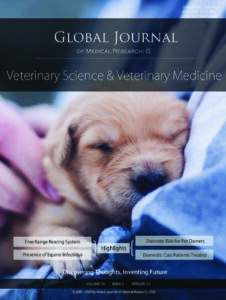
Zoonotic risk for Pet Owners in Kathmandu, Nepal

α
Kosh Bilash Bagale
Kosh Bilash Bagale
σ
Basanta Gaire
Basanta Gaire
ρ
Ramesh Adhikari
Ramesh Adhikari
α Tribhuvan University Tribhuvan University

Send Message

To: Author

Zoonotic risk for Pet Owners in Kathmandu, Nepal

Article Fingerprint

ReserarchID

JX8C9

Zoonotic risk for Pet Owners in Kathmandu, Nepal Banner

AI TAKEAWAY

Connecting with the Eternal Ground
  • English
  • Afrikaans
  • Albanian
  • Amharic
  • Arabic
  • Armenian
  • Azerbaijani
  • Basque
  • Belarusian
  • Bengali
  • Bosnian
  • Bulgarian
  • Catalan
  • Cebuano
  • Chichewa
  • Chinese (Simplified)
  • Chinese (Traditional)
  • Corsican
  • Croatian
  • Czech
  • Danish
  • Dutch
  • Esperanto
  • Estonian
  • Filipino
  • Finnish
  • French
  • Frisian
  • Galician
  • Georgian
  • German
  • Greek
  • Gujarati
  • Haitian Creole
  • Hausa
  • Hawaiian
  • Hebrew
  • Hindi
  • Hmong
  • Hungarian
  • Icelandic
  • Igbo
  • Indonesian
  • Irish
  • Italian
  • Japanese
  • Javanese
  • Kannada
  • Kazakh
  • Khmer
  • Korean
  • Kurdish (Kurmanji)
  • Kyrgyz
  • Lao
  • Latin
  • Latvian
  • Lithuanian
  • Luxembourgish
  • Macedonian
  • Malagasy
  • Malay
  • Malayalam
  • Maltese
  • Maori
  • Marathi
  • Mongolian
  • Myanmar (Burmese)
  • Nepali
  • Norwegian
  • Pashto
  • Persian
  • Polish
  • Portuguese
  • Punjabi
  • Romanian
  • Russian
  • Samoan
  • Scots Gaelic
  • Serbian
  • Sesotho
  • Shona
  • Sindhi
  • Sinhala
  • Slovak
  • Slovenian
  • Somali
  • Spanish
  • Sundanese
  • Swahili
  • Swedish
  • Tajik
  • Tamil
  • Telugu
  • Thai
  • Turkish
  • Ukrainian
  • Urdu
  • Uzbek
  • Vietnamese
  • Welsh
  • Xhosa
  • Yiddish
  • Yoruba
  • Zulu

Abstract

Pet keeping practices have a long history in human societies, butpoor knowledge regarding pet keep ingincreases risk of several zoonoses. The aim of this study is to identify the risk of zoonoses based on knowledge, practices, and perception of threat among pet owners in Kathmandu. A cross-sectional questionnaire based study was conducted on 143 purposively selected pet owners from different three wards in Kathmandu metropolitan. Most of the respondents 86.7% (n=143) were keeping dog as a pet in their households. Feeding practices for pet was varied based on economic status where almost a fifth (18%) owners feeding readymade food. The purpose of pets keeping found diverse where most of them kept forpurpose of household security (37.76%). All respondents were literate among them 88.11% of respondents had above secondary level qualifications. The majority of respondents received information from radio/television (92.30%) .

References

6 Cites in Article
  1. Basnyat (2013). from animals to human.
  2. N Niroula (2016). Risk of Zoonoses. Retrieved from; The Kathmandu Post.
  3. K O' Rourke (2002). Zoonotic risks of pets: How to handle questions.
  4. A Smith,Y Whitfield (2014). Household pets and zoonoses.
  5. Jason Stull,Andrew Peregrine,Jan Sargeant,J Weese (2013). Pet husbandry and infection control practices related to zoonotic disease risks in Ontario, Canada.
  6. Jason Stull,Jason Brophy,J Weese (2015). Reducing the risk of pet-associated zoonotic infections.

Funding

No external funding was declared for this work.

Conflict of Interest

The authors declare no conflict of interest.

Ethical Approval

No ethics committee approval was required for this article type.

Data Availability

Not applicable for this article.

How to Cite This Article

Kosh Bilash Bagale. 2020. \u201cZoonotic risk for Pet Owners in Kathmandu, Nepal\u201d. Global Journal of Medical Research - G: Veterinary Science & Medicine GJMR-G Volume 20 (GJMR Volume 20 Issue G2): .

Download Citation

Journal Specifications

Crossref Journal DOI 10.17406/gjmra

Print ISSN 0975-5888

e-ISSN 2249-4618

Keywords
Classification
GJMR-G Classification: NLMC Code: WC 950
Version of record

v1.2

Issue date

August 5, 2020

Language
en
Experiance in AR

Explore published articles in an immersive Augmented Reality environment. Our platform converts research papers into interactive 3D books, allowing readers to view and interact with content using AR and VR compatible devices.

Read in 3D

Your published article is automatically converted into a realistic 3D book. Flip through pages and read research papers in a more engaging and interactive format.

Article Matrices
Total Views: 2379
Total Downloads: 1189
2026 Trends
Related Research

Published Article

Pet keeping practices have a long history in human societies, butpoor knowledge regarding pet keep ingincreases risk of several zoonoses. The aim of this study is to identify the risk of zoonoses based on knowledge, practices, and perception of threat among pet owners in Kathmandu. A cross-sectional questionnaire based study was conducted on 143 purposively selected pet owners from different three wards in Kathmandu metropolitan. Most of the respondents 86.7% (n=143) were keeping dog as a pet in their households. Feeding practices for pet was varied based on economic status where almost a fifth (18%) owners feeding readymade food. The purpose of pets keeping found diverse where most of them kept forpurpose of household security (37.76%). All respondents were literate among them 88.11% of respondents had above secondary level qualifications. The majority of respondents received information from radio/television (92.30%) .

Our website is actively being updated, and changes may occur frequently. Please clear your browser cache if needed. For feedback or error reporting, please email [email protected]

Request Access

Please fill out the form below to request access to this research paper. Your request will be reviewed by the editorial or author team.
X

Quote and Order Details

Contact Person

Invoice Address

Notes or Comments

This is the heading

Lorem ipsum dolor sit amet, consectetur adipiscing elit. Ut elit tellus, luctus nec ullamcorper mattis, pulvinar dapibus leo.

High-quality academic research articles on global topics and journals.

Zoonotic risk for Pet Owners in Kathmandu, Nepal

Kosh Bilash Bagale
Kosh Bilash Bagale Tribhuvan University
Basanta Gaire
Basanta Gaire
Ramesh Adhikari
Ramesh Adhikari

Research Journals