## INTRODUCTION
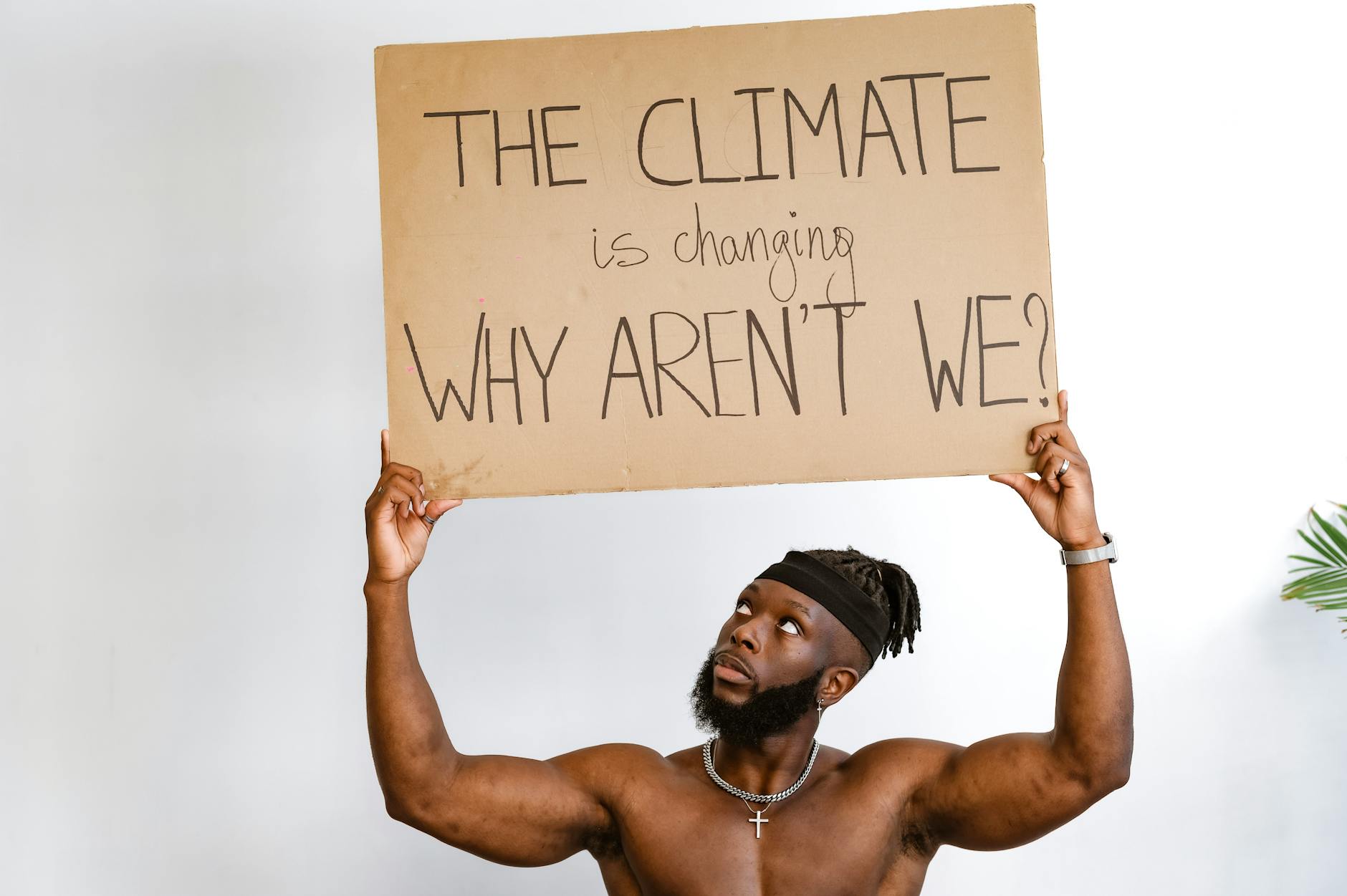
As concern mounts over the impacts of global environmental change on social and ecological systems, coinciding with a more fluid international security environment since the end of the Cold War, environmental change is increasingly being understood
Both governmental views and relevant research on the security implications of climate change, by and large, approach the question from a perspective of interdependence between human vulnerability and national security. They identify five channels through which climate change could affect security: Vulnerability; Development; Coping and security; Statelessness; International conflict.[^6]
Clime change is best viewed as threat multiplier which makes worse existing trends, tensions and instability. The core challenge is that climate change threatens to overburden states and regions which are already fragile and conflict prone. It is important to recognize that the risks are not just of humanitarian nature. They also include political and security risks that directly affect European interests. Moreover, in line with the concept of human security, it is clear that many issues related to the impact of climate change on international security are interlinked requiring comprehensive policy responses.[^7]
The European Union is in a unique position to respond to the impacts of climate change on international security, given its leading role in the development, global climate policy and the wide array of tools and instruments at its disposal. Also, the security challenge plays to Europe's strengths, with its comprehensive approach to conflict prevention, crisis management and post-conflict resolution, and as a key promoter of effective multilateralism.[^8]
## I. THREATS
The effects of climate change are being felt now: temperatures are rising, icecaps and glaciers are melting and extreme weather events are becoming more frequent and more intense. The following section outlines some of the forms of conflicts driven by climate change which may occur in different regions of the world.
### a) Conflict over Resources
Reduction of arable land, widespread shortage of water, diminishing food and fish stocks, increased flooding and prolonged droughts are already happening in many parts of the world. Climate change will alter rainfall patterns and further reduce available freshwater by as much as 20 to $30\%$ in certain regions. A drop in agricultural productivity will lead to, or worsen, food-insecurity in least developed countries and an unsustainable increase in food prices across the board. Water shortage in particular has the potential to cause civil unrest and to lead to significant economic losses, even in robust economies. The consequences will be even more intense in areas under strong demographic pressure. The overall effect is that climate change will fuel existing conflicts over depleting resources, especially where access to those resources is politicized.
### b) Economic Damage and Risk to Coastal Cities and Critical Infrastructure
It has been estimated that a business as usual scenario in dealing with climate change could cost the world economy up to $20\%$ of global GDP per year, whereas the cost of effective concerted action can be limited to $1\%$. Coastal zones are the home of about one fifth of the world's population, a number set to rise in the years ahead. Mega-cities, with their supporting infrastructure, such as port facilities and oil refineries, are often located by the sea or in river deltas. Sea-level rise and the increase in the frequency and intensity of natural disasters pose a serious threat to these regions and their economic prospects. The East coasts of China and India as well as the Caribbean region and Central America would be particularly affected. An increase in disasters and humanitarian crises will lead to immense pressure on the resources of donor countries, including capacities for emergency relief operations.
### c) Loss of Territory and Border Disputes
Scientists project major changes to the landmass during this century. Receding coastlines and submergence of large areas could result in loss of territory, including entire countries such as small island states. More disputes over land and maritime borders and other territorial rights are likely. There might be a need to revisit existing rules of international law, particularly the Law of the Sea, as regards the resolution of territorial and border disputes. A further dimension of competition for energy resources lies in potential conflict over resources in Polar regions which will become exploitable as a consequence of global warming. Desertification could trigger a vicious circle of degradation, migration and conflicts over territory and borders that threatens the political stability of countries and regions.
### d) Environmentally-induced Migration
Those parts of the populations that already suffer from poor health conditions, unemployment or social exclusion are rendered more vulnerable to the effects of climate change, which could amplify or trigger migration within and between countries. The UN predicts that there will be millions of "environmental" migrants by 2020 with climate change as one of the major drivers of this phenomenon. Some countries that are extremely vulnerable to climate change are already calling for international recognition of such environmentally-induced migration. Such migration may increase conflicts in transit and destination areas. Europe must expect substantially increased migratory pressure.
### e) Situations of Fragility and Radicalization
Climate change may significantly increase instability in weak or failing states by over-stretching the already limited capacity of governments to respond effectively to the challenges they face. The inability of a government to meet the needs of its population as a whole or to provide protection in the face of climate change-induced hardship could trigger frustration, lead to tensions between different ethnic and religious groups within countries and to political radicalization. This could destabilize countries and even entire regions.
### f) Tension over Energy Supply
One of the most significant potential conflicts over resources arises from intensified competition over access to, and control over, energy resources. That in itself is, and will continue to be, a cause of instability. However, because much of the world's hydrocarbon reserves are in regions vulnerable to the impacts of climate change and because many oil and gas producing states already face significant social economic and demographic challenges, instability is likely to increase. This has the potential to feed back into greater energy insecurity and greater competition for resources. A possible wider use of nuclear energy for power generation might raise new concerns about proliferation, in the context of a non-proliferation regime that is already under pressure. As previously inaccessible regions open up due to the effects of climate change, the scramble for resources will intensify.
### g) Pressure on International Governance
The multilateral system is at risk if the international community fails to address the threats outlined above. Climate change impacts will fuel the politics of resentment between those most responsible for climate change and those most affected by it. Impacts of climate mitigation policies (or policy failures) will thus drive political tension nationally and internationally. The potential rift not only divides North and South but there will also be a South - South dimension particularly as the Chinese and Indian share of global emissions rises. The already burdened international security architecture will be put under increasing pressure.[^10]
Climate change calls for revisiting and reinforcing cooperation and political dialogue instruments, giving more attention to the impact of climate change on security. This could lead to greater prioritization and enhanced support for climate change mitigation and adaptation, good governance, natural resource management, technology transfer, transboundary environmental cooperation (inter alia water and land), institutional strengthening and capacity building for crisis management. $^{11}$
## II. SECURITY IMPLICATIONS OF CLIMATE CHANGE FOR THE UN SYSTEM
As climate change accelerates, its impacts exacerbate existing social, economic, and environmental challenges in many contexts, which can contribute to insecurity at local levels, or even internationally. Security concerns linked to climate change include impacts on food, water and energy supplies, increased competition over natural resources, loss of livelihoods, climate-related disasters, and forced migration and displacement.
Despite growing recognition of the interlinkages between climate change, peace and security, few examples of integrated programmatic approaches that address specific risks at the intersection of climate change and insecurity exist. Conflict and crisis affected contexts are more susceptible to being overwhelmed by climate change, but too often peacebuilding and stabilization efforts often do not consider climate-related impacts or environmental hazards. At the same time, insecurity hinders climate change adaptation efforts, leaving already vulnerable communities even poorer and less resilient to interlinked climate and security crises, but climate change adaptation initiatives often fail to fully integrate peacebuilding or conflict prevention objectives.
As climate change is increasingly recognized as a "threat multiplier" by scientists, political representatives, and civil society across the world, the United Nations Security Council held an open debate on Friday to discuss its concrete impact on peace and security, and focus on tangible ways to diminish the effects of global warming.
"The relationship between climate-related risks and conflict is complex and often intersects with political, social, economic and demographic factors," said Rosemary DiCarlo[^12], the Under-Secretary-General for Political and Peacebuilding Affairs in her opening remarks.
In 2009, UNEP partnered with IOM, OCHA, UNU, and CILSS to investigate the implications of climate change for livelihoods, conflict and migration across the Sahel region. The resulting report "Livelihood Security: Climate Change, Migration and Conflict in the Sahel" (2011)[^13] identifies 19 hotspots where climatic changes have been most severe over the past 20 years. It concludes that climate change effects on resource availability have already led to migration, and increased competition over scarce resources in some of the hotspots.
As a follow-up to this initial work, UNEP was requested in 2009 by the UN Secretary General to provide technical inputs to the drafting of the report to the General Assembly entitled "Climate Change and its Possible Security Implications" (A/64/350).
UNEP's Executive Director was invited to address the Security Council in 2011, a thematic debated which resulted in the Security Council Presidential Statement S/PRST/2011/15 on climate change. In the statement, the council requested the Secretary General to report on the possible security implications of climate change when such issues are drivers of conflict, represent a challenge to the implementation of Council mandates or endanger the process of consolidation of peace.
The next major international milestone was the report "A New Climate for Peace,"[^14] commissioned by G7 foreign ministries, was launched in New York in June 2015. Based in part on substantive contributions by UNEP, the report identifies seven key compound climate and fragility risks that should form the basis for united action. These include local resource competition, livelihood insecurity and migration, volatile food prices and provision, transboundary water management, and unintended effects of climate change policies.
As a direct follow-up to the G7 report, UNEP established a partnership with the EU in 2017, with the aim of collaborating to strengthen the capacity of countries and international partners to identify environment and climate-related security risks at global, national and community levels, and to programme suitable risk reduction and response measures. The resulting five-year project was among the first of its kind to integrate climate change adaptation and peace-building objectives into analysis, planning and resilience-building initiatives in conflict-affected contexts. The project also made important contributions towards strengthening the capacity of key actors at international and field levels to identify and address climate-related security risks.
At the local level, UNEP worked directly with communities in North Darfur, Sudan and the Karnali River Basin, Nepal[^15] to pilot test integrated climate change adaptation and peacebuilding approaches. The project combined climate change adaptation activities – such as the introduction of climate-smart agricultural techniques and water conservation methods, livelihood diversification and the development of sustainable water infrastructure – with inclusive approaches to dialogue, conflict resolution, and natural resource governance with the aim of improving enhancing resilience to linked climate change, peace, and security risks. In both contexts, the project contributed to enhancing intra- and inter-communal trust and relationships and strengthened the capacity of local communities to resolve conflicts related to natural resources. Key to building resilience, the project also strengthened economic prospects of vulnerable groups through investments in climate-smart livelihood options.
At the global level, the partnership played an important role in strengthening system-wide capacity to identify, assess and address climate-related security risks. To meet the growing demand for training and expertise, the project developed a Massive Online Open Course $^{16}$ on designing and implementing inclusive approaches to addressing climate-related security risks, integrating the project's guidance and tools into a self-paced, online course that is the first of its kind globally. Drawing heavily on lessons learned and good practices identified through the project – and featuring elements from the pilot projects through interactive case studies – the course provides an introduction to climate, peace, and security linkages using an intersectional lens, as well as guidance on conducting integrated analysis and designing programmes to address these multifaceted challenges.
To further enhance system-wide capacity for integrated risk analysis, UNEP also developed the Strata data platform[^17] to identify, map and monitor environmental and climate stresses potentially driving threats to peace and security. Strata offers the best available analytics and visualizations on where and how environment and climate stresses are converging with other factors of risk over space and time, to help field-based partners – national and regional bodies, political and peacekeeping missions, UN Resident Coordinators, UN country teams, EU Delegations and other stakeholders – to priorities practical risk mitigation and resilience-building measures. A prototype of Strata focused on Somalia was launched in February 2022 to support the UN Assistance Mission in Somalia and the UN Country Team, as well as environmental and peacebuilding civil society organizations in the country.
UNEP has made significant contributions to strengthening the evidence base on the gender dimensions of climate change and security, recognizing that climate-related security risks do not impact everyone equally. In June 2020, UNEP together with UN Women, UNDP, and DPPA launched the policy report Gender, Climate and Security: Sustaining Inclusive
Peace on the Frontlines of Climate Change, $^{18}$ illustrating the differentiated impacts and opportunities associated with climate-related security risks in unique contexts across the globe. The report helped to put gender on the agenda in policy discussions related to climate change and security on the one hand, and better integrate climate and environmental considerations into the Women, Peace and Security agenda on the other. At the local level, UNEP and partners tested a new approach to programming through the Joint Programme for Women, Natural Resources, Climate and Peace, $^{19}$ demonstrating that not only is gender equality integral for building resilience in climate and conflict-affected contexts, but also that climate change adaptation approaches can contribute to strengthening women's contributions to peace.
Finally, security risks related to climate change will not be evenly distributed and will affect some kinds of governments more than others. While local and regional consequences of climate change remain very difficult to predict, three types of nations seem particularly vulnerable to the security risks of climate change: least developed nations, weak states, and undemocratic states.
The United Nations' strategy for addressing climate change is to facilitate agreements among nations to: (a) mitigate those nations' greenhouse gas emissions, thereby stabilizing atmospheric concentrations of these gases at a safe level; and (b) help vulnerable nations adapt to the adverse consequences of global warming. While these goals are the right ones, the UN system is not acting with sufficient ambition or effectiveness to deal with the security risks posed by climate change.
## III. THE EUROPEAN SECURITY STRATEGY
Climate change is a key element of international relations and will be increasingly so in the coming years, including its security dimension. If recognized, it can even become a positive driver for improving and reforming global governance. As it is a global problem, the EU is advocating a multilateral response. Building on the successful Bali conference in Dec 2007 the EU needs to continue and strengthen its leadership towards an ambitious post-2012 agreement in 2009, including both mitigation and adaptation action by all countries as a key contribution to addressing climate security.
Possible actions that could be developed include:
- Focus attention on the security risks related to climate change in the multilateral arena; in particular
within the UN Security Council, the G8 as well as the UN specialized bodies (among others by addressing a possible need to strengthen certain rules of international law, including the Law of the Sea).
- Enhance international cooperation on the detection and monitoring of the security threats related to climate change, and on prevention, preparedness, mitigation and response capacities. Promote the development of regional security scenarios for different levels of climate change and their implications for international security.
- Consider environmentally-triggered additional migratory stress in the further development of a comprehensive European migration policy, in liaison with all relevant international bodies.
Climate change calls for revisiting and reinforcing EU cooperation and political dialogue instruments, giving more attention to the impact of climate change on security. This could lead to greater prioritisation and enhanced support for climate change mitigation and adaptation, good governance, natural resource management, technology transfer, transboundary environmental cooperation (inter alia water and land), institutional strengthening and capacity building for crisis management.
Possible actions that could be developed include:
- Further integrate adaptation and resilience to climate change into EU regional strategies (for example Northern Dimension, European Neighbourhood Policy, EU-Africa Strategy, Barcelona Process, Black Sea Synergy, EU-Central Asia Strategy, Middle East action plan). Special attention should be given to the most vulnerable regions and potential climate security hot spots. The Global Climate Change Alliance between the EU and the most vulnerable developing countries should be built upon.
- Develop an EU Arctic policy based on the evolving geo-strategy of the Arctic region, taking into account i.a. access to resources and the opening of new trade routes.
- Examine the security implications of climate change in dialogue with third countries including through the sharing of analyses.[^20]
On the 24 July 2020, the European Commission set out the new EU Security Union Strategy $^{21}$ for the period 2020 to 2025, focusing on priority areas where the EU can bring value to support Member States in fostering security for all those living in Europe. From combatting terrorism and organised crime, to preventing and detecting hybrid threats and increasing the resilience of our critical infrastructure, to promoting cybersecurity and fostering research and innovation, the strategy lays out the tools and measures to be developed over the next 5 years to ensure security in our physical and digital environment.
The new Security Union Strategy is built around the following objectives:
- To build capabilities and capacities for early detection, prevention and rapid response to security crisis.
- To focus on results
- To link all players in the public and private sectors in a common effort.
All these challenges are multifaceted and often interconnected. Our security is at stake, at home or overseas. We must be able and ready to protect our citizens, defend our shared interests, project our values and contribute to shape the global future. We need to redouble our efforts to we combine our diplomatic and economic instruments, including our sanctions regimes, with civil and military assets to prevent conflict, respond to crises, contribute to peacebuilding and support partners. We will also strengthen our cooperation with bilateral, regional and multilateral European security and defence initiatives that contribute to Europe's security.[^22]
## IV. CONCLUSION
Following are Secretary-General Antonio Guterres' remarks at the Security Council[^23] high-level open debate on the maintenance of international peace and security: climate and security, held today:
"I thank the Irish Presidency for organizing this timely debate. Last month, the Intergovernmental Panel on Climate Change released a deeply alarming report. It shows that climate disruption caused by human activities is widespread and intensifying. The report is indeed a code red for humanity."
Much bolder climate action is needed ahead of COP26 [Conference of Parties to the United Nations Framework Convention on Climate Change] with G20 [Group of 20] nations in the lead — to maintain international peace and security. Our window of opportunity to prevent the worst climate impacts is rapidly closing. No region is immune. Wildfires, flooding, droughts and other extreme weather events are affecting every continent.
The effects of climate change are particularly profound when they overlap with fragility and past or current conflicts. It is clear that climate change and environmental mismanagement are risk multipliers. Where coping capacities are limited and there is high dependence on shrinking natural resources and ecosystem services, such as water and fertile land, grievances and tensions can explode, complicating efforts to prevent conflict and to sustain peace.
In Somalia, more frequent and intense droughts and floods are undermining food security, increasing competition over scarce resources and exacerbating existing community tensions from which Shabaab benefits. In the Middle East and North Africa, which are among the world's most water-stressed and climate-vulnerable regions, a major decline in precipitation and a rise in extreme weather events is harming water and food security.
Last year, more than 30 million people were displaced by climate-related disasters. Ninety per cent of refugees come from countries that are among the most vulnerable and least able to adapt to the effects of climate change. Many of these refugees are in turn hosted by countries that are also suffering the impacts of climate change, compounding the challenge for host communities and national budgets.
And as the devastation caused by the COVID-19 pandemic continues to cause immense suffering, it is undermining Governments' ability to respond to climate disasters and build resilience.
The threats are clear and present. But, it is not too late to act to ensure that climate action contributes to international peace and security. Let me highlight three absolute priorities in climate action.
First, we need unambiguous commitment and credible actions by all countries to limit global warming to $1.5^{\circ}\mathrm{C}$ to avert the most catastrophic impacts of climate change I urge all Member States to show more ambition in their nationally determined contributions by COP26 and to translate their commitments into concrete and immediate action. Collectively, we need a 45 per cent cut in global emissions by 2030.
Second, to deal with the already dire impacts of climate disruption on the lives and livelihoods of people all over the world, we need a breakthrough on adaptation and resilience. It is essential that at least 50 per cent of climate finance globally is committed to building resilience and supporting adaptation. This need is urgent, as growing climate impacts remind us daily. Annual adaptation costs in developing countries are estimated at $70 billion, and they are expected to reach up to $300 billion a year by 2030.
Huge gaps remain in adaptation finance for developing countries. We simply cannot achieve our shared climate goals — nor achieve hope for lasting peace and security — if resilience and adaptation continue to be the forgotten half of the climate equation.
This neglect is seriously endangering our collective efforts on the crucial road to COP26 in November. Developed countries must uphold their promise to deliver — before COP26 — $100 billion dollars in climate finance annually to the developing world. And they must ensure this reaches the most affected populations. The quality of this finance is also key. Grant financing is essential, as loans will add to already crushing debt burdens in the most climate-vulnerable countries.
Third, climate adaptation and peacebuilding can and should reinforce each other. For example, in the Lake Chad region, dialogue platforms for cooperatively managing natural resources, supported by the Peacebuilding Fund, have promoted reforestation and improved access to sustainable livelihoods. In West and Central Africa, cross-border projects have enabled dialogue and promoted more transparent management of scarce natural resources, a factor of peace.
The United Nations is integrating climate risks into our political analysis, as well as conflict prevention and peacebuilding initiatives. The Climate Security Mechanism is supporting field missions, country teams and regional and subregional organizations to analyse and address climate-related security risks and shape integrated and timely responses.
Work is gaining traction in countries and regions where the Security Council has recognized that climate and ecological change are undermining stability. Our Regional Office in West Africa and the Sahel, in coordination with IOM [International Organization for Migration], UNEP [United Nations Environment Programme] and the UNFCCC [United Nations Framework Convention on Climate Change], has launched a new initiative on peace, climate change and environmental degradation. This initiative will help the Economic Community of West African States, as well as other regional bodies and national and local governments, to harmonize efforts to reduce climate-related security risks in the sub region.[24]
[^6]: UN General Assembly Report, A/64/350, 11 September 2009, pp. 1. _(p.1)_
[^7]: For example, the attainment of the Millennium Development Goals would be at considerable risk because clime change, if unmitigated, may well wipe out years of development efforts. See UN General Assembly Res. A/RES/55/2, 18 September 2000. _(p.2)_
[^8]: See EU Doc. S113/08, 14 March 2008. _(p.2)_
[^10]: Climate Change and International Security, Paper from the High Representative and the European Commission to the European Council, S113/08, 14 March 2008. _(p.3)_
[^12]: Rosemary A. DiCarlo, UN Political and Peacebuilding Affairs. Leadership | Department of Political and Peacebuilding Affairs (un.org). _(p.3)_
[^13]: Livelihood Security: Climate Change, Migration and Conflict in the Sahel, IOM. Livelihood Security: Climate Change, Migration and Conflict in the Sahel | IOM Publications Platform. _(p.3)_
[^14]: A New Climate for Peace. A New Climate for Peace – Taking Action on Climate and Fragility Risks | adelphi. _(p.4)_
[^15]: Climate Change and Security Risk. Climate change and security risks | UNEP - UN Environment Programme. _(p.4)_
[^17]: $^{17}$ Data Resources. Data Resources | UNEP - UN Environment Programme. _(p.4)_
[^20]: 17.pdf (europa.eu). _(p.5)_
[^22]: A Strategic Compass for Security and Defence, Council of the European Union,7371/22, Brussels, 21 March 2022. pdf (europa.eu). _(p.6)_
[^23]: Global Climate Crisis' Dire Impact on Peace, Security Calls for Bolder Collective Action, Secretary-General Tells Security Council. SG/SM/20926, 23 SEPTEMBER 2021. Global Climate Crisis' Dire Impact on Peace, Security Calls for Bolder Collective Action, Secretary-General Tells Security Council | UN Press. _(p.6)_
Generating HTML Viewer...
References
13 Cites in Article
A New Climate for Peace -Taking Action on Climate and Fragility Risks.
(2022). A Strategic Compass for Security and Defence.
(2008). Explanatory Statement: Report on the Western Balkans Presented to the Lisbon European Council by the Secretary General/High Representative together with the Commission – Brussels, 21 March 2.
Climate change and security risks.
Nicholas Simpson (2022). Climate change will force up to 113m people to relocate within Africa by 2050.
(null). Climate Change and International Peace and Security.
(2007). Communication of the Commission, A better workplace for all: from equal opportunities towards diversity and inclusion.
David Campbell (1992). Writing Security: United States Foreign Policy and the Politics of Identity.
Dabelko Geoffrey,Simmons Peter (1997). Environment and Security: Core Ideas and US Government Initiatives.
(2002). Edvard Page and Michael Redclift.
(2020). Gender, climate and security: Sustaining inclusive peace on the frontlines of climate change | Digital library.
(2021). The UN Charter and the Ratification of the ECOWAS Action by the Security Council: Implications for Global Security.
No ethics committee approval was required for this article type.
Data Availability
Not applicable for this article.
How to Cite This Article
Dr. Elena Andreevska. 2026. \u201cClimate Change and International Security: Consequences for Future Europe\u201d. Global Journal of Human-Social Science - A: Arts & Humanities GJHSS-A Volume 25 (GJHSS Volume 25 Issue A5).
Explore published articles in an immersive Augmented Reality environment. Our platform converts research papers into interactive 3D books, allowing readers to view and interact with content using AR and VR compatible devices.
Your published article is automatically converted into a realistic 3D book. Flip through pages and read research papers in a more engaging and interactive format.
Our website is actively being updated, and changes may occur frequently. Please clear your browser cache if needed. For feedback or error reporting, please email [email protected]
Thank you for connecting with us. We will respond to you shortly.