Organizations face mounting pressures to extract maximum value from SAP S/4HANA investments while maintaining market flexibility. This article presents API-led connectivity as a strategic catalyst transforming enterprise integration through layered architecture-system, process, and experience APIs-where business functions become reusable services. System APIs reveal critical company information, while process APIs manage intricate business tasks, and experience APIs shape output for different user needs. Keeping these connections secure requires strict access rules, layered safeguards, and proper data handling practices. Effective governance tools help companies monitor usage and scale connections across business partners. Factory operations flow more efficiently, retail stores connect online and in-person shopping effortlessly, and financial institutions bring new capabilities to market with less delay, creating competitive edges, reducing expenses, and building stronger customer relationships. Companies can respond to changing business conditions without endangering essential operations, elevating S/4HANA beyond basic accounting into a platform that drives business advancement and fresh opportunities.
## I. INTRODUCTION
Modern markets force companies to adapt quickly or fall behind. Firms spending heavily on S/4HANA struggle with a common problem: getting full value from these investments while staying nimble as business needs change. A recent industry report highlights how connecting different systems remains the biggest headache for companies rolling out S/4HANA [1]. Breaking down S/4HANA features into reusable service blocks offers a fresh solution to this old problem. Smart companies now see that building a network of well-designed APIs creates business advantages that go far beyond just making the technology work better. This approach replaces old-fashioned direct connections with a flexible, multi-layered design.
The structure organizes interfaces into three distinct categories: system APIs that access core business records, process APIs that manage workflows, and experience APIs that format information for specific user channels. Market analyses show companies using this three-tiered approach achieve significantly better reuse rates for integration components versus conventional methods [2]. The layered design builds flexible frameworks promoting reusability, minimizing dependencies, and speeding development cycles.
Real business benefits extend far beyond technical improvements. Companies gain market agility by separating frontend applications from backend systems, enabling rapid deployment of new capabilities without disrupting essential ERP operations. Industry benchmarks confirm that businesses using API-led connectivity bring products to market faster than competitors relying on older integration techniques [1].
Cost reductions represent another tangible advantage as reusable APIs eliminate duplicated integration efforts. Savings come from multiple sources: less custom coding, reduced maintenance requirements, and streamlined testing thanks to standardized interfaces [2].
Innovation accelerates when well-designed API ecosystems enable internal teams and external partners to build applications on S/4HANA foundations. Companies with established API programs consistently introduce more digital products yearly compared to industry peers [2].
Retail chains, manufacturers, and banks using this approach report several improvements: customers see the same information whether shopping online or in stores, sales teams can instantly access buyer histories during conversations, and marketing campaigns deliver more relevant offers that keep customers coming back [1]. The next parts of this article cover key ideas, tested methods, and software tools that help make API-led connectivity work with S/4HANA, showing practical steps to extract maximum value from technology spending.
## II. API DESIGN PRINCIPLES FOR SAP S/4HANA INTEGRATION
### a) RESTful API Design
Strong design foundations matter when creating business interfaces for S/4HANA systems. REST architecture continues to dominate enterprise API development, especially for integration work [3]. This widespread adoption makes sense - REST aligns perfectly with established web standards while making complex business data digestible for various applications.
Moving from function-based to resource-based design marks a fundamental improvement in how systems interact. Traditional approaches organize everything around transactions and technical processes. In contrast, REST APIs structure interactions around real business concepts like customers, orders, and products. This shift simplifies integration by matching interfaces to actual business activities rather than technical details [3].
Working with S/4HANA resources becomes more straightforward when using the basic web operations everyone knows - fetching information, creating new entries, updating existing records, and removing outdated data. Companies report faster developer onboarding when projects strictly follow these established patterns. The stateless nature of REST creates additional benefits - properly built interfaces handle much higher transaction volumes compared to state-dependent alternatives running on similar hardware [4].
### b) API Versioning Strategies
Managing changes becomes critical with S/4HANA APIs since business processes, data models, and technical capabilities frequently evolve. Enterprise customers typically implement significant ERP changes yearly, directly affecting API interfaces. Robust versioning approaches must balance backward compatibility with continuous improvement [4].
URL-based versioning (like /v1/customers, /v2/customers) remains the most popular method in enterprise settings due to its clarity and compatibility with management tools. Market data confirms this approach reduces support cases related to breaking changes compared to interfaces without version control [3]. Most businesses maintain at least two major versions simultaneously and publish clear timelines for retiring older interfaces.
Header-based versioning works better in situations where changing URLs creates problems. While content negotiation through Accept headers offers the most flexibility, adoption remains limited because implementation proves complex, and client library support varies widely. Parameter-based versioning (adding? version=2 to requests) sees the least use among enterprise integration teams [4].
### c) API Documentation and Developer Experience
Clear, comprehensive documentation directly determines API adoption success. Market feedback consistently shows that well-documented interfaces achieve substantially higher usage rates [4]. For S/4HANA specifically, Open API specifications have become standard practice, enabling automatic code generation, testing tool integration, and consistent documentation.
Practical examples matching common business scenarios dramatically reduce implementation time. When developers see realistic request/response pairs tied to actual business processes, productivity improves compared to technical specifications alone. These examples bridge the gap between technical capabilities and business needs without forcing developers to make translation leaps independently [3].
Error handling presents unique challenges in enterprise integrations due to complex validation rules and business process dependencies. Companies report fewer support escalations during implementation when APIs include comprehensive error documentation. Effective error handling includes standardized response codes, clear explanations of business rule violations, and specific guidance for resolving common issues in the S/4HANA context [4].
Table 1: API Design Principles Impact on S/4HANA Integration [3, 4]
<table><tr><td>Principle</td><td>Business Impact</td></tr><tr><td>REST Architecture</td><td>Better web compatibility</td></tr><tr><td>Resource-based Design</td><td>Simplified business integration</td></tr><tr><td>API Versioning</td><td>Reduced support issues</td></tr><tr><td>Documentation</td><td>Higher adoption rates</td></tr><tr><td>Error Handling</td><td>Fewer implementation problems</td></tr></table>
## III. API SECURITY FRAMEWORK FOR SAP S/4HANA
Opening business systems to external connections creates security challenges that demand serious attention. Protecting S/4HANA functionality exposed through APIs requires a complete security approach. Figure 1 shows how effective protection relies on three connected areas: verifying users, blocking attacks, and safeguarding private information.
### API Security Framework for S/4HANA
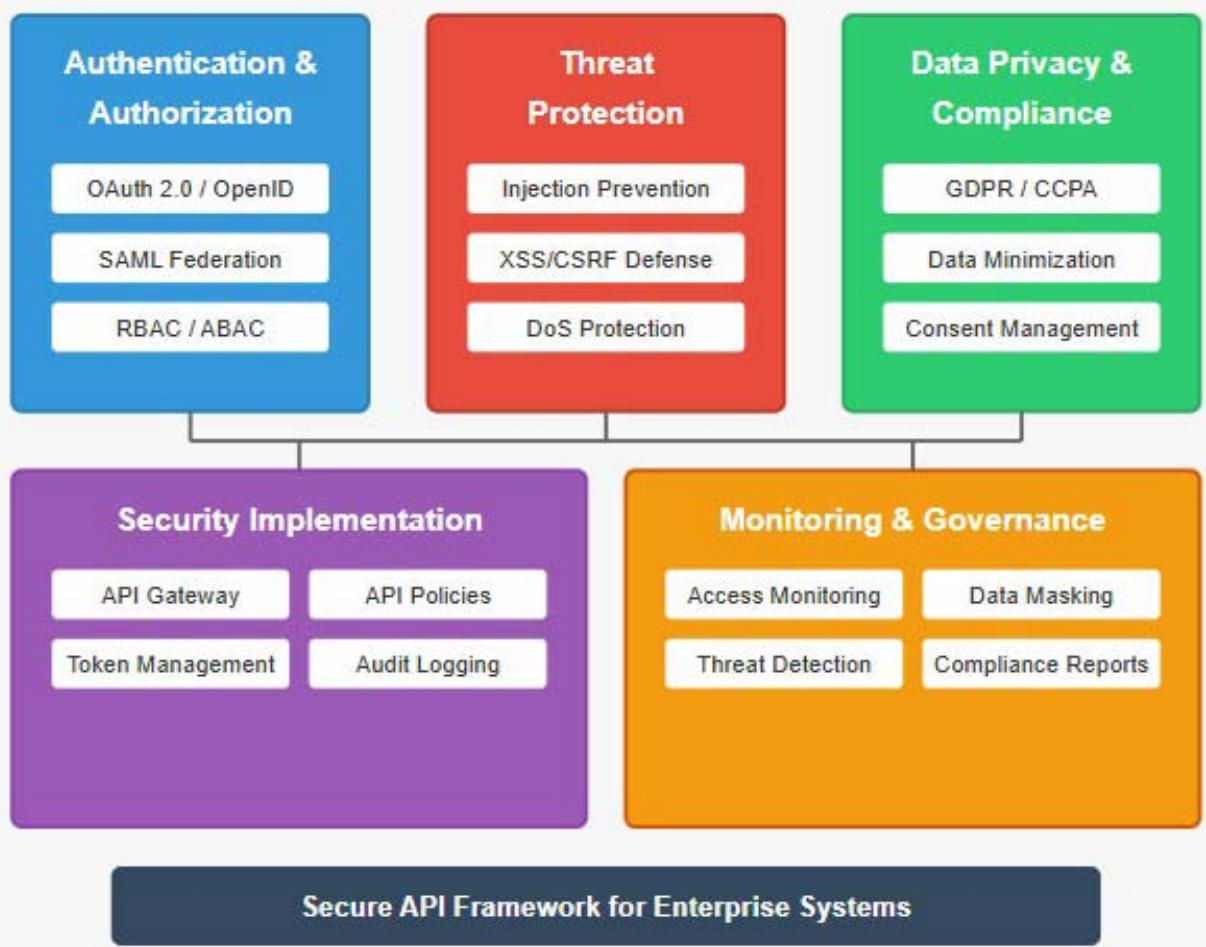 Fig. 1: API Security Framework for SAP S/4HANA Integration [5, 6]
### a) Authentication and Authorization
Controlling access to valuable business data means implementing strong verification methods that keep sensitive information protected while allowing legitimate business activities to proceed smoothly. The top-left portion of Figure 1 highlights these fundamental security elements [5].
The marketplace has widely adopted O Auth 2.0 combined with Open ID Connect as the preferred verification method for business interfaces. This approach uses specialized access tokens with clearly defined boundaries, giving companies precise control over what each connection can access without exposing actual login credentials [5].
Getting proper authorization requires more than just confirming identity. Role-based controls match system permissions to established job functions, while attribute-based systems make access decisions based on multiple factors, including user characteristics, resource sensitivity, and current circumstances [6].
### b) Threat Protection
Critical business systems remain targets for various threats, requiring organized protection strategies. The top-center section of Figure 1 reveals multiple protection layers needed to shield essential business operations [6].
Database injection attempts continue threatening enterprise interfaces. Effective defense requires thorough input checking and properly structured database queries that prevent attackers from manipulating data access [5]. When APIs connect to web applications, additional vulnerabilities emerge, requiring specialized defenses - content security rules, output encoding techniques, and anti-forgery tokens that prevent attackers from hijacking legitimate user sessions [6].
System overload attacks grow increasingly concerning as APIs become essential business infrastructure. Defending against these threats combines several techniques: limiting request volumes, establishing usage quotas, and detecting unusual patterns that might indicate malicious activity [6].
### c) Data Privacy and Compliance
Business data flowing through interfaces must meet strict regulatory standards, including GDPR and CCPA requirements. The top-right section of Figure 1 shows key privacy protection elements [6].
Limiting exposed information represents a core privacy principle - interfaces should return only data necessary for specific business functions. Practical implementation includes field-level restrictions, response filtering mechanisms, and thoughtful interface design focused on specific use cases [5]. Managing consent becomes equally important, with systems tracking and enforcing user preferences regarding how personal information gets processed.
Masking and anonymization techniques help protect sensitive details in system responses, significantly reducing exposure risk while preserving enough information value for legitimate business activities [5].
The lower portions of Figure 1 demonstrate how implementation practices, continuous monitoring, and governance frameworks work together, turning security principles into practical safeguards across business technology landscapes.
## IV. API MANAGEMENT PLATFORMS FOR SAP S/4HANA INTEGRATION
### a) Capabilities and Selection Criteria
Connecting business systems requires specialized tools that manage the entire lifecycle of interfaces. Management platforms form the backbone of any successful S/4HANA integration strategy, providing essential functions that keep connections secure, reliable, and properly governed [7].
At the core sits the gateway component - essentially a traffic manager that routes information requests, transforms data formats, and enforces security rules. Modern gateways handle numerous technical challenges, including converting between different protocols, restructuring data payloads, and applying security policies. Market experience shows that properly implemented gateways dramatically simplify integration while boosting system performance [8].
Developer resources make or break adoption rates. Successful platforms offer comprehensive support, including interactive testing tools, working code examples, security setup guides, and community forums where technical questions get answered quickly. Enterprise projects benefit most when these resources include business context alongside technical details, helping bridge communication gaps between subject matter experts and technical teams [7].
Tracking capabilities give visibility into what happens after deployment. Effective platforms monitor usage patterns, performance metrics, and business impacts. Particularly valuable for S/4HANA projects: connecting technical activity to actual business transactions helps both daily operations and strategic planning. These insights highlight optimization opportunities and demonstrate concrete returns on technology investments [8].
Choosing the right platform means evaluating several critical factors. Certification matters greatly, ensuring the vendor properly supports specific data formats and protocols used in enterprise environments. Deployment options significantly affect long-term costs and operational complexity. Many businesses now prefer mixed models that place core processing components on-site while managing configuration and analytics in the cloud [7].
### b) Leading API Management Platforms
The marketplace offers several proven solutions for enterprise integration needs, each bringing different strengths to specific business challenges. Market reports show more companies choosing API-based methods to link their essential business programs [8].
Software packages from the same company blend naturally with existing systems, typically offering ready-made connection tools and patterns that speed up setup work. These platforms typically require less setup effort for standard services compared to generic alternatives. Potential limitations might include less sophisticated traffic management capabilities or developer experience features compared to specialized offerings [7].
Independent management platforms emphasize strong security features and analytics capabilities while delivering exceptional performance. Standout capabilities often include advanced traffic handling techniques like gradual rollouts, automatic circuit breaking when problems occur, and sophisticated usage control. Monetization features help businesses that want to generate revenue from their interfaces. The main consideration is that these platforms might require additional integration work to connect with enterprise systems [8].
Combined platforms merge management and integration capabilities into unified environments. This approach creates consistent governance across various connection types and typically includes extensive adapter libraries that minimize custom development. Organizations with complex landscapes spanning both on-premises and cloud environments often see particularly strong results from these unified solutions [7].
### c) Implementation Best Practices
Successful API management follows established patterns, balancing technical needs with organizational and governance considerations. Market data shows that companies using structured implementation approaches achieve better outcomes faster than those using ad-hoc approaches [8].
Creating a central group focused on API excellence lays the groundwork for sustainable success. This group combines technical skills, business knowledge, and governance frameworks. Enterprise implementations see particularly good results when these teams include both business process specialists and technical experts working together to translate complex workflows into intuitive interfaces [7].
Designing interfaces before building them significantly improves outcomes. This approach reduces rework during development and creates happier developers. The most valuable aspect is keeping technical implementation details hidden behind clean, business-focused interfaces that shield consumers from underlying system complexity [8].
Table 2: Key Components of API Management Platforms for S/4HANA [7, 8]
<table><tr><td>Component</td><td>Function</td></tr><tr><td>Gateway</td><td>Routes requests, transforms data, and enforces security</td></tr><tr><td>Developer Portal</td><td>Provides documentation, code samples, and testing tools</td></tr><tr><td>Analytics</td><td>Monitors usage, performance, and business impact</td></tr><tr><td>Platform Selection</td><td>Considers certification, deployment options, and cost</td></tr><tr><td>Implementation</td><td>Requires a center of excellence, API-first design</td></tr></table>
## V. MICROSERVICES ARCHITECTURE AND CASE STUDIES
### a) Microservices Architecture for SAP S/4HANA Integration
Dividing complex software into smaller functional chunks complements API strategies when working with business systems. This method organizes services around actual business activities rather than technical functions, creating systems that speak business language instead of programmer jargon [9].
Each small service manages only its essential data, while S/4HANA remains the official source of critical business information. Common techniques include copying data with gradual updates, creating specialized views, and separating reading from writing [10].
Updates affect only small parts of the system instead of everything at once. Teams make focused improvements with less worry about breaking connections [9].
Several patterns help these connections work. The gateway pattern creates a single entry point for outside programs. Event-based integration reduces tight coupling between systems. The strangler pattern helps gradually replace old custom code with modern services [10].
### b) Manufacturing: Digital Supply Chain Transformation
A manufacturing business used APIs to revolutionize supply chain operations, sharing current inventory and production information while keeping S/4HANA as the central truth source [10].
The solution followed the three-layer approach: System APIs exposed fundamental data, Process APIs managed workflows, and Experience APIs created interfaces for suppliers, customers, and field teams [9].
Benefits included faster order fulfillment, reduced inventory costs, better supplier collaboration, and improved customer satisfaction [10].
### c) Retail: Omni channel Commerce Integration
A retail chain used API-led connectivity to blend shopping experiences across channels, making online and in-store shopping seamless while using unified systems [9].
The solution built APIs for inventory, customer profiles, and order management that enabled cross-channel shopping options [10].
The store chain saw more customers shopping across websites and physical locations, rolled out new features quicker, managed stock levels better, and kept more shoppers coming back [9].
### d) Financial Services: Modernization and Innovation
A bank implemented API-led connectivity to update core systems while enabling innovation. The solution created protected transaction APIs, controlled customer data APIs, and partner APIs for external collaboration [10].
The bank achieved lower integration costs, faster service introduction, successful fintech partnerships, and better regulatory compliance [9].
Table 3: Micro services Implementation Across Industries [9, 10]
<table><tr><td>Sector</td><td>Approach</td><td>Result</td></tr><tr><td>Architecture</td><td>Independent services</td><td>Business-aligned systems</td></tr><tr><td>Manufacturing</td><td>Layered APIs</td><td>Faster fulfillment</td></tr><tr><td>Retail</td><td>API ecosystem</td><td>Seamless shopping</td></tr><tr><td>Banking</td><td>Secure APIs</td><td>Innovation & compliance</td></tr></table>
## VI. CONCLUSION
Building bridges between business systems through reusable services represents a game-changing strategy for companies running S/4HANA. This method delivers both flexibility and stability - two qualities typically at odds in enterprise technology. The structured approach detailed throughout this article covers interface design, security controls, and management tools essential for success. Manufacturing plants, shops, and banks using these methods report actual benefits: production flows better, shoppers stay happier, new features launch quicker, and technology costs drop. The lasting power of this approach comes from fitting naturally with larger business improvement efforts, letting companies adjust to new market needs without breaking critical systems. This shifts how businesses view their enterprise software - not just as a record-keeping tool but as the foundation for future business growth.
Generating HTML Viewer...
References
10 Cites in Article
Cleo SAP Integration: How-To and Best Practices Guide.
Sagar Chaudhari (2025). API-Led Connectivity: Architecting Modern Enterprise Integration.
(2022). REST API Design: 4 Tips you should Start Applying to your ML Engineering Project.
Sachin Bhatt (2023). Implementing SAP S/4HANA on AWS: Challenges and Solutions for Large Enterprises.
Kacper Rafalski (2025). API Security Best Practices for Enterprise Protection in 2025.
Ivan Mans (2024). SAP Governance, Risk, Compliance (GRC): What is it?.
Moiz Syed,Ali,Tariq Rahim,Soomro (2019). Comparative Study of API Management Solutions.
Marco Ertel (2019). SAP Cloud Platform API Management und SAP API Business Hub.
No ethics committee approval was required for this article type.
Data Availability
Not applicable for this article.
How to Cite This Article
Vivek Banerjee. 2026. \u201cAPI-Led Connectivity for SAP S/4HANA: Unlocking Business Value through Reusable Services\u201d. Global Journal of Computer Science and Technology - G: Interdisciplinary GJCST-G Volume 25 (GJCST Volume 25 Issue G1): .
Explore published articles in an immersive Augmented Reality environment. Our platform converts research papers into interactive 3D books, allowing readers to view and interact with content using AR and VR compatible devices.
Your published article is automatically converted into a realistic 3D book. Flip through pages and read research papers in a more engaging and interactive format.
Organizations face mounting pressures to extract maximum value from SAP S/4HANA investments while maintaining market flexibility. This article presents API-led connectivity as a strategic catalyst transforming enterprise integration through layered architecture-system, process, and experience APIs-where business functions become reusable services. System APIs reveal critical company information, while process APIs manage intricate business tasks, and experience APIs shape output for different user needs. Keeping these connections secure requires strict access rules, layered safeguards, and proper data handling practices. Effective governance tools help companies monitor usage and scale connections across business partners. Factory operations flow more efficiently, retail stores connect online and in-person shopping effortlessly, and financial institutions bring new capabilities to market with less delay, creating competitive edges, reducing expenses, and building stronger customer relationships. Companies can respond to changing business conditions without endangering essential operations, elevating S/4HANA beyond basic accounting into a platform that drives business advancement and fresh opportunities.
Our website is actively being updated, and changes may occur frequently. Please clear your browser cache if needed. For feedback or error reporting, please email [email protected]
Thank you for connecting with us. We will respond to you shortly.