Each and every living thing on planet earth consists of at least one or more cells in their structure as an organism. A cell within each living thing has a chemical makeup that produces energy and is found in molecules that are supplied through its nutrition from the organism. This is considered the cell’s food source. Energy is produced as the cell breaks down its nutritional source from the organism then, the cell can perform functions that it generally carries out. From the energy produced the cell has the ability to provide respiration, create hormones, enzymes, and perform other functions that the cell carries out. In energy transference a particle moves into a cell, as the cell increases in mass it increases in density as density increases and particles accumulate in the cell, the cell is forced to expand. As the cell expands energy is created from the particles and energy is released. When energy is created and released the cell divides into two cells then the process replicates itself as long as there are particles that are moving into the cell to create energy. After the cell divides, particles have lost their energy until new particles move into the cell and begin the process again. For a particle to move into the cell a vacuum may be created to pull the particle to the cell.
## I. INTRODUCTION
In cellular function [1], the cell has more of a requirement for energy than basic survival. A cell needs to perform many tasks that will expend energy at a greater level than at inactivity and may depend on energy from the metabolism of food or from other alternatives [2]. In the quantum level, a particle must be absorbed or ingested into the cell for the cell to function [3]. As particles are absorbed the cell increases in density even after the metabolism of the cell has expended energy from the ingestion of particles to the cell, this makes the cell to become denser, heavier, and bigger. As density increases the cell grows larger and larger until the cell divides into two cells [4]. For the cell to divide there has to be energy to create the cell division. By introducing the Innovation the author had achieve a breakthrough cell division that allows the cell to grow as a fully functioning living cell [5]. During the release of energy there has to be a constant release energy, if the energy release is not a constant then the cell can be damaged during division. This constant is in line with the equation of physicist Albert Einstein's famous formula: $E = mc^2$ (Figure 3) where energy equals mass at the speed of light or in the case of an organism the metabolic effect [6] [7]. An unstable cell is a malfunctioning cell that has become unbalanced [8]. This cell has the inability to accept particles nutrition and other elements that allow proper function. To stabilize the cell a modulating factor must be introduced back into the cell. The modulating factor will then allow particles to move through the cell wall and accumulate and compress until the cell divides [9]. In the term before cell division proper nutrition for the cell may continue and other elements such as proteins hormones and enzymes may be taken in and released [10]. When particles penetrate into a cell, the cell becomes increased in density, heavy, and bigger. As a cell increases in density the cell becomes heavier and denser [11]. Quantum tunneling through a cell wall surface is required to penetrate the outer layer of the cell. This tunneling effect is accomplished in the crossing of the cell membrane and blood-brain barrier that separates the blood system from the nervous system. The Schrödinger equation has explained the effect of a Quantum Wave in particle distribution through nonsolid and solid structure [12]. It is believed that the Schrödinger effect produces a Quantum Wave from the particle and gives a pathway for nutrient intake [13]. The Schrödinger effect is that the cell may be penetrated through Quantum Tunneling.
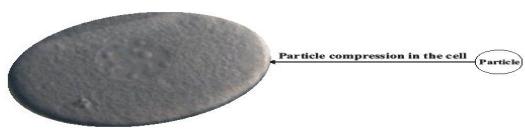 Figure 1: Particle accumulation and compression in the cell
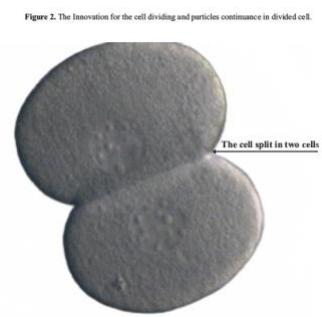
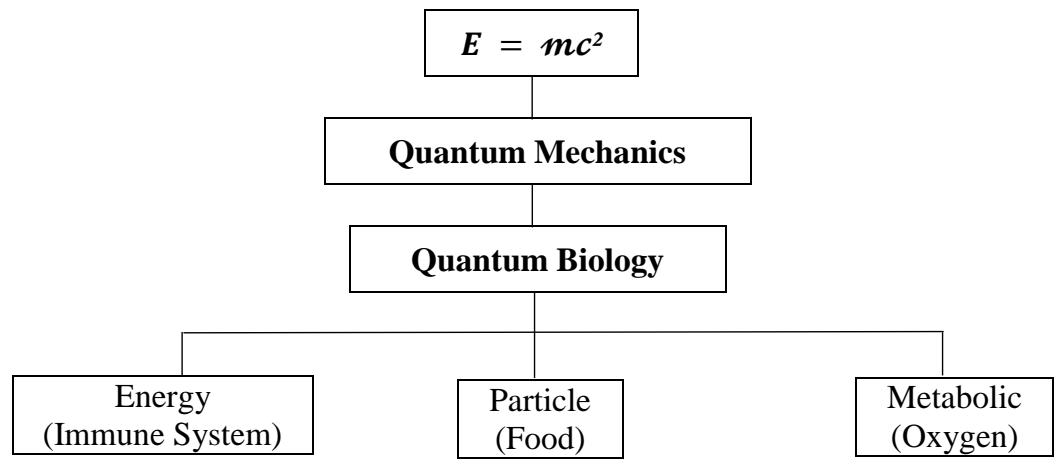 Figure 2: The Innovation for the cell dividing and particles continuance in divided cell. $\mathbf{E} = m c^{2}$
## II. METHODOLOGY
This unit of measurement had been replicated to show a consistent measurement relationship to the testing method. In observations and other testing methods, the patients overall health was shown to improve. Authors created a framework for evaluating the clinical benefit use of Real-World Evidence from U.S. Food and Drug Administration (FDA) guidance [14].
## III. RESULTS AND DISCUSSION - REALWORLD EVIDENCE PATIENT CLINICAL BENEFIT [15]
The observations compiled by licensed physicians and specialists in the medical field were entered and compared. It was observed that using Innovation provokes a significant response, i.e., is a reduction in a variety of symptoms for patients with Serious or Life-threatening conditions or diseases that required monitoring for doses and reactions by both the attending licensed physician, registered nurse, or another specialist in the medical field [16]. The X-ray taken in (Figure 4) and (Figure 5) are of a 58-year-old male that required two teeth to be replaced. The subject had been taking Innovation products prior to the removal and replacement of the subject teeth. In (Figure 4) you will notice the replacement sockets inserted for the teeth without bone overgrowth. After six months when the replacement teeth were to be inserted, you will notice in (Figure 5) that there has been an overgrowth of bone which had to be removed before
the insertion of the replacement teeth in (Figure 6). Evidence-Based Medicine is a set of principles and methods intended to ensure that to the greatest extent possible thru best clinical judgments or medical decisions are made [17]. To show the effects of the Schrödinger equation: for Quantum tunneling, comparing the Tiēu equation: for patient applications, and applying Einstein equation: for particle energy, it can be observed from patients suffering from Serious or Life-threatening illnesses [18] a Real-World Evidential effect on biologic organisms as referenced below.
a) Patient with Thalassemia Major of Serum Iron Overload Aspartate Transferase (AST), Alanine Transaminase (ALT), and Alkaline Phosphatase
J.C. is a 19-year-old male Asian that had been diagnosed with Thalassemia Major. His blood was so thick that it had trouble to move through his arteries. The subject had multiple sores on his skin and was constantly tired and had trouble getting out of bed even in the afternoon. The subject was almost incoherent and almost incoherent and had difficulty understanding commands.
Results: The subject began taking the Innovation substance and in a matter of hours the sores that were all over his body began to recede. After about a month the subject could get out of bed in the early morning and could function at work. The sores that had plagued him for a number of years were gone. The subject Platelet count also was greatly improved after in a matter of weeks. The subject was required to take blood transfusions on a weekly basis before taking the Innovation products. After taking the products for a month or so, the doctor lengthened the interval between transfusions as they were not needed with that frequency. The subject after taking the products improved his overall health.
Table 1: A chart the Innovation before and the Innovation after results
<table><tr><td>Date</td><td>ALK PHOS</td><td>AST (SGOT)</td><td>ALT (SGPT)</td></tr><tr><td>Before the Innovation: January; 2011</td><td>139</td><td>107</td><td>136</td></tr><tr><td>After the Innovation: February, 2011</td><td>137</td><td>67</td><td>93</td></tr><tr><td>March, 2011</td><td>135</td><td>76</td><td>85</td></tr><tr><td>April, 2011</td><td>119</td><td>69</td><td>78</td></tr><tr><td>May, 2011</td><td>121</td><td>60</td><td>73</td></tr><tr><td>June, 2011</td><td>133</td><td>58</td><td>75</td></tr><tr><td>July, 2011</td><td>123</td><td>68</td><td>74</td></tr><tr><td>August, 2011</td><td>106</td><td>57</td><td>63</td></tr></table>
### b) Patient with Liver Cancer
T.B. is a 72-year-old male White that was diagnosed with stage four liver cancer. The subject complained of excruciating pain and could not find relief from any source of medication or treatment.
Results: The subject began taking the Innovation products and in a matter of days the pain had subsided.
Table 2: A chart the Innovation before and the Innovation after results
<table><tr><td>Date</td><td>ALK PHOS</td><td>AST (SGOT)</td><td>ALT (SGPT)</td></tr><tr><td>Before the Innovation: December; 2007</td><td>163</td><td>46</td><td>68</td></tr><tr><td>After the Innovation: February, 2008</td><td>195</td><td>39</td><td>43</td></tr><tr><td>March, 2008</td><td>132</td><td>44</td><td>45</td></tr><tr><td>July, 2008</td><td>131</td><td>41</td><td>45</td></tr><tr><td>August, 2008</td><td>120</td><td>31</td><td>35</td></tr></table>
### c) Patient with Dental Implants and Oral Surgery
H.T. is a 58-year-old male Asian that required two replacement teeth.
Results: The subject began taking the Innovation to help with blood loss. When the dentist removed the teeth there was almost minimal blood loss and no pain medicine required. The healing process after teeth were removed was very fast with the doctor saying that the healing was that of a 20-year-old not a 58-year-old. When the dentist was ready to put new replacement
teeth in he was shacked that the bone had grown over the screw shocked and that he had to scrape back the bone to insert the replacements. The doctor said that he had never seen such bone growth after a procedure.
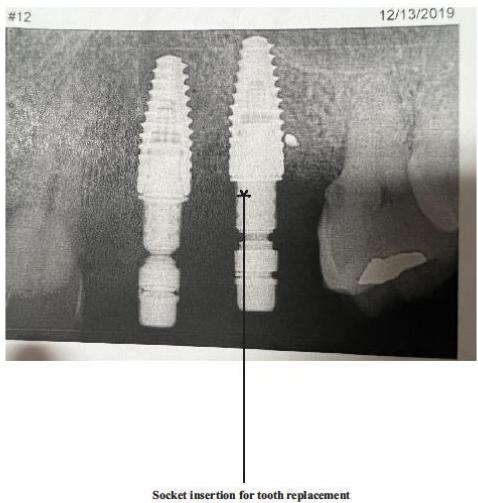 Figure 3: Quantum Biology: Energy (immune system), Particle (food), and Metabolic (oxygen).
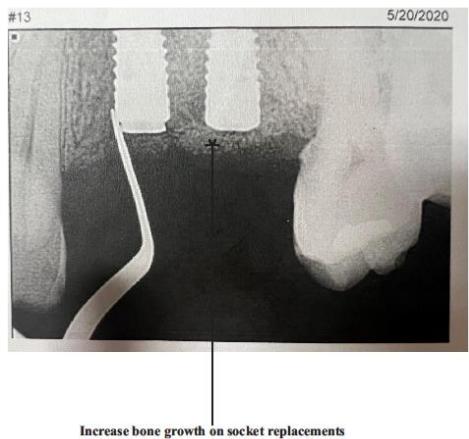 Figure 4: An X-ray photo of socket insertion for tooth replacement on December 13, 2019.
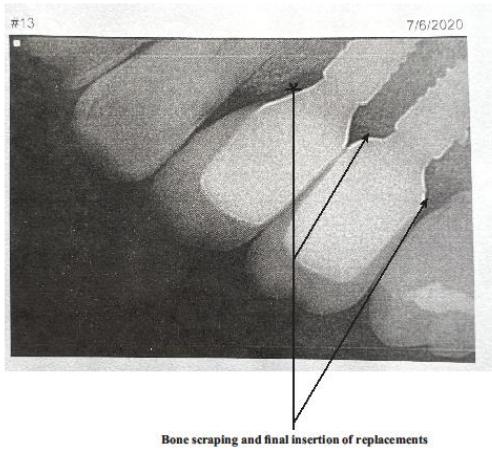 Figure 5: An X-ray photo six months after socket insertion of bone overgrowth on socket replacements on May 20, 2020 Figure 6: An X-ray shows the successful completion of the teeth replacements after bone scraping and final insertion of replacements on July 06, 2020.
The author have discovered that which is unlocking nature's secrets to the functioning of the living cell in quantum form. This breakthrough will move the future of science forward and transform science to find and create new discoveries and innovation [19]. In Quantum Biology, Quantum Mechanics, and Particle Physics, the Innovation is examined through equation and experimental data. The application can be performed on a diverse population of biological organisms. This means that the Innovation can be applied to humans, but also be used in the function of animals, and plant structures. This gives the Innovation a broad spectrum of uses for the vertebrae the invertebrate and the botanical kingdom to, and for the improvement of nature itself. The inclusion of all living things gives positivity to the quantum method. There is a belief that the Innovation has altered or produced a new particle or has created an unknown function for an existing particle that has eluded scientists in the past. This belief may further be followed where a particle can penetrate through cellular tissues in, and effect repair to damaged areas of the organism. To delineate particle transference, a particle may penetrate and move by potential energy from one side of a solid mass to another. If the particle cannot achieve complete penetration without exiting the mass then the particle becomes part of the mass. When this is viewed through a scientific equation the Tiēu Equation applies to particle penetration and movement. The Tiēu Equation merges wave function or Hamiltonian (Quantum Mechanics) [20] into temperature in thermodynamics [21] that excites particles to release energy for particle movement. This function describes the absorption or penetration that allows the Innovation to cross the blood-brain barrier. This penetration does not cause damage to the barrier but allows the Innovation into the nervous system by a possible layering effect. Penetration of the barrier may be done by only a vibration and vacuum fluctuations. This effect may be explained by the Theory of String that gives a detailed explanation of wave function in particles. Particle Entanglement is the measurement from the outcomes of an object state I Particle-A which is correlated with the measurement of outcomes from object state II Particle-B (two independents then events with solution, (then-PA(y1) ⇌ event-PB(y2))).
The Tieu equation by the author accurately predicted the Innovation as defined for Real-World Evidence as pre-clinical data regarding the usage under $21^{\text{st}}$ Century Cures Act (Cures Act) [22], or the potential benefits or risks, of a drug derived from sources other than traditional clinical trials.
## IV. CONCLUSION
The Equations that demonstrate the effects of particle movement and cellular development are shown as successful through the experimental treatments of patients as Real-World Evidence to guide the use of the Innovation for future for the benefit of biological organisms. By showing particle accumulation and compression of the cell through Quantum Tunneling, Quantum Biology, and Quantum Mechanics can combine to learn and further its understanding of life and its function.
### ACKNOWLEDGEMENT
The authors would like to thank all that have contributed and have made contributions to the disciplines of science especially in contributions to Quantum Sciences that have made this article possible. The authors further acknowledge and thank the medical staff of medical and all physicians' professionalism in regards to patient care for their application of Real-World Data to patient care that makes this article possible.
Ruangyote Pilajun,Ratchataporn Lunsin,Chitraporn Yeanpet,Areerat Lunpha,Pramote Paengkoum,Chaiwat Jekmadan (2023). Protein requirement for maintenance of growing Boer crossbred doe.
Arthur Koch (1985). How bacteria grow and divide in spite of internal hydrostatic pressure.
Huu Tieu,Martin Loeffler (2022). FDA Approves First Dietary Supplement under New Drug Application with the Indication of Serious or Life-Threatening Illnesses.
(1997). Nutrition and the Immune System.
Gaetana Napolitano,Gianluca Fasciolo,Paola Venditti (2022). The Ambiguous Aspects of Oxygen.
(2023). Effects of Acute and Chronic Disease on Cell Junction in Mouse Liver.
Huu Tieu,Martin Loeffler (2022). Life Is Quantum Biology Effects Explained from the Schrödinger Equation, Serious or Life-Threatening Conditions or Diseases, and COVID-19 Results.
Shan Zhao,Kira Makarova,Wenchao Zheng,Yafei Liu,Le Zhan,Qianqian Wan,Han Gong,Mart Krupovic,Joe Lutkenhaus,Xiangdong Chen,Eugene Koonin,Shishen Du (2023). Widespread PRC barrel proteins play critical roles in archaeal cell division.
Kristi Miller,Cesar Vargas-Garcia,Abhyudai Singh,James Moseley (2022). The fission yeast cell size control system integrates pathways measuring cell surface area, volume, and time.
H-D Doebner,Gerald Goldin (1996). Introducing nonlinear gauge transformations in a family of nonlinear Schrödinger equations.
Timothy Wallstrom (1994). Inequivalence between the Schrödinger equation and the Madelung hydrodynamic equations.
S Huu (2016). TIEU Request for FDA to Establish Regenerating Human Cells as Law on December 13.
President Barack,H Obama Signed the 21st Century CURES Act into FDA Regulation and Law.
(2021). Clinical Categorization Algorithm (CLICAL) and Machine Learning Approach (SRF-CLICAL) to Predict Clinical Benefit to Immunotherapy in Metastatic Melanoma Patients: Real-World Evidence from the Istituto Nazionale Tumori IRCCS Fondazione Pascale.
Huu Tieu,Martin Loeffler (2023). Patient Quality-of-Life, Providers with Incentive Payments, Real-World Evidence, and Reducing Healthcare Costs through New Innovations.
P John,Ioannisdis Unknown Title.
Huu Tieu,Martin Loeffler (2023). Tiêu Equation Experimentation of Understanding by Energy Transfer Quantum Mechanics.
Bey Goh,Eng Tong,Priyia Pusparajah (2020). Quantum Biology: Does quantum physics hold the key to revolutionizing medicine?.
(2024). 14 Hamiltonian quantum mechanics.
Carlos Bassetto,Bernardo Pinto,Ramon Latorre,Francisco Bezanilla (2023). Ion channel thermodynamics studied with temperature jumps measured at the cell membrane.
No ethics committee approval was required for this article type.
Data Availability
Not applicable for this article.
How to Cite This Article
Huu S. Tieu. 2026. \u201cParticle Becomes Energy = Energy Becomes Mass\u201d. Global Journal of Science Frontier Research - A: Physics & Space Science GJSFR-A Volume 23 (GJSFR Volume 23 Issue A4): .
Explore published articles in an immersive Augmented Reality environment. Our platform converts research papers into interactive 3D books, allowing readers to view and interact with content using AR and VR compatible devices.
Your published article is automatically converted into a realistic 3D book. Flip through pages and read research papers in a more engaging and interactive format.
Each and every living thing on planet earth consists of at least one or more cells in their structure as an organism. A cell within each living thing has a chemical makeup that produces energy and is found in molecules that are supplied through its nutrition from the organism. This is considered the cell’s food source. Energy is produced as the cell breaks down its nutritional source from the organism then, the cell can perform functions that it generally carries out. From the energy produced the cell has the ability to provide respiration, create hormones, enzymes, and perform other functions that the cell carries out. In energy transference a particle moves into a cell, as the cell increases in mass it increases in density as density increases and particles accumulate in the cell, the cell is forced to expand. As the cell expands energy is created from the particles and energy is released. When energy is created and released the cell divides into two cells then the process replicates itself as long as there are particles that are moving into the cell to create energy. After the cell divides, particles have lost their energy until new particles move into the cell and begin the process again. For a particle to move into the cell a vacuum may be created to pull the particle to the cell.
Our website is actively being updated, and changes may occur frequently. Please clear your browser cache if needed. For feedback or error reporting, please email [email protected]
Thank you for connecting with us. We will respond to you shortly.