## I. INTRODUCTION
### a) Background
The global transportation sector is facing increasing challenges related to air pollution, greenhouse gas emissions, and climate change. As a result, there is a growing need to shift towards cleaner and more sustainable modes of transportation. Electric vehicles (EVs) have gained significant attention as a promising solution to reduce emissions and dependence on fossil fuels.
Central to the operation of EVs are lithium-ion batteries, which provide the necessary energy storage capacity for electric propulsion. Lithium-ion batteries have emerged as a leading technology in the field of energy storage due to their high energy density, low self-discharge rate, and versatile design options. However, ensuring the reliability and safety of these batteries remains a critical aspect for the widespread adoption of EVs. Figure 1 explain the Electric Vehicle architecture in details. This report aims to assess the reliability and safety of lithium-ion batteries in electric vehicles, taking into account the progress made in the field, the challenges that still need to be addressed, and the environmental implications associated with battery production, usage, and disposal. By thoroughly examining these aspects, the thesis seeks to contribute to the understanding of the current state of lithium-ion battery technology and provide insights into the measures needed to enhance their reliability, safety, and overall sustainability.
Through a comprehensive analysis of battery degradation, thermal management techniques, failure mechanisms, and the need for standardization and regulation, this research will identify the key issues and obstacles that must be overcome to ensure the safe and reliable operation of lithium-ion batteries in electric vehicles. Furthermore, the environmental implications of lithium-ion batteries, including their material extraction, manufacturing processes, and end-of-life management, will be evaluated to gain a holistic understanding of their overall sustainability.
By addressing these crucial aspects, this research endeavors to contribute to the advancement of reliable and safe lithium-ion battery technology, paving the way for the wider adoption of electric vehicles as a sustainable mobility solution. Ultimately, this transition to cleaner transportation options can significantly mitigate environmental impacts, improve air quality, and create a more sustainable and resilient transportation system for future generations
### b) Research Objectives
- Assess the current state of reliability and safety of lithium-ion batteries used in electric vehicles.
- Identify the key challenges and obstacles in ensuring the reliability and safety of lithium-ion batteries in electric vehicles.
- Evaluate advancements in battery management systems, materials, and designs to enhance the reliability and safety of lithium-ion batteries.
- Investigate the failure mechanisms of lithium-ion batteries in electric vehicles and their impact on reliability and safety.
- Analyze the environmental implications of lithium-ion batteries, including their production, usage, and disposal, in order to identify strategies for minimizing their environmental impact.
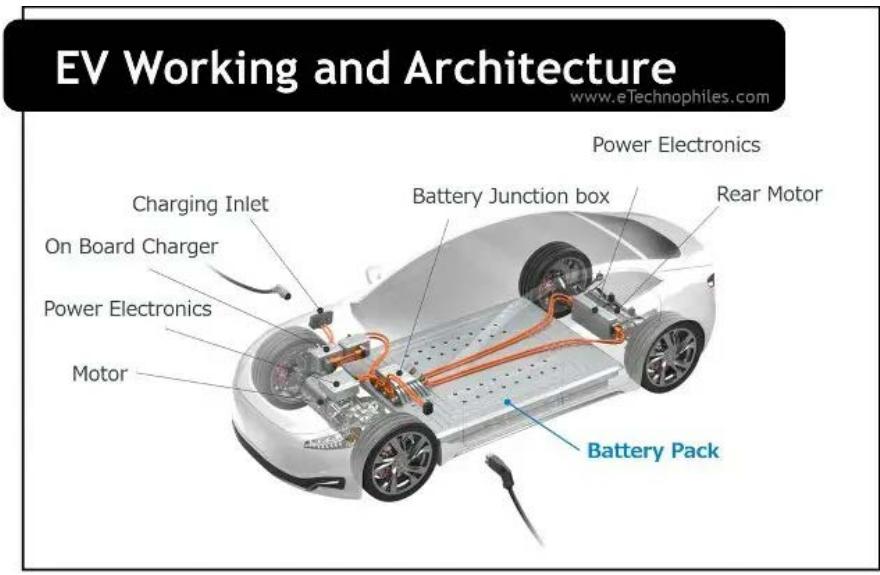 Figure 1: Electric Vehicle architecture
## II. LITHIUM-ION BATTERIES IN ELECTRIC VEHICLES
### a) Overview of Lithium-Ion Batteries
Lithium-ion batteries are rechargeable energy storage devices widely used in electric vehicles (EVs) due to their high energy density, lightweight design, and long cycle life. These batteries operate based on the movement of lithium ions between two electrodes, namely the cathode and the anode, through an electrolyte. The cathode is typically composed of lithium metal oxides, such as lithium cobalt oxide (LiCoO2), lithium nickel manganese cobalt oxide (LiNiMnCoO2), or lithium iron phosphate (LiFePO4). The anode, on the other hand, is commonly made of graphite or other carbon-based materials.
### b) Importance of Lithium-Ion Batteries in Electric Vehicles
Lithium-ion batteries play a critical role in the successful deployment of electric vehicles. As the primary energy storage system, they provide the necessary power for the vehicle's propulsion, enabling emission-free and efficient transportation. The importance of lithium-ion batteries in EVs stems from their ability to deliver high energy density, which allows for longer driving ranges and shorter charging times compared to alternative battery technologies. Moreover, lithium-ion batteries offer a higher specific energy (energy stored per unit mass) and energy efficiency, contributing to improved overall vehicle performance.
### c) Types of Lithium-Ion Batteries Used in EVs
There are several types of lithium-ion batteries utilized in electric vehicles, each with distinct characteristics and chemistries. Common types include:
## i. Lithium Iron Phosphate (LiFePO4) Batteries
- Known for their enhanced safety and thermal stability.
- Suitable for applications requiring high current ratings and long cycle life.
- Often used in commercial electric vehicles and hybrid electric vehicles.
## ii. Lithium Nickel Manganese Cobalt Oxide (NMC) Batteries
- Offers a balance between energy density, power capability, and longevity.
- Widely adopted in mainstream electric vehicle models due to their favorable performance characteristics.
- Provide a good compromise between high specific energy and specific power.
## iii. Lithium Nickel Cobalt Aluminum Oxide (NCA) Batteries
- Known for their high specific energy and power density.
- Commonly used in electric vehicles that prioritize energy density and longer driving ranges.
- Often found in premium electric vehicle models.
### d) Comparison of Different Lithium-Ion Battery Chemistries
When comparing the different lithium-ion battery chemistries used in electric vehicles, several factors come into play, including energy density, power capability, cycle life, safety, and cost. Lithium-ion batteries with higher energy densities offer longer driving ranges, while those with higher power capabilities enable quicker acceleration and regenerative braking. Additionally, cycle life reflects the battery's lifespan before significant capacity degradation occurs, while safety considerations involve resistance to thermal runaway and the risk of thermal events. Lastly, cost plays a crucial role in the commercial viability of electric vehicles.
By understanding the various lithium-ion battery chemistries and their characteristics, manufacturers and researchers can tailor battery systems to specific vehicle requirements and optimize performance, reliability, and safety. This knowledge aids in the advancement of electric vehicle technology and the ongoing development of more efficient and sustainable transportation solutions.
## III. FAILURE MECHANISMS OF LITHIUM-ION BATTERIES
### a) Chemical Failure Mechanisms
Chemical failure mechanisms in lithium-ion batteries can result from various processes, including electrolyte decomposition, active material dissolution, and loss of lithium. These mechanisms can lead to capacity loss, decreased battery performance, and potentially hazardous conditions. Understanding and mitigating these chemical failure modes are crucial for enhancing the reliability and safety of lithium-ion batteries in electric vehicles. Figure 2. explain the various condition of failure of batteries in EVs.
Table 1: Chemical Failure Mechanisms in Lithium-Ion Batteries
<table><tr><td>Chemical Failure Mechanism</td><td>Description</td><td>Impact</td></tr><tr><td>Electrolyte Decomposition</td><td>Breakdown of the electrolyte due to high voltage, elevated temperatures, or prolonged cycling</td><td>Formation of gas, capacity loss, increased internal resistance</td></tr><tr><td>Active Material Dissolution</td><td>Dissolution of active materials from the electrodes into the electrolyte, resulting in capacity fade</td><td>Reduced electrode performance, increased impedance</td></tr><tr><td>Loss of Lithium</td><td>Irreversible loss of lithium ions from the electrodes, leading to reduced capacity and irreversible performance degradation</td><td>Capacity loss, decreased overall battery performance</td></tr><tr><td>Solid-Electrolyte Interphase (SEI) Formation</td><td>Formation of a passivation layer on the electrode surface, affecting ion transport and leading to capacity degradation</td><td>Increased impedance, reduced cycling stability</td></tr></table>
### b) Thermal Failure Mechanisms
Thermal failure mechanisms in lithium-ion batteries can result in severe safety risks, including thermal runaway, fire, or explosion. These mechanisms often arise due to internal short circuits, external abuse conditions, or inadequate thermal management systems. Understanding and effectively managing thermal failure modes are crucial to ensure the safety and reliability of lithium-ion batteries in electric vehicles.
Table 2: Thermal Failure Mechanisms in Lithium-Ion Batteries
<table><tr><td>Thermal Failure Mechanism</td><td>Description</td><td>Impact</td></tr><tr><td>Internal Short Circuit</td><td>Unintentional electrical connection between the positive and negative electrodes within the battery</td><td>Heat generation, temperature rise, potential thermal runaway</td></tr><tr><td>External Abuse Conditions</td><td>Exposure to high temperatures, physical stress, or improper handling</td><td>Risk of thermal runaway, fire, or explosion</td></tr><tr><td>Inadequate Thermal Management</td><td>Insufficient cooling or heating systems to maintain optimal temperature range</td><td>Capacity loss, power failure, reduced battery performance, potential safety hazards</td></tr></table>
### c) Impact of Design, Integration, Manufacturing, and Handling on Failure
Design, integration, manufacturing, and handling practices significantly influence the failure mechanisms and overall reliability of lithium-ion batteries. Proper attention to these aspects is necessary to minimize risks and ensure the safe and reliable operation of batteries in electric vehicles.
Table 3: Impact of Design, Integration, Manufacturing, and Handling on Battery Failure
<table><tr><td>spect</td><td>Description</td><td>Impact</td></tr><tr><td>Design</td><td>Considerations such as electrode structure, separator choice, and cell packaging</td><td>Performance, cycle life, and safety of the battery</td></tr><tr><td>Integration</td><td>Proper assembly and connections within the battery pack and vehicle</td><td>Overall pack performance, risk of short circuits or thermal events</td></tr><tr><td>Manufacturing</td><td>Quality control, process optimization, and consistent production</td><td>Uniform battery performance, reduced variability, minimized defects</td></tr><tr><td>Handling</td><td>Proper transportation, storage, and maintenance procedures</td><td>Prevention of physical damage, reduction of safety risks, prolonged battery lifespan</td></tr></table>
By understanding the chemical and thermal failure mechanisms, as well as the impact of design, integration, manufacturing, and handling, manufacturers, researchers, and policymakers can implement strategies to enhance the reliability and safety of lithium-ion batteries in electric vehicles. This knowledge can guide the development of robust battery systems, effective thermal management strategies, and standardized manufacturing and handling practices, ultimately ensuring the successful and widespread adoption of electric vehicles.
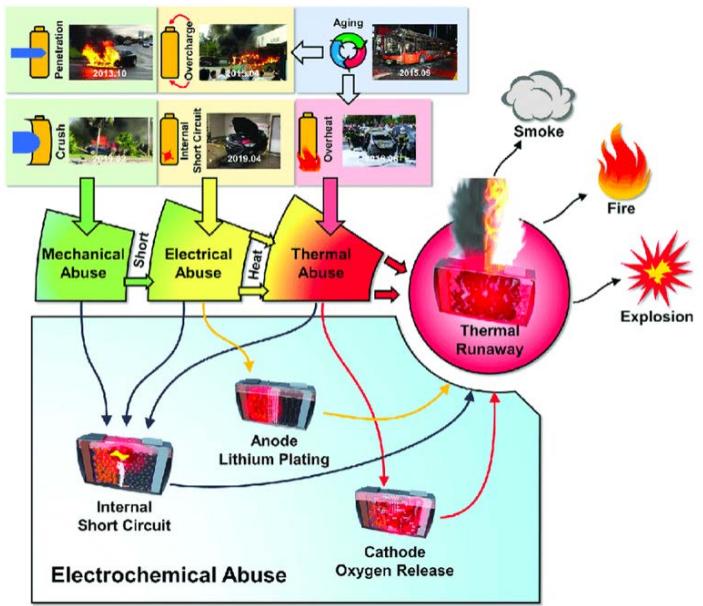 Figure 2: Various conditions of failure of batteries
## IV. BATTERY THERMAL MANAGEMENT SYSTEMS
### a) Importance of Battery Thermal Management
Battery thermal management is a crucial aspect of ensuring the reliability and safety of lithium-ion batteries in electric vehicles. Lithium-ion batteries are sensitive to temperature variations, and operating outside the optimal temperature range can significantly impact their performance, cycle life, and safety. Proper thermal management systems help regulate the temperature of the battery pack, maintaining it within the recommended range and mitigating the adverse effects of extreme temperatures.
### b) Optimal Temperature Range for Lithium-Ion Batteries
Lithium-ion batteries exhibit optimal performance within a specific temperature range. While the exact range may vary depending on the battery chemistry and design, it is generally recommended to operate lithium-ion batteries within a temperature range of approximately $20^{\circ}\mathrm{C}$ to $45^{\circ}\mathrm{C}$ (68°F to 113°F). Operating within this range ensures efficient battery performance, minimizes capacity loss, and reduces the risk of thermal events.
### c) Impact of High and Low Temperatures on Battery Performance and Safety
Extreme temperatures, both high and low, can have detrimental effects on battery performance and safety. Operating at high temperatures accelerates degradation processes within the battery, leading to capacity loss, reduced cycle life, and increased internal resistance. It can also increase the risk of thermal runaway, causing a rapid and uncontrollable increase in temperature, potentially leading to fire or explosion. On the other hand, low temperatures can increase the battery's internal resistance, limiting its power output
and reducing its available capacity. Figure 3 shows the impact of temperature on the performance of batteries.
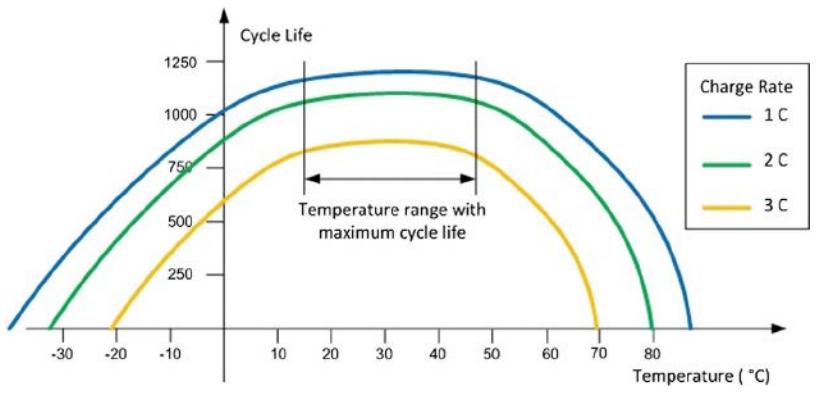 Figure 3: Impact of Temperature on Lithium-Ion Battery Performance.
The figure above illustrates the relationship between temperature and key battery performance parameters, such as capacity, power output, and efficiency. It demonstrates the decline in battery performance as temperatures deviate from the optimal range.
### d) Role of Battery Thermal Management Systems in Reliability and Safety
Battery thermal management systems play a vital role in maintaining the temperature of lithium-ion battery packs within the optimal range. These systems typically incorporate cooling and/or heating mechanisms to regulate the battery temperature during various operating conditions. They help dissipate excess heat generated during charging or discharging, preventing thermal runaway and ensuring safe battery operation. Additionally, thermal management systems help maintain a uniform temperature distribution across the battery pack, avoiding hotspots that can accelerate degradation and compromise battery performance.
Table 1: Key Components of Battery Thermal Management Systems
<table><tr><td>Component</td><td>Description</td></tr><tr><td>Cooling System</td><td>Heat exchange mechanisms, such as liquid cooling or air cooling, to dissipate excess heat from the battery</td></tr><tr><td>Heating System</td><td>Provision of controlled heating during cold temperatures to maintain battery performance</td></tr><tr><td>Thermal Sensors</td><td>Temperature sensors strategically placed to monitor the battery's temperature and provide feedback for temperature regulation</td></tr><tr><td>Control System</td><td>Intelligent control algorithms to monitor and adjust the cooling or heating systems based on the battery's temperature and other operating parameters</td></tr></table>
The integration of effective battery thermal management systems in electric vehicles ensures optimal battery performance, prolongs battery life, and enhances overall safety. By maintaining the battery temperature within the recommended range, these systems contribute to the reliable and sustainable operation of lithium-ion batteries in electric vehicles.
## V. SOLUTIONS FOR ENHANCING LITHIUM-ION BATTERY RELIABILITY AND SAFETY
Lithium-ion battery reliability and safety are critical factors for the widespread adoption of electric vehicles. To address the challenges and improve the performance of these batteries, several solutions have been developed. This section explores key strategies, including advanced battery management systems, materials and design advancements, integrated safety features, and recycling and end-of-life considerations.
### a) Advanced Battery Management Systems
Advanced battery management systems (BMS) play a crucial role in monitoring and controlling critical parameters of lithium-ion batteries. They enhance battery reliability and safety by actively managing charging and discharging processes, monitoring cell voltages and temperatures, and implementing appropriate safety measures. BMS also provide important diagnostic information, allowing early detection of potential failures and enabling preventive actions. These systems contribute to optimal battery performance, prolong cycle life, and mitigate safety risks.
Table 1: Key Features of Advanced Battery Management Systems
<table><tr><td>Battery Management System Features</td><td>Description</td></tr><tr><td>State of Charge (SOC) Estimation</td><td>Accurate estimation of the remaining capacity in the battery</td></tr><tr><td>State of Health (SOH) Monitoring</td><td>Continuous monitoring of the battery's health and degradation over time</td></tr><tr><td>Thermal Management Control</td><td>Regulation of battery temperature to ensure optimal operating conditions</td></tr><tr><td>Voltage and Current Monitoring</td><td>Real-time monitoring of cell voltages and currents to detect anomalies</td></tr><tr><td>Cell Balancing</td><td>Equalization of charge/discharge levels among cells to maintain uniform performance</td></tr><tr><td>Safety Shutdown Mechanisms</td><td>Activation of safety protocols in case of abnormal operating conditions</td></tr><tr><td>Communication Interface</td><td>Exchange of information between the battery system and external devices</td></tr></table>
### b) Materials and Design Advancements
Materials and design advancements play a crucial role in enhancing the reliability and safety of lithium-ion batteries. Improvements in electrode materials, such as the development of new cathode and anode materials with higher energy density and improved stability, can significantly enhance battery performance and longevity. Additionally, advancements in cell design, including novel architectures and improved electrolyte formulations, contribute to better thermal management, reduced internal resistance, and improved cycling stability.
### c) Integrated Safety Features
Integrated safety features within lithium-ion batteries further enhance reliability and safety. These features include mechanisms such as shutdown separators, thermal shutdown devices, and pressure relief valves. Shutdown separators, for instance, inhibit the flow of ions and prevent thermal runaway during abnormal conditions. Thermal shutdown devices detect excessive temperatures and trigger safety measures to prevent overheating. Pressure relief valves release built-up pressure in case of battery abuse or failure, mitigating the risk of explosion.
Table 2: Integrated Safety Features in Lithium-Ion Batteries
<table><tr><td>Integrated Safety Features</td><td>Description</td></tr><tr><td>Shutdown Separators</td><td>Separator materials that inhibit ion flow and prevent thermal runaway</td></tr><tr><td>Thermal Shutdown Devices</td><td>Sensors and circuitry that detect excessive temperatures and initiate safety measures</td></tr><tr><td>Pressure Relief Valves</td><td>Mechanisms that release built-up pressure to prevent explosion</td></tr><tr><td>Flame Retardant Materials</td><td>Materials incorporated into battery components to reduce flammability</td></tr></table>
### d) Recycling and End-of-Life Considerations
Recycling and proper end-of-life management of lithium-ion batteries are essential for sustainability and environmental protection. Recycling processes aim to recover valuable materials from spent batteries, such as lithium, cobalt, nickel, and other metals. These materials can be reused in the production of new batteries, reducing the demand for raw materials and minimizing environmental impact. Additionally, safe and efficient disposal methods ensure that batteries do not end up in landfills, preventing potential contamination and harmful effects on ecosystems.
Incorporating these solutions and strategies into the design, manufacturing, and usage of lithium-ion batteries for electric vehicles contributes to their enhanced reliability, safety, and sustainability. Advanced battery management systems, materials and design advancements, integrated safety features, and recycling practices are key enablers for the continued development and adoption of electric vehicles as a cleaner and more sustainable transportation option.
## VI. ENVIRONMENTAL IMPLICATIONS
The environmental implications of lithium-ion batteries used in electric vehicles (EVs) are crucial considerations for ensuring the sustainability of transportation. This section explores the environmental aspects related to lithium-ion batteries, including their role in sustainable transportation, recycling and resource recovery, and measures to minimize their environmental impacts.
### a) Sustainable Transportation and Lithium-Ion Batteries
Lithium-ion batteries play a significant role in enabling sustainable transportation through the electrification of vehicles. EVs powered by lithium-ion batteries offer several environmental benefits compared to conventional internal combustion engine vehicles. These benefits include reduced greenhouse gas emissions, improved air quality, and decreased reliance on fossil fuels. By transitioning to electric vehicles, societies can mitigate the adverse environmental impacts associated with conventional vehicles, such as air pollution and climate change.
### b) Recycling and Resource Recovery
The recycling and resource recovery of lithium-ion batteries are critical for minimizing their environmental footprint and reducing the demand for raw materials. Recycling processes aim to recover valuable materials from spent batteries, including lithium, cobalt, nickel, and other metals. These materials can be reused in the production of new batteries, reducing the reliance on mining and the associated environmental and social impacts. Additionally, recycling reduces the environmental risks associated with improper disposal and prevents the release of hazardous substances into the environment.
Table 1: Environmental Benefits of Recycling Lithium-Ion Batteries
<table><tr><td>Environmental Benefits</td><td>Description</td></tr><tr><td>Resource Conservation</td><td>Recovery of valuable materials reduces the need for new resource extraction</td></tr><tr><td>Reduced Greenhouse Gas Emissions</td><td>Decreased energy consumption and emissions associated with primary production</td></tr><tr><td>Waste Minimization</td><td>Diverting spent batteries from landfills and preventing potential environmental contamination</td></tr><tr><td>Energy Savings</td><td>Lower energy requirements in recycling compared to primary production</td></tr></table>
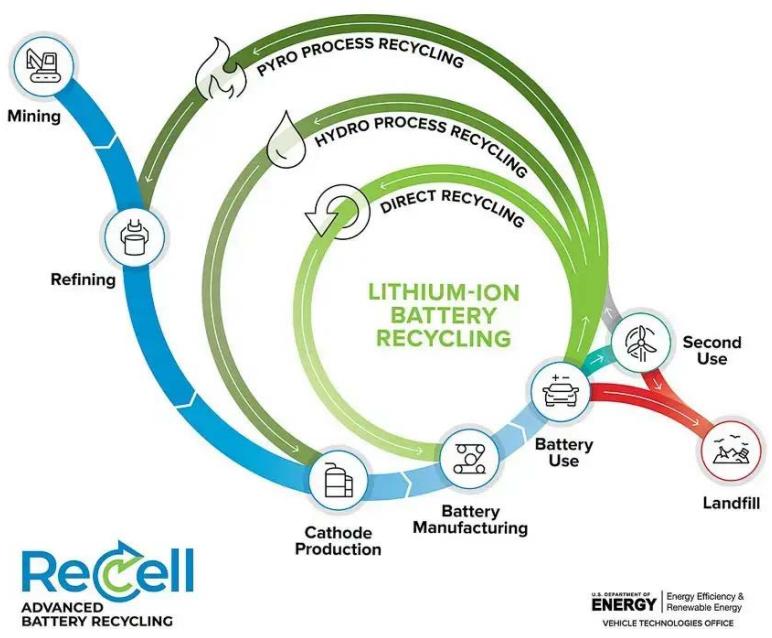 LITHIUM-ION BATTERY LIFECYCLE Figure 4: Lithium-Ion Battery Recycling Process
The figure 4 above illustrates the general process of lithium-ion battery recycling, which involves collection, dismantling, and separation of battery components, followed by material recovery and refining.
### c) Minimizing Environmental Impacts of Lithium-Ion Batteries
To minimize the environmental impacts of lithium-ion batteries throughout their lifecycle, several measures can be implemented. These measures include:
Sustainable Battery Manufacturing: Promoting sustainable manufacturing practices that reduce energy consumption, waste generation, and emissions during battery production.
Design for Environment: Incorporating eco-design principles in battery development to optimize resource efficiency, recyclability, and ease of disassembly.
Life Cycle Assessment: Conducting life cycle assessments to evaluate the environmental impacts of batteries from raw material extraction to disposal and identifying hotspots for improvement.
Responsible Disposal: Establishing proper collection, disposal, and recycling systems to ensure spent batteries are handled and disposed of safely, minimizing environmental and health risks.
Implementing these measures requires collaboration among stakeholders, including battery manufacturers, policymakers, recycling facilities, and consumers. By adopting a holistic approach to minimize the environmental impacts of lithium-ion batteries, the transition to electric vehicles can contribute to a more sustainable and environmentally responsible transportation system.
In conclusion, the environmental implications of lithium-ion batteries in electric vehicles are of utmost importance for achieving sustainable transportation. By considering sustainable manufacturing, promoting recycling and resource recovery, and implementing measures to minimize environmental impacts, the lifecycle of lithium-ion batteries can be managed in an environmentally responsible manner. These efforts contribute to the reduction of greenhouse gas emissions, resource conservation, and the creation of a more sustainable and resilient transportation system for the future.
## VII. CHALLENGES AND FUTURE DIRECTIONS
### a) Current Challenges in Lithium-Ion Battery Reliability and Safety
Despite the significant advancements in lithium-ion battery technology, several challenges still exist in ensuring their reliability and safety in electric vehicles. Some of the current challenges include:
Battery Degradation: Lithium-ion batteries experience degradation over time, leading to capacity loss and reduced performance. Understanding and mitigating degradation mechanisms are essential for prolonging battery life and maintaining optimal performance.
Thermal Management: Efficient thermal management is critical to prevent excessive temperature rise and maintain the battery within the optimal temperature range. Achieving effective cooling and heating strategies is vital to mitigate thermal-related failures and ensure safe battery operation.
Safety and Failure Mechanisms: Lithium-ion batteries can be prone to safety issues such as thermal runaway, short circuits, and electrolyte decomposition. Identifying and understanding failure mechanisms and developing robust safety measures are essential to prevent catastrophic events and ensure safe battery operation.
Standardization and Regulation: The absence of comprehensive standards and regulations specific to lithium-ion batteries in electric vehicles poses challenges for ensuring consistent quality, safety, and performance. Developing and implementing standardized testing protocols and safety regulations can enhance reliability and facilitate widespread adoption.
### b) Future Directions and Emerging Technologies
The future of lithium-ion battery technology in electric vehicles holds great promise. Researchers and industry stakeholders are actively working on addressing the current challenges and exploring emerging technologies. Some of the future directions and emerging technologies include:
Advanced Materials: Continued research and development of advanced electrode materials, such as silicon anodes, solid-state electrolytes, and new cathode chemistries, to enhance energy density, cycle life, and safety.
Battery Pack Design: Innovative battery pack designs, including flexible and modular configurations, can optimize space utilization, improve thermal management, and enhance overall reliability and safety.
Artificial Intelligence and Machine Learning: Integration of artificial intelligence and machine learning algorithms in battery management systems can enable real-time monitoring, predictive modeling, and adaptive control strategies, optimizing battery performance and safety.
Solid-State Batteries: Solid-state batteries, which replace liquid electrolytes with solid-state electrolytes, hold promise for improved safety, energy density, and cycle life. Ongoing research aims to overcome technical challenges and scale up production for commercial use.
Recycling and Circular Economy: Advancements in battery recycling technologies and the establishment of a circular economy approach can ensure efficient resource recovery, reduce environmental impacts, and minimize reliance on raw material extraction.
By addressing the current challenges and embracing emerging technologies, the reliability and safety of lithium-ion batteries in electric vehicles can be significantly enhanced. Continued research, collaboration among industry, academia, and policymakers, and the development of robust standards and regulations are key to advancing the future of lithium-ion battery technology and ensuring the continued growth and sustainability of electric vehicles.
## VIII. CONCLUSION
In conclusion, the report highlights various aspects related to the reliability, safety, and environmental implications of lithium-ion batteries in electric vehicles. Here are the key points summarized:
- Lithium-ion batteries are crucial for enabling sustainable transportation by reducing greenhouse gas emissions, improving air quality, and decreasing reliance on fossil fuels.
- Advanced battery management systems play a critical role in monitoring and controlling battery parameters, ensuring optimal performance and enhancing safety.
- Materials and design advancements, such as improved electrode materials and innovative cell architectures, contribute to enhanced reliability, safety, and performance of lithium-ion batteries.
- Integrated safety features, including shutdown separators, thermal shutdown devices, and pressure relief valves, help mitigate safety risks and prevent thermal runaway or explosions.
- Recycling and resource recovery are essential for minimizing the environmental impacts of lithium-ion batteries. Proper recycling processes enable the recovery of valuable materials and reduce the demand for raw material extraction.
- Effective battery thermal management systems maintain batteries within the optimal temperature range, preventing degradation, capacity loss, and safety hazards.
- Standardization and regulation are necessary to ensure consistent quality, safety, and performance of lithium-ion batteries, fostering their widespread adoption and confidence in electric vehicle technology.
- Future directions and emerging technologies, such as advanced materials, innovative battery pack designs, artificial intelligence integration, solid-state batteries, and circular economy approaches, hold promise for further enhancing the reliability, safety, and sustainability of lithium-ion batteries.
- Continued research, collaboration, and the development of robust standards and regulations are crucial for advancing lithium-ion battery technology and ensuring the success of electric vehicles as a sustainable transportation solution.
- By addressing the current challenges, embracing emerging technologies, and implementing sustainable practices throughout the lifecycle of lithium-ion batteries, we can pave the way for a cleaner, greener, and more reliable transportation system that minimizes environmental impacts and contributes to a sustainable future.
REFERENCES RÉFERENCES REFERENCIAS Study material that was referred to write this report
<table><tr><td>Title</td><td>Author(s)</td><td>Publisher</td><td>Publication Year</td></tr><tr><td>Lithium-Ion Batteries: Science and Technologies</td><td>Gianfranco Pistoia</td><td>Elsevier</td><td>2018</td></tr><tr><td>Lithium Batteries: Advanced Technologies and Applications</td><td>Edited by Bruno Scrosati and Jürgen Garche</td><td>Wiley</td><td>2013</td></tr><tr><td>Lithium-Ion Batteries: Solid-Electrolyte Interphase</td><td>Jürgen O. Besenhard, Jean-Marie Tarascon, Martin Winter</td><td>Springer</td><td>2004</td></tr><tr><td>Battery Management Systems for Large Lithium-Ion Battery Packs</td><td>Davide Andrea</td><td>Artech House</td><td>2010</td></tr><tr><td>Battery Systems Engineering</td><td>Christopher D. Rahn, Luke A. Schoen</td><td>Wiley</td><td>2013</td></tr><tr><td>Battery Technology for Electric Vehicles: Public Science and Private Innovation</td><td>Gianfranco Pistoia and Shmuel De-Leon</td><td>Elsevier</td><td>2014</td></tr><tr><td>Lithium-Ion Batteries: Fundamentals and Applications</td><td>Masaki Yoshio, Ralph J. Brodd, AkiyaKozawa</td><td>Wiley</td><td>2009</td></tr><tr><td>Battery Management Systems: Accurate State-of-Charge Indication for Battery-Powered Applications</td><td>Gregory L. Plett</td><td>Artech House</td><td>2015</td></tr><tr><td>Battery Technology Handbook</td><td>H.A. Kiehne, A. Thaler</td><td>CRC Press</td><td>2003</td></tr><tr><td>Lithium-Ion Batteries: Advances and Applications</td><td>Edited by Gianfranco Pistoia and Walter van Schalkwijk</td><td>Wiley</td><td>2014</td></tr></table>
Generating HTML Viewer...
References
3 Cites in Article
John Warner (2004). Lithium-Ion Battery Packs for EVs.
D Christopher,Luke Rahn,Wiley (2009). Battery State Estimation.
L Gregory,Plett (2003). Lithium-Ion Batteries: Advances and Applications.
No ethics committee approval was required for this article type.
Data Availability
Not applicable for this article.
How to Cite This Article
Sriyash Tantia. 2026. \u201cEvaluating the Reliability and Safety of Lithium-Ion Batteries in Electric Vehicles: Advancements, Challenges, and Environmental Considerations\u201d. Global Journal of Science Frontier Research - A: Physics & Space Science GJSFR-A Volume 23 (GJSFR Volume 23 Issue A11).
Explore published articles in an immersive Augmented Reality environment. Our platform converts research papers into interactive 3D books, allowing readers to view and interact with content using AR and VR compatible devices.
Your published article is automatically converted into a realistic 3D book. Flip through pages and read research papers in a more engaging and interactive format.
Our website is actively being updated, and changes may occur frequently. Please clear your browser cache if needed. For feedback or error reporting, please email [email protected]
Thank you for connecting with us. We will respond to you shortly.