The international protagonist of the Amazon has gained ground in Brazil’s foreign policy, and the rate of deforestation in the region is one of the indicators of this importance. Due to the current focus on the Amazon, the federal government needs to justify the increase in deforestation and present plans to reduce these rates. Realizing the need to better understand the topic, this paper aims to analyze the foreign policy actions developed for the Amazon in the Lula (2003)(2004)(2005)(2006)(2007)(2008)(2009)(2010) and Bolsonaro (2019-2022) governments, focusing on forest management, considering the beginning of historical monitoring, in 1988, made by the Amazon Deforestation Monitoring Program. In addition, the discussion also contemplates Brazil’s performance within the Paris Agreement and the 2030 Agenda. The results of this survey show that the lowest continuous rates of deforestation occurred between 2005 and 2011, while the highest deforestation rates were registered between 2019 to 2021.
## I. INTRODUCTION
The Amazon covers an immense amount of resources and natural areas, and is divided between nine different countries, which demands an ecological interdependence between them. Brazil has $60\%$ of the largest preserved area on the planet, which, according to Filho (2013), gives the country the leading role in exercising the region's sovereignty. As the holder of most of the Amazon rainforest, Brazil is an international highlight when it comes to protecting this biome. However, the highlight is not always positive: the high rates of deforestation draw the attention of the international community and the Brazilian population, who have seen in recent years the numbers grow without a plausible justification and without a plan to control deforestation.
This article presents the history of the Brazilian Foreign Policy (PEB) for the Amazon, starting in 1958 with the increase of migration to the region, passing through the main PEB actions over the years – focusing on the governments of President Luiz Inácio Lula da Silva and Jair Messias Bolsonaro. The administrations of Lula and Bolsonaro meet at a central point, with the increase in deforestation rates in the Legal Amazon, and they distance themselves when Lula manages to reduce these rates during his administration, as opposed to Bolsonaro.
Considering the above, the objective of this article is to analyze the actions of PEB by the governments mentioned above, from the beginning of the historical monitoring in 1988, made by the Amazon Deforestation Calculation Program (PRODES), which presented the lowest continuous rates of deforestation between 2005 and 2011 and the most discrepant rates in the years 2019 to 2021.
The work is exploratory research made from bibliographic analysis, covering scientific articles, books, academic papers, and analysis of statistical data from the consolidated deforestation annual rates published by PRODES. After consulting the sources above, it was possible to observe that several actions influenced the decrease of the indexes, such as creating the Action Plan for the Prevention and Control of Deforestation in the Legal Amazon (PPCDAm) in 2004, which was discontinued in 2019. In addition, it was possible to note that the reduction of resources of the control bodies and the easing of environmental laws were factors that contributed to the increase in deforestation in the Amazon.
Thus, the article is structured as follows: the first part addresses the historical role of the PEB for the Amazon between 1958 and 2002; the second part addresses the historical series of PRODES data, focusing on the governments of Lula and Bolsonaro and, finally, we present future projections for the fight against deforestation in the Legal Amazon through Brazil's commitment to the Paris Agreement and the 2030 Agenda.
## II. THE HISTORICAL ROLE OF BRAZILIAN FOREIGN POLICY TOWARDS THE AMAZON
Regional integration intensifies in South America as governments align their foreign policies (FP). According to Antiquera (2006), in the 1970s, most of the Amazonian countries were concentrating on development programs for their respective forest areas. In Brazil, for example, in 1958, due to the need to expand the industrialization and unification of the national market, President Juscelino Kubitschek implemented highways for access to the region, which accelerated migration to northern Brazil, which, according to Becker (2001), caused the population to increase from 1 (one) to 5 (five) million in ten years. That same year, the Legal Amazon region was established –
the area that was appointed by the Superintendent for the Amazon Economic Valuation Plan (SPVEA) and is divided between nine Brazilian states: Amazonas, Amapá, Acre, Rondônia, Roraima, Pará, Maranhão, Tocantins and Mato Grosso.
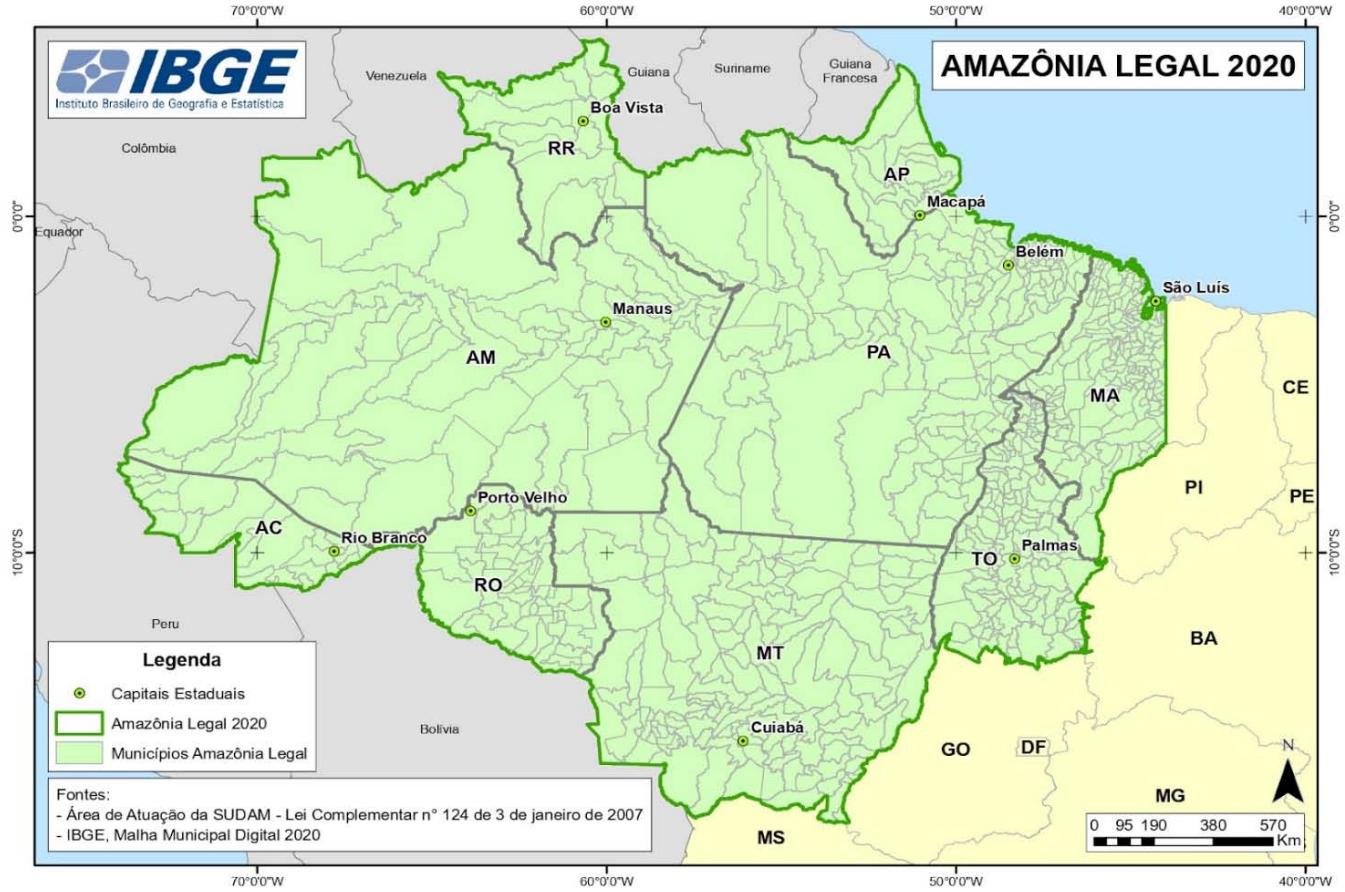 Fig. 1: Legal Amazon Area - Brazilian Institute of Geography and Statistics - IBGE
Shortly after that, in 1966, according to Repetto (1988), tax incentives were created for Amazon development policies through the Amazon Investment Fund (FINAM), favoring companies with discounts on federal taxes. Externally, in the early 1970s, the ecological debate broke out from the report 'The Limits to Growth', commissioned by the Club of Rome, which, according to Oliveira (2012), had a catastrophic, almost apocalyptic character, indicating that without the containment of birth and the adoption of the zero-growth policy, the world would suffer with overpopulation, pollution, and hunger.
It is essential to mention that the report presented the exact solution for all countries: birth control and natural resources. However, Furtado (1998) writes that the report leaves out an essential issue: there is no concern about not making central countries dependent on the natural resources of peripheral countries, allowing the latter to become even more susceptible to the predatory use of these resources. The report presented a significant impact on the world from the most realistic projections.
In 1972, the United Nations (UN) promoted the first United Nations Conference on Human Environment in Sweden, having as one of its pillars and main argument of the central countries the report "The Limits to Growth" – which promoted the idea of environmental conservation and birth control for peripheral countries, while the central countries would not change their capitalist consumption and production pattern. According to Figueiredo and Cruz (2013), Brazil strongly opposed the unequal proposals during the conference, recognizing that there is an environmental contamination produced by the central countries, therefore it needs to be restored by them. This attitude is compatible with the development policy adopted by Brazil, which made the Amazon a breeding ground for large projects. The conference ended without a clear consensus among the participating countries on the new directions of global environmental policy.
The end of the conference resulted in the creation of the United Nations Environment Program (UNEP), which became the principal global agent promoting environmental conservation and the rational use of natural resources. Also resulting from the conference was the Stockholm Declaration on the Human Environment, which contains 26 (twenty-six) principles, divided between encouraging the preservation of the human environment, birth control, cooperation between states, technological development, and environmental education.
According to Antiquera (2006), Brazil formulated a project that was presented in 1977 by President Ernesto Geisel to the possible countries that are members of a new treaty: Amazon Cooperation Treaty (ACT). However, Venezuela, which was experiencing significant economic growth due to the rise in the price of oil, was cautious about the possible leadership of Brazil in South America. The agreement was signed in 1978, fifteen months after the beginning of negotiations, and according to Ricupero (1984), to defend the Amazonian countries' sovereignty over their territories. The treaty was characterized as a "Framework Agreement", that is, it is flexible enough to be amended according to future relations. In addition, the ACT also proposes not to interfere in other treaties – considering that the Andean Pact was being created and it was not feasible to dispute a place among the other Amazonian countries: Bolivia, Peru, Colombia, and Ecuador.
The importance of Brazilian policies for the environment was intensified with the 1988 Federal Constitution (CF). The elaboration of the new Constitution was driven by pressures from civil society and international environmental campaigns, which denounced neglect situations with the Amazon Forest, including deforestation and the reduction of indigenous areas (ALBERT, 1991). That same year, the increase of fires in the Amazon led to headlines in TIME magazine, and the death of the great environmental activist Chico Mendes – who always denounced that Brazil was not able to care for the Amazon rainforest efficiently, raised the international focus to combat deforestation.
To try to bypass this international vision of the country, President José Sarney set up, together with Itamaraty, an agenda of interests in which Sarney offered Brazil to host the first United Nations Conference on Environment and Development (Rio-92) and, according to Bezerra (2013) and Mello (2006), it was in the late 1980s that Brazil launched some programs as a response to the international community to prove that the country could to perform well in managing environmental concerns:
1) Creation of the Our Nature Program: adoption of a policy to address deforestation in the Amazon.
2) Creation of the Brazilian Institute of Environment and Renewable Natural Resources (IBAMA).
3) Creation of the Pesticides Law: according to arts. 23 and 24 of the CF: legislate on the use, production, consumption, trade and storage of pesticides, and their components, as well as
supervise the use, consumption, work, storage and internal transport.
4) Creation of the National Center for Prevention and Fight against Forest Fires (Prevfogo): responsible for the prevention policy that combats forest fires throughout the Brazilian territory.
Amazon Deforestation Calculation Program (PRODES) was also created during that period and, since 1988, uses images from the American satellite of the Landsat series to monitor deforestation in the Legal Amazon.
Already in the 1990s, the international scenario was changed by the post-Cold War, and Brazil – initially ruled by Collor de Mello – had a new opportunity to present its policies for the Amazon in the Agenda of Rio92, which related to development and environment issues. Considering that Brazil treated environmental problems as a consequence of the lack of social and economic development, therefore, the topics needed to be discussed together. Alves (2018) emphasizes that: "It is important to note, however, that the right to development consensually established by Rio92 is not the human right to development, according to the Declaration on the Right to Development from the United Nations Commission on Human Rights and proclaimed, without consensus, by the General Assembly in 1986. It concerns the right of every human to participate in economic, social, cultural and political development, in which all human rights and fundamental freedom can be fully accomplished."
Thus, the right to development discussed during Rio-92 aims to defend the sovereignty and interest of countries through the attribution of environmental responsibilities, that it is a right of development for all states. The conference opened space for the beginning of a global cycle of debate and conferences of various aspects in the 1990s and, unlike the Stockholm Conference in 1972, there was no clash between the central and peripheral countries.
In addition to hosting the Rio-92 event, Brazil also presented more objective issues during the conference, pointed out new paths for development aligned with the preservation of the environment and opened space for new agendas. At the end of the conference, Agenda 21 and the Rio Declaration were signed, which boosted a new expectation of ordering environmental and social issues (ALVES, 2018).
On the eve of the new millennium, Brazilian President Fernando Henrique Cardoso (FHC) represented Brazil at the first edition of the Conference of the Parties at the United Nations Framework Convention on Climate Change (COP-1), in 1995. Unlike the last meetings related to the environment, the topic became more polarized in Brazil, being discussed both by Non-Governmental Organizations (NGOs) and by the Legislative Branch. According to Santos (2016), in general, FHC was the most stable democratically elected government in the country after a long time, giving Brazil a Foreign Policy agenda that had the opportunity to be, in fact, fulfilled.
During COP-1, the country reaffirmed the objectives of Rio-92, and with Law No. 9.985 of July 18, 2000, the National System of Conservation Units (SNUC) was created, promoting biodiversity conservation in all regions of Brazil, to ensure compliance with international commitments made during the UN conventions.
In 2002, the World Summit on Sustainable Development (Rio+10) took place in Johannesburg, South Africa, which dealt with issues such as climate change, biodiversity and pollution (FIGUEIREDO & CRUZ, 2013), and Brazil, with its soft power diplomacy, managed to act in defense of interests on protected areas of the Amazon, which increased the country's international credibility in environmental matters.
## III. INPE HISTORICAL DATA COLLECTION
### SERIES - PRODES
The creation of the National Institute for Space Research (INPE) in 1961, was an essential milestone in Brazilian history. According to Câmara (2011), the institute brought visibility to the country regarding space research, considering that the Soviet Union, for example, launched satellites into Earth a few years earlier and had great results. One of the main programs launched by INPE was PRODES, which since 1988 has measured the annual rate of clear-cut deforestation in the Amazon.
According to Camara (2011), the first consolidated deforestation rate was 21,050 $\mathrm{km}^2$, in 1988, and the lowest rate found in this period was in 1991. For Fearside (2005) this decrease is justified by the confiscation of savings made in March 1990, by President Fernando Collor de Mello, which affected the resources of many farmers who invested in the timber sector in the Amazon.
The data remained low until 1995, when the rate began to rise and reached $29,059~\mathrm{km}^2$, being the highest rate recorded to date. According to Fearside (2005), the peak of 1995 was probably caused by the implementation of the Plano Real ("Real Plan", in English), which increased the availability of capital and influenced the value of durable goods, such as land, for example. The following year, 1996, rates fell again and remained without drastic increases until 2002, according to Figure 2.
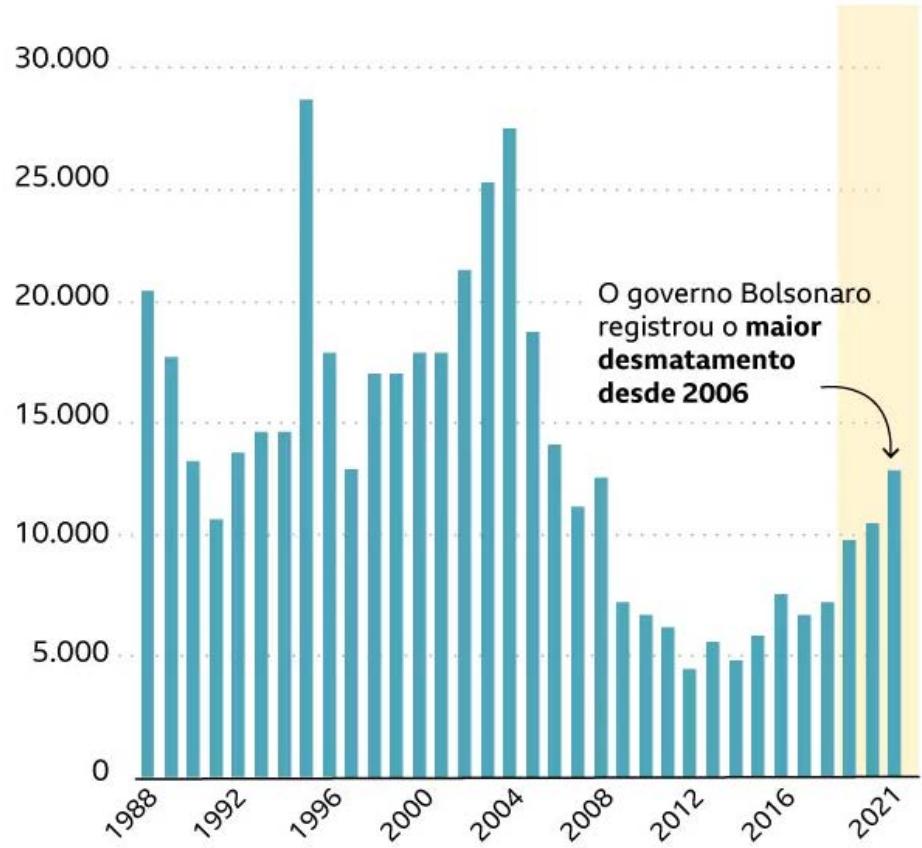 Fig. 2: Annual deforestation of the Legal Amazon in
$\mathrm{km}^2$ - INPE/PRODES - BBC, 2021
Between 2002 and 2004, the indexes rose again along with the increase in the price of agricultural export commodities, such as soybeans and meat. The index decrease was mainly due to creating the Action Plan for the Prevention and Control of Deforestation in the Legal Amazon (PPCDAm) to stop deforestation.
For Fearside (2020), starting in 2008, raw material prices recovered, but the Central Bank of Brazil adopted a resolution that granted agriculture and livestock credits only to people who did not have pending fines for illegal deforestation, which contributed to maintaining the drop in deforestation until 2012.
In 2012, the lowest deforestation rate in the history of the Legal Amazon was observed: $4,571 \mathrm{~km}^2$. In the same year, Law 12,651/2012, known as the "New Forest Code", was approved, which: reduced the number of legal reserves in the Amazon (from $80\%$ to $50\%$ ) and made it difficult to identify differences between Conservation Units and approved Indigenous Lands ( $\S 4$ and 5 of art. 12); made it possible to merge native and exotic plants for the reforestation of Legal Reserve areas, changing local biodiversity ( $\S 3$ of art. 66); agricultural credit was authorized with registration in the Rural Environmental Registry (CAR) regardless of proof of environmental regularity (art. 78-A).
The impeachment of President Dilma Rousseff, in 2016, presented a new phase for policies aimed at the Legal Amazon. The vice-president, Michel Temer, took on as President of Brazil, and some measures were then sanctioned, which corroborated the increase in deforestation, including the approval of the Proposed Amendment to the Constitution (PEC 65) in April/2016, exempting environmental licenses for construction, requiring only a previous environmental impact study. In the same year, PEC 241 was approved, which froze for 20 years the budget of the Ministry of the Environment (MMA), threatening the functioning of the agencies that act to monitor and control deforestation in the Legal Amazon (PEREIRA et al., 2019).
As a result, deforestation rates rose again in 2016, 2017 and 2018. During the election in 2018, presidential candidate Jair Bolsonaro promised to abolish MMA and moved its functions to the Ministry of Agriculture, Livestock and Supply (MAPA). However, during his term, Bolsonaro did not extinguish MMA, but transferred the functions of monitoring and controlling deforestation to MAPA – initially directed by ruralist Tereza Cristina. This was one of the actions that influenced the increase in deforestation rates, along with actions to dismantle the inspection and control bodies. In the first year of his government (2019), the rate consolidated by PRODES was $10,129\mathrm{km}^2$, the highest recorded in ten years. In 2021, the consolidated rate was $13,038\mathrm{km}^2$, the highest registered since 2006.
### a) Government of President Luiz Inacio Lula da Silva - 2003 to 2010
The 2002 elections brought former union leader Luiz Inacio Lula da Silva to the Presidency of the Republic, which ruled Brazil from 2003 to 2010. Lula's foreign policy was based on global multilateralism, focusing on the Global South countries. With this, the government participated intensively in creating projects aimed at integrating the neighboring countries of South America (reactivation of the South Common Market - MERCOSUR) and economically emerging countries (creation of BRICS - Brazil, Russia, India, China and South Africa).
In the environmental area, the Lula government was marked by continuing FHC's international environmental strategy, as it engaged in international conferences and meetings in the environment sphere (SANTOS, 2016). The beginning of the government was marked by high and continuous rates of deforestation in the Legal Amazon – between 2002 and 2004, and the rates totaled $72,200\mathrm{km}^2$, and the highest annual rate of this period was in 2004 ( $27,772\mathrm{km}^2$ ), that is, the second highest rate consolidated in the historical series already registered by PRODES.
According to Svampa (2019), at the beginning of the 21st century, Latin America was strongly influenced by the international increase in prices of primary products (commodities). In Brazil, in the early years of Lula's government, traditional Amazonian populations lost space for large soybean plantations and cattle raising, decreasing the original area of the forest and favoring deforestation. Araújo et al. (2009) states that the record deforestation index in 2004 is related to the boom in primary products, focusing on the high price of commodities, especially soybeans.
Despite the relationship between the increase in deforestation and the high price of commodities, Bezerra (2013) points out that externally, during the COP, Brazil presented its goals (without specifying how it would be done) to reduce harmful gas emissions. Complementary Law No. 12/2003 was also discussed, which boosted deforestation and degradation of the environment with the dismantling of IBAMA. That is, the increasing rates of deforestation in the early years of the Lula government were not only the result of the increase in the price of agricultural products, but also of the dismantling actions of inspection bodies.
Marina Silva led the Ministry of the Environment (MMA) between 2003 and 2008. According to Santos (2016), she was well-received by the community of environmentalists, and she had a consolidated career in the environmental area: teacher, environmental activist, and born in Acre with a historical relationship with Chico Mendes, which allowed her to know the problems of the region deeply.
To reduce deforestation rates, Marina Silva implemented some projects, including the PPCDAm, which, according to Castelo (2015), helped to enable a new development model for the Amazon region, based on social inclusion, respect for cultural diversity and the feasibility of sustainable use of natural resources. The PPCDAm was part of the development strategies of the Pluriannual Plan (PPA) and the Sustainable Amazon Plan (PAS) of the Lula government.
According to Assunção et al. (2015), the PPCDAm worked together with INPE, IBAMA, Federal Police, Highway Police and the Brazilian Army in monitoring the program developed by INPE, the Environmental Monitoring Center (CEMAM), and DETER – which delivers real-time data on deforestation in the Legal Amazon. Within the Lula government, the PPCDAm went through two phases: the first between 2004 and 2008, and the second between 2009 and 2011. The first phase of the project showed a positive result, between 2004 and 2008 deforestation was reduced by $53\%$, while between the beginning of the first phase (2004) and the last year of the second phase (2012), the drop was $84\%$ in deforestation of the Legal Amazon.
When the PPCDAm began to show a positive result, President Lula adopted the measure art. 152 of Decree No. 6,514 of July 22, 2008, which prevented IBAMA from collecting deforestation fines within a year from landowners who submitted the protocol requesting regularization of legal reserves. However, to "balance" the situation, IBAMA adopted an essential measure in 2008 by creating a list of restrictions with the name of the Legal Amazon municipalities with high rates of deforestation. These municipalities suffered credit restrictions, increased IBAMA inspections, and as well as requirements to obtain licenses for legal deforestation (COSTA, 2013).
In terms of controlling deforestation, we can conclude that the Lula government presented a positive balance, as a result of the environmental policy implemented by Minister Ms. Marina Silva.
### b) Government of President Jair Messias Bolsonaro – 2019 to 2022
Jair Messias Bolsonaro, was a federal deputy for the state of Rio de Janeiro between 1991 and 2018, was elected in 2018 as President of Brazil. According to Casarões et al. (2019), Bolsonaro's foreign policy was based on the opposition of the so-called "globalist theory", that is, anti-globalism. Within the Bolsonarist ideology, in a lecture at the Federation of Industries of the State of Rio de Janeiro in 2019, former Foreign Minister Ernesto Araujo defined the environmental movement as coming from a "Marxist cultural analysis".
Regarding the Legal Amazon, the region's deforestation rates grew before Bolsonaro's inauguration. Fearside (2021) argues that when polls of voting intent pointed to the former military's victory, deforestation increased from September 2018 by $36\%$, most likely due to the relaxation of inspections that were part of Bolsonaro's campaign promises.
In 2019, the first year of his government, the rate ended with consolidated deforestation of $10,129 \mathrm{~km}^{2}$, an increase of $34.4\%$ compared to the previous year recorded by PRODES. The former minister of MMA, Ricardo Salles, acted vehemently to repeal the measures of several decrees related to environmental policies to reduce the chairs of the National Environment Council (CONAMA) from 96 to 23. Salles, as the pressure of public opinion regarding deforestation increased, attributed the problem to the ineffectiveness of the monitoring done by INPE and announced the hiring of a private company to do the monitoring. Still, in 2019, Bolsonaro stated that INPE data were manipulated and announced the dismissal of the institute's president, scientist Ricardo Galvão, who had been in office since 2016. After Galvão's exoneration, the data continued to rise (AVILA; TIERNO, 2020).
One of the most organized actions by farmers around the state of Pará (BR-163) to jointly deforestation the Legal Amazon took place on August 10, 2019, known as the "Fire Day", which made the hotspots increase by about $300\%$. The event was "encouraged" by Bolsonaro, based on the threat of French President Emmanuel Macron not to ratify the agreement between MERCOSUR and the European Union (BRAGA; MARINHO, 2022).
The following year, 2020, presented a consolidated deforestation rate of $10,851~\mathrm{km}^2$. During that year, the president approved a change in Decree No. 8,974, of 01/24/2017, which changed the regimental structure, the demonstration framework and the trust functions of the Chico Mendes Institute for Biodiversity Conservation (ICMBio), relocating trust functions and replacing positions on the institute's committee.
The changes within the environmental inspection bodies were significant in aggravating deforestation. The president of IBAMA, Olvaldi Azevedo, was exonerated in April 2020, after a report that showed an operation of the institute on indigenous lands to combat illegal mining in Pará and prevent the transmission of Covid-19 to indigenous people. According to Avila and Tierno (2020), after the release of deforestation data before the middle of the year by INPE, career servant Lubia Vinhas was exonerated from the position of General Coordinator of Earth Observation of the institute.
In 2021, the third year of office, PRODES recorded a consolidated deforestation rate of 13,038 $\mathrm{km}^2$, an increase of $22\%$ compared to the previous year. According to the Report of the Climate Observatory entitled "A Conta Chegou", published in 2022, IBAMA changed its president again, but this time Eduardo Bim was removed from office after being accused by the Federal Police (PF) within the "Akuanduba Operation" of favoring environmental criminals. Operation Akuanduba also investigated former MMA minister Ricardo Salles for environmental crimes.
In November 2021, the 26th UN Climate Change Conference occurred in Glasgow - Scotland. At the time, the MMA minister stated that he held 24 (twenty-four) meetings with ministers from other countries, however, he omitted an important information disclosed by INPE in October of the same year: deforestation in the Legal Amazon between August 2020 and July 2021 reached the highest rate (13,235 km2) ever recorded for the period since 2006 (PONTES, 2019).
Scantinburg (2022) states that the budget for environmental inspection in 2021 was the lowest in the last 20 years, culminating in a record increase in deforestation in the Legal Amazon. INPE, for example, had a reduced budget to R$2.6 million - the lowest amount in 10 years.
We conclude that the increase in deforestation rates in the Bolsonaro government result from an anti-environmentalist ideological policy, a dismantling of inspection & control bodies as well as the incentive to occupy protected areas, Conservation Units and Indigenous Lands. It's incorrect to say that the Bolsonaro government did not have an environmental policy. It was an environmental policy based on exploiting natural resources safeguarded by a developmentalist ideology.
## IV. FUTURE PROSPECTS FOR COMBATING DEFORESTATION IN THE LEGAL AMAZON
The international treaties and agreements ratified by Brazil are a way of maintaining a commitment to the international community to solve common issues. According to Feldmann (1997), international environmental treaties usually deal with situations related to transboundary pollution, marine pollution, climate change, airspace contamination, Antarctic region, common aquifer resources, international wildlife trade, areas under special protection regime, pest control, among others.
Within the agreements and treaties ratified by Brazil, the Paris Agreement (2015), which aims to avoid reaching a maximum of $2^{\circ}\mathrm{C}$ of global temperature increase, stands out when combating the effects of climate change. The Paris Agreement allowed countries to set their targets to meet the overall goal of avoiding a rise in global temperature. Faccin (2019) complements the operation of the agreement "To act with the Nationally Determined Contribution (NDCs), each country must adopt a series of public policies to achieve the goal of reducing temperature rise. Any government, when thinking about implementing public policies, needs to consider other impacts that are indirectly affected. These policies will not only impact the environment, but also the economy, for example. Every policy has its costs and benefits, and it is up to the government to measure them to make the promotion of these policies efficient."
According to Pinsky; Gomes; and Kruglianskas (2019) the Brazilian goals are to reduce pollutant emissions in $37\%$ by 2025. Part of the goals by the year 2030 are related to the energy sector, aiming to reach
45% of renewable energy, and, concerning the forest area, the goals are to zero illegal deforestation in the Amazon and reforest 12 million hectares.
Deforestation in the Legal Amazon increased immensely in 2019, a factor that contributed to the increase in the amount of greenhouse gas emissions released into the atmosphere. The report published at the end of 2021 by the Climate Observatory on the analysis of Brazilian greenhouse gas emissions states that, in 2020, emissions from the biome (Amazon) were up to seven times higher than in the Cerrado, the second biome that emitted the most gases, due to the largest deforested area and carbon stock in the forests.
The data above goes against Law No. 12.187/2009, which deals with the National Policy on Climate Change (PNMC), aiming to reduce by $80\%$ the dismantling of the Legal Amazon in relation to the average verified between 1996 and 2005, until 2020. However, according to the Climate Observatory report (2021), Brazil failed to meet this objective: the goal was deforestation limited to $3.925 \mathrm{~km}^2$ in 2020, but the index measured by PRODES was $10.851 \mathrm{~km}^2$.
In April 2021, during the leaders' summit on climate change held in the United States, Brazilian President Jair Bolsonaro promised zero net carbon emissions by 2050, anticipating by ten years the initial deadline, and zero illegal deforestation by 2030. However, Brazil has never officially presented these goals related to Bolsonaro's promises within the Paris Agreement.
Also in 2015, Brazil assumed, during the UN General Assembly, the responsibility of collaborating with the Sustainable Development Goals (SDGs) – Agenda 2030. Moreira et al. (2020) complements the objective of the SDGs "It proposes a global pact for sustainable development. Its main purpose is to ensure human development and meet the basic needs of citizens through an economic, political and social process that respects the environment and sustainability. Ratified in 2015 by 193 countries, this Agenda is distributed by 17 Goals – the 'SDGs, Sustainable Development Goals' – composed of 169 goals that must be met by 2030. The proposed goals are broad, and diverse, and require interaction, which involves a diversity of fields of action that move towards: the eradication of poverty and hunger; health and well-being; education; gender equality; access to drinking water and sanitation; clean energy; decent work; sustainable economic growth; reduction of social inequalities; sustainability of life; innovations in infrastructure; responsible consumption; healthy cities; climate responsibility; reduction of inequalities; effective institutions; and social peace."
To comply with the 2030 Agenda, Brazil established the Social Articulation Secretariat (SEAS) as responsible for the implementation of the 2030 Agenda through Decree No. 9.980, of August 20, 2019. With this, deforestation of the Amazon falls mainly within SDG 15 – Land Life: protect, restore and promote the sustainable use of terrestrial ecosystems, sustainably manage forests, combat desertification, cease and reverse soil degradation and cease biodiversity loss.
SDG 15 had some goals by 2020, among them the 15.2 goal: until 2020, promote the implementation of sustainable management of all types of forests, stop deforestation, restore degraded forests and substantially increase afforestation, and reforestation globally. However, Brazil has been unable to reduce the deforestation rate or apply measures to meet the target by the established deadline. However, like the Paris Agreement, Brazil can still achieve some SDGs by 2030, such as "15.3 Until 2030, combat desertification, restore degraded land and soil, including lands affected by desertification, droughts and floods, and strive to achieve a land degradation-neutral world. 15.4 Until 2030, ensure the conservation of mountain ecosystems, including their biodiversity, to improve their ability to provide essential benefits for sustainable development. 15.6 Ensure fair and equitable sharing of benefits derived from using genetic resources and promote adequate access to these resources. 15.7 Take urgent measures to end illegal hunting and trafficking in species of Brazil's flora & fauna. Address both the demand and supply of illegal wildlife products. 15.a Mobilize and significantly increase, from all sources, financial resources for the conservation and sustainable use of biodiversity and ecosystems. 15.b Mobilize significant resources from all sources and at all levels to finance sustainable forest management and provide adequate incentives for developing countries aiming to promote it, including conservation and reforestation. 15.c Strengthen global support for efforts to combat illegal hunting and trafficking of protected species, by increasing the capacity of local communities to pursue sustainable livelihood opportunities (UN BRAZIL, 2022).
Therefore, despite the high rates of deforestation in the Amazon observed by the Bolsonaro government, the goals are achievable if the federal government develops projects to reduce deforestation (and eventually zero it), considering that the current government does not have plans to meet these goals and deforestation rates fully have increased greatly in recent years. However, both the Paris Agreement and the 2030 Agenda bring, in a positive way, a commitment from Brazil to reduce deforestation in the Legal Amazon.
A perspective of decreasing the rate of deforestation lies in the change of government itself, with the advent of the third term of President Luiz Inacio Lula da Silva. The resumption of a Foreign Policy with an environmental commitment will lead to active action by Brazil in the international environmental agenda, which can strengthen programs aimed at investing in an economy with environmental responsibility. In the political field, the return of Marina Silva as Minister of the Environment and Climate Change also gives Brazil the possibility of a favorable environmental policy to control deforestation in the Amazon.
## V. CONCLUSION
The Amazon Forest is treated as the solution for the environmental issue by the international community. Since the first environmental convention, the biome has been on an exclusive list: the only forest in the world to undergo international intervention. Because of this pressure, Amazon must be an essential part of Brazilian Foreign Policy. In the 1950s, the objective was to develop through the creation of roads and the stimulation of human migration to the region. The need to propose development to preserve the environment arose from international pressure on environmental conventions. Brazil was slow to change policies for the Amazon, and, as we can observe, the region is still neglected by the government. Although belatedly, Brazil has become an important player regarding environmental preservation in international agreements and treaties.
Lula's government, for example, showed very high deforestation rates at first, but they began to fall after implementing the PPCDAm. From the multilateral action of the government, the changes of policies directed to the Amazon attracted positively other states that began to credibility the use of the forest by Brazil. However, when rates stabilized, the president made room for people to deforest again, the one-year amnesty on fines for deforestation applied by IBAMA is a clear example. Thus, control over some parts of the Amazon and permission to deforest others became a way of internally balancing deforestation rates. If the Lula government hadn't relaxed some means of control, the rates would have been even lower.
Between the Lula and Bolsonaro government were Dilma Rousseff and Michel Temer, who maintained the PPCDAm. Dilma achieved the lowest rate of deforestation recorded by PRODES, but following the attitudes of her predecessor, she also approved laws that made environmental legislation more flexible. Temer had no significant decreases in deforestation rates during his tenure and approved the easing of regulations and froze the supervising bodies' budget.
Thus, it seems that most Brazilian presidents of the 21st century took advantage of a decrease in deforestation rates to show other countries that they were taking good care of the biome, but, internally, the easing of laws favored only a tiny part of the population: those who practiced deforestation.
However, not all presidents have waited for rates to drop to encourage deforestation. Bolsonaro, for example, has achieved the highest deforestation rates after several years of decline and stabilization. He began his government by filing the PPCDAm without putting any project in place, revoked several decrees for environmental protection, exonerated presidents and directors of supervisory bodies, cut the budget and publicly stated that the data published by INPE were manipulated. The neglect of the Amazon region is also reflected in Brazil's discredit internationally. Bolsonaro received several criticisms that culminated in cuts in international donations for the protection of the Amazon. Internally, Bolsonaro's environmental action received support from the ruralist community (which gained a "free pass" to deforest through the relaxation of laws) and severe criticism from the Brazilian civil and scientific society.
Despite Brazil's international commitment to reduce deforestation with the Paris Agreement and the 2030 Agenda in previous governments, with Bolsonaro's inauguration the federal government decreased internal mobilization to try to meet - even minimally, the goals of the agreements. Bolsonaro's speech at the leaders' summit in 2021 was only to try to lessen the impact of the Amazon's high deforestation rates and show a commitment that was not stimulated internally.
Therefore, it was possible to observe the importance of the data disclosed by INPE through PRODES, which denounces the lack of commitment to the Legal Amazon region. In addition, we also observed the pattern followed by Brazilian presidents: the easing of environmental laws after deforestation rates falling, which shows that these policies lack rigidity. Bolsonaro was the only president to go contrary to the statistics, and, although deforestation rates were not decreasing, he still eased the laws on this important matter.
The importance of the Amazon region goes beyond the borders of the Amazon countries: "The standing forest" contributes positively to the climate balance. Thus, the deforestation of the region negatively impacts the global climate situation.
Generating HTML Viewer...
References
44 Cites in Article
Bruce Albert (1991). Terras indígenas, política ambiental e geopolítica militar no desenvolvimento da Amazônia: a propósito do caso Yanomami.
Alfredo Almeida,Wagner Berno,De (2012). Territórios e territorialidades específicas na Amazônia: entre a "proteção" e o "protecionismo.
José Alves,Augusto Lindgren (1990). A década das conferências.
Daniel Antiquera,De Campos (1978). A Amazônia e a política externa brasileira: análise do Tratado de Cooperação Amazônica (TCA) e sua transformação em organização internacional.
Claudio Araujo,Catherine Bonjean,Jean-Louis Combes,Pascale Combes Motel,Eustaquio Reis (2009). Property rights and deforestation in the Brazilian Amazon.
Ernesto Araújo (2020). A nova política externa brasileira: seleção de discursos, artigos e entrevistas do Ministro das Relações Exteriores -2019/ Ernesto Araújo.
As Nações Unidas No Brasil (2022). OBJETIVOS DE DESENVOLVIMENTO SUSTENTÁVEL.
Juliano Assunção,Clarissa Gandour,Rudi Rocha (2015). Deforestation slowdown in the Brazilian Amazon: prices or policies?.
Elaine Avila,; Taborda De,Rosane Tierno,De Almeida O desmonte da política ambiental do Brasil: da boiada à desregulação dos mangues e restingas.
Brasil Bbc News (2021). Desmatamento na Amazônia tem a maior taxa em 15 anos.
Bertha Becker (2010). Novas territorialidades na Amazônia: desafio às políticas públicas.
Joana Bezerra,Carlos (2013). O papel do meio ambiente na política externa brasileira.
Giovanna Pandolfo (2019). As raízes coloniais das crises ecológicas: a Amazônia no Brasil de Bolsonaro.
Thaís Braga,Sandra Marinho (2019). Ideologia e poder no “dia do fogo” na Amazônia (2019): análise crítica do discurso dos jornais Público e Folha de S.Paulo.
Brasil,Constituição (1988). Constituição da República Federativa do Brasil.
(2008). Dispõe sobre as infrações e sanções administrativas ao meio ambiente, estabelece o processo administrativo federal para apuração destas infrações, e dá outras providências.
Ana Araújo (2016). A Comissão Nacional para os Objetivos de Desenvolvimento Sustentável.
Felipe Genari (2017). A inelegibilidade como requisito negativo à nomeação de cargos em comissão e à designação de funções de confiança.
(2009). Institui a Política Nacional sobre Mudança do Clima -PNMC e dá outras providências.
José Rodrigues (2000). Sistema Nacional de Unidades de Conservação (SNUC): uma análise à luz da legislação vigente (Lei Federal 9.985 de 18 de julho de 2000).
Companhia Federal (2003). Possíveis Impactos do Projeto de Lei Complementar Nº 416/2008 (Criação de Novos Municípios).
Taveira A.C.F.,Quadros E.G. (2022). CAPÍTULO 1 A CONSTITUIÇÃO FEDERAL DE 1988 NA PROTEÇÃO DO MEIO AMBIENTE E O DIREITO À SUSTENTABILIDADE.
Gilberto Câmara (2011). A pesquisa espacial no Brasil: 50 anos de Inpe (1961-2011).
Thiago Castelo,Bandeira (2015). LEGISLAÇÃO FLORESTAL BRASILEIRA E POLÍTICAS DO GOVERNO DE COMBATE AO DESMATAMENTO NA AMAZÔNIA LEGAL.
P Fearnside (2005). Desmatamento na Amazônia brasileira: História, índices e conseqüências.
(2020). Desmatamento na Amazônia brasileira: História, índices e consequências.
Philip Fearnside (2021). The intrinsic value of Amazon biodiversity.
Eduardo Moreira,Luara Tourinho,Rafael Chaves,Blandina Viana,Cristiano Menezes,Kayna Agostini,Camila Abreu,Cristina Azevedo,Luciano Lopes,Natália Ivanauskas,Jean Metzger,Danilo Boscolo (1997). Potencial do serviço ecossistêmico de polinização: no estado de São Paulo.
Marcelo Ferreira,Alexandre Coelho (2011). Desmatamento Recente nos Estados da Amazônia Legal: uma análise da contribuição dos preços agrícolas e das políticas governamentais.
F Figueiredo,F Cruz (2012). Aproximações teóricas sobre a questão ambiental internacional na sociedade global: de Estocolmo 1972 ao Rio de Janeiro.
Celso Furtado,Mito (1998). do Desenvolvimento Econômico.
Neli Aparecida Mello,De (2006). Políticas territoriais na Amazônia.
Marcelo Moreira,Érica Kastrup,José Ribeiro,Antônio Carvalho,Analice Braga (2020). O Brasil rumo a 2030? Percepções de especialistas brasileiros(as) em saúde sobre o potencial de o País cumprir os ODS Brazil heading to 2030.
Observatório,Clima (2022). A Conta Chegou: O terceiro ano de destruição ambiental sob Jair Bolsonaro.
Marcos Pereira,Ana Brito (2021). O NEOLIBERALISMO E AS SUAS IMPLICAÇÕES NA CONSECUÇÃO DAS POLÍTICAS PÚBLICAS PARA A EDUCAÇÃO SUPERIOR NO BRASIL: em análise a meta 12 do PNE (2014-2024).
Ibge -Instituto Brasileiro De Geografia E Estatística (2020). Mapa da Amazônia Legal.
Filho,Pio (2013). Reflexões sobre o Brasil e os desafios Pan-Amazônicos.
E Pereira,L Ferreira,P Ribeiro,L Carvalho,T Pereira,H (2019). Policy in Brazil (2016-2019) threaten conservation of the Amazon rainforest.
Vanessa Pinsky,Clandia Gomes,Isak Kruglianskas (2019). Metas brasileiras no Acordo de Paris: reflexões sobre o papel das universidades.
Nádia Pontes (2021). Governo mentiu sobre o desmatamento na COP26.
Robert Repetto (1988). Forest for the Trees? Government policies and the misuse of forest resources.
Rubens Ricupero (1984). O Tratado de Cooperação Amazônica.
Roberta Santos,Preussler Dos (2016). Política externa ambiental brasileira: os governos FHC e Lula.
Maristella Svampa,M Antonelli (2019). Las fronteras del neoextractivismo en América Latina.
No ethics committee approval was required for this article type.
Data Availability
Not applicable for this article.
How to Cite This Article
Jodival Mauricio da Costa. 2026. \u201cAmazon and Brazilian Foreign Policy: Analysis of Deforestation Index in the Lula and Bolsonaro Governments\u201d. Global Journal of Human-Social Science - B: Geography, Environmental Science & Disaster Management GJHSS-B Volume 23 (GJHSS Volume 23 Issue B3).
Explore published articles in an immersive Augmented Reality environment. Our platform converts research papers into interactive 3D books, allowing readers to view and interact with content using AR and VR compatible devices.
Your published article is automatically converted into a realistic 3D book. Flip through pages and read research papers in a more engaging and interactive format.
Our website is actively being updated, and changes may occur frequently. Please clear your browser cache if needed. For feedback or error reporting, please email [email protected]
Thank you for connecting with us. We will respond to you shortly.