## I. INTRODUCTION
Intelligent agriculture has used data analysis and information technology to systematize complex agricultural systems. The field of data analysis has strengthened the agricultural cyclical production process by applying intelligent systems. Data analysis in agriculture could be divided into three production processes and areas: yield, range service, livestock (creation and biological welfare), and hydroponic cultivation. IoT agricultural convergence should be able to reflect crop expansion and real-time changes in farm environments[3]. In detail, precision farming, which employs movement tracking, sensors, and data analysis, optimizes field management, conserves resource information like fertilizer and water, protects soil health, and enhances overall farm efficiency and sustainability. Precision farming, or precision agriculture, involves highly controlled, accurate, and optimized agricultural production with AI-aided analysis. It facilitates more efficient resource utilization, better yield, and reduced environmental impact, all at the same time. It pertains to the expected improvement of shrewd PCs, drones, robots, or sensors that might impersonate human activities to do tasks for the benefit of individuals and serve society intelligently. Using data processing and learning technology gadgets, application modules hold and analyze these activities' history. Smart agriculture, which combines IoT systems and traditional agricultural practices, utilizes precision farming to monitor crop development and boost food economies[4].
The approach in which technology has impacted instead, almost every part of our lives isn't remarkable to us. Fans, air conditioners, coolers, plants, entryways, and a lot more can chat with each other and make decisions on actual conditions with practically any human info. In all fields, including brilliant homes, wearables, intelligent urban communities, savvy frameworks such as Universal Middleware, Open Service Gateway initiative (OSGi) and Dynamic Service Platform, connected vehicles, the Modern Internet, store network the executives, medical care, and o forth, AIoT made a critical commitment [5]. IoT is a large group of varied linked devices that use multiple protocols and architectural designs to communicate with one another and carry out predetermined actions on sensor data acquired. Things become more innovate and defensible judgments are made without human intervention when AloT are integrated [6].
We examined and could figure out and evaluate the data coming from the many gadgets surrounding us as we join the modern world through the past foot print. When this data is processed, AI is particularly important for IoT devices [7]. Also, We referred to research cases in which blockchain technology is intended to implement the main attributes of blockchain to promote transparency in the agri-food supply chain. They are application cases of precision agriculture, which cross-maps the attributes of agri-food distribution and agrifood origin and sourcing [8].
Agriculture is no longer an exception in this decade of unprecedented technological advancement. Agriculture-related operations were also significantly influenced by AloT. According to research, deep learning and predictive analysis are proposed, like the R-squared model. Deep learning algorithms in AloT environments are used to predict the future value of the percentage of GDP produced by agriculture [9]. For further crop creation, it depends on various inward and outside perspectives that are challenging to expect ahead of time, such as each appropriate data analytics knowing weather conditions, manure use, soil quality, bug control, crop wellbeing, weed administration, rise or decrease in temperature, and so on.
Ordinarily utilized techniques miss the mark regarding creating the best results, especially with regards to foreseeing how a yield will act and how much water it will require. Supplement worth will be harmed whenever used in excess, while crop development will be upset whenever utilized in deficient amounts. Water is squandered in irrational processes by around $60\%$ [10]. Agriculture accounts for around $70\%$ of all water withdrawals globally according to the World Bank, and approximately $60\%$ of that is wasted, largely due to inefficient applications according to the UN's Food and Agriculture Organisation (FAO). For example, problems with home sprinkler systems often go unnoticed. Automated systems usually run every other day, regardless of a rainy forecast. The cumulative effect of inefficient and overzealous watering is taking a toll on our water supply.
In the case of the study for real-time analytics water data, month-wise prediction is performed. The implementations were performed for single and multiple kinds of tree water requirements. After the implementation of the proposed work, the water requirement has been optimized for irrigation, and heavy usage of fresh water and energy waste have also been reduced [11].
AIoT starts with gathering sensor data, analyzing it, and recognizing key components separated by request by the system user that, at last, aid in crop creation[12]. The farming data system considers various factors, including temperature, rainfall figures, weed control, water administration on the board, crop wellbeing checking, and weed control.
Each field, including robotized water system frameworks, agrarian checking models, information examination sought after and supply, crop infection forecast with picture handling, and the exact utilization of pesticides with the sensors, benefited enormously from the AloT. What's more, the Korean agricultural food market data has sent off various fruitful projects around here, including the Consumer Panel Survey Data (RDA), Outlook and Agricultural Statistics Information System (OASIS), Korea Agro-Fiseries and Food Trade Corporation(KAMIS), and numerous others [13].
The combination of technology and agribusiness has made life simpler for ranchers since they never again need to visit every one of the fields around evening time and remain there until the power or water supply is turned on [14].
Precision farming, smart farming, and digital farming are new ideas in agriculture that are introduced through an increasing number of new approaches, tools, and procedures [15].
The accompanying exercises can be generally dealt with using data information different utilizations of artificial intelligence in farming:
- Checking the entity of soil and yields (screening the harvest's wellbeing). AI might be utilized by organizations to appraise agrarian yields and figure out the most profitable time for gathering by constantly observing harvests and soil wellbeing.
- Finding events of problems (early arrangement of plant sicknesses assists with utilizing the appropriate methodology to battle them) Ranchers will actually want to apply the best sickness-battling procedures with the early arrival of plant diseases.
- A robot activation for cultivating (handling the work difficulties). Reaping assignments might be finished quicker and all the more precisely for representatives by utilizing robots, sensors, machine vision, AI models, and AI frameworks.
- Guesses for Data Information (Empowers right direction with Various dimensions)
- Crop yield anticipating with analytics (foreseeing the best chance to plant). It is possible to gauge the best second to prepare fields and sow seeds utilizing artificial intelligence techniques and devices, bringing about a better return and better value with impeccable timing.
- Strategic spraying (allows for cost savings). The loss of crops in the field caused by the conventional technique of harvesting is decreased with the use of intelligent spraying. Chemical spraying is considered as a crucial technique for managing plant diseases caused by bacteria, fungi, and pest insects.
The number of inhabitants in the globe will rapidly ascend from 7.8 billion in 2020 to around 11 billion before long, as per projections from the Unified Countries. By 2025, there will be 8 billion individuals in the world, and there will be 9.6 billion toward the end of 2050, as per the FAO [16]. To meet the tremendous ascent in population, the world must grow food accordingly. Customary agrarian strategies are lacking to satisfy the rising need for food since ranchers should support yield and give better food to shoppers. AloT systems and data analysis are essential to meet food demand with limited land, resources, and human resources. By applying AloT, cloud-based machine learning, satellite images, GPS devices, and advanced analysis technologies, data such as weather, moisture, plant health and soil conditions, and the presence or absence of pests can be collected, and operations based on data analysis can increase yields and reduce costs to improve profitability [17]. Figure 1 shows the practical system architecture Fig1. Agriculture AloT Advanced Technologies in agriculture.
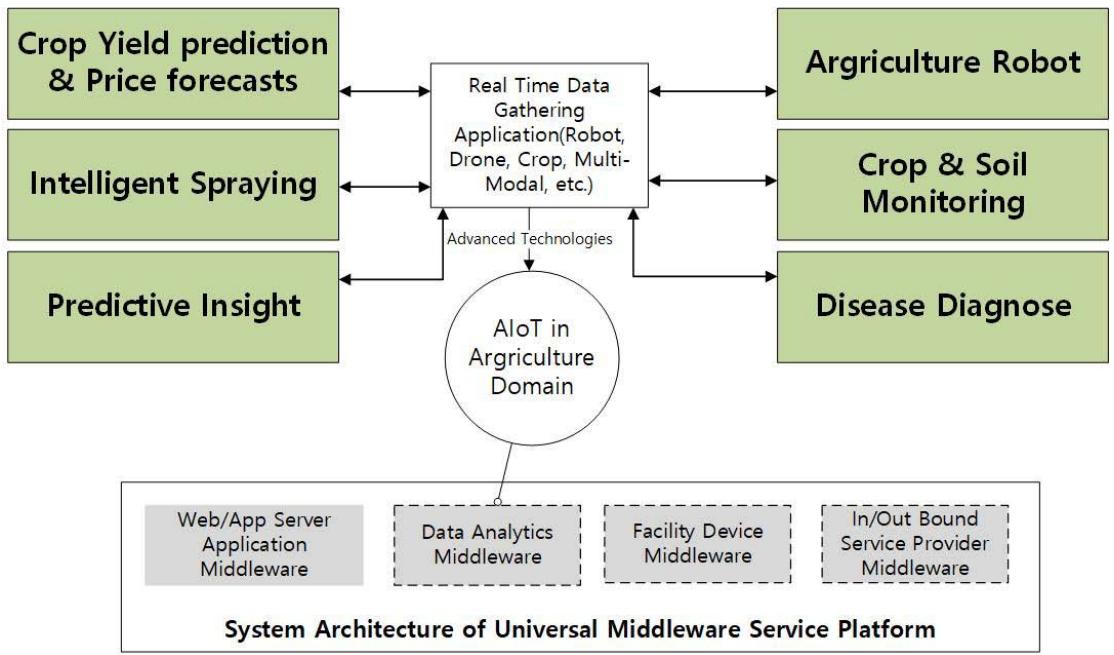 Fig. 1: Agriculture and AIoT Advanced Technologies
A few search queries (Table 1) pertinent to how AloT are utilized in addressing horticultural troubles were used to separate substance from peer-reviewed scholastic distributions and meetings to secure information zeroing in on the essential parts of this SLR. The data was obtained from the Horticulture Science Data set, Science Direct, and Google Researcher, among different spots.
Table 1: For information recovery during the inquiry recognizable proof, use search strings
<table><tr><td>Search Terms</td><td>About the results</td></tr><tr><td>"Data Analysis" AND "Agriculture"</td><td>2 700 000</td></tr><tr><td>"Agricultural Practices" AND "Artificial Intelligence"</td><td>89 900</td></tr><tr><td>"Agriculture" AND "Internet of Things"</td><td>44 255</td></tr><tr><td>"Big data" AND "Agriculture"</td><td>22 400</td></tr><tr><td>"'Agriculture' AND 'Machine learning'"</td><td>42 22</td></tr><tr><td>"Agribusiness AND "Smart sensors"</td><td>75 22</td></tr><tr><td>"'4.0 Agriculture"</td><td>4 55</td></tr><tr><td>"'Shrewd Farming"</td><td>47 2</td></tr><tr><td>"Precision farming"</td><td>75 3</td></tr></table>
Precision farming is an optimization strategy that incorporates fields and crops specific observation, measurement, and analysis. Robotics, big data, and Advanced analytics are two potential technologies that control precision agriculture. The 4 R's, or proper time, right location, right amount, and right manner, more accurately describe it [18].
"Smart farming": Refers to the method of gathering data from the field and the clever use of that data to carry out the intended operations. It uses data and digital technology and affects all aspects of agricultural operations [19].
## II. DIGITAL FARMING IN MIDDLEWARE
Digital farming is a practical idea in light of both brilliant cultivating and accurate data decisions at the right time and in the right way in the field of computed systems using middleware. In the agricultural sector, devices that have been introduced into precision agriculture with information and communication technology can be classified into application services centered on agricultural machinery, robots, and UAVs operating in an interactive environment between wired and wireless sensor networks. Data and services enable farmers to automate a series of previous tasks and enlighten their decision-making. Middleware is a concept that supports open interactions that provide farmers with more options and flexibility between the automation they need and information and communication technology that supports decision-making [20]. For example, middleware could enable a survey on the role of agriculture in the implementation of smart farming components of IoT-based smart farming from the vertical to the horizontal structure of live stock monitoring, Field Monitoring, and green house monitoring. Middleware enables the integration of AIoT devices and supports precision farming practices such as real-time monitoring and decision-making through multiple connectivity options, likes wiring framework service [21]. The strategy gives the information that has been assembled esteem and produces decisions that might be executed for sometime in the future. Also, as it offers clients knowledgebase and raw data, it is invaluable for users [22].
Despite the reception of a few contemporary strategies, there are still various issues that should be settled. The objective of the ongoing review piece is to look at a few demonstrated systems utilized in contemporary farming and to represent these procedures actual capacity for what's to come. Figure 2 shows WSN node architecture, including Universal Middleware.
A broad examination is as yet required in creating areas important to observably affect enormous scope ranches in developed nations and on limited scope ranches in emerging nations [23]. Nevertheless the way that the utilization of AloT and the reception of accuracy in horticulture can extraordinarily work on the general yield and cultivating practices of ranchers.
Focus must be given to how these advances might be made available to non-industrial countries and country locales since the reception of accurate horticulture depends on something other than the utilization of these technologies on business ranches.
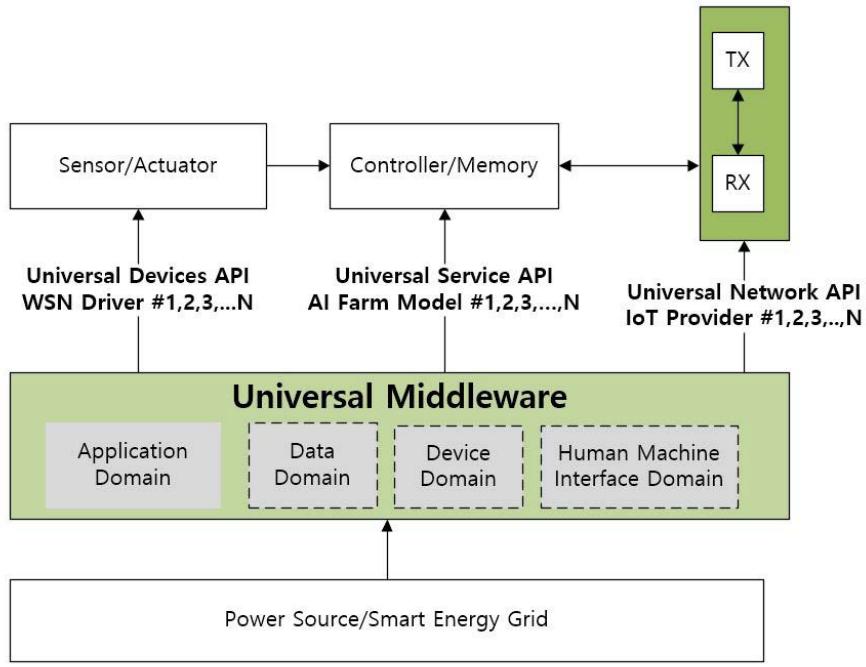 Fig. 2: WSN node architecture including Universal Middleware
It is necessary to develop a network and computer system for rural regions that is more effective and dependable regarding energy supply, network latency, throughput, and performance. Improves access to the advantages of precision agriculture by reducing network delay in locations with lower connections and more significant bandwidth limits [24]. Facilitate the availability of resources for value-added cyclical farming that has the potential to improve production and maybe other aspects of agricultural output.
## III. SYSTEM METHODOLOGY USING UNIVERSAL MIDDLEWARE
Probably one of the most essential aspects of life organized on the space planet is food and agriculture. To address various issues, the convergence of agriculture into the food industry might benefit the public from AI and its IoT subfields, including data analytics, vision learning, and multi-modal handling. Systematic methodologies in Universal Middleware organized methodology level, web access controller, connector, application management, configuration manager, device manager, preferences, light web server, and wire with XML parser. There are applications for agriculture services that are customized in the context of the middleware system. While AI roadmap can be utilized in these cycles during preproduction (crop yield and finding water system spills), creation (sickness location and climate expectation), handling (item assessment), and circulation (stockpiling and customer examination), IoT gear can be utilized to gather valuable data from crude information on ranches in regards to agribusiness and water system [25]. Creators ought to investigate, fathom, and classify the latest examination distributions in their field of revenue prior to doing investigation and reaching resolutions in light of their outcomes. AloT middleware spans a common agricultural value chain of standards across industries that incorporate multiple applications. IoT applications can use different individual IoT systems depending on the value cycles of crop and livestock production. We present the concept of a universal artificial intelligence (AI) system that operates on an independent AI module interconnected by a comprehensive cloud network [26]. We searched for diary articles, meeting papers, and book sections that examined AloT applications in agribusiness for the momentum literature study. As the several of interconnected devices continues to grow in IoT systems, various dynamic big data is generated. In one study, intelligent processing and analysis of big data provided a higher level of knowledge base and insight that resulted in better decision-making, prediction, and reliable management of sensors. Using middleware and sensor data analysis within agricultural ecosystems, AI algorithms can explore advanced data-driven case studies while expanding to food, energy, and water integration systems. We explored sustainable works recorded in Yemeserach Mekonnen et al. 2020 J. Electrochem [27].
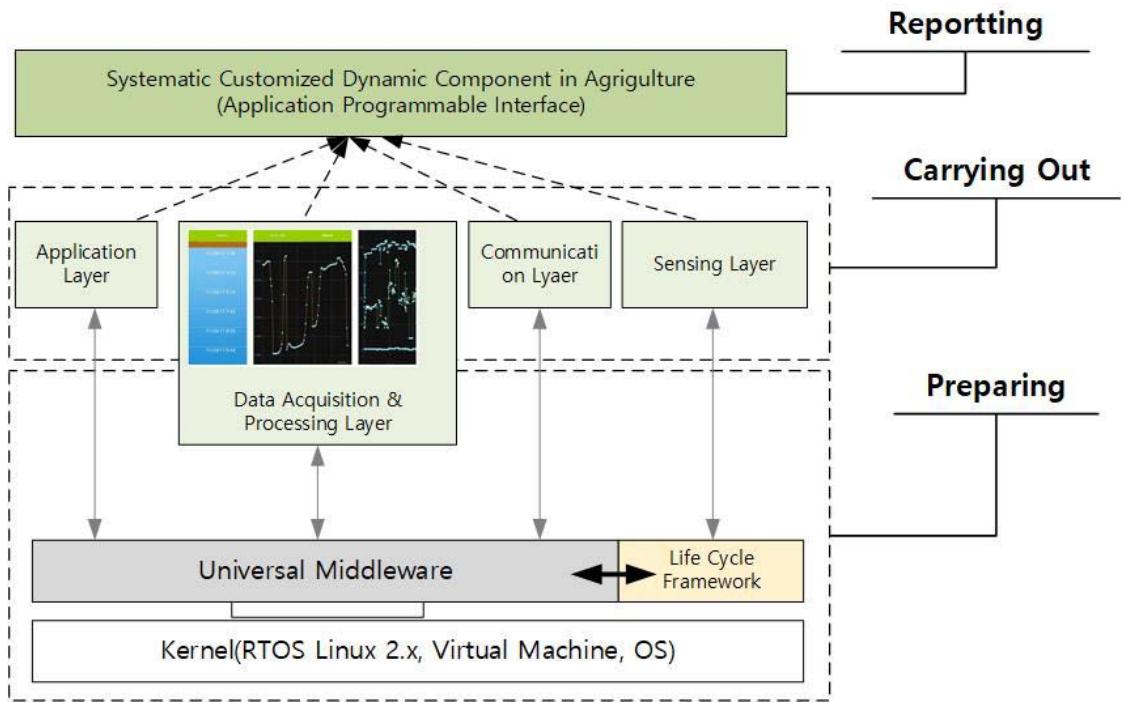 Fig.3: Systematic Methodology in Universal Middleware Figure 3. Gives the design concept in a natural-time environment of a systematic framework in universal middleware utilized for this work. This methodology can be divided into three areas. First, it is an execution environment in which kernel and universal middleware structures are applied in the form of system porting, which constitutes system stability. Second, carrying out, which comprises communication, data, and application services, is a modular service managed by the life cycle process. Third, it is a reporting area where users, farmers, or operators can customize data and view information. Data acquisition and processing layers could be easily realized applications of AI and IoT technologies, addressing challenges in data integration or scalability, or enhancing the usability of middleware in diverse agricultural settings.
The justifications for doing a literature review in a particular field are considered account during the planning stage. In this example, various novel applications are introduced, including efficiency, harvest and animal checking, abnormal action recognition, water system spillage location, and observing. The most advantageous AI draws near, including AI, master frameworks, the Internet of Things, and picture/video handling, are likewise investigated notwithstanding these application areas [28].
## V. AGRICULTURAL SECTOR
From several angles, intelligent farming technologies impact on the farming industry. The effectiveness of water use, for instance, will benefit from observations and data collection from big farms on humidity, air temperature, soil moisture, and solar intensity. As a result, it will have an impact on agricultural output as a whole. Since the population of the globe is growing every day, it is crucial to employ innovative agricultural practices to boost food output. The ideal method for boosting food output and maximizing profit is, therefore, smart farming. Utilizing IoT platforms and inexpensive sensors, innovative agricultural solutions should be put into practice efficiently while conserving time, money, and resources. The Korean government implemented the policy using the ICT infrastructure to build the supply chain for agri-food. In the United States, the system for smart agricultural technology does not exist. Fundamentally, smart agricultural solutions have been led to high-tech by private-centered competition. Understanding the difference between the two methods can provide a different path than before [29]. The agricultural industry will gain from these implementations in various ways, including enhanced animal farming, remote monitoring of fields, decreased environmental footprints, real-time data collecting, cheaper operating costs, and higher output quality [30].
Brillant farming research and development is encouraged in many nations to increase sustainable food production and improve farmer profitability. One instance of smart farming being used in the agriculture industry was given. They tended to the troubles related to such drives while considering the availability of beneficial examination offices, HR, and ecological contemplations [31].
Figure 4. Illustrates the AI technology of an IoT savvy cultivation framework. Drones, Wi-Fi bots, and IoT sensors (like optical, electrochemical, mechanical soil, area, and airflow sensors) assemble information from the fields and send it to the AI-based brilliant cultivating framework through the cloud. Savvy cultivating frameworks remove data from unstructured information and assist with cultivating the executives and navigation by utilizing various AI, picture handling, PC vision, remote detecting, and master framework techniques. These techniques work on rural and supply organizations' quality, efficiency, and sustainability [32]. Looking at the role of middleware, first, the collected information is processed and sent through the cloud to the service delivery platform on the AI cultivation framework. Next, the service delivery gateway provides functional problems including IoT-based control, energy management, surveillance, remote management, lack of resources, and cost management services. In this case, the service delivery platform integrates various technologies (UPnP, SNMP, AI, photo processing, PC vision, remote detection, unstructured information, etc.) with the application services (HTTP, WAP, Instant Messaging, Web Services) and external systems that use separate security layers (SSL, TLS, WTLS).
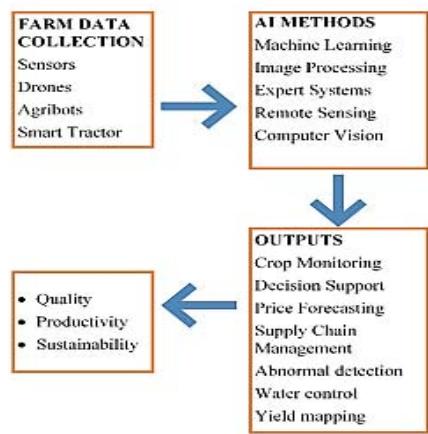 Fig. 4: IoT innovative agricultural system with AI
Proposed an IoT-based data analytics strategy for "digital farming in middleware" to assess agrian output. IoT sensors gather information from farms, assisting farmers in decision-making and crop monitoring. Applications for smart phones and the web are particularly practical in distributing product information and facilitating online shopping. Several AIoT-based agricultural approaches to established farming practices [33]. Their discoveries exhibit that AI-based rural creation and data analytics are more successful and worthwhile, and that ranchers who practice shrewd cultivating have better satisfaction record scores and expectations for everyday comforts than ranchers who utilize traditional farming [34].
## VI. CONCLUSION
Smart farming in Middleware is an idea that incorporates endlessly overseeing ranches using current advances like IoT, robots, and AI to raise the amount and nature of merchandise while diminishing the requirement for human work underway [35]. Middleware develops the required diversity by introducing new technologies due to AloT while maintaining its advantages while operating a farm. This technical feature is, first, the expansion of the space for connecting the introduced devices. Second, it is communication between all users that appears while integrating vast application services that connect the inside and outside of the farm[36]. Distance using the k-means algorithm with large amounts of data generated during agricultural production. The crop growth curve is simulated and compared with the improved K-means algorithm. The experimental results of the k-means algorithm enable more efficient real-time data communication and information processing functions and play an important role in promoting agricultural informationization and improving levels. When using middleware, it can be used in combination by applying different algorithms depending on the application domain. Considering that populace numbers are rising quickly all over the globe, these benefits will well affect the public economy's profitability and extension. To help ranchers in steppin and utilising AI technology to produce better seeds, crop security, and manures, specialists and researchers are pushing toward utilising recently delivered IoT advances in shrewd cultivating.
The most current uses of AI and IoT with perspective techniques in intelligent farming middleware have also been covered in this study, with an emphasis on the AI techniques or algorithms employed and the accuracy rates attained [37]. Universal Middleware for system methodologies were presented to show the most current AI perceptual design concept and systematic methodology, their related applications, and the accuracy levels achieved. Researchers have seen highly encouraging outcomes when successfully using AI methodologies. This study has offered comprehensive explanations of complex AI applications in smart farming. To sum up, the idea of smart farming and precision agriculture is to improve agricultural civilization, and it seems that the only way agriculture will flourish is if most farmers adopt these technologies into their farming methods [38]. The limitation of this study is that it focused on preparing and carrying out Therefore, in the future, an expanded field case study is needed for personalized verification for each user of Reporting Stages. In particular, private-centered case studies in the United States will be a scientifically important turning point.
Generating HTML Viewer...
References
38 Cites in Article
Raj Goel,Chandra Yadav,Shweta Vishnoi,Ritesh Rastogi (2021). Smart agriculture – Urgent need of the day in developing countries.
Suryari Purnama,Wahyu Sejati (2023). Internet of Things, Big Data, and Artificial Intelligence in The Food and Agriculture Sector.
Rambod Abiri,Nastaran Rizan,Siva Balasundram,Arash Shahbazi,Hazandy Abdul-Hamid (2023). Application of digital technologies for ensuring agricultural productivity.
G Nagaraja,Avinash Soppimath,T Soumya,A Abhinith (2019). IoT Based Smart Agriculture Management System.
Lee Hae-Jun (2023). Dynamic Context Awareness of Universal Middleware based for IoT SNMP Service Platform.
D Sivaganesan (2019). Design and Development AI-Enabled Edge Computing for Intelligent-IOT Applications.
D Kumari,R Pandita,M Mittal (2018). An Agricultural Perspective in Internet of Things.
Sheetal Menon,Karuna Jain (2021). Blockchain Technology for Transparency in Agri-Food Supply Chain: Use Cases, Limitations, and Future Directions.
Angelo Leogrande (2023). The Contribution of Agriculture to GDP.
Praveen Kambar (2018). A Study on the role of E-Technology to take over Agriculture Distress in India.
D,Maria Manuel Vianny,A John,Senthil Kumar Mohan,Aliza Sarlan,Ali Adimoolam,Ahmadian (2022). Water optimization technique for precision irrigation system using IoT and machine learning.
Tserenpurev Chuluunsaikhan,Jin-Hyun Song,Kwan-Hee Yoo,Hyung-Chul Rah,Aziz Nasridinov (2019). Agriculture Big Data Analysis System Based on Korean Market Information.
Siddhant Kumar,Gourav Chowdhary,Venkanna Udutalapally,Debanjan Das,Saraju Mohanty (2019). gCrop: Internet-of-Leaf-Things (IoLT) for Monitoring of the Growth of Crops in Smart Agriculture.
Shibin David,R Anand,Martin Sagayam (2020). Enhancing AI based evaluation for smart cultivation and crop testing using agro-datasets.
B Raju (2019). An IOT based Low Cost Agriculture Field Monitoring System.
Alexander Uzhinskiy (2023). Advanced Technologies and Artificial Intelligence in Agriculture.
(2022). Global Population Growth and Sustainable Development.
(2023). Efficient and Secure Communication in VANETS Using Block Chain.
D Anusha,P & R, Anandan & Krishna (2022). Modified Context Aware Middleware Architecture for Precision Agriculture.
Praveen Kambar (2018). A Study on the role of E-Technology to take over Agriculture Distress in India.
V Puranik,A Ranjan,A Kumari (2019). Automation in Agriculture and IoT.
Siddhant Kumar,Gourav Chowdhary,Venkanna Udutalapally,Debanjan Das,Saraju Mohanty (2019). gCrop: Internet-of-Leaf-Things (IoLT) for Monitoring of the Growth of Crops in Smart Agriculture.
Shibin David,R Anand,Martin Sagayam (2020). Enhancing AI based evaluation for smart cultivation and crop testing using agro-datasets.
B Raju (2019). An IOT based Low Cost Agriculture Field Monitoring System.
Marco Barenkamp (2020). A New IoT Gateway for Artificial Intelligence in Agriculture.
M Yemeserach,N Srikanth,B Lamar,S Arif,Shekhar Bhansali (2019). Machine Learning Techniques in Wireless Sensor Network Based Precision Agriculture.
Olakunle Elijah,Tharek Rahman,Igbafe Orikumhi,Chee Leow,M Hindia (2018). An Overview of Internet of Things (IoT) and Data Analytics in Agriculture: Benefits and Challenges.
Susan O'shaughnessy,Minyoung Kim,Sangbong Lee,Youngjin Kim,Heetae Kim,John Shekailo (2021). Towards smart farming solutions in the U.S. and South Korea: A comparison of the current status.
Edwin Collado,Anibal Fossatti,Yessica Saez (2019). Smart farming: A potential solution towards a modern and sustainable agriculture in Panama.
A De Araujo Zanella,E Silva,L Albini (2020). Security challenges to smart agriculture: Current state, key issues, and future directions.
H Thakor,S Iyer (2019). Development and analysis of smart digifarming robust model for production optimization in agriculture.
P Suebsombut,A Sekhari,P Sureepong,P Ueasangkomsate,A Bouras (2017). The using of bibliometric analysis to classify trends and future directions on 'smart farm.
S Kumar,P Raja,G Bhargavi (2018). A Comparative Study on Modern Smart Irrigation System and Monitoring the Field by using IOT.
S Mane,M Mane,U Kadam,S Patil (2019). Design and Development of Cost Effective Real Time Soil Moisture based Automatic Irrigation System with GSM.
Michael O'grady,Gregory O'hare (2017). Modelling the smart farm.
M Patange,P Student,M Farooqui (2019). IOT Assisted Farming.
S Bhagwat,A Hulloli,S Patil,A Khan,M Kamble (2018). Smart Green House using IOT and Cloud Computing.
No ethics committee approval was required for this article type.
Data Availability
Not applicable for this article.
How to Cite This Article
Hae-Jun Lee. 2026. \u201cEnhancing Agriculture through Alot and Data an Alytics Middleware\u201d. Global Journal of Science Frontier Research - D: Agriculture & Veterinary GJSFR-D Volume 24 (GJSFR Volume 24 Issue D1).
Explore published articles in an immersive Augmented Reality environment. Our platform converts research papers into interactive 3D books, allowing readers to view and interact with content using AR and VR compatible devices.
Your published article is automatically converted into a realistic 3D book. Flip through pages and read research papers in a more engaging and interactive format.
Our website is actively being updated, and changes may occur frequently. Please clear your browser cache if needed. For feedback or error reporting, please email [email protected]
Thank you for connecting with us. We will respond to you shortly.