
I. INTRODUCTION
Portuguese documents from the time of the Empire describing the coastal areas in Northeastern Brazil, more specifically the semiarid lands of Ceará, mention 'infertile soils' and a failed attempt at occupying the territory in 1603 on part of Pero Coelho de Souza and the indigenous community under his command (Pompeu; Tassigny, 2006). This 'infertility' may be more appropriately described as seasonal aridity.
Awareness of the regional phenomenon of prolonged droughts as a crisis scenario emerged after the social upheaval associated with the dry season of 1877. The imperial government dealt with adverse climate conditions mostly by distributing food and creating emergency aid programs for rural populations, but it also encouraged studies in order to identify the root cause of the problem and propose feasible solutions to neutralize it (Neves, 2002).
Later, desiring to further mitigate the negative social impact of prolonged water scarcity, the republican government established a drought relief agency ('Inspectoria de Obras Contra as Secas'), later renamed 'Inspectoria Federal de Obras Contra as Secas') which did much to expand knowledge of the climate, water resources and sanitation (Magalhães et al, 1991; Pompeu; Tassigny, 2006). In the same period, the federal government adopted a series measures in semiarid regions, such as the building of reservoirs and dams capable of storing rain water for use in the dry season. This period became known as 'the hydraulic era'.
During the military government (1964-1985), irrigation was resumed as a public policy with the purpose of maintaining an environmental and socioeconomic balance in semiarid regions. Within predetermined perimeters set up and managed by public agencies, water was distributed in equitable amounts to fruit and vegetable croppers.
Irrigation projects in semiarid Ceará date back to 1890 when a large dam and reservoir ('Cedro') was built in the city of Quixadá. Other contemporary drought relief projects used drilled wells and plate-assembled water storage tanks (Pompeu; Tassigny, 2006) until organized irrigation zones were established.
The first irrigated zone ('Morada Nova') was established in the mid-1970s to allow subsistence croppers to rise to the level of micro or mid-sized business owners and to prepare the semiarid backlands of Ceará for future farming enterprises oriented towards the export market (Sousa, 2010).
Equipped with pipelines to bring water from different reservoirs in Ceará and other technically advanced infrastructure, the project met the needs of a variety of farmers settled in the irrigation zone and allowed stabilizing productivity regardless of the season and despite droughts (Pontes et al, 2013).
As specified in Law #12.787/13, the irrigation zone plan is part of the National Irrigation Policy and has as its main objectives encouraging the expansion of irrigated land in the country, increasing productivity, and making local agribusiness more competitive. The project was intended to generate economic growth and support the region's ecological, political and social development. In other words, the project was expected, on the one hand, to minimize ecological impacts by making sustainable use of native species and resources and, on the other, to promote the social and educational development of subsistence croppers so as to allow them to participate proactively in the political process and reject, if they so wish, initiatives stemming from the corrupt old 'drought industry'.
Sustainable development is essentially a process of change in which exploitation of resources, the direction of investments, the orientation of technological development, and institutional change are all in harmony and enhance current and future potential to meet human needs and aspirations (Brandon, 1999). Thus, two aspects highlight the necessary involvement of the individual and of the values underlying sustainable action: the philosophy allowing to understand the relationships between the different complex factors must be shared in a public consensus, and a comprehensive framework must exist in such a way that the complex inter-relationships can be made to aid communication, understanding and the growth of knowledge (Brandon, 1999).
A number of studies focused on the irrigation zones in Ceará have been published, offering relevant and critical socioeconomic analyses (Sousa, 2010; Pontes et al, 2013; Rigotto; Freitas, 2012). Evaluations of the sustainability of the regions benefited by these irrigation zones have revealed the potential of the project and have shed light on the perspective of the small farmers settled on lands adjacent to the irrigation zones.
In this study, we looked into the social, environmental and economic impacts of the Jaguaribe-Apodi irrigation zone in Ceará and its potential for sustainability in light of the triple bottom line sustainability model proposed by Elkington (2012).
II. IRRIGATION ZONES: LEGAL BASIS AND GOVERNMENT PROGRAMS
Beginning in the 19th century, the history of irrigation in Brazil may be divided into four stages (Franca, 2001). Originally, the purpose was to make rational use of existing water resources, such as the São Francisco river, and thus put an end to the paradox that semiarid Brazil has one of the world's greatest water reserves but also one of the smallest areas of irrigated land. According to Bursztyn (2008), Northeastern Brazil has the equivalent of 11 billion of water stored up and less than 3,000 ha of irrigated land.
The drought relief agency established in 1909 ('Inspectoria de Obras Contra as Secas') was made into a federal autarchy in 1945 and renamed DNOCS ('Departamento Nacional de Obras Contra as Secas', currently governed by Law #4229/63). Covering the states Piauí, Ceará, Rio Grande do Norte, Paraíba,
Pernambuco, Alagoas, Sergipe, Bahia and part of Minas Gerais, DNOCS develops public policies for the redistribution, channeling and use of water resources in semiarid regions impacted by recurrent droughts (Brasil, 1963).
The early stages of irrigation consisted of minor interventions directed at specific targets and not informed by well-defined national policies and programs (Franca, 2001). However, these early efforts at implementing irrigation and drainage soon became ineffective due to lack of persistence on part of the agencies involved (Franca, 2001).
The late 1960s saw the beginning of the second stage of the history of irrigation. The government, then under president Médici, created the Group for Integrated Studies on Irrigation and Agricultural Development (GEIDA) (Bursztyn, 2008) and, with the purpose of mapping and managing the country's water resources, launched the Pluriannual Irrigation Program (PPI) in 1969 and the National Integration Program (PIN) in 1970 (Franca, 2001).
President Médici also ordered the creation of the First National Plan of Development (I PND) which proposed to expand irrigation by 130,000 ha during a 4-year period (1975-79). This goal was incorporated into the PIN (Bursztyn, 2008).
Two programs under the umbrella of the National Integration Program (I PNI), the National Program for the Rational Use of Irrigable Lowlands (PROVÁRZEAS) and the Program for the Financing of Irrigation Equipment (PROFIR), sought to create opportunities for private enterprises to enter drainage and irrigation zones or purchase 'corporate plots' on public land. Although these irrigation programs were government initiatives, they strongly encouraged private participation (Bursztyn, 2008; Franca, 2001).
The third stage of irrigated agriculture in Brazil started in 1986 with the establishment of the Northeast Irrigation Program (PROINE) and the National Irrigation Program (PRONI). Again, the priority of the federal government was to strengthen the private sector, but with a difference: a clearer distinction between the roles of the public and private sector in the development of irrigation projects, and government action limited to large infrastructure works (hydraulic and electric support and macrodrainage). Private enterprise was expected to handle everything else (Franca, 2001, p. 40).
Experience gathered throughout the first three stages had made it clear that a new approach to irrigation was necessary. Thus, in the fourth stage, starting in 1995, the National Irrigation and Drainage Policy was revised. The new approach was materialized in the New Irrigation Model Project (Franca, 2001).
The earliest attempts at irrigating the semiarid soils of Northeastern Brazil were supervised by IOCS (now DNOCS) in the early 1940s and involved the construction of reservoirs and irrigation canals (Pompeu; Tassigny, 2006).
Then, in 1959, the Northeastern Superintendency of Development (SUDENE) was established, having as its priority the development of irrigated agriculture. This produced favorable results in the Experimental Fields of Bebedouro and Mandacaru in 1963-64, a restructuring of the technical and administrative structure of DNOCS and Companhia Vale do São Francisco (CVSF), and the foundation of the Executive Irrigation Group for Agricultural Development (GEIDA) in 1968 (Franca, 2001).
In 1973, the Integrated Plan for the Mitigation of the Consequences of Drought in the Northeast registered an irrigated area of 2,500 ha in the region, including the large public reservoirs and the pilot irrigation zones in Morada Nova (Ceará), Bebedouro (Pernambuco) and Mandacaru (Bahia) (Carvalho, 1973).
Studies sponsored by GEIDA identified 62 technically feasible projects in the Northeast. This was used to inform the first stage in the National Irrigation Plan. Concerns about water scarcity in the Northeast also led to the establishment of the PIN in 1970 which determined at the federal level that projects benefiting the Northeast were urgent and should be prioritized (Franca, 2001).
The guidelines of the I PND (1972) established the goal of 40 thousand ha of irrigated farm land. This was incorporated into the PIN and defined as urgent. The II PND (1974) concluded that Northeastern Brazil had large but poorly managed water resources. This prompted the setting of new goals involving a wide range of agencies, such as SUDENE, DNOCS, the Superintendentcy of the Development of Vale do Sao Francisco (SUVALE, now CODEVASF), the Brazilian Agricultural Research Agency (Embrapa), Banco do Nordeste (BNB) and Banco do Brasil (BB) (Franca, 2001).
The 'Nordeste' project had no strategies for public irrigation. It was prepared for the I PNI in 1982 and followed federal government guidelines for incentives to private enterprise, as shown by the granting of special credit and the allotment of outright grants for infrastructure. When PROFIR was established in 1982, an official rural credit line was opened for investment in irrigation projects which were emerging in some parts of Northeastern Brazil (Franca, 2001).
PROINE and PRONI, both established in 1986, were run by the ad hoc Ministry of Irrigation in partnership with DNOCS, CODEVASF and the National Department of Sanitation (DNOS), with the goal of reaching one million ha of irrigated land by 1990 in the Northeast alone (Albuquerque; Monte; Paula, 2010).
The National Office of Irrigation (SENIR) was created in 1990 under the Ministry of Agriculture and Agrarian Reform and charged with implementing the National Irrigation Program through DNOCS and
CODEVASF, since DNOCS had been extinguished at this point (Franca, 2001).
A few years later, in 1996, the Program for the Emancipation of Irrigated Zones (PROEMA) was established following the guidelines of the National Program for Irrigation and Drainage (PRONID). The main purpose was to provide educational and organizational training for the farmers in the public irrigation zones, with emphasis on the technical and managerial skills required for management transfer (Albuquerque; Monte; Paula, 2010, p.2).
This transfer of management was made possible with the passage of Law #10.204/01. The law determined a 5-year deadline for DNOCS to completely implement PROEMA and permanently transfer ownership from the State to private legal entities or farmer associations (Brasil, 2001).
The goals of PROEMA and PRONID were supported by the PPI in the 4-year period 2004-2007 by creating two new programs: the Irrigated Agriculture Development Program and the Public Irrigation Zone Management Transfer Program (Albuquerque; Monte; Paula, 2010). The criteria of the latter were defined entirely by the State, without taking into account the farmers' understanding of the situation (MI, 2013), despite the fact that the State declared to consider the emancipation of the irrigation zones a direct expression of the farmers' socioeconomic interests.
DNOCS, under the Ministry of National Integration (MI), had resources allocated as determined by the law, making it possible to meet the goals of PROEMA by 2011. This initiative by the MI required resources to be invested primarily in mid-sized and large irrigation zones, which at the time amounted to twenty-one (Albuquerque; Monte; Paula, 2010).
Surveys conducted by the MI on the management, land ownership status and maintenance of irrigation zones were used to subsidize the Pilot Investment Project. The project focused on 10 of the 21 previously selected irrigation zones with the aim of achieving emancipation by December 2007 (Albuquerque; Monte; Paula, 2010).
Currently, issues related to irrigation policy, emancipation and transfer are governed by Law #12.787/13, which however, according to Albuquerque, Monte and Paula (2010) and Dourado et al (2006), lacks clarity regarding the government's objective with the transfer of management of the public irrigation zones. Figure 1 provides an overview of the government plans and programs described up to this point.
Figure 1: Government plans and programs created between 1969 and 2005 to implement and support irrigated agriculture in the semiarid region of Northeastern Brazil.
| Plan or program | Year | |
| PPI | Pluriannual Irrigation Program | 1969 |
| PIN | National Integration Program | 1970 |
| I PND | First National Plan of Development | 1972 |
| Integrated Plan for the Mitigation of the Consequences of Drought in the Northeast | 1973 | |
| II PND | Second National Plan of Development | 1974 |
| PNI | First National Irrigation Plan | 1982 |
| PROVÁRZEAS | National Program for the Rational Use of Irrigable Lowlands | 1982 |
| PROFIR | Program for the Financing of Irrigation Equipment | 1982 |
| PROINE | Northeast Irrigation Program | 1986 |
| PRONI | National Irrigation Program | 1986 |
| Projeto Novo Modelo de Irrigação | 1995 | |
| PRONID | National Program for Irrigation and Drainage | 1996 |
| PROEMA | Program for the Emancipation of Irrigated Zones | 1996 |
| Pilot Investment Project | 2005 | |
III. SUSTAINABILITY, ELKINGTON AND THE TRIPLE BOTTOM LINE
Throughout modern history, governments have made efforts to find a balance between the interests of society, the economy and the environment, but the notion of sustainability wasn't popularized until the 1960s (Oliveira, 2015). The earliest movements towards sustainable societies were inspired by influential books, such as "Silent Spring" (Carson, 1962) which documented the environmental harm caused by the indiscriminate use of pesticides. Elkington (2012) centered his work on the ternary of economic prosperity, environmental protection and social equity, but also pointed out the difficulty in drawing clear limits between these dimensions (Oliveira, 2015).
In the 1990s, the notion of sustainable development was expanded beyond the economic-financial realm. The first report of human development provided new and more refined definitions, which enriched the debate worldwide (Veiga, 2006).
These new ideas and insights made society aware of the need for a better understanding and management of the interactions between society, the economy and the environment. According to Elkington (2012, p. 110), the burgeoning global perspective of sustainability required an urgent redefinition of the meaning of concepts like social equity, environmental justice and corporate ethics to better envisage the multiple dimensions of capital, not just the physical and financial aspect, but also social, human and natural capital.
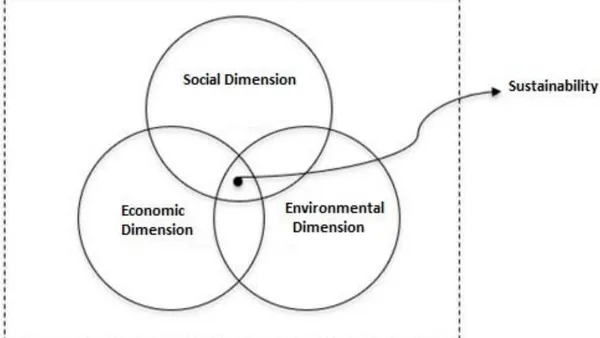
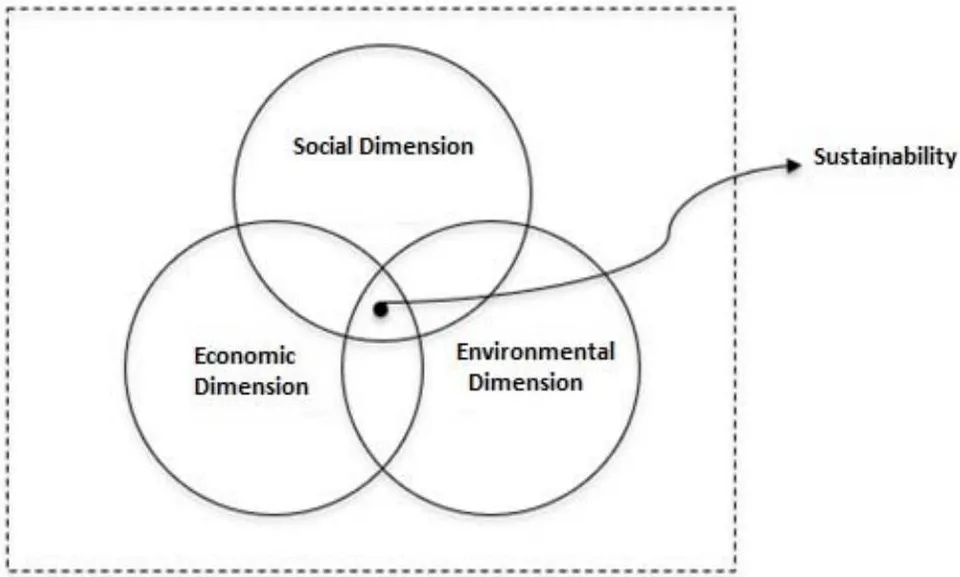
By the end of the 20th century, the World Business Council For Sustainable Development introduced the concept of eco-efficiency, a philosophy concerned with creating more value with less impact. This helped clarify the notion of sustainability and led to further discussions on the possibility of harmonizing financial and social priorities (Elkington, 2012). The result was the so-called triple bottom line model of sustainability proposed by Elkington (2012). In this model, the social component reflects concerns with the impact of business on communities, the environmental component reflects resource use and emissions of pollution, while the economic component reflects economic efficiency (Barbieri et al, 2010, p. 150).
In the delimitation of Elkington's model (1997) the questioning about the possibility of a sustainable capitalism initially arises. Despite the negative response, the author suggests a business movement focused on rethinking strategies, considering that "businesses need stable markets (...) and must have the necessary technological, financial and management skills to overcome the sustainability transition" (ELKINGTON, 2012, p. 52).
This transition would not be able to suppress the search for profit, as the main characteristic of capitalism, however, this search is refined from a transformation of the mission and values of the companies, directing them not only to the valorization of the three pillars (planet, profit, people), as well as consolidating sustainable and renewable actions in the stages of the trade and production system.
These reflections moved society towards developing teachings that would make possible an interaction between man and society, allied to the economy and the environment, and in this sense "the social dimension reflects the concern with the impacts on communities; the environmental dimension concerns the use of natural resources and the emission of pollutants; the economic dimension refers to economic efficiency" (BARBIERI et al., 2010, p. 150).
The focus on the difficulties generated from the points of intersection between the social, environmental and economic pillars is not capable of functioning as a way of annihilating capitalism in favor of sustainability or vice versa; in fact, a "sustainability crisis" emerges from this impasse, which must be resolved with business movements that invest in labor capable of preserving the planet, and consequently, breaking with the paradigm of only obedience to economic-financial progress, since the concerns turned to sustainability not only brought new perspectives but also a greater refinement of its concept.
With regard to the economic pillar, profit is highlighted here as a point of support for the organization, as well as its operational sustainability, and also in this perspective, the detailing of capital in physical capital, including the machinery that makes up the organization, financial capital and human capital, as "a measure of experience, capacity and other knowledge-based assets of individuals who make the organization move" (ELKINGTON, 2012, p. 112).
The viability of the economic field (profit) demands business action with regard to providing annual reports that traditionally pervade only the financial behavior of the organization; considering the first and second points of intersection between the three pillars, said reports should not only indicate economic movement, but also indicators of natural and social capital, emphasizing that natural capital indicates both what is essential for the balance of the ecosystem, and what has renewable potential; and social capital, in turn, emphasizes the results resulting from the human grouping that integrates the organization.
Environmental issues (planet), which gained greater coverage from the 1970s, raise the third point of intersection, triggering in managers an awareness directed to the standardization of a fit in the classification of "environmentally sustainable company". In this case, organizations that seek the "sustainable" designation must formulate analyzes capable of discriminating the interactions that are taking place between the company and the environment (ELKINGTON, 2012).
Returning to the developments inherent to capital, there is a need for organizations to understand the concept of natural capital so that they can become environmentally sustainable, and in this sense, natural capital is divided into: critical natural capital, representing what is essential to life and ecosystem integrity, and renewable natural capital, that can be renewed (e.g. through seeds or relocation of sensitive ecosystems), reclaimed (environmental alternatives or desert recovery) or substituted (increased use of manmade substitutes such as solar panels in place of limited fossil fuels) (ELKINGTON, 2012, p. 117).
This pillar also emphasizes environmental accounting, forecasting financial indicators through the glimpse of revenue and cost, as well as the delimitation of performance factors capable of strengthening investments aimed at preserving the environment and assessments related to the environmental impacts of organizations.
In the discussion between the economic and environmental pillars, the first point of intersection is represented by the development of eco-efficiency with the production of goods and services "at competitive prices, which satisfy human needs and bring quality of life, and at the same time, reduce the environmental impact to a level at least equal to the sustainability capacity of the resource given by planet Earth" (MACIEL; KHAN; ROCHA, 2018, p. 28).
With regard to the social pillar (people), the concept of human capital is resumed, considering issues such as health, education and skills in a micro sense, and society's health and potential for wealth creation in a macro sense.
Regarding the point of intersection between the environmental and social pillars, the viability of companies focusing on education and training on environmental issues, as well as environmental justice, and intra and intergenerational equity, is highlighted. In short, with regard to the socio-environmental aspect, the characterization of a sustainable company has as a representative of social capital the development of joint work and at all social levels, a movement that strengthens ethical values and overcomes social differences.
Finally, from the intersection between the environmental and social pillars, discussions arise discussions that are constant, but more present in times of crisis, inherent to downsizing, unemployment and business ethics; in other words, organizations enter increasingly delicate scenarios with regard to the relationship with employees, bringing greater energy to the scope of business ethics.
This reflection ratifies the relevance of organizational actions and their impacts on the environment, and the balance between them and social issues assuming the same degree of relevance, concluding that a balanced interaction between companies and the environment would not be possible coexisting with instabilities social.
IV. METHODS
This was an exploratory, descriptive and qualitative study, with emphasis on the relevance of social structures and the human phenomena they comprise (Haguette, 1997).
Qualitative research processes descriptive information which cannot be quantified. Thus, the results of the present study cannot be presented statistically or graphically and require subjective interpretation, involving not just emotional perception but also an understanding of the greater context of which the object of study is an inseparable part (Minayo, 2007).
Information was collected through an extensive review of the literature and in person using a semistructured instrument designed to explore the topic in depth by way of qualitative interviews (Bauer; Gaskell, 2017; Minayo, 2007). The instrument featured 8 items focusing mostly on regional improvements (schools and health services), agricultural procedures, impact on local business, job and income generation, and regional money flow.
The 18 respondents were stakeholders of the Jaguaribe-Apodi and Morada Nova irrigation zones at the time of the study (September 2015 to November
2015)and included 5 agricultural technicians from the Producers' Association of the Jaguaribe-Apodi Irrigation Zone (FAPIJA), 2 school directors partnered with the irrigation project, 1 researcher from the Institute of Technological Education (CENTEC), 4 members of a community ('Cabeça Preta') adjacent to the irrigation zone, 4 members from the Morada Nova irrigation zone and 2 residents in the city of Limoeiro, which is near to the irrigation zones. In the sections below, the respondents are identified merely by the letter 'R' and a number from 1 to 18 to protect their privacy.
The respondents were recruited by snowball sampling, a non-probability sampling method in which existing study subjects recruit future subjects from among their acquaintances (Bracarense, 2012). The interviews were recorded in full and submitted to discourse analysis based on the concept of language as mediator between man and the natural and social order (Orlandi, 2010, p. 15).
The framework adopted in the study allowed to analyze the respondents' input according to three dimensions or 'pillars' of sustainability: social, environmental, and economic—also referred to as the 'triple bottom line' (Figure 1).
The interview instrument was pretested twice to identify possible deficiencies. Interviewing was discontinued when content saturation was achieved (Minayo, 2007).
V. RESULTS AND DISCUSSION
In our analysis, emphasis was given to responses covering all the dimensions of the triple bottom line model: social (reflecting concern with how communities are impacted), environmental (reflecting the use of natural resources and the emission of pollution), and economic (i.e., economic efficiency) (Barbieri et al., 2010, p. 150).
Within the social dimension, the respondents stated that the establishment of the irrigation zone led to improvements in schools and made more skilled labor available for work with irrigated crops and health care services. Approximately six thousand formal jobs were created:
| R 12, 2015 | "One of the benefits of the irrigation zone was the expansion of the schools. Because of the partnership, the number of regular students increased, as did the number of technical courses in Agronomy." (Jaguaribe-Apodi irrigation zone) |
| R 4, 2015 | "With regard to education, I have only good things to say. Because of the activities in the irrigation zone, CENTEC and IF opened schools in the region, offering courses in Agronomy, Irrigation and Farming". (Jaguaribe-Apodi irrigation zone) |
| R 5, 2015 | "The irrigation zone fostered development in the region. Before the zone was established, my father had crops but only during the rainy season. Then my family received a plot of irrigated land which allows farming all year round. The zone harbors 324 families plus dependents, totaling from five to six thousand jobs." (Jaguaribe-Apodi irrigation zone) |
| R 13, 2015 | "I have lived in the Morada Nova Irrigated Perimeter since I was six years old. I came here in 1976, when the project really started to work. When my family arrived here, we received a piece of land that, according to the DNOCS, measured four hectares. In this space, it was up to us to establish a permanent home and dedicate ourselves to the cultures requested by the DNOCS. My father, my brothers and I were responsible for growing the rice, which had to be harvested and bagged to be delivered to DNOCS every six months in the rendering of accounts." (Morada Nova irrigation zone). |
| R 14, 2015 | These improvements in health and education here were only at the beginning of the project. As time went by, the perimeter was abandoned and today there is no more improvement in these areas. (Morada Nova irrigation zone) |
| R 16, 2015 | At the beginning of the project everything was wonderful. There was an improvement in health and a lot of training courses were offered, but today you don't see that anymore. This project has been abandoned for some time and the lack of water has made it much worse. (Morada Nova irrigation zone). |
In the Jaguaribe-Apodi irrigation zone, the social aspect most consistently addressed by the respondents was job and income generation. This is in harmony with the tenets of Elkington's theory, according to the social pillar (people), which indicates that the concept of human capital is resumed, considering issues such as health, education and skills in a micro perspective, and society's health and potential for wealth creation in a macro perspective. On the other hand, as pointed out by Oliveira (2015, p. 68), corporate activities impact society through changes related to the safety of products and services, training and education initiatives, allocation of money and time, and income and job creation for disadvantaged groups.
According to Elkington (2012, p. 123), a sustainable organizational complex should consider human capital within the scope of the social pillar, "in the form of health, skills and education, but should also encompass broader measures of health for society and wealth creation potential. By analyzing the data collected in the field, it was possible to diagnose that education, skills and potential for wealth creation are interdependent factors, since their implementation lies in the work improvements offered by technical education organizations, which not only increase the breadth of knowledge of the population involved, but also induce an increase in the practice of modernized agriculture and, consequently, an increase in family income and regional profitability.
In these parameters, it was observed that the social dimension presents constructive references in the irrigation zone Jaguaribe-Apodi. The Morada Nova irrigation zone presented relevant social developments at the beginning of the project, but they did not last.
Environmental issues (planet), gained greater coverage from the 1970s, calling managers to an awareness directed to the standardization of "environmentally sustainable" spaces. In this case, organizations that seek the "sustainable" designation must be capable of discriminating the interactions that are taking place between the company and the environment (ELKINGTON, 2012).
As for the environmental dimension of sustainability, stakeholders are generally concerned with the abundance and natural diversity which sustain the ecosystem, whether it be fauna or flora, or the atmosphere or soil and water (Oliveira, 2015, p. 65). Our respondents described modifications related to the irrigation zone as harmful to the regional environment. For example, areas destined for environmental preservation were in many cases invaded, deforested and used for agriculture:
| R 3, 2015 | "The Jaguaribe-Apodi project was very large and its implementation undeniably caused some permanent damage to the regional fauna. I am sure some species were driven out." (Jaguaribe-Apodi irrigation zone) |
| R 6, 2015 | "A negative aspect of the irrigation zone was what happened to the environmental preservation areas, also called green areas. Although DNOCS and the Association set aside these areas for preservation, many farmers invaded them and used them for crops." (Jaguaribe-Apodi irrigation zone) |
| R 16, 2015 | "The project was a very good thing for the population, but we cannot deny that there was aggression. Yes, there was, but it was to improve people's lives". (Morada Nova irrigation zone). |
| R 14, 2015 | "When I arrived here, the project was already finished, but those who have lived here for a long time say that there was a lot of felling of native trees". (Morada Nova irrigation zone). |
About the interviews, it is important to point out that the respondents who made up the group of farmers recognize the environmental devastation and the invasion of preservation areas, however, it was noticeable that from the point of view of this social segment, the procedures carried out with the objective of guaranteeing the farmer greater range of work activities cannot be considered as something of a negative nature.
Another negative aspect within the environmental dimension was the obligatory use of agricultural chemicals. According to the respondents, the use of chemicals was supervised daily by a technician who would determine how much should be used for each crop and explain how to use personal protection equipment to prevent direct contact with the chemicals. However, the respondents believed that awareness of the proper use of agricultural chemicals was insufficient and that, as a result, some farmers handled the products inappropriately and were injured:
| R 11, 2015 | "The only negative aspect of the irrigation zone is the agricultural chemicals. It is necessary to spray the amount of poison that the crop demands. Without chemicals, no production." |
| R 7, 2015 | "The question of agricultural chemicals is still not settled in the irrigation zone. Today we defend proper use of chemicals in moderate amounts and with personal protection equipment, but there are still cases of farmers who are contaminated by direct contact with the poison." |
As we have seen, the third bottom line of Elkington's model (2012) is economic efficiency. While financial capital focuses on corporate profit, natural capital reflects the interaction between profit and the environment, and social capital reflects society's potential for collective action by diffusing, implementing and maintaining values like loyalty, honesty and interdependence (Oliveira, 2015).
In the Jaguaribe-Apodi irrigation zone, the observed economic aspects were as positive as the social aspects: All the respondents agreed that the existence of the irrigation zone led to considerably higher individual wages and that local business had benefited from transactions involving produce from the irrigation zone.
However, the respondents from the Morada Nova irrigation zone had a different point of view: the project brought significant changes on its beggining, but the small social and economic aspects that changed for the best, improving the population's quality of life were visible only on the initial phase of the project. The Figure 2 shows a house of the Morada Nova irrigation zone on its original structure, and the figure 3 shows a abandoned warehouse with tractors on the same irrigation zone.
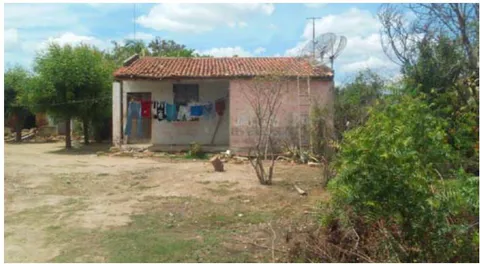
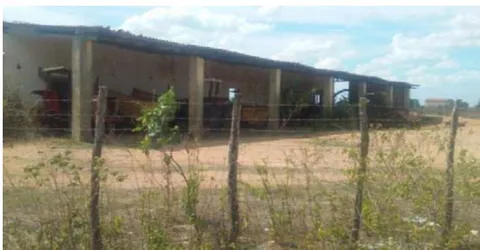
R 8, 2015 "The establishment of the irrigation zone improved the living standard of many people. Much of the unemployment in the region disappeared thanks to job opportunities provided by firms opening branches here." (Jaguaribe-Apodi irrigation zone) R 9, 2015 "In the irrigation zone, formal employment is decisive for many people's monthly income and I can assure you the production here has been very beneficial for businesses in Limoeiro and other neighboring towns." (Jaguaribe-Apodi irrigation zone)
Sustainable development is essentially a process of change in which exploitation of resources, the direction of investments, the orientation of technological development, and institutional change are all in harmony and enhance current and future potential to meet human needs and aspirations (Brandon, 1999). Two of the dimensions of the triple bottom line model reveal a positive influence of the Jaguaribe-Apodi irrigation zone on the quality of life of local stakeholders:
the social dimension and the economic dimension. Nevertheless, when sustainable development is evaluated in light of the triple bottom line, the outcome is compromised by the environmental dimension, especially with regard to the use and handling of agricultural chemicals. This is made clear by the respondents' use of the word 'poison' to describe these products.
| R 1, 2015 | "The plants need agricultural chemicals. It's impossible not to use them." |
| R 10, 2015 | "The irrigation zone does not harm the environment in any way. All the land here is used only for farming. Nothing is polluted here." |
| R 1, 2015 | "We tried to mitigate the damage caused by agricultural chemicals by providing supervision, starting with the maintenance of protective equipment and the disposal of empty packaging." |
An important point that was caught in the interviews was the issue of water in irrigation zones: they make it clear that the fundamental aspect that allows the zones to function continuously is the availability of water resources. This dependency character was also corroborated in interviews with two commercial representatives who work in the city of Limoeiro, close to the irrigation zones:
| R 17, 2015 | "You must have already seen on the irrigation zone itself that water has an influence on everything. This repercussion is not very different here. The lack of water there has repercussions here as well. As much as the perimeters have taken a leap in trade in Limoeiro and even other municipalities, this development has already had a decline due to water rationing". |
| R 18, 2015 | "Believe me, even tourism here in the region suffered from water rationing. The hotel chain here in Limoeiro is going through a big decline. It's been a while since we received representatives from fruit growing companies, and we also haven't received tourists who always come to visit the waterfalls here in the region." |
VI. FINAL CONSIDERATIONS
The interviews conducted for this study suggest the triple bottom line was not achieved for both the Jaguaribe-Apodi and the Morada Nova irrigation zones when all the dimensions of sustainable development were taken into account. Considering the Jaguaribe-Apodi irrigation zone, positive results were observed for the social and economic dimensions, especially with regard to job creation and income expansion, both of which favor social mobility, and with regard to the level of consumption and the perception of well-being.
In the Morada Nova perimeter, the assistance nature of the project was pointed as very relevant at the beginning, and so its results both on social and economic aspects. However, these social and economic aspects cannot be proven, because the project was abandoned.
The input provided by our study reinforces the diffusion of values and ideas underpinning the notion of sustainable development, as the respondents converged towards the view that irrigation projects should be informed by a mindset of environmental responsibility.
The challenge posed by the drought-ridden lands of Northeastern Brazil can be overwhelming for subsistence croppers, leading them to see irrigation projects essentially as emergency measures and therefore as good and sufficient, regardless of deficiencies in the environmental dimension.
Both irrigation zones showed that the environmental aspect related to the improper use of agricultural chemicals, aggravated by inefficient monitoring, suggests the perspective of sustainability was compromised and that triple bottom line sustainability was not achieved in the region. It also points to the emergence of an environmental awareness favoring non-conventional paradigms in which survival hinges on the balance between man and the environment, rather than on simply meeting basic material needs. The study highlights the need for a sustainable approach and for adopting zero-waste growth models with a holistic view of environmental, political and social aspects.
Our study has some limitations. For example, the concept of sustainability is still open to debate and refinement, potentially affecting our conclusion that the irrigation project failed to achieve the triple bottom line proposed by Elkington (2012). To put our findings in perspective, studies using different methodologies or based on different sustainability frameworks should be conducted. Another limitation is the exploratory nature of the study, focusing on a specific context and moment in time, making it difficult to extrapolate our conclusions outside these bounds. Future studies could expand the discussion on the sustainability of irrigation zones by using data triangulation in longitudinal designs.