Analysis of the Household Waste Management System and the Health and Environmental Impact in the Municipality of Kasa Vubu, City of Kinshasa in the Democratic Republic of Congo
### INTRODUCTION
2.6 billion people lacked access to adequate sanitation in 2004, representing $60\%$ of the population of developing countries (WHOUNICEF 2006). This lack of sanitation represents a serious problem for human dignity, public health, environmental integrity, social equity and economic development. Lack of sanitation is considered one of the major causes of water-related diseases (WHO-UNICEF 2006). Solid waste management is inextricably linked to the broader issue of smart environmental management and social well-being.
As early as the 1992 Rio Earth Summit, Agenda 21 recommended a hierarchy of goals for the United States that included reducing waste generation, optimizing waste reuse and recycling, promoting waste treatment and disposal by less polluting means, and extending waste services throughout the United States, leaving no citizen unprotected and no community without resources. These objectives and approaches were taken up in the 2002 Johannesburg Summit Action Plan. In line with these objectives, the waste sector has developed in developed countries to become an important component of environmental policy. Waste management has indeed become a priority due to the growing awareness on the part of citizens and the media that it is a serious problem linked to the deterioration of the natural environment. Waste is one of the best indicators of the economic vitality and lifestyle of a society. The protection of the environment is becoming more and more a collective concern. The issue of waste is a daily one and affects every human being, both professionally and at home. As a consumer, producer, user of garbage collection and recyclable waste sorter, citizen or taxpayer, everyone can and must be an actor in better waste management (Philippe Thonart and Sory Diabaté 1997).
In an integrated vision of sustainable development, the problem of waste cannot be treated as an isolated object, nor can it be limited to the aspects of recovery and disposal alone. It must be placed in a holistic perspective of risk and resource management, covering the entire life cycle of the waste, from its generation to its final treatment. It anticipates waste from the project stage, includes source reduction, recovery and disposal strategies and aims to control flows throughout the process leading to the waste. In 2010, the rate of access to a healthy environment in urban areas in the DRC was around $42\%$ according to the report on hygiene and environment in urban areas (Lelo. N, et al, 2004).
This situation has a negative influence on the health of the surrounding population and on the ecosystems. After independence, the communes of the city of Kinshasa in the Democratic Republic of the Congo are already experiencing sanitation and hygiene problems. The city of Kinshasa produces seven thousand tons of waste every day from households, markets, public places and businesses. This includes scrap metal, produce, and plastic bags and garbage (Mindele, 2016). In his outlook, he advocates for a substantial reduction in landfilling or current practices (open dumping, dumping in waterways, burying in plots, incineration) in household waste management in Kinshasa. For him, it is necessary to promote large- scale recycling of organic matter for energy recovery and fertilization of degraded soils.
## I. DESCRIPTION OF THE STUDY ENVIRONMENT
The commune of Kasa Vubu is one of 24 communes in the city of Kinshasa. Formerly called Dendal, Kasa-Vubu is a downtown commune in the Funa district of the city of Kinshasa in the Democratic Republic of Congo. It is bordered from north to south by the communes of Kalamu and Bandalungua and from east to west by those of Ngiri-Ngiri, Barumbu, Lingwala and Kinshasa. It covers an area of $5.05\mathrm{Km}^2$ or 505ha. Its geographical location shows that it is between $4^{\circ}20'33''$ South and $15^{\circ}18'19''$ East. The commune of Kasa Vubu includes 7 districts, namely Veterans, Assossa, Katanga, Lodja, Lubumbashi, ONL and Salongo.
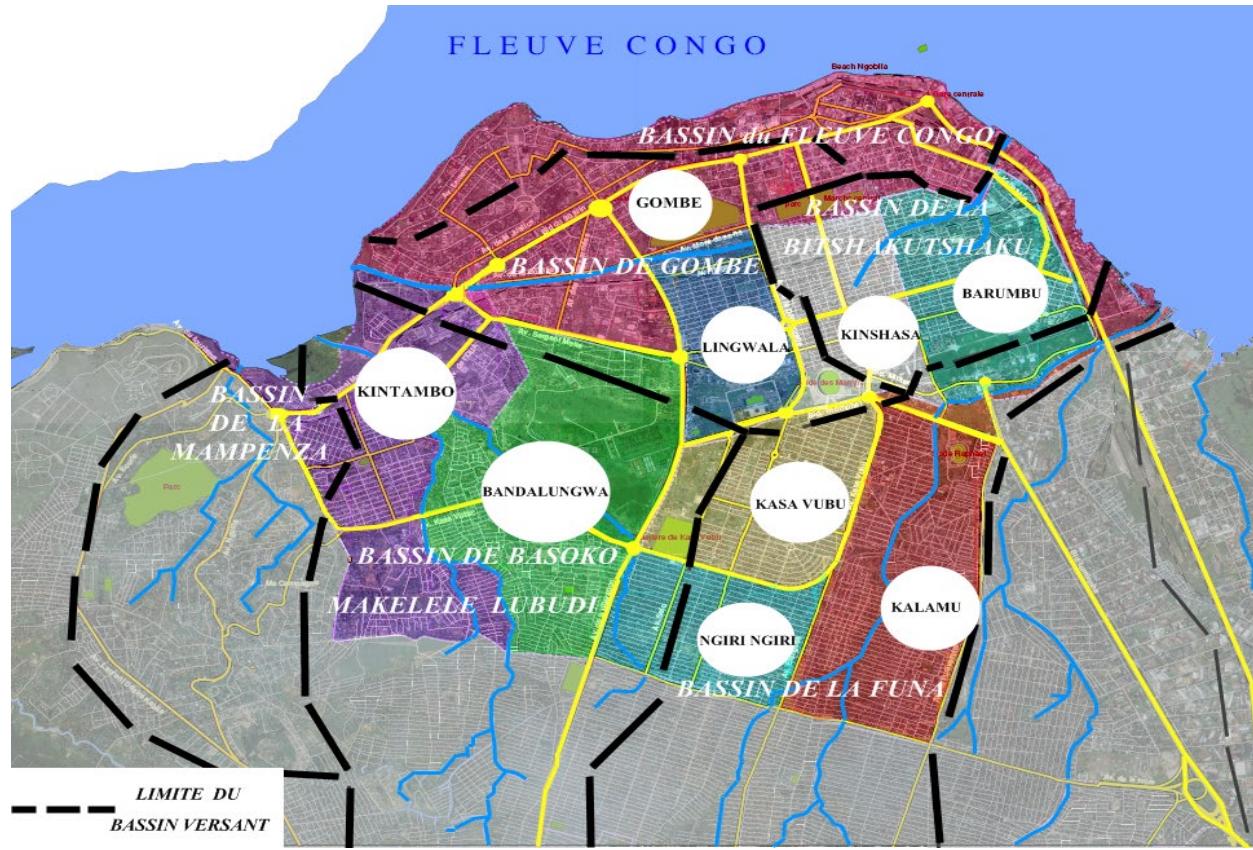 Figure $n^{\circ}1$: Administrative map of the city of Kinshasa
According to (Kakonda et al., 1975), Precambrian bedrock outcrops to the west of the site in the form of resistant benches that are the origin of the rapids damming the Malabo pool. The city of Kinshasa occupies a vast plain that constitutes a basin bordered by hills. The vegetation of Kinshasa is essentially made up of savannah dotted with shrubs with the urban pressure, it is currently located in the region of hills and on the plateau of Kwango. The soils of the city of Kinshasa are essentially sandy belonging to the tropical soil group, with some coarse elements. They are sandy soils with low clay content (less than $20\%$ ) and very acidic, but rich in iron and aluminum (Al2O3) subjected to the action of a hot and humid climate.
In the city of Kinshasa, there is a particular ecoclimate of the humid tropical type AW4 according to the classification of KOPPEN, that is to say a climate with a dry season of 4 months from mid-May to mid-September and a rainy season from mid-September to mid-May (Ntombi et all, 2004). The average temperature in the coldest month (August) is $20^{\circ}\mathrm{C}$ and $26^{\circ}\mathrm{C}$ in the hottest month, and the average annual humidity is $79\%$, ranging from a minimum of $71\%$ to a maximum of $84\%$. An average of $1095 \mathrm{~mm}$ of rain falls per year. The relief of Kinshasa includes:
- The Kwango plateau that opens onto the circular marshy plain (Pool Malebo),
- The plain of Kinshasa bordering the pool is located between the sides of 300 and $320 \mathrm{~m}$, wide of some 5 km,
- The region of the hills, belt which prolongs the South of the plain of Kinshasa culminates beyond $50\mathrm{m}$ of altitude.
## II. MATERIALS AND METHODS
In order to carry out this research, it seemed important to us to first draw up a status report, in particular by consulting the available literature on solid waste management in the city of Kinshasa in the Democratic Republic of Congo in particular and the world in general. Then, in the field, we covered our study area through observations, interviews and surveys with local populations. The physico-chemical parameters were determined from samples taken at different points located at different distances from the center of the dump. The sampling points were chosen so that the sampling was representative of the environment (30 samples). The samples were preserved according to the general guide for the preservation and handling of samples.
Hydrogen potential $(\mathsf{pH})$, redox potential $(E^{\circ})$ temperature, conductivity, total dissolved solids (TDS) and salinity (SALT) were measured using an EXTECH multi-analyzer, model 433201. For each measurement, the probe was rinsed with distilled water and then dipped into the small bucket containing the sample mixed with distilled water. The different parameters are read and recorded in-situ. All analyses and measurements required to quantify organic, nitrogen and sulfate pollutants are standardized. Statistical data collected in the field and those from the trace metal determination were processed using Microsoft Excel 2016 software. Root growth inhibition was estimated by EC50 (Effective Concentration for which chemical effects are observed for $50\%$ of individuals tested). The EC50 effective concentrations and regression equations are determined from plotting the root length versus percent concentrations of the water samples using the Microsoft Excel 2016 program. Principal Component Analysis (PCA) as well as the correlation matrix were performed by XLSTAT software version 2013.3.02.
## III. RESULTS AND DISCUSSION
### a) Results
In the framework of this research, samples and in situ analyses were carried out in the garbage dump located at the intersection of Assossa and Saio avenues in the commune of Kasa-Vubu (Figure 2). This landfill receives household waste from the district of Funa, which includes the communes of Bandalungwa, Bumbu, Kalamu, Kasa-Vubu, Makala, Ngiri-Ngiri and Selembao. It occupies an area of $60\mathrm{m}^2$, and receives 100 tons of waste/day, composed mostly of organic waste (food scraps, garden waste), followed by plastic and a complex mixture of other types of waste (paper cardboard, glass, some metal scraps, clothes, shoes, etc.).
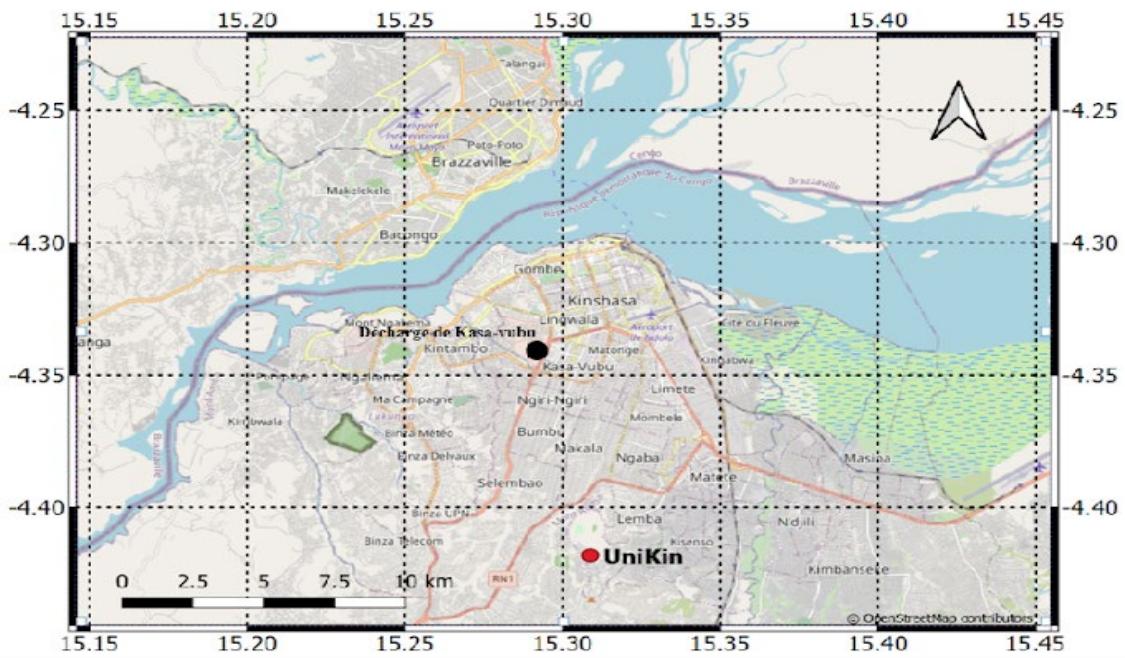 Figure 2: Location of the landfill site at the intersection of Assossa and Saio avenues Table
${n}^{ \circ }1$: Measurement of physico-chemical parameters of samples
<table><tr><td>N°</td><td>Conductivité</td><td>TDS</td><td>SALT</td><td>PH</td><td>ORP</td><td>TPE</td><td>PO</td><td>PS</td></tr><tr><td>1</td><td>716</td><td>486</td><td>361</td><td>6,95</td><td>3</td><td>29,3</td><td>30 g</td><td>20</td></tr><tr><td>2</td><td>3,74</td><td>2,13</td><td>1,91</td><td>7,62</td><td>-58</td><td>34,6</td><td>30 g</td><td>14</td></tr><tr><td>3</td><td>2,99</td><td>1,98</td><td>1,48</td><td>6,67</td><td>7</td><td>39,8</td><td>30 g</td><td>22</td></tr><tr><td>4</td><td>1946</td><td>1314</td><td>976</td><td>7,83</td><td>-75</td><td>34,3</td><td>30 g</td><td>21</td></tr><tr><td>5</td><td>1524</td><td>1015</td><td>758</td><td>6,77</td><td>0</td><td>38,8</td><td>30 g</td><td>16</td></tr><tr><td>6</td><td>1306</td><td>883</td><td>657</td><td>7,19</td><td>-31</td><td>36,1</td><td>30 g</td><td>25</td></tr><tr><td>7</td><td>1082</td><td>650</td><td>512</td><td>6,75</td><td>10</td><td>30</td><td>30 g</td><td>14</td></tr><tr><td>8</td><td>2,43</td><td>1,68</td><td>1,19</td><td>7,3</td><td>-29</td><td>46,5</td><td>30 g</td><td>18</td></tr><tr><td>9</td><td>463</td><td>325</td><td>241</td><td>7,15</td><td>-25</td><td>33,2</td><td>30 g</td><td>22</td></tr><tr><td>10</td><td>865</td><td>568</td><td>425</td><td>7,55</td><td>-48</td><td>38,4</td><td>30 g</td><td>17</td></tr><tr><td>11</td><td>1426</td><td>977</td><td>723</td><td>6,13</td><td>51</td><td>41,5</td><td>30 g</td><td>18</td></tr><tr><td>12</td><td>1275</td><td>853</td><td>637</td><td>6,88</td><td>-8</td><td>49,4</td><td>30 g</td><td>20</td></tr><tr><td>13</td><td>2,7</td><td>1,8</td><td>1,34</td><td>6,1</td><td>52</td><td>29,7</td><td>30 g</td><td>13</td></tr><tr><td>14</td><td>1253</td><td>883</td><td>642</td><td>7,34</td><td>-46</td><td>32,6</td><td>30 g</td><td>19</td></tr><tr><td>15</td><td>2,46</td><td>1,68</td><td>1,25</td><td>7,26</td><td>-28</td><td>31,6</td><td>30 g</td><td>22</td></tr><tr><td>16</td><td>4,5</td><td>3,02</td><td>2,25</td><td>8,13</td><td>-99</td><td>37,2</td><td>30 g</td><td>16</td></tr><tr><td>17</td><td>722</td><td>489</td><td>362</td><td>6,94</td><td>-10</td><td>36,2</td><td>30 g</td><td>24</td></tr><tr><td>18</td><td>717</td><td>481</td><td>358</td><td>6,66</td><td>4</td><td>31,2</td><td>30 g</td><td>18</td></tr><tr><td>19</td><td>1346</td><td>917</td><td>685</td><td>6,95</td><td>-11</td><td>38,9</td><td>30 g</td><td>21</td></tr><tr><td>20</td><td>801</td><td>472</td><td>371</td><td>6,4</td><td>26</td><td>37,5</td><td>30 g</td><td>24</td></tr><tr><td>21</td><td>876</td><td>580</td><td>435</td><td>7,06</td><td>-14</td><td>34</td><td>30 g</td><td>29</td></tr><tr><td>22</td><td>1951</td><td>1307</td><td>976</td><td>6,92</td><td>-11</td><td>37</td><td>30 g</td><td>25</td></tr><tr><td>23</td><td>261</td><td>170</td><td>128</td><td>7,04</td><td>-17</td><td>32,3</td><td>30 g</td><td>25</td></tr><tr><td>24</td><td>304</td><td>194</td><td>153</td><td>6,64</td><td>13</td><td>31,3</td><td>30 g</td><td>25</td></tr><tr><td>25</td><td>743</td><td>497</td><td>374</td><td>6,71</td><td>11</td><td>32,5</td><td>30 g</td><td>26</td></tr><tr><td>26</td><td>1582</td><td>1061</td><td>790</td><td>7,56</td><td>-56</td><td>35,1</td><td>30 g</td><td>23</td></tr><tr><td>27</td><td>702</td><td>469</td><td>350</td><td>6,36</td><td>22</td><td>33</td><td>30 g</td><td>24</td></tr><tr><td>28</td><td>1586</td><td>1058</td><td>759</td><td>6,35</td><td>26</td><td>35,2</td><td>30 g</td><td>25</td></tr><tr><td>29</td><td>785</td><td>165</td><td>345</td><td>6,25</td><td>25</td><td>38,1</td><td>30 g</td><td>24</td></tr><tr><td>30</td><td>305</td><td>250</td><td>358</td><td>6,37</td><td>22</td><td>36,2</td><td>30 g</td><td>23</td></tr></table>
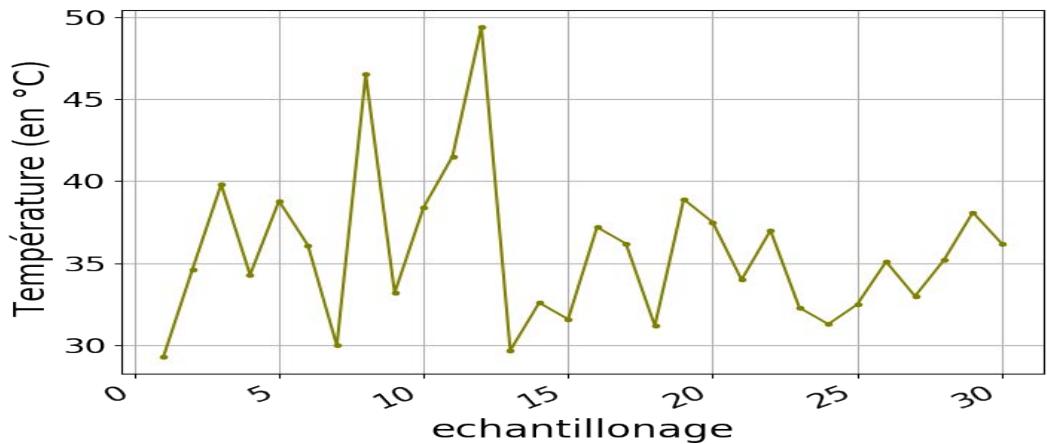 Figure 3: Temperature curve taken at each measurement point
Temperature: In our study area, the surrounding surface temperature does not show great variations from one source to another, but nevertheless, it presents more or less high values with a minimum of $29.8^{\circ}\mathrm{C}$ and a maximum of $31.7^{\circ} \mathrm{C}$ recorded. The temperature in each sampling point is strongly oscillating and given by the following figure with a maximum of $48^{\circ} \mathrm{C}$ and a minimum of $26^{\circ} \mathrm{C}$
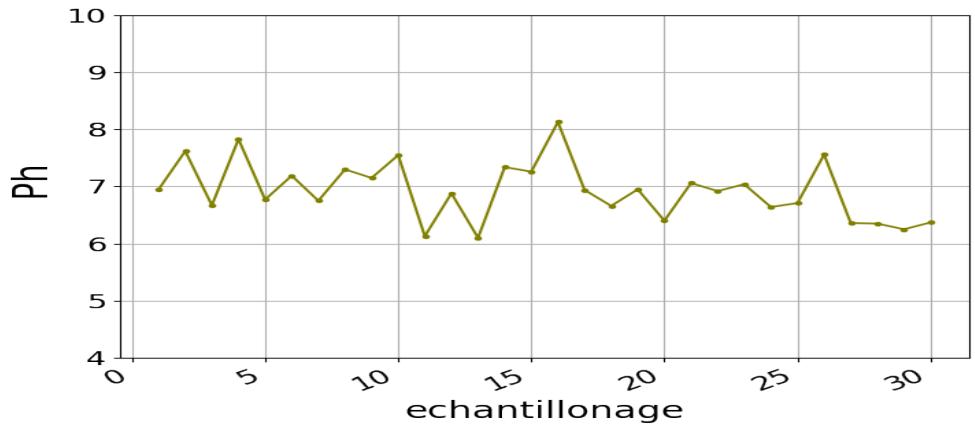 Figure 4: Ph values at each measurement point
Hydrogen potential: The pH of the analyzed samples varies from 6.1 to 8.13 and is therefore almost uniform over the lagoon. It belongs to the interval [6.5; 9.5] corresponding to the guideline set by the World Health
Organization (WHO) for surface waters. This allows us to conclude that the values obtained are within the tolerable range.
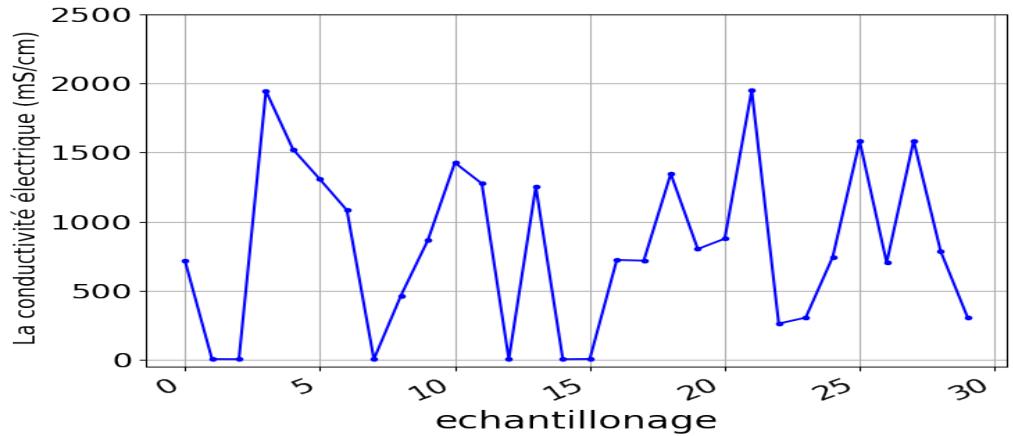 Figure 5: Conductivity curve during the measurement
Conductivity: The samples collected are highly mineralized, with values between 7.83 and 18.00 mS/cm, well above the range allowed for natural waters, i.e. [0.05 to 1.5] mS/cm (Figure 10).
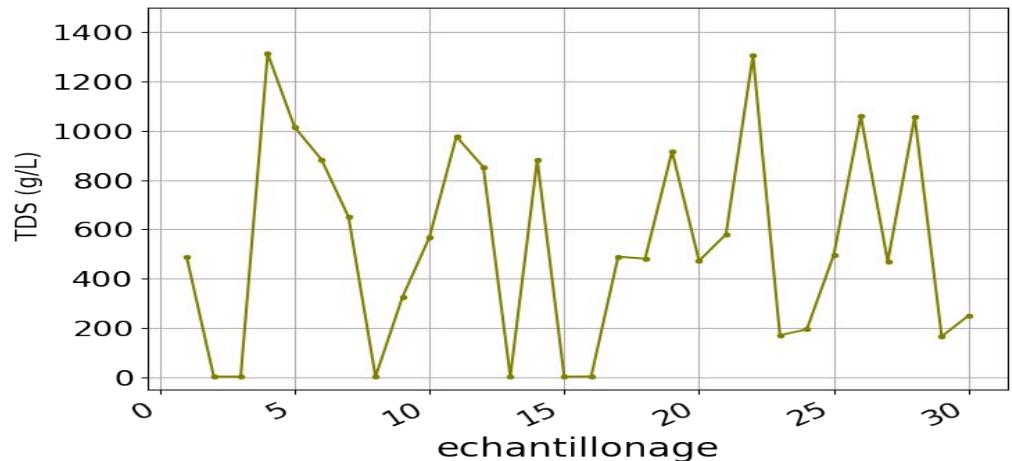 Figure 6: TDS values at each measurement point
TDS: The spatial variation of TDS values shows the same pattern as that of conductivity with a minimum of
1.68g/L obtained at the mouth and a maximum of 1314g/L obtained in the middle of the discharge.
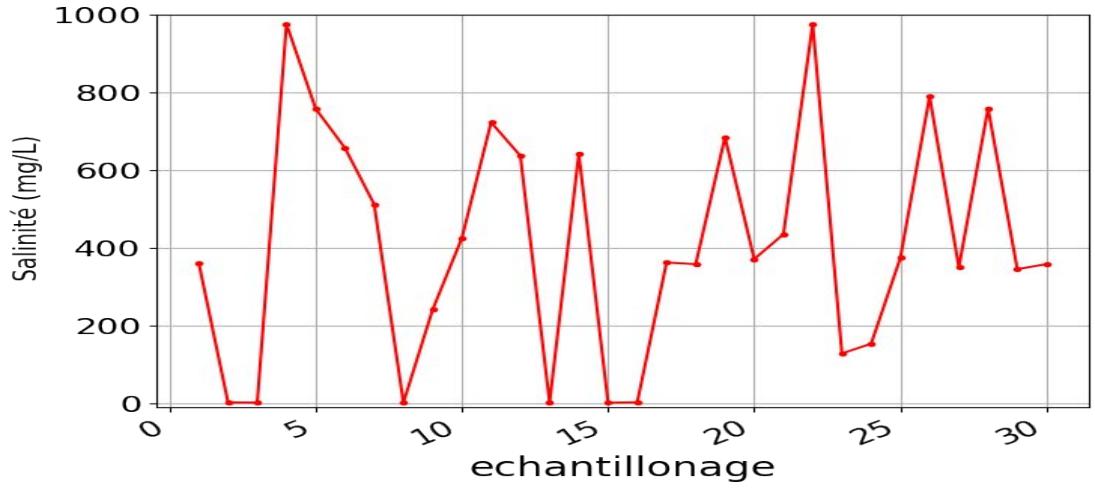 Figure 7: Salinity values at each measurement point
Salinity: Like the conductivity and TDS graphs, the salinity graph also shows the same pattern with a minimum of $3.9 \mathrm{mg} / \mathrm{L}$ obtained at the mouth and a maximum of $9.2 \mathrm{mg} / \mathrm{L}$ obtained in the middle.
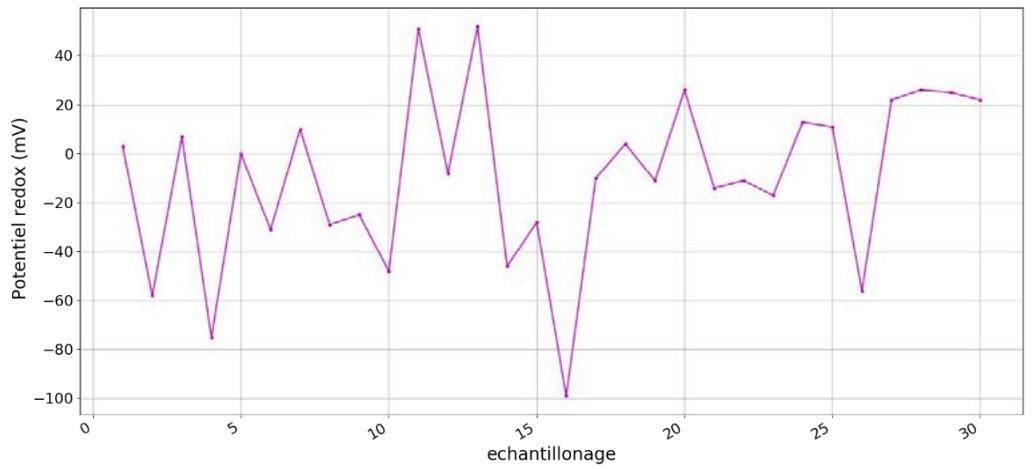 Figure 8: Values of redox potential at each measurement point
Redox potential: The values of redox potential are lower than -14mV and vary very little with a minimum of - 32.5mV obtained at the mouth and a maximum of -
29mV obtained on the site. We can underline that the lagoon presents globally the characters of a reducing environment.
Table 2: Pearson's correlation matrix
<table><tr><td>Column 1</td><td>Conductivity</td><td>TDS</td><td>SALT</td><td>PH</td><td>ORP</td><td>TPE</td></tr><tr><td>Conductivity</td><td>1</td><td></td><td></td><td></td><td></td><td></td></tr><tr><td>TDS</td><td>0,9855775</td><td>1</td><td></td><td></td><td></td><td></td></tr><tr><td>SALT</td><td>0,9909624</td><td>0,986156</td><td>1</td><td></td><td></td><td></td></tr><tr><td>PH</td><td>-0,0070378</td><td>0,039592</td><td>-0,01692</td><td>1</td><td></td><td></td></tr><tr><td>ORP</td><td>-0,0187411</td><td>-0,05676</td><td>-0,01234</td><td>-0,98774</td><td>1</td><td></td></tr><tr><td>TPE</td><td>0,15066765</td><td>0,137845</td><td>0,15494</td><td>0,038689</td><td>-0,06101</td><td>1</td></tr></table>
The Pearson correlation matrix in the table shows the values of the coefficients of determination $R^2$ for a rejection threshold of $5\%$. The analysis of this table shows a strong positive correlation between salinity, conductivity and TDS. This implies that these three parameters evolve in a proportional way. The redox potential and temperature, on the other hand, show a negative correlation with the other parameters. This states that these two parameters are inversely proportional to the mineralization parameters. That is,
when the samples are rich in minerals including salts (salt water), the temperatures and redox potentials are lower and vice versa.
The high values observed for the temperature measurement can be explained by the effect of global warming in the city of Kinshasa as no hot wastewater discharge source was recorded. This explanation refers to the simulation study conducted by ANCR on Climate Change in the Democratic Republic of Congo, which shows that the simulated temperature increases in steps of $1^{\circ}\mathrm{C}$ from 1990 to 2100.
The graph of conductivity, TDS and salinity shows the same patterns, which means a strong correlation between these parameters. This correlation is confirmed with the correlation matrix. The strong correlation between TDS, salinity and conductivity is explained by the presence of chemical substances in our samples, enriching the medium with ions (e.g. Na+, Cl-...). These ions then participate in the formation of salt and also increase the capacity of the leachate present in the discharge to conduct electric current. It should also be noted that the mineralization of these leachates may be mainly due to salts because of the observed values.
The high values of TDS indicate us in first approximation also the presence of metallic trace elements (copper and zinc). It is therefore necessary to deepen studies in this context. We can therefore say by the results obtained that the Kasa-Vubu dump contains polluting species in minerals and heavy metals. Illegal dumping can have many harmful consequences. In addition to the degradation of the landscape, they pollute the soil and water, attract rats and insects, and cause odor nuisance and health hazards. Waste can be treated in different ways depending on its properties. They can be classified according to their physical state (solid, liquid, gaseous), their origin (household waste, industrial waste, agricultural waste), their treatment (primary, secondary, final) or their hazardousness (inert waste, ordinary waste, special waste).
Intuitively, human beings, like animals, deposit their waste away from their living areas, for various reasons, including health concerns (protection against odors, parasites, physical damage and infections). In fact, in the strict sense of the term, rational urban waste management consists of evacuating garbage outside the city, because its deposit in inhabited areas pollutes the environment and deteriorates the quality of life.
Any organic matter of animal or plant origin will sooner or later, depending on the physico-chemical conditions such as temperature and humidity, be colonized by microorganisms. They will find there food and development while producing gases and substances having a negative effect (toxic substances and/or inhibiting the expected effects) on the surrounding environment. In a landfill, the phenomena that develop, following the biodegradation of organic matter, will be all the more complex as the volume of waste will be heterogeneous.
The uncontrolled landfill brings together wastes of various nature (weakly or rapidly biodegradable materials, plastics, metals, glasses and ceramics) and mixed populations of endogenous microorganisms which come from the waste, the surrounding atmosphere or the subsoil of the landfill. The heterogeneity, the presence of biodegradable materials and the influence of external parameters, such as rainfall and temperature, are referred to as biogas. The inflow to this landfill corresponds to the inflow of water as well as the inflow of waste during the dumping of the waste.
Water, the element with the greatest influence on the evolution of the waste, comes from three main sources: runoff arriving at the landfill, precipitation, and the water constituting the waste. The leachate or percolating liquids from the landfill are bacteriologically and especially chemically loaded with both mineral and organic substances. They can mix with surface water as well as with groundwater and therefore constitute a polluting element both in terms of quality and quantity (ecotoxicological elements). The water passing through the waste layer will be loaded with polluting substances such as soluble organic matter resulting from the biological activity of the uncontrolled landfill, inorganic constituents such as heavy metals (from batteries in particular) and germs that can be dangerous for health and the environment.
The greatest risk associated with the production of leachate is the contamination of the groundwater. This would result in the pollution of drinking water wells and thus deprive the population of an element vital to its survival. The pollution of drinking water reserves by pathogenic micro-organisms is likely to cause epidemics. There are other nuisances of uncontrolled landfills that have a lesser environmental impact than biogas and leachate, but whose consequences on the socio-economic life are more easily discernible. The visual impact of landfills, coupled with the problem of odors. The waste storage activity also leads to a whole series of pests such as stray animals, which are a source of nuisance for the population.
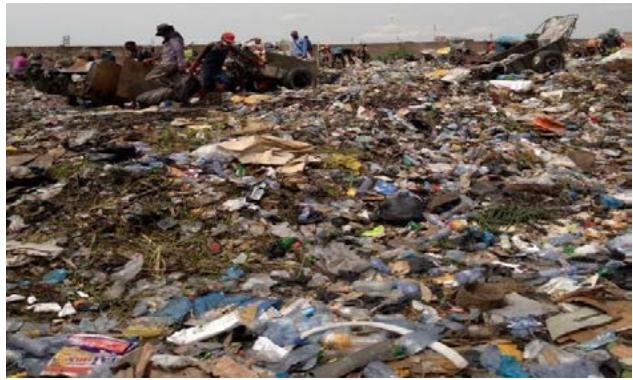 Figure 9: Waste at the pirate dump on Saio Avenue
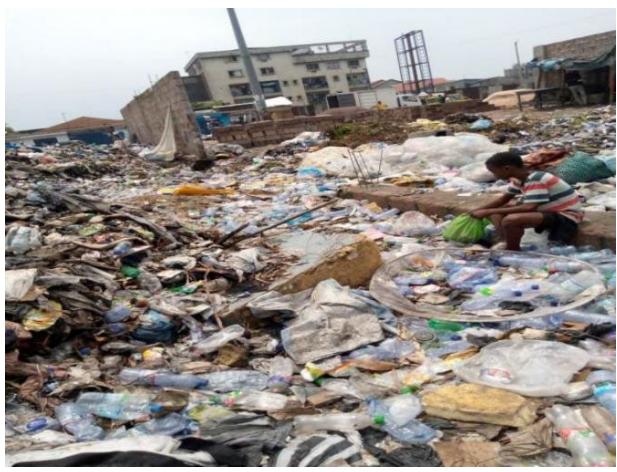
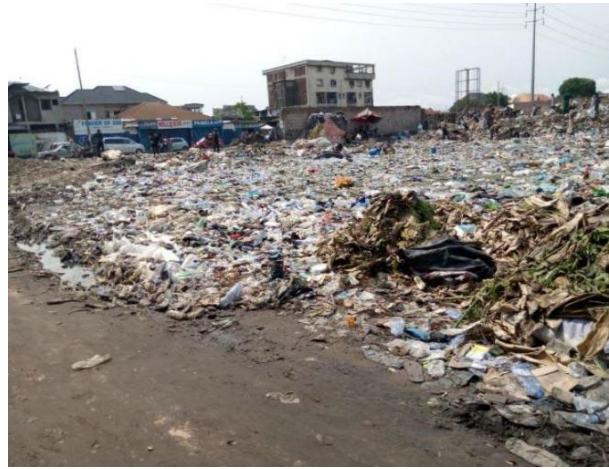 Figure 10 and 11: Environmental pollution in Kinshasa in the commune of Kasa-Vubu
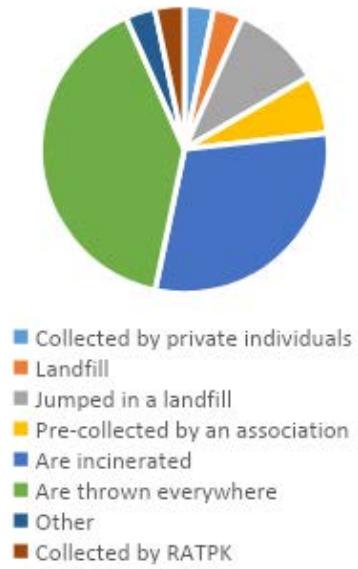 Mode and process of household waste disposal by the inhabitants of the district Figure 12: Mode and process of household waste disposal by the inhabitants of the district On the mode and process of household waste disposal used by the inhabitants of the district, shows the following: $3.33\%$ of the garbage is collected by the RATPK, while $30\%$ is incinerated, $40\%$ thrown away, $6.66\%$ is pre-collected by an Ass of the Q/, $10\%$ is dumped in an uncontrolled landfill, $3.33\%$ is buried, $3.33\%$ collected by the private and $3.33\%$ is buried. This result shows that the management of waste in this district is not well ensured because nearly $50\%$, that is to say $40\%$ of the population throw the household waste they produce almost everywhere.
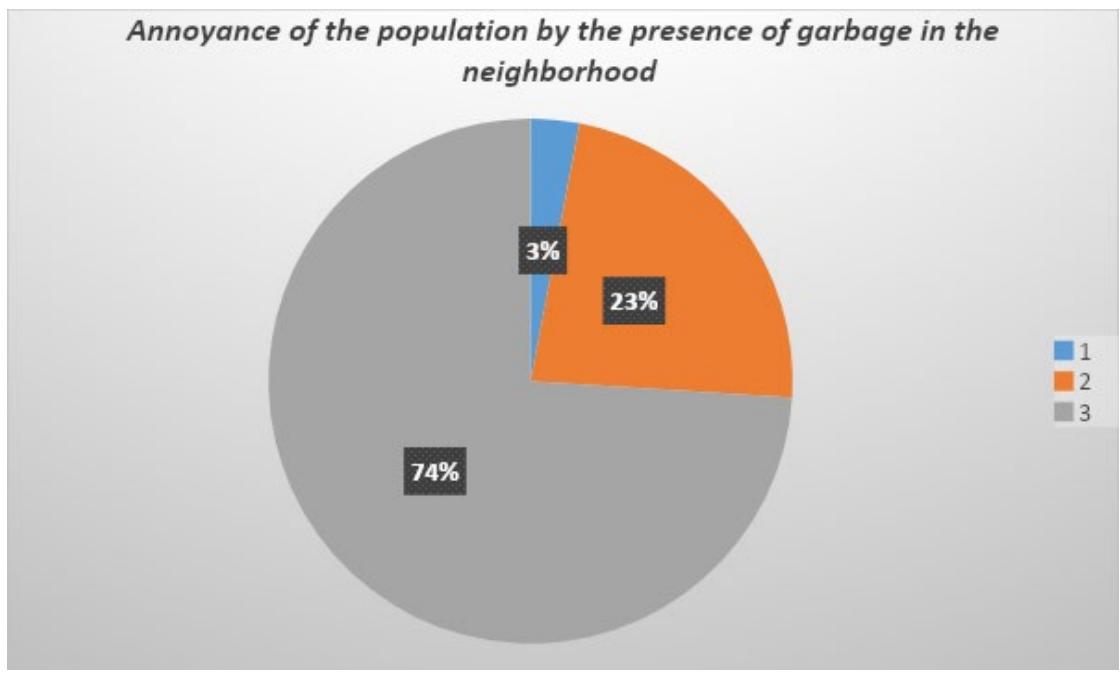 Figure 13: Annoyance of the population by the presence of garbage in the neighborhood
The reading of figure 13 shows that $73.33\%$ or more than half of the population declare to be too bothered by the presence of garbage, $23.33\%$ feel a little bothered and $3.33\%$ are not bothered at all by the presence of garbage.
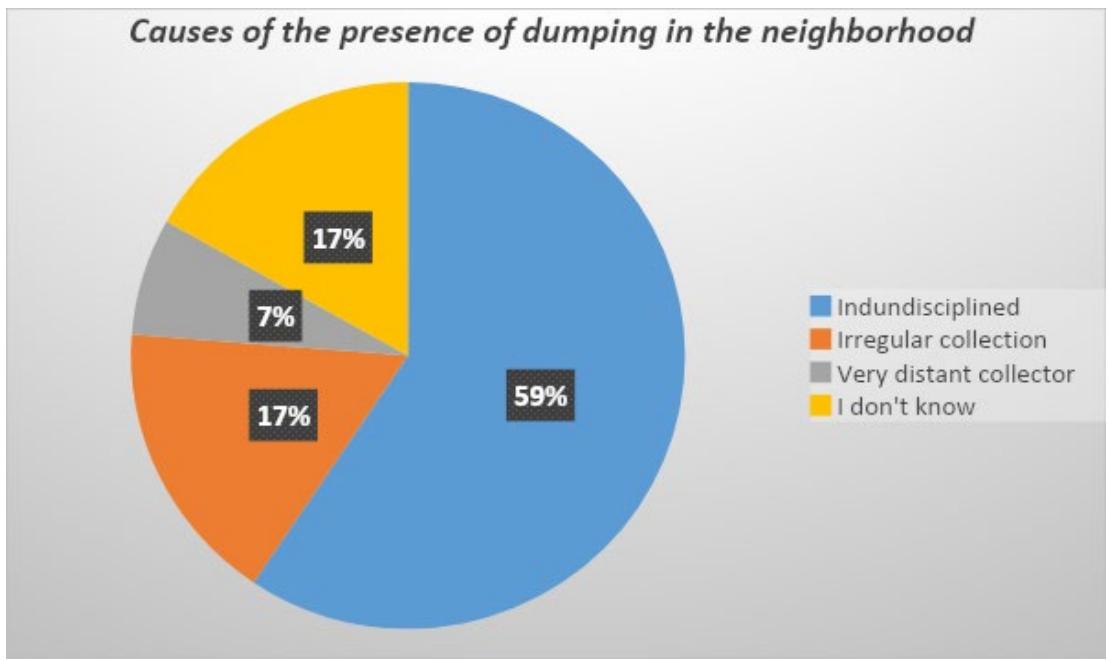 Figure 14: Causes of the presence of dumping in the neighborhood
After reading and inspecting figure 13, the results show us that: $60\%$ of the dumpsites are caused by the undisciplined, while $16.67\%$ are collected irregularly, $6.67\%$ caused by lack of collectors too far away and $16.67\%$ have not made any proposals.
The studies made by Lelo Nzuzi show that the Kinois empties quickly his garbage in an uncontrolled dump because of the fast putrefaction of his biodegradable waste. It is because of the lack of an organized waste management system that he no longer chooses where to dispose of his garbage. If this waste is recovered by ragpickers, it follows the recycling path, either biological to manufacture green fertilizers in an artisanal way, or physical-chemical to manufacture bottles, recycled paper, plastic objects, etc. industrially. In view of all the above, it should be recalled that household waste does not follow the normal route to the final dump, that is to say collection, transport, evacuation, recovery and disposal. All these steps are not respected in all cases (Lelo N, 2008).
### b) Health effects of waste
Uncontrolled landfills and some waste accumulation sites represent a danger to human health. Among the health risks that may arise and the nuisances associated with them, we note Proliferation of rodents and insects: the waste, before fermentation, constitutes the main food of rats direct or indirect agents of propagation of serious diseases: (plague, fever, etc.). They are poles of attraction for flies and other insects, passive vectors of germs and viruses;
Emanations of toxic gases (methane, hydrogen sulfide, etc.), foul odors and germs that proliferate in the dust of garbage;
Pollution of water resources: Waste can contaminate groundwater and/or surface water when deposited on undeveloped land. Pathogenic germs and heavy metals can then reach the water table by infiltration of leachate, or surface water by runoff of contaminated rainwater;
Contamination of the marine environment and surface waters by direct discharge of waste;
Degradation of the landscape (visual pollution): The urban landscapes lose their aesthetics because of the flight of papers and plastic packaging contained in the heaps of waste stored in the uncontrolled dumps;
Risk of fires: Waste is often easily inflammable, it can ignite by spontaneous combustion, when it is put in heaps without precaution, with production of smelly fumes;
In the long term, the piling up of waste in these landfills causes CH4 methane gas (biogas) to escape, which, due to its odor and ignition rate, is dangerous (Holenu, M, 2016).
### c) The health effects of poor waste disposal techniques
The combustion of waste and the gases it generates emits oxides of carbon, nitrogen and sulfur, acids, dust and volatile organic compounds. These substances, emitted in varying concentrations depending on the incineration and smoke treatment processes used, are released into the environment, where they mix with those emitted by other sources, substances specific to waste incineration, likely to have a health impact on the local population such as
- Trichloroethane (various systemic effects);
- Benzene (carcinogenic);
- Cadmium (renal effect);
- Nickel (carcinogenic).
As for liquid discharges from incineration units, they are likely to contain heavy metal residues, among which mercury and nickel are specific toxicants (Holenu. M, (2012). Poorly controlled landfilling can contaminate soils and groundwater, leachate leaching into the subsoil leads to severe degradation of groundwater (Holenu. M, (2012). Solid and liquid wastes discharged into waterways are likely to contain oxidized or reduced metallic substances, halogenated organic compounds, and traces of solvents and pesticides, whose known toxic effects appear to be able to affect only aquatic organisms directly exposed to the discharge (Holenu. M, (2016).
## IV. CONCLUSION
The results of the surveys conducted show that most of the waste in the commune of Kasa Vubu is essentially due on the one hand, to the lack of adequate waste management structures. This state of affairs has led to the degradation and pollution of the environment by uncontrolled dumps with harmful consequences on the health of the population. This landfill is at the root of the diseases encountered by the population, as the population surveyed suffers more from malaria, typhoid fever, amoebiasis, diarrhea and cholera. These results prove that the people living next to this uncontrolled public dump in the commune of Kasa-Vubu are more exposed to the risks of diseases related to insalubriity. After having analyzed the data, we can affirm that the commune of Kasa-Vubu is at great risk of urban degradation. The populations living in the neighborhoods where there are pirate dumps are exposed to numerous diseases related to the unhealthy environment.
We solicit the involvement of urban and municipal authorities to make this environment healthy and thus contribute to the eradication of diseases related to insalubrity and fight against environmental degradation. The results of our surveys show that good urban waste management can effectively lead to the improvement of the environment and the health conditions of the population of the city of Kinshasa if and only if all the actors involved become aware of it. But if this is not applied, the bad management of urban waste leads to a degradation of the aesthetics of the city and immobilization of productive land due to the presence of non-biodegradable products (example: plastic bags, demolition waste, etc.), a source of various pollutions of the water table and of the atmosphere and a source of many diseases.
To do this, awareness around the defined actions must be one of the priority components in any program of this plan. This awareness must be well elaborated, sustainable, and entrusted to professionals in the field, so that waste is anchored in the collective consciousness as a real problem with shared responsibility, and not as a product that we get rid of so that it is managed by the other link in the chain. Thus, the poor management of waste in the commune of Kasa-Vubu is due to the lack of regulations and strategies on the management of the landfill, and this has a negative impact on the environment and on the health of the population. Thus, faced with problems of planning, organization of space, management and financing, the urban authorities are experiencing enormous difficulties for the proper management of illegal dumping and sanitation. To combat the poor management of waste in the study area, we suggest the following
- Restructuring the spaces in the commune in order to find sites that can serve as transit dumps, before their transfer to the final dump; Restructurer les espaces dans la commune afin de trouver des sites pouvant servir des décharges de transit, avant leur transfert vers la décharge finale;
- Restructuring and constructing gutters in outlying areas in order to fight against the stagnation of rainwater and wastewater;
- Place garbage cans in the corners of each avenue, crossroads, and arteries of the commune;
- Regularly evacuate waste to the appropriate transit sites;
- Conduct environmental education among the population of the commune of Kasa-Vubu;
- Enforcement of environmental laws;
- Create environmental clubs for the sanitation of neighborhoods;
- Training personnel for sanitation;
- Provide sanitation equipment and materials;
- To propose a sanitation tax for the maintenance of equipment and personnel.
Generating HTML Viewer...
Funding
No external funding was declared for this work.
Conflict of Interest
The authors declare no conflict of interest.
Ethical Approval
No ethics committee approval was required for this article type.
Data Availability
Not applicable for this article.
How to Cite This Article
Holenu Mangenda Holy. 2026. \u201cAnalysis of the Household Waste Management System and the Health and Environmental Impact in the Municipality of Kasa Vubu, City of Kinshasa in the Democratic Republic of Congo\u201d. Global Journal of Human-Social Science - B: Geography, Environmental Science & Disaster Management GJHSS-B Volume 23 (GJHSS Volume 23 Issue B6): .
Explore published articles in an immersive Augmented Reality environment. Our platform converts research papers into interactive 3D books, allowing readers to view and interact with content using AR and VR compatible devices.
Your published article is automatically converted into a realistic 3D book. Flip through pages and read research papers in a more engaging and interactive format.
Our website is actively being updated, and changes may occur frequently. Please clear your browser cache if needed. For feedback or error reporting, please email [email protected]
Thank you for connecting with us. We will respond to you shortly.
Lorem ipsum dolor sit amet, consectetur adipiscing elit. Ut elit tellus, luctus nec ullamcorper mattis, pulvinar dapibus leo.
Analysis of the Household Waste Management System and the Health and Environmental Impact in the Municipality of Kasa Vubu, City of Kinshasa in the Democratic Republic of Congo