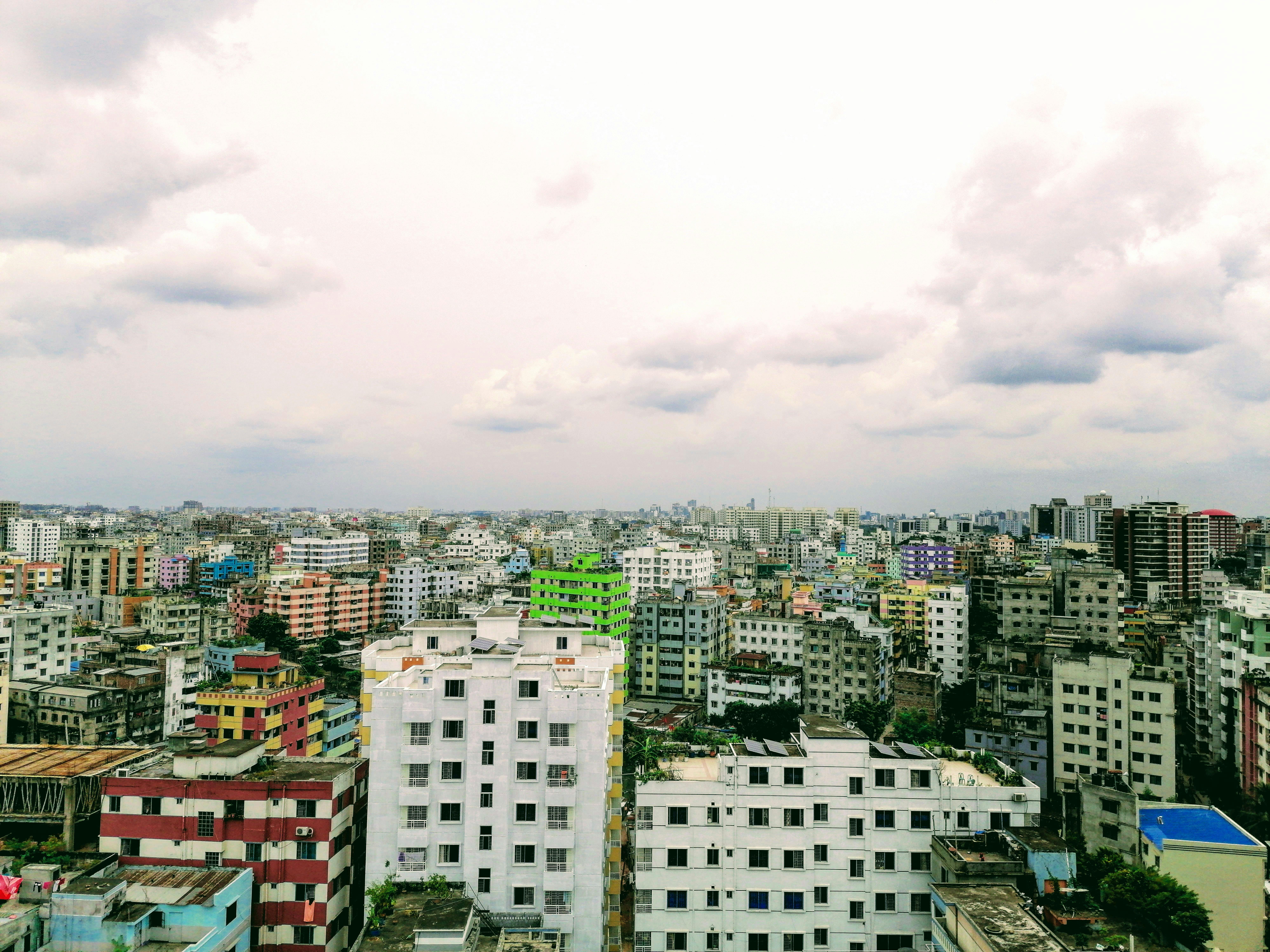
Economically sustainable urban residential neighborhoods are characterized by adequate provision of physical infrastructure including transport facilities and utility services. The built urban fabric of residential areas of Dhaka has been undergoing densification operation over the past decades without considering the physical infrastructure capacity of these areas in terms of accessibility and provision of transportation and utility services. This intervention eventually exerted pressure on the existing infrastructure and caused negative externalities like traffic congestion, pollution, and water clogging. Thus, this paper aims to investigate the impact of densification on residential areas of Dhaka through the lens of economic sustainability. Seven residential areas from Old and New Dhaka that underwent various degrees of densification were selected as the study areas. Primary data was collected through a random sampling household questionnaire survey, fieldwork, and informal qualitative interviews with the residents and officials.
## I. INTRODUCTION
Densification of cities is a worldwide practiced contemporary strategy to contain urban sprawl and support sustainable urban development. The higher-density cities yield several benefits including reduced land consumption, reduced transit through shorter trip lengths to avail most amenities, improved energy efficiency of buildings, and increased provision for open spaces and walkability (Long et al., 2011). Other benefits include social interaction and community cohesion (Bahadure and Kotharkar, 2012). In addition, the reduced level of GHG emission in compact cities due to the restrained use of cars benefits the global environment (Litman, 2008, Newman and Kenworthy, 2000). Efficiencies in transport systems and utility infrastructure through shorter distribution networks significantly help to conserve energy and thereby make the city economically sustainable. When urban compaction is not accompanied by a consistent transport and infrastructure policy a host of negative externalities may occur, such as increased traffic congestion, pollution, and other social issues. Given the growth of the world's urban population, there is a need to increase the built environment of the cities. Densification is a strategy generally used to accommodate the growing urban population without compromising further consumption of valuable land resources. However, balancing urban intensification with sustainable transport policy has always been in the core debate of economic sustainability. The situation becomes more challenging to incorporate a sustainable transport system in an already urbanized area of a city and, therefore, requires a comprehensive assessment of the state of the urban context and the site-specific potential and threats involved in undertaking such intervention.
Dhaka witnessed a phenomenal growth of population after the independence of Bangladesh when it's status raised from Provincial Capital to the Capital of a sovereign country. The existing Master Plan 1959 of the city was conceived based on a relatively lower population forecast. To tackle the subsequent population growth from the sudden influx of migrants and natural increase the government opted to densify the existing housing stock. But as the densification strategy was implemented without paying due consideration to the possible consequences on the built environment, utility services, and the traffic situation, a host of urban issues emerged. Over the period from 1995 to 2005, the increase in the roads of Dhaka accounts for only five percent, while population and traffic have increased by over 50 percent and 134 percent respectively (DTCB, 2005). Consequently, the increase in traffic and pollution became more explicit among the negative externalities caused by urban intensification. According to the World Bank analysis, many residents of Dhaka have experienced a lack of access to basic services and in the last 10 years and the average traffic speed has dropped from 21 km/hour to 7 km/hour, only slightly above the average walking speed (Bird et al., 2017). In addition, around 200,000 nonmotorized rickshaws with no dedicated lanes ply through the streets of the city besides motorized vehicles making the traffic situation more taxing. Dhaka the home of approximately 20.6 million within an area of 306.38 sq. km. is one of the most polluted (Air Quality Index (AQI) of 215 on 21 December 2019) cities in the world. (Siddiqui et al., 2020). Transport service and infrastructure are analogs to the lifeline of any city and play a huge role in its sustenance and economic growth. The ongoing urban densification is exerting unprecedented pressure on the infrastructure system of Dhaka posing an ever-increasing threat to the economic sustainability of the city. Therefore, this paper focuses on the urgent need to assess the impact of densification intervention from the perspective of economic sustainability.
## II. METHODOLOGY
Due to the saturated state of Old Dhaka, the city went through a continuous horizontal expansion with a series of low-density planned residential areas along the north-south axis dictated by topographical constraints up to the 1970s. Dhanmondi was the first planned residential area of New Dhaka followed by the sequential development of Gulshan, Banani, Pallabi, and Uttara. From the mid-1990s in response to the growing demand for housing urban intensification started taking place in these areas at varying pace and time depending on the provision of physical infrastructure. Therefore, to examine the effects of the ongoing densification process on the economic sustainability of the residential areas of Dhaka Megacity these seven residential areas with varied gross density, age, social class, location (inner core, middle and peripheral), and settlement pattern from both Old Dhaka (Luxmi Bazaar and, Wari) and New Dhaka (Dhanmondi, Banani, Gulshan, Pallabi, and Uttara) were selected as study areas. Primary data was collected through a household questionnaire survey, informal interviews, and extensive fieldwork while, neighborhood land use plans, the Master Plan of Dhaka, the Strategic Transport Plan, density data, planning ordinances, and circulars related to building regulations collected from Capital
Development Authority (RAJUK), Public Works Department (PWD), Dhaka North, and South City Corporations contributed to developing an insight into the process of land use allocation, urban consolidation and infrastructure planning the study areas underwent periodically.
The questionnaire survey was employed to understand the related household demography, residents' perception of density, travel behavior of the residents, quality, and access to public transport, availability of alternative modes of transport and types of trips taken by the residents, provision, and quality of utility services and residents' satisfaction level regarding the facilities. The total number of residential plots in each sample area is considered as the whole population for each study area and household per plot is considered as a unit of analysis. The total required sample size from all the study areas was estimated to be $(291 + 277 + 280 + 357 + 284 + 353) = 1842$ households at the confidence level of $95\%$ with a marginal error of $0.05\%$. The questionnaires were distributed to randomly selected respondents and a total of 1623 responses were received. Gross population density has been considered as the indicator of the population density of the study areas. The analysis was done in two parts. The first part focused on the residents' perceptions about the prevailing density and the selected aspects (access to transport and utility services) pertinent to economic sustainability by analyzing the responses from the questionnaire survey and corroborating them with the informal qualitative interviews of the residents. Primary data from the questionnaire survey was analyzed through simple descriptive statistical tools (frequency distribution) to assemble or reconstruct the data in a meaningful and comprehensive manner and was presented in the form of charts, tables, graphs, etc. The second part examined the relation between density and sustainability aspects based on the residents' satisfaction level associated with the selected aspects of economic sustainability by using Pearson's correlation test. These findings were then interpreted in detail with their theoretical underpinnings contributing to a better understanding of the consequences of the ongoing densification process in the residential areas of Dhaka that might serve as a guide for formulating a comprehensive and consistent transportation and infrastructure plan coherent with urban densification policy in the future.
## III. ASPECTS OF ECONOMIC SUSTAINABILITY
The economic sustainability of the urban areas depends on the provision of public infrastructure facilities that principally comprises transport facilities and utility services. These aspects were examined through a set of indicators presented in Table 1. Therefore, the economic sustainability of the residential areas is assessed based on these two criteria discussed in the following:
Table 1: List of economic sustainability indicators
<table><tr><td>Aspects of economic sustainability</td><td>List of indicators</td><td>Number of indicators</td></tr><tr><td>Accessibility to Transport Facilities</td><td>·Availability of public transport facilities
·Average distance to nearest daily use transport nodes</td><td>2</td></tr><tr><td>Accessibility to infrastructure (Utility services)</td><td>·Well maintained infrastructure</td><td>1</td></tr></table>
Sources: Adapted from Stewart, 2010; Neighborhood Sustainability Indicators Guidebook, 1999; Neighborhood Sustainability Indicators Guidebook, Minneapolis, 1999; Seattle Sustainable Neighborhoods Assessment Project, 2014.
### a) Accessibility to Transportation Facilities
The public transport in Dhaka primarily comprises buses only. The high-density areas are better connected through public transport service in terms of the average distance of bus stoppage and availability of buses. However, density alone is not the factor that facilitates easy accessibility, but the type and layout pattern of the road network also has a vital role to play as the residential areas which are laid along primary thoroughfare seem to have better accessibility. This is evident in the case of Wari which despite being a high-density residential area has poor access to public transportation. As the nearby major transport corridor is not located in the vicinity of the area inhabitants must travel long distances to reach the closest bus stop located in the Old Central Business District of Gulistan.
Table 2: Residents' opinion regarding the availability of public transport (Bus)
<table><tr><td>Location</td><td>Availability of Public Transport (Bus)</td><td>Non-Availability of Public Transport (Bus)</td></tr><tr><td>Wari</td><td>18</td><td>82</td></tr><tr><td>Luxmi Bazaar</td><td>27</td><td>73</td></tr><tr><td>Dhanmondi</td><td>52</td><td>48</td></tr><tr><td>Banani</td><td>53</td><td>47</td></tr><tr><td>Gulshan</td><td>41</td><td>53</td></tr><tr><td>Pallabi</td><td>63</td><td>37</td></tr><tr><td>Uttara</td><td>61</td><td>39</td></tr></table>
The percentage is based on the number of responses.
Source:Field Survey,2015 From analyzing the residents' modal choice, it was found that due to the incompatibility of the narrow intertwining street pattern of Old Dhaka for motorized vehicles the residents relatively rely more on nonmotorized vehicles for travel purposes than the residents of New Dhaka. The ownership of cars is rather few in Luxmi Bazaar and Wari. However, Wari has comparatively more car owners than Luxmi Bazaar due to its gridiron street pattern conducive to car traffic. But most of the people of Wari depend on other means of public transport rather than the bus as the bus stops are not available within a radius of 10-minute walking distance. The survey findings show that only $23\%$ of office goers and $15\%$ of students rely on the bus as the chief mode of transport for their daily business trips. As Wari does not have adequate schools $52\%$ of the parents use rickshaws and $20\%$ auto-rickshaws as the primary mode of transport to drop their children to the schools of the nearby wards. A small percentage $(8\%)$ of the inhabitants whose children study in English medium schools of Dhanmondi use their cars. Conversely, an array of educational institutions is situated in the vicinity of Luxmi Bazaar (within a radius of 1 km), and thereby, around $72\%$ of students do not use any motorized vehicles (43% foot and 28% rickshaws). Most of the female students at Jagannath University are found to reside in rental accommodation in the area of Koltabazar and Rokonpur of the study ward which is located within walking distance of the university campus. The figures from the survey (Table 4) indicate a higher percentile of the inhabitants of Old Dhaka (Wari $57\%$ and Luxmi Bazaar $72\%$ ) depending on non-motorized mode of transport while a significant percentage of the inhabitants of New Dhaka (Dhanmondi $76\%$, Banani $81\%$, Gulshan $85\%$, Pallabi $54\%$, and Uttara $55\%$ ) are dependent on motorized transport for daily school trips.
Table 4: Percentage of the inhabitants using various modes of travel for study purposes
<table><tr><td rowspan="2">Location STUDY</td><td colspan="2">Non-Motorized Transport</td><td colspan="3">Motorized Transport</td></tr><tr><td>Walk%</td><td>Rickshaw%</td><td>Taxi/ CNG auto-rickshaw%</td><td>Bus%</td><td>Car%</td></tr><tr><td rowspan="2">Wari</td><td>5</td><td>52</td><td>20</td><td>15</td><td>8</td></tr><tr><td colspan="2">57%</td><td colspan="3">43%</td></tr><tr><td rowspan="2">Luxmi Bazaar</td><td>43</td><td>29</td><td>14</td><td>12</td><td>2</td></tr><tr><td colspan="2">72%</td><td colspan="3">28%</td></tr><tr><td rowspan="2">Dhanmondi</td><td>3</td><td>21</td><td>25</td><td>14</td><td>37</td></tr><tr><td colspan="2">24%</td><td colspan="3">76%</td></tr><tr><td rowspan="2">Banani</td><td>4</td><td>15</td><td>14</td><td>20</td><td>47</td></tr><tr><td colspan="2">19%</td><td colspan="3">81%</td></tr><tr><td rowspan="2">Gulshan</td><td>4</td><td>11</td><td>22</td><td>6</td><td>57</td></tr><tr><td colspan="2">15%</td><td colspan="3">85%</td></tr><tr><td rowspan="2">Pallabi</td><td>8</td><td>38</td><td>8</td><td>36</td><td>10</td></tr><tr><td colspan="2">46%</td><td colspan="3">54%</td></tr><tr><td rowspan="2">Uttara</td><td>8</td><td>37</td><td>14</td><td>21</td><td>20</td></tr><tr><td colspan="2">45%</td><td colspan="3">55%</td></tr></table>
The percentage is based on the number of responses.
Source:Field Survey,2015
Most of the inhabitants of Luxmi Bazaar are businessmen by trade whose business enterprises are located within Sutrapur and Kotawali thana (administrative unit). This medium to small-scale commercial establishments mainly comprise printing presses, wholesale shops of household goods, and small-scale factories. Therefore, to reach their workplaces which are near their houses most of them travel on foot, by rickshaw or motorcycle. Only $44\%$ of the service holders who are employed in various public, private, and other corporate offices in the locations of Mohakhali, Motijheel, and Farmgate commute by bus to their workplaces. There are direct bus routes from the Victoria Park bus stop to Mohakhali, Gabtoli, Elephant Road, Farmgate, Khilket, Uttara, Gazipur, Savar, and Jatrabari. BRTC bus services are not available in this area, only private buses ply these routes. The situation of Old Dhaka regarding the accessibility to transport is expressed through the interviews of the residents of Luxmi Bazaar-
"I have been working in the Judge court for the last 8 years. I live in Luxmi Bazaar. Every morning I take a rickshaw which is easily available along my lane to reach the court. It takes around 15 to 20 minutes to reach the court if I catch the rickshaw by 7:20 am. Otherwise, I might get caught in a traffic jam which usually starts taking place from 8:00 to 9:00 am. The situation in the evening is quite different. I often face traffic jams caused by the regular traffic of the launch terminal in Shadarghat at these hours. Sometimes the situation becomes so acute that rickshaws remain still standing for hours. In such cases I usually cross through the traffic jam on foot and take a rickshaw from the other side of Victoria Park...this saves a lot of time". (Interview with a resident of Luxmi Bazaar, September 2015)
"I run a press in the Hrishikesh lane. We have been living in Rokonpur since my grandfather built our house there. Usually, I drop my daughter at Bangla bazaar school by motorbike before I get to work. To avoid traffic congestion, we set off early by 7:30 am. Generally, the trip does not take more than 10-15 minutes to reach my workplace after dropping her." (Interview with a resident of Luxmi Bazaar, September 2015)
For running daily errands like buying vegetables, groceries, and shopping, inhabitants of Old Dhaka (Wari and Luxmi Bazaar) rely more on walking and rickshaws. The wet markets of both New and Old Dhaka are located within a walking distance of 11-20 minutes and are usually reached by rickshaw. Furthermore, the higher number of convenience stores and chain supermarkets like Agora, Meena Bazaar, and Nandan particularly in New Dhaka attracts the residents to do their groceries from there by using cars. The width of the access roads of the New residential areas varies from 18 feet to 24 feet. Many of these access roads are not accompanied by pedestrian pathways. The ones which have footpaths are having regular break-ups at regular short intervals for providing vehicular entry to the flanking residential or commercial plots. The frequent breakups in the pedestrian pathways make them inconvenient for smooth pedestrian movement and therefore, discourage people from using them. However, pedestrian pathways are relatively better functioning in Banani and Uttara which are accompanied by separate by-lanes for the access of vehicular traffic to the road-facing plots while keeping the pedestrian flow uninterrupted. The residents of both Uttara and Mirpur rely more on alternative modes of public transport like rickshaws and auto-rickshaws for their daily shopping. Residents do their daily groceries by foot or by rickshaw (57% in Uttara and 51% in Mirpur) from nearby neighborhood wet markets or street vendors. An increase in the convenience stores and chain shopping malls (Agora, Meena Bazaar, Aroma Bazaar, Swapno,
Stop n Shop, etc) on the secondary roads of Uttara since the last 6-7 years has made shopping in these stores easier for the residents who can easily access them by rickshaws or by foot from almost all the sectors of Uttara. Overall, the choice of travel mode of the residents of New Dhaka is quite contrary to Old Dhaka. People in these areas show a higher propensity towards car use, which is partly due to the planned street layout and partly to the unavailability of suitable public transport like feeder or shuttle service. Dhanmondi displays a moderate use of cars, Banani has a relatively higher share of car users and most of the residents of Gulshan are exclusively automobile-dependent for almost all kinds of daily trips regardless of the traveling distance.
Table 5: Percentage of the inhabitants using various modes of travel for work purposes.
<table><tr><td rowspan="2">Location</td><td colspan="2">Non-Motorized Transport</td><td colspan="3">Motorized Transport</td></tr><tr><td>Walk%</td><td>Rickshaw%</td><td>Taxi/ CNG auto-rickshaw%</td><td>Bus%</td><td>Car%</td></tr><tr><td rowspan="2">Wari</td><td>5</td><td>27</td><td>35</td><td>23</td><td>10</td></tr><tr><td colspan="2">32%</td><td colspan="3">68%</td></tr><tr><td rowspan="2">Luxmi Bazaar</td><td>12</td><td>60</td><td>14</td><td>12</td><td>2</td></tr><tr><td colspan="2">72%</td><td colspan="3">28%</td></tr><tr><td rowspan="2">Dhanmondi</td><td>2</td><td>10</td><td>28</td><td>24</td><td>36</td></tr><tr><td colspan="2">12%</td><td colspan="3">88%</td></tr><tr><td rowspan="2">Banani</td><td>4</td><td>15</td><td>14</td><td>20</td><td>47</td></tr><tr><td colspan="2">19%</td><td colspan="3">81%</td></tr><tr><td rowspan="2">Gulshan</td><td>-</td><td>17</td><td>22</td><td>4</td><td>57</td></tr><tr><td colspan="2">17%</td><td colspan="3">83%</td></tr><tr><td rowspan="2">Pallabi</td><td>8</td><td>21</td><td>14</td><td>47</td><td>10</td></tr><tr><td colspan="2">29%</td><td colspan="3">71%</td></tr><tr><td rowspan="2">Uttara</td><td>8</td><td>31</td><td>14</td><td>27</td><td>20</td></tr><tr><td colspan="2">39%</td><td colspan="3">61%</td></tr></table>
Dhanmondi is resided by upper-middle-income class who are using cars mostly for going to work (36%), study (37%), and shopping (41%) (Field survey, 2015). Though Dhanmondi is located along a major thoroughfare of Mirpur Road the bus routes and frequency of buses lag in meeting the demand. This was evident from the interviews of several service holders who cannot rely solely on the bus service for their daily commuting. A significant number of office goers who use cars are likely to drop their children at school by car on the way to their office which explains the higher incidence of car usage in school traffic during the peak hours in this area. One of the reasons for the lack of public transport is embedded in the development process of the area. As the plan of Dhanmondi was designed as a high-class car-oriented neighborhood exclusive for the elites, diplomats, and dignitaries, the public transit system was not a concern in its initial phase of planning. The only public transport BRT service was launched in the 1960s in Dhanmondi which adequately served the needs of the residents then. But from the onset of the 1990s as the area was increasingly undergoing the construction boom initiated by the rising housing demand for the upper-middle and middle-income groups. This in turn raised the demand for public transport and other supporting facilities in the locality. The only school (Dhanmondi Boys School) in the area was not sufficient to meet the growing demand.
As a result, more schools were constructed which gradually proliferated into an unprecedented number of educational institutions of various scales. The posh character and locational criterion of this area soon promoted to set up other commercial establishments mainly shopping and health care facilities including general and specialized hospitals. Offices and banks were also established but comparatively fewer than shopping, educational, and health care facilities. However, the relatively lower percentage of offices does not generate a regular inflow of office-going commuters in the area. Most of the Branded commercial outlets of Dhanmondi serve the need of the neighborhood and beyond and are usually availed by car owners from all over the city (Nancy, 2004). So, the prevalence of a lesser percentage of office-going commuters could be a reason for the negligence of the private transport companies to supply more buses on this route.
On the other hand, Banani and Gulshan still retain their status as up-scale residential neighborhoods and most of the residents own cars. The accessibility to public transport is better in Banani than in Gulshan as it is located right along with one of the prime arteries of the city (Dhaka Mymensingh Road). Furthermore, Banani houses a higher percentage of offices than Dhanmondi which ensures a daily flow of commuter traffic to the area. In effect of this, more private buses are serving this route than Dhanmondi and the intersections of the area are subjected to heavy traffic congestion most of the time. The bus stop is located on the main thoroughfare which is far beyond walking distance of the residents. This is also a factor discouraging the residents from using public transport.
Gulshan is exclusively a high-class residential area with a diplomatic zone housing most of the embassies. The bus service in this area is also inadequate and mainly used by commuters from all over the city. The existence of a diplomatic zone also discourages public transport services for security concerns. As the upper-class residents are more used to cars most of them are not bothered about the availability of public transport in the area and remain oblivious about it which was reflected in several interviews of the residents of this area who have no idea about the public transport facilities of their residential area. The survey findings presented in Tables 4 and 5 show that around $83\%$ - $85\%$ of the residents are car-dependent for most of their daily outdoor activities.
Mirpur and Uttara are found to have good connectivity with the rest of the city through the public transport system. More than 36 bus routes are served by both private and public buses which regularly ply across the major thoroughfare of Dhaka Mymensingh Road connecting these areas. Mirpur is a middle-class residential area from where most people commute to Uttara, Banani, Gulshan, and Motijheel regularly for work. From 2003 up to 2010 Mirpur and Uttara were served mainly by BRTC double-deckers with a few private buses along this route. The good connectivity of Uttara gradually encouraged many offices and commercial activities to be established there. As a result, the number of commuters to Uttara from Mirpur increased and this made Mirpur a preferable location for the private bus companies to escalate the provision of bus services along this route. The quality and frequency of BRTC service declined when the Volvo double-decker buses were replaced by the new low-cost single and biarticulated buses and were subsequently taken over by the private bus companies.
Residents' Satisfaction with Public Transportation Facilities
Regarding the satisfaction level of transportation facilities, Wari and Luxmi Bazaar display contrasting opinions from the respondents. Despite belonging to Old Dhaka, around $91\%$ of respondents of Luxmi Bazaar have expressed their satisfaction in various degrees, while in Wari only $51\%$ have shown positive remarks, and the rest are dissatisfied with the provision of public transport facilities. Both Wari and Luxmi Bazaar have one bus stop, but it takes comparatively less time to reach the bus stop in Luxmi Bazaar (5-10 mins). In the case of Wari, there is no bus stop within the neighborhood and the nearest bus stop is situated in Gulistan which takes around 15-20 minutes to reach. The distance and lack of bus stops and vehicle occupancy rate are significant factors for the higher rate of dissatisfaction in Wari as asserted by some of the respondents:
"I live in Wari and regularly go to Dhaka University to attend my MBA classes. I would rather travel by bus as the fare is comparatively lower than the rickshaw. But the nearest bus stop is in Gulistan which is quite far away from Wari. To avail the bus, I need to take a rickshaw to get there first and then board the bus. But had even reached the bus stop, often it becomes difficult to ride the bus as most of the time it is found overcrowded. So, the only choice left for me is taking a rickshaw or auto-rickshaw which is easily available within the neighborhood but not cost effective. The situation remains the same on the way back home. I just wish for an affordable and comfortable mass transit system that could help reduce the sufferings of students like me." (Interview with a student residing at Wari, March 2015)
Dhanmondi is served by about 40 bus routes along Mirpur Road with 10 routes along Satmasjid Road. There are 3 bus stops, located respectively along Road No. 4, Shukrabad and in Jikatola. But from the survey, it was found that, for most of the residents (82%) the average time to reach these bus stops is more than 10-15 minutes by rickshaw. In addition, the frequency of these buses is not adequate to meet the demand. Therefore, people tend to use cars and other modes of motorized vehicles to reach their destinations on time. These factors can explain the relatively higher rate of dissatisfaction (25%) in Dhanmondi than in other new residential areas of Dhaka regarding public transport.
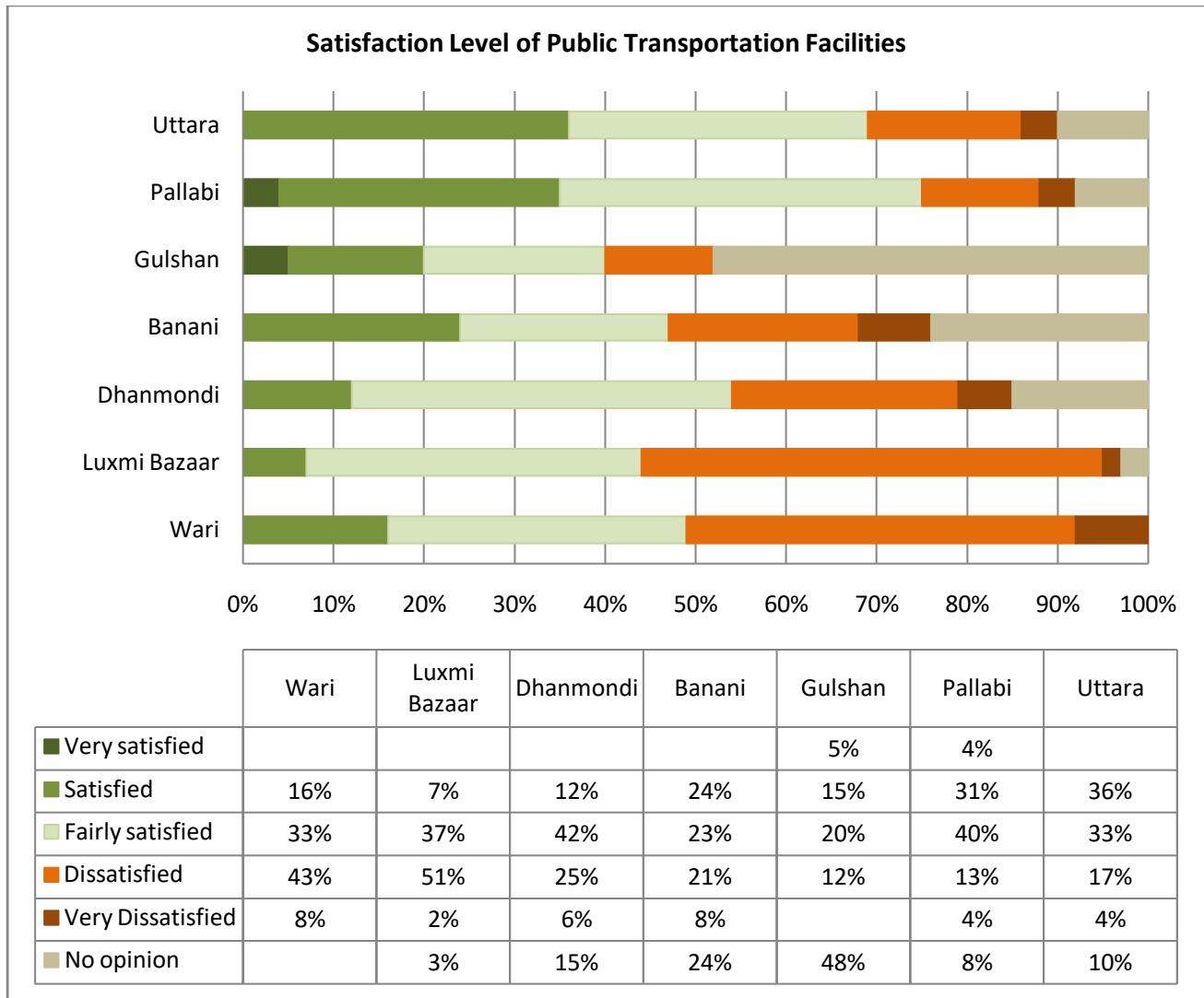 Chart 1: Satisfaction level of the respondents regarding public transport facilities Source:Field Survey,2015
The overall satisfaction level of Banani is $47\%$ and the overall dissatisfaction level is $29\%$ regarding public transport. However, $24\%$ of the respondents have not given any opinion. This is partly due to the affluent high-class status of the residents who are mostly automobile-dependent for their daily activities. The area is served by two bus stops located at the two far ends of Kemal Ataturk Avenue (Kakoli and Baridhara stops). Most of these public transports (bus, auto-rickshaw, taxi) are used by commuters and the residents are least concerned about its provision. Besides cars, the residents occasionally use other modes of transport like rickshaws and auto-rickshaws for traveling within the neighborhood with which they are found to be quite satisfied. The same scenario can be observed in Gulshan where almost all the residents are car users and thereby do not depend on public transport. As non-users of public transport, most of the residents $(48\%)$ were unable to express their opinion regarding the issue. The good connectivity, provision, and frequency of the bus service have yielded an overall higher satisfaction level with public transport both in Pallabi (75%) and Uttara (69%).
The survey findings indicate that the road network pattern of the residential areas plays a significant role in the provision of public transportation facilities as planned areas enjoy better connectivity than unplanned areas. The satisfaction level, in general, reflects similar outcomes where the residents of unplanned areas are found dissatisfied while residents of planned areas displayed a higher level of satisfaction. But other factors like income level also influence the satisfaction level as the higher-income groups are less dependent on public transport and they are least bothered about its provision and quality. However, the accessibility to public transport in terms of distance from bus stops to the neighborhood also plays an important role in the satisfaction level as it is clear from the responses of Wari that despite being a planned residential area the longer distance to the bus stop prevents inhabitants from using public transport.
## IV. ACCESSIBILITY TO INFRASTRUCTURE
This aspect covers the utility service infrastructure which includes water, electricity, gas, sewerage services, and waste disposal systems of the study areas. Overall, from the survey, it was found that there is a significant infrastructure and service delivery gap in utility services except for water supply across the majority of the study areas. From the observation, it was found that regarding the availability and quality of the utility services, water supply ranks first place in all the study areas. The deficit between the demand and supply of water is the lowest as Dhaka Water and Sanitary Authority (DWASA) produces 2420 MLD against a demand of 2250 MLD (DWASA, 2015). However, the residents of Luxmi Bazaar and Pallabi have complained of the periodic irregularity in the supply and quality of water which is chiefly due to the system loss caused by leakage in pipes, lack of proper operation and maintenance, and unauthorized connections. A study by GKW Consultants conducted in 1996-97 indicated that about $20\%$ of water loss can be contributed to leaking pipes and joints and the rest to administrative inefficiencies including non-metered connections, no billing, under billing, unauthorized connections, pilferage etc (Haq, 2006). The illegal connections in these areas made by unskilled laborers are often not leak-proof and result in contamination of water. In addition, a major part of the water pipes in Luxmi Bazaar installed by the public utility is over 50 years old and needs to be replaced. To ensure continuous supply water is stored in the underground reservoir and then pumped to the overhead tank of each building while deep tube wells serve larger housing complexes at New Dhaka. Dhaka city has sanitation coverage of around $70\%$, of which a water-borne piped sewerage system covers merely $30\%$ and the rest is handled through conventional septic tanks (ibid). Areas like Pallabi and part of Old Dhaka (east) are not covered within the water-borne piped sewerage network and the system of sewerage collection and conveyance is also in poor shape. During the monsoon, the storm drains are often overflowed with sewage for lack of proper drainage system. The respondents of Dhanmondi, Gulshan, Banani, and Uttara complained about frequent breakdowns and blockage of the sewerage system due to the insufficiency of sewer lines in terms of length and diameter and the frequent road digging for making new connections and repair of sewers.
On the other hand, the residents of Luxmi Bazaar and Pallabi have reported having better service regarding electricity supply than water. This may be attributed to the presence of fewer large-scale shopping malls and other commercial facilities in the locality contributing to increased power saving. Nonetheless, frequent power cuts occur in all the study areas which indicates that the overall electricity demand is higher than the supply. The frequent power cuts are mostly experienced in summer due to the high consumption of electricity. The government has adopted the policy of closing off the commercial establishments after 8:00 pm to mitigate the deficit of power supply. The policy seemed to have improved the continuity of power supply as revealed in the survey result. There is an ongoing crisis of natural gas, due to production shortages, pipeline leaks and, illegal and excessive gas connections also reflected in the responses of the households experiencing the supply disruption. At present for fuel safety government promotes LPG cylinders in the newly constructed buildings instead of pipeline supply of natural gas. The waste disposal service has been reported to be in the least acceptable condition in all the study areas. There are open garbage disposal points situated along the arterial and access roads which pollute the surrounding environment as well as hinder the traffic movement and create traffic congestion. The waste management system is assigned to the city corporations. But as these organizations are not capable of handling the duty properly due to lack of funding and human resources the responsibilities of collection, disposal, and management can be assigned to the private sector. Overall, most of the residents of the study areas have ranked the power service in second place while gas, sewerage, and waste disposal service take third, fourth, and fifth place respectively in terms of accessibility and quality of the service.
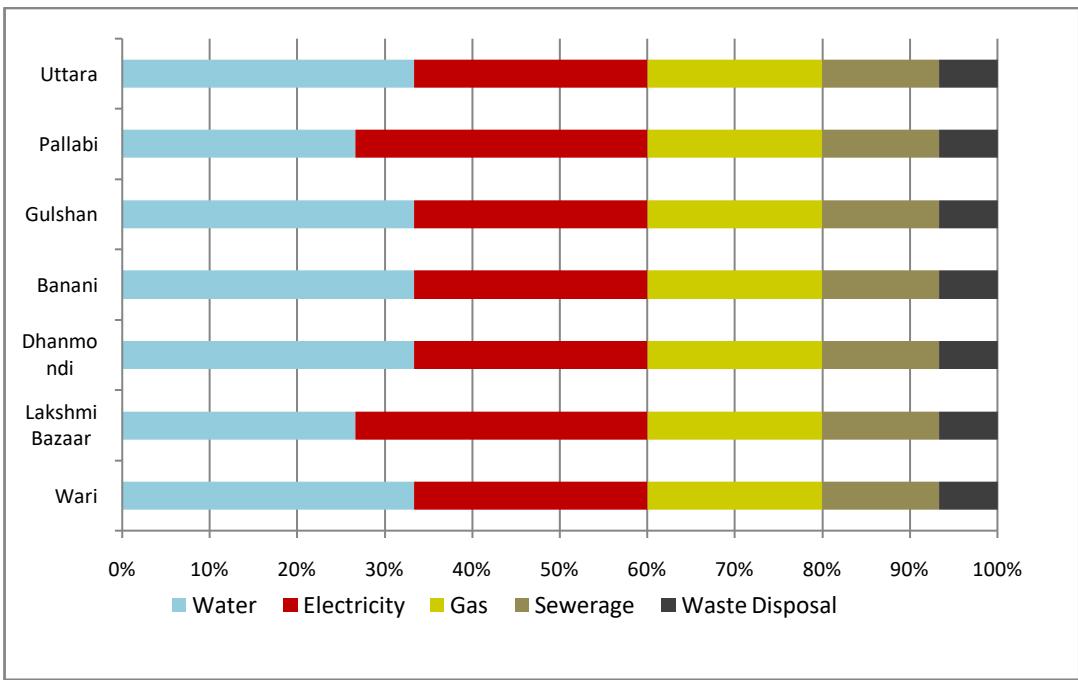 Chart 2: Ranking of utility services in the study areas The percentage is based on the number of responses Source:Field Survey,2015
## V. RELATIONSHIP BETWEEN DENSITY AND ECONOMIC SUSTAINABILITY ASPECTS
The aim of the analysis carried out in this research was to explore the relationship between density and the selected aspects of economic sustainability of the study areas. The analysis process used simple correlations (Pearson's correlation) to examine the basic relations between density and the two selected aspects of economic sustainability. The Gross
Density of the study areas has been selected as the density parameter. The correlation between density and the indicators of each selected aspect of sustainability was examined individually and then the overall impact of density was determined from the average values of the indicators of each aspect. The results of the correlation analysis are presented in Table 6 and followed by the interpretation of the findings.
Table 6: Relationship between density and aspects of economic sustainability
<table><tr><td></td><td>List of indicators</td><td>Density relationship (Ward wise - gross population density</td><td>Overall impact of density</td></tr><tr><td rowspan="2">Accessibility to Infrastructure facilities</td><td>Accessibility to public transport</td><td>negative</td><td rowspan="2">negative relationship-higher density residential areas have lower accessibility to infrastructure facilities.</td></tr><tr><td>Access to utility services</td><td>negative</td></tr></table>
Among the aspects of economic sustainability, accessibility to public transport was found to have a negative association with the physical density of the study areas which implies that higher-density areas are not well served with public transport while no significant association was found between density and infrastructure which suggests that the provision of utility services (gas, electricity, and water) in the residential areas have not yet gone beyond the threshold. However, higher density is found to be negatively associated with services like sewerage and garbage disposal in all the study areas.
## VI. SUMMARY FINDINGS
### a) Accessibility to transport facilities
Though the literature suggests that higher-density areas are supposed to have better access to public transport facilities, the results of this research are contrary to this expectation. The residential areas of Wari and Luxmi Bazaar have one of the highest densities but do not have higher accessibility to public transport facilities in terms of the average distance of bus stops, availability, and frequency of buses. The organic settlement pattern, narrow access roads, and the distance from transport corridors of these settlements are partly responsible for this. For both the residents of Luxmi Bazaar and Wari, it takes about 20-25-minute walk to reach the nearest bus stops (700m-850m) and again must wait for another 10-15 minutes as the buses are not that frequent or overcrowded. Overcrowding is caused by carrying an extra number of standing passengers on board. In addition, there is no monitoring authority to regulate the fare. Consequently, the residents of Old Dhaka rely more on alternative modes of both motorized and non-motorized vehicles like rickshaws, bicycles, motorcycles, auto-rickshaws (CNG), and to a lesser extent on cars. Conversely, the relatively lower-density residential areas of New Dhaka are found to have better access to public transport facilities. This is due to the gridiron pattern layout of these settlements where the access roads of each block end up in the adjoining primary and secondary roads. Despite inadequate transit provision, the number of routes and frequency is higher than Old Dhaka and it takes about 15-20-minute walk for most of the residents to reach the nearest (350m-550m) bus stop. This explains the higher satisfaction level of the residents of New Dhaka. Overall, the present condition of public transport in terms of service quality, frequency, fare policy, vehicle occupancy rate, and lack of routes, is not satisfactory and therefore, does not ensure the sustainability of the residential areas in terms of the accessibility to public transport facilities. Due to the lack of adequate public transportation infrastructure and management, people are constrained to increase their reliance on cars accounting for the registration of 78240 private cars from 2011 to 2016 (BRTA, 2016). The higher traffic load with persistent traffic congestion is contributing to increased vehicular emission (Iqbal et al., 2014) posing a constant threat to the health of the city dwellers.
### b) Accessibility to utility services
The accessibility of utility services was also found negatively associated with high density which indicates that high-density residential areas are not still provided with adequate utility service. Though theory claims that higher densities ensure higher accessibility to utility services the opposite scenario has been observed in Dhaka. This indicates an overall shortage of utility facilities not able to meet the demand. Therefore, from the viewpoint of accessibility to infrastructure, both the transport and utility services have a negative association with density which cannot ensure the economic sustainability of these residential areas.
## VII. DISCUSSION AND RECOMMENDATIONS
Given the summary findings, it can be said that high-density developments when unguided are prone to generate increased traffic concentration, overloaded infrastructure, poor spatial qualities, and urban inefficiencies which have been observed in the case of Dhaka. The vertical expansion of the city has stretched to an extent where disadvantages in terms of the transport system and infrastructure provision are becoming increasingly unsustainable and beyond the limit of acceptable thresholds of the city. From the empirical observations, the transport system is the most affected in the current context of Dhaka. Densification strategy when formulated needs to be integrated with viable and consistent transportation planning. The best practices of densification strategies around the world reinforce this fact. An example of successful densification practice is Curitiba where structural axes for public transportation integrated with urban land use were created redirecting the city's growth from a concentric radial to a linear pattern ((Rabinovitch, 1992; Pienaar et al 2005). Along these axes, the density zones of differing densities were distributed.
The city of Dhaka is deprived of an efficient public transport network system. According to Caminos and Goethert (1978), at least $20\% - 25\%$ of the urban land should be dedicated to road space to facilitate a smoothly functioning transport system in a modern city. According to the STP 2005, Dhaka has a road space of $9\%$ of its total urban area, even after the implementation of the Dhaka Urban Transport Project (DUTP) and the Dhaka Integrated Transport Project (DITP), which is far less than the recommended standards. Furthermore, the development of new roads has been slower than the growth in the number of vehicles ( $80\%$ in the last decade). In addition, according to the official records of Dhaka City Corporation (DCC), the mixing of different modes of transport i.e., both motorized and nonmotorized transport (rickshaws 3,00,000 in number accounting for $15.2\%$ of the traffic and occupying $73\%$ of the road space) has been cited as a major reason for the persistent traffic congestion in the city. The unguided densification has contributed to an escalation in the number of automobiles from 4734 in 2004 to 10913 in 2011 (BRTA 2012). This leads to increased traffic congestion which is further aggravated by the greater number of on-street illegal parking in the absence of adequate parking facilities. Multi-storied parking lots, traffic calming, and designated lanes for buses may improve the situation. To maintain a balanced street and car ratio ceiling needs to be imposed on the registration of new cars. The current FAR rule for designing high-rise buildings does not consider the impact of the car traffic generated by them which could be controlled through area-based density planning. The Observations also indicated that the construction of multi-story buildings along the major transport corridors without adequate provision for parking of construction vehicles, storage of construction materials, etc. in contravention to the Building Construction Rules 2006 (BCR) has contributed to the recurring gridlocks on certain principal corridors.
The number of buses through the period of 2004 to 2011 increased from only 1147 to 1318 buses (BRTA, 2012) which is highly inadequate for a megacity like Dhaka. This is partly due to the inadequate road infrastructure as well as the monopoly of a handful of influential private companies running the bus sector with the BRTA (STP, 2005). Alam and Habib (2003) pointed out that more than 60 percent of the roads of Dhaka are found to remain congested carrying 25 percent more traffic than their capacities and around 50 percent of these roads are incapable of supporting a vehicular speed limit of more than $15\mathrm{km}/$ hr. during the peak hours. By introducing BRTs covering the entire city propensity towards automobile usage can be reduced. Newman and Kenworthy (1989) indicated that public transport becomes viable at net densities between 90 to 120 persons per hectare (gross densities of 30-40 plots/ hectare) and walking becomes viable at a net density of 300 persons per hectare. The gross densities found in the study areas range between 81 to 737 persons per hectare making these settlements viable for public transport. In addition, the geological feature of the terrain dictates the city to adopt linear development which is suitable for adopting a mass transit system. The Government already had planned for Mass Rapid Transport systems (MRTs) through the introduction of the elevated light rail. However, the Bus Rapid Transit (BRT) service with designated bus lanes instead of expensive elevated rail tracks may prove cost-effective in terms of installation and operation. Again reviving the waterways through a network of interconnected lakes, canals, and river water-based public transport systems may be introduced. Private sector participation needs to be encouraged for funding such projects.
Besides an efficient transport system for a natural disaster-prone (i.e., earthquake and flash floods) city like Dhaka, it is crucial to develop an accessible matrix of urban streets and open space system to ensure a safe and rapid evacuation of people. A growing body of research indicates that an accessible street network based on people's movement patterns and density and other morphological aspects including land use, building density, distribution of public open space, and emergency shelter are the key considerations for effective rescue and recovery planning (Ahmed, 2016). A planned accessible network for emergency routes would promote community awareness regarding preparedness and mitigation programs in post-disaster situations. Preparation of site-specific evacuation plans is of high priority, especially for every organically planned locality of Dhaka. A network of access roads connecting the public buildings with nearby open spaces could prompt safe evacuation during a disaster including earthquake and fire hazards.
Density is a crucial factor in determining the allocation of infrastructure and public service delivery in residential areas. There is an inverse relationship between density and infrastructure costs (Arenas, 2002). The growth of Dhaka is largely characterized by mid-rise apartment buildings with population densities ranging from 81 to 737 persons per sq. km. (BBS, 2011). However, the city has expanded vertically in response to the limited provision of the line infrastructure and amenities. The rapid densification caused a significant infrastructure and service delivery gap in terms of gas and water supply, especially in the older parts of the city. For New Dhaka, the water supply infrastructure that was installed earlier for lower-density settlements became insufficient for higher-density living. To address the problem of low pressure in the supply lines, water is pumped to the overhead tanks from the underground reservoirs to serve the upper floors. The increased water consumption exerts extra pressure on the subsoil water and results in lowering the water table which may lead to land subsidence (BUET 2000). Rainwater harvesting in conjunction with ground and surface water supply systems may solve the crisis. In addition, $30\%$ of Dhaka has water-borne piped sewerage coverage and the rest rely on on-site sanitation through septic tanks and soak pits (Haq, 2006). With the rising production of sludge, these septic tanks need to be frequently cleaned which is not cost-effective in the long run either.
Observations indicated that the frequent digging of all types of roads for installation, repair, and shifting of utility service lines throughout the year causes huge snags in traffic flow and increases traffic congestion. The installation of underground service ducts underneath the sidewalks, largely practiced in western cities, may help avoid such hassle. These service ducts are usually 5ft x 7ft in dimension containing all the utility lines in various service trays. With all the utility lines within a single duct underneath the sidewalk, the vehicular road remains free from unnecessary digging whenever a new utility connection or repair is required. The survey revealed that most of the access roads in the new residential areas are accompanied by pedestrian pathways where this system can be engineered. It would also diminish the need for installing the series of electric poles with exposed high voltage wiring not only poses danger but also creates an ugly streetscape. The underground ducting would improve the visual image of the neighborhoods by offering a clear street view. Despite the high installation cost involved in replacing the existing system, the benefits may outweigh the overall cost, in the long run, making the neighborhoods more sustainable. The system can be implemented in the upcoming public and private housing projects having sufficient road width with sidewalks.
## VIII. CONCLUSION
Densification in connection to the compact city model is recognized as an effective strategy for reducing travel demand and ensuring access to basic services for the urban dwellers which in turn contributes to the economy of the city. But if densification interventions are implemented without considering the limitation and potential of the prevailing infrastructure adverse outcomes may surface as indicated by the findings of this research evident in the sector of transport and utility services of Dhaka. However, to avoid the unintended outcomes urban densification policy should consider the compatibility of the existing physical infrastructure and their potential for expansion with the proposed density. Before setting the density of buildings, it is necessary to assess the outcome in terms of projecting various development scenarios considering the site-specific potential and challenges. The extent of urban densification should also comply with the residents' needs and cultural expectations.
Nonetheless, urban intensification supported by a well-integrated consistent infrastructure policy can promote the economic sustainability of the city in many ways including, reducing travel activity, vehicle occupancy rates, and fuel consumption per capita causing reduced emissions and carbon footprint, and improving air quality (WBCSD, 2004; Dalkmann and Brannigan, 2007; Joumand and Gudmundsson, 2010; Kane, 2010; Litman, 2007; Ramani et al., 2011). Similarly, reducing the need for stretching trunk infrastructure in a compact city can conserve energy and fuel economy. Given the current situation, Dhaka requires a range of rationally supportive and feasible policies for the transport sector to maximize the mitigation potential by shifting to multi-modal options. This could be achieved by reviving the waterways of the city and increasing reliance on inclusive and transit-oriented transport like Bus Rapid Transit (BRT) and rail-based mass transit. However, to avoid unintended outcomes densification intervention should be guided by site-specific densification policies supported by a rationalized, comprehensive, and sustainable physical infrastructure and transport plan.
Generating HTML Viewer...
References
30 Cites in Article
Ahmed (2015). Earthquake risk management should be a priority, The Financial Express.
M Alam,K Habib (2003). Effects of alternative transport options on congestion and air pollution in Dhaka city.
Aumnad Phdungsilp,Ivo Martinac,Tuan Ngo (2002). A Framework for Integrated Energy Systems, Infrastructure and Services Optimization with Visualization and Simulation Platform for Low-carbon Precincts.
Sarika Bahadure,R Kotharkar (2012). Social Sustainability and Mixed Landuse, Case Study of Neighborhoods in Nagpur, India.
(2011). Statistical Pocket Book of Bangladesh.
J Bird,H Rahman,M Rama,A Venables (2017). Toward Great Dhaka A New Urban Development Paradigm Eastward.
S Rahman (2016). HUMAN RESOURCE MANAGEMENT IN THE TRANSPORT SECTOR: A SYSTEMATIC LITERATURE REVIEW OF STRATEGIC APPROACHES AND SECTORAL IMPACTS.
H Dalkmann,C Brannigan (2007). Transport and climate change.
Dwasa (2014). Dhaka Water and Sanitation Authority Annual Report.
Mohammad Gani,Mohammad Alam,Md. Alom,Mohammad Faruq (2010). Challenges and prospects of neuromarketing: Bangladesh perspective.
Dunya Aldhaher (2008). Building Information Modelling (BIM): An evaluation of BIM application on achieving sustainable design.
S Abdul Gani,Md. Haque,Ronzon Das,Rafio Rahmatullah,Md. Mahmud,Md. Bashar,Mirza Morshed,Md Islam,Khalid Syfullah (2005). Effect of GA₃ and NAA on Growth and Yield of Cabbage.
R Goethert,H Caminos (1978). Urbanization Primer: Project assessment, site analysis, design criteria for site and services of similar dwelling environments in developing areas.
K Haq (2006). Water Management in Dhaka.
Asif Iqbal,Andrew Allan,Rocco Zito (2014). Meso-scale on-road vehicle emission inventory approach: a study on Dhaka City of Bangladesh supporting the ‘cause-effect’ analysis of the transport system.
R Joumard,H Gudmundsson (2010). Indicators of Environmental Sustainability in Transport: An Interdisciplinary Approach to Methods.
Lisa Kane (2010). Sustainable transport indicators for Cape Town, South Africa: Advocacy, negotiation and partnership in transport planning practice.
Todd Litman (2007). Developing Indicators for Comprehensive and Sustainable Transport Planning.
Explore published articles in an immersive Augmented Reality environment. Our platform converts research papers into interactive 3D books, allowing readers to view and interact with content using AR and VR compatible devices.
Your published article is automatically converted into a realistic 3D book. Flip through pages and read research papers in a more engaging and interactive format.
Economically sustainable urban residential neighborhoods are characterized by adequate provision of physical infrastructure including transport facilities and utility services. The built urban fabric of residential areas of Dhaka has been undergoing densification operation over the past decades without considering the physical infrastructure capacity of these areas in terms of accessibility and provision of transportation and utility services. This intervention eventually exerted pressure on the existing infrastructure and caused negative externalities like traffic congestion, pollution, and water clogging. Thus, this paper aims to investigate the impact of densification on residential areas of Dhaka through the lens of economic sustainability. Seven residential areas from Old and New Dhaka that underwent various degrees of densification were selected as the study areas. Primary data was collected through a random sampling household questionnaire survey, fieldwork, and informal qualitative interviews with the residents and officials.
Our website is actively being updated, and changes may occur frequently. Please clear your browser cache if needed. For feedback or error reporting, please email [email protected]
Thank you for connecting with us. We will respond to you shortly.