Tourism is the third most crucial socio-economic sector that generates income and employment in the Republic of Benin, where it occupies a prominent place in the country’s development policies. In response to the sustainable development requirements, tourists are worldwide more and more demanding on the quality and diversity of the services they receive. As such, strengthening the tourism sector requires environmentally and socio-economically sustainable innovations. Bees, with their great ecological and socio-economic functions, offer many facets which can be valued to support the well-diversified tourism heritage of the Republic of Benin. This review analyses existing tourism heritage, the diversity of bees and apicultural practices in the country and their susceptibility to apitourism development. Tourism promotion strategies based on the products and the ecological services of social, and solitary bee species were analysed per suggested ecotourism region of the country. The involved actors, their roles, and responsibilities, as well as the challenges that may emerge from integrating the bee sector into the tourism heritage of the country, were also analysed.
## I. INTRODUCTION
In response to the challenges of sustainable development, tourists are increasingly demanding on the quality, the diversity of the elements to discover, their environmental sustainability, and the contribution of tourism heritage to the strengthening of their human capital (Bruce et al., 2012). Thus, tourism sites with positive environmental impacts, which also offer visitors, learning and practice opportunities to make them be part of the solutions to the global environmental and development challenges, are likely to maintain the highest attendance rates (Duvat, 2006; Pantoja et al., 2017).
With their undeniable ecological and socioeconomic functions, bees are of great interest to the
Author p: Université d'Abomey-Calavi, Faculté des Sciences Agronomiques, Laboratoire d'Ecologie Appliquée (Bénin).
Tourism is the second source of foreign exchange and the third sector that sustains jobs after agriculture and trade in the Republic of Benin. Indeed, according to the 2013-2025 Benin Tourism Strategic Plan document (PST, 2013), the number of tourists increased from 138,000 in 1995 to more than 325,000 in 2020, when it generated $1.3\%$ of the country's gross domestic product (GDP). The government's ambitions favoured this sector in the different development strategies, and following the country's national development plan (MEPD, 2018), the contribution of tourism to the country's (GDP) should reach $8\%$ in 2025.
Despite the strong and recognized potential of the tourism sector in the economy and social well-being of the country, the sector is still understudied. In fact, the best investigations on tourism in Benin are often limited to descriptions of key tourism sites and some fair contributions for improving reception facilities (Corali & Houenoude, 2013; Agbaka, 2022). With such limited scientific analyses available on classic tourism in the country, apitourism, which is an emerging field in most countries, is almost unknown despite the favourable conditions for its implementation in Benin. This constitutes an obstacle to the total valuation of the tourism potential and bee diversity of the country. The present study filled this gap by analysing the possibilities of integrating bees into the country's tourism heritage, and proposes strategies for a new ecologically and socio-economically smart bee-based tourism for sustainable biodiversity conservation and development in the Republic of Benin. The investigations established a universal process for integrating the bees, their products, and services in the tourism heritage of any socio-geographic area. Targeting on the particular socio-economic, political et ecological situation of the
Republic of Benin, located in West Africa, we analysed the traditional tourism heritage of the country, the bee diversity, the principles of a sustainable bee-based tourism and how a profitable apitouristic site could be managed.
## II. BEES AND TOURISM POTENTIALS IN THE REPUBLIC OF BENIN
### a) Existing Tourism Heritage
The tourism heritage of the Republic of Benin is very rich and well preserved by indigenous knowledge, most of which has resisted the cultural pollutions imposed by globalization and cultural hybridization from the slavery era and the colonial periods to date (Corali & Houenoude, 2013; Agbaka, 2022). The most critical heritages, based on the classification of the National Tourism Policy document of the country (PST, 2013) are the cultural and religious heritage, the historical and architectural heritage, the natural heritage, and the heritage of memories. They are interconnected, and constantly improve their facets and attractiveness through governmental initiatives in cooperation with the civil society.
## i. The Cultural and Religious Heritage
It consists of the sites of the royal palaces of the city of Abomey, listed as UNESCO heritage in 1985, and the Glede dance of Nago tribes in the list of intangible heritage of humanity in 2001. The relics of colonial and slavery periods, the temples of Vodoun, which is the endogenous religion of populations of Ghana, Togo, Benin, and Nigeria, also belong to this group.
The Republic of Benin is worldwide known as the land of Vodun which determines the daily life of most people (INSAE, 2015). Vodun is so crucial in the country that the government established in 1990, the national Vodun day to celebrate the numerous endogenous religions of the country every 10 January. According to Agbaka (2022), the Vodoun temples, and the numerous sacred groves of Benin are great tourism opportunities available to satisfy and maintain adepts and visitors if efficient care is taken to prevent the desecration of intrinsic endogenous values. Likewise, some communities have developed, and preserved identity festivals, initiation rituals, pilgrimage sites and endogenous fishing and hunting technologies that deserve particular attention. All these original sites are reinforced by a much-diversified indigenous craft industry that remains active all year round (Corali & Houenoude, 2013).
In order to strengthen the rich Vodun tourism heritage of the country, the government recently established the so-called Vodun Rite Committee through a decree of 13 September 2023. Following this decree, the Vodun Rite committee, made up of nine members, will help establish the labelling of the rites, ceremonies, and practices of Vodun temples and rites, and support all initiative related to the Vodun tourism heritage development.
## ii. The Historical and Architectural Heritage
It consists of the precolonial architecture of the historic cities of Abomey, Ouidah, Porto-Novo and numerous unique buildings scattered countrywide (Agbaka, 2022). The water-born-habitats of the Toffin people of Ganvie in the south, the Tata Somba, and the Tata Betamaribe huts in the North-West, the war holes and the traditional iron extraction furnaces in Zou, Collines and Borgou departments belong to this group. The Museums of the Kings of Abomey, Porto-Novo, the slavery memory sites of Ouidah, the Gaani site of Nikki are sites of great touristic value that are constantly improving their reception capacity with the government's support.
## iii. The Natural Heritage
It is used for ecotourism. It is made up of the natural landscapes of the Atacora chains in the northwest, the reserved forests, the sacred groves, and the natural landscapes in the south according to the decree No. 2017-331 of July 6, 2017, that dealt with the Protected Areas categorization in the Republic of Benin. The natural landscapes of the Atacora chains are made up of the Pendjari biosphere reserves and the W parks. They bear panoramic sites, falls, cascades, caves, natural pools, and large wildlife that have been well-protected for decades. The parks and their ecological environments also offer the possibility of extensive hunting tourism, animated by the village hunting areas, which support the Safaris of lions and buffalos living in the same area with protected species such as elephants, leopards, cheetahs, and crocodiles. In the southern parts, the natural landscapes are made up of lakes and mangrove complexes, the mouth of Mono River, and beaches with various socio-cultural activities.
The reserved forests are areas that benefit from a restrictive regime of use rights relating to the land and the born resources by an administrative act following the provisions of law No. 93-229 of July 2, 1993, relating to the forest regime in the Republic of Benin. There are 58 forest areas, which are parks, hunting areas, reserved forests, and reforestation areas. Sacred forests serve as habitats for deities or socio-cultural principles the populations venerated (Djdaoun et al., 2022). The existence of a coastline of more than $120\mathrm{km}$ with a warm beach all year round supports seaside and ecosocial tourism in the city of Grand-Popo, the lakeside city of Ganvie and Nokoue and the marshes of So-Ava, and Aguegue.
These sites are increasingly secured by the government with participatory development plans that support the sustainable conservation of rare, endemic, and emblematic species they host.
## iv. The Country's Memory Heritage
It comprises the itineraries of slavery and the history of precolonial period kings (Lohento, 1999; Girard and Scheou, 2012). We can mention here, the Slavery Road and the Ouidah history museum, the war holes in Abomey, and those of the tailed men of the district of Dogbo. In November 2022, the government succeeded in obtaining the restitution of 26 royal treasures looted by French colonial forces in 1892 from the kingdom of Dahomey with the deportation of King Behanzin. They constitute powerful curiosities both at the national and international level, which will significantly revolutionize the tourism industry of the country.
### b) Bee Biodiversity in the Republic of Benin
The Republic of Benin is located in an area of great diversity of social and solitary bees. As everywhere in the world, social bees are the most studied, while much effort remains for the solitary bees (Johnson et al., 2023).
As far as the social bees are concerned, the honey bee Apis mellifera. Linnaeus 1758 and the nonstinging bee Hypotrigona ruspolii. Cockerell 1934 are the two widespread native species (Amakpe et al., 2019). A. mellifera, the honey-producing species under the provisions of CODEX Alimentarius (1981) is known as the domestic bee. But most honey bee populations in Benin are still in the wild where they nest in trees, termite mounds and houses. Morphometric and molecular genetic analyses (Amakpe et al., 2018), showed that they belonged to three races which were adansonii, scutellata and iberiensis. These races are distributed in the dry Benino-Guinean ecotype, the Benino-Soudanian ecotype, and the Benino-dry tropical honeybee ecotype as the consequences of their adaption to the different ecological areas of the country.
Hypotrigona ruspolii, the non-stinging bee, is found in the wild, as in the entire tropical regions (Gruter, 2020; Chakuya et al., 2022). In rural areas of Zou and Borgou departments, more, and more people are keeping this species (melliponiculture) in special "hives" to satisfy the growing magico-pharmacological needs of its products in tropical areas (Kiprono et al., 2022; Grando et al., 2023; Mduda et al., 2023). As such, any initiative targeted at integrating this species into the production system constitutes an opportunity for its conservation, deeper scientific knowledge and to add value to its economic, and ecological services.
Regarding the solitary bees, Amakpe et al. (2019) identified at industrial quarries located in the southwest of the country, two species of Apidae family (Xylocopa luteola and Xylocopa nigrita), two species of Halictidae (Seladonia jucunda and Pachynomia amoenula), and two species of Megachilidae family (Chalicodoma cincta and Eutricharaea sp.). Unlike social bees, which benefit from the recognition of their ecological services and the different products they issue, which justify their domestication for millennia (Etxegarai-Legarreta & Sanchez-Famos, 2022), solitary bees, and their ecological functions are poorly known in the tropical region. In the Republic of Benin, as in many countries, they are sometimes considered as crop pests (Silva et al., 2023). Such a situation constitutes, apart from the climatic factors that are increasingly worsening for all biological entities, additional risks to their disappearance (LeBuhn & Vargas, 2021; Johnson et al., 2023). Their maintenance on tourism sites constitutes a tangible contribution to their conservation (Silva et al., 2023).
### c) Beekeeping Systems and their Challenges
Communities in Benin have developed and preserved practices of harvesting honey and other hive products from ancient times (Botoyiye, 1999). The widespread method used to obtain honey is honey bee and Melipona hunting. In this system, social colonies are raided at night with fire, and such a method persists in some areas of the centre and north of the country. But it constitutes, along with deforestation and anarchic land use/land over, one of the leading causes of the disappearance of natural colonies of social bees (Johnson et al., 2023).
Alongside this problematic system, beekeeping and melliponiculture with actively kept hives are very old in the regions of Atacora, Borgou and Zou. The materials used for this purpose are hives made of clay, jars, or hollowed-out tree trunks (figure 1). These traditional hives are set high in the trees that the owner harvest in the dry season (Ahouandjinou et al., 1997; Paraizo et al., 2012). The system of hives with removable combs set by a beekeeper who works with a smoker and bee suit is recent and started only in 1972 (Botoyiye, 1999). The average size of apiaries is five hives, dominated by traditional hives made in jars, and sometimes in plastic cans and Kenyan top bars hives. A few professional beekeepers in the departments of Zou, Borgou and Donga have apiaries with more than 50 Kenyan, or frame hives, the colonies of which are obtained by trapping hives, fragmenting colonies or rarely by queen rearing.
The significant challenges of beekeeping in the country are poor management skills, extensive agriculture and livestock farming, bushfires, uncontrolled pesticide use, pollution, and habitat fragmentation. In addition to these problems, which are common to the entire tropical areas (Johnson et al., 2023), beekeeping in the Republic of Benin is particularly impacted by night time theft and vandalism of colonies. No beekeeper is spared from this phenomenon, during which unidentified looters break the hives, burn the colonies, and take away any comb they find (figure 2).
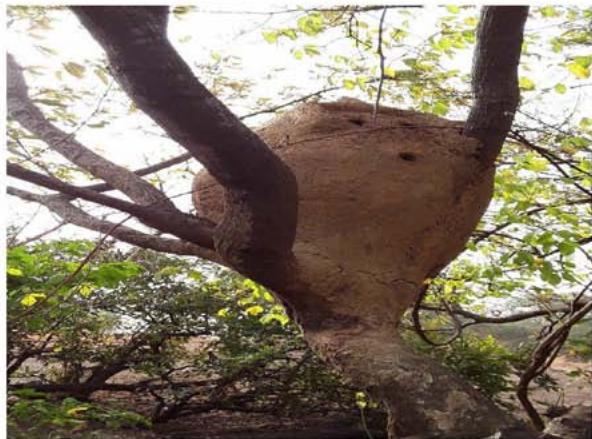
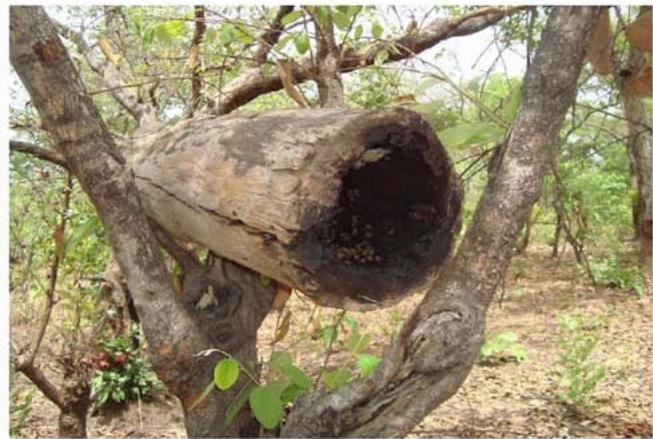 Figure 1: Traditional Honey Bee Hive in Clay Mud (Left) and Hollowed-out Tree Trunks (Right) in the District of Keru (Benin).
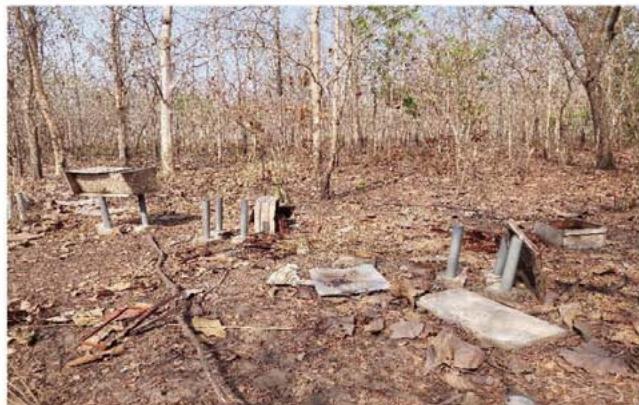
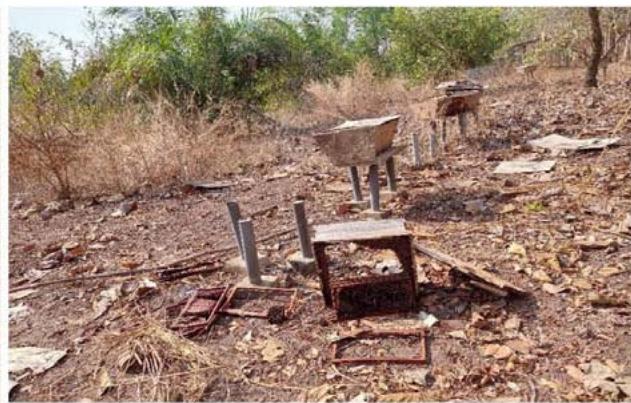 Figure 2: A Vandalised Apiary in the District Of Djidja (Benin). More than 20 Hives are Destroyed at this Apiary Each Year.
## III. OPERATIONAL APITOURISM CIRCUITS IN THE REPUBLIC OF BENIN
### a) Favorable Ecological Conditions for the Bee Species
The Republic of Benin is located in a particular area of the Guinean Gulf called the Dahomeyan gap, characterized by a break in the rainforest blocks from Liberia to Cameroon (Ern, 1988; Salzmann & Hoelzmann, 2005; Adjossou et al., 2022). This makes the country, a specific ecological entity in West Africa where the savannah reaches the coast.
The country comprises of three large climatic areas bearing an East-West gradient where the East is more humid than the West (ASECNA, 2021). The northern part is characterized by a long dry season of more than six months with $900\mathrm{mm}$ per year. The centre, with a Sudano-Guinean climate of $1200\mathrm{mm}$ of water per year, is a transition zone while the south, subequatorial, also has two rainy seasons where rainfall reaches its maximum in the southeast with an average of $1300\mathrm{mm}$ of water per year over almost eight rainy months.
The Vegetation varies from Guinean forests in the southeast to semi-desertic in the far north regions. Diversity and abundance analyses of the melliferous plants (Amakpe et al., 2015; Balagueman et al., 2017) showed that the country bore five major melliferous regions. These were the southern melliferous region, the central region, the central-western region, the central north region and the far northern melliferous region. Honeys from each region are determined by the pollen, and nectars of exclusive melliferous plant species, which give them specific organoleptic, nutritional, chemical, and pharmacological properties (Brischoux et al., 2013; Mensah et al., 2016).
### b) Favorable Ecological Conditions for the Bee Species
Unlike classic tourism, which satisfies visitors though observing the wonders of nature, inventions, achievements, and challenges of humanity, apitourism is the sharing of goods and services of bees in a given social area (Grigorova et al., 2016; Pentoja et al., 2017; Isquierdo-Gascon & Rubio-Gil, 2023). Integrating apitherapy and the promotion of beehive products in alternative medicine and the diversity of beekeeping systems, it is an interdisciplinary approach to strengthening the interrelationships between human beings, the bees, and floral resources to achieve socioeconomic, cultural, environmental, and spiritual needs without compromising the ecological functions necessary for living in harmony with nature (Suligoj,
2021; Etxegarai-Legarreta & Sanchez-Famoso, 2022). In Benin, there is no specifically dedicated site to active visions around the bees. It is, therefore, a new business opportunity available to innovators who may integrate it into existing tourism sites or create new apitourism sites for guaranteed financial, economic, environmental, and social profitability. This will strengthen the operational framework for tourism's contributions to the Sustainable Development Goals (SDGs).
### c) Apitourism and the Worldwide Sustainable Tourism Criteria
Under the recommendations of the Global Sustainable Tourism Council (GSTC, 2019), any tourism development initiative must comply the principles of site management sustainability, environmental sustainability, and socio-economic sustainability. This allows the optimal exploitation of the tourism aspects, while preserving their authenticity and long term ecological and social values. The integration of bees into existing tourism heritage or the creation of new sites dedicated to tourism around the bees contributes to the strengthening of these three principles, which are the same as the objectives of sustainable development goals (GDB) according to Marcotte & Bourdeau (2010); Drouin (2014) and Duval & Smith (2014).
## i. The Site's Management Sustainability
It is supported by the responsibility and involvement of key actors and stakeholders in managing the bee-based tourism destinations with relevant themes on the bees, and the implementation of a participatory action plan for the management of the apitourism site for better performance and efficiency. In case biological materials such as social bee colonies and nests are harvested from the wild, this plan will also endure the reduction of socio-economic, cultural, and environmental risks induced by keeping social and solitary bees in compliance with Law No. 2002 on wildlife in Benin. The establishment of a concerted operational framework for the monitoring and evaluation of installations will ensure better resilience with the dynamics of the number of visitors and induced activities from the introduction of apitourism for an optimum carrying capacity at the host sites.
## ii. Socio-Economic Sustainability
The socio-economic sustainability is ensured by evaluating the contributions of the apitourism complex to the social well-being of the involved actors, the created new jobs, and business opportunities that emerge from the innovation. The possibility of establishing young, women, and disabled people associations to take care of the bee nests and hives constitute an efficient mitigative innovation to the innate fears that limit inclusive beekeeping and wild bee valuation (Ekumankama & Nwankwo, 2002; Deressa et al., 2009, Bradbear, 2010). Likewise, this will help reduce social discrimination as all visitors may be accepted without distinction of sex, religion, and other disadvantaged social categories. In apitourism business, the main targeted products of the bee circuits are vision-based services. But hive products that will emerge from social beekeeping make up additional economic and financial values (Famuyide, 2014; Hanley et al., 2015; Etxegarai-Legarreta & Sanchez-Famoso, 2022). As such, the income of the involved actors will be improved as a consequence of better visibility and promotion of local beekeepers and the material and intangible resources which were formerly dedicated to classic tourism.
## iii. Cultural Sustainability
The materials and themes required for the bee tour will add more value and protect existing intangible tourism heritage. This will reinforce compliance with the relevant legislation during trades of cultural goods, bee products, and services. Themes relating to beekeeping techniques of the country in relevant national languages to local and foreign visitors will be developed to retain tourists. This will also help create representative sites of the potential and challenges of bees and their services conservation, strengthen, and diversify the ethnozoological knowledge on bees, their products, and services (Gbesso et al., 2019).
## iv. Environmental Sustainability
Apitourism will contribute to a better conservation of the country's natural heritage. Its association with sites that were traditionally dedicated to ecotourism will lead to better awareness of visitors of the conservation challenges of these sites, the promotion of environmentally sound behaviours, and reduction of risk factors on delicate habitats and their components (Aryal et al., 2020). In reserved forests, sacred groves, parks, and fragile ecological areas, apitourism represents alternative income activities for local communities which may also help better control conflicting activities such as extensive agriculture, poaching, and pastoralism (Hanley et al., 2015; Yirga & Ftwi, 2010). It also constitutes potential mitigative actions to human-wildlife-conflicts around protected areas in promoting the use of honey bees to repel large wildlife such as elephants, which damages crops and properties of riparian (King et al., 2011; Ridwan et al., 2023; Raycraft, 2023).
### d) Geospatial Analysis of the Apitourism Potential of the Republic of Benin
For efficiency and profitability's sake, apitourism sites must be set in such a way as to benefit from the synergy of the diversity of tourism and beekeeping potentials of the bearing ecological regions. As the honey bee morpho-ecotype regions almost cover each tourism regions of the tourism strategic plan of the Republic of Benin (PST, 2013), the apitourism regions are also based on the bee morpho-ecotype regions for easier readability of the geographic distribution of each region (figure 3).

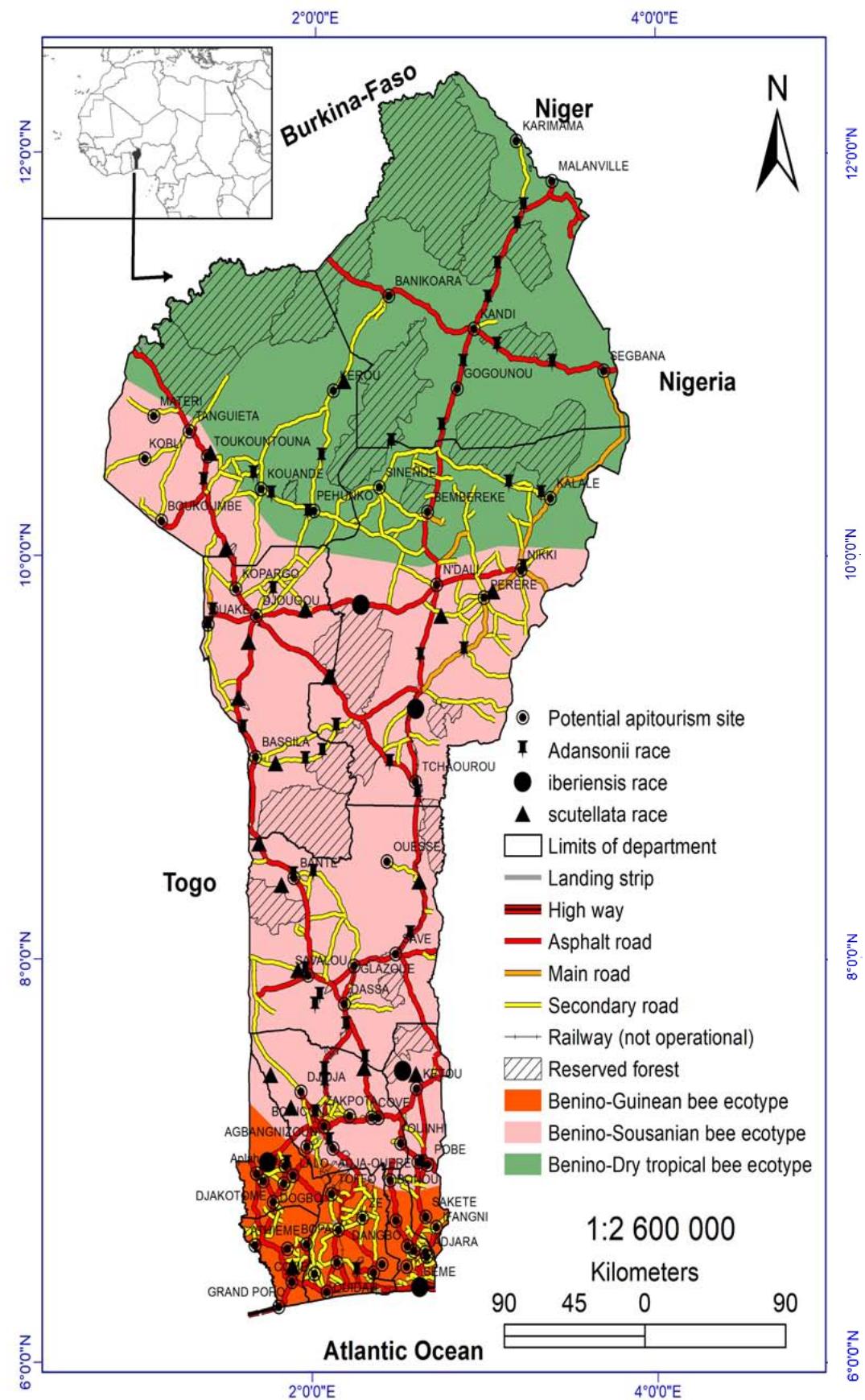 Figure 3: Apitourism regions map of the Republic of Benin based on the bee morphotypes distribution and key administrative traits of the country. Administrative and transport data are from the National Geographic Institute of Benin. The bee ecotypes are the ones from Amakpe et al. (2018).
## i. Apitourism in the Southern Region
The southern region extends from the coast to the latitude of Abomey, is dominated by small-sized honey bees of iberiensis and scutellata genotypes. Very few beekeepers are operational in this poor beekeeping potential area with sparse mellarous plants and higher parasitic pressures (Amakpe et al., 2015; ASECNA, 2021). On the other hand, it is the area of high human concentration and high consumption of all kinds of goods and services in the Republic of Benin. This region hosts more than $75\%$ of tourism reception capacities and receives the maximum number of visitors per year (PST, 2013). With its low beekeeping capacity, apitourism sites will be based on imported materials from relevant beekeeping sites in the district of Djidja. A production chain for vision colonies and specialized equipment must, therefore, be sustained with professional beekeepers who have artificial queen rearing sites and experimental nests for Melipona and solitary bees. The most suitable places to house apitourism sites in this region are museums and private tourism sites in the cities of Ouidah, Porto-Novo, Allada, Seme, Pobe and Lokossa. Some sacred groves are visited by tourists all year round, and may also harbour bee-based circuits to reinforce the respect for the deities and sacred principles they host (Agbaka, 2022).
## ii. Apitourism in the Central Region
This region extends from the district of Djidja and the Plateau department to the latitude of Bembèrekè. With scutellata and adansonii honey bee races, it is the area with the highest mellarous plant diversity and abundance and also home to the largest beekeeper population (Yedomonhan 2016; Balagueman et al., 2017). Serving as the departure zone for ecotourism and hunting trips to the north, it is the second tourism region with $18\%$ of the country's estimated tourism reception capacity (PST, 2013). Apitourism sites in this transition zone will serve for both the launch and closing of traditional tourism hikes for visitors who will enjoy a greater diversity of beekeeping practices and beehive products. Experienced local beekeepers who may serve as bee guides are an opportunity to affordable access to beekeeping equipment, and relevant themes on bees and their services. Apitourism sites in this region will preferentially be established in the cities of Abomey, Bohicon, Djidja, Dassa, Savalou, Ketou, Parakou, Djougou, Bassila and Bembèrekè whose beekeepers will be strengthened in the supply, use and maintenance of apitourism materials.
## iii. Apitourism in the Northern Region
The northern region the country, which extends from the district of Bembèrekè to the far north, is made up of the Niger, Mekrou, Alibori, Sota and Penjari river basins. Parasitic pressures are low in this area where the melliferous flora is dominated by Vitellaria paradoxa orchards, inherited from the selective slash-burn agro-system in favour of this species (Glele Kakai et al., 2011; Bidou et al., 2019; Amoako & Gambiza, 2021). In this area, the bee colonies are essentially made up of the aggressive adansonii race (Paraizo et al., 2012; Amakpe, 2018). These regions harbour the country's oldest beekeeping practices with traditional hives. With only $8\%$ of the country's tourism reception capacity, it is the area of parks, hunting trails, landscapes, and specific cultural values of the North. In this area, apitourism sites will mainly be integrated into the functional classic tourism itineraries of the parks and hunting areas in cooperation with the highly organized local communities. The cities of Kandi, Banikoara, Malanville, Natitingou, Tanguieta, and Porga are the best places to host the new apitouristic centres in addition to the reception sites of the parks and hunting areas.
### e) Apitourism Sites Establishment and Management Criteria
The establishment of the apitourism sites must meet the profitability criteria of the tourism enterprise, which are determined by the attendance rates. It should offer the visitors and local communities, a proven level of safety against honey bee attacks.
Regarding the attendance rate improvement, the charged prices for access to tourism sites are not decisive for foreign tourists (Marcotte & Bourdeau., 2010; FPT, 2012). Nevertheless, apitourism site managers would benefit from practicing special attractive costs for social categories such as schoolboys, students, and the elderly to promote a kind of craze for bee tourism at the national and local levels.
Ensuring "zero sting" during visits is key to success with the honey bee races, which are particularly aggressive in the entire country. Inspection and discussion rooms must then be isolated from roads and surrounding properties. They must also be well equipped to prevent accidental honeybee attacks, which are sometimes fatal, during visits to apiaries in tropical areas (Brunet, 2008; Mbengogo et al., 2018; Veado et al., 2020). Likewise, a minimum safety distance from public and private infrastructure or properties is required to ensure that bees are not life-threatening issues for people and domestic herds around apitourism sites (Veado et al., 2020).
For the stability and continuity of apitourism services, social bees' colonies must be provided by professional beekeepers who are skilled in artificial colony delivery. The honey bee queens must be marked and maintained in the hives by appropriate queen excluders to prevent desertions and frequent swarming, which characterize tropical honey bees (Winston et al., 1983; Rubink et al., 1996; Hepburn, 2010). For the nonstinging bee, Hypotrigona ruspolii, their nests will be set in bee hotels (figure 4). Although they do not sting, the native $H$ ruspolii species causes discomfort by penetrating the nose, eyes, and ears when disturbed. The promoter should then ensure to visitors, the provision of specific clothing in compliance with hygiene rules during the tours (Bauer, 2015).
Regarding the solitary bee species, they may be observed from their nests, which may also be installed in association with the Melipona nests. These nests are made up of pipes, stacked in specific cages or galleries of varying diameters, which are drilled into wooden planks and placed in the bee hotel (Rauf et al., 2022). Many Hymenoptera species, such as wasps, are associated with bee hotels, and some of them may be aggressive with dangerous and allergenic stings (Steiner 1986; Schmidt et al., 1983). The manager is then required to take particular care to them for the safety of visitors.
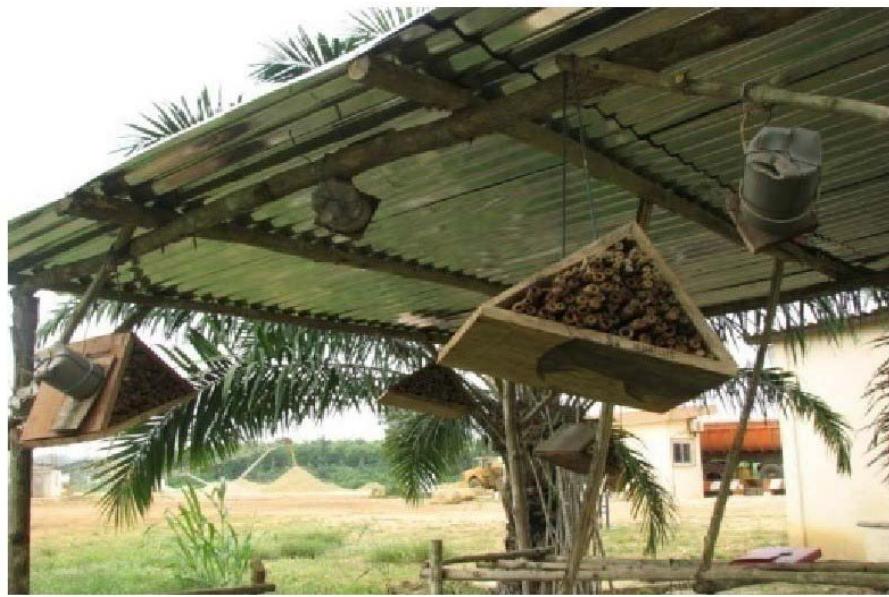 Figure 4: Solitary and Melipona Nests Found at a Bee Hotel in the District of Lokossa.
### f) Stakeholders of the Apitourism Industry
The stakeholders are any involved in the development of traditional tourism and those in the beekeeping sector. As apitourism is a multidisciplinary approach involving public-private cooperation, the administration responsible for managing national tourism will ensure an operational framework between beekeepers, promoters of tourism sites, researchers, tourists, and local communities (Marcotte & Bourdeau, 2010). This allows the shared establishment of the roles, and responsibilities of each actor. It also helps define academic curricula to strengthen the institutional and individual capacities of site managers, tourist guides and beekeepers, as well as improving the necessary legal and regulatory framework for good governance and sustainability of the innovations. In the socioeconomic, cultural, and political contexts of the Republic of Benin, table 1 analyses the strengths, weaknesses, opportunities, and threats of potentially involved actors in apitourism development.
Table 1: SWOT Analysis of the Involved Actors in Apitourism Development in Benin.
<table><tr><td>Stakeholders</td><td>Role and Responsibilities</td><td>Strengths</td><td>Weaknesses</td><td>Opportunities</td><td>Threats</td></tr><tr><td>Vodun Rite Committee</td><td>Ensure the proper integration of Bee tourism in the Vodun tourism heritage</td><td>Established by the government, made up of highly qualified experts in Vodun and tourism</td><td>Too young committeeNeed time to be operational.Not skilled in Apitourism issues</td><td>Governmental support</td><td>Administrative burdenOverwhelmed by political orientations</td></tr><tr><td>Tourists</td><td>Pay visit fees.Respects country lows.Give feed backs</td><td>AcceptableFinancial capacity</td><td>Some may be foreigners</td><td>New opportunity to learn and contribute to bee conservation projects</td><td>Risk of bee stings</td></tr><tr><td>Guides and apitouristic site manager</td><td>Satisfy tourists curiosity.Ensure safety at the site</td><td>Acceptable knowledge on the country tourism and beekeeping activities</td><td>Low professional skills in tourism and apitourism</td><td>New business opportunities.Good tourism legal framework in Benin</td><td>False advertisement and fake hive products trade</td></tr><tr><td>Former tourist guide and site managers</td><td>Improve and develop new apitourism materials and communication materials</td><td>Proven tourism experiences.</td><td>Not skilled in bee management
Low reception capacity</td><td>A new tourism heritage</td><td>Over carrying capacity of site
Incapacity to update their facilities and to comply to new legal framework</td></tr><tr><td>Research and training centres</td><td>Propose performance and sustainability strategies for the sector</td><td>Available staff</td><td>Very few are skilled in apitourism</td><td>New research and training fields</td><td>Loss of notoriety in apitourism</td></tr><tr><td>Governmental and local authorities</td><td>Secure the different involved actors and their goods</td><td>Security guards ambitious to promote tourism in Benin</td><td>Lack of reliable data base on beekeepers and tourism sites</td><td>Opportunity for taxes and fees</td><td>Increase in informal tourism sites.
New security issues</td></tr><tr><td>Riparian's of apitourism site</td><td>Cooperate with tourists and site owners</td><td>Living in their own land</td><td>No control on tourists and their behaviours</td><td>Additional income and networks</td><td>Desecrations and loss of endogenous values
Shift of young to prohibited activities</td></tr></table>
### g) Components of the Dedicated Site to Bee-based Visits
The development and establishment of apitourism sites must be based on a sound assessment of the carrying capacity and follow-up of tourist flows which varies according to the seasons and the prevailing local, national, and international events (Song et al., 2023). The site's compartments will also allow visitors to save images of hives, nests, and their components without physical contact with the bees. The two main operational compartments for this purpose are:
- The Exhibition and Exchange Room: It is the reception area from which the visits start and end. It bears communication and safety materials and offers the visitors the possibility to taste relevant hive products and learn bee services and functions that they are encouraged to implement at home.
- The Observation Corridor of Hives and Their Contents: This compartment is specially equipped with a system of glass, mirror, and light intensity adjustment devices for the effective and secure visualization of the different individuals and functional principles of a hive or bee hotel.
Regarding solitary bees, which do not present much sting hazards, their nests can simply be installed at the bee hotel with those of Melipona while keeping an eye on the associated insects, such as wasps which present some risks as described above.
### h) Key Apitourism Communication Themes
Many themes may be developed at the apitourism sites and this calls upon the experiences, knowledge, and skills of the apitourism guides. They mainly focus on the biology, ethology, ecology, socioeconomic aspects, apitherapy, and alternative medicine of bees and their products and the challenges they face (Lebuhn & Vargas 2021; Johnson and al., 2023). The apitourism guide may use communication tools such as video projectors, posters, and live materials to convince his audience. The following themes are essential and will be improved in cooperation with the stakeholders, the dynamics of bee conservation challenges and site management requirements.
- Knowledge of the Hive and its Components: This is a case-by-case description of the honey bee, and mellipona hives, the different individuals that live in each type of hive, the products it bears and how they are made by the bees. The different types of hives in the country or region may be put in the exhibition room for the gradual reconstruction of the country's beekeeping history.
- Bee Diseases and Enemies: The site manager shares with visitors the leading diseases, the biotic and abiotic factors that impact bees in the country. The systematic groups of pathogens, and their mode of propagation will also be analysed without obscuring the socio-cultural factors hindering the beekeeping development in the targeted region. The pathological relationships will help enlighten visitors on the risks of exchanges of diseases between plants, humans, and bees in an ecological area and the possibilities of using these relationships in biological controls against crop pests (Resci & Cilia; 2023)
- Modern Biotechnology and Bees: It is an issue of great concern in our area of living-modified organisms (LMOs) development for crop yield improvement, and pest control (Duan et al., 2008; Brookes, 2019). Facilitators will feed visitor expectations by addressing the potential impacts biopesticides, bactericides and plant varieties resulting from modern biotechnology may have on the conservation and sustainable use of bees and their services (Arpaia et al., 2021).
- Promotion and Tasting of Hive Products: Will close the apitourism tour. This allows visitors to register recommendations and suggestions for improving the services they received. This will also offer
visitors, the opportunity to address the products and services they can acquire from local beekeepers and tips for creating their beekeeping site, Melipona or solitary bee nests.
## IV. CONCLUSION
Integrating hive products and bee services in tourism heritage is an opportunity for improving and diversifying tourism facets that have long been limited to classic tourism sites in Benin. Apiculture and bee management is key of success in the establishment of any operational apitourism site. But Melipona, and solitary bees' management, requires additional specific skills, and knowledge to fully play their function in the apitourism complex. As any innovation, the development of the new apitourism sector which will open up a perspective for poverty alleviation, will be subject to the constraints, and burdens of adoption in social areas. In order to take the best advantage from the favourable ecological, political, and socio-cultural apitouristic conditions in Benin, the whole West Africa, and beyond, sustained investments, and deeper investigations on each component of the operational apitourism chain are required. Pilot apitourism sites should be established in the historic cities of Abomey and Ouidah as a starting point for progressively extending it, in a trial and adapt process. The technical and managerial capacities of the involved actors must also be strengthened through effective public and private agreed partnerships. It will also be necessary to master and evaluate the national, regional, and international bee-related legislative framework to prevent conflicts, and regulatory challenges that may emerge from the innovations.
## V. ACKNOWLEDGEMENT
The authors thank the staff of Cercle Nature et Development (CENAD-NGO) and the General Directorate of Forest and Natural Resources Management (DGEFC) for their kind contributions in contacting the different involved actors.
### Conflict of Interest
The authors certify that they performed their investigations without any financial, commercial, legal, or professional relationship with other organizations, employers, or funders that may be considered as conflict of interest.
#### Funding
These investigations benefited by no funding.
Generating HTML Viewer...
References
74 Cites in Article
Kossi Adjossou,Kouami Kokou,Marc Deconchat (2022). Floristic composition and turnover analysis in Dahomey Gap and the surrounding sub‐humid Togolese mountain minor forest refuges: Importance for biogeography and biodiversity conservation in <scp>sub‐Saharan</scp> Africa.
O Agbaka (2022). Chapitre 15. Changement climatique, quels enjeux pour la santé au Sud ?.
Sfich Ahouandjinou,Hounnankpon Yedomonhan,Aristide Adomou,Monique Tossou,Akpovi Akoegninou (2016). Caractéristiques techniques et importance socio-économique de l’apiculture au Nord-Ouest du Bénin : cas de la commune de Cobly.
Felicien Amakpe,Lina De Smet,Marleen Brunain,Frans Jacobs,Brice Sinsin,Dirk De Graaf (2018). Characterization of Native Honey Bee Subspecies in Republic of Benin Using Morphometric and Genetic Tools.
Felicien Amakpe,Dirk De Graaf,Brice Sinsin,Honore Biaou (2015). Stem cuttings assessment for domesticating the medicinal melliferous plant, Combretum micranthum G. Don. in the Republic of Benin.
Felicien Amakpe,Dirk De Graaf,Brice Sinsin,Honore Biaou (2019). Stem cuttings assessment for domesticating the medicinal melliferous plant, Combretum micranthum G. Don. in the Republic of Benin.
E Amoako,J Gambiza (2021). Effects of fire on the population structure and abundance of Anogeissus leiocarpa and Vitellaria paradoxa in a West African savanna parkland.
S Arpaia,G Smagghe,J Sweet (2021). Biosafety of bee pollinators in genetically modified agro ecosystems: Current approach and further development in the EU.
Sunil Aryal,Sampat Ghosh,Chuleui Jung (2020). Ecosystem Services of Honey Bees; Regulating, Provisioning and Cultural Functions.
Asecna (2021). Fiche météorologique 2021 du Benin.
O Balagueman,B Detchi,S Biaou (2017). Diversité de la flore mellifère le long du gradient pluviométrique au Bénin. Anale de l'université de Parakou.
E Bauer,L Lynch,D Golick,T Weissling (2015). Crating a Solitary Bee Hotel.
J Bidou,A Koukpéré,I Droy (2019). L'évolution des parcs à karité au Bénin : inégalités de genre et désenchantement du monde.
S Botoyiye (1999). Current status and future perspectives of apiculture in Taiwan.
N Bradbear (2010). 1.2 La définition des termes process et projet 39.
Sonia Brischoux,Alexis Desmoulière,Yves Faucher,Ghislaine Pautard,Agnès Sparsa (2013). Le miel : qualité, produits et utilisation.
Graham Brookes (2019). Twenty-one years of using insect resistant (GM) maize in Spain and Portugal: farm-level economic and environmental contributions.
W Bruce,H Terry,P Brian (2012). Tourisme culturel et patrimonial. Guide pour les Maîtres d'oeuvre Communautaires.
J-L Brunet (2008). Piqûres d’insectes et voyages.
Jeremiah Chakuya,Edson Gandiwa,Never Muboko,Victor Muposhi (2022). A Review of Habitat and Distribution of Common Stingless Bees and Honeybees Species in African Savanna Ecosystems.
Mariëlle Masson-Matthee (1981). The Codex Alimentarius: Harmonisation Through Standard-Setting.
Monica Coralli,Didier Houénoudé (2013). La patrimonialisation à l'occidentale et ses conséquences sur un territoire africain.
Temesgen Deressa,Rashid Hassan,Claudia Ringler,Tekie Alemu,Mahmud Yesuf (2009). Determinants of farmers’ choice of adaptation methods to climate change in the Nile Basin of Ethiopia.
Chabi Djagoun,S Zanvo,Elie Padonou,E Sogbohossou,Brice Sinsin (2022). Perceptions of ecosystem services: A comparison between sacred and non-sacred forests in central Benin (West Africa).
Dmitri Domanski,Jürgen Howaldt,Antonius Schröder (2017). Social Innovation in Latin America.
Martin Drouin (2012). Tourisme et patrimoine mondial Laurent Bourdeau , Maria Gravari-Barbas et Mike Robinson (dir.) Les Presse de l'Université Laval, Patrimoine en mouvement, Québec, 2012, 326 pages.
Jian Duan,Michelle Marvier,Joseph Huesing,Galen Dively,Zachary Huang (2008). A Meta-Analysis of Effects of Bt Crops on Honey Bees (Hymenoptera: Apidae).
Mélanie Duval,Benjamin Smith (2014). Inscription au patrimoine mondial et dynamiques touristiques : le massif de l'uKhahlamba-Drakensberg (Afrique du Sud).
Virginie Duvat (2006). Mondialisation touristique et environnement dans les petites îles tropicales.
O Ekumankama,G Nwankwo,Radio (2002). Farm Brodcasts: A study of Adoption of Agricultural Innovation in the Umuahla Zone, Abia State.
H Ern (1988). Flora and vegetation of the Dahomean Gap. A contribution to the plant geography of the West Tropical Africa.
O Etxegarai-Legarreta,V Sanchez-Famoso (2022). The Role of Beekeeping in the Generation of Goods and Services: The Interrelation between Environmental, Socioeconomic, and Sociocultural Utilities.
O Famuyide,O Adebayo,T Owese,F Azeez,O Arabomen,O Olugbire,D Ojo (2014). Economic Contributions of Honey Production as a Means of Livelihood Strategy in Oyo State.
G Gbesso,B Yabi,M Dossou,O Lougbegnon,B Tente,J Codjia (2019). Utilisation ethno-zoologique des produits et sousproduits des abeilles à l'Est de la Réserve de Biosphère Transfrontalière de W au Bénin.
A Girard,B Schéou (2012). Le tourisme solidaire communautaire à l'épreuve des illusions culturaliste et participative. L'exemple d'une expérience au Bénin.
Glèlè Kakaï,R Akpona,T Assogbadjo,A Gaoué,O Chakeredz,S Gnanglè,P (2011). Ecological adaptation of the shea butter tree (Vitellaria paradoxa C. F. Gaertn.) along climatic gradient in Benin, West Africa.
Dave Goulson,Elizabeth Nicholls,Cristina Botías,Ellen Rotheray (2015). Bee declines driven by combined stress from parasites, pesticides, and lack of flowers.
Remili Grando,Cláudia Catharina Weis,Larissa Bertan,Luciano Tormen,Charline Bonatto,Altemir Mossi,Helen Treichel (2023). Physicochemical characterization and acceptance of honey from stingless bees.
Zlatka Grigorova,Stefka Timareva,Ivanka Shopova (2016). Resources for Apitourism in Bulgaria.
Christoph Grüter (2020). Evolution and Diversity of Stingless Bees.
(2019). Tourist Safety and Security: Practical Measures for Destinations - Protection et sécurité du tourisme: mesures pratiques pour les destinations (Version française).
N Hanley,T Breeze,C Ellis,D Goulson (2015). Measuring the economic value of pollination services: Principles, evidence and knowledge gaps.
H Hepburn (2010). Absconding, Migration and Swarming.
Insae (2013). Recensement General de la population et de l'Habitat.
Mario Izquierdo-Gascón,Ángeles Rubio-Gil (2023). Theoretical approach to Api-tourism routes as a paradigm of sustainable and regenerative rural development.
M Johnson,J Glass,M Dillon,J Harrison (2023). How will climatic warming affect insect pollinators?.
L King,I Douglas-Hamilton,F Vollrath (2011). Beehive fences as effective deterrents for cropraiding elephants: field trials in northern Kenya.
Sabella Kiprono,Gladys Mengich,Jackline Kosgei,Charles Mutai,Sammy Kimoloi (2022). Ethnomedicinal uses of stingless bee honey among native communities of Baringo County, Kenya.
G Lebuhn,J Vargas (2021). Pollinator decline: what do we know about the drivers of solitary bee declines?.
R Lohento (1997). Plan de développement du tourisme au Bénin.
Pascale Marcotte,Laurent Bourdeau (2010). La promotion des sites du Patrimoine mondial de l'UNESCO : Compatible avec le développement durable ?.
J Mbengono,A Amengle,R Bengono,S Djouda,S Kona,R Hentchoya,J Minkande (2018). Choc anaphylactique compliquant une envenimation massive par piqûres d'abeilles chez un adulte: cas clinique.
C Mduba,J Hussein,M Muruke (2023). the effects of bee species and vegetation on the antioxidant properties of honeys produced by Afrotropical stingless bees (Hymenoptera, Apidae, Meliponini).
Sylvanus Mensah,Ruan Veldtman,Thomas Seifert (2016). Potential supply of floral resources to managed honey bees in natural mistbelt forests.
Mepd (2018). Plan National de développement 2018-2025.
Ministère Fédéraux (2012). Tourisme culturel et patrimonial : Guide pour les maîtres d'oeuvre communautaires.
Gabriel Pantoja,Miguel Gómez,Claudio Contreras,Lissette Grimau,Juan Ramírez Quirama,Gloria Montenegro (2017). Corrigendum: Determination of suitable zones for apitourism using multi-criteria evaluation in geographic information systems: a case study in the O’Higgins Region, Chile.
Abdur Rauf,Shafqat Saeed,Mudssar Ali,Muhammad Tahir (2022). Nest preference and ecology of cavity-nesting bees (Hymenoptera: Apoidea) in Punjab, Pakistan.
J Raycraft (2023). Wildlife and human safety in the Tarangire ecosystem, Tanzania. Trees For.
Ilaria Resci,Giovanni Cilia (2023). The use of honey bee (Apis mellifera L.) as biological monitors for pathogenic bacteria and antimicrobial resistance: A systematic review.
Qamer Ridwan,Zishan Wani,Nahila Anjum,Jahangeer Bhat,Mohd Hanief,Shreekar Pant (2023). Human-wildlife conflict: A bibliometric analysis during 1991–2023.
W Rubink,P Luévano-Martinez,E Sugden,W Wilson,A Collins (1996). Subtropical Apis mellifera (Hymenoptera: Apidae) Swarming Dynamics and Africanization Rates in Northeastern Mexico and Southern Texas.
Ulrich Salzmann,Philipp Hoelzmann (2005). The Dahomey Gap: an abrupt climatically induced rain forest fragmentation in West Africa during the late Holocene.
V Silva,I Gomes,J Cardoso,C Bosenbecker,J Silva,O Neto,W Oliveira,A Stewart,A Lopes,P Maruyama (2023). Diverse urban pollinators and where to find them.
H Song,R Qiu,J Park (2023). Progress in tourism demand research: theory and empirics.
André Steiner (1986). Stinging Behaviour of Solitary Wasps.
M Suligoj (2021). Origins and development of apitherapy and apitourism.
H Veado,R Conceição,K Nogueira,C M Finot,A Silva,M Castro,B Soto-Blanco,Câmara (2020). Massive Africanized honeybee stings in two hair sheep and a mare.
M Winston,O Taylor,G Otis (1983). Some differences between temperate European and tropical African and South American honeybees.
H Yédomonhan,G Houenon,A Akoègninou,A Adomou,G Tossou,L Van Der Maesen (2012). The woody flora and its importance for honey production in the Sudano-Guinean zone in Benin.
G Yirga,K Ftwi (2010). Beekeeping for rural development: Its potentiality and constraints in eastern Tigray, northern Ethiopia.
No ethics committee approval was required for this article type.
Data Availability
Not applicable for this article.
How to Cite This Article
Felicien Amakpe. 2026. \u201cBuzzing opportunities: Integrating apitourism for enriching the tourism heritage of the Republic of Benin\u201d. Global Journal of Management and Business Research - F: Real estate, Event, Tourism Management & Transporting GJMBR-F Volume 23 (GJMBR Volume 23 Issue F3): .
Explore published articles in an immersive Augmented Reality environment. Our platform converts research papers into interactive 3D books, allowing readers to view and interact with content using AR and VR compatible devices.
Your published article is automatically converted into a realistic 3D book. Flip through pages and read research papers in a more engaging and interactive format.
Tourism is the third most crucial socio-economic sector that generates income and employment in the Republic of Benin, where it occupies a prominent place in the country’s development policies. In response to the sustainable development requirements, tourists are worldwide more and more demanding on the quality and diversity of the services they receive. As such, strengthening the tourism sector requires environmentally and socio-economically sustainable innovations. Bees, with their great ecological and socio-economic functions, offer many facets which can be valued to support the well-diversified tourism heritage of the Republic of Benin. This review analyses existing tourism heritage, the diversity of bees and apicultural practices in the country and their susceptibility to apitourism development. Tourism promotion strategies based on the products and the ecological services of social, and solitary bee species were analysed per suggested ecotourism region of the country. The involved actors, their roles, and responsibilities, as well as the challenges that may emerge from integrating the bee sector into the tourism heritage of the country, were also analysed.
Our website is actively being updated, and changes may occur frequently. Please clear your browser cache if needed. For feedback or error reporting, please email [email protected]
Thank you for connecting with us. We will respond to you shortly.