Evaluation of Polyherbal Formulation at Different Dose Levels on Egg Production and Egg Quality Parameters in White Leghorn layers fed with High Energy Diets
Choline is an essential nutrient in the poultry diet. It plays a vital role in the metabolism and mobilization of accumulated abdominal fat. In layer birds, it helps in improving the rate of egg production, egg quality and prevents fatty liver syndrome. However, synthetic choline has lots of demerits that need to be addressed. To mitigate the drawbacks of choline, the present study was conducted to evaluate the impact of Kolin Plus TM , a polyherbal formulation (POH) manufactured by M/s Natural Remedies Pvt Ltd, Bengaluru, India, on the performance of the White Leghorn (WL) layer poultry birds. In the current trial, WL layer hens at the age of 41 to 55 weeks were distributed into 7 (G1 to G7) study groups having 6 replicates (20 birds/replicate) per group. All groups (G2 to G7) except the normal control group (G1) were supplied with high energy diet (HED).
## I. INTRODUCTION
Choline is a constituent of the vitamin B complex and an essential nutrient in the poultry diet (Beheshti Moghadam et al., 2021). It is a vital component for building cell structure, metabolism and mobilization of fat. In laying birds, choline plays a crucial role in the removal of needless fat deposited in the hepatic tissue and prevents fatty liver disease (Chaudhari et al., 2017). It helps in synthesizing phosphatidylcholine (PC) that has a significant function in egg yolk formation (Khairani et al., 2016). Additionally, choline serves as a methyl group donor in methionine synthesis and actively influences egg production as well as the performance of the layers (Chaudhari et al., 2017). Choline is necessary for acetylcholine formation which helps in transmitting the nerve impulses (Chaudhari et al., 2017).
The layer birds often suffer from choline deficiency as they are unable to synthesize abundant choline. So layers necessitate choline intake through their diet (Parsons & Leeper, 1984). It was reported that the inclusion of choline in layers' diet enhances their reproductive performance, egg mass, egg weight, egg yield, albumin height, percentage of egg yolk weight, yolk colour and improves the Haugh unit (Chaudhari et al., 2017; Zhai et al., 2013). Thus, it is an indispensable nutrient in improving egg production and the quality of laying birds. The laying hens need an approximate amount of 1300, 900 and $500\mathrm{mg / kg}$ choline as a dietary supplement from 0 to $6^{\text{th}}$, $6^{\text{th}}$ to $12^{\text{th}}$ week and $12^{\text{th}}$ week to age of laying eggs respectively (Chaudhari et al., 2017). Each egg comprises $12 - 13\mathrm{mg}$ of choline/g of dried whole egg mass (Chaudhari et al., 2017). According to Dänicke et al. (2006), the layers require choline at a concentration of $1500\mathrm{mg / kg}$ of feed for optimum performance. The dietary requisition of choline in layers as recommended by the US National Research Council (NRC) is $1050\mathrm{mg / kg}$ to get optimum yield (Zhai et al., 2013).
However, synthetic choline has several drawbacks. Choline is usually converted into trimethylamine (TMA) by gut microbiota which is corrosive in nature and causes toxicity (Selvam et al., 2018). The maximum permissible limit of TMA for birds is 200 ppm (Singh Rajesh Kumar, 2019). It triggers malabsorption and respiratory distress resulting in low reproductive performance and even death. Choline develops the lump of particles due to the hygroscopic property. Synthetic choline should have a uniform particle size for obtaining the optimum bio-availability (Singh Rajesh Kumar, 2019). Myriads of literatures have reported that the bioactive substances derived from plants may counter the demerits of synthetic choline (Selvam et al., 2018). Therefore, scientists are actively investigating the choline-like nutritional supplement of herbal origin to replace the synthetic choline from the layer's ration.
Kolin PlusTM is a proprietary polyherbal formulation (POH) comprised of Acacia nilotica (A. nilotica) and Curcuma longa (C. longa) plant parts developed by M/s Natural Remedies Pvt Ltd, Bengaluru, India. The phytoactive compounds present in POH are catechin, curcumin, gallic acid and polyphenols. They are proven to be antioxidant and lipotropic in nature. In the present study, the effect of POH supplementation in layers fed with a high energy diet (HED) has been explored for the rate of egg production and egg quality in comparison with synthetic choline chloride.
## II. MATERIALS AND METHOD
### a) Feed supplements
All protocols of the in vivo experiments were prepared and approved by Animal Ethics Committee of Natural Remedies Private Limited. The POH used as feed supplement in layers' diet, was comprised of powder of phytopharmaceuticals derived from A. nilotica and C. longa plant parts. HED was provided to the birds of all groups except normal control. HED contains basal diet with additional 100 Kcal metabolic energy (ME). Whereas birds of normal control group were fed with basal diet only. The composition of basal diet and HED was mentioned in table 1. Choline chloride $60\%$ was used as synthetic feed supplement in the experiment.
Table 1: Feed Composition of the layers
<table><tr><td>Nutrient</td><td>Basal Diet</td><td>HED</td></tr><tr><td>M.E (Kcal/kg)</td><td>2550</td><td>2650</td></tr><tr><td>CP (%)</td><td>13.7</td><td>13.7</td></tr><tr><td>dLysine,%</td><td>0.605</td><td>0.590</td></tr><tr><td>dMethionine+Cysteine,%</td><td>0.500</td><td>0.500</td></tr><tr><td>dTryptophan,%</td><td>0.139</td><td>0.137</td></tr><tr><td>dThreonine,%</td><td>0.512</td><td>0.498</td></tr><tr><td>dIso-leucine,%</td><td>0.512</td><td>0.500</td></tr><tr><td>dValine,%</td><td>0.637</td><td>0.603</td></tr><tr><td>Calcium,%</td><td>3.800</td><td>3.800</td></tr><tr><td>Sodium,%</td><td>0.170</td><td>0.170</td></tr></table>
### b) Study design
The trial was conducted at Sri Ramadoodha Poultry Farm, India. The experimental shed for housing the layer birds was maintained with standard room temperature and humidity as per the guidelines. The study was carried out for a duration of 12 weeks. The White Leghorn (WL) layers at the age of 41 to 55 weeks were distributed into 7 (G1 to G7) study groups as described in table 2. All birds except the normal control group were supplied with HED. The layers of G6 and G7 were fed with choline chloride $60\%$ along with HED at a dose level of 500 and 1000 g/ton of feed, respectively. Whereas the birds of G3, G4 and G5 groups were fed with POH added diet at the dose range of 250, 500 and 750 g/ton of feed, respectively.
Table 2: Experimental design
<table><tr><td>Group</td><td>Dose (g/ton)</td><td>No. of birds/Replicate</td><td>No. of Replicates/Group</td><td>Duration</td></tr><tr><td>G1: Normal Control</td><td>-</td><td>20</td><td>6</td><td rowspan="7">12 weeks</td></tr><tr><td>G2: High Energy Diet Control (HED)</td><td>-</td><td>20</td><td>6</td></tr><tr><td>G3:HED + POH</td><td>250</td><td>20</td><td>6</td></tr><tr><td>G4:HED + POH</td><td>500</td><td>20</td><td>6</td></tr><tr><td>G5:HED + POH</td><td>750</td><td>20</td><td>6</td></tr><tr><td>G6:HED + Choline Chloride 60%</td><td>500</td><td>20</td><td>6</td></tr><tr><td>G7:HED + Choline Chloride 60%</td><td>1000</td><td>20</td><td>6</td></tr><tr><td colspan="5">POH - Polyherbal formulation; HED - High Energy Diet; HED - Basal Diet + 100 Kcal ME. The extra energy should be provided by increasing the carbohydrate levels in feed</td></tr></table>
### c) Assessment parameters
The birds were monitored for the parameters like egg production percentage, feed intake and egg quality traits. The weekly experimental data of each group were recorded for a period of 12 weeks starting from 43 to 55 weeks of age of the birds and the mean value was calculated. The average value of 3 weeks i.e. week 41 to 43 of age of the birds was considered as baseline and used to compare with the recorded weekly values. The average feed consumption and feed intake per egg were estimated from week 1 to 12 of the entire study period. The weekly egg shell defect percentage for a period of 12 weeks study was evaluated. The egg quality parameters like egg density, Haugh unit (HU), egg shell weight and egg shell thickness were measured and compared between the groups.
### d) Statistical analysis
All raw data of the trial were compiled and expressed as mean. The statistical analysis was performed using the one-way analysis of variance (ANOVA). The p value $< 0.05$ was considered as statistically significant.
performance of the layer birds of 43 to 55 weeks of age. The baseline value of each parameter was calculated as per the average values from week 41 to 43 of the layers. Then the data were normalized using baseline value, and the POH results were compared with the data obtained from normal diet fed, HED fed, choline chloride $60\%$, and standard hen day production percentage (HDP).
### a) Egg production%
As shown in table 3, the normalized egg production percentage (from week 1 to 6) of the layers fed with POH at a dose level of $500\mathrm{g / ton}$ of feed was similar as that of choline chloride $60\%$ (1000 g/ton) supplementation. The results of normalized egg production rate of $7^{\text{th}}$ to $12^{\text{th}}$ week of POH supplementation at a dose range of $500\mathrm{g / ton}$ of feed revealed better performance as compared to normal, HED diet fed, and choline chloride $60\%$ supplemented groups. Although, the baseline egg production was less in POH (500 g/ton) group as compared to standard HDP layers, the mean egg production rate (7-12 weeks) of POH was similar as that of standard value.
## III. RESULTS
The present study outcomes exhibited the effect POH as feed additive along with HED in the
Table 3: Average percentage of egg production (EP) of layers
<table><tr><td>Group</td><td>Baseline</td><td>Average (1-6)</td><td>Diff</td><td>Average (7-12)</td><td>Diff</td><td>Average (1-12)</td><td>Diff</td></tr><tr><td>G1: Normal Control</td><td>94.67</td><td>90.74</td><td>-3.93</td><td>88.03</td><td>-6.64</td><td>89.38</td><td>-5.29</td></tr><tr><td>G2: High Energy Diet (HED)</td><td>93.83</td><td>90.10</td><td>-3.73</td><td>85.67</td><td>-8.16</td><td>87.88</td><td>-5.95</td></tr><tr><td>G3:HED + POH 250g</td><td>94.75</td><td>89.76</td><td>-4.99</td><td>85.76</td><td>-8.99</td><td>87.76</td><td>-6.99</td></tr><tr><td>G4:HED + POH 500g</td><td>93.50</td><td>90.52</td><td>-2.98</td><td>91.24</td><td>-2.26</td><td>90.88</td><td>-2.62</td></tr><tr><td>G5:HED + POH 750g</td><td>95.96</td><td>89.60</td><td>-6.36</td><td>83.08</td><td>-12.89</td><td>86.34</td><td>-9.62</td></tr><tr><td>G6:HED + CCL (60%) 500g</td><td>94.63</td><td>91.41</td><td>-3.22</td><td>88.53</td><td>-6.10</td><td>89.97</td><td>-4.66</td></tr><tr><td>G7:HED + CCL (60%) 1000g</td><td>96.54</td><td>93.51</td><td>-3.03</td><td>89.67</td><td>-6.87</td><td>91.59</td><td>-4.95</td></tr><tr><td>BV-300 Standard HDP (%)</td><td>94.97</td><td>93.65</td><td>-1.32</td><td>91.85</td><td>-3.12</td><td>92.75</td><td>-2.22</td></tr><tr><td colspan="8">Values were expressed as Mean; POH - Polyherbal formulation; HED - High Energy Diet; CCL - Choline chloride; HDP - Henday egg production</td></tr></table>
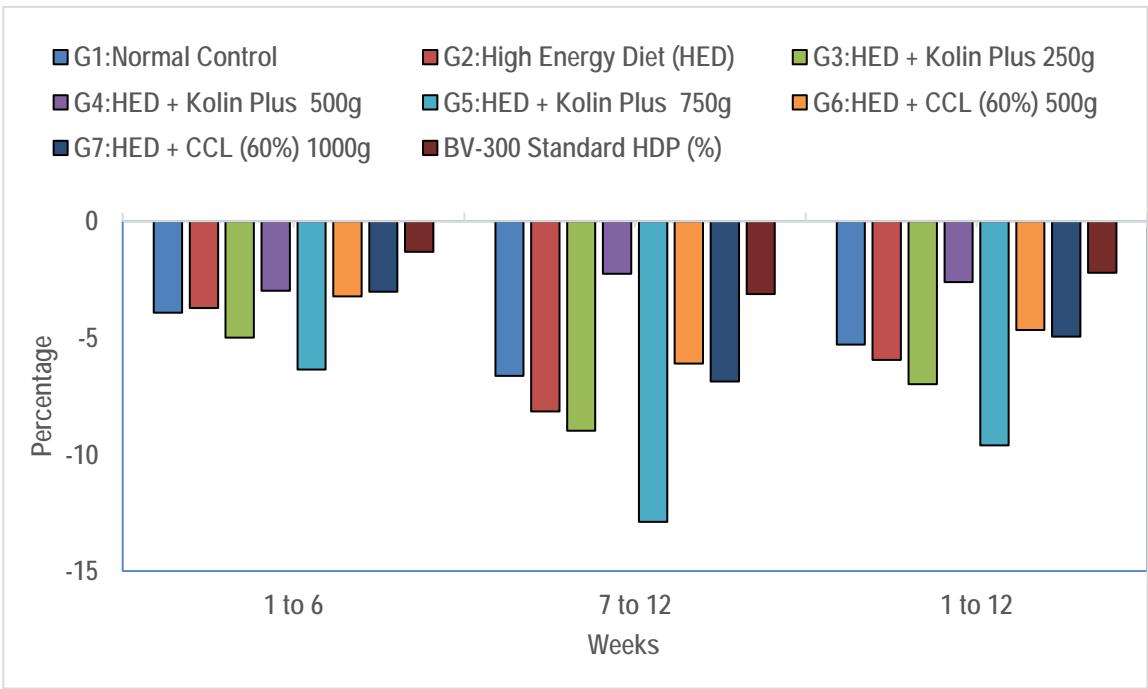 Figure 1: Difference in Egg Production (%) Compared to Baseline
POH - Polyherbal formulation; HED - High Energy Diet; CCL - Choline chloride
The histogram (Figure 1) showed that, the dip in egg production of POH (500g/ton) group in the first 6 weeks was similar as that of choline chloride $60\%$ (1000g/ton) fed birds. The average (7-12 weeks and 1-12 weeks) egg production loss was less in POH (500g/ton) supplemented birds as compared to all other groups.
### b) Feed intake
The results presented in table 4, showed that, the normalized $(1^{\mathrm{st}}$ to $6^{\mathrm{th}}$ week) total feed consumption of the layer birds of POH (500 g/ton) supplemented group was less when compared to the HED control group. However, the feed intake was higher than choline chloride $60\%$ (1000 g/ton) added group. The data of the normalized feed intake from 7 to 12 weeks revealed that POH (500 g/ton) supplementation resulted in low feed intake as compared to HED fed layers, but higher than choline chloride $60\%$ (1000 g/ton) fed group. Similar result was observed in case of normalized feed intake from $1^{\text{st}}$ to $12^{\text{th}}$ week duration.
Table 4: Average feed intake (g) of the birds
<table><tr><td>Group</td><td>Baseline</td><td>Average (1-6)</td><td>Diff</td><td>Average (7-12)</td><td>Diff</td><td>Average (1-12)</td><td>Diff</td></tr><tr><td>G1:Normal Control</td><td>108.9</td><td>112.8</td><td>3.93</td><td>112.7</td><td>3.75</td><td>112.74</td><td>3.84</td></tr><tr><td>G2:High Energy Diet (HED)</td><td>110.9</td><td>108.7</td><td>-2.20</td><td>110.3</td><td>-0.65</td><td>109.48</td><td>-1.43</td></tr><tr><td>G3:HED + POH 250g</td><td>113.1</td><td>109.0</td><td>-4.08</td><td>109.1</td><td>-4.03</td><td>109.04</td><td>-4.06</td></tr><tr><td>G4:HED + POH 500g</td><td>113.1</td><td>109.1</td><td>-3.12</td><td>111.0</td><td>-2.08</td><td>110.50</td><td>-2.6</td></tr><tr><td>G5:HED + POH 750g</td><td>109.7</td><td>109.8</td><td>0.15</td><td>109.4</td><td>-0.33</td><td>109.61</td><td>-0.09</td></tr><tr><td>G6:HED + CCL (60%) 500g</td><td>110.5</td><td>109.4</td><td>-1.10</td><td>109.0</td><td>-1.53</td><td>109.18</td><td>-1.32</td></tr><tr><td>G7:HED + CCL (60%) 1000g</td><td>113.6</td><td>109.0</td><td>-4.60</td><td>110.0</td><td>-3.65</td><td>109.48</td><td>-4.12</td></tr><tr><td>BV-300 Standard</td><td>112.0</td><td>112.0</td><td>0.00</td><td>113.5</td><td>1.50</td><td>112.75</td><td>0.75</td></tr><tr><td colspan="8">Values were expressed as Mean; POH - Polyherbal formulation; HED - High Energy Diet; CCL - Choline chloride</td></tr></table>
The normalized feed intake per egg in first 6 weeks duration was less in POH (500 g/ton) added group as compared to normal control and HED fed layers. But the feed intake of POH fed layers was observed as higher than choline chloride $60\%$ (1000 g/ton) supplemented group. The data obtained from the layers regarding the normalized feed intake per egg of week 7 to 12, exerted that POH (500 g/ton) supplemented birds consumed less feed as compared to choline chloride $60\%$ (1000g/ton) group. Similar results were observed in case of normalized feed intake per egg from $1^{\text{st}}$ to $12^{\text{th}}$ week of the experiment.
Table 5: Average feed intake (g) per egg of the layers
<table><tr><td>Group</td><td>Baseline</td><td>Average (1-6)</td><td>Diff.</td><td>Average (7-12)</td><td>Diff.</td><td>Average (1-12)</td><td>Diff.</td></tr><tr><td>G1: Normal Control</td><td>115.1</td><td>124.6</td><td>9.47</td><td>128.3</td><td>13.20</td><td>126.43</td><td>11.33</td></tr><tr><td>G2: High Energy Diet (HED)</td><td>118.3</td><td>120.8</td><td>2.53</td><td>129.4</td><td>11.05</td><td>125.09</td><td>6.79</td></tr><tr><td>G3:HED + POH 250g</td><td>119.4</td><td>121.7</td><td>2.28</td><td>127.5</td><td>8.08</td><td>124.58</td><td>5.18</td></tr><tr><td>G4:HED + POH 500g</td><td>121.0</td><td>121.7</td><td>0.70</td><td>121.9</td><td>0.88</td><td>121.79</td><td>0.79</td></tr><tr><td>G5:HED + POH 750g</td><td>114.3</td><td>122.7</td><td>8.43</td><td>132.0</td><td>17.72</td><td>127.38</td><td>13.08</td></tr><tr><td>G6:HED + CCL (60%) 500g</td><td>116.8</td><td>119.9</td><td>3.10</td><td>123.3</td><td>6.53</td><td>121.62</td><td>4.82</td></tr><tr><td>G7:HED + CCL (60%) 1000g</td><td>117.7</td><td>116.7</td><td>-1.03</td><td>122.8</td><td>5.05</td><td>119.71</td><td>2.01</td></tr><tr><td>BV-300 Standard</td><td>118.0</td><td>119.7</td><td>1.67</td><td>123.5</td><td>5.5</td><td>121.58</td><td>3.58</td></tr><tr><td colspan="8">Values were expressed as Mean; POH - Polyherbal formulation; HED - High Energy Diet; CCL - Choline chloride</td></tr></table>
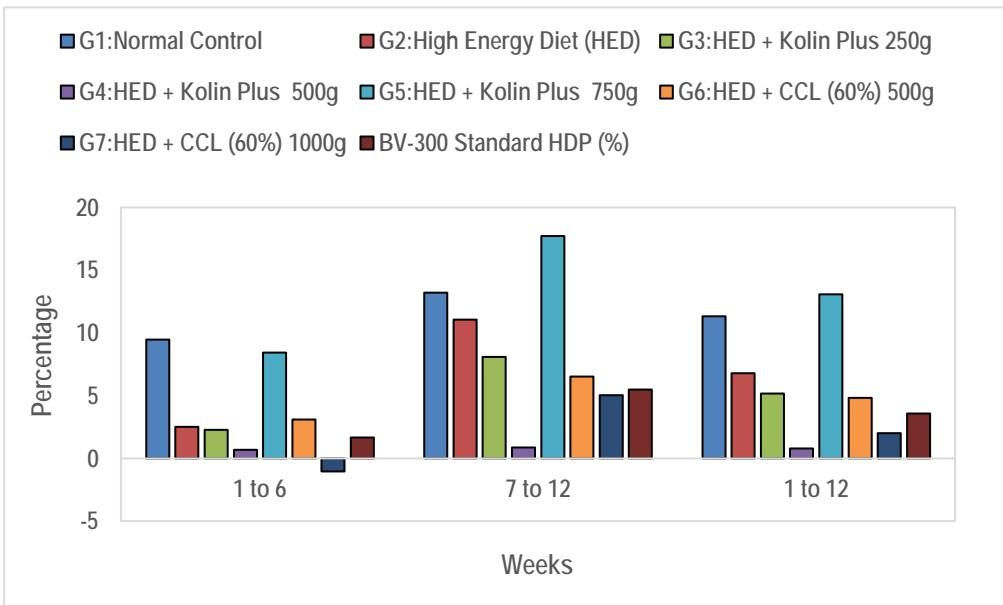 Figure 2: Difference in Feed Intake per Egg (%) compared to baseline
The normalized (1-12 weeks) feed intake per egg of POH (500g/ton) group was better than all the groups including choline chloride $60\%$ (1000g/ton) added diet fed layers.
### c) Egg shell defects (ESD)%
As shown in table 6, the average egg shell defects percentage of 1 to 6, 7 to 12 and 1 to 12 weeks of study duration showed values of within the range in all groups in case of before as well as after supplementation.
Table 6: Average percentage of egg shell defects of the layers
<table><tr><td>Group</td><td>Baseline</td><td>Average (1-6)</td><td>Average (7-12)</td><td>Average (1-12)</td></tr><tr><td>G1: Normal Control</td><td>0.840</td><td>0.570</td><td>0.350</td><td>0.490</td></tr><tr><td>G2: High Energy Diet (HED)</td><td>1.420</td><td>0.760</td><td>0.260</td><td>0.580</td></tr><tr><td>G3: HED + POH 250g</td><td>0.710</td><td>0.970</td><td>0.490</td><td>0.730</td></tr><tr><td>G4: HED + POH 500g</td><td>0.940</td><td>0.490</td><td>0.200</td><td>0.390</td></tr><tr><td>G5: HED + POH 750g</td><td>1.350</td><td>0.710</td><td>0.380</td><td>0.60</td></tr><tr><td>G6: HED + CCL (60%) 500g</td><td>1.670</td><td>0.580</td><td>0.50</td><td>0.630</td></tr><tr><td>G7: HED + CCL (60%) 1000g</td><td>0.390</td><td>1.020</td><td>0.840</td><td>0.890</td></tr><tr><td colspan="5">Values were expressed as Mean; POH - Polyherbal formulation; HED - High Energy Diet; CCL - Choline chloride</td></tr></table>
### d) Egg quality
The egg quality parameters like average egg shell density, Haugh unit, egg shell weight and egg shell thickness were assessed for 6 weeks and 12 weeks duration of the study and compared between the groups. There was no significant difference noticed between the groups (table 7 and 8).
Table 7: Average density $(\mathrm{g} / \mathrm{cm}^{3})$ and Haugh Unit (HU) of the eggs
<table><tr><td rowspan="2">Group</td><td colspan="3">Egg Density (g/cm3)</td><td colspan="3">HU</td></tr><tr><td>Baseline</td><td>6 weeks</td><td>12 weeks</td><td>Baseline</td><td>6 weeks</td><td>12 weeks</td></tr><tr><td>G1:Normal Control</td><td>1.086</td><td>1.077</td><td>1.067</td><td>72.17</td><td>76.83</td><td>75.50</td></tr><tr><td>G2:High Energy Diet (HED)</td><td>1.083</td><td>1.072</td><td>1.065</td><td>73.83</td><td>75.83</td><td>72.50</td></tr><tr><td>G3:HED + POH 250g</td><td>1.082</td><td>1.077</td><td>1.060</td><td>73.83</td><td>75.50</td><td>72.83</td></tr><tr><td>G4:HED + POH 500g</td><td>1.082</td><td>1.078</td><td>1.062</td><td>76.83</td><td>77.67</td><td>75.83</td></tr><tr><td>G5:HED + POH 750g</td><td>1.086</td><td>1.076</td><td>1.060</td><td>75.83</td><td>75.67</td><td>70.17</td></tr><tr><td>G6:HED + CCL (60%) 500g</td><td>1.083</td><td>1.078</td><td>1.059</td><td>73.67</td><td>73.67</td><td>70.00</td></tr><tr><td>G7:HED + CCL (60%) 1000g</td><td>1.089</td><td>1.074</td><td>1.066</td><td>80.00</td><td>63.17</td><td>70.50</td></tr><tr><td colspan="7">Values were expressed as Mean; POH - Polyherbal formulation; HED - High Energy Diet; CCL - Choline chloride</td></tr></table>
Table 8: Average eggshell weight (g) and egg shell thickness (mm)
<table><tr><td rowspan="2">Group</td><td colspan="3">Egg Shell Weight (g)</td><td colspan="3">Egg Shell Thickness (mm)</td></tr><tr><td>Baseline</td><td>6 weeks</td><td>12 weeks</td><td>Baseline</td><td>6 weeks</td><td>12 weeks</td></tr><tr><td>G1:Normal Control</td><td>6.169</td><td>5.890</td><td>5.084</td><td>0.413</td><td>0.372</td><td>0.378</td></tr><tr><td>G2:High Energy Diet (HED)</td><td>6.009</td><td>5.282</td><td>5.294</td><td>0.401</td><td>0.362</td><td>0.370</td></tr><tr><td>G3:HED + POH 250g</td><td>5.735</td><td>5.687</td><td>5.059</td><td>0.402</td><td>0.380</td><td>0.352</td></tr><tr><td>G4:HED + POH 500g</td><td>5.796</td><td>5.606</td><td>4.953</td><td>0.414</td><td>0.385</td><td>0.358</td></tr><tr><td>G5:HED + POH 750g</td><td>5.838</td><td>5.465</td><td>5.063</td><td>0.401</td><td>0.375</td><td>0.353</td></tr><tr><td>G6:HED + CCL (60%) 500g</td><td>5.778</td><td>5.589</td><td>4.965</td><td>0.404</td><td>0.380</td><td>0.357</td></tr><tr><td>G7:HED + CCL (60%) 1000g</td><td>5.992</td><td>5.431</td><td>5.219</td><td>0.404</td><td>0.370</td><td>0.365</td></tr><tr><td colspan="7">Values were expressed as Mean; POH - Polyherbal formulation; HED - High Energy Diet; CCL - Choline chloride</td></tr></table>
## IV. DISCUSSION
Choline is an essential nutrient for poultry and ubiquitously present in plant as well as animal cells. It is the fundamental component to build the structure of cells. Choline is required for synthesizing phospholipid and phosphatidylcholine that are obligatory for maintaining the integrity of cell membrane (Dänicke et al., 2006). Choline acts as methyl group donor to form methionine which has an important role in protein synthesis (Dänicke et al., 2006). It helps to metabolize fat and mobilize the excess lipid accumulated in the liver of the layers fed with HED (Beheshti Moghadam et al., 2021). In spite of numerous functions of choline, poultry birds cannot synthesize it in sufficient amount (Zhai et al., 2013). Therefore, choline supplementation is necessary in the diet of the birds. Synthetic choline chloride is routinely included as feed additive in layers' diet for a longer period. Although, it has lots of drawbacks like poor absorption rate, hygroscopicity, corrosiveness, non-uniform particle size, residual TMA formation (Selvam et al., 2018). Moreover, TMA concentration exceeding the permissible amount causes
severe respiratory distress leading to fatality among the birds. To get rid of these demerits, scientists are in quest of choline like feed additives of natural origin.
POH is a polyherbal compound developed by M/s Natural Remedies Pvt Ltd, Bengaluru, India. The formulation is comprised of the bioactive constituents of A. nilotica and C. longa plant parts. Both the plants are well known for their multifarious ethnomedicinal properties. The key chemical constituents present in A. nilotica are polyphenols like gallic acid and catechin (Malviya et al., 2011). It is a promising antioxidant and proficient in reducing the oxidative stress (Adewale, 2016). It upsurged the oxidative enzyme activity like catalase (CAT), superoxide dismutase (SOD), glutathione peroxidase (GPx), and glutathione-Stransferase (GST) in the liver of N-nitrosodiethylamine induced toxicity in rats (Malviya et al., 2011). Thus, it may act as hepatoprotectant and prevent lipid peroxidation. This statement was in agreement with the investigations done by Narayanan et al (Kannan et al., 2013). The treatment with the plant caused a significant reduction in cholesterol and triglyceride levels in the rodents (Kannan et al., 2013). C. longa is the rich source of phytopharmaceutical curcumin which is a natural antioxidant and hepatoprotectant. It scavenges the oxygen free radicals and enhances the activity of antioxidant enzymes. Previous literatures suggested that curcumin efficiently metabolized the dietary fat and accumulated lipid in liver (Labban, 2014; Tranchida et al., 2015). It may alter the fatty changes in liver, biliary hyperplasia and CCI4 induced hepatic injury in rats (Akram et al., 2010). In an experiment, hot water extract of C. longa showed a preventive effect against hepatic lipid deposition (Mun et al., 2019). Thus, the choline-like property of POH may exhibit a potential role in fat metabolism and lipotropic effect.
In the present study, POH supplementation in the diet of the layers of 43 to 55 weeks of age showed promising performance among the birds. HED in layer birds results in accumulation of fat in the abdomen and hepatic cells (Shini et al., 2019). However, previous studies also corroborated that herbal choline was a good alternative of synthetic choline chloride and might efficiently metabolize the hepatic fat of the birds (Gangane et al., 2010). Furthermore, it was reported that POH is efficient in fat metabolism and mobilization from hepatocytes to egg cells and improves the production rate. POH at a dose range of $500\mathrm{g / ton}$ in feed showed better egg production percentage (normalized $\%$ ) as compared to choline chloride $60\%$. In addition, the results showed that normalized feed intake per egg percentage, in case of POH (500 g/ton) group was less than choline chloride fed birds. These results revealed that POH might efficiently enhance the performance of the layers. However, the egg quality based on egg density, HU, egg shell weight and egg shell thickness showed no significant differences between the groups.
The bioactive compounds present in plant parts of A. nilotica and C. longa of POH helped in fat metabolism and prevented abdominal fat deposition leading to optimal egg production.
## V. CONCLUSION
In brief, POH at a dose range of $500\mathrm{g / ton}$ as a natural feed supplement exhibited better performance among the layers of 43 to 55 weeks of age. The cumulative performance parameters viz. percentage of egg production, feed intake (g/egg) were improved following supplementation of POH (500g/ton) as compared to normal control and HED control groups and the performance of POH was similar to CCL $60\%$ (1000g) group. However, no significant change in egg quality parameters was observed between the groups. POH (500 g/ton) exerted choline like characteristics and an ideal replacement of synthetic choline chloride $60\%$ (1000 g/ton) in BV 300 layers fed with HED.
### ACKNOWLEDGEMENT
Generating HTML Viewer...
References
17 Cites in Article
Alli Adewale (2016). Evaluation of Root Extract of Acacia nilotica on Haematological and Lipid Profile in Rats.
M Akram,A Ahmed,K Usmanghani,A Hannan,E Mohiuddin,M Asif (2010). Curcuma Longa and Curcumin: a Review Article.
M Beheshti Moghadam,A Aziza,G Cherian (2021). Choline and methionine supplementation in layer hens fed flaxseed: effects on hen production performance, egg fatty acid composition, tocopherol content, and oxidative stability.
Prajapati Chaudhari,K Lunagariya,D Sorathiya,P Patel,Nayak (2017). an Importance of Choline Chloride for Poultry and Cattle: an Overview.
S Dänicke,Karl-Heinz Ueberschär,K Reese,S Weigend (2006). Investigations on the effects of rape oil quality, choline and methionine concentration in diets for laying hens on the trimethylamine content of the eggs, on trimethylamine metabolism and on laying performance.
G Gangane,N Gaikwad,K Ravikanth,S Maini (2010). The comparative effects of synthetic choline and herbal choline on hepatic lipid metabolism in broilers.
Narayanan Kannan,Kunnathur Sakthivel,Chandrasekaran Guruvayoorappan (2013). Protective Effect of<i>Acacia nilotica</i>(L.) against Acetaminophen-Induced Hepatocellular Damage in Wistar Rats.
Khairani Khairani,Sumiati Sumiati,K Wiryawan (2016). Egg Production and Quality of Quails Fed Diets with Varying Levels of Methionine and Choline Chloride.
L Labban (2014). Medicinal and pharmacological properties of Turmeric (Curcuma longa): A review.
S Malviya,S Rawat,A Kharia,M Verma (2011). Medicinal attributes of Acacia nilotica Linn.-A comprehensive review on ethnopharmacological claims.
Jeongeun Mun,Shintae Kim,Ho-Geun Yoon,Yanghee You,Ok-Kyung Kim,Kyung-Chul Choi,Yoo-Hyun Lee,Jeongmin Lee,Jeongjin Park,Woojin Jun (2019). Water Extract of Curcuma longa L. Ameliorates Non-Alcoholic Fatty Liver Disease.
C Parsons,R Leeper (1984). Choline and methionine supplementation of layer diets varying in protein content.
Ramasamy Selvam,Marimuthu Saravanakumar,Subramaniyam Suresh,C Chandrasekeran,D’souza Prashanth (2018). Evaluation of polyherbal formulation and synthetic choline chloride on choline deficiency model in broilers: implications on zootechnical parameters, serum biochemistry and liver histopathology.
A Shini,S Shini,W Bryden (2019). Fatty liver haemorrhagic syndrome occurrence in laying hens: impact of production system.
Nitin Singh,Pankaj Kumar,Dimple Kaparwan (2019). EFFECT OF NATURAL CHOLINE ON FEED UPTAKE, BODY WEIGHT AND FCR IN BROILERS COMPARED TO SYNTHETIC CHOLINE CHLORIDE..
Fabrice Tranchida,Laetitia Shintu,Zo Rakotoniaina,Léopold Tchiakpe,Valérie Deyris,Abel Hiol,Stefano Caldarelli (2015). Metabolomic and Lipidomic Analysis of Serum Samples following Curcuma longa Extract Supplementation in High-Fructose and Saturated Fat Fed Rats.
Q Zhai,X Dong,J Tong,Y Guo,Y Bao (2013). Long-term effects of choline on productive performance and egg quality of brown-egg laying hens.
No ethics committee approval was required for this article type.
Data Availability
Not applicable for this article.
How to Cite This Article
Saravanakumar Marimuthu. 2026. \u201cEvaluation of Polyherbal Formulation at Different Dose Levels on Egg Production and Egg Quality Parameters in White Leghorn layers fed with High Energy Diets\u201d. Global Journal of Medical Research - G: Veterinary Science & Medicine GJMR-G Volume 22 (GJMR Volume 22 Issue G2): .
Explore published articles in an immersive Augmented Reality environment. Our platform converts research papers into interactive 3D books, allowing readers to view and interact with content using AR and VR compatible devices.
Your published article is automatically converted into a realistic 3D book. Flip through pages and read research papers in a more engaging and interactive format.
Choline is an essential nutrient in the poultry diet. It plays a vital role in the metabolism and mobilization of accumulated abdominal fat. In layer birds, it helps in improving the rate of egg production, egg quality and prevents fatty liver syndrome. However, synthetic choline has lots of demerits that need to be addressed. To mitigate the drawbacks of choline, the present study was conducted to evaluate the impact of Kolin Plus TM , a polyherbal formulation (POH) manufactured by M/s Natural Remedies Pvt Ltd, Bengaluru, India, on the performance of the White Leghorn (WL) layer poultry birds. In the current trial, WL layer hens at the age of 41 to 55 weeks were distributed into 7 (G1 to G7) study groups having 6 replicates (20 birds/replicate) per group. All groups (G2 to G7) except the normal control group (G1) were supplied with high energy diet (HED).
Our website is actively being updated, and changes may occur frequently. Please clear your browser cache if needed. For feedback or error reporting, please email [email protected]
Thank you for connecting with us. We will respond to you shortly.
Lorem ipsum dolor sit amet, consectetur adipiscing elit. Ut elit tellus, luctus nec ullamcorper mattis, pulvinar dapibus leo.
Evaluation of Polyherbal Formulation at Different Dose Levels on Egg Production and Egg Quality Parameters in White Leghorn layers fed with High Energy Diets