I. BACKGROUND OF THE STUDY
The Ready-Made Garment (RMG1) industry is the number one export earner of Bangladesh. In the 2017-18 Fiscal Year (FY), a total of US$ 30.15 Billion was generated in exports made by the garment industry. It also employed more than 4.5 million workers dispersed among 4560 factories involved in exports of Ready Made Garments all over the world.
Currently, the sector accounts for more than 84 percent of total exports in Bangladesh (Textile Today, January 26, 2019). After the liberation war, it is the garment sector that has become the backbone of our economy by becoming the second-largest garment exporter in the whole world (with a growth rate of 8.7 percent). In recent years the industry has boomed
The textile industry of Bangladesh says a significant story of the country's prosperous transformation towards having a main export-oriented economy. The factors that contributed to the successful marching of Bangladesh in this sector are global trading agreements, cheap labor cost, government policy support, and vigorous private entrepreneurship. All these things have facilitated Bangladesh to gain a fine share in the global garment business.
From the early 1990s onwards the RMG¹ industry has become the biggest foreign exchange earning sector in Bangladesh's economy. In 2005-06, Bangladesh earned nearly 30.88 billion in 2015-162 FY² and 50 billion by 2021.
In Bangladesh, fire mishaps in export-oriented garment factories continue to kill workers, most of them are usually women and children. In recent time's two accidents in Savar Rana plaza and Ashulia Tazreen Garments near Dhaka left about 2000 deaths. According to the observers, such deaths cannot be regarded as accidental; these are murders, caused by the negligence of the factory authorities (The Daily Star, May 2013). There is a growing concern that labor rights are mostly violated in the Bangladeshi RMG industry.3
The empirical evidence suggests that labor rights have not yet been established in the RMG industry, with the last one took place in January 2019, between the workers and authorities over pay grades. Bangladesh is committed to secure labor rights for the well-being of laborers by ILO membership. But the result observed in the RMG industry is simply unsatisfactory which mostly shows the breach of such commitment(s).
Researchers, journalists, and labor rights activists claim that the damage would not happen if the government could have formulated and implemented a comprehensive and effective labor law that would incorporate labor rights in the RMG industry. Thus the realities on the ground demand fresh scrutiny and answer to the existing barriers and find some ways to make the RMG textile industry more sustainable.
II. INTRODUCTION
The Readymade Garments industry is one of the fastest-growing industries in Bangladesh. The UK (Parker, 2011) is one of the most vital markets for this industry from Bangladesh including but not limited to Marks and Spencer, H&M, Next. Eighty percent import of the UK (Parker, 2011) is generally done from the South Asian region.
Initially when this industry has been started to be in operation total share of export was just.0.02 (Bhattacharya & Rahman, 1999) percent but that share has become 67.92 (Bhattacharya & Rahman, 1999) percent within only twenty years and this rise demonstrates the growth of this industry simultaneously.
Despite this growth due to the nature of our economy or other heterogeneous reason, this industry is viewed as a starter (Saxena, 2014) in the south Asian region. And this to be in starter can be well linked with the taking of condition (M. R. I. Khan & Wichterich, 2015) of our economy. The expansion of the industry can be illuminated by the availability of low-cost labor, particularly women, and simple technology essential for the industry (Khosla, 2009), and also by the substantial support provided by the government, including duty drawback facilities, tax holidays, cash assistance, income tax rebates, creation of export processing zones and zero tariffs on machinery inputs. (Ahmed, 2009; Muhammad, 2007; USAID, 2007; Rashid, 2009).
Due to being an overpopulated country as well as a developing state, Bangladesh has abounded with labor and most of them including both males and females are ready to work with the minimum they are offered. The expansion of the Ready-Made Garments sector in this country is closely associated with such an abundance of cheap labor as well.
The current scenario of this sector is both frustrating and optimistic. The frustration comes when
we are taking the safety issues, initiatives, environmental pollution into consideration, and the optimism come when we are taking the growth of this sector under consideration as well.
And a clear imbalance is observed in the core of these two and the sustainability of this sector depends on how this imbalance is treated. The stakeholders of the RMG industry are dissimilar – employees, government, the community in which it functions, media – and businesses have restricted resources and capabilities to meet their demands (Freeman, 1984).
Knowing these stakeholders, their power and interests, and having a good relationship with them is critical for better management, strategic planning, and long-term sustainability of the industry. However, RMG industries in developing countries have traditionally been driven by multinational buying companies and their requests (Islam and Deegan, 2008) rather than managing relationships with other key stakeholders, particularly the employees.
Research directs the presence of a conflict between international buyers' purchasing practices – claim for lower-priced products within a short period – and their persistence in obeying with codes of conduct (Barrientos, 2013). Many suppliers involve in reckless business practices that favor the first at the cost of the second, such as lowering wages, saving costs, and making workers engage in overtime (Lund-Thomsen and Lindgreen, 2014; Ruwanpura and Wrigley, 2011; Tokatli et al., 2008).
Major Bangladesh laws such as the Company Act 1994, Bangladesh Labor Law 2006, Environmental Conservation Act 1995, and Environmental Preservation Policy 1997 are not adequately focused on compliance with CSR (Nasrullah and Rahim, 2014; Rahim, 2012). As a result, the corporate regulation framework is not yet in a position to stimulate the well-being of stakeholders other than the government and shareholders (Rahim, 2012).
III. LITERATURE REVIEW
Due to the cheap labor and tangible capital is considered as one of the primary sources of competitive advantage, China, currently, the largest global textile and garments exporter has been facing a shortage of workers due to elevated labor costs, forcing it to shift into heavy and high tech industries instead of garment manufacturing (Textile Today, 2017).
It has significantly increased competition among other textile manufacturing countries however the international retailers are still trying to maintain profit margin similarly by finding cheaper locations to outsource their garments. Despite China, Sri Lanka, and
India shifting away from the industry seeking cheap labor, Bangladesh cannot indefinitely exploit the cheap labor costs due to the increasing demands of workplace safety and compliance demands from the buyers concerning international standards, which has increased the cost of production for Bangladesh (Khatun, 2017) The tragedy involving fire in Tazreen Garments in 2012 and the collapse of the Rana Plaza building in 2013 highlighted the dire need of safety compliances (Chowdhury et al., 2018) and increase of productivity through improved working environments, job satisfaction, etc. in the industry (Abdullah, 2009). Such tragedies have not only created moral outrage from around the world and reinforced the significance and the necessity for CSR than ever before but have also exposed the laws in labor-based export industries such as the RMG industry in developing countries.
The recent tragedies in developing countries have activated a range of reform initiatives and suggestions from a wide range of domestic and international stakeholders (Yardley, 2012c), but the advancement is slow. The significance of economic globalization lies in its "ability" of breaking down the national economic barriers for the spread of international trade, expansion of financial and production activities, and the rising power of MNC s and international financial institutions (Khor, 2000).
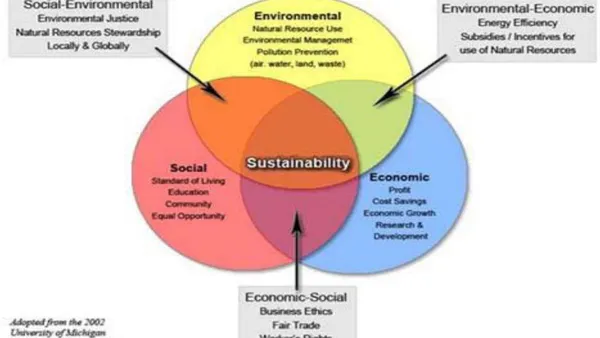
The concern is that globalization, particularly in developing countries, is not an indigenous procedure from either the economic or the political standpoint (Hirst and Thompson, 1996; Wade, 1996). In our study, a model Adopted from (University of Michigan, 2002) has been considered while developing the conceptual framework and questionnaire.
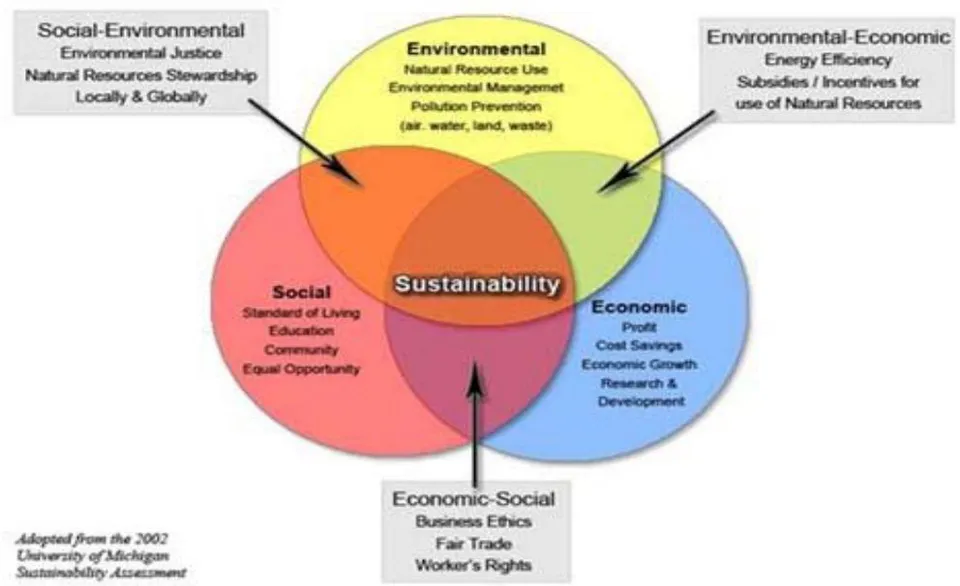
a) Social and Economic concern
The certainties of globalization and harder competitive conditions, as well as the development in the power of corporations, put pressure on businesses to scrutinize their social responsibilities and to incorporate responsible practices with their business operations (Adams, 2008; Burke and Logsdon, 1996; UNCTAD, 2011).
In the Western world, auditing, reporting, and programming CSR is now an industry in its own right (Brown, 2011; Dusuki, 2008); the same cannot be said of developing countries. CSR has emerged as severe distress for the survival of this labor-intensive, export-oriented industry and Bangladesh like other developing countries is now facing the encounter to address these disputes for the sustainable growth of the industry
(Rahim and Wisuttisak, 2013; Nasrullah and Rahim, 2014).
Consumers are aware of the procedures followed to produce the products regarding what they would wear (Dickson, 1999; Stanforth and Hauck, 2010). To keep the companies' brand value safe, the fashion and textile retailers require the suppliers to obey certain codes of conduct to avoid scandal risks, which might also influence their financial performance in the long run. (Welford and Young, 2002; Parry et. al., 2002).
The focus on fashion and textiles industries for the organizational health and safety (OHS) lies on any particular subsector, for example, pregnant clothing workers in developing countries, etc. (Barnes and Kozar,
- Due to scarcity of workplace safety (De Koster et al., 2011), the limited studies of Organizational Health and Safety (OHS) focuses on the safety environment and safety culture in organizations (Baer and Frese, 2003; Das et al., 2008; Hofmann and Stetzer, 1998; Katz-Navon et al., 1988; Naveh et al., 2005; Smith-Crowe et al., 2003; Zohar, 1980), where the worker's safety observation is a vital interpreter of the safety performance for the organization(s). The common thread that explicitly or implicitly runs through these studies is the argument that there is a need for "surrogate accountability" in developing countries with fragile institutions, high corruption levels, and the incompetence of governments to implement code of practice (cf. Belal et al., 2015; Rubenstein, 2007).
From this point of view, corporations and factory owners are characterized as "power wielders" who repeatedly disrupt laws, protocols, and agreements. Accountability holders such as workers and local communities are incapable to avoid the breaches of laws and/or social standards due to substantial power asymmetry and other disadvantageing factors such as extreme poverty and vulnerability, lack of education, etc.
Any accountability system needs to be defined by the following six dimensions: "who, to whom, about what, through what processes, by what standards and with what effect" (Mashaw, 2005, p. 17). In cases where accountability and auditing practices are externally enacted on developing country suppliers, the pressure between transparency, and responsibility may be further intensified.
This is because, by pressurizing the suppliers to obey with codes or standards, one enforces on the corporation the role of a surrogate accountability holder. However, given the distance between multinational enterprises (MNEs) and their suppliers (both geographical and psychic), the former most likely lack enough understandings of the context-dependent socially grounded requirements of the workers (cf. Belal and Roberts, 2010; Lund-Thomsen, 2008; Sinkovics et al., 2014).
However, investigations display that the effect of social upgrading is rather unevenly distributed between different groups of workers, such as skilled and unskilled (e.g. Barrientos et al., 2011), regular and irregular (e.g. Barrientos and Kritzinger, 2004; Rossi, 2011), and male and female (e.g. Barrientos et al., 2005). Most suppliers tend to be unwilling to permit rights that encounter deeply embedded labor relations or social means, hoping to avoid interference to the production process. As a result, concerns such as gender discrimination, freedom of speech, and workers' skills development are still mostly abandoned.
The accountability of the corporations and factory holders in the developing countries are breached frequently, and due to the fragile institutions, high
exploitation levels, the incompetence of governments to implement regulations, it has been made difficult to prevent the breaches of laws and/or social customs for the power asymmetry and other factors like poverty, vulnerability, etc. (Belal et al., 2015; Rubenstein, 2007) Despite increasing and imposing the accountability and auditing practices on the developing country suppliers, the tension between transparency and responsibility might get intensified since they are pressurized to fulfill with codes or standards but the buyers get to go without having deeper insights on the necessity of more prices to be paid to acquire funds to comply with the required codes and standards existing thoroughly.
(Belal and Roberts, 2010; Lund-Thomsen, 2008; Sinkovics et al., 2014). The analysis yielded two key findings (Sinkovics et al., 2016). First, external pressures on the firms to implement the measurable/tangible measurements of the BSCI and the Accord accomplished their projected purpose, that is, the establishment of a safer, better equipped, and more comfortable working environment. Nevertheless, there have been several unintended consequences.
Due to the high cost of compliance, the case companies were required to dismiss initiatives that had furnished to some of the socially grounded necessities and urgencies of workers. A closer examination of these initiatives through the lens of social value conception (Sinkovics et al., 2015) directed to the following reflection: while certain compliance initiatives can be categorized as social improvement and thus fulfill their intended resolution, they may at the same time abolish prevailing social value and lead to the damage of certain social, economic, and cultural rights.
Second, to protect the substantial cost of compliance and to guarantee the survival of their companies, the owners have invested in technological upgrading. At the same time, they have augmented the pressure on the workforce to further enrich the efficiency of production. Despite this economic elevation, there has been no development in workers' skills.
Rather, it has caused an increase in the power discrepancy and the elimination of unskilled workers from the job market. (Sinkovics et al., 2016) As a result of the high cost of compliance, the case firms had also been forced to withdraw services such as free cooked lunches and prayer facilities that had been highly appreciated by the workers.
These are all examples of the demolition of previously existing social value, resulting in the loss of social, economic, and cultural rights (Sinkovics et al., 2015). The cases also aid as an illustration of the prioritization of suggested needs over felt needs by compliance mechanisms (cf. Goldewijk and De Gaay Fortman, 1999). The firms have to develop themselves financially and managerially with their limited resources by properly adapting to the diverse range of regulations along with the costs of compliances acquired.
To use the costs of compliance as an advantage, proper promotion is required by them along with increasing awareness through campaigns to make the market more competitive for the future by proper implementation of compliance. (Gordhan K. Saini, 2011)
b) Social and Environmental concern
With globalization and increased awareness of the environmental, ethical and social impacts of trade, consumers in developed countries rely on consumer organizations to provide them with independent, comparative and verifiable information on goods and services in terms of safety, performance, quality, and value for their money, enabling them to make choices and purchase decisions. (Salvador, 2007). Belal et al.'s (2015) study suggest that the current growth in Bangladesh's garment industry is mostly because it involves a highly polluting manufacturing process.
From this, it follows that, in their search for profit maximization, MNCs are not only outsourcing their production but also the pollution and labor exploitation that is "necessary" to preserve costs low. Social upgrading is defined as the practice of enhancement of the rights and privileges of workers, as social actors, which increase the value of their employment (Barrientos et al., 2011). Barrientos et al. (2011) furthermore specify that social upgrading has two components: measurable standards and enabling rights.
Measurable standards are the more quantifiable aspects of employment, such as wages, working conditions, and working hours. Empowering rights deal with more sophisticated matters, such as discrimination, the sovereignty of association, freedom of speech, and career development.
c) Environmental and Economic concern
Key features for environmentally sustainable product innovation includes knowledge of market, law, and legislation, inter-functional collaboration, and innovation-oriented learning and R&D investments Besides, knowledge on environmental laws and regulations are as well as policies concerning financial issues and information initiatives involving green innovation are necessary as well. (Medeiros et al., 2014).
Sustainable product design is a design philosophy and practice in which products contribute to social and economic welfare, have trivial influences on the environment, and can be manufactured from a sustainable resource base, which is the inclusive concept of eco-terms (Brezet, et al., 1997; Fuad and Luke, 2002; Simon, et al., 1998) due to the deterioration of the overall conditions in our surroundings.
Life Cycle Assessment (LCA) which is the evaluation of the environmental aspects of the production system through all stages of its life cycle,
has been developed to help environmental management in sustainable development in the long term. Sustainable development requires improvements in eco-efficiency; how we use energy and materials and how we minimize waste (Niinimäki, 2006).
The life cycle consists of the extraction of raw materials, the design and formulation process, manufacturing, packaging, distribution, use, re-use, and waste disposal, ultimately increasing the responsibilities of producers, which do not end at the factory gate (Fuad and Luke, 2002; Jensen et al., 1997). A textile factory's wastewater must be well treated from toxins, harmless chemicals and substances, dye, and heat; and the wastewaters should be treated using purification plant(s).
Using fewer chemicals means further savings in the production processes and financial benefit can also be achieved since less waste is generated and a fraction of hazardous waste is also reduced. Besides, dealing efficiently with energy, water, and auxiliary materials during production can save a considerable amount of costs (Talvenmaa, 1998).
Environmental efficiency, or eco-efficiency, means reusing the product, recycling the material after use, and producing less waste in the end (Rissa, 2001). While approaching sustainability, other aspects have to be estimated: how the natural dye has been cultivated, what kind of textile materials have been used, the textile processing itself, what kind of helping agents and chemicals have been used in the dyeing process, wastewater treatment and so on (Niinimäki, 2006).
Researchers suggested that an integration of the company's core business activities and specific strategies toward sustainability is necessary to build its competitive advantages (Galbreath, 2006). For example, some companies may take the ethically oriented approach toward sustainability where actions might be demonstrated toward their stakeholders rather than market transactions (Kleinrichert, 2008).
Others may take the business or economic approach, involving relationships between CSR programs and financial performance (Godfrey, 2005). Textile is a labor-concentrated industry, which time and again has experienced questions around poor working circumstances, child labor, overtime employment, employee manipulation, low wages, and others (Scott, 2006) as well as the negative environmental effects, such as soil, water, and air pollution while growing and manufacturing fibers, producing and finishing textiles and even during transportation (Borghesi and Vercelli, 2003; De Brito et al., 2008; Hanzl-Wei_, 2004; Myers and Stolton, 1999). Sustainability could be a source of competitive advantage for companies. By creating sustainability a part of companies' core business practices, companies can use such strategies to their competitive advantage in the industry. Thus, companies may need to evaluate their need to contribute to
sustainability, integrate sustainability as their core business activities, and build competitive advantages over others.
(Goswami and Brookshire, 2015) Environmental impacts lead to industries implementing or being subject to different standards for environmental protection, levels of environmental spending, environmental sanctions, and stakeholder pressures to which companies in the industries have to respond. The environmental threat of the industry is material to investors due to its financial implications (e.g. implicit environmental liabilities, see, Peters and Romi, 2013) and the probable long-term effects on investment portfolios The objective of the Study: The sustainability of the Bangladesh textile industry previously was only associated with social or environmental or economic aspects. Many studies are there who based the sustainability of the textile industry either on social or environmental or economic performance but there is no study that shows the dependency of the sustainability of the textile industry on the social, environmental, and economic concern simultaneously.
So our objectives are:
- Seek to identify the factors that variously obstruct and promote sustainability within the textile industry of Bangladesh from the perspective of stakeholders at different levels.
e) Conceptual Framework
- Enhance the opportunities of training managers employed in the textile industry of Bangladesh or elsewhere.
d) The methodology of the Study
The data collected for this study followed both qualitative and quantitative data collection methods and the questionnaire used to collect the necessary data is semi-structured. The sample size of the data used in this study is 100. The sources of data used in the study are primary and secondary.
Primary sources involved in-depth interviews of the mid-level managers of textile related companies, officials of the regulatory bodies of textile in Bangladesh, and govt. official(s). Secondary sources involved the study of scholarly websites, journals, articles, and research papers. The measurement of data has been detailed for the qualitative part, however, for the quantitative segment, empirical statistical analysis, and descriptive analysis has been conducted using SPSS. Conceptual Framework: / Sustainability of textiles has been considerably dependent on three variables, i.e. - Social Compliances, Environmental compliance, and Economic Compliances. Again, Social Compliances are divided into six sub-variables - Health, Safety, Equality, Empowerment of Women, Legal Practice, and Ethical Practice.
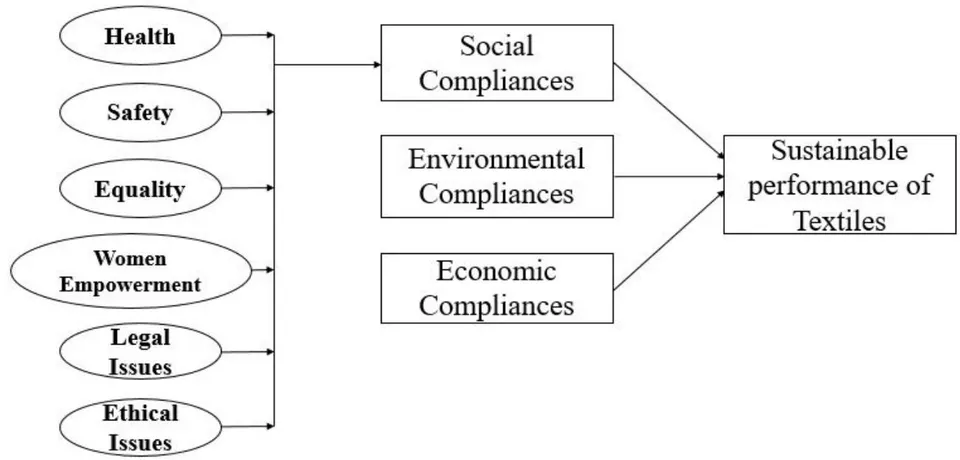
The sustainability of textiles has been considerably dependent on three variables, i.e. - Social Compliances, Environmental compliance, and Economic Compliances. Again, Social Compliances are divided into six sub-variables - Health, Safety, Equality, Empowerment of Women, Legal Practice, and Ethical Practice.
f) Research Hypothesis
H1: Social, Environmental, and Economic concerns have a positive impact on the Sustainability of Textiles in Bangladesh.
IV. ANALYSIS AND FINDINGS
a) Mean, Standard Deviation, and Relative Importance of Means' of Variables
Based on the answers of the respondents from the Questionnaire the following table has been generated. The Questionnaire has four parts: social, environmental, economic, and others portion. Each portion has both open-ended and closed-ended
questions To determine the relative importance of the mean(s) of all the variables, we have divided it into three categories on a scale of 1 to 5 (1 being the minimum value):
i) Low ii) Medium iii) High
Table 1
| Variable Type | Variable | Mean | Relative Importance of Mean | Standard Deviation |
| Independent | Social Concerns | 3.88 | High | 0.51 |
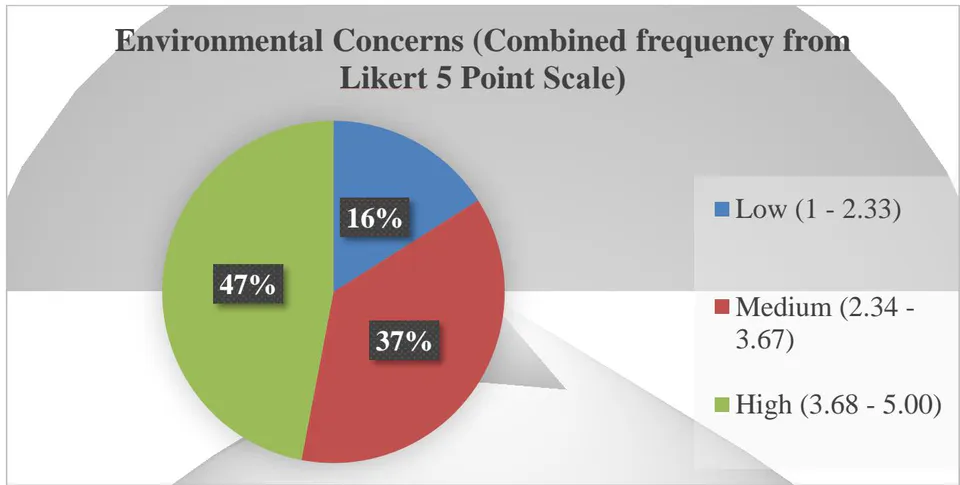
| Independent | Environmental Concerns | 3.73 | High | 0.72 |
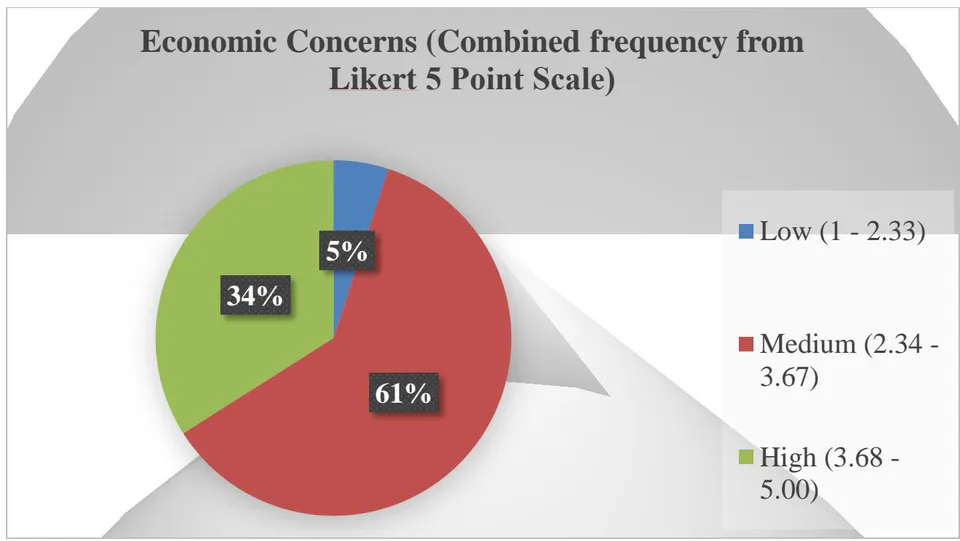
| Independent | Economic Concerns | 3.61 | Medium | 0.58 |
| Dependent | Sustainability of Textiles | 3.66 | Medium | 0.58 |
According to the relative importance of mean, social and environmental concerns are comparatively in a better stage compared to the economic concerns in the textile industry of Bangladesh. However, the difference between the mean of three independent variables are not too high (<0.3), and the mean of them are close to or currently in the medium range according
Pearson Correlation
to the relative scale of importance. The dependent variable has been at the edge of the medium and higher level of the relative importance of mean, which depicts the requirement of more attention towards the factors responsible to influence the sustainability of textiles in a positive direction.
Table 2
| Correlations | |||||
| Social | Environmental | Economic | Sustainability | ||
| Social | Pearson Correlation | 1 | 0.106 | 0.137 | 0.519 ** |
| Significance (2 tailed) | 0.294 | 0.175 | 0.000 | ||
| N | 100 | 100 | 100 | 100 | |
| Environmental | Pearson Correlation | 0.106 | 1 | 0.435 ** | 0.615 ** |
| Significance (2 tailed) | 0.294 | 0.000 | 0.000 | ||
| N | 100 | 100 | 100 | 100 | |
| Economic | Pearson Correlation | 0.137 | 0.435 ** | 1 | 0.648 ** |
| Significance (2 tailed) | 0.175 | 0.000 | 0.000 | ||
| N | 100 | 100 | 100 | ||
| Sustainability of Textile | Pearson Correlation | 0.519 ** | 0.615 ** | 0.648 ** | 1 |
| Significance (2 tailed) | 0.000 | 0.000 | 0.000 | ||
| N | 100 | 100 | 100 | 100 | |
According to table 2, Social, Environmental, and Economic concerns are highly correlated with the sustainability of textiles at a significance level of 0.01 or .
Table 3
| Reliability Statistics | |
| Cronbach's Alpha | Number of Items (N) |
| 0.726 | 4 |
Cronbach's alpha has been used to check the reliability of the collected data. Cronbach's alpha indicates overall reliability over a variable set. The acceptable standard value of Cronbach's alpha is 0.70
Regression Analysis
or more. In this study, the value of Cronbach's alpha is 0.726, which depicts a considerable level of internal consistency for the scale of this sample.
Table 4
| Model Summary | ||||
| Model | R | R Square | Adjusted R Square | Std. Error of the Estimate |
| 1 | 0.854 | 0.729 | 0.721 | 0.30737 |
| a. Predictors: (Constant), Economic, Social, Environment | ||||
The coefficient of determination is 0.729. It means that the model fits the data appropriately as the dependent variable is explained by or approximately by the independent variables.
Table 5
| ANOVA | |||||
| Model | Sum of Squares | df | Mean Square | F | Significance |
| 1. Regression | 24.450 | 3 | 8.150 | 86.264 | 0.000 |
| Residual | 9.070 | 96 | 0.094 | ||
| Total | 33.520 | 99 | |||
| a. Dependent Variable: Sustainability of Textilesb. Predictors: (Constant), Economic, Social, Environment | |||||
Table 5 represents that the statistical significance of the regression model is 0.000, which is less than 0.05 for a higher F (=86.264) value. It means that all the independent variables collectively and simultaneously can significantly influence the dependent
variable, the sustainability of textiles. Therefore, is rejected. That means, Social, Environmental, and Economic concerns can have a positive impact on the sustainability of the textile industry in Bangladesh.
Table 6
| Coefficients | |||||||
| Model | Unstandardized Coefficients | Standardized Coefficients | t | Significance | Collinearity Statistics | ||
| β | Std. Error | Beta | Tolerance | VIF | |||
| 1 (Constant) | -0.910 | 0.298 | -3.056 | 0.003 | |||
| Social | 0.483 | 0.062 | 0.420 | 7.823 | 0.000 | 0.984 | 1.016 |
| Environment | 0.313 | 0.048 | 0.387 | 6.560 | 0.000 | 0.818 | 1.222 |
| Economic | 0.424 | 0.059 | 0.422 | 7.120 | 0.000 | 0.814 | 1.229 |
| a. Dependent Variable: Sustainability of Textiles | |||||||
From table 6, the following regression equation can be developed.
Regression Equation
Sustainability of Textiles -0.910 + (0.483xSocial Concerns) + (0.313xEnvironmental Concerns) + (0.424xEconomic Concerns)
The value of the coefficient from the above-mentioned Coefficient table indicates, how many units of dependent variable increases or decreases for a single unit increase in each independent variable. Here, the "1" unit increase in Social Concerns results in a "0.483" unit increase of Sustainability of Textiles. Similarly, a "1" unit increase in Environmental Concerns will increase the Sustainability of Textiles by "0.313" units and Economic Concerns by "0.424" units. Here, Social, Environmental, and Economical concerns all individually have a statistically significant impact on Sustainable textiles as their individual absolute t values are more than 2
(according to the 2-t thumb rule). No multicollinearity in this regression model as the values of VIF for all independent variables fall within the range of 1 to 10.
b) Findings
There are barriers and success of the textile industry of Bangladesh according to different stakeholders' level. They are described below:
c) Barriers
The barriers of the three independent variables, i.e., social, environmental, and economic concerns are as follows:
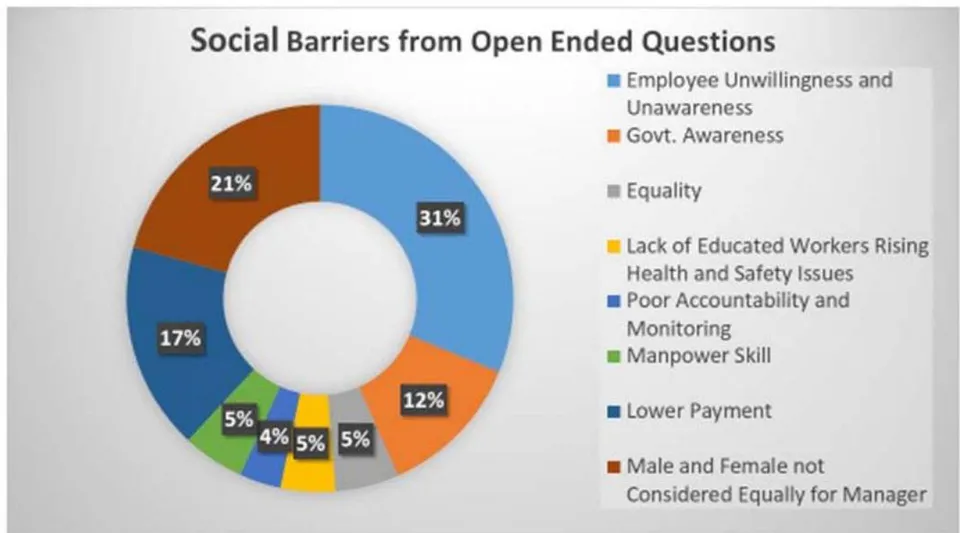
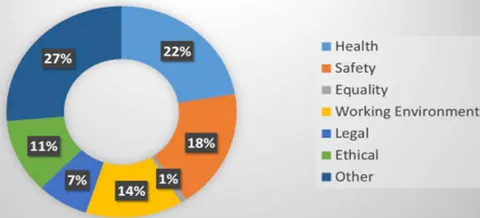
Social Concerns: (See appendices 10 and 11)
i) According to the mid-level managers, lack of education and awareness along with ignorance are some of the primary reasons for workers' health conditions in the factories.
Workers are reluctant to use PPE (Personal Protective Equipment) and get wounded or sick from the machines they keep working with. Again, some factories do no provide PPEs to the workers despite engaging them in risky jobs and often do not provide frequent training or monitoring in the working environment.
ii) Payments are often comparatively lower compared to the requirement of a standard lifestyle, which arises a conflict between the workers and managers. As a result, productions are obstructed causing loss to the factory(s). iii) Male and female are not considered in the managerial positions equally according to most of the managers. According to the managers, the females might not be able to face a conflicting situation between the authority and a few hundred workers and will possibly get in shock. As a result, very few women are seen in managerial posts. iv) The ethical issues of workers are not too strong despite proper training and motivation. Due to excessive pressures of work, they tend to spend more time than regular during breaks and the works remain incomplete which forces other workers to stay as well till the work gets finished. v) Ignorance of top-level management over ensuring a healthy working environment, e.g., enough space for every worker, PPEs for workers according to requirements, sufficient leisure hours and proper salaries, etc., is another barrier of the social concern.
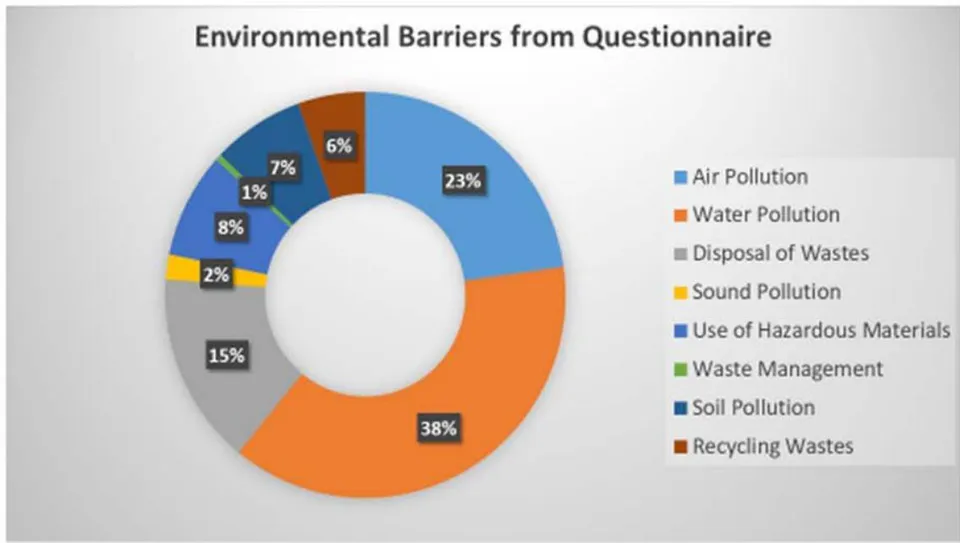
Environmental Concern: (See appendices 12 and 13)
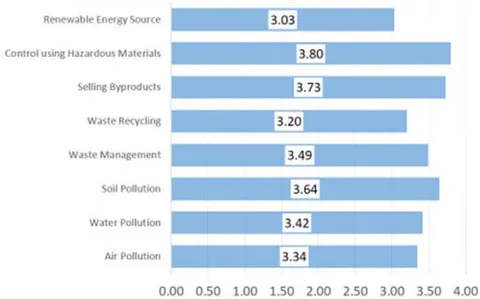
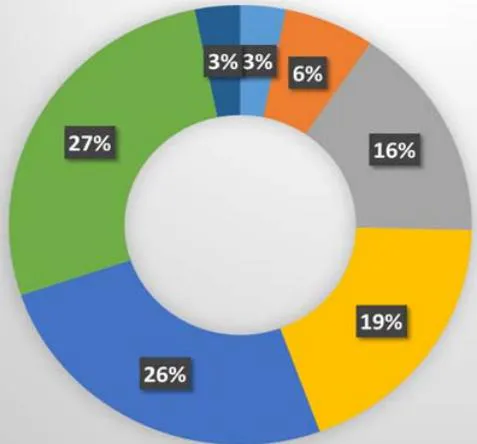
i) Effluent Treatment Plants (ETP) is not set and/or not maintained properly by all factories due to the huge expenses it will incur. The profits cannot cover its expenses properly after the payment of the salaries. Due to a lack of working knowledge and funds, ETPs are not frequently used in our country to prevent or lessen water pollution along with the absence of waste recycling initiatives. ii) A lot of factories use burners to burn their wastes, resulting in frequent air pollution around the factory premises. iii) Due to the disposal of industrial wastes around the factory premises, the water and soil around the factories get polluted frequently, which results in the death of aquatic animals and lessening soil fertility respectively. iv) Renewable energy sources are not yet used in maximum factories of Bangladesh, rather they prefer to use gas as their fuel. Renewable energy is
too costly to set up in this region and cannot be used properly for a bulk amount of production according to the managers.
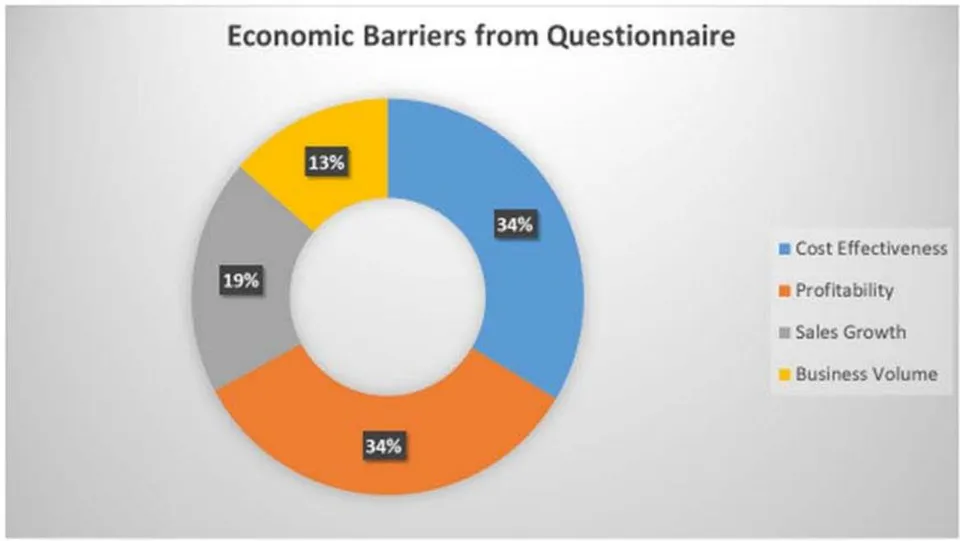
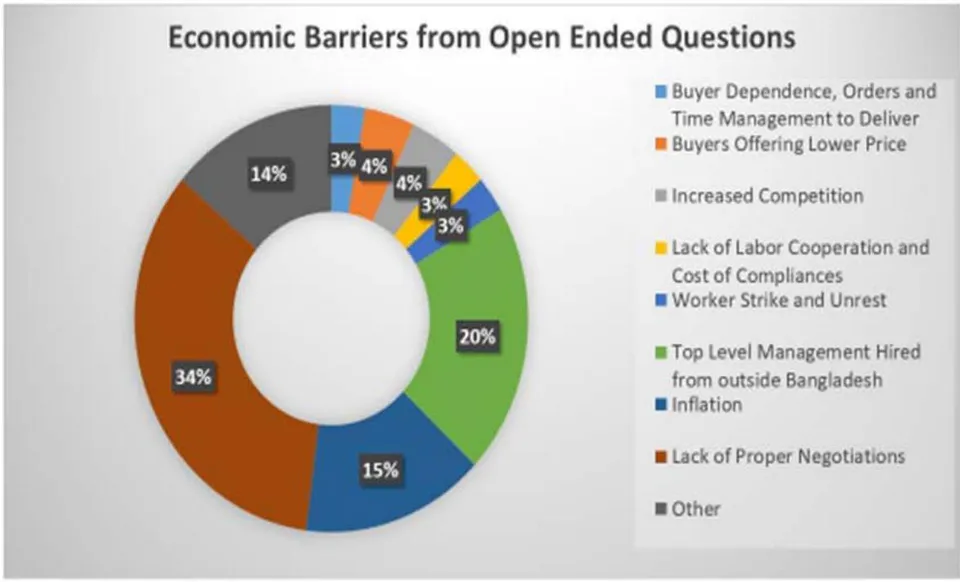
Economic Concerns: (See appendices 14 and 15)
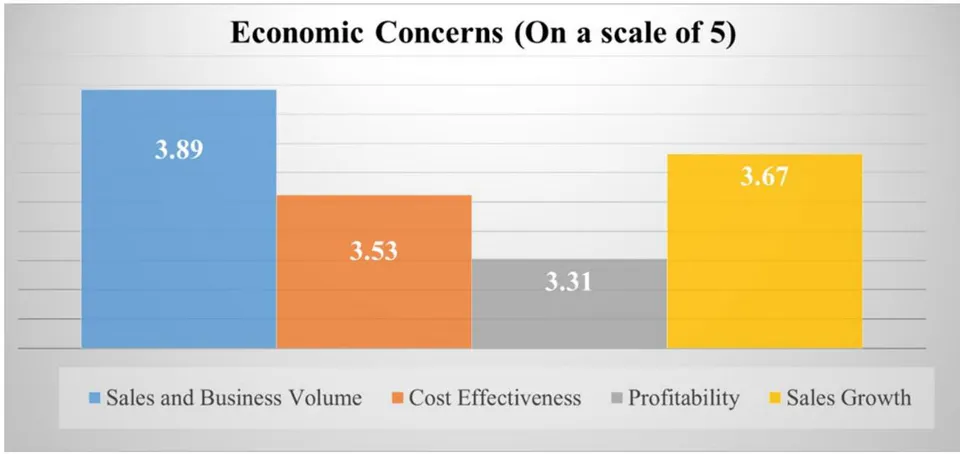
i) In almost all factories of Bangladesh, top-level management personnel is hired from India and Sri Lanka due to their vast previous experience in the management of textile factories in their countries. ii) However, sometimes it becomes a burden for the factories to match with their higher salaries when the factories keep failing to match with the profits. iii) Due to inflation in the international market(s), raw materials like cotton' prices have increased, which has brought about a decrease in cost-effectiveness. iv) Buyers seem disinterested in paying for the orders more than before, despite the price increase of supplies in the international market and more conditions being attached regarding compliance issues with regular auditing, which requires a huge cost to maintain. As a result, overall profitability has decreased over the years in the textile industry. v) Due to a lack of proper negotiations over the prices between the buyers and the factory managers, buyers are finding alternatives, as a result of which, sales growth has been decreasing on an overall basis.
Success Factors
Social Factors
i) Free treatments are being provided in maximum textile factories of Bangladesh, where some of them also have a permanent clinic providing free medicines for the sick, treatment to the wounded except for serious injuries, and sanitary napkins for the female workers inside the factory premises. As a result, the workers are not deprived of healthcare in the factory(s). ii) Fire extinguishers are reserved on every floor of the factory(s) where the supervisors and workers are trained to escape the premises through the emergency exits during fire or explosion. In some factories, fire extinguisher balls are kept nearby to tackle the emergency (s) immediately during fire accidents. iii) Females are getting interested in the textile sector since students in textile universities are increasing gradually, and within a few years, females will be seen in the managerial positions of textile companies more often. iv) Employees are trained over the legal and ethical issues which ensure both workers and authorities a fair system for hiring and firing employees over any incident. v) Female workers are given paid maternity leaves and in some factories, daycare facilities are existent to keep the female worker's tension free and more
consistent in their works as well as ensuring a safe environment for the child.
Environmental Factors
i) The use of ETPs has increased in the factory(s) due to pressures from the buyers and auditors frequently, which has lessened the water pollution to some extent. ii) Waste disposal has decreased compared to before due to advanced technology(s) used for production and the remaining products are either sold as a byproduct or used as fuel in the burners for the production of goods. iii) Renewable energy sources are used in all the green factories of the country. However, the tendency to use renewable energy and lessening overall production costs as well as pollution in the long term has been started on a small scale over the country.
Economic Factors
i) Sales and Business volumes are currently on a significant level ensuring the constant export of textile goods. ii) Export has increased by overall paralleled to the previous fiscal year (2017-18).
Enhancing the Training of Managers Employed in the Textile Industry:
i) Having extensive training for mid-level managers regarding building the confidence and knowledge to negotiate with buyers ii) Awareness campaign for workers to the social compliances to ensure their knowledge about workers' rights and requirements of workplace safety. iii) The involvement of management students in the Textile sector with textile-based practical knowledge can ensure their adaptation into the textile-related jobs with ease. iv) Universities can play the following roles to enhance the training of managers:
- Motivate students to involve in the textile sector.
- Focus more on textile-based education along with management education.
- Help the textile industries to give eligible students for their managerial post.
V. RECOMMENDATIONS
To enhance the training of managers employed in the textile industry(s) more, the following initiatives are required to be taken:
i) Arranging frequent workshops, training sessions to increase awareness among the employees, and regular visitations in the well-arranged factories if necessary.
ii) Demonstrations of handling a conflicting situation with the workers and buyers to manage them and negotiate with them properly by protecting companies' interests should take place. iii) Developing awareness to protect the environment and encourage them to take necessary measures for it iv) Training them to fix the workplace environment lessening the pollution and fulfilling all compliances. v) Ensuring proper knowledge of the Labor Law and Human Rights Act among the managers to make them aware of the workers' rights before negotiating with them properly. vi) Proper development of skills to handle buyers and workers to motivate them to buy and work respectively. Training to handle emergencies like fire accidents, earthquakes, etc.
VI. CONCLUSION
This study focused on the barriers and success factors of the sustainability of the Bangladeshi textile industry from different stakeholders' perspectives which has varied accordingly in the context of social, environmental, and economic concerns.
The findings of this study have suggested the improvisation of different concerns (social, environmental, and economic) will ensure the long term sustainability of this industry as well as making the industry more profitable after some conditions from the stakeholders are fulfilled as well. As according to Rahman (2004), the RMG industry of Bangladesh has been established "with a dominant core-periphery structure of production" which are dictated by external elements where the local entrepreneurs are not in the driving seat, that is, the foreign buyers have been the topmost priority to ensure the proper fuel to this industry with more buy orders.
Due to the lower expenses in Bangladesh compared to most of the countries around the world, the buyers become more interested in purchasing RMG products from this country, however, the condition is not going to be the same in this decade. The increased salaries, labor costs rise, maintaining compliance after a few incidents described in the initial segment of the study have been changing the future of the textile industry of Bangladesh.
All over the world, sustainability has gained huge attention from both the buyers and sellers on a local, national and international basis, the absence of which might cause either party to suffer in the long run. However, the support system of this change of the textile industry in Bangladesh provided by the international buyers has not been the same according to their increasing demand as our findings has suggested so far in this study from the perspective of the managers.
The managers have to ensure the profit margin with the price they receive which ends with the negligence of the concerns most of the time according to them. For this managers need to develop negotiation skills to attain a price that ensures profit margin. Most of the managers, including the respondent from ILO, has valued the importance of increasing awareness of helping to maintain every concern of social, environmental, and economic, from both buyers and sellers to ensure the profit margin of the industry overall and reach the target of $50 Billion of Bangladesh by 2021 in the textile industry through maintenance of every stakeholders' share, and make the textile industry more sustainable for the betterment of Bangladeshi economy in the long run.
ACKNOWLEDGEMENTS
Research work titled "Exploration of barriers and success factors of sustainability of the Bangladeshi textile industry at various stakeholders' level from Social, Environmental and Economical concern" is a part of a research project of HEST (German Bangladesh Higher Education Network for Sustainable Textiles) funded by DAAD and GIZ, MoU and UGC. Our project partner in Bangladesh was Ahsanullah University of Science and Technology (AUST) and in Germany was Technical University Dresden (TUD). We did the project on behalf of Notre Dame University Bangladesh (NDUB). The coauthor is the project Coordinator of NDUB and main author is the student research project supervisor. We had a student team that helped us get interviews of respondents. One of my students named Rubab Salehin together with main author presented the research project in Dresden, Germany. The research project has been presented in ICTEL (International Conference on Teaching, Education and Learning) in Bali in 2019 and in ICAEB-20 (International Conference on Arts, Education and Business) in Male in 2020 by main author.
Funding
The author(s) received no financial support for the research, authorship, and/or publication of this article.
APPENDICES
Appendix 1
The relative importance of the Means' of Variables (on a scale of 5)
Low
1.00 - 2.33
Medium
2.34 - 3.67
- High
- 3.68 - 5.00
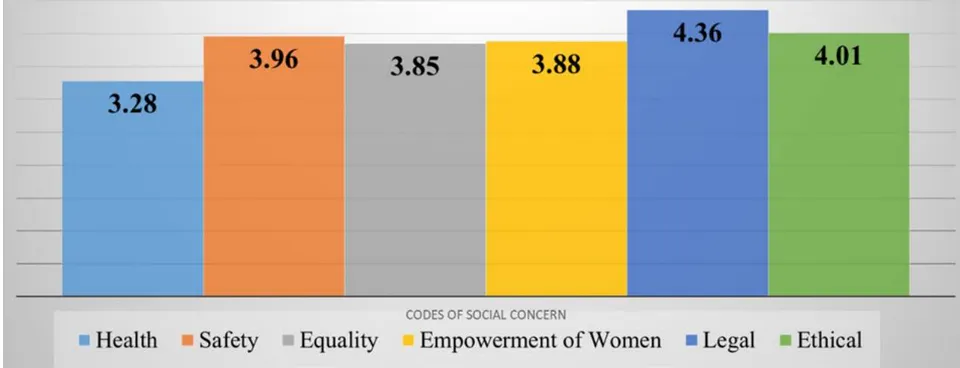
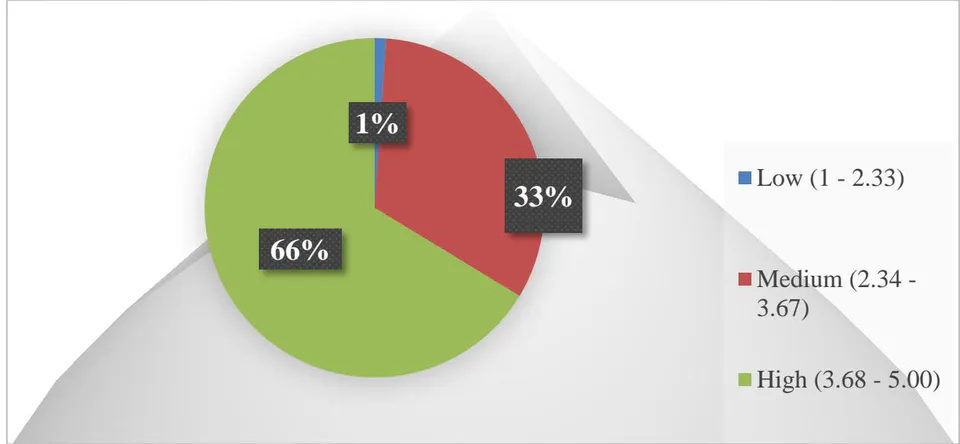
Appendix 8 Appendix 9
| Mean of All Concerns Combined (On a scale of 5) | ||
| Social | Environmental | Economic |
| 3.98 | 3.45 | 3.59 |
Reliability Statistics
| Reliability Statistics | |
| Cronbach's Alpha | Number of Items (N) |
| 0.726 | 4 |
Regression Analysis
| Model Summary | ||||
| Model | R | R Square | Adjusted R Square | Std. Error of the Estimate |
| 1 | 0.854 | 0.729 | 0.721 | 0.30737 |
| a. Predictors: (Constant), Economic, Social, Environment | ||||
ANOVA
| ANOVA | |||||||
| Model | Sum of Squares | df | Mean Square | F | Significance | ||
| 1. Regression | 24.450 | 3 | 8.150 | 86.264 | 0.000 | ||
| Residual | 9.070 | 96 | 0.094 | ||||
| Total | 33.520 | 99 | |||||
| a. Dependent Variable: Sustainable performances of Textilesb. Predictors: (Constant), Economic, Social, Environment | |||||||
| Coefficients | |||||||
| Model | Unstandardized Coefficients | Standardized Coefficients | t | Significance | Collinearity Statistics | ||
| β | Std. Error | Beta | Tolerance | VIF | |||
| 1 (Constant) | -0.910 | 0.298 | -3.056 | 0.003 | |||
| Social | 0.483 | 0.062 | 0.420 | 7.823 | 0.000 | 0.984 | 1.016 |
| Environment | 0.313 | 0.048 | 0.387 | 6.560 | 0.000 | 0.818 | 1.222 |
| Economic | 0.424 | 0.059 | 0.422 | 7.120 | 0.000 | 0.814 | 1.229 |
| a. Dependent Variable: Sustainable performances of Textiles | |||||||
Pearson Correlation
| Correlations | |||||
| Social | Environmental | Economic | Sustainability | ||
| Social | Pearson Correlation Significance (2 tailed) N | 1 | 0.106 | 0.137 | 0.519 ** |
| 0.294 | 0.175 | 0.000 | |||
| 100 | 100 | 100 | 100 | ||
| Environmental | Pearson Correlation Significance (2 tailed) N | 0.106 | 1 | 0.435 ** | 0.615 ** |
| 0.294 | 0.000 | 0.000 | |||
| 100 | 100 | 100 | 100 | ||
| Economic | Pearson Correlation Significance (2 tailed) N | 0.137 | 0.435 ** | 1 | 0.648 ** |
| 0.175 | 0.000 | 0.000 | |||
| 100 | 100 | 100 | |||
| Sustainable performance of Textile | Pearson Correlation Significance (2 tailed) N | 0.519 ** | 0.615 ** | 0.648 ** | 1 |
| 0.000 | 0.000 | 0.000 | |||
| 100 | 100 | 100 | 100 | ||
Social Barriers No. of Respondents Agreed on Percentage of Respondents Agreed on Documentation, Payment and Business License 1 0.45 Employee Unwillingness and Unawareness (Often Results in Less Personal Protective Equipment Use) 4 1.82 Working Environment 30 13.64 Ethical 25 11.36 Grey Area of Law 1 0.45 Trade Union 1 0.45 Legal 16 7.27 Govt. Awareness 2 0.91 Expensive Equipment and Building Construction 1 0.45 Health 49 22.27 Safety 40 18.18 Social Barriers No. of Respondents Agreed on Percentage of Respondents Agreed on New and Old Generation Gaps 1 0.45 None 8 3.64 Illiterate Workers Consuming more Time to Gain Experiences 1 0.45 Worker Turnover 1 0.45 Lower Payment 10 4.55 Male and Female not Considered Equally for Manager 12 5.45 Total 100% 
Appendix 12
| Social Barriers | No. of Respondents Agreed on | Percentage of Respondents Agreed on |
| Equality | 2 | 0.91 |
| Women Empowerment | 1 | 0.45 |
| Bribing Auditors to save Company | 1 | 0.45 |
| Infant Treatment | 1 | 0.45 |
| Intention to Disobey Rules and Regulations | 1 | 0.45 |
| Lack of Educated Workers Rising Health and Safety Issues | 3 | 1.36 |
| Lack of Employer Perspective Mindset | 1 | 0.45 |
| Poor Accountability and Monitoring | 2 | 0.91 |
| Lack of Owners' Knowledge about Social Compliances | 1 | 0.45 |
| Management System | 1 | 0.45 |
| Manpower Skill | 3 | 1.36 |
Appendix 13
- Lack of Awareness and Qualified People
- Less Interest in Selling Byproducts
- Expensive ETP Equipment
- Burners burning Wastages
- Waste Disposal around Industry affecting Aquatic Animals
- Less Opportunities for Renewable Energy
- Others
| Environmental Barriers | No. of Respondents Agreed on | Percentage of Respondents Agreed on |
| Air Pollution | 46 | 16.61 |
| Water Pollution (Along with Washing Chemicals and Dyeing Agents) | 77 | 27.80 |
| Disposal of Wastes | 31 | 11.19 |
| Sound Pollution (Misplaced Generators) | 4 | 1.44 |
| Use of Hazardous Materials | 17 | 6.14 |
| Waste Management | 1 | 0.36 |
| Soil Pollution | 15 | 5.42 |
| Recycling Wastes | 11 | 3.97 |
| All Mentioned in Questionnaire | 6 | 2.17 |
| Awareness Problems | 1 | 0.36 |
| Challenge to Maintain Total Dissolved Solid in Water | 1 | 0.36 |
| Environmental Barriers | No. of Respondents Agreed on | Percentage of Respondents Agreed on |
| None | 6 | 2.17 |
| Slow Work Rate by Govt. Officers of Ministry | 1 | 0.36 |
| Lack of Qualified People to deal with Pollution Problems | 1 | 0.36 |
| Less Interest in Selling Byproducts | 4 | 1.44 |
| Expensive ETP Equipment | 10 | 3.61 |
| Burners burning Wastages | 12 | 4.33 |
| Waste Disposal around Industry affects Aquatic Animals | 16 | 5.78 |
| Less Opportunities for Renewable Energy | 17 | 6.14 |
| Total | 100% |
Economic Barriers No. of Respondents Agreed on Percentage of Respondents Agreed on All Mentioned in Questionnaire 2 0.90 Bank Interests 1 0.45 Buyer Dependence, Buyer Orders and Time Management to Deliver 2 0.90 More Time Consumption for Raw Materials 1 0.45 Buyers offering Lower Price 3 1.35 Cost Effectiveness 47 21.08 Profitability 47 21.08 Sales Growth 27 12.11 Increased Competition (Local and Foreign) 3 1.35 Living Cost Increase 1 0.45 Govt. Assistance 1 0.45 Economic Barriers No of Respondents Agreed on Percentage of Respondents Agreed on Lack of Labor Cooperation 1 0.45 None 8 3.59 Business Volume 19 8.52 Cost of Compliances 1 0.45 Lack of Proper Energy Supply Hindering Production 1 0.45 Increasing Salaries and Wages 2 0.90 Worker Strike and Unrest 2 0.90 Relationship between Buyer and Seller lowering Prices 1 0.45 Time Consumption to Satisfy Different Needs of Buyers 1 0.45 Unions focusing on Labor rights only 1 0.45 Top Level Management Hired from outside Bangladesh 15 6.73 Footnotes