The determination of stresses developed in a pavement constitutes a basic prerequisite and is achieved mainly by implementation of various methods which is dependent on the number of distinct pavement layers. The need to predict the deformation of highway pavement with a precision that will aid optimal design cannot be oversized. Boussinesq’s work was foundational for the development of all subsequent elasticity theories, but Boussinesq assumed one layer of uniform subgrade material. In this research, a mechanistic elastic model for obtaining deformation in road pavement was derived using Finite Element Method (FEM). This model was found to be an improvement on the Boussinesq model owing to the closeness of its result to that obtained from Plaxis software. In addition to this, it has the capability of handling deformation in both flexible and rigid pavement utilizing the dimensional similarities between unit weight and modulus of subgrade reaction of soil. A MATLAB program was also written for easy computation using the new model.
## I. INTRODUCTION
### a) Causes of Pavement Deformation in Highway Pavement
- Deformation of highway pavement can be occasioned by weak soils [1-2], frost action [3-4], expansive soils [5], Unbound aggregate material [6], seasonal drying and wetting [7]. Deformation can also result from thermal stresses [8], differential subgrade settlement [10], and aggregate morphology [11-12].
b) Methods of Analysis of Highway Pavement
Boussinesq's work was foundational for the development of all subsequent elasticity theories. Boussinesq's theory assumed one layer of uniform and homogenous subgrade material. According to [13], the stresses applied to an elastic homogenous and isotropic material extended to infinity at both directions, (horizontal and vertical) and the stress developed at any depth, $z$, below the surface of the pavement under the influence of a point load in Figure 1 can be calculated thus:
Vertical stress,
$$
\sigma_ {z} = \frac {3 Q}{2 \pi}. \frac {Z ^ {3}}{R ^ {5}} \tag {1}
$$
After the pioneering work of Boussinesq, different methods of analysis have been used in obtaining stresses and the accompanying deformation in highway pavement. Behera (2013) [14] used linear elastic theory in analyzing the deformation behaviour of fly ash composite material in the subbase of surface coal mine haul road. Uzan (2004) [15] applied the mechanistic framework in determining the permanent deformation of flexible pavement. Du and Dai (2006) [16] utilized the dynamic stability evaluation index in analyzing permanent deformation. It was discovered that the method is not fit for evaluating permanent deformation of asphalt mixture. Tchemou et al. 2011 [17] and Qiao et al. 2015 [18] applied rutting mechanisms in predicting flexible pavement degradation, [19] used model simulation in determining permanent deformation in high-modulus asphalt having sloped and horizontally curved alignment. Du and Shen (2005) [20] applied grey modelling method, [21] used field cores, and [22] used ground-penetrating-ladar in predicting the development of irrecoverable deformation in road pavement. Sawant (2009) [23] used dynamic analysis whereas [24] used the back-calculation of the transition probability approach. Each group of researchers demonstrated the merit of their method.
Many researchers have applied finite element method (FEM) in the analysis of deformation in highway pavement [25-28]. He et al. (2008) [29] used 3D viscoelastic finite element analysis (FEA) in determining asphalt pavement rutting deformation. Kim et. al. (2014) [30] used FEM in modelling the effect of environmental factors on rigid pavement deformation. In analyzing the influence of asphalt deformation under heterogeneous settlement of roadbed whereas [31] used elastic-plastic dynamic FEM to compute the differential settlement of the half-filled and half dug embankment under axle load. The latter succeeded in deriving a model for computing critical differential settlement. Each of the models is unique depending on the assumptions made by each group of researchers. Sadek and Shahrour (2007) [32] compared Boussinesq's model with the occasional plastic nature of subgrade and pavement materials. The researchers model was shown to be an improvement on Boussinesq's model.
## II. PURPOSE
This work involves the finite element method for predicting pavement deformation. Each model cited is derived either for rigid pavement and flexible pavement. However, this model is also unique owing to assumptions and approach was derived to handle both rigid and flexible pavement. Secondly, according to [33], many models used in the structural design of pavements are complex and/or difficult to use in the field, making its application in pavement analysis rather difficult. This model is devoid of such complexities.
## III. METHODOLOGY
### a) Derivation of the New Model
## i. Model Assumption
In the derivation of the new model for deformation behaviour, the following assumptions were made;
1. Loading is symmetrical
2. Soil is elastic, homogenous and isotropic
3. The principle of superposition is valid
4. Constitutive law is valid
5. The idealized system of pavement structure is treated as a beam on elastic subgrade
6. The UDL from asphaltic concrete is converted to point load to produce the worst deformation needed for optimal design.
7. The problem is two-dimensional.
## ii. Model Derivation
A road of base course thickness $t_b$, asphaltic concrete (AC) thickness as $t_p$, and width $l$ is subjected to a standard axle load $P_a$ as shown in Figure 10.
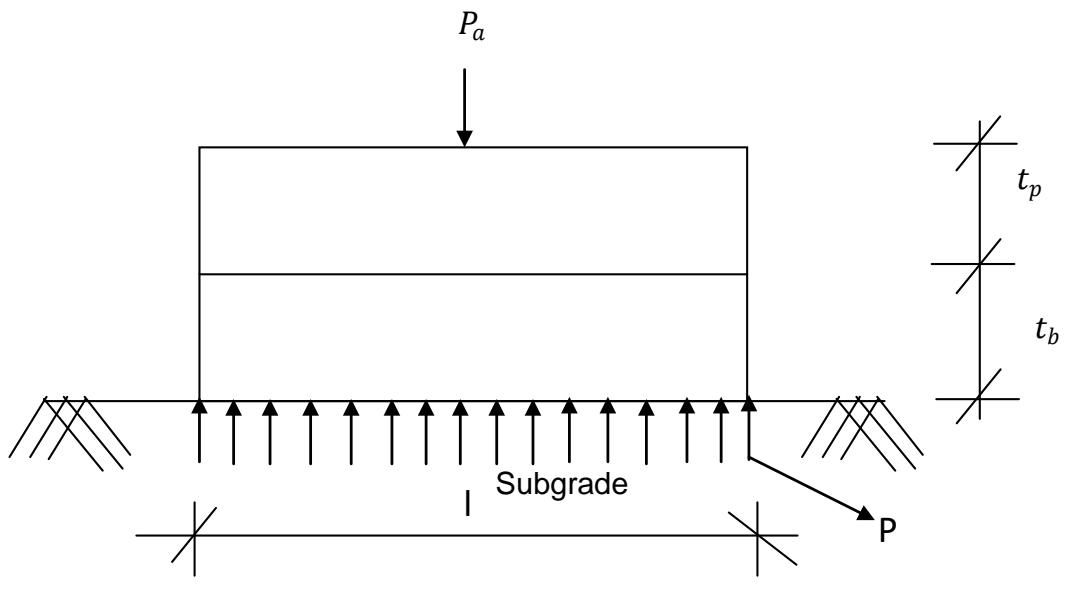 Figure 1: Simple model diagram
To convert the asphaltic concrete (AC) to a point load.
$$
\text{Area} AC = t_{p}.l\tag{2}
$$
Let the modulus of subgrade reaction due to $AC = k$
: Weight per unit length (UDL)
$$
= l. t _ {p}. \mathrm {k} \tag {3}
$$
Converting the UDL to point load
$$
P _ {u} = \left(l t _ {p} \kappa_ {a c}\right) L = l ^ {2} t _ {p} \kappa \tag {4}
$$
Total point load on the pavement
$$
P = P a + l ^ {2} t _ {b} \kappa \tag {5}
$$
The model diagram in Figure 1 is simplified in Figure 2.
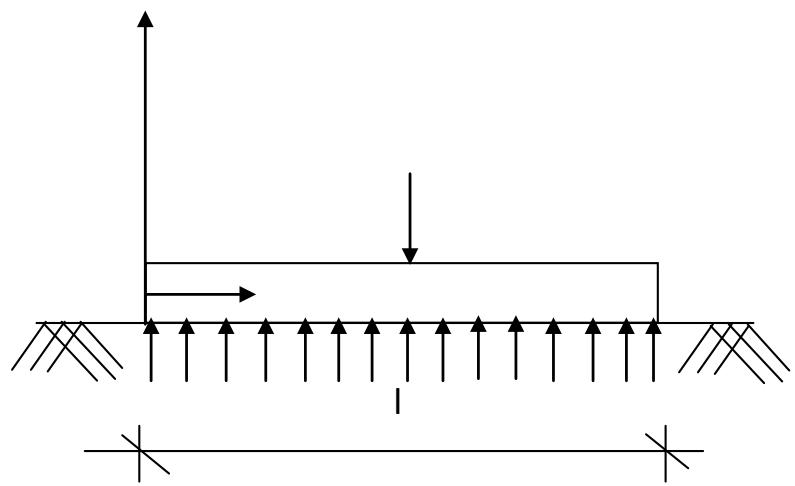 Figure 2: Model pavement with point load and moment
To determine the total stricture stiffness matrix for a spring assemblage by using the force/displacement matrix relation of FEM, the model is discretized into nodes and element as shown in Figure 3.
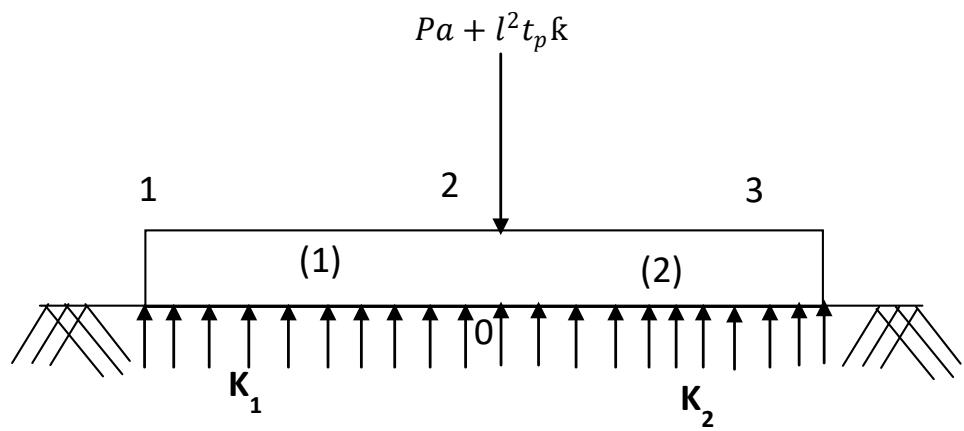
Figure 3: Pavement discretized into 2 elements and 3 nodes
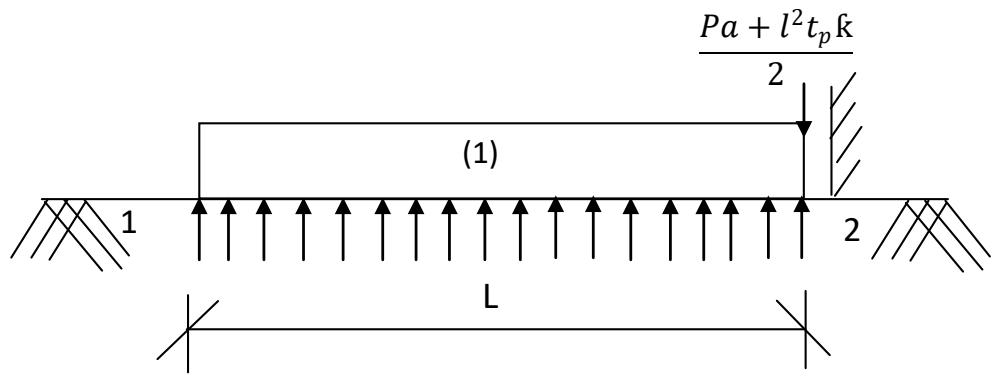 Figure 4: Symmetry of the discretized model pavement
Substituting into the Timoshenko beam element stiffness matrix, a global Equation (13) is obtained.
$$
\frac {E I}{L ^ {3} \left(1 + \varnothing_ {c}\right)} \left[ \begin{array}{c c c c} 1 2 & 6 L & - 1 2 & 6 L \\6 L & (4 + \varnothing_ {c}) L ^ {2} & - 6 L & (2 - \varnothing_ {c}) L ^ {2} \\- 1 2 & - 6 L & 1 2 & - 6 L \\6 L & (2 - \varnothing) L ^ {2} & - 6 L & (4 + \varnothing_ {c}) L ^ {2} \end{array} \right] \left\{ \begin{array}{c} d _ {1} y \\\varnothing_ {1} \\d _ {2} y \\\varnothing_ {2} = 0 \end{array} \right\} = \left\{ \begin{array}{c} F _ {1} y \\0 \\\frac {P a + l ^ {2} t p k}{2} \\0 \end{array} \right\} \tag {6}
$$
Applying the boundary condition
$$
d _ {1} y = 0 = \varnothing_ {2}
$$
therefore using the $2^{\text{nd}}$ and $3^{\text{rd}}$ row of equation 13 whose rows are associated with the two unknowns, $\varnothing_{1}$ and $d_{2}y$ and simplifying, we obtain;
$$
d_{2}y = \frac{(Pa + L^{2}t_{p}\kappa)(4 + \phi_{c})L^{3}}{24EI}
$$
For long slender beams with L about 10 times or more, the beam depth, shear correction term $\varnothing_{c}$ is small and can be neglected [34].
For standard highway, $L = 7.4$ m, $d = 0.6$ m [35]
$$
\therefore \frac {l}{d} = \frac {7 . 4}{0 . 6} \approx 1 2 \tag {8}
$$
$$
\Rightarrow \emptyset_ {c} = 0
$$
If $l =$ the whole length of the beam, then $l = 2L$ and we can substitute $L = l / 2$ in equation 5.38 to obtain the deformation in terms of the whole length of the beam as;
$$
= > d _ {2} y = \left[ \frac {\left(P _ {a} + l ^ {2} t _ {p} \kappa\right) l ^ {3}}{4 8 E I} \right] \tag {9}
$$
## IV. CONCLUSION AND RECOMMENDATION
Many roads fail even before their design lives, probably because of using conservative models in their design to save cost. The cost implication of early maintenance and/or rehabilitation implies that using conservative models is not economical in the real sense. This new model, being close with the result from plaxis software shows that it is an improvement on Boussinesq's model which is found to be conservative. Secondly, the dimensional uniformity between unit weight and modulus of subgrade reaction was utilized by the researchers in making it a flexible model that can handle deformation in both rigid and flexible road pavement unlike many existing models.
## V. DECLARATIONS
### a) Ethical Approval and Consent to Participate
The research observed all ethical codes and done with the consent of all authors involved.
### b) Consent for Publication
We give our Consent for the publication of the article.
### c) Availability of Supporting Data
Not applicable
### d) Code Availability
Not applicable
### e) Funding
Not applicable
List of Abbreviations
$\sigma_{z} =$ Vertical Stress
### Q = Vertical Load
$Z =$ Vertical Load
### R = Influence Radius
$t_b =$ Base Course Thickness
$t_p =$ Asphaltic Concrete/ Rigid Concrete Thickness
### I = Width of Pavement
$\hat{\mathbf{k}} =$ Modulus of Subgrade Reaction
$\mathrm{P_a} =$ Axle Load
$\mathrm{d}_2\mathrm{y} =$ Deformation
$\varnothing =$ Shear Correction Factor
E = Young's Modulus of the Pavement
I = Moment of Inertia of the Pavement d = Depth of the Pavement
e = Expected Values
- = Observed Values
### V = Degree of Freedom
$x =$ Chi-square Value
Highlights
- The need to predict the deformation of highway pavement with a precision that will aid optimal design cannot be overemphasized.
- A mechanistic elastic model for obtaining deformation in road pavement was derived using Finite Element Method (FEM).
- The new model improved on Boussinesq's owing to the closeness of its result to that obtained from Plaxis software.
- The new model also has the capability of handling deformations in both flexible and rigid pavement.
Generating HTML Viewer...
References
35 Cites in Article
G Jegede (2004). Highway pavement failure induced by poor soil geotechnical properties at a section along the F209 Okitipupa-Igbokoda highway, southwestern Nigeria.
X Jiang,Y Qiu (2004). The influence of asphalt pavement deformation due to the differential subgrade settlement.
Z Wen,W Sheng,Ma Wu,Q Fang,J (2009). Ground temperature and deformation laws of highway embankments in degenerative permafrost regions.
H Peng,W Ma,Y Mu,Jin (2015). Impact of permafrost degradation on embankment deformation of Qinghai-Tibet Highway in permafrost region.
S Hossain,M Ahmed S, Khan,Aramoon (2016). Expansive subgrade behavior on a state highway in North Texas.
E Tutumular,T Pan (2008). Aggregate morphology affecting strength and permanent deformation behavior of unbound aggregate materials.
George Wang,Yuhong Wang,Russell Thompson,Yong Ahn (2012). Long-Life Pavement Design and Construction: A Case Study.
E Tutumular,T Pan (2008). Aggregate morphology affecting strength and permanent deformation behavior of unbound aggregate materials.
X Jiang,Y Qiu (2004). The influence of asphalt pavement deformation due to the differential subgrade settlement.
T Pan,E Tutumuluer,S Carepenter (2006). Effects of coarse aggregate morphology on permanent deformation behavior of hot mix asphalt.
Kunnawee Kanitpong,Nuttaporn Charoentham,Suched Likitlersuang (2012). Investigation on the effects of gradation and aggregate type to moisture damage of warm mix asphalt modified with Sasobit.
Kunnawee Kanitpong,Nuttaporn Charoentham,Suched Likitlersuang (2012). Investigation on the effects of gradation and aggregate type to moisture damage of warm mix asphalt modified with Sasobit.
Soumya Mallick,Manoj Mishra (2013). Geotechnical Characterization of Clinker-Stabilized Fly Ash - Coal Mine Overburden Mixes for Subbase of Mine Haul Road.
J Uzan (2004). Permanent deformation in flexible pavements.
S Du,J Dai (2006). Permanent deformation evaluation index of asphalt mixture.
G Tchemou,L Minsili,Mototemapa,Eko Manguelle,J (2011). Prediction of flexible pavement degradation: application to rutting in Cameroonian highway.
Yaning Qiao,Andrew Dawson,Anders Huvstig,Leena Korkiala-Tanttu (2015). Calculating rutting of some thin flexible pavements from repeated load triaxial test data.
Mulian Zheng,Lili Han,Chongtao Wang,Zhanlei Xu,Hongyin Li,Qinglei Ma (2017). Simulation of Permanent Deformation in High-Modulus Asphalt Pavement with Sloped and Horizontally Curved Alignment.
Jia-Chong Du,Der-Hsien Shen (2005). Development of pavement permanent deformation prediction model by grey modelling method.
Qiang Li,Huanhuan Yang,Fujian Ni,Xiang Ma,Lihong Luo (2015). Cause analysis on permanent deformation for asphalt pavements using field cores.
Fabio Tosti,Luca Bianchini Ciampoli,Fabrizio D'amico,Amir Alani,Andrea Benedetto (2018). An experimental-based model for the assessment of the mechanical properties of road pavements using ground-penetrating radar.
Vishwas Sawant (2009). Dynamic analysis of rigid pavement with vehicle–pavement interaction.
Khaled Abaza (2016). Back-calculation of transition probabilities for Markovian-based pavement performance prediction models.
S Helway,J Dyer,J Leidy (1998). Finite element analyses of flexible pavement.
Mohammad Rahman,Sigurdur Erlingsson (2015). Predicting permanent deformation behaviour of unbound granular materials.
Andrew Collop,Glenn Mcdowell,York Lee (2004). Use of the Distinct Element Method to Model the Deformation Behavior of an Idealized Asphalt Mixture.
M Nahi,A Ismail,A Ariffin (2011). Analysis of Asphalt Pavement under Nonuniform Tire-pavement Contact Stress using Finite Element Method.
Z He,T Lei,Chen Wang,G Hou,Y (2008). 3D visco-elasto-plastic finite element analysis of the asphalt pavement rutting deformation.
S Kim,H Ceylan,K Gopalakrishnan (2014). Finite element modeling of environmental effects on rigid pavement deformation.
W Weng,X Zhang,B Chen,S Yan (2004). Nonlinear FEM analysis of influence of asphalt pavement under non-homogenous settlement of roadbed.
Marwan Sadek,Isam Shahrour (2017). Use of the Boussinesq solution in geotechnical and road engineering: influence of plasticity.
Fabricio Leiva-Villacorta,Adriana Vargas-Nordcbeck,José Aguiar-Moya (2017). Permanent deformation and deflection relationship from pavement condition assessment.
D Logan (2012). First Course in the finite element method.
S Garg (2013). Soil mechanics and foundation engineering.
No ethics committee approval was required for this article type.
Data Availability
Not applicable for this article.
How to Cite This Article
Arinze, Emmanuel Emeka. 2026. \u201cFinite Element Model for Prediction of Highway Pavement Deformation\u201d. Global Journal of Research in Engineering - E: Civil & Structural GJRE-E Volume 23 (GJRE Volume 23 Issue E1): .
Explore published articles in an immersive Augmented Reality environment. Our platform converts research papers into interactive 3D books, allowing readers to view and interact with content using AR and VR compatible devices.
Your published article is automatically converted into a realistic 3D book. Flip through pages and read research papers in a more engaging and interactive format.
The determination of stresses developed in a pavement constitutes a basic prerequisite and is achieved mainly by implementation of various methods which is dependent on the number of distinct pavement layers. The need to predict the deformation of highway pavement with a precision that will aid optimal design cannot be oversized. Boussinesq’s work was foundational for the development of all subsequent elasticity theories, but Boussinesq assumed one layer of uniform subgrade material. In this research, a mechanistic elastic model for obtaining deformation in road pavement was derived using Finite Element Method (FEM). This model was found to be an improvement on the Boussinesq model owing to the closeness of its result to that obtained from Plaxis software. In addition to this, it has the capability of handling deformation in both flexible and rigid pavement utilizing the dimensional similarities between unit weight and modulus of subgrade reaction of soil. A MATLAB program was also written for easy computation using the new model.
Our website is actively being updated, and changes may occur frequently. Please clear your browser cache if needed. For feedback or error reporting, please email [email protected]
Thank you for connecting with us. We will respond to you shortly.