
I. INTRODUCTION
The economic climate in Cameroon is currently characterized by the depreciation of the household basket due to a rise in the general price level, as well as the difficulty in achieving the level of enrichment intended in the 2009 economic strategy (DSCE, 2009). Inflation in Cameroon is also a significant issue of concern, having climbed from 0.17 percent in 2015 to 2.52 percent in 2019. The general price level has increased by roughly 1382.35 percent since 2015. (WDI, 2019). Furthermore, the growth rate, which was 5.65 percent in 2015, has dropped to 4.2 percent in 2019, a loss of 25.66 percent from 2015. (WDI, 2019).
These observations prompt us to consider the specific factors that can explain the roadblocks to a country's economic development. In terms of the determinants capable of presenting a country's economic status, the economic literature has advanced significantly. Throughout the centuries, many authors have worked hard to provide the forerunners of economic thinking, such as explaining a country's level of enrichment in terms of declining returns from land and population expansion (Ricardo, 1817; Malthus, 1798). It is crucial to highlight, however, that there are now a variety of additional causes for economic growth.
Foreign Direct Investment is thus presented as a recent factor that significantly promotes a country's enrichment, owing to the technology transfer it induces in the receiving country (Bouiyour et al., 2009), the effects of the resulting opening of markets to international trade (Salaet Trivin, 2014), and the capital accumulation it allows (Hermes et Lensink, 2003). Berg et al. (2012) and Rodrik (2018), for example, put macroeconomic stability, financial development, the quality of public policies, and the institutional environment at the center of their analyses.
Cameroon appears to be following the theories mentioned above since 2009 when the Growth and Employment Strategy Paper (GESP) was developed. As such, this paper illustrates the aims of capital accumulation through structural investments (roads and highways, dams, etc.), promotion of foreign investor entry, reduction of unemployment, and so on. So, Cameroon might become a developing economy by 2035. Cameroon, however, does not appear to be out of the woods at the end of the first phase of implementation of the said strategy, which was completed in 2020, and during the second phase, which began in 2020 with the elaboration of a compass known as the National Strategy for Development to 2030 (NSD-30). In fact, the growth rate in 2020 was 4.96 percent, much below the DSCE's forecast of , and the state's job creation is diminishing, as evidenced by the increase in the unemployment rate to 6.1 percent in 2021 compared to 2020. (According to the National Institute of Statistics report on development indicators in 2021). In addition, a research published in 2018 by the "Laboratoire de Recherche en Economie Mathématique" revealed that Cameroon had received roughly CFAF 9,350 billion in illicit remittances over the past 17 years. In its 21 January 2021 issue, the journal "Quotidien l'émergence" reported that Cameroon had suffered financial losses to the tune of 18 billion FCFA. Furthermore, a request for the departure abroad of 86 civil officials (usually trained in professional establishments), including 60 teachers, was reported in Cameroon's Western region, according to the daily "Actu Cameroun" in its 23 May 2018 issue.
According to these observations, it is essential to note that another indicator of wealth must be sought in Cameroon, and it is helpful to pay attention to the country's organization and management, such as the quality of its institutions, as presented by Rodrik (2018) following the pioneering analysis of North (1990). These researchers put institutions at the center of economic analysis, claiming that, bad institutions are to blame for a country's economic stagnation.
Institutional analysts' theoretical conclusions found a helpful application in particular empirical work done in Cameroon, which showed institutions as an explanatory factor for specific variables of the country's economic environment. Institutions are thus emphasized as a significant driver of innovation (Eloundou, 2014) or as a determinant in the attraction of Foreign Direct Investment (FDI) (Djaowé et Bouba, 2018). Following this, we provide an institutional explanation for the rising rate of inflation and Cameroon's failure to meet its growth targets as outlined in the DSCE.
Rather than using existing methodologies, we develop a composite proxy that groups the variables of the institutional system to achieve our purpose more effectively. Following that, we build econometric models based on this proxy that explain inflation and growth rate by institutions in order to develop a diagnosis that will allow us to propose accurate and efficient institutional regulations. These regulations will be capable of controlling the galloping evolution of prices and bringing the country firmly towards the path of an emerging nation.
II. THEORETICAL FRAMEWORK OF THE ANALYSIS
a) Effect of institutions on wealth formation
The link between institutions and wealth production is a trend that North (1990) has popularized. Since then, the area of institutional economics has grown significantly, with a diverse spectrum of perspectives. The significance of ideas on the relationship between institutions and growth have been established to determine how institutions affects economic growth. There are many points of view, and presenting them all would be pretentious; instead, we show the most essential ones.
i. The Evolutionary Approach
The evolutionary approach is a relatively new theoretical approach to institutions that has revolutionized the economic approach to them. It was created in opposition to the functionalist approach, which focuses on the economic functions of institutions. The functionalist view posits that institutions improve economic performance by performing specific functions such as lowering transaction costs, coordinating markets, and reducing market fraud (Coase, 1937; Demsetz, 1957). Institutions are treated as a static fact in this perspective, and their roles in the economy are the only thing that matters.
For evolutionary analysts, this constraint is the beginning point. Institutions evolve according to this paradigm, and it is this evolution that defines a country's economic performance. According to Acémoglu et al. (2006), institutional transformation is influenced by the country's economic development. Thus, the wealthier a country becomes, the better its institutions become, which has a positive impact on growth. According to Amable et Palombarini (2005), institutional transformation is fuelled by social conflict. Low growth rates, high prices, and high unemployment encourage political conflicts, which lead to the formation of new institutions: institutions are thus viewed as a tool for maintaining political equilibrium. Although institutions are changing, it is essential to remember that they are not universal, as they do not yield the same affects in various economies (Lechevalier, 2012; Piketti, 2015).
A method based on learning effect, on the other hand, is being developed. Economic performance, according to this viewpoint, is a product of institutional change, which is achieved through trial and error. Past policies decisions that lead to wrong results have led to a re-evaluation of these decisions and the introduction of new economic regulations that are better than the old ones (Lechevalier, 2011).
ii. The Cultural Approach
Cultural differences or ideological convictions, according to proponents of the cultural approach to institutional analysis, would explain differences in economic growth between countries. Because of their differences in conceptions of "good social values", societies chose different economic systems. Not all societies would have the same view of what is beneficial for their people. This discrepancy is exacerbated by the uncertainty surrounding ex-ante knowledge of good institutions. Countries that prosper are those whose leaders' institutional choices prove to be correct ex-post, that is, those where the discrepancy between the institutions selected and those that maximize aggregate income is modest. Countries where political leaders get it wrong ex-post, on the other hand, tend to stagnate. The cultural approach, like the economic approach, indicates that there are factors at work that prevent countries from selecting institutions that are widely acknowledged to be inefficient for society as a whole (Acemoglu et al., 2005).
iii. The Historical Approach
The historical approach considers institutional quality as a result of historical events. In other words, historical events shape the nature of institutions at a certain point in time, and theseinstitutions persist across time by creating various effects.
Several economists, sociologists, and political scientists have this ideological viewpoint. Authors such as La Porta et al. (1998, 1999), Djankov et al. (2003) have emphasized the impact of the legal origin of the judicial system on the quality of protection of private property rights or the performance of governments, and they share the historical approach to some extent. In truth, the rules controlling the legal system in many countries are frequently the product of historical events.
b) Inflation: An Institutional Origin?
Daniel (2020) defines inflation as "the loss of money's purchasing power that results in a general and continuous increase in prices." Several economic theoretical investigations have attempted to explain the origins of inflation in a given country.
While there is a substantial body of economic literature on the causes of the general price increase, institutional factors have always been mentioned. They have become increasingly prominent in recent years.
Consequently, the forefathers of inflation analysis, such as Hume (1752), Ricardo (1817), and others, approach the problem via a monetarist lens. According to these scholars, the main reason for market price spikes is the amount of money in circulation in an economy. To this effect, Hume (1752) asserts that if an economy's money supply is doubled, the price of thingswill be twice as well.
Based on the theoretical observation of the monetary origin of inflation, Keynesians willargue that the government should pursue a monetary interventionist strategy to regulate and control the market's price evolution. However, only more recent research has revealed that the issue is not so much the quantity of money in circulation as it is the trustworthiness of the money handled by institutions. Institutional flaws, according to Huang et Wei (2006), Hefeker (2010) and Dimakou (2013), impair agents' confidence in the currency of the country in question and, consequently, the currency's credibility. Even if inflation has a monetary origin, the institutionalimprint cannot be ignored; it is the primary source of the phenomena.
While theoretical theories are focused on explaining a presumed channel between institutions and inflation, there are nevertheless paradigms that highlight the existence of a bidirectional relationship, demonstrating that inflation affects the quality of institutions. According to Braun et Di-Tella (2004), an increase in the general price level leads to a rise in the market's price control expenses. Thus, governmental agents in charge of price control will be harassed or will harass enterprises to collect remuneration for turning a blind eye to specific frauds related to the non-observation of price ceilings in the context of Keynesian economic functioning. Thanks to the rise in corruption, institutions are deteriorating. This phenomena has several ramifications. As the level of corruption increases, the cost of investment rises, discouraging new entrants and reducing overall investment, which limits the number of enterprises in the market, stifling growth.
According to Huang et Wei (2006), a country's exchange rate system has impacts on inflation. The policy choice to adopt a fixed exchange rate system and, thus, a monetary peg has ramifications. In effect, the ink ing country has better institutions than countries that ink their currency on foreign currencies, causing the latter to look to the ink ing country as a model. This leads to a tendency to peg to the ink ing country's inflation rate: this is inflation targeting, which entails setting an inflation rate based on the inflation rate of a model country. Revenues from currency issues and foreign exchange gains are non-existent because the exchange rate is fixed. Accordingly, countries that ink their currency have no choice but to increase the general level of taxation, either through rate increases or by broadening the tax base, increasing the cost of production and, therefore, an increase in the selling price and, ultimately, a reduction in social welfare.
III. EMPIRICAL REVIEW OF THE LITERATURE
a) Some empirical work on the effect of institutions on economic growth
The empirical work that has assigned itself the purpose of evaluating the effect of institutions on economic growth adds to the theoretical arguments regarding the impact of institutions on economic growth. Inequalities in law are presented as the reason for differences in economic performance in the empirical approach that focuses on the legal origins of institutions. In this regard, some works have been developed, such as La porta (1998), Djankov et al. (2002), and Glaeser et al. (2004). The created concept states that differences in economic performance can be explained by the weight of law enacted in each country. Accordingly, the empirical analyses center on comparing the various legal systems around the world. Thus, La porta (1998) finds that in countries governed by the "common law," Anglo-Saxon legal system, the protection of investors' rights and the enforcement of contracts are more crucial, moderately essential in countries governed by the German civil code system, and weaker in countries governed by the French civil code.
Mahoney (2001) used econometric analysis to determine the impact of institutions on growth, concluding that common law nations grew faster than civil law countries between 1960 and 1992. These authors propose several explanations for this phenomenon. According to them, the ease of contracting, the procedural ease of settling conflicts and forming firms etc... are at the heart of the excellent economic performance seen in nations with Anglo-Saxon institutional inspiration, as opposed to countries that follow the civil code.
Along with empirical work that explains differences in economic performance by the legal origin of institutions, there is an empirical study that points to the colonial imprint as the trustworthy source of institutions in ex-colonized nations in general and developing countries in particular. The core concept of this stream of empirical research is that economic differences are the product of colonial-era institutional differences. The authors of this paper argue that the quality of institutions in place, particularly in developing countries, is influenced by colonial policies.
Acemoglu et al. (2001) used empirical investigations to show that the quality of the laws and rules of the economic game is greatly influenced by the settler's goal. So, they concluded that settlements have superior institutions to exploiting colonies. Therefore, the colonists' desired settlement areas witnessed the construction of institutions similar to the city's. Investing in the establishment of solid institutions, on the other hand, was the last goal in terms of exploitative colonies. Acemoglu, Johnson et Robinson (2001) employed numerous proxies to approximate this reality: the colony's topography, diseases, colonists' life expectancy, and so on. Sachs et Waner (2001) looked at a group of countries from 1950 to 1995 and ran different regressions to determine the importance of geography in income. They began by performing a regression between malaria risk as indicated by its index and per capita income while adjusting for all other variables. The malaria index is inversely connected with growth rates, according to the regression results. After that, they used Rodrik's (2005) equation to refute the premise that location does not affect income in the absence of institutions. Thus, geographical variables such as distance to the sea, Malaria index, and economic variables were considered (trade openness).
Beck et al. (2003) found that ex-European developing nations that utilize French civil law as a template for the organization of their judicial systems are less protective of private property rights than their counterparts who use common law, based on a sample of 70 developing countries. They used the Fraser Institute and Heritage Fundation databases to compile a 1997 index of private property rights protection.
b) Empirical relationships between institutions and inflation
The relationship between institutions and inflation has been studied in some empirical research. These investigations revealed that a decline in institutional quality has a significant impact on price level control. Thus, Al-Marhubi (2000) uses the level of corruption as a proxy for the quality of institutions in his study of 41 countries, which includes both developed and developing countries, and finds a positive relationship between corruption and the general price level, implying that a rise in corruption leads to an increase in inflation.
In a related study, Ben et Sassi (2016) claim that a decline in the quality of institutions because of more significant of corruption leads to a fall in cash inflows and, consequently, a fiscal deficit, which will be financed by fiscal pressure, which would result in price increases. The inefficiency in collecting fiscal revenues owing to corruption and embezzlement of public funds is thus the channel via which the decline in the quality of institutions influences inflation (Blackburn et Powell, 2011; Tanzi et Davoodi, 2000).
Inflation, which is frequently associated with adverse effects on growth, can also positively affect the economy if certain institutional conditions are met. This conclusion is reinforced by Mehdi (2021), who recommends an increase in inflation-friendly institutional reforms in Morocco in order to profit from the debt-reduction effect of inflation. Furthermore, assuming that the level of debt remains unchanged, an increase in the general price level leads to an increase in supply and hence output, which leads to a rise in the value of Gross Domestic Product and thus tends to reduce the debt/GDP ratio. Morocco, which has an debt-to-GDP ratio, has an interest in promoting inflation to reduce its debt without resorting to fiscal pressure.
Furthermore, Goel (2010) and Marackbi (2020) re-echoed the cyclical effect of inflation, institutional quality, and economic growth in their empirical investigations. In this regard, whenthe general price level rises, it becomes more challenging to supervise the behavior of economicagents, resulting in an increase in corruption and, so, a decline in the quality of institutions, raising institutional obstacles to investment (red tape, high costs of starting a business...).
IV. METHODOLOGICAL APPROACH
a) Theoretical basis of the model
The significance of empirical studies on the effect of institutions on economic growth can be divided into two categories: those that use a sample of multiple nations and those that focus on a single country. Studies affecting groups of countries tend to formalize dynamic models estimated using the MMG approach and panel data (Kaufmann et Kraay, 2002; Idrissa et al., 2018), whereas studies affecting a single country employ time-series data and linear models to analyze the problem (Kaufmann et Kraay, 2002). These models are estimated using either the Ordinary Least Square method (OLS) with the implementation of a specific test (Mauro, 1995), or the VAR estimation method (Djoawe et Bouba, 2018), among other methods.
Due to the fact that this is an analysis of the case of Cameroon, we rely on the empirical framing of Mauro (1995), Abdoul (2010) and Knack et Keefer (1995) to formulate a linear model of institutional growth, a model that will be estimated using time series data and will be completed with a model stability test that assures the model's non-volatility due to shocks or abrupt changes in institutional measures. Our methodological approach differs from previous studies in that it aims to analyze the institutional system as a whole in order to determine its contribution to wealth accumulation in Cameroon. Thus, our methodology is similar to that of the DEPF (2012), which was out to assess the Moroccan institutional system by developing a proxy that represents all institutional variables and that will be used in a linear model.
We formalize an empirical model inside this methodological framework, using the "systins" proxy, which is built by integrating a series of institutional variables, including:
The freedom to invest Index;
Corruption Perceptions Index
The size of the Cameroonian government;
The property rights protection Index;
The index of state regulation of markets;
The government expenditure Index;
The freedom to trade Index;
The financing freedom Index;
The law enforcement index;
The index of freedom to trade internationally...
We build a factor based on these institutional indicators that best combines all of these factors and thereby measures the quality of Cameroon's institutional structure. The following is the SPSS output from the development of the proxy representing the institutions in Cameroon:
| Components | EXTRACTION OF THE SUM OF SQUARES OF THE SELECTED FACTORS | SELECTED FACTORS | |||
| TOTAL | OF VARIANCE | CUMULATED | FACTORS | OF VARIANCE | |
| 1 | 3,858 | 77,119 | 77,119 | 1 | 77,119 |
| 2 | 2,508 | 8,123 | 85,242 | ||
| 2 | 1,842 | 4,342 | 89,584 | ||
| 4 | 1,045 | 3,1234 | 92,7074 | ||
The Gross Domestic Product growth rate is used as a proxy for the degree of growth in the study sample in empirical studies examining the effect of institutions on growth.
In his comparative research of Anglo-Saxon versus Francophone institutions, Mahoney (2001) employed the Gross Domestic Product growth rate as an endogenous variable and institutions as explanatory variables in his regression model to examine the effect of institutions on economic growth. These studies were thus developed around the explanation of growth rate changes by institutional variances, as well as the incorporation of some control factors such as foreign trade, topography, and distance to the equator. In regard to our research hypotheses, it seems reasonable to keep the Gross Domestic Product growth rate (TxDGP) and the inflation rate (TxINF) as endogenous variables, as well as the indicator of the quality of the institutional system (systins) constructed using Principal Component Analysis (PCA) as an explanatory variable. To better capture the interplay between institutions and economic growth, we include some additional control variables. In fact, according to New International Trade Theories, institutions stimulate investment however the rate fluctuates depending on the legal environment (Djankov et al., 2003). According to data from the CATO Institute, the private sector makes the most of investments in Cameroon, primarily foreign investments, with public assets accounting for only of overall investments. Accordingly, one of the control variables should be the rate of Foreign Direct Investment inflow (TxlDE) in Cameroon. TxlCI, or the degree of integration into international trade, will also be considered.
We employ the "systins" proxy again since the other goal of our study is to look at the combined effect of institutional variables on inflation. This differs from Huang et Wei (2006)'s approach, which used the quality of monetary policies as a proxy for the quality of institutions. We use a number of control variables in addition to institutional quality, all of which are based on economic theory. So, monetarists believe that inflation has a purely monetary foundation. We keep the rate of change of the money supply (Txmassmo) and the interest rate on savings (Tdi) as control variables in this sense. The World Bank's inflation rate, which captures the evolution of consumer prices, will be used to estimate the inflation variable.
b) Mathematical formalization of the model
We put the GDP growth rate in a Cobb-Douglas form mathematical relationship with its selected explanatory variables based on Solow's growth model, which is known as a general model of growth and integrates the results of neoclassicals and Keynesians on growth. Consequently, we can determine the righth relationship:
With the coefficients measuring the influence of the selected explanatory variables.
Because we want our model to be linear, we use the base 10 logarithm to change it into alog-linear model. Then, we have:
A being any coefficient. By setting and integrating the omitted variables noted the model can be rewritten as follows:
After formalizing the model in this way, all that remains to be done, is to estimate it using the chosen OLS method and data from the World Bank (for macroeconomic variables) and the Institutional Profile Database (IPD) as described in the previous section, an estimate that will be followed by a CUSUM stability test.
To investigate the impact of institutions on inflation in Cameroon, we formulate a linear model based on Hefeker's (2010) and Huang et Wei's (2010) models. We can construct our empirical model can be constructed by defining inflation as a linear function of the quality of the institutional system and the selected control variables:
and represent the coefficients of each explanatory variable that only need to be calculated.
V. RESULTS AND INTERPRETATIONS
The Eviews 8.1 program and data from 1990 to 2019 were used to estimate the models that were acquired. Thus, it will be acceptable to show the various outcomes and analyze the discoveries that result from them.
a) Presentation of the results
i. Relationship between institutions and economic performance in Cameroon
Before beginning with the regression calculation of parameters, it is critical to ensure that the prerequisites for data liability and the presence of a relationship between the variables in the study have been verified.
The first condition's verifiability prompts us to use a unit root test, in this case the augmented Dickey Fuller test. The following is the Eviews software's output:
| INCREASED DICKEY-FULLER STATISTICS | |||
| VARIABLES | AT LEVEL | IN FIRST DIFFERENCE | DECISION |
| Txgdp | -3,025646 | -4.933941*** | I(1) |
| SYSTINS | -2,564614 | -6,977453*** | I(1) |
| TICI | -2,356180 | -6.216533*** | I(1) |
| TIDE | -1,519813 | -8.984447*** | I(1) |
If the data have no unit root [they are said to be level stationary and denoted ], or if they do, a differentiation is all that is required to make them stationary [they are said to be integrated at order one and marked ]. We note that all of the data in our model are , implying that they are high quality.
The second prerequisite leads us to use the Johansen (1988) cointegration test, which produces the following result in Eviews 8.1:
| Series: TxINF SYSTINS TxMASSMO TDI Lags interval (in first difference) 1 to 1 Unrestricted Cointegration Rank Test (TRACE) | ||||
| Hypothesized no. Of CE(s) | Eigenvalue | Trace statistic | 0.05 Critical value | Prob.** |
| None * | 0.856677 | 61.62443 | 40.17493 | 0.0001 |
| At most 1 | 0.279107 | 13.05814 | 24.27596 | 0.0167 |
| At most 2 | 0.164332 | 4.876509 | 12.32090 | 0.5849 |
| At most 3 | 0.015417 | 0.388424 | 4.129906 | 0.0964 |
| Trace test indicates no cointegration at the 0.05 level *denotes rejection of the hypothesis at the 0.05 level **MacKinnon-Haug-Michelis (1999) p-value | ||||
Only the "none" hypothesis (no association between the variables) is marked with a starin the table above, and thus must be rejected: our variables have a long-term relationship.
We can now proceed with our model's regression after confirming the two conditions for estimation.
| Dependent Variable: Log(Txgdp)Method: Least Squares Date: 03/08/21 Time: 06:14Sample: 1990 2019 Included observations: 30 | ||||
| Variable | Coefficient | Std.Error | t-statistic | Prob. |
| C | 3,359792 | 0,488038 | 6,884285 | 0,0000*** |
| Log(SYSTINS) | -0,185110 | 0,232562 | -0,795959 | 0,0370** |
| Log(TxICI) | 0,055689 | 0,085495 | 0,651377 | 0,0042*** |
| Log(TxIDE) | -0,249589 | 0,232562 | -2,085935 | 0,0116** |
| R-squared | 0,719210 | Mean dependent var | 0,524214 | |
| Adjusted R-squared | 0,686811 | S.D. dependent var | 0,240694 | |
| S.E of regression | 0,134700 | Kaike info criterion | -1,047961 | |
| SumSquared resid | 0,471749 | Schwarz criterion | -0,861135 | |
| Log likelihood | 19,71942 | Hannan-Quinn | -0,988194 | |
| F-Statistic | 22,19858 | Durbin watson | 1,393954 | |
| Prob(F-statistic) | 0,000000 | |||
| Prob(Wald F-statistic) | 0,000000 | |||
We can see from the table above that all variables are individually significant because thep-values are all smaller than either or . Furthermore, the Fisher probability value is 0.0000, indicating that the model is overall significant at the level. The adjusted coefficient of determination of the regression has a value of 0.6868, indicating that the selected variables explain
68.68 percent of the variability in the endogenous variable.
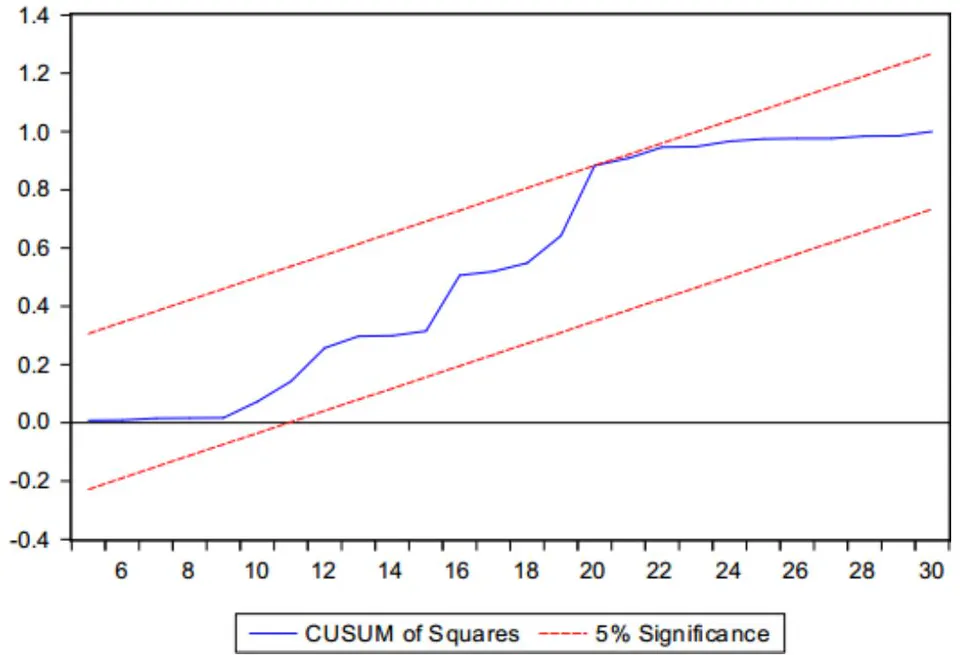
The model calculated exhibits statistical properties of liability; thus, we conduct a CUSUM sensitivity test to ensure that it is stable over time. The following is the output of the Eviews 8.1 software:
Source: Authors computation, using Eviews software
The figure above indicates that the model's fluctuations curve (shown in blue) does not pass any of the two-tailed test boundaries, indicating that the estimated model is stable. Then, the model's validity is no longer questioned.
ii. Relationship between institutions and inflation in Cameroon
Verifications before estimation enable us to conduct tests of data liability (ADF stationarity test) and the existence of a long-term link between the variables picked, in accordance with econometric rigor (Johansen test). The following are the findings of these tests:
| INCREASED Dickey-FULLER STATISTICS | |||
| VARIABLES | AT LEVEL | IN FIRST DIFFERENCE | DECISION |
| SYSTINS | -2,564614 | -6,977453*** | I(1) |
| TxA MASSMO | -3,454455 | -4,517060*** | I(1) |
| TxD INF | -4,565466 | -5.508423*** | I(1) |
| TDI | -3,547365 | -4,256880*** | I(1) |
| Series: TxINF SYSTINS TxMASSMO TDI Lags interval (in first difference) 1 to 1 Unrestricted Cointegration Rank Test (TRACE) | ||||
| Hypothesized no. Of CE(s) | Eigenvalue | Trace statistic | 0.05 Critical value | Prob.** |
| None * | 0.856677 | 61.62443 | 40.17493 | 0.0001 |
| At most 1 | 0.279107 | 13.05814 | 24.27596 | 0.0167 |
| At most 2 | 0.164332 | 4.876509 | 12.32090 | 0.5849 |
| At most 3 | 0.015417 | 0.388424 | 4.129906 | 0.0964 |
| Trace test indicates no cointegration at the 0.05 level *denotes rejection of the hypothesis at the 0.05 level **MacKinnon-Haug-Michelis (1999) p-value | ||||
An examination of the above findings reveals that all of the data are stationary as integrated of order one (see Table 5). Also, because the assumptions about the existentiality of mathematical equations are accepted at the threshold, the existence of a long-run link cannot be challenged(see Table 6).
We can then use the Eviews 8.1 software to estimate our empirical model using the OLS approach. The following are the outcomes:
| Dependent Variable: TXINFMethod: Least Squares Date: 08/02/21 Time: 21:17Sample: 1990 2019 Included observations: 30 | ||||
| Variable | Coefficient | Std.Error | t-statistic | Prob. |
| C | 43,5353 | 15,0478 | 2,8931 | 0,0084*** |
| SYSTINS | 0,3265 | 0,0162 | 3,2248 | 0,0037*** |
| TxA MASSMO | 0,1731 | 0,0645 | 2,6830 | 0,0125** |
| TDI | 0,0206 | 0,0012 | 2,5104 | 0,0140** |
| R-squared | 0,6763 | Mean dependent var | 3.7840 | |
| Adjusted R-squared | 0,5608 | S.D. dependent var | 7.2940 | |
| S.E of regression | 631,0607 | Akaike info criterion | 6.4007 | |
| SumSquared resid | 5,3557 | Schwarz criterion | 6.7307 | |
| Log likelihood | -85,8107 | Hannan-Quinn | 6.504105 | |
| F-Statistic | 4,9889 | Durbin watson | 1.912648 | |
| Prob(F-statistic) | 0.0023 | Wald F-statistic | 32,08122 | |
The model calculated in this approach has significant p-values of either or , indicating the individual significance of each variable. Furthermore, the calculated Fisher attach a probability of 0.0023, making the model significative at : the entire significativity of the model is thus an effectivity. Furthermore, the corrected coefficient of determination is 0.5608, indicating that the explanatory factors selected account for 56.08 percent of the variability in the endogenous variable. Given these qualities, it is evident that the model's suitability as a foundation for economic analysis has been established, and we may now move to economic interpretations of the estimated model.
b) Discussion of results
i. The effect of institutions on economic performance in Cameroon
From the aforementioned analysis, -0.185110 is the value of the metric reflecting the impact of institutional quality on the GDP growth rate. As can be shown, the quality of Cameroon's institutions hurt the country's growth on a scale of 18.5110 percent. Accordingly, a change in institutional measures corresponds to an 18.5110 percent drop in economic growth. This is in contrast to the findings of Mehdi (2021) in Morocco, we revealed that the quality of institutions has a favorable but limited impact on economic growth. What is the best way to comprehend this phenomenon? There are several possible explanations. First and foremost, Cameroon is ranked as one of the most corrupt countries in the world, as we previously stated, with serious economic effects, as evidenced by a research conducted at this time. In his analysis, Nabil (2017) shows how corruption hurts Cameroon's economic growth by reducing private investment, education levels, and government spending. An examination of the growth of corruption's influence over the previous five years reveals that much work has to be done in Cameroon to clean up the corruption problem:
| Years | Corruption Perception Index | |
| Value in% of total | Variation | |
| 2015 | 25 | 14% |
| 2016 | 27 | 8% |
| 2017 | 17,4 | -36% |
| 2018 | 20,06 | 15% |
| 2019 | 20,08 | 0% |
Furthermore, embezzlement of public funds, which is a common occurrence in Cameroon, is a significant economic bottleneck because it significantly reduces the budgetary pot available for the development of public infrastructure, which, in Barro's opinion, is one of the conditions for economic development because it promotes industrialization. This result confirms Cameroon's ranking of 22nd out of 38 African countries examined by the World Bankin terms of institutional and governance quality.
The metric indicating the impact of international trade integration on GDP growth rate has a value of 0,055689. This contrasts with the results observed in the Democratic Republic of Congo, where a change in commerce with the outside world causes a 1.249 percent change in GDP, and in Morocco, where commercial integration had a negative impact on growth of 0.3percent. This characteristic in Cameroon has a low value, with a 5 percent influence on growth. This could be because Cameroon's efforts to produce manufactured goods have yielded ineffective results, therefore it's comprehensible why the country's imports of goods and services are so high. Cameroon has a shallow level of high-tech exports, with only low-value-added products accounting for the significance of exports, demonstrating once again the failure of
Cameroon's industrialisation policy, which began with five-year plans and continued through industrial free zones (IFZs) and master plans for industrialisation.
The Foreign Direct Investment inflow (FDI) rate, on the other hand, is -0.249589, indicating that Cameroon's institutions have contributed to the slowdown of economic growth through an indirect channel: discouraging foreign investors, with a foreign capital inflow rate of 2.326 percent in 2017 falling to 2.017 percent in 2019, according to World Bank data. What is the best way to comprehend this reality? Several recent studies have identified institutions as a key determinant of growth through the promotion of FDI, which has a well-known impact on growth. In fact, according to Djaowé et Bouba (2018), political stability, the business climate, and good governance are among the factors of FDI in Central Africa, and in Cameroon in particular. Institutional quality's role as a determinant of FDI in Cameroon is thus no longer debatable, and it is now part of a theoretical framework that sees FDI as reliant on it. Furthermore, given the social environment, which is characterized by periodic security crises, how can we failto comprehend the outcome of the estimate? An examination of the evolution of FDI inflows to Cameroon over the previous five years reveals that the country still has work to do:
| Years | FDI inflows | |
| Value in% oftotal | Variation | |
| 2015 | 2,245 | 8% |
| 2016 | 2,034 | -9% |
| 2017 | 2,326 | 14% |
| 2018 | 1,977 | -15% |
| 2019 | 2,017 | 2% |
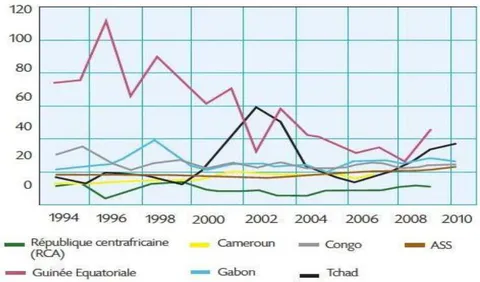
The net variation in FDI from 2015 to 2019 ranged from to , with a peak of 14 percent in 2017, which might be ascribed to the rise in social insecurity with the extent of the security problem in the North-West and South-West Regions of the country, as shown in the table above. This situation has the unintended consequence of contributing to Cameroon's low level of investment when compared to similar countries, as illustrated in the graph below:
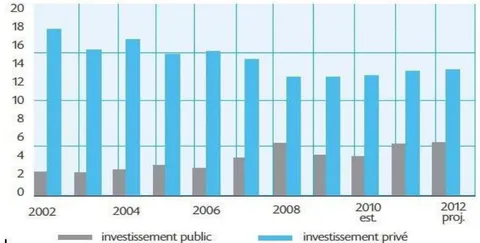
This low level of investment, along with an increasingly visible fall in private investment (of which a significant part is foreign investment), as seen in the graph below, is not conducive to the country's economic progress.
Thus, the results of our regression reflect the reality of Cameroon, where the industrial sector is struggling to take off.
ii. The effect of institutions on inflation in Cameroon
The metric quantifying the effect of institutions on inflation is , which suggests that a change of in institutional measures causes a increase in inflation. This indicates that Cameroon's institutional framework is struggling to keep the market's pricing level under control. Insofar as there is an unprecedented price spike in the markets, this outcome corroborates empirical data. This phenomenon is illustrated in the table below:
| Years | Inflation Rate |
| 2015 | 0,179 |
| 2016 | 1,094 |
| 2017 | 1,48 |
| 2018 | 1,59 |
| 2019 | 2,59 |
The following table depicts how the Cameroonian market is characterized by an upward tendency in the general level of consumer prices, indicating the difficulty of public authorities in controlling market pricing, despite several reforms made by the Ministry of Commerce.
The value of , implies that the money supply in circulation in the economy favors price inflation. In the specific situation of Cameroon, the notion that inflation is caused by money is thus validated. Consequently, a change in the money supply results in a increase in the price level. This minimal influence of the money supply on prices can be explained by the fact that the choice to modify the money supply is an external factor because the country is in a monetary zone. The occurrence of uncertain events, such as foreign exchange gains on external claims, is thus reduced to the increase in the money supply. Cameroon's moneysupply expanded from 4.897,5 billion francs in 2019 to 5.598,7 billion francs in 2020, indicating a rise of , thanks to counterparty upgrades (external claims) ("Investir au Cameroun," 17 June 2020 issue).
The interest rate coefficient is 0.0206, indicating that a change in the interest rate of results in a price rise of 2.06 percent. In the example of Cameroon, the economic theory of price sensitivity to interest rate increases is confirmed. Then, an increase in the interest rate raises the cost of bank loans, which raises manufacturing expenses and, then, prices. Furthermore, rising credit costs cause a crowding out of bank credit, which reduces investment and, consequently, paralyzes supply. Because demand has remained constant and has grown to outnumber supply, price fluctuations are unavoidable.
But, beyond the theory, this result could also be explained by the situation of excess liquidity of
Cameroonian banks, which do not finance enough investments, particularly SMEs, which are the most numerous and least eligible for any financing: with the cost of credit, the conditions of access to credit, among others being inaccessible to them. Therefore, investments low continued to remain due to high credit costs combined with difficult conditions for SMEs, thus, the most numerous enterprises in Cameroon (75 percent according to the 2009 General Census of Enterprises), are compounded by increasing fiscal pressure (with the new 2022 finance law that plans to tax money transfers by telephone money and income created by tontines), the prices charged are rising, allowing imports to flourish.
VI. CONCLUSION
Our analysis uncovered some significant areas that we should take into consideration in order to address the concerns of services and earnings in our daily lives. We can see that an institutional origin in Cameroon is the primary cause of household predicaments relating to the depreciation of the consumption basket, which is caused by an increase in prices and is exacerbated by income stagnation. So, it is critical to take remedial actions to clean up the institutional environment in order to ensure the population's well-being, which is the state's prerogative. The following aspects are developed through suitable solutions:
- Strengthening the fight against corruption
Despite the fact that government anti-corruption measures have been multiplied for nearly two decades, such as "Operation Sparrow Hawk," the establishment of the Anti-Corruption Commission, which has implemented a national anti-corruption strategy, and a slew of other initiatives, one thing is clear: the problem persists. The phenomenon has grown to the point where it is difficult to know where to begin. It appears to have become the accepted practice among citizens. It is now common knowledge that you must motivate a cashier in order to receive your salary or any other payment (especially if the amount is significant), and that a file or letter that is not "followed up" is likely to be lost in the offices... Consequently, the phenomenon causes significant losses for both households (according to Transparency International, families spend an average of 102,500 francs per month on bribes, which is significantly more than the monthly salary of some senior civil servants) and the state (according to Samuel Ekoum, president of the Cameroonian Nongovernmental Organization named SOS Corruption, Cameroon loses an average of 400 billion francs per year due to corruption). Thus, stronger measures are needed to deter such behaviors, which are sometimes the result of bureaucratic red tape and procedural formalism, orchestrating the use of money to abbreviate these procedures.
- Strengthen efforts to consolidate public finances
It is confusing to attribute Cameroon's low investment budget to the country's financial woes, given the minimal amount allotted to public investments and the outrageous misappropriation of public funds. Given this, it becomes almost impossible not to infer that the significant issue is the quality of governance rather than the budget deficit. Few managers of Cameroon's public service have escaped being imprisoned because of the intractability of a fewbillion francs. Therefore, there is still a lot that can be done to improve the quality of public financial management. Beyond "Operation Sparrow Hawk," which focuses on catching "pickpockets," repressive and even deterrent measures should be implemented as soon as possible. In reality, rather than incarceration, which is an additional cost to the state, measures aimed at retrieving concealed sums of money must be established. It would also be necessary to establish legislation to deter future attempts at embezzlement. It is essential to create a public management audit system based on a strategy that is more focused on sticks than carrots.
Faced with a resurgence of high prices in Cameroon, the source of which, as our empirical study shows, is institutional, there is an urgent need to implement reforms that are firmly geared toward the control and regulation of market prices, rather than actions that are part of "institutional posturing." We recommend the following measures to achieve this goal: - Promote "made in Cameroon good" in order to reduce imports and thereforeimported inflation
Cameroon's trade balance is unstable due to a high gap between imports and exports, which has the effect of introducing inflation into the markets from across the border. So, it is critical boosting national manufacturing through funding projects led by qualified young people, as well as the establishment of local raw material transformation enterprises.
- Develop inflation control measures, including inflation targeting
The Cameroonian government must ensure that prices are stabilized to keep the currency's purchasing power at an adequate level to fulfil better the goal of improving the population's well-being. Then, it would be prudent to establish an inflation target rate that must be adhered to on the markets, as well as to ensure that this rate is applied effectively through market raids by control teams established for this reason.