Summery-Human resources planning, as a key activity and essentially integrating Human Resources Management, is the process by which a company ensures a sufficient number of personnel and fulfills the objective of optimizing its human structure. It makes it possible to foresee future needs based on criteria of social commitment and overall profitability and to determine the ideal number of employees needed at any given time, with the right qualifications or skills and in the right positions in the present and foreseeable future. For years, strategy experts have emphasized the importance of clearly defining a company’s strategic framework because it allows it to create its identity, purpose and direction. At the same time, this framework serves as an instrument to appropriate a greater portion of the value created from, for example, the implementation of more and better business innovation practices.
## I. INTRODUCTION
In recent times the advance of technology constitutes a fundamental part in the development of any organization, as well as its financial and material resources, but it is important not to leave aside Human Resources (HR). The latter plays an essential role in the proper functioning, quality and efficiency of any organization. This is where the term HR comes from to describe the people who work in organizations. Therefore, in view of the new challenges facing companies, they must focus essentially on understanding human behavior in their work environment, as well as on their training and development.
Modern organizations, both public and private, operate in an environment where change is constant and permanent. The need for survival of any organization makes instruments such as HR strategic planning a proactive way for them to be able to face organizational actions, which allows them, in one way or another, to foresee the future and get ahead with their strategies. (Mendoza et al., 2016)
According to Vazquez and Zenea (2017), constant transformations indicate to organizations that it is strategic, for their growing and sustained development, to have highly competent staff. It is essential to pay attention to human capital management (HCM), with the permanent search for new methods and tools that, supported by the competencies of workers and the new trends that govern the current labor world, facilitate an increase in the efficiency and quality of processes.
The need for planning in organizations is so obvious and so great that it is difficult to find someone who does not agree with it. But it is even more difficult to apply the planning processes in the human resources of the organizations, if the necessary techniques to do so are not available. Therefore, the main objective pursued in this research is to substantiate how strategic management constitutes the main input element for HR planning.
## II. METHODOLOGY
The research method employed was documentary analysis of authors and consulting institutions, reflected in recent scientific literatures.
## III. RESULTS AND DISCUSSION
In the last two decades there has been a growing interest of HR professionals in getting involved in the strategic planning of organizations as a way of reinforcing their importance in these organizations. According to Martell Sanchez (2021) strategic planning is not only a key tool for the manager, it also implies an interactive process from top to bottom and vice versa in the organization. General management is in charge of setting overall goals for the company and establishing priorities. The lower units determine plans and budgets for the following period, which are consolidated and corrected by the higher units, which send them back downwards, where they are further refined. As a result, the establishment of a formal strategic planning system brings strategic concern down to all levels of the organization. The company selects, among several alternative paths, the one it considers most suitable for achieving the proposed objectives. Generally, it is a long-term global planning.
Strategic HR management can be conceived as a large umbrella that integrates HR practices, policies and philosophy, with the objective of preparing the organization to achieve its strategic goals. Ideally, these practices and policies should form a system capable of attracting, developing, motivating and training the necessary number of employees to ensure the effective functioning of an organization. González (2011) states that this can be broadly defined as the process of analyzing HR needs, as the internal and external environments of the organization change, and the application of the consequent proactive strategy to ensure the availability of HR demanded by the organization.
Chiavenato (2011), states that the HR processes are: integrate, organize, retain, develop and evaluate human talent. Due to their interaction, any change in one of them influences the others, feeding back new motivations, thus producing changes and expansion in the whole system. Ramírez Molina et al. (2018) propose, based on this theory, that there are five (5) processes in HR Management. These can be seen in Figure 1.
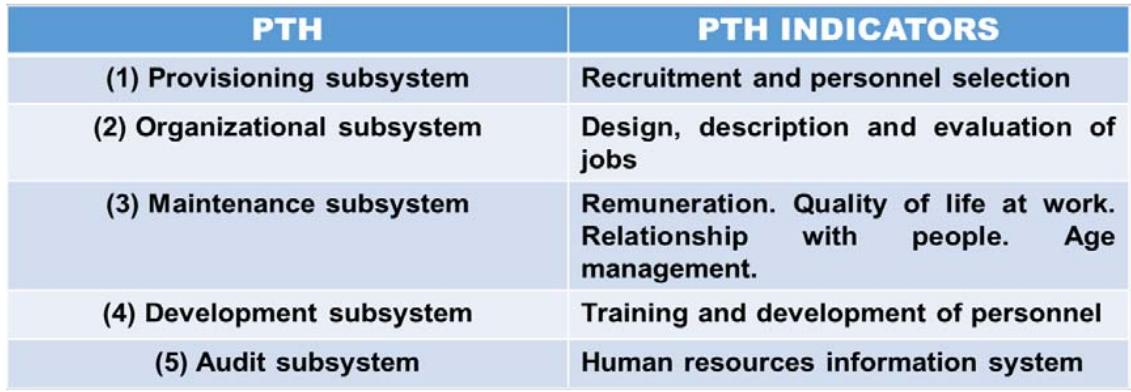
Source: Own elaboration Figure 1: Human talent processes (PTH).
In order to provide a solution to the research objective, previous research on the subject was analyzed, which serves as a basis for the HR management model. Table 1 shows the key elements of the different models analyzed.
Table 1: Key elements of the research consulted.
<table><tr><td>Models</td><td>Key elements</td></tr><tr><td>González and Cabrera (2010)</td><td>Strategies, contingencies and job design.</td></tr><tr><td>Urrutia (2013)</td><td>Key activities articulated to strategy, culture, policies and objectives.</td></tr><tr><td>Perez and Rondon (2017)</td><td>Organizational effectiveness. Job design, internal and external analysis.</td></tr><tr><td>Prado Gomez (2019)</td><td>Strategy and business philosophy. Situational factors. Task technologies. Internal and external analysis.</td></tr><tr><td>Matos et al. (2021)</td><td>Strategy, culture, policies and objectives.</td></tr></table>
In addition, the HR Management Systems proposed by: Bastidas Rodelo (2020); Cuesta Santos (2021); Chiaven (2021): Bastidas Rodelo (2020); Cuesta Santos (2021); Chiavenato (2007); Ramírez Vázquez (2017). According to the analysis carried out, it is recommended to use for Cuban institutions the systemic process comprised by HR planning, proposed by Cuesta Santos (2021) (Figure 2), since it takes into account the main features and current trends of HR Management, the conception of Human Capital Management and the approaches proposed by the National Bureau of Standardization (2007).
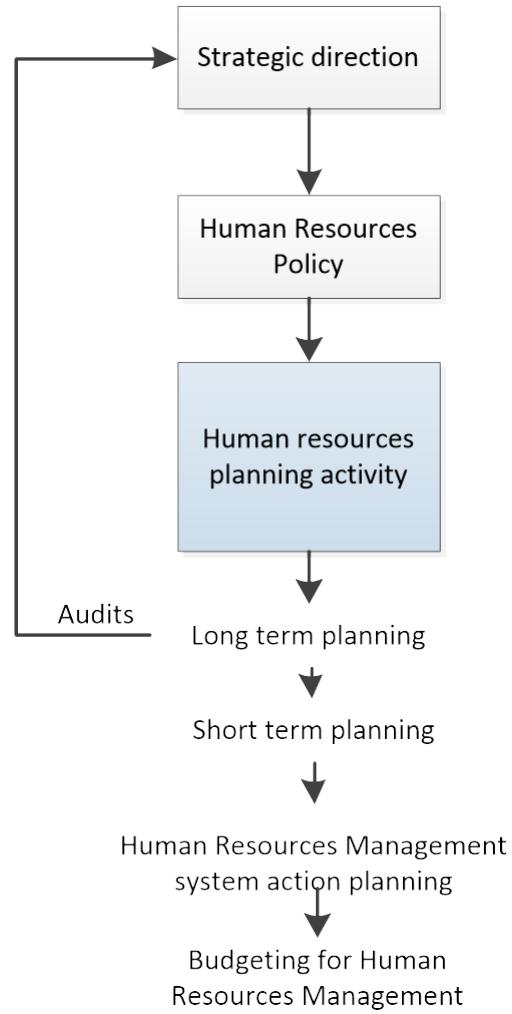 Figure 2: Systemic process involved in HR planning.
Source: Own elaboration.
Figure 2 shows several essential inputs to proceed with the key activity of HR management planning. Of course, the first input is Strategic Management. At this functional level of HR management, strategies are followed by HR policies, together with the budget. Subsequently, the first entry to the planning block is the organizational structure. Then other important key HR management activities continue to be entered, and as many as possible should be considered. This will make it possible for the management planning to be truly comprehensive and systemic.
According to Thompson et al. (2012), strategic direction is a process of continuous and systematic movement that provides better guidance to the entire organization on the crux of what it wants to achieve. It allows to be more attentive to changes, new opportunities and threatening developments. It provides ideas for evaluating budget requests, capital investment and new personnel. It allows to allocate resources in areas that produce results and support the strategy, it helps to unify the numerous decisions related to strategies throughout the organization. Strategic management creates a more proactive managerial attitude and thus counteracts tendencies toward reactive and defensive decisions.
Various academic and professional publications highlight the value of structuring and clearly defining a company's strategic framework. This allows the creation of its identity, purpose and direction, as an instrument by which the company's essential values are transmitted to its stakeholders (Bailey, 1996). The concepts and elements that make up strategic management, according to Silva Murillo (2010) and Pedros and
Gutiérrez (2012), are: mission, vision, values and strategic goal or objectives, as shown in Figure 3.
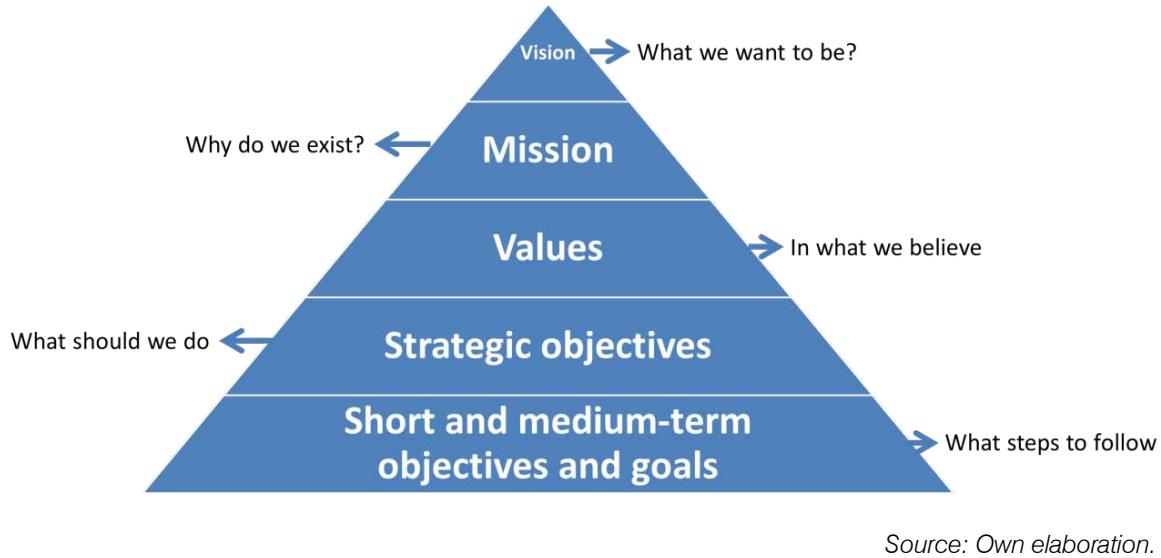 Figure 3: Elementary concepts that make up strategic management.
Collins and Porras (1996), define a company's mission as the core ideology that determines the enduring character of an organization, providing a coherent identity that transcends product life or marketing cycles, technological advances, management fads and individual leaders.
Research by Pearce and David (1987) was the first attempt to empirically study the relationship between mission statements and firm performance. They sought to test the value of the statements by using content analysis to review the components of the statements of Fortune 500 companies. Their findings supported that the inclusion of the proposed mission statement components, is positively associated with a firm's financial performance, however, they assert that there are many variables that affect organizational performance, so the results do not suggest that their inclusion in mission statements directly improves organizational performance, as a firm can have a comprehensive mission statement and still experience a decline in sales and profits for various reasons (Contreras-Pacheco et al., 2021).
Vision according to Kirkpatrick (2017), is the positive impact the organization wants to have. A vision statement is a formal description of the desired future state of the organization in the long term. Contreras-Pacheco et al. (2021) states that several studies show that companies whose vision focuses on a desired future state are better prepared for change. A correct vision, with the right characteristics and components aimed at cultivating a culture of innovation as a fundamental pillar at all levels of the organization, allows the company to gain a competitive advantage.
Contreras-Pacheco et al. (2021), identified six (6) variables that allow to understand the relationships between mission, vision, competitive advantage and innovative capacity in a company, as shown in Table 2.
Table 2: Structural model and relationship of the variables identified by Contreras-Pacheco et al.
<table><tr><td colspan="2">Variables</td><td>Structural Model</td></tr><tr><td>1</td><td>Positive relationship between the quality of the mission statement and the ability to permanently build a company's competitive advantage. In other words, a better quality of a company's mission statement is a clear indicator of its possession of competitive advantage.</td><td rowspan="6">Vision
P5
Mission
P1
Competitive
P6
P4
Innovative
Innovative
P6
P4
Innovative
P6
P4
Innovative
P6
P4
Innovative
P6
P4
Innovative
P6
P4
Innovative
P6
P4
Innovative
P6
P4
Innovative
P6
P4
Innovative
P6
P4
Innovative
P6
P4
Innovative
P6
P3
P2
P1
Competitive
Competitive
Competitive
Competitive
Competitive
Competitive
Competitive
Competitive
Competitive
Competitive
Competitive
Competitive
Competitive
Competitive
Competitive
Competitive
Competitive
Competitive
Competitive
Competitive
Competitive
Competitive
Competitive
Competitive
Competitive
Competitive
Competitive
Competitive
Competitive
Competitive
Competitive
Competitive
Competitive
Competitive</td></tr><tr><td>2</td><td>Positive relationship between the quality of the mission statement and the innovative capacity of a company. In other words, a better quality of a company's mission statement is a clear indicator of a high innovative capacity.</td></tr><tr><td>3</td><td>Positive relationship between the quality of the vision statement and the ability to permanently build a company's competitive advantage. In other words, a better quality of a company's stated vision is a clear indicator of its possession of competitive advantage.</td></tr><tr><td>4</td><td>Positive relationship between the quality of the vision statement and the innovative capacity of a company. In other words, a better quality of a company's vision statement is a clear indicator of a high innovative capacity.</td></tr><tr><td>5</td><td>Positive relationship between the quality of a company's mission statement and the quality of its vision statement.</td></tr><tr><td>6</td><td>Positive relationship between a company's innovative capacity and its competitive advantage.</td></tr></table>
As a result of the above, all companies, organizations or institutions should take into account that, when drawing up the work policies of the different areas, they should be aligned and contribute to their strategic planning. HR planning must go hand in hand with these, as it is a guarantee of having all the key processes in place in order to achieve the goals set. They must be taken into account from the recruitment or selection of personnel and training or improvement. This makes it possible to have workers who know why and for what they work and to strengthen their sense of belonging.
The strategic planning of the company identifies several critical factors to achieve the success of the organization, while trying to find a way to place it in a better position and be in a better position to compete in the market. To this end, the planning process provides a clear formulation of the organization's mission, a commitment of the staff to that mission, an express statement of the starting assumptions with a plan of action adjusted to the available resources. This must include trained and educated personnel. HR planning contributes significantly to the strategic management process, as it provides the means to achieve the expected results of the planning process.
HR demands and needs are derived from strategic and operational planning, and then compared with existing needs. Recruitment, training and reassignment programs are developed for this purpose. Any human resources plan, to be effective, must be based on the organization's long-term operational plans. Its achievement will depend on the degree to which the HR department can integrate effective workforce planning into the company's overall planning process.
Mendoza et al. (2016), propose that in order to integrate HR into strategic planning, a SWOT or HR SWOT matrix can be performed. This is because the constant changes in the environment modify the state of the organization and it is necessary to know the social, demographic and union environment, which directly influence the internal environment of the work organization and employees.
The competency-based HR planning process is considered as the effective way to evaluate the objectives of the section. Through it, an analysis is made of the current situation where the internal and external aspects of the organization are studied, the gap between what exists and what is envisioned is analyzed to then develop strategic, alternative and functional plans, thus proceeding to the implementation of the plan to culminate in the evaluation. This evaluation is recommended as circumstances change. The diagnosis of the environment helps to obtain a better understanding of the context in which HR decisions are and will be made.
In this sense, there are several issues to consider, aspects such as the degree of aging of the working population, migratory flows, participation of minority groups in the composition of the labor force, level of unemployment, incorporation of women into the workforce, level of training, among others, are aspects of mandatory consideration for HR planning. Granjo (2008) stated that it is important for the organization to identify its relevant labor market, in its broadest sense, without referring to any specific job position, which will be marked by the geographical scope, the nature of the business and the competitive situation of the firm.
For Benito (2003), creating a strategic HR plan is a very serious decision that requires some time of prior reflection on its opportunity and possibilities of success. To carry out a project of this nature entails a double commitment, on the one hand, with the company's management and, on the other hand, a very close and direct commitment with the HR function itself and with the team of professionals who develop it. However, it is a task that must be developed, since the benefits are greater than the proposed challenges. With this, structural models can be achieved that prove a good work performance.
In order to fulfill the strategic plan, it is necessary to take into account the following aspects:
- Imagine all possible paths from the current situation to the ideal situation.
- Study from all possible points of view (technical, human, economic, etc.), all the proposed solutions.
- Eliminate those that do not seem feasible and select those that do seem to lead to the objectives.
- Choose the most appropriate option for the strategic HR plan.
The plan should include the way in which the competencies that are not currently available and that are necessary will be acquired. In addition to the ways in which the competencies that the company already has are going to be developed. All this must be present in the strategic objectives and in correlation with the company's vision.
## IV. CONCLUSIONS
The conclusions of the study are that companies should follow the following principles in their HR planning:
1. Relate the strategic direction of the company to each key activity of HR Management.
2. To achieve a greater contribution of each key activity of HR management to the strategic management of the company, in order to have innovative, competitive workers with a sense of belonging.
3. To implement each of the human talent processes as part of a strategic objective.
BIBLIOGRAPHICAL REFERENCES
Generating HTML Viewer...
References
27 Cites in Article
V Amrutha,S Geetha (2020). A systematic review on green human resource management: Implications for social sustainability.
J Bailey (1996). Technology: The Answer to Your Worries.
Paola Ladino Marín,Sandra Valbuena Antolinez,Mario Vernaza Trujillo,María Londoño Arias (2020). Estrategias e instrumentos de la gestión del conocimiento para dinamizar comunidades de práctica en el contexto de la educación superior.
C Benito (2003). El proceso de diseño de la estrategia de recursos humanos.
James Collins,Jerry Porras (1996). Building a Visionary Company.
Orlando Contreras-Pacheco,Alejandra Pirazan Parra,Maira Villareal (2021). ¿Son la Misión y Visión Verdaderos Promotores de Ventaja Competitiva e Innovación?.
Cuesta Santos,A (2021). Tecnología de Gestión de Recursos Humanos.
I Chiavenato (2007). Administracón de Recursos Humanos.
I Chiavenato (2011). Administración de recursos humanos.
A González,Y Cabrera (2010). Diseño de un procedimiento para aplicar la Gestión por Competencias en los cargos técnicos.
F González (2011). La planificación estratégica de recursos humanos.
J Granjo (2008). Cómo hacer un plan estratégico de recursos humanos.
Shelley Kirkpatrick (2017). Understanding the Role of Vision, Mission, and Values in the HPT Model.
K Martell Sánchez (2021). Diseño de un modelo de gestión para la capacitación de cuadros y reservas de cuadro en la Jefatura del MININT en Matanzas.
L Matos,P Rodríguez,M Matos (2021). La capacitación político-ideológica desde el puesto de trabajo de los cuadros políticos.
D Mendoza,D López,E Salas (2016). Planificación estratégica de recursos humanos: Efectiva forma de identificar necesidades de personal.
Carlos Suárez Sánchez (2007). Estudio de viabilidad para desarrollo de un sistema experto para la gestión del capital humano en las PYMES del Perú.
John Pearce,Fred David (1987). Corporate Mission Statements: The Bottom Line.
D Pedros,A Gutiérrez (2012). Metas estratégicas.
J Perez,M Y Rondon (2017). Sistema de preparación y superación para cuadros y reservas.
A Prado Gomez (2019). Administración de Recursos Humanos.
Ramírez Molina,R Villalobos Antúnez,J Herrera Tapias,B (2018). Proceso de talento humano en la gestión estratégica.
T Ortiz,A Cruz-Crespo,M Rodríguez (2017). Efecto del número de pasadas sobre el desempeño al desgaste micro-abrasivo de depósitos de recargue obtenidos con un electrodo tubular revestido experimental.
Silva Murillo,R (2010). Enfoque conceptual de la Dirección Estratégica.
A Thompson,M Peteraf,J Gamble,Iii Strickland,A (2012). Administración sistemática de oxígeno en casos de IAM: un mito moderno.
A Urrutia (2013). La dimensión económica de la preparación y superación de los cuadros y reservas del Gobierno de Cárdenas.
O Vazquez,M Zenea (2017). La gestion por competencia de los directivos de las áreas docentes en la Unversidad Agraria de la Habana UNAH.
No ethics committee approval was required for this article type.
Data Availability
Not applicable for this article.
How to Cite This Article
Ulises Betancourt Morffis. 2026. \u201cStrategic Direction as an Input to Human Resources Planning\u201d. Global Journal of Human-Social Science - E: Economics GJHSS-E Volume 22 (GJHSS Volume 22 Issue E7).
Explore published articles in an immersive Augmented Reality environment. Our platform converts research papers into interactive 3D books, allowing readers to view and interact with content using AR and VR compatible devices.
Your published article is automatically converted into a realistic 3D book. Flip through pages and read research papers in a more engaging and interactive format.
Our website is actively being updated, and changes may occur frequently. Please clear your browser cache if needed. For feedback or error reporting, please email [email protected]
Thank you for connecting with us. We will respond to you shortly.