This research sought to investigate the contribution of SMEs to social development. Owing to the exponential increase in unemployment and retrenchments from the formal sector in Zimbabwe, there is a critical absence of empirical evidence to support SMEs as viable alternatives for income generation and employment, as well as general uncertainty about the contribution of the sector to the national economy. This study was significant since SMEs are believed to have a role upon employment creation, particularly for the less qualified people of society, as well as income generation, and since they are understood to have the potential to fight poverty and aid development, which also helps through the generation of information for policymaking purposes. The objectives of the study were therefore to detail the structure of Zimbabwe’s SME sector, to investigate its employment creation ability as well as to assess the average monthly incomes of the employees within this sector. These were determined in order to establish how these jobs contribute to the development of the people involved in this sector.
## I. INTRODUCTION
This section seeks to introduce the background of the study. It introduces the issues concerning small and medium enterprises (SMEs) and social development. Thus the researcher came up with objectives that will assist in data gathering leading to coming up with possible recommendations to the SMEs sector in Zimbabwe.
### a) Background Information
Although development usually refers to economic progress, it can apply to political, social and technological progress as well. Development is a human process as the energy aspiration of the people who seek it forms the motive force that drives development and is one of the most powerful means of propagating and sustaining new developments if the educational system in a society. It transmits society's collective knowledge from one generation to the next and equips people with the mental capacity to devise ways and means to improve productivity and enhance living standards, and involves the use of such resources as physical, social, mental and human resources.
Social development describes the actions that are taken to build positive outcomes and to prevent negative outcomes that can adversely affect a community (UN, 1995). It is an approach that helps the society to better realize its aims and objectives. Social development empowers people by creating more inclusive, cohesive, resilient and accountable institutions and societies that help overcome poverty. Social sustainability is a critical aspect of achieving long-term development that significantly improves the lives of the world's poorest people.
As one of these attempts, the importance of social development has been emphasized especially since the 1990s, learning from the past development experiences. The United Nations Development Programme (UNDP) promoted the concept of human development from the 1990s by redefining development as centering on people rather than simple material growth and as a process of enlarging people's choices (UNDP 1990), enriching the concept of social development (Judge, 1988). In the 1980s, sustainable development became one of the key points to redefine development with the recognition of the environmental degradations. Corresponding to the evolvement of the development definitions, the concept of social development became refined, and its importance was confirmed globally in the Social Summit of 1995 (UNDP, 1993).
The original definition of social development during the 1960s and 1970s was mainly the social infrastructure to support economic development, which corresponded with the mainstream development during this period focusing on economic development. The conceptualization of human development in the 1990s, to broaden the choices of people, is also closely related to the foundation of the social development concept (Rist, 1996). The 1995 Copenhagen Social Summit emphasized social development as a global imperative whose objectives can be summarized as ensuring poverty eradication, full employment, and social integration. With these three main pillars, social development evolved to include 10 commitments of the Social Summit, namely; creating an economic, political, social, cultural and legal environment to enable social development; eradicating poverty in the world; promoting full employment; promoting social integration, based on protection of human rights, nondiscrimination, and the participation of all people; equity between women and men; universal education, and health; respecting and promoting common and particular cultures; preserving the essential bases of people-centered sustainable development; and contributing to the full development of human resources to social development in order to eradicate poverty, promote full and productive employment and foster social integration; accelerating the economic, social and human resource development of Africa and the least developed countries; ensuring structural adjustment programmes to include social development goals, in particular eradicating poverty, promoting full employment, and enhancing social integration; increasing resources allocated to social development and improving framework for international, regional and sub-regional cooperation for social development (United Nations, 1995).
Social development is therefore a necessity for communities the world over, particularly in the developing countries which are yet to meet global standards of development. Whilst there are many approaches to ensure social development initiatives are fruitful, one that finds ready applicability is taking the SME route in developing countries like Zimbabwe. However, understanding the role and importance of these SMEs in development is another area that needs review.
### b) Problem Statement
The problem is that although there is an exponential increase in unemployment and retrenchments from the formal sector in Zimbabwe, there is a critical absence of empirical evidence to support SMEs as viable alternatives for income generation and employment. There continues to be uncertainty over the significance of the SME sector to the national economy. There is also limited or scanty information on the role of SMEs within the societies they serve.
### c) Objectives of the Study
The following were the objectives of the study;
1. To examine the structure of SMEs at Glen View 8 Industry.
2. To determine the number of jobs created by the SMEs in the Glen View Area 8 industry.
3. To determine the disposable monthly incomes created by the SMEs in the Glen View Area 8 industry.
d) Scope
The research was confined to Harare's Glen View Area 8 industry. This made it easier and cheaper for the researcher to locate the SME staff who were the key respondents in this research. The researcher faced problems in obtaining information which was deemed confidential but endeavoured to get authority from business owners and convince those with the necessary statistics that the information was purely for academic purposes and would treated in high confidentiality. There was also the risk of no responds from the anticipated respondents owing to such issues as other commitments, limited time and negative perceptions from the respondents who deemed this research as something that jeopardised their business or professional interests, particularly along political lines. The researcher is also a full time employee and had to dedicate extra hours effort to ensure completion of the research.
### e) Key Definitions
Small to Medium Enterprises (SMEs): A business enterprise employing a total of between 5 and 10 people. However it should be noted that this definition varies from place to place.
Social Development: The social infrastructure to support economic development.
Entrepreneur: One who assumes the financial risk of the initiation, operation and management of a given business or undertaking. Someone who organises a business venture and assumes the risk for it.
Informal Activities: In economics, the informal economy is a system of exchange used outside state-controlled or money-based economic activities.
Formal Activities: Industrial activities that are carried out within the legal framework of an economy.
## II. LITERATURE REVIEW
### a) The Definition of SMEs
A lot of definitions have been put across to define SMEs. There is no universally accepted definition of SMEs (Tevera, 1998). The variables used in the definitions of SMEs vary from country to country. In South Korea the definition of SMEs is based on the number of employees found at an establishment (Bert, 1994). In Taiwan an SME is defined according to level of capitalisation (Kim and Gallent, 2000). It can be argued that some definitions focus on measures such as number of employees and volume of sales while others prefer to pay attention to total capital assets and capital per worker. In Zimbabwe the definition of SMEs is based on number of employees and asset base (Republic of Zimbabwe, 2002). The Ministry of Small and Medium Enterprises Development (MSMED), which was set up in 2002 by the Government of Zimbabwe, defines SMEs by reference to number of employees, total assets and legal structure (Republic of Zimbabwe, 2002). SMEs are defined as enterprises with fewer than 500 employees (Republic of Zimbabwe, 2002). According to MSMED, the number of employees, asset base and the legal structure must be met for an enterprise to be classified as SMEs. The statistical definition of SMEs varies by country and is usually based on the number of employees, and the income as shown in Table 1.1.
Table 1.1: The Definition of SMEs in Zimbabwe
<table><tr><td>Sector</td><td>Number of People</td><td>Asset Base</td><td>Legal Structure</td></tr><tr><td colspan="4">Micro-enterprises</td></tr><tr><td>All sub-sectors</td><td>Less than 5</td><td>Not relevant</td><td>Informal</td></tr><tr><td colspan="4">Small-scale Enterprises</td></tr><tr><td>Manufacturing</td><td>Less than 50</td><td>Less than 12 000 000</td><td>Formal</td></tr><tr><td>Other</td><td>Less than 30</td><td>Less than 6 000 000</td><td>Formal</td></tr><tr><td colspan="4">Medium-scale Enterprises</td></tr><tr><td>Manufacturing</td><td>50-70</td><td>12-24 000 000</td><td>Formal</td></tr><tr><td>Manufacturing</td><td>30-50</td><td>6 000 000-14 000 000</td><td>Formal</td></tr></table>
### b) Characteristics and Importance of SMEs
SMEs are central to local private sector development, a major driver of economic growth and are key builders of social infrastructure. These businesses generate up to $90\%$ of jobs in developing and low-income economies (World Bank, 2012). The jobs generated are suitable for semi-skilled and unskilled workers. Importantly, employment is a major driver of reduced conflict and social empowerment. Governments recognize that SMEs are vibrant and innovative engines of growth and of job creation, quick to respond, flexible and adaptable to changing circumstances. SMEs have become a central force in the economy and society. SMEs are also important for the development and acceleration of change economies in transition, such as those in which agricultural predominance is giving way to industry and services, or those moving from a centralized to a free market economy. They also serve as important vehicles in facilitating people-to-people conflict resolution through direct interaction between important sectors of society (World Bank, 2012). In this way, they can help create growing mutual trust between 'enemies'.
Small and medium-sized enterprises (SMEs) are a very heterogeneous group. SMEs are found in a wide array of business activities, ranging from the single artisan producing agricultural implements for the village market, the coffee shop at the corner, the internet café in a small town to a small sophisticated engineering or software firm selling in overseas markets and a medium-sized automotive parts manufacturer selling to multinational automakers in the domestic and foreign markets. The owners may or may not be poor; the firms operate in very different markets (urban, rural, local, national, regional and international); embody different levels of skills, capital, sophistication and growth orientation.
At the lower end of the SME sector, a large number of countries define a group, which is a mixture of the self-employed and "micro" enterprises, with less than 10 employees. Irrespective of the level of development of an economy, a significant proportion of micro and, sometimes, small enterprises are found in the informal sector or the shadow economy. Schneider (2003) compared the size of the informal sector in 22 transition (former Soviet Union and Central and Eastern Europe) and 21 OECD economies from 2000-2002 and found that the size of the informal sector amounted to an average of $16.7\%$, $29.2\%$ and $44.8\%$ of GDP in OECD, Central and Eastern Europe and the former Soviet Union economies, respectively.
Recent empirical studies show that SMEs contribute to over $55\%$ of GDP and over $65\%$ of total employment in high-income countries. SMEs and informal enterprises account for over $60\%$ of GDP and over $70\%$ of total employment in low-income countries, while they contribute over $95\%$ of total employment and about $70\%$ of GDP in middle-income countries (Schneider, 2003). In low-income countries, especially in the least developed economies, the contribution of SMEs to employment and GDP is less than that of the informal sector, where the great majority of the poorest of the poor make a subsistence level of living. Therefore, an important policy priority in developing countries is to reform the policies that divide the informal and formal sectors, so as to enable the poor to participate in markets and to engage in higher value added business activities.
In middle-income countries, formal SMEs contribute about $20\%$ more to employment and GDP than the informal enterprises. Thus, in these countries, eliminating factors that discourage informal enterprises from entering the formal SME sector would also bring about gains in economic terms. This is evidenced by the fact that SMEs contribute over 3 times as much as the informal sector in both total employment ( $\sim 65\%$ ) and GDP ( $\sim 55\%$ ) in high-income countries, and that these countries are also taking initiative to bring as many informal enterprises as possible into the formal sector. SMEs have played a pivotal role in the development of the manufacturing sector in South East Asia and countries such as Japan, South Korea, Taiwan, Hong Kong and Malaysia owe their industrial development to SMEs (Sunita and Mead, 2002). Evidence from the highly developed economies has also shown the importance of SMEs. Countries in Europe and North America have advanced programmes to encourage the development of the SMEs in peripheral regions (Kim and Gallent, 2000). In some African countries SMEs have also contributed to the manufacturing sector (Musampa, 1999). Just as in developed countries, SMEs tend to revive manufacturing industries in peripheral regions.
### c) SMEs in Zimbabwe
SMEs play a key role in job creation, providing two thirds of all formal jobs in developing countries and up to $80\%$ in low income countries. $50\%$ of total employment creation comes from enterprises with less than 100 employees (WB, 2012). Job growth comes not only from existing companies but also from newly created firms, especially those that grow very fast in the first years of activity. There are key areas where data is missing, for example on micro and informal firms, and on the quality of jobs created in SMEs.
The employment creation potential of the SME sector is well documented in both developed and developing countries (WB, 2003) and presents an attractive and compelling policy option for a country like Zimbabwe confronted with a structural unemployment rate between 57 and $63\%$ (Zimbabwe, 2006). Across much of the Sub-Saharan Africa region, including Zimbabwe, the true potential of the SME sector remains stymied in a phenomenon described as missing middle (UNDP, 2008). In Zimbabwe, the SME Policy and Strategy Framework has defined SMEs as those firms who are registered in terms of their legal statuses and employ anywhere between 6 to 100 workers (Zimbabwe, 2008).
There is general consensus that there is a dearth of up-to-date metrics on the size and nature of the SME sector in Zimbabwe (UNDP, 2010). Increased retrenchments make the SME sector the safety net for those retrenched. The first country-wide survey conducted in 1991 established that the country had a total of 845 000 SMEs employing around 1.6 million people in small-scale manufacturing, trade and services (WB, 2012). SMEs are largely based on hawking and vending.
Small to Medium Enterprises (SMEs) occupy a key and strategic role in revitalizing the economy. It is universally acknowledged that they are effective instruments of employment creation and economic growth, which ultimately lead to poverty alleviation for the entrepreneurs themselves as well as their employees. Their contribution will help turn the economic fortunes of the country and many will experience a better way of life.
Zimbabwean manufacturing sector is regarded as one of the most advanced and highly diversified in Sub-Saharan Africa (SSA). The sector produced over 7000 separate industrial products with $50\%$ of all manufacturing in the formal sector taking place in Harare and half of the remainder taking place in Bulawayo (Ministry of Industry and Trade, 1999; Mumbengegwi, 1993). Manufacturing industry in Zimbabwe has been restricted to major urban centres like Harare, Bulawayo, Gweru and Kwekwe (Ministry of Industry and Trade, 1999; Ministry of Industry and Trade, 1998 and Mumbengegwi 1993). The manufacturing sector contributes about $17\%$ to the Gross Domestic Product (GDP) and it employs $15\%$ of the labour force (Ministry of Industry and Trade, 1998). These figures apply to the formal manufacturing sector. The Ministry of Industry and Trade (1999) argues that although figures from the informal sector are not reflected, SMEs contribute much to the manufacturing sector.
SMEs in Zimbabwe are highly diverse and they operate in various market conditions. They vary in scale and operations. Bango (1990) argues that SMEs employ varied means of production ranging from quasi-cottage systems to automated assembly line systems. SMEs engage in different manufacturing activities, these include carpentry, textiles, tinsmithing, basketry, shoemaking, panel beating, drinks and brick moulding (Ministry of Industry and Trade, 1999; Ministry of Industry and Trade, 1998; Bango, 1990). The range includes growing profit-making enterprises as well as poorly managed establishments lacking the financial and managerial resources (Tevera, 1998).
McPherson (1991) estimates that $70\%$ of SMEs in Zimbabwe are in manufacturing, $23\%$ in trading and $7\%$ in service sectors. Helmsing (1993) and McPherson (1991) both agree that linkages exist between SMEs and LSEs in the manufacturing sector. Helmsing (1993) argues that weak linkages exist between SMEs in manufacturing and LSEs in the same sector since the latter uses inputs generated by nature. McPherson (1991) observed that strong linkages exist between the two, since SMEs buy some inputs from LSEs and LSEs sometimes hire labour from the SMEs.
There was a steady rise in the informalization of the Zimbabwean economy which persisted since the
ESAP era up to 2009 (UNDP, 2008). The introduction of dollarization and the accompanying stabilization of the economy, as well as trade liberalization in 2008 and 2009 have impacted both positively and negatively on the SMEs and it is important to understand the nature of such correlation. Although the formation of the Inclusive Government in 2008 and 2009 has done a lot in stabilizing Zimbabwe's economy with real possibilities for recovery and growth, there has not been up-to-date information on SMEs since the last comprehensive GEMINI national survey on SMEs undertaken in 1998 (UNDP, 2008). There exists therefore an opportunity to conduct research on the social impact of the SME sector on Zimbabwean communities, especially since the SME sector is poised to play a key role in the Zimbabwean society, especially in employment creation and poverty alleviation. In order for the SMEs to best execute this social mandate, there is a need to come up with credible statistics on its impact on the livelihoods of the people. The evident data gaps highlighted in this paper point to the need for accelerated research into the SME sector in Zimbabwe.
## III. METHODOLOGY
### a) Research Philosophy
The researcher in coming up with the study relied on positivism and interpretivism philosophies. Assumptions of positivism depend upon real objectivity that confirms the use of laws and natural sciences (Johnson and Cassell, 2001). The main aim of positivism is to discover the laws related to positive facts and quantitative research methods. The researcher adopted the positivist paradigm in determining the target population that was to be used in the research of SMEs in Glen View 8. The researcher also used descriptive survey in collecting data for the sampled respondents to highlight their employment and incomes as required by the objectives of the research.
Positivism philosophy was not conclusive enough to give evidence that could be used to come up with a conclusion to the research of SMEs. Qualitative data was probed through administering of self administered interviews. This information was blended together to explain the characteristics, employment creation and income generation abilities of SMEs in Glen View.
### b) Research Design
The researcher used the descriptive and exploratory research designs which assisted in getting data of the creation of employment and income generation at Glen View 8 SME complex. The researcher employed exploratory research. Exploratory research provided qualitative data in relation to how SMEs are structured, the number of jobs they are creating for the people within the society as well as the income they are generating. As a result interviews with these entrepreneurs provided the qualitative data required by researcher to explain their feelings. The research method was critical in the description of the findings of th structure of SMEs, their employment creation ability and the mean monthly incomes. The research design enabled the researcher to use a questionnaire with closed ended questions to determine the number of employees per SME and the monthly income of both employees and business owners.
### c) Population and Sampling
The target population for the study consisted of SMEs operating at Glen View's Area 8 SME complex. The population was approximately 90. The business owners and employees of these farms constituted the target population. The researcher used the sample frame of SMEs operating at Glen View 8 who were knowledgeable of the area under study.
Kotler (1997) pointed out that a target of not less than $1\%$ of the population can provide good and reliable results. Wegner (2003) is of a different view, as he stated that in terms of statistical analysis, a sample size (n) should not be less than 30 to enable a researcher to make inferences. The researcher opted for a sample size which is not less than 30 $(n > 30)$, because the method of using not less than $1\%$ of the population would provide a limited number of respondents to be considered for the study. The sample size was 30. The SME owners and the employees for the 30 selected SMEs were the respondents to the questionnaires. However, where the owner was not available the managing employee was the respondent to the research instruments.
The following formula for determining the sample size (Mutambirwa, 2002) was used:
$$
n^{*}=(n)/[1+(n/N)]
$$
Where;
$\mathsf{n}^{\star} =$ Necessary sample size n= Desired sample size when n is less than 10 000
$$
N= Estimated population size
$$
$$
n/N= The sampling fraction
$$
In this study, a total of 30 SMEs were investigated. This was the sample for the approximately 90 SMEs that operate at Glen View's Area 8 (the population).
### d) Sources of Data
This data was collected specifically for the research problems at hand from respondents using questionnaires and interviews. A field survey to determine the number of people who have become employed by the Area 8 home industry was done. This survey involved key stakeholders within this SME sector, mostly proprietors and business managers and owners as well as their close employees and family. The purpose of the survey was to generate data on the number of people who have become employed by the Area 8 SME industry.
Structured questionnaires were used to determine the level of incomes of the employees of the SMEs at the home industry. The questionnaires were distributed to key SME business owners and employees, filled and returned to the researcher for computation and analysis.
Minimal Standard Monitoring (before and after analysis) was used to understand how the Glen View society has generally changed owing to the establishment of the SMEs. This ensured no bias in choosing the SMEs for the study.
The primary sources of data were obtained from the SMEs through the use of questionnaires. Business owners and employees were engaged as they had knowledge of the existing methods of job creation and income generation. The questionnaire was the chief tool of gathering field data. The questionnaire comprised of both open ended and closed questions. This was done to allow flexibility from respondents. It was felt that if a closed questionnaire was to be used in the collection of data it would limit the responses from the respondents. Thus the open-ended questions open a new avenue that might have been over looked by the researcher. The questionnaires were administered to the owners of the enterprises. For each target population, standard questionnaires were administered to ensure that all respondents were asked exactly the same set of questions in the same sequence thereby making it possible to quantify and compare responses.
Secondary data was collected from brochures, strategic plans, reports, academic journals and the press. These sources enabled the researcher to get accurate information on the SME sector in Zimbabwe, particularly its job creation ability and the incomes generated. Secondary sources of data were used to supplement data from the survey. Data from the Ministry of Small and Medium Enterprise Development (MSMED) were used to examine the trends in the development of SMEs in the country.
### e) Data Analysis
Responses were numerically coded and inputted into an SPSS data editor. Several data analysis functions were used to generate frequency tables, cross-tabulations and other descriptive statistics showing the most popular responses. Data from interviews with key informants was also classified according to the order of the questions on the interview schedule and important quotes from interviewees were noted for direct citation in data analysis. Data collected from field observations were recorded separately and used in the analysis where it was applicable.
Analysis of variance (ANOVA) was used to test the hypothesis formulated and determine goodness of fit of regression models computed in the study. Simple regression was used to quantify and establish the nature of the relationships between various variables in the research, such as the duration of operation, earnings and number of employees.
## IV. RESULTS AND DISCUSSION
### a) Demographic Profiles of Participants
## i. Gender
The gender distribution of the entrepreneurs showed that males dominated most of manufacturing activities carried out in Glen View 8 (Fig. 4.1). According to the results of this study, males owned all of the SMEs interviewed at Glen View 8, with a significant portion of women $(31.2\%)$ engaged only as employees.
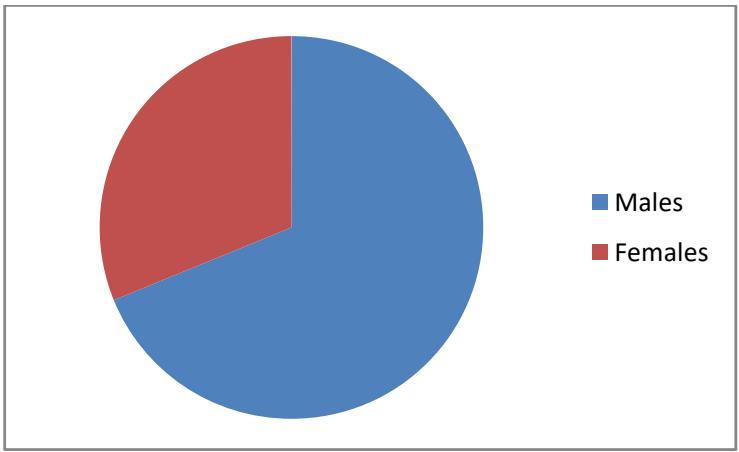
Fig. 4.1: The Gender Composition of Employees at Glen View 8 SME Complex
The traditional belief of reserving physically strenuous jobs exclusively for men was apparent in the SMEs (Choshi, 1996; Sunita and Mead, 2002). However, another possible explanation for this observation might be the fact that women have limited access to capital to start up businesses thus they tend to be concentrated in activities that require limited start up capital. In African society women roles are limited to household chores and men are thought to be the ones who should be involved in income generating projects.
## ii. Level of Education
Educational levels were four, namely none at all, primary education, secondary education and tertiary levels. The entrepreneurs were requested to indicate the highest level of education they attained. This was to ensure that during analysis, it would be easy to tell if respondents had a clear understanding of the questions and the study itself.
The survey revealed that the majority of the entrepreneurs in the sample sites had at least attained formal education, especially through the Ordinary level. This went on to show that the majority of the entrepreneurs were school dropouts or people who failed to secure formal employment owing to the harsh economic climate obtaining in the country, or were retrenched workers.
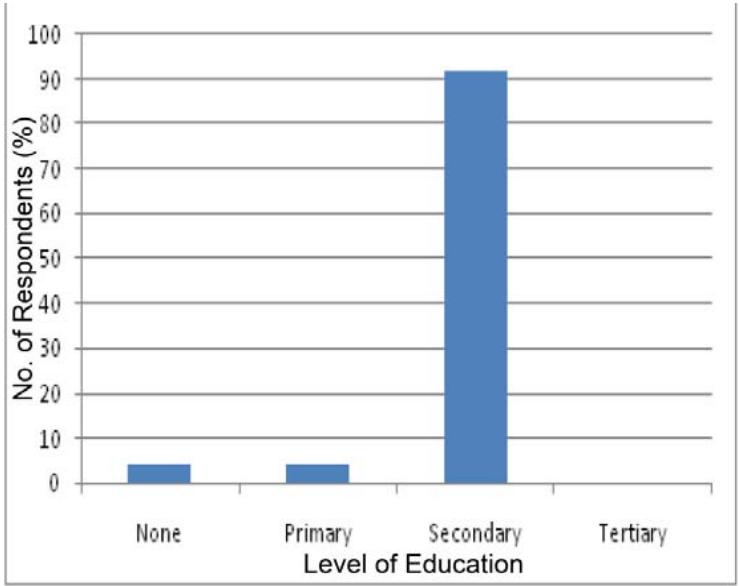
Fig. 4.2: Level of Education
It is generally accepted that the higher the educational standard of entrepreneurs the higher the chance for the enterprise to be successful, as has been suggested elsewhere entrepreneurs with higher educational training standards are more likely to survive economically in a more 'turbulent' business environment. More educated entrepreneurs tend to run their business establishments professionally, and hence provide reliable sources of income and employment for themselves and their employees. In the survey it was noted that the most successful entrepreneurs in Glen View Area 8 were those who had higher educational qualifications.
## iii. Age
It was apparent from the survey that people in the middle age were mostly involved in the various manufacturing activities in the area. The majority of the respondents, business owners and employees at the Glen View Area 8 SME Complex were found to be in the age range of 20-35 years (68%), although there also was a considerable proportion between 36-50 years (16%), those below 20 years of age (12%) and one above 50 years (4%). This is the economically active people and it shows that the majority of the entrepreneurs were in their prime age. Table 4.1 shows the age profile of the respondents from Glen View's Area 8 SME complex.
Table 4.1: Age Profile (%) of respondents from Area 8 SME complex
<table><tr><td>Age (Years)</td><td>No. of Respondents</td></tr><tr><td><20</td><td>3</td></tr><tr><td>20-35</td><td>17</td></tr><tr><td>36-50</td><td>4</td></tr><tr><td>>50</td><td>1</td></tr></table>
This age distribution showed that SME owners are young people, and the possible explanation for this may be the high unemployment generally obtaining in the country. Unemployment in Zimbabwe is high because the formal industries like banking, mining, the parastatals and even the civil service have been retrenching and thus many people tend to revert to the informal sector to start up their small businesses in order to have a source of income and something to do. Retrenchments of even older persons is the likely cause for the significant portion of older persons trading at Glen View Complex.
## iv. Training level
The level of training of the employees was also assessed in this study. Both employees and business owners were asked about any form of training they received for the businesses which they are currently doing. Of these respondents, $16\%$ confirmed some form of training whilst the rest had no formal training for the jobs. Those with training attributed it to apprenticeship training programmes offered in the Area 8 complex.
Table 4.2: Level of Training of the Respondents
<table><tr><td>Training status</td><td>Number of Respondents (%)</td></tr><tr><td>Employees with training</td><td>16</td></tr><tr><td>Employees without training</td><td>84</td></tr></table>
## V. Years with Firm
The number of years that a given employee had been with the firm was also observed. This was important as it is an indicator of the reliability of the SME sector in providing a lasting employment option, as well as a reliable source of income for a given employee. Generally, shorter years with a firm would imply an unreliable form employment whilst longer terms show the reliability of the firm in providing employment for the employee. In this study, $32\%$ of the respondents showed that they had been employed for a periods less than a year, $20\%$ had been employed for between 1 to 2 years whilst $24\%$ said they had been employed for between 2 to 3 years. A significant proportion of the respondents $(24\%)$ did not provide any information pertaining to how long they had been employed. These figures are as shown in Fig. 4.3 below.
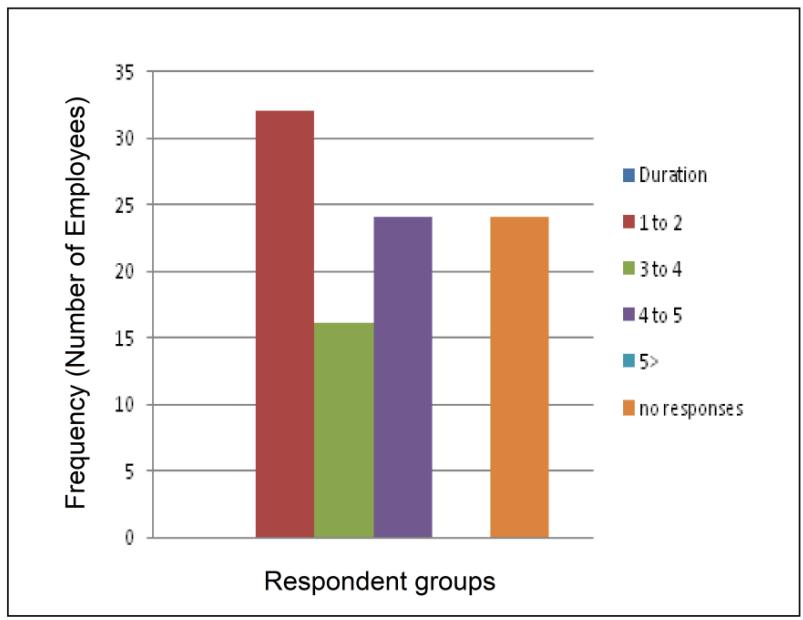
Fig. 4.3: Duration of Employment for the Respondents
The first observation that $32\%$ of the respondents were employed for less than a year is true since the majority of the SMEs operating within the Area 8 complex have not been spared from the harsh economic climate obtaining throughout the country. Such problems as financial liquidity as well as the general dynamism of the Zimbabwean economy will make it difficult for companies, SMEs included, to retain their employees as there is a high turnover rate. The high turnover occurs as employees move from one company to another in search of better remuneration and incentives, with some even going as far as South Africa and overseas. The result is that the SME is almost always with relatively new employees as the majority do not stay beyond a year, especially since SMEs themselves have low salaries. The observation that
some SMEs could not provide any information on the durations of their employees was not surprising since, owing to the above dynamics, it sometimes becomes difficult to record this since, for example, some employees go and return within given times.
The observation that older firms had more jobs than younger firms is true as small businesses will never remain small forever as some of them will grow and expand beyond 20 workers by joining medium and large businesses when using a given strategic planning (Schayek, 2008). This type of migration to another class size reduces the share of small businesses by becoming medium size. The migration of businesses into and out of class sizes also contribute to decrease or increase of jobs in those class sizes (Edmiston, 2004).
## vi. Employment Status
The employment status was also taken note of in this study. This was important since the form of employment contract given the employee is by large a good indicator of the security of that given job, especially in the terms of income generation and employment creation and job security. Of the interviewed employees, $48\%$ said they were employed on a short term basis (less than one year) whilst $16\%$ said they were employed on a medium term basis (between 1 to 5 years), $32\%$ were employed on a permanent basis (5 years and above) whilst $4\%$ of the respondents did not respond at all. This is shown in Fig. 4.4 below.
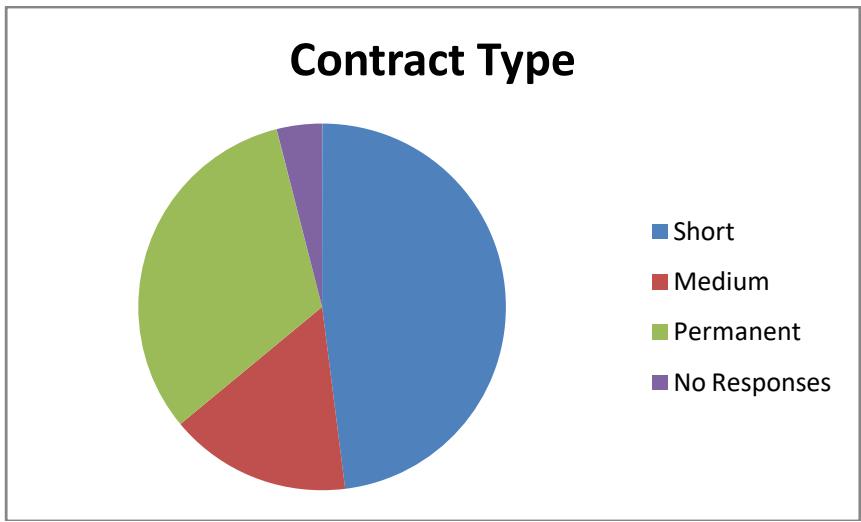
Fig. 4.4: The Contract Type of SMEs at Glen View Area 8
Again, the employment contracts noted reflect the dynamic structure of the Zimbabwean economy where the majority of arrangements are preferred to be short-term, with the possibility of contract renewal. Permanent contracts were also significantly high owing to the fact that the majority of the SMEs include family members and relatives who generally believe that they will remain business partners for life. It was noted in this research that the majority of these contractual agreements were verbal, revealing the informal structure of the SMEs.
Employment contracts are an important factor in the economic activities of the SMEs.
## vii. SMEs Role in Employment Creation
One of the objectives of this research was to establish if and how SMEs are contributing to employment creation in the country, and hence their impact upon social development. This is so since employment creation is one of the prerequisites for social development. SMEs have been castigated for their failure in creating adequate job opportunities for the growing number of unemployed youths in the small towns. The sample of entrepreneurs surveyed employed a total of 93 workers. An average of 3.72 job opportunities per each enterprise were created. This figure shows that SMEs had a relatively poor performance in terms of creating job opportunities compared to studies carried out by Osei et al (1993) in a similar study in Ghana and Choshi (1996) who did a research in Northern Province of South Africa. These two studies showed that in small urban areas SMEs should at least employ 5-10 people if they are to make any significant contribution to employment creation. Osei (1993) states that if a SME employs more than 5 people it ceases to be family based, as it tends to employ more people who are non-relatives. Although many can argue that 393 people are insignificant to alleviate unemployment, it should be borne in mind that the majority of the SMEs that were interviewed were lacking proper support to expand their businesses. If proper support mechanisms are offered to the SMEs they might create more employment opportunities.
In FGDs many of the entrepreneurs at Glen View 8 argued that if they received assistance from the government they would definitely employ more people. According to this study, SME business growth in terms of production output stood at a measly $12\%$, whilst only
1% of the respondents reported some firm expansion. The remainder of the respondents said their businesses were not growing at all. They argued that they were failing to grow or expand their businesses because of several reasons, among them lack of funding, the harsh economic environment and cash insolvencies. If government gave them financial assistance they would expand and employ more people in their firms.
### b) Relationship between Duration of Operation and Level of Education
Enterprises that were operated by people who had a higher level of education tended to be in operation for a long time. Of the 25 enterprises, 13 (52%) had been in the business for more than 10 years, of which 3 had attained at least secondary school level. All entrepreneurs who had no formal education and had only attained a primary school education could not operate their enterprises for a long period. Another important observation from the survey in Glen View 8 was that entrepreneurs who had experience in the activity that they were involved in tended to last long in the business. This goes on to show that it is very important for entrepreneurs to at least have experience in the activity they are involved in. This shows the importance of education in the operations of SME activities.
It is important to note that enterprises who were realising an increase in their outputs were those who had been in business for a relatively long time. Only 9 (36%) enterprises had operated for 5 or less years, with the majority of the enterprises being 'experienced' in their fields of trade. It is important to note that in the study area the majority of the enterprises that reported that they were not realising growth were those that had been in operation for less than one year and 1-5 years. So it can be concluded that the longer the enterprise has been in operation the more chances of it expanding its operations. Thus there was a positive relationship between duration and increase in output.
The SME enterprises that had been in operation for long periods of time were successful, possibly because of their long relationship with customers. Such operation for long periods of time had actually led to some enterprises curving a permanent niche in the market. Some of the entrepreneurs were so experienced in their activities thus they produced quality products compared to the upcoming entrepreneurs, often attracting more flows of customers and profit and had a stronger survival rate compared to new comers.
### c) Relationship between Duration of Operations and Number of Employees
The study showed that there was a relationship between duration of operation of entrepreneurs and the number of employees in the SMEs. The null hypothesis put forward in this research was that there was no significant relationship between number of employees in an SME and the duration of that SME. ANOVA was used to test the hypothesis formulated and determine goodness of fit of regression models computed. Simple regression was used to quantify and establish the nature of the relationship between duration of operation and number of employees. For curve estimation, the linear method was used because unlike the logarithm, quadratic and exponential methods it best fitted the data. The relationship between duration of operation and income in the study area and regression equations computed to explain the relationships are shown in Fig. 4.5 below.
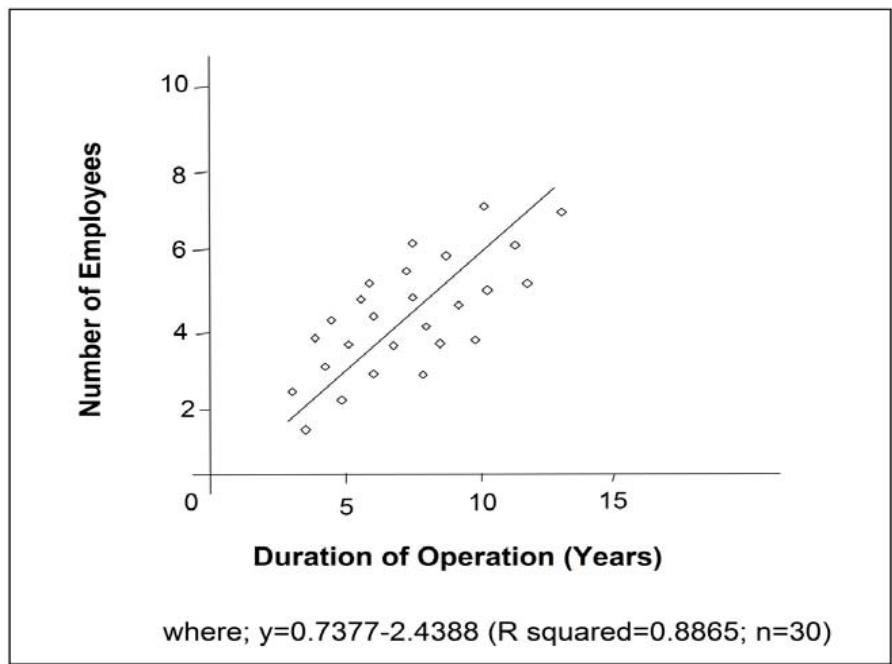
Fig. 4.5: The Relationship between the Years of Operation and the Number of Employees
### d) Relationship between Duration of Operation and Income
The null hypothesis put forward in this study is that there is no significant difference brought by the SMEs to the incomes made by the entrepreneurs. The hypothesis was put forward because there was need to examine if there was any significant difference in the earnings made by the entrepreneurs through engaging in SME production. One Way ANOVA was used to test the hypothesis formulated. The calculated value obtained was 7.050 and the critical value obtained was 3.123 and the P value of 0.001598 at 0.05 significance level. On the basis of this information the null hypothesis was rejected and the alternative hypothesis which stated that there was significant difference in the income made by the entrepreneurs was accepted.
The survey showed that there was a mean annual income of $318.80 for the business owners and $80.40 for the general employees at the Glen View 8 Complex. The incomes varied greatly between business owners and between employees, with the highest income for the entrepreneurs and for the employees being $700 and $200 respectively. The lowest incomes stood at $200 sand $50 for business owners and employees respectively. This can be explained by the fact that there were differences in the operation years of the SMEs, as well as inn the access to markets and product qualities owing to differences in production experiences.
However, it should be remembered that the data pertaining to sales is very biased since the entrepreneurs were not forced to disclose their sales statistics and since most of the entrepreneurs reported these figures from their heads and thus it would be difficult to verify if these figures were accurate. The figures, however, are important because they give a background of what is really happening in the enterprises.
The study showed that there was a relationship between duration of operation and the income in the SMEs. The null hypothesis put forward in this research was that there was no significant relationship between income in an SME and the duration of that SME. ANOVA was used to test the hypothesis formulated and determine goodness of fit of regression models computed. Simple regression was used to quantify and establish the nature of the relationship between duration of operation and the income. The relationship between duration of operation and income in the study area and regression equations computed to explain the relationships are shown in Figure 4.6.
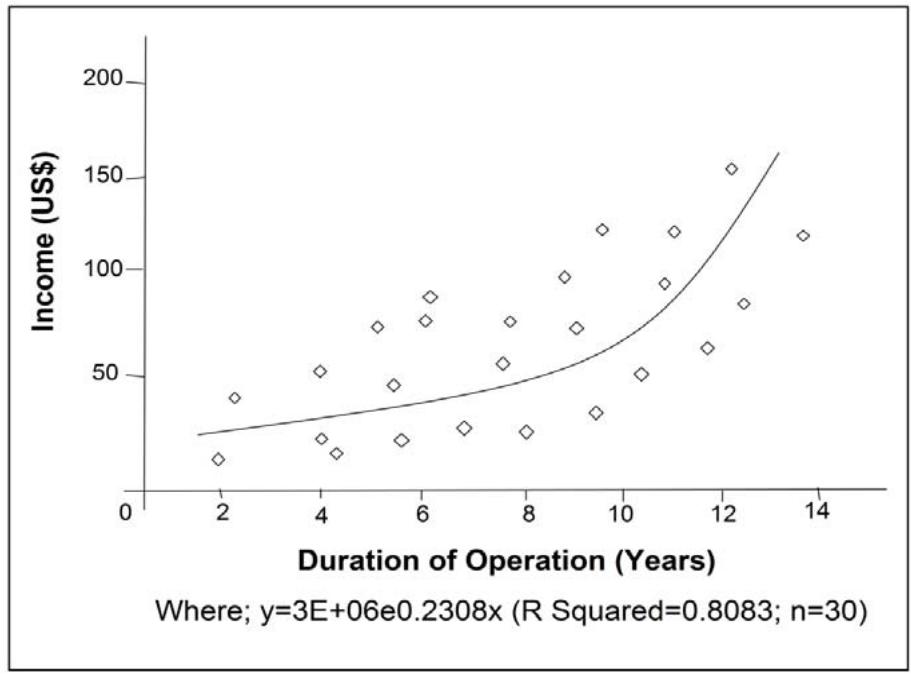
Fig. 4.6: Relationship between Duration of Operation and Income As shown in Figure 4.6, there was a high degree of relationship between the income of the SMEs and their duration of operations. This suggested that with age, the incomes of the SMEs improved. On the contrary, younger SMEs had smaller incomes owing to various challenges in their start-up, such as financing, the lack of knowledge, low innovation levels and poor business marketing.
## V. CONCLUSIONS
From the results of this study, it can be said that SMEs are useful alternatives, to the formal sector, for income generation. They SMEs provide better option for the generation of income, particularly in the economic hardships that many citizens of Zimbabwe have or continue to face. This has important social bearings as it enables people to take care of themselves as well as their families and communities (Pedersen, 1998). The provision of a source of income, though low and sometimes unreliable, is a good ground for social development, particularly if viewed in the light of curbing the ills of unemployment. The assertions of Tevera (1998) of the SME sector being a viable option for the retrenched workers and those outside formal employment are found to be true as this agrees to the above findings of this study.
Also, SMEs provide cheap, ready and easily negotiable option for good and services. These goods may even be of very high qualities and standards and help the average or low-income families to obtain those goods they would never get from the formal, more-established retailers as from Harare's CBD. The goods from the SME sector make it viable for members of the public to purchase them. Goods could be found on credit and most of the low income people from Glen View, Glen Norah, Highfield and Budiriro found it worthwhile to purchase the goods, mostly furniture, for their households.
From the results of this study, it was seen that SMEs provide a good avenue for the employment of the majority of the unemployed people ion the country. These results can also apply to any other country, particularly those in sub-Saharan Africa and the developing nations of the world. However, it was discovered in this study that the security of this employment is generally higher in those SMEs that have been operating for a longer while compared to new or smaller ones. The reasons for this were identified as the fact that older SMEs usually are more established and have a more reliable cashflow compared to younger ones which are still in the processes of either establishing their client bases or perfecting the qualities of their products. The employment contracts in older firms offered more reliable employment for the employees, and this was also evidenced by the length or number of years given employees stayed with these firms.
Although it is generally true that the income and employment creation ability of the SMEs cannot compare to those of the formal sector, this has to be reinforced by empirical researches into the area. This therefore necessitates the need for a comparative research which establishes the benefits or demerits of incomes between the formal sector and the SME sector. However, despite the above fact, the SMEs as studied in this research were beneficial in employment creation as the majority of the employees had before been completely unemployed. Working, even for low amounts of income, is generally better than being completely unemployed, as discussions with the respondents in this research revealed. Although the average number of employees per SME was quite low (3.72), it goes a long way on showing that SMEs have the potential to become the country's largest sector of employment, particularly for such people as school dropouts, the uneducated and the retrenched. This figure differs by far from the Indonesia's average of 12.3 employees per SMEs (World Bank, 2003), possibly because of the differences in the degrees or extents to which these countries economies have slipped. The figure, however, is quite nearer to those found in Mali, with an average of 3.88 employees per SME (UNDP, 2010). This can be explained since Mali is a third world country with similar economic and social problems like Zimbabwe.
Owing to the above contributions of SMEs to employment creation and income generation, it can be generalized that they have a net effect on social development. Although social development itself cannot be entirely measured by employment status and income alone, these are among the major factors that determine how a society develops. Without a stable source of income and employment, a society might miss developmental targets and goals, apart from the fact that negative development may also occur. This negative development might be the destruction of already met developmental goals as well as the rise of social ills like crime, violence, prostitution and theft, among many others. Poverty is fought as families have a source of income and are able to survive above the poverty datum levels, which agrees with the assertions McPherson (1991), one the role of SMEs in the development of Zimbabwe. SMEs will also enhance the country's GDP as more production is done and foreign currency is earned, although the case of Glen View's Area 8 pointed to insignificant exportation levels of the finished goods. Hence it can be said that SMEs provide a good platform for the commencement or continuation of development within the given societies, as was seen in the case of the Glen View Area 8 SME industry.
## VI. RECOMMENDATIONS
Most of the SMEs interviewed by the research were poorly coordinated and lacked the basic organization expected for serious businesses. Poor coordination and differences may be seen as confusion and thus throw them into a negative perception from interested stakeholders like customers, potential investors and even governmental organizations. For example, it was noted that most SMEs at Glen View 8 sorely focus on the production of such carpentry-related products like sofas, which gave rise to stiff competition on the market when some could in fact focus on other finished goods like beds and wardrobes. Thus, the organization and coordination of the SMEs sector on local and national levels is required to enhance their performance and create more incomes and jobs.
The research revealed that there are policy gaps which are having a deleterious effect on the operations of the SMEs. The lack of a comprehensive national policy packages to target SMEs has been self evident throughout the research, even though the discipline of governmental policies was not among the objectives of this study. It is recommended that there be policies to cater for SMEs and enhance their current operations as well as to enable the growth of new ones in this potentially beneficial sector of the Zimbabwean society. Such policies should encompass support systems for existing SMEs, provide help to the SMEs' internal and external resources, and provide financial requirements such as starting capital. It was actually very disturbing for the researcher to note that governmental bodies and agents actually are currently working much to the harm of the SMEs' operation, particularly via such means as exorbitant taxes and rentals, the high difficulties of obtaining operating licenses and the constant negative force of corruption which demands bribes from the SMEs even for no apparent reason on any given day.
The SMEs need financing in order for their initiatives to be successful. Without proper financial mechanisms, as was seen through this research and particularly through the field interviews, the goals of these SMEs will never be realized and they will still realize relatively low incomes and employment creation compared to their formal sector counterparts. They should have access to loans from banks and other financial institutions and since the majority of them do not have the required collateral, the government should chirp in with necessary financial security strategies. The majority of the interviewed SMEs and entrepreneurs lacked the skills to effectively and efficiently manage their business. As such, training is required in such fields and bookkeeping, corporate governance and accounting, among others. National programmes and policies to help develop SMEs are required. Training though governmental and non-governmental associations can be initiated so that the SMEs will have more knowledge on how to improve their incomes and employment statuses, and thus contribute more meaningfully towards social development.
It is recommended that those unemployed in Zimbabwe, particularly the youths and those retrenched from formal sectors of employment, adopt SME production and entrepreneurship as options for employment and income generation. Although this sector offers lower incomes per month as compared to the formal sector, which may also be unreliable, it is worthwhile than having nothing to do at all. Engaging in SME production not only helps them to acquire survival skills that they previously did not have, but also enables them to determine their own destinies, create employment for others, disengage from harmful acts like crime, drug abuse and violence and realize a respectable living for themselves and their families. Opportunities for growth and development are also there, particularly with the recovering economy of the country, the growing demand for cheaper household products and goods as well as through the widely publicised indigenisation and economic empowerment policies within the country.
## VII. SUMMARY
This research addressed the role of SMEs in social development through a pedestrian approach. It examined how SMEs create employment as well as the income they normally generate for their employees per month and discovered that although these figures are not as one would expect, they are appreciable because there is some level of employment creation and income generation within these enterprises. Employment creation and income generation are helpful determinants of social development, a useful goal in the present-day Zimbabwe which still is recovering from the worst economic crisis in its history. The findings of this research may be compared and applied to other countries, particularly those in the developing world. However, the study discovered that more still needs to be done to help the SME sector in Zimbabwe to become as competitive as the formal sector, particularly along policy and training lines.
Generating HTML Viewer...
References
38 Cites in Article
S Bango (1990). Case Study of SEDCO Zimbabwe.
P Bert (1994). Planning Comprehensiveness and Strategy in SME's.
G Brand,Scott,P Roberts (1995). The Growth of the Small Enterprise: An Answer to Third World Industrialisation.
P Choshi (1996). Industrial Estates and Formal Small-Scale Manufacturing Activities in the Northern Province.
R Evenson,D Gollin (1960). Assessing the Impact of the Green Revolution, 1960 to 2000.
A Helmsing,T Kolstee (1993). Small References Références Referencias 6.
(1995). The World Summit for Social Development.
G Judge (1988). Introduction to the Theory and Practice of Econometrics.
Kwang Kim,Nick Gallent (2000). Industrial land planning and development in South Korea: current problems and future directions.
Gary Loveman,Werner Sengenberger (1991). The re-emergence of small-scale production: An international comparison.
D Mcpherson (1991). Micro and Small Scale Enterprises in Zimbabwe: Results of a Countrywide Survey.
C Mumbengegwi (1993). Structural Adjustment and Small Scale Enterprise Development in Zimbabwe.
Christopher Musampa (1999). Import Substitution and the Creation of Backward Linkages in the Zambian Manufacturing Sector 1984-88.
C Mutambirwa (2002). Unpublished notes on Spatial Analysis.
(2001). The New Economy Beyond the Hype.
P Pedersen (1998). The Role of Small Enterprises and Small Towns in the Developing Countries.
M Piore,C Sabel (1984). The Second Industrial Divide: Possibilities for Prosperity.
Jesper Rasmussen (1992). The Small Enterprise Environment in Zimbabwe: Growing in the Shadow of Large Enterprises.
Philippe Regnier (1993). The dynamics of small and medium-sized enterprises in Korea and other Asian NIEs.
(2002). The Development Framework of Small and Medium Scale Enterprises in Zimbabwe.
G Rist (1996). History of Development: From western origins to global faith.
C Sabel (1986). Changing Models Economic Efficiency and their Implications for Industrialisation in the Third World.
F Schneider (2003). The Size and Development of the Shadow Economies and Shadow Economy Labor Force of 22 Transition and 21 OECD Countries: What Do We Really Know.
D Storey,J Potter (2007). OECD Framework for the Evaluation of SME and Entrepreneurship Policies and Programmes.
L Summers (2003). Juma, Prof. Calestous, Professor of the Practice of International Development, and Director, Science, Technology and Globalization Project, Belfer Center for Science and International Affairs, Harvard Kennedy School (formerly John F. Kennedy School of Government), Harvard University, since 2002.
D Tevera (1998). Micro and Small-Scale Enterprises in Shamva District within the Context of an adjusting National Economy.
(2001). Best Practices in Financial Innovations for SMEs.
Ramesh Thakur (1993). Book Review: United Nations Development Programme, Human Development Report 1995 (New York: Oxford University Press for the United Nations Development Programme (UNDP), 1995), pp. 230, $40.45..
Paul Collins (2003). 1999 UNDP human development report for central and eastern Europe and the CIS UNDP, New York, 1999, Sales No. E.99.III.6.6.
Nguyen Dung,Nguyen Huy,Nguyen Hang,Duong Ha (2008). Self-perception of teachers and managers of the impact of teachers’ professional development in Vietnam.
(2010). Human Development Report.
Ramesh Thakur (1996). Book Review: United Nations Development Programme, Human Development Report 1995 (New York: Oxford University Press for the United Nations Development Programme (UNDP), 1995), pp. 230, $40.45..
(2012). Impact Assessment Framework: SME Finance. Prepared by the World Bank on behalf of the G20 Global Partnership for Financial Inclusion (GPFI) SME Finance Sub Group.
William Steel (2001). Key Lessons from Donor Committee Conference on Business Development Services for Small Enterprises.
(2003). Indonesia Economic Quarterly, January 2017.
No ethics committee approval was required for this article type.
Data Availability
Not applicable for this article.
How to Cite This Article
Mika Mugogo. 2026. \u201cThe Effect of SMEs on Social Development in Zimbabwe: A Case Study of Zimbabwe’s Home Industries\u201d. Global Journal of Management and Business Research - B: Economic & Commerce GJMBR-B Volume 25 (GJMBR Volume 25 Issue B1): .
Explore published articles in an immersive Augmented Reality environment. Our platform converts research papers into interactive 3D books, allowing readers to view and interact with content using AR and VR compatible devices.
Your published article is automatically converted into a realistic 3D book. Flip through pages and read research papers in a more engaging and interactive format.
This research sought to investigate the contribution of SMEs to social development. Owing to the exponential increase in unemployment and retrenchments from the formal sector in Zimbabwe, there is a critical absence of empirical evidence to support SMEs as viable alternatives for income generation and employment, as well as general uncertainty about the contribution of the sector to the national economy. This study was significant since SMEs are believed to have a role upon employment creation, particularly for the less qualified people of society, as well as income generation, and since they are understood to have the potential to fight poverty and aid development, which also helps through the generation of information for policymaking purposes. The objectives of the study were therefore to detail the structure of Zimbabwe’s SME sector, to investigate its employment creation ability as well as to assess the average monthly incomes of the employees within this sector. These were determined in order to establish how these jobs contribute to the development of the people involved in this sector.
Our website is actively being updated, and changes may occur frequently. Please clear your browser cache if needed. For feedback or error reporting, please email [email protected]
Thank you for connecting with us. We will respond to you shortly.