This article discusses the ethical challenges of the green economy using cobalt mining in the DRC as an example. The rising demand for cobalt, a crucial mineral in the manufacture of renewable energy technologies, has resulted in serious abuses of human rights and environmental damage in the DRC. The article offers suggestions for addressing the ethical and environmental issues linked with cobalt mining in the DRC. These ideas include responsible sourcing policy, interaction with the community, sustainable mining techniques, and support for alternative technologies. The production of essential minerals must prioritize human rights and environmental preservation, and community engagement and sustainable mining techniques can assist in mitigating negative impacts and ensuring equitable distribution of benefits. The shift to a low-carbon economy is crucial to combating climate change, but it must be accomplished in an ethical and sustainable manner.
## I. INTRODUCTION
The green economy's ethical dilemma is concerned with the potential human and environmental costs connected with the transition to a low-carbon economy (Goldthau A, 2018). The source of minerals used in renewable energy technologies, such as cobalt, which is mostly mined in the Democratic Republic of the Congo (DRC), is a critical concern in this respect. The DRC's cobalt mining business has been linked to major human rights violations such as child labor, forced labor, and unsafe working conditions (Amnesty, 2016). Mining firms have been accused of exploiting disadvantaged populations, flouting labor laws, and violating workers' rights. Furthermore, the DRC government's regulatory framework has been insufficient in protecting the rights of local populations and mining workers (Bales, K. 2017).
The environmental consequences of cobalt mining in the DRC are also considerable. Mining has resulted in deforestation, soil erosion, and water contamination (Musingwini C, 2019). The use of harmful chemicals in the mining process, such as sulfuric acid and cyanide, has also harmed local ecosystems and water sources (Sapp A, 2020). The green economy's ethical dilemma stems from the conflict between the potential benefits of switching to renewable energy technology and the human and environmental costs connected with their production. The growing demand for cobalt, in particular, has put strain on the DRC mining industry, resulting in major human rights violations and environmental deterioration (Kennedy, 2019).
The ethical dilemma of the green economy necessitates a comprehensive solution that balances the benefits of renewable energy technologies with human rights and environmental protection. This can be accomplished through responsible sourcing policies that ensure mineral extraction while respecting human rights and the environment (IISD, 2019). It is also critical to collaborate with local communities to ensure their participation in decision-making processes and equitable sharing of benefits (Hilson G, 2018).
Responsible sourcing strategies are required to ensure that mining businesses adhere to ethical standards while also respecting human rights and the environment. Certification programs that validate the source and manufacturing processes of minerals used in renewable energy systems may be included in these policies. For example, the Responsible Minerals Initiative (RMI) is a certification program that attempts to enhance the ethical practices in the global mineral supply chain, including cobalt mining in the DRC. The RMI entails auditing, assessing, and verifying mining activities to ensure that they adhere to responsible sourcing criteria.
Working with local communities is also important for guaranteeing their participation in decision-making processes and the equal sharing of benefits. Mining corporations should engage with local communities to learn about their needs and concerns, and then collaborate to reduce the negative effects of mining activities. These can include community development programs that promote education, health, and infrastructure, as well as the creation of local supply chains that benefit the communities.
The ethical dilemma of the green economy necessitates a balanced strategy that takes into account the human and environmental costs connected with the development of renewable energy technology. The DRC's cobalt mining sector exemplifies the ethical problems of procuring minerals for renewable energy systems. Responsible sourcing regulations and community engagement can help to prevent the negative affects of mining activities and assure the production of renewable energy technologies in an ethical and sustainable manner. This paper investigates the ethical implications of cobalt mining in DRC, with an emphasis on the human and environmental costs involved.
## II. GLOBAL STATUS OF CERTAIN MINERALS AND FOSsIL FUELS
The global status of particular minerals and fossil fuels fluctuates based on their availability, production, and demand. As the globe transitions to a low-carbon economy, demand for minerals such as lithium and cobalt is likely to skyrocket. Yet, ethical and environmental issues about their manufacture underline the importance of responsible sourcing and long-term mining techniques. Here's a quick rundown of the current state of some of the most important minerals and fossil fuels:
- Coal: Coal is still the most abundant fossil fuel on the planet, with worldwide reserves estimated to be more than 1 trillion tons. Yet, due to worries about its contribution to climate change, coal's place in the global energy mix is shrinking. According to the International Energy Agency (IEA), worldwide coal demand is predicted to level and then drop during the next five years (IEA, 2020)).
- Oil: Oil is the most utilized fossil fuel on the planet, with global demand exceeding 99 million barrels per
day in 2019. Despite the rise of renewable energy, oil remains a critical source of energy for transportation, heating, and industrial activities. Concerns about climate change and the instability of oil prices, on the other hand, have prompted growing efforts to convert to alternate energy sources (IEA, 2020).
- Natural Gas: Natural gas is the fastest-growing fossil fuel, with demand expected to expand at a $1.6\%$ annual rate through 2040. Natural gas is a cleaner-burning fuel than coal or oil and is frequently utilized as a transition fuel to renewable energy. Concerns regarding methane emissions from natural gas production and transportation, on the other hand, have sparked worries about its environmental impact (IEA, 2020).
- Lithium: Lithium is a crucial mineral used in the creation of batteries for electric vehicles and renewable energy storage systems. As the globe transforms to a low-carbon economy, global demand for lithium is expected to high. Yet, lithium manufacturing has been linked to environmental consequences such as water contamination and habitat destruction. (IEA, 2019).
- Cobalt: Cobalt is another important mineral that is utilized in the manufacture of batteries for electric vehicles and renewable energy storage systems. Almost $70\%$ of the world's cobalt comes from DRC, where human rights violations and environmental problems have created ethical issues regarding its production (IEA, 2019).
- Rare Earth Elements (REEs): REEs are a category of minerals that are vital for the creation of high-tech items such as cellphones, wind turbines, and electric vehicles. China now controls the majority of the worldwide supply of REEs, raising worries about supply chain security and escalating geopolitical tensions (US Geological Survey, 2021).
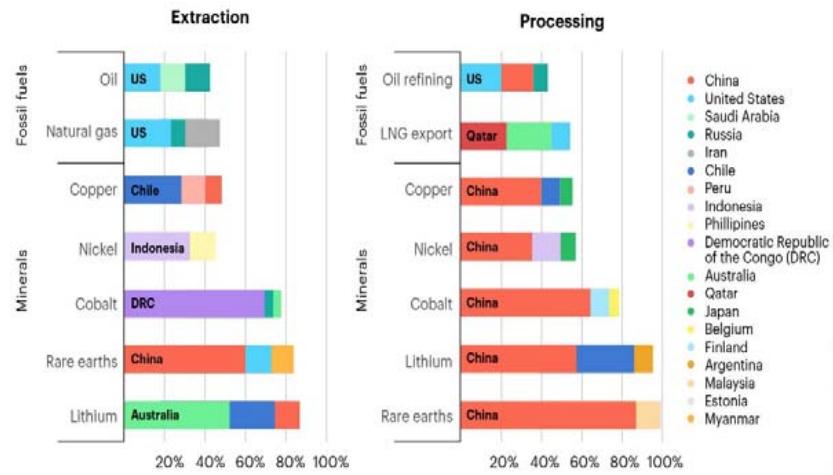 Figure 1: Countries Producing Selected Minerals and Fossil Fuels
Cobalt demand is increasing as the globe strives for a "greener" economy, with Electric vehicles (EVs) replacing traditional gasoline/diesel vehicles, solar and wind energy being stored in massive batteries, and the manufacture of smartphones and laptop computers. EVs are regarded as a promising means of reducing greenhouse gas emissions and combating climate change (Gopalakrishnan, 2021). But, rising demand for battery minerals, particularly cobalt, a vital component of electric vehicle batteries, has resulted in an increase in demand (The Economist, 2019)
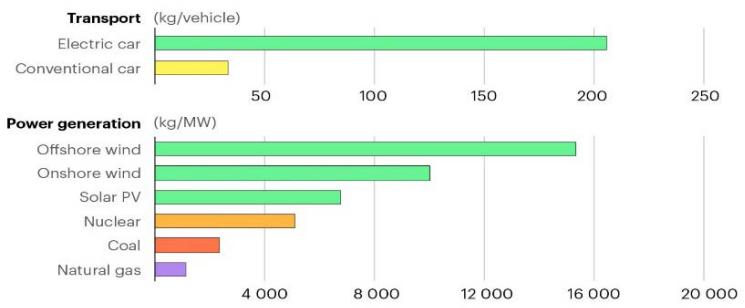 Figure 2: Minerals used in Selected Energy Technologies
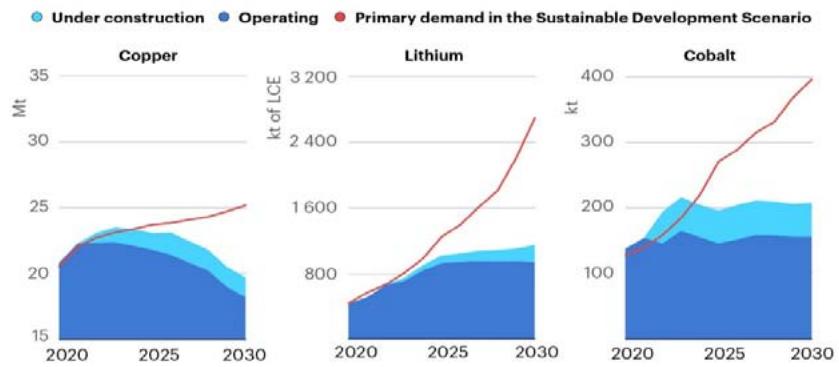 Figure 3: Committed Mine Production and Primary Demand for Selected Minerals in the Sustainable Development Scenario
According to the International Energy Agency's (IEA) research, "The Role of Key Minerals in Clean Energy Transitions," demand for minerals such as lithium, cobalt, and rare earth elements (REEs) is likely to rise dramatically as the world transitions to a low-carbon economy. According to the paper, demand for lithium and cobalt might increase by 40 and 25 times, respectively, by 2040 to fulfill the needs of electric vehicle and renewable energy storage system production (IEA, 2019). Similarly, demand for REEs is expected to climb by more than $300\%$ by 2040, owing to the increased use of high-tech items such as smartphones, wind turbines, and electric vehicles.
These forecasts imply that the shift to a low-carbon economy will necessitate a large increase in the production of essential minerals. However, this increase must be complemented with responsible sourcing and sustainable mining procedures in order to avoid ethical and environmental concerns related with their manufacturing.
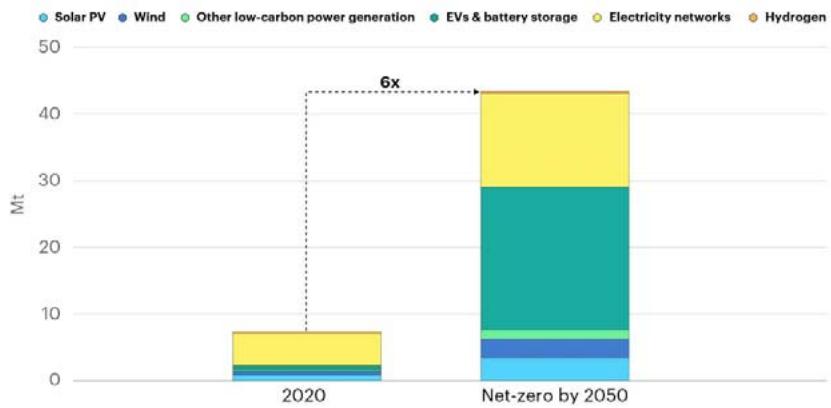 Figure 4: Total Mineral Demand for Clean Energy Technologies Growth to 2040
## III. LITERATURE REVIEW
The transition to a green economy has emerged as a global priority for tackling the climate change challenge. Renewable energy technologies have the ability to reduce carbon emissions and alleviate climate change effects. Unfortunately, the extraction of essential minerals is required for the development of these technologies, which may have ethical and environmental concerns. The following literature review investigates the ethical issues related with the development of renewable energy technology, as well as the necessity for responsible sourcing rules.
Critical mineral production, such as cobalt, lithium, and rare earth elements, has been connected to human rights violations and environmental deterioration in poor countries (IEA, 2020). One such example is the Democratic Republic of the Congo (DRC), where cobalt mining has been linked to child labor and hazardous working conditions (Amnesty International, 2016). To promote a more just and equitable green economy, the development of renewable energy technology must prioritize human rights and environmental conservation.
Responsible sourcing regulations are required to ensure the ethical production of key minerals utilized in renewable energy systems. Implementing responsible sourcing standards may include certification programs that validate the origin and manufacturing methods of minerals. The Responsible Minerals Initiative (RMI) is an industry-led project that strives to create a responsible minerals supply chain that respects human rights and the environment (RMI, 2020).
Community engagement and sustainable mining methods can also play an important role in reducing negative effects and ensuring equitable benefit distribution. Mining corporations should engage with local communities to learn about their needs and concerns, and then collaborate to remedy the negative effects of mining activities. Therefore, sustainable mining procedures that promote environmental preservation and minimize negative consequences are essential (ICMM, 2018).
The survey of literature emphasizes the ethical problems connected with the development of renewable energy technology, as well as the necessity for responsible sourcing rules. Implementing responsible sourcing policies and sustainable mining methods, as well as community engagement, can help reduce the negative impacts of vital minerals extraction and ensure a more just and equitable green economy.
## IV. METHODOLOGY
This article is a qualitative study of the ethical dilemma of the green economy and the human and environmental costs of cobalt mining in the DRC. The research is based on secondary sources, such as academic publications, international organization papers, and news stories. The literature review investigates the ethical difficulties posed by the manufacture of renewable energy technology and the need for responsible sourcing rules. The examination then concentrates on the issue of cobalt mining in the DRC and the attendant abuses of human rights and environmental damage.
The research is based on a comprehensive literature assessment and includes results from multiple sources to present a thorough and nuanced analysis of the ethical difficulties involved with the manufacturing of renewable energy technology. The focus of the literature review is on scholarly works, reports from international organizations, and news pieces that examine the ethical difficulties involved with the creation of renewable energy technology and the need for responsible sourcing rules. The study of the cobalt mining issue in the DRC is based on news stories and studies from international organizations that show the human rights violations and environmental devastation linked with cobalt mining.
The research is constrained by the lack of data on cobalt mining in the DRC, a difficult area for data collecting owing to political instability and poor governance. Notwithstanding this, the paper presents a complete review of the ethical problems involved with the manufacture of renewable energy technology and the necessity of responsible sourcing regulations.
Using cobalt mining in the DRC as a case study, this qualitative study provides a complete review of the ethical problems connected with the manufacturing of renewable energy technology. The analysis emphasizes the need for responsible sourcing rules, community participation, sustainable mining methods, and the promotion of alternative technologies in order to mitigate the negative effects of essential mineral production and promote a more just and equitable green economy.
## V. DISCUSSION
The Democratic Republic of the Congo (DRC) is a major cobalt producer, accounting for roughly $70\%$ of global cobalt production (USGS, 2021). However, cobalt mining in the Democratic Republic of the Congo is related with a number of ethical difficulties, including worker exploitation and environmental destruction. The increasing adoption of EVs by consumers and policymakers alike can be ascribed to the rising demand for cobalt. As countries strive to reach their carbon reduction targets and phase out fossil-fuel-powered vehicles, the market for electric vehicles is expected to grow quickly in the coming years (Gopalakrishnan, 2021). Nevertheless, the production of EVs necessitates the usage of a substantial amount of cobalt, which is primarily mined in the Democratic Republic of the Congo.
The use of cobalt in EVs has prompted issues about the ethics of the supply chain, particularly in connection to the human and environmental costs of mining in the DRC. The majority of cobalt mining in the DRC is done by artisanal and small-scale miners who operate in dangerous conditions for little pay (Amponsah-Dacosta & Akuffo, 2019). Furthermore, the mining process has caused severe environmental deterioration, such as deforestation and soil erosion, affecting the livelihoods of local residents (Amponsah-Dacosta & Akuffo, 2019).
Cobalt mining in the Democratic Republic of the Congo is primarily carried out by artisanal and small-scale miners who labor in exceedingly hazardous conditions. The mining technique entails excavating tunnels by hand, using primitive tools, and working in small places. Toxic particles in mining dust can cause lung disease, cancer, and other respiratory disorders. The miners, many of whom are children, work long hours in hazardous and unhealthy conditions with inadequate protective equipment (Amponsah-Dacosta & Akuffo, 2019).
The working conditions of miners in the DRC have been described as among the worst in the world (Amponsah-Dacosta & Akuffo, 2019). According to an Amnesty International (2016) investigation, children as young as seven years old work in cobalt mines in the DRC, where working conditions are "hazardous, unclean, and physically demanding." The research also underscores the fact that miners in the DRC are paid very little, with some earning as little as $2 per day (Amnesty International, 2016).
In addition to the health dangers involved with cobalt mining in the DRC, the mining process has resulted in severe environmental deterioration. The mining process consumes a large quantity of water and energy, depleting natural resources and worsening the region's already vulnerable ecosystem. The mining process has led in deforestation, soil erosion, and waterway contamination, affecting the livelihoods of local residents (Amponsah-Dacosta & Akuffo, 2019).
The lack of transparency in the cobalt supply chain has made it impossible to trace the source of cobalt used in the fabrication of electric car batteries. This has made it difficult to ensure that the cobalt used in EV batteries is not linked to human rights violations and environmental destruction (Apple, 2020).
## VI. ANALYSIS AND FINDINGS
The analysis of the green economy's ethical dilemma, especially in terms of cobalt mining in the DRC, shows how important it is to have responsible sourcing policies and sustainable mining practices to make sure that important minerals used in renewable energy technologies are mined in an ethical way. Here are the most important things that came out of the analysis:
- Human Rights Violations: Human rights violations in developing countries have been linked to the mining of important minerals like cobalt. Cobalt mining in the DRC is an example of this. There have been reports of child labor and dangerous working conditions there. Putting in place responsible sourcing policies can help stop these violations of human rights and make sure that critical minerals are made in a fair way.
- Degradation of the environment: The mining of important minerals can also hurt the environment. In the case of cobalt mining in the DRC, the lack of rules and enforcement has made it possible for mining companies to ignore environmental rules, which has polluted the soil and water. It is important to use mining methods that are good for the environment and have as few negative effects as possible.
- Involving the community: Involving the community is important to make sure that benefits are shared fairly and that problems caused by mining are fixed. Mining companies should talk to people in the area to find out what they need and what worries them. They should also work together to solve problems caused by mining.
- Policies for Responsible Sourcing: Policies for responsible sourcing are needed to make sure that critical minerals used in renewable energy technologies are produced in an ethical way. Responsible sourcing policies can be put into place with the help of certification programs that check where minerals come from and how they are made. The Responsible Minerals Initiative (RMI) is an industry-led effort to set up a responsible minerals supply chain that protects human rights and the environment.
- Alternative Technologies: Supporting alternative technologies, like solid-state batteries that use less cobalt, can help lower the demand for critical minerals and reduce the negative effects of making them.
The analysis of the green economy's ethical dilemma, especially in terms of cobalt mining in the DRC, shows how important it is to have responsible sourcing policies, sustainable mining practices, community involvement, and support for alternative technologies to make sure that important minerals used in renewable energy technologies are produced in an ethical way. To make sure that the change to a low-carbon economy is good for both people and the planet, the production of renewable energy technologies must address ethical and environmental concerns.
## VII. RECOMMENDATIONS
The ethical problem posed by the green economy necessitates a multifaceted strategy that strikes a balance between the advantages of renewable energy technology and the protection of human rights and the environment. The following recommendations are presented to resolve the ethical concerns related to cobalt mining in the DRC:
- Supporting Responsible Sourcing Policies: Businesses that source cobalt must adhere to ethical standards and prioritize the protection of human rights and the environment. Governments should adopt and enforce regulations for mining operations that prioritize human rights and environmental protection (ICMM, 2021). Responsible sourcing initiatives, such as the Responsible Minerals Initiative (RMI), can play an essential role in confirming the source and production methods of minerals utilized in renewable energy systems (RMI, 2020).
- Encouraging Community Engagement: Promoting Community Involvement Mining corporations should interact with local communities to understand their needs and concerns and collaborate to mitigate the negative effects of mining activities. Community development programs that provide education, health, and infrastructure support, as well as the building of beneficial local supply chains, can be part of the involvement (Hilson, G 2018).
- Promoting Sustainable Mining Practices: Mining businesses should employ sustainable mining techniques that promote environmental protection and minimize negative impacts. This may involve decreasing the production of waste and the use of dangerous chemicals. In addition, the industry should encourage the research and development of sustainable mining technologies and practices (ICMM, 2018).
- Encouraging Other Technologies: The expansion of the renewable energy industry must be followed by innovations in alternative technologies, such as solid-state batteries, that minimize reliance on cobalt and other essential minerals (Gao, Y., & Chen, G. 2021).
The ethical issue of the green economy necessitates an all-encompassing strategy that balances the advantages of renewable energy technology with the protection of human rights and the environment. The aforementioned ideas can play a vital role in guaranteeing the ethical and sustainable production of important minerals utilized in renewable energy systems.
## VIII. CONCLUSION
The ethical issue of the green economy necessitates a comprehensive and balanced strategy that takes into account the possible advantages and costs of renewable energy technology. Frequently, the production of these technologies requires the extraction of key minerals, which may have ethical and environmental consequences. As such, cobalt mining in the Democratic Republic of the Congo serves as an illustration of the ethical issues brought by the green economy.
Demand for cobalt, a critical mineral in the development of renewable energy technology such as electric vehicles and solar panels, has led to serious abuses of human rights and environmental degradation in the Democratic Republic of the Congo. Lack of regulation and enforcement has permitted mining corporations to exploit vulnerable communities and disrespect environmental standards. The production of essential minerals necessitates sourcing rules that place human rights and environmental conservation first. Nevertheless, community engagement and sustainable mining techniques can offset negative effects and guarantee equitable sharing of benefits.
This article's ideas, which include responsible sourcing rules, community participation, sustainable mining methods, and support for alternative technologies, present a road map for establishing a more sustainable and ethical green economy. To ensure that the transition to a low-carbon economy benefits both people and the earth, it is crucial to address ethical and environmental concerns linked with the creation of renewable energy technology.
The ethical conundrum presented by the green economy highlights the need for a balanced approach to sustainable development. This article's ideas can serve as a starting point for mining firms, governments, and communities to work jointly to guarantee that the transition to a low-carbon economy is ethical and sustainable. By prioritizing human rights and environmental conservation, we may establish a green economy that is more just and equitable, to the benefit of both present and future generations.
Generating HTML Viewer...
References
28 Cites in Article
(2021). What we do.
(2016). This is what we die for: Human rights abuses in the Democratic Republic of the Congo power the global trade in cobalt.
E Amponsah-Dacosta,F Akuffo (2019). The ethical dimensions of electric vehicle adoption in Republic of Congo.
Apple (2020). Apple commits to 100% carbon neutrality for supply chain and products by.
K Bales (2017). Blood, sweat, and batteries: Human rights and the electronics industry.
(2018). BBC News – Africa ✓.
Bmw Group (2019). Democratic Republic of Congo Sports and Culture for Development.
Kazuyo Hanai (2021). Conflict minerals regulation and mechanism changes in the DR Congo.
M Gopalakrishnan (2021). Electric vehicles: A global reality check.
A Goldthau,B Sovacool,L Roach (2018). Crafting an energy transition: Lessons learned from contemporary and historical case studies.
Gavin Hilson,Abigail Hilson,Agatha Siwale,Roy Maconachie (2018). Female Faces in Informal ‘Spaces’: Women and Artisanal and Small-scale Mining in sub-Saharan Africa.
(2019). Responsible sourcing of minerals: What can the Democratic Republic of Congo learn from other mineral-rich countries?.
(2021). Position Statement on Mining and Human Rights.
Janice Zinck,Bryan Tisch,Terry Cheng,Rory Cameron (2018). Mining Value from Waste Initiative: Towards a Low Carbon and Circular Economy.
(2020). Energy Technology Perspectives 2020.
(2020). Global Gas Security Review 2020.
(2019). The Role of Critical Minerals in Clean Energy Transitions.
L Kennedy,S Xu (2019). Human rights and ethical concerns in the supply chain for cobalt.
R Kuehr,C Lüpschen (2017). Luxembourg.
(2018). Rapport som maire de 'la Division des Mines du Ministère des Mines pour l'année terminée le 31 décembre 1914.
C Musingwini (2019). The impact of cobalt mining in the Democratic Republic of Congo.
(2021). Emissions Trading in Practice, Second Edition.
A Sapp,M Wilson,R Hill (2020). Environmental impacts of mining in the Democratic Republic of Congo.
Tesla (2020). Tesla cobalt sourcing policy.
(2021). project.
Christopher Emerson (2019). The Microstructure and the Electrochemical Behavior of Cobalt Chromium Molybdenum Alloys from Retrieved Hip Implants.
(2021). United Nations sustainable development goals (UN SDGs).
(2021). Aeromagnetic map of the Mercury area, Nevada.
No ethics committee approval was required for this article type.
Data Availability
Not applicable for this article.
How to Cite This Article
Sarder Ali Haider. 2026. \u201cThe Ethical Dilemma of Green Economy: Examining the Human and Environmental Costs of Cobalt Mining in DRC\u201d. Global Journal of Human-Social Science - B: Geography, Environmental Science & Disaster Management GJHSS-B Volume 23 (GJHSS Volume 23 Issue B2): .
Explore published articles in an immersive Augmented Reality environment. Our platform converts research papers into interactive 3D books, allowing readers to view and interact with content using AR and VR compatible devices.
Your published article is automatically converted into a realistic 3D book. Flip through pages and read research papers in a more engaging and interactive format.
This article discusses the ethical challenges of the green economy using cobalt mining in the DRC as an example. The rising demand for cobalt, a crucial mineral in the manufacture of renewable energy technologies, has resulted in serious abuses of human rights and environmental damage in the DRC. The article offers suggestions for addressing the ethical and environmental issues linked with cobalt mining in the DRC. These ideas include responsible sourcing policy, interaction with the community, sustainable mining techniques, and support for alternative technologies. The production of essential minerals must prioritize human rights and environmental preservation, and community engagement and sustainable mining techniques can assist in mitigating negative impacts and ensuring equitable distribution of benefits. The shift to a low-carbon economy is crucial to combating climate change, but it must be accomplished in an ethical and sustainable manner.
Our website is actively being updated, and changes may occur frequently. Please clear your browser cache if needed. For feedback or error reporting, please email [email protected]
Thank you for connecting with us. We will respond to you shortly.