## I. INTRODUCTION
### a) Accelerating Total Electrification
While t Electricity is becoming the key fuel for human activities, and total electrification covering all areas of life is understood as inevitable. Changes in the world clearly show that human practices are more and more "electrified" [^1]. While there are major differences between urban and rural areas and the degree of electrification worldwide, access to electricity is considered one of the prerequisites for a contemporary life.
Between 1980 and 2022, electricity consumption more than tripled, reaching approximately 25,500 terawatt-hours in 2022, and $91.2\%$ of the world population in 2022 had access to electricity. As more energy end uses become electrified, the share of electricity in total final energy consumption is expected to grow from $20\%$ in 2022 to over $27\%$ in 2030 (see the Net Zero Emissions by 2050 Scenario [^1]).
Energy Transition from fossil fuel derived power sources to that of clean, renewably sourced electricity, enabling total electrification, has emerged as the overriding challenge for humankind in the first quarter of the $21^{\mathrm{st}}$ century [2-8]. Ensuring energy security [9-16], adapting to climate change [17-21] and embracing the low carbon economy [22,23] were among the critical factors for this paradigm shift.
Based on the wide availability and maturity of renewable technologies, investments in renewables globally in 2022 reached a record high of $1.3 trillion, a 19% increase from 2021 investment level. To continue increasing the supply of clean energy and its associated technologies, the innovation landscape of clean energy solutions must be boosted [^2].
### b) Why the Future Grid?
The key driver of Energy Transition, sometimes hidden behind global economic and political implications, balancing energy security, equity, and resilience, is the electricity grid. Often called power grid, it empowers the electricity value chain.
Ensuring clean electrification targets are achieved globally means power grids must be promptly brought to a new, much higher, level of complexity. They must meet a $21^{\text{st}}$ century definition of the Future Grid as a seamless, flexible, cost-effective electricity system. Leading jurisdictions globally are continuously upgrading the leading role of the Future Grid as the energy transition driver [24,25].
The huge need for and acceleration towards the Future Grid as a macro-scale human development require high-pace transformational efforts. These efforts are needed for promptly establishing practices and experiences based on a combination of technoeconomical and psycho-social understanding of electricity systems. This evolutionary Future Grid development calls for unique approaches and solutions such as the Alternate Current (AC)/Direct Current (DC) Grid Merge. It also calls for constructive dialogue and cooperative actions of the government, academic, private, and civil sectors of society to coordinate their Future Grid efforts and achievements.
### c) Why a Dynamic Spiral?
To ensure timely coordination of all the four sectors on multiple levels, socio-psychological tools may be required. One example of internationally tested toolsets addressing geopolitical, economic, social and technical aspects of macro-scale human developments in the society that may be considered for supporting a decentralized, decarbonized and digitalized Future Grid development is Spiral Dynamics Integral [26-29].
Spiral Dynamics Integral (SDi) is a theoretical and practical model for understanding and operating based on dynamic forces in human-made[^4]
developments and change processes, often macroscale. SDi uses a conceptual framework to map complex human issues and develop a new view on society, organizations and people. SDi concepts are focused on understanding the versatile needs of individuals, groups, organizations and society, and on aligning them in the most optimal and effective way.
The Future Grid development and unfolding AC/DC Grid Merge is a macro-scale human-based undertaking. This development started in the late $19^{\text{th}}$ century, and moved in a spiral of thinking and doing to greater complexities. The timeliness of this development calls for SDi skills contributing to and supporting the low carbon economy.
The major objectives of this paper are as follows:
- Manifest the urgency of the Future Grid development for Energy Transition.
- Validate and defend the ability of electrical systems for AC/DC Grids Merge.
- Show the Future Grid solutions addressing the needs and complexities of the electricity value chain.
- Demonstrate available socio-psychological tools such as Spiral Dynamics Integral for supporting and leveraging the AC/DC grids merge.
- Analyse the current state of conditions for change in the AC/DC grids merge.
- Highlight the knowledge gap in initial requirements for the AC/DC grids merge.
The paper brings to the readers attention solutions and opportunities for power grids experiencing a Dynamic Spiral of changes. It refers to the history of the power grid, considers current developments, and defines the leadership needs to accelerate the global development of the Future Grid. Based on the insights shared, the paper makes a call for constructive dialogue and cooperative actions of the government, academic, private, and civil sectors of society accelerating the AC/DC grids merge.
## II. MATERIALS AND METHODS
### a) Future Grid for Energy Transition
"How feasible is the transition to net zero?...
The core will be to electrify everything and simultaneously develop green electricity."
Mark Carney
Global electrification is inevitably and meaningfully changing the ways we live, and clean, renewably sourced, electricity is making it possible. The only way to sustain this change is to promptly reengineer the existing power grid into the Future Grid, addressing our needs and daily experiences. Let us look attentively at the drivers of this transition.
## i. Total Electrification: A Must
When thinking about electricity, we rarely connect things like Energy Security, Climate Change Adaptation and the Low Carbon Economy. They may seem unattached to our daily lives. However, these sustainable cultures and forces embedded in all our human practices have been changing our lives and helped us achieve our goals and survive as society.
### a. Energy Security
An understanding of Energy Security is more and more felt as a part of personal and collective life. We cannot live without energy security in very "simple" things such as driving cars or maintaining thermal comfort in our homes. It ensures availability, accessibility, affordability, and acceptability of energy [12] and touches Physical and Economical Security, and Environmental Sustainability. It also addresses technical issues such as reliability, resilience, & efficiency [9], as well as emergency response policies and practices ensuring "the uninterrupted availability of energy sources at an affordable price" [13].
As a complex concept, Energy Security is well defined as "equitably providing available, affordable, reliable, efficient, environmentally benign, proactively governed and socially acceptable energy services to end-users" [30,31]. As a holistic concept, sometimes it is presented as an "antipode" of "vulnerability of vital energy systems" [10] or "energy poverty" [32-36].
To better understand, compare and upgrade the Energy Security of households, businesses, communities or jurisdictions, a comprehensive multidimensional Energy Security Index was developed. This Index was based on responses from a broad group of stakeholders (including civil society, academics, government and private sectors) addressing the practical usability of Energy Security dimensions and metrics [31]. The Energy Security Index presents the following dimensions and related components:
- Availability: Security of supply, Production, Dependency, and Diversification
- Affordability: Stability, Access, Equity, and Affordability
- Technology development and efficiency: Innovation and research, Energy Efficiency, Safety and Reliability, and Resilience
- Environmental sustainability: Land use, Water, Climate Change and Pollution
- Regulation and governance: Governance, Trade and Connectivity, Competition and Information
An increase in electrification at household, community/neighbourhood, municipality, county/ territory, province/state and country levels for residential, commercial, institutional, and industrial electricity uses increases the Energy Security rating for each of these key dimensions, and the overall Energy Security rating as well as the related Quality of Life rating.
### b. Climate Change Adaptation
Climate change adaptation means adjusting economic, ecological and social systems, practices and ways of life to an actual and expected future climate [17-19]. We need to reduce our risks from the harmful effects of climate change such as more intense extreme weather events, sea-level rise, or food insecurity. We also need to address any potential beneficial opportunities associated with climate change (e.g., longer growing seasons or increased yields); countries and communities are required to develop adaptation solutions and implement actions to respond to current and future climate change impacts, and do it at local scale.
Continuing adaptation to the Climate Change spiral [19] includes planning for adaptation, implementing adaptation measures, assessing impacts, vulnerability and risks, and monitoring and evaluating adaptation.
As a critical part of economic systems, an electricity system has to harden and back up infrastructure against increasingly severe and frequent weather events, to limit their cascading impacts in the electricity value chain [20], as the costs of inaction will exceed the costs of adaptation [21].
## c. Low Carbon Economy
A low-carbon economy is based on energy sources producing low levels of greenhouse gas emissions [22]. Any product, service or solution in the economy has its own Carbon Life Cycle [23]. The carbon life cycle components include embodied carbon (carbon content of all the materials used in the solution, including manufacturing and processing, transportation, delivery, and installation), operating carbon (required for operations, maintenance, and upgrades), and recycling.
Each of the carbon life cycle components uses energy from energy sources available. Reducing greenhouse gas emissions by choosing lower carbon energy sources is seen by society as one of the most important actions required to mitigate climate change. The low carbon economy makes clean electricity the energy source of choice.
Looking into electrification as a result of Energy Security, Climate Change Adaptation and Low Carbon Economy efforts, we see the role of electricity in the $21^{\text{st}}$ century completely changing. Making electricity a $100\%$ Primary Fuel for all areas of economic activity is changing the electricity value chain, and low carbon electricity is paving the way of energy transition.
## ii. Energy Transition – the Time Has Come
Diversification of electricity sources and scaling the growth of clean electricity historically started in the late $20^{\text{th}}$ century by wind power and was promptly followed in 2000s by solar photovoltaics. With wind and solar joining hydro, clean electricity moved from its "secondary" to "primary" role as an energy source
clearly competing with fossil fuels like coal and oil (and later – natural gas) and moving these fossil fuels to other economic applications.
The increasing penetration of renewable energy into the energy supply mix, towards total electrification, is very often referred to as an "energy transition" [2-7, 24, 25]. This sustainable energy transition refers to the global energy sector's shift from fossil-based to renewable energy sources with their systemic integration and related reduction of greenhouse gas emissions.
Access to electricity from renewable sources at any spatial level (household, neighbourhood, municipality, county/territory, province/state or country) today brings significant changes in the electricity value chain, including generation, transmission, distribution, storage and consumption [37-44]. It strengthens the core foundation of sources for energy security and supports the Low Carbon Life Cycle and Climate Change Adaptation objectives.
## iii. Inevitable Leap to Future Grid
The significant changes in each of the links of the electricity value chain - from electricity generation via transmission and distribution to electricity consumption - are shaped by "soft revolutions" at the end of $20^{\text{th}}$ century in the two key areas: Power Electronics and Battery Storage. Technologies and advancements in both areas allowed for changing the major tool of energy transition - power grids, covering every clean electricity hub - from renewable power plants and transmission and distribution substations to service transformers in feeders. A dramatic growth of solar PV roofs and electric vehicles in 2010's changing electricity loads added significant changes to operating conditions of the grid. It also showed that an inevitable leap will have to be done in power grid architecture and infrastructure to have successful energy transition happen. Even more, this leap will bring a merge of alternate current-based and direct current-based grids: "The AC/DC war is over, today DC and AC co-exist in Generation, Transmission and Distribution"[52]. The AC/DC merge at the end point of this leap in energy transition was pictured as the grid of the future, or Future Grid. The Future Grid vision spearheaded human thinking as this future had to be reached very soon, in the timeframe required by a goal of $100\%$ clean electricity by 2035- within one human generation.
### b) AC/DC Merge: "Rescuing" the Grid
"The Grid as a Hostage of Its History"\
Mark Ahlstrom[^2]
To understand the proposed vision and thinking of the Future Grid evolution, we refer to a very thoughtful definition of the "grid of today" by Mark Ahlstrom, VP
Renewable Energy Policy, NextEra Energy Resources: "The Grid as a Hostage of Its History" [45].
Indeed, for people deeply involved in the understanding, deployment and operations of clean electricity solutions in the grid, it is clear that high penetration of these solutions in AC grid has been experiencing and demonstrating a huge roadblock in interconnection to and operations of the grid, and that it requires a large upgrade of the grid infrastructure and functionality.
Clean electricity generation owners/operators are ready and strongly willing to bring power to the grid.
Utilities are interested in and committed to managing clean electricity in the grid.
End users love to use clean electricity in their work and personal life.
However, the process of interconnection and operational control of clean electricity resources is slow and is creating large interconnection queues [46]. The history of the grid brought it very close to a "dead-end" where clean electricity resources are available but cannot be appropriately "absorbed" by the grid. With key limitations in clean electricity transmission and distribution the grid is felt as a "hostage" of its historic AC-based architecture and infrastructure.
## i. Where Grid History Started
To accept the hostage nature of the grid in today's 2020's, we have to remember that the "War of the Currents" started in the late 1880's by two inventors and electricity thought leaders in the U.S. - Thomas Edison and Nikola Tesla. In this "war" of intellects, business approaches and Intellectual properties Edison strongly promoted Direct Current (DC), and Tesla - Alternating Current (AC) to transmit electricity in the grid [47-49].
### Two major events in 1890's changed the grid's history:
- In 1893 the Westinghouse Corporation illuminated the Chicago World's Fair in 1893 using Tesla's AC generators driven by steam engines (George Westinghouse purchased many of Tesla's patents in 1877).
- In 1895 AC generators designed and built using Tesla's patents were installed by Westinghouse at the hydropower station at Niagara Falls, and the first power was brought to Buffalo in November 1896 - followed by power lines bringing electricity to New York City [50,51].
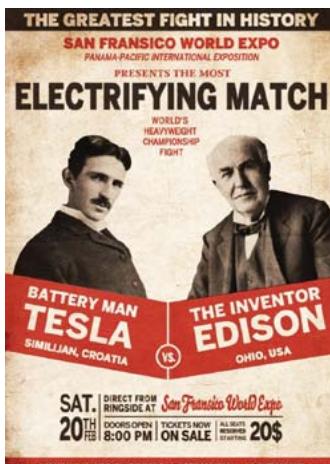
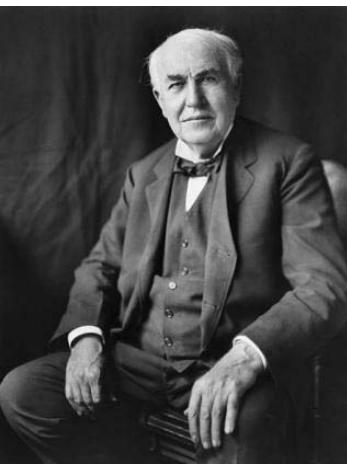
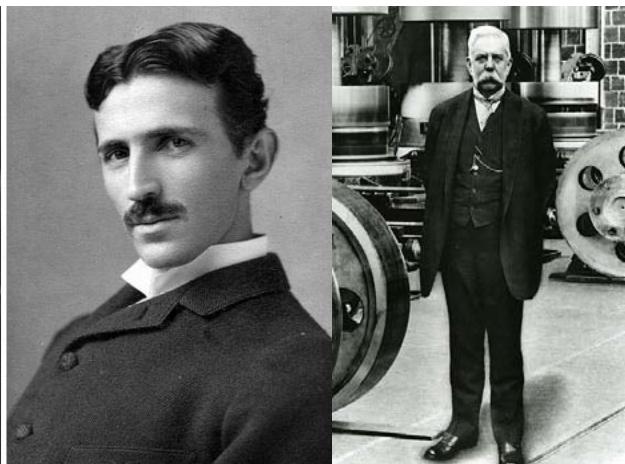 Credits: Sharon Donahue and Library of Congress Figure 1: Electrification Match: Thomas Edison vs Nicola Tesla + George Westinghouse
"The War of the Currents" defined a very practical need to reduce grid circuit heat losses and supported the final choice for the AC grid concept: Tesla's ingenuity allowed for an opportunity to increase voltage in the grid and reduce the circuit losses and related power costs by using AC transformer technology.
As a result, for over 125 years society has been mostly focused on AC grid architecture and practices in generation, transmission and distribution.
## ii. Technological Rivalry Continued
However, the AC/DC technological rivalry did not stop. Two major roadblocks in DC grid deployment-transformers and circuit breakers had to be, and were, resolved.
### Transformers:
Low voltage in local DC grids (LVDC) was brought to higher levels. Today, DC-based renewable sources of electricity (such as wind, solar, tidal, wave) are collected at much higher voltages (e.g., $1500\mathrm{V_{DC}}$ for utility-scale PV arrays) than in 1895, with the grid circuit losses considerably reduced.
Medium voltage for DC power distribution was achieved by Solid State Transformers (SST), often called DC transformers [52]. Solid State Transformers present an advanced combination of medium frequency (several kHz) AC transformer technology and AC/DC power conversion technology.
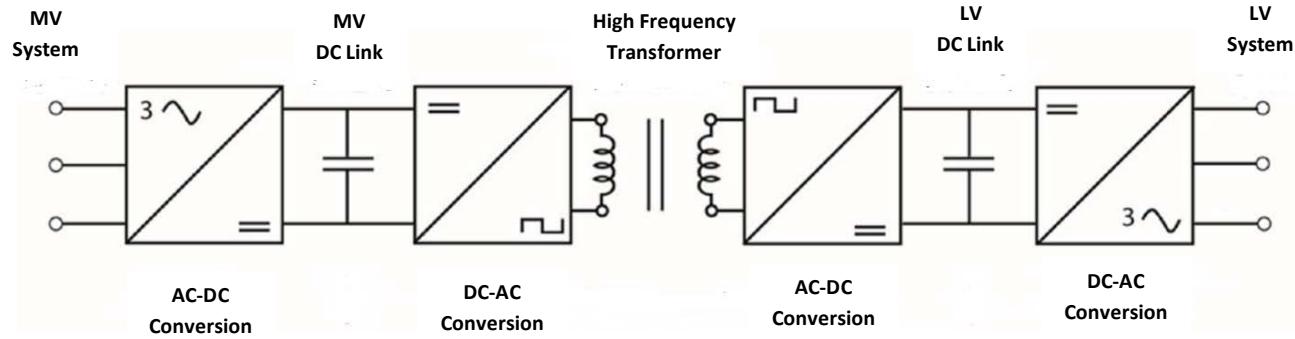 Credits: Scholarly Community Encyclopedia Figure 2: DC Transformer Architecture
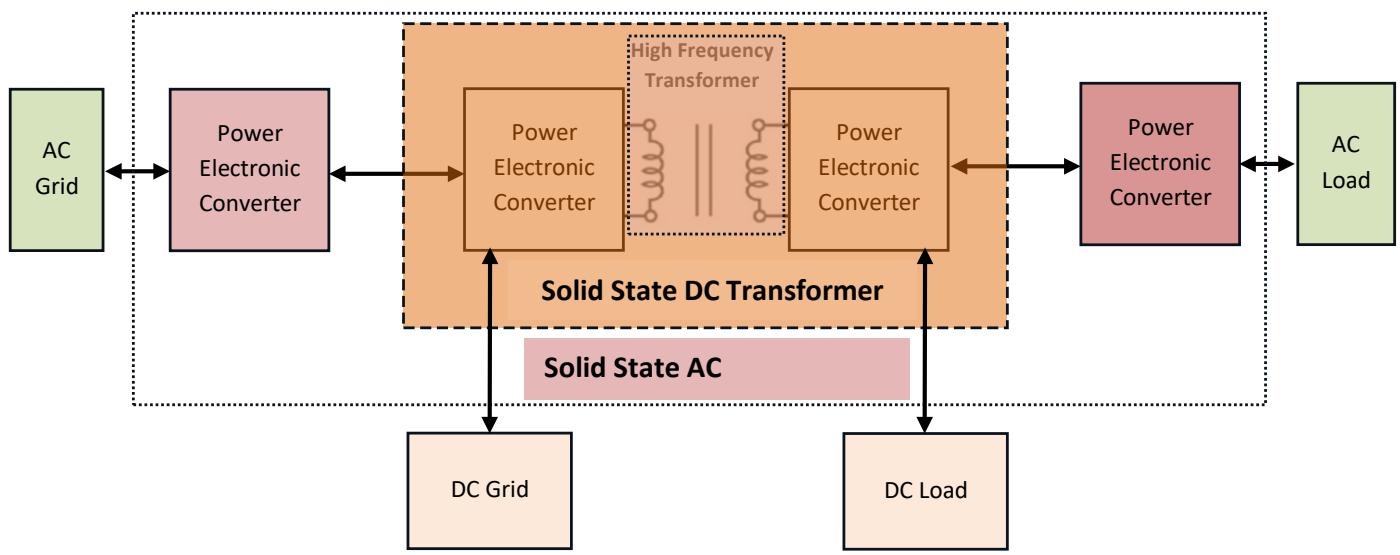 Figure 3: Solid State Transformer Applications
This allows for bringing Medium Voltage Direct Current (MVDC) grids from $1.5\mathrm{kV_{DC}}$ to up to $100\mathrm{kV_{DC}}$ voltage level [53].
DC Transformers for emerging MVDC grids due to increased frequency provide increased efficiency with significant reduced volume and weight [52,54]. They optimize the links between renewable sources, loads and storage and reduce DC cabling losses.
Applications of transformers for MVDC have been also advanced for offshore floating and subsea transformer solutions [55,56].
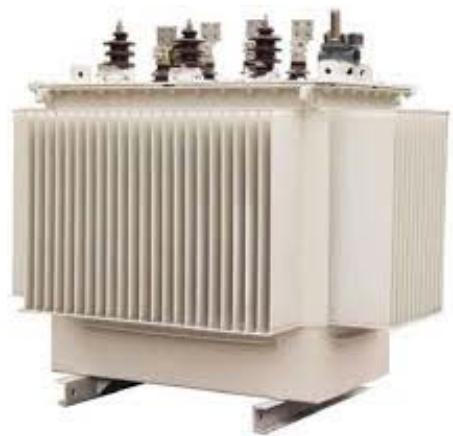 Credits: U.S. Department of Energy Figure 4: Example of Solid-State Transformer
High Voltage Direct Current (HVDC) lines commonly used for long-distance power transmission, operate in $100\mathrm{kV}$ to $800\mathrm{kV}$ voltage range. In 2019 a $1,100\mathrm{kV}$ link over a distance of $3,300\mathrm{km}$ with a power capacity of $12\mathrm{GW}$ was completed in China [57-59]; this demonstrates the level of intercontinental HVDC grid with large-scale wind and solar power plants interconnection [60].
Circuit Breakers
Another critical problem in DC grids was related to circuit breakers. In AC grid practice, a circuit breaker disconnects the circuit at a moment when the current becomes zero; this technique makes AC breakers simple and low-cost. The arc extinguishing technique in HVDC circuit breakers is much more complex, and the complexity of HVDC breakers equipment makes their costs higher [61].
The Power industry has been working on HVDC circuit breaker solutions since the mid-20th century [62]. While solutions in selected HVDC systems have been used and tested [63], only in 2012 ABB, one of the very few global leaders in HVDC deployment, announced that it solved "a 100-year-old electrical engineering puzzle...paving the way for a more efficient and reliable electricity supply system" [64].
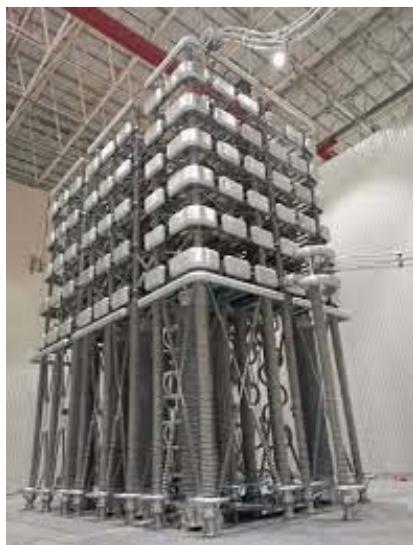 Credits: Progress on Meshed HVDC Offshore Transmission Networks, European Commission Figure 5: $500\mathrm{kV}$ hybrid HVDC circuit breaker
As a result, by the end of 2010's the problems and "roadblocks" in dealing with DC grids -specifically highest quality of DC transformers and circuit breakers - have been resolved, and AC/DC competition has been brought to the next, very technologically advanced, level [48].
## iii. Merge on the Horizon
As AC and DC systems started complementing each other [52], "rescuing" the Grid and moving from
the current power grid to an emerging Future Grid, a big leap towards a "merge" of AC and DC grids appeared on the horizon. This merge expected DC grid solutions to match and shortly lead the development and deployment of Future Grid to meet the sustainability objectives within the timeframe required by a goal of $100\%$ clean electricity by 2035.
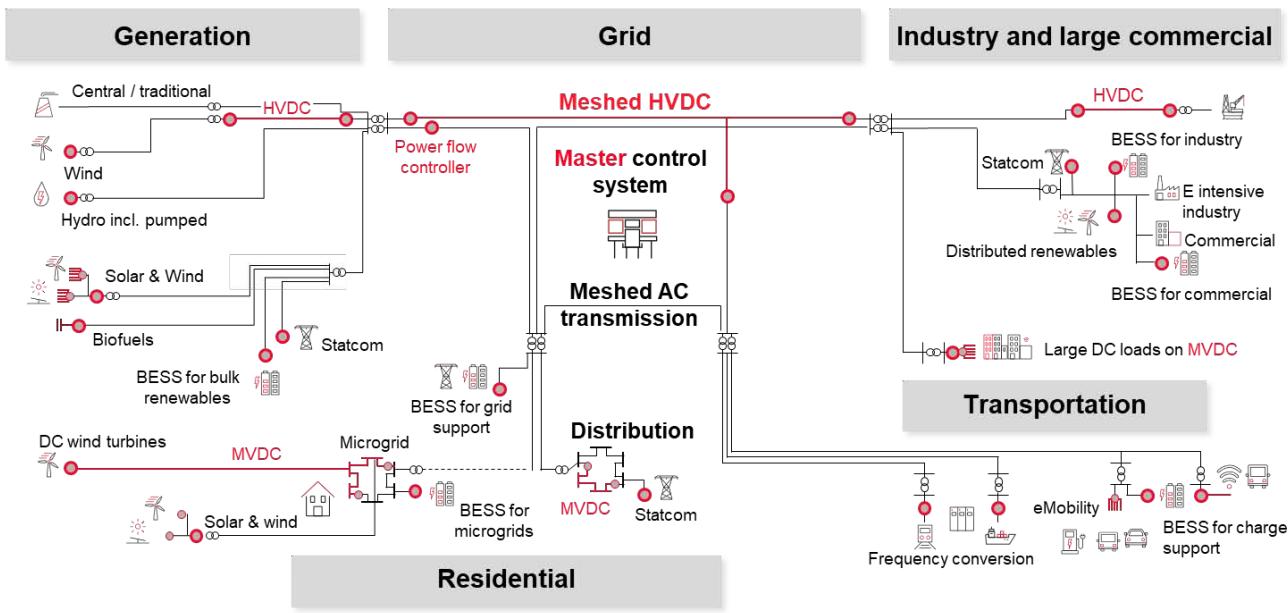 Figure 6: AC and DC forming the Grids of the future [52] Credits: Courtesy of Hitachi Energy
The AC/DC 'merge leap' is driven by two industrial groups.
The first group includes the key multinational enterprises (MNEs) leading technology/product deployment of utility-scale converters (inverters and rectifiers) in modern HVDC solutions (such as Hitachi Energy's HVDC Light [65,66] or Siemens' HVDC Plus [67]). These solutions are used for interconnecting renewable electricity sources (onshore and offshore) into the grids, utilizing back-to-back DC power stations to upgrade the resilience and coordinate independent parts of the grid [68], and bringing power to large consumption hubs from very remote clean electricity sources (such as Muskrat Falls, Newfoundland, Canada [69,90]).


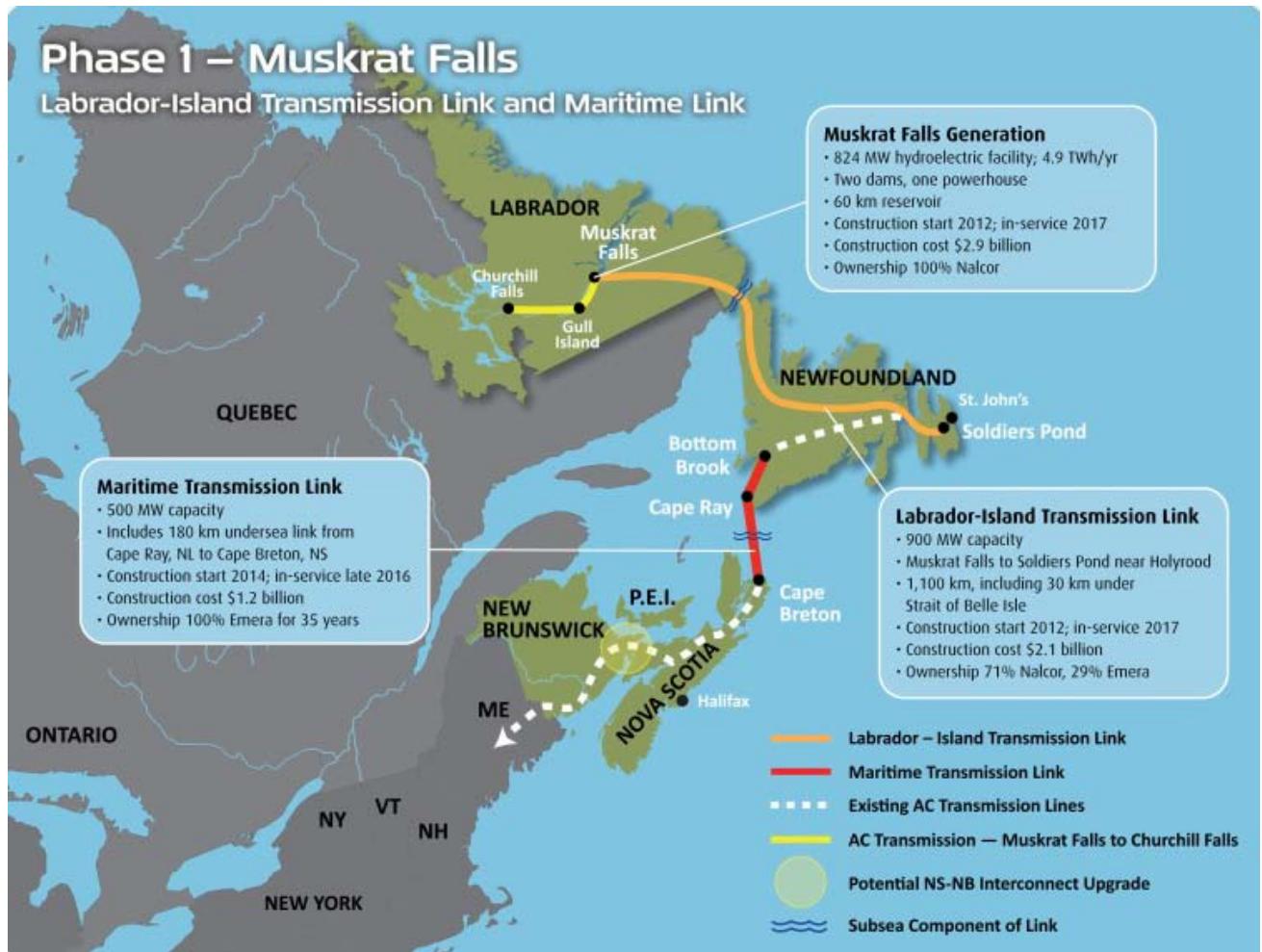 Figure 7: Maritime (subsea 500 MW) and Labrador-Island (900 MW) HVDC Transmission Links, Atlantic Canada Credits: Nova Scotia Energy and Mines
The second group is presented by electricity system operators accelerating transitions to advanced low emission power systems through manufacturing and deployment of grid forming converters (some of them known as Grid Forming Inverters) for Distributed Energy Resources (DER) interconnection with and operations in the grid [71,72]. This development is mostly focused on residential/community/commercial and smaller industrial clean electricity projects and plants.
This leap is also leveraged by utility-scale and residential/commercial/industrial scale battery storage solutions [73-75] as a key part of the Future Grid deployment. These battery storage solutions are already in the market.
To select the ways to accelerate the merge of AC and DC grid solutions to reach the Future Grid, let's look attentively at challenges and changes transforming Electricity Value Chain in Energy Transition.
### c) Transforming the Electricity Value Chain
"When all five pillars of the TIR are interconnected, they create a new nervous system for the economy..."
Jeremy Rifkin[^3]
## i. Value Chain Challenges
As a continuous real-time match between electricity demand and supply, the electricity value chain in energy transition on the path to $100\%$ clean electricity [76] is exposed to major challenges. Some important challenges, expected to be encountered to achieve the levels of clean electricity potentially reaching over $80\%$ of electricity generation by 2030, include \[77\]:
- Deep penetration of variable energy sources like wind and solar in generation mix (where penetration is the amount of electricity generated from a particular source as a percentage of annual consumption);
- Interconnection/integration of commercial- or residential-level distributed and/or decentralized generation in distribution systems;
- Dramatic changes in electricity consumption through electric vehicles' battery charging;
- Deployment/integration of advanced technologies to address the grid reliability and efficiency under changing conditions;
- Vast increase of data communications and related cybersecurity issues within the grid, and
- Meeting emerging power grid workforce requirements.
## ii. Future Grid Visions
To address the electricity value chain challenges, visions of the Future Grid have been thoroughly envisioned by leading jurisdictions globally. As a key example, the U.S. presented its vision of the Future Grid as "seamless, cost-effective electricity system, from generation to end-use, capable of meeting all clean energy demands and capacity requirements" \[78\]:
Table 2: Vision of the Future Grid [78]
<table><tr><td>· Significant scale-up of clean energy (renewables, natural gas, nuclear, clean fossil)</td></tr><tr><td>· Universal access to consumer participation and choice (including distributed generation, demand-side management, electrification of transportation, and energy efficiency)</td></tr><tr><td>· Holistically designed solutions (including regional diversity, AC-DC transmission and distribution solutions, microgrids, energy storage, and centralized-decentralized control)</td></tr><tr><td>· Two-way flows of energy and information</td></tr><tr><td>· Reliability, security (cyber and physical), and resiliency</td></tr></table>
This vision supports the modernization of the U.S. electricity transmission and distribution system within a Smart Grid concept to maintain a reliable and
secure electricity infrastructure meeting future demand growth \[79\]:
Table 3: U.S. Statement of Policy on Modernization of Electricity Grid [79]
<table><tr><td>1. Increased use of digital information and controls technology to improve reliability, security, and efficiency of the electric grid.</td></tr><tr><td>2. Dynamic optimization of grid operations and resources, with full cybersecurity.</td></tr><tr><td>3. Deployment and integration of distributed resources and generation, including renewable resources.</td></tr><tr><td>4. Development and incorporation of demand response, demand-side resources, and energy efficiency resources.</td></tr><tr><td>5. Deployment of `smart' technologies (real-time, automated, interactive technologies that optimize the physical operation of appliances and consumer devices) for metering, communications concerning grid operations and status, and distribution automation.</td></tr><tr><td>6. Integration of `smart' appliances and consumer devices.</td></tr><tr><td>7. Deployment and integration of advanced electricity storage and peak-shaving technologies, including plug-in electric and hybrid electric vehicles, and thermal-storage air conditioning.</td></tr><tr><td>8. Provision to consumers of timely information and control options.</td></tr><tr><td>9. Development of standards for communication and interoperability of appliances and equipment connected to the electric grid, including the infrastructure serving the grid.</td></tr><tr><td>10. Identification and lowering of unreasonable or unnecessary barriers to adoption of smart grid technologies, practices, and services.</td></tr></table>
Energy transition, estimated to become a USD23-trillion market by 2030 [80], requires changes in the Electricity Value Chain addressing the inflexibility and prompt upgrades of grid infrastructure in a timely manner [81].
The highly centralized, one-directional Power Grid is currently being "reinvented", creating "an electrical power revolution" [82]. Most of energy demand will be met by electrical power; it is expected that electricity as a share of final global energy demand [83],
will double from under $20\%$ in 2022 to nearly $40\%$ within the next 30 years.
The biggest barriers for power grids in energy transition are more socio-political than technical [82]. It is clearly understood that the grids of the future will integrate sustainability and circular economy solutions at every stage of the value chain [84].
Ensuring/enabling power grid flexibility to balance demand and supply in energy transition requires Dispatchable Emission-Free Resources [85]. It
is expected to be addressed by major solutions such as grid coupling, generation management, demand-side management, and energy storage management [82].
## iii. "Soft Revolutions" in Value Chain
With current challenges and visions behind Future Grid in the electricity value chain, we can see "soft revolutions" that have enabled energy transition. We will look at these "revolutions" bottom-up, beginning with consumption as a starting point in energy evolution, and move via distribution and transmission to electricity generation. We will also address "electricity storage" as a core part in each of the value chain links.
a. Consumption: Changing Demand
### A. Energy Management
Historically, the Energy Management revolution started from energy security related to oil price events: Oil Shock with OPEC nations quadrupling price of oil in 1973 [85-89] and the Iranian revolution leading to second oil price rise in 1979.
As an immediate response, very initial Energy Management thoughts and practices moved to Energy Conservation, and further to Energy Efficiency [90].
In 2010-2020 Energy Efficiency was clearly understood internationally as a "fuel" [91-93] and an "energy resource" reducing the energy otherwise supplied by the electricity grid. Driven by carbon reduction requirements and implications of climate change, it was seen as" an important utility system resource, typically the lowest-cost system resource compared to supply-side investments" [94].
Based on the rapid advancement of cost-effective onsite distributed energy resources (DER) "energy efficiency" has become the "first fuel" – having "clean energy/renewable energy" as the "second fuel" in clients' energy mix, embedding it with digitalization and asset management through the Internet of Things™, and putting customers at the center [95]. Today sophisticated energy management approaches take advantage of technology, using real-time energy data analytics [96] and moving it to integrated, adept and robust predictive energy management practices [97] to increase clean energy productivity in the energy mix.
# B. Electric Vehicles and Fleets
As oil prices and gasoline shortages in 1973 peaked, interest in lowering society's dependence on oil as vehicles' fuel started growing [98]. However, public interest in electric vehicles as an energy security/energy transition solution in the last quarter of the $20^{\text{th}}$ century was lacking. Only at the beginning of the $21^{\text{st}}$ century did interest in electric vehicles as a strong competitor to fossil fuel-based vehicles start increasing. This interest was supported by the growth of lithium-ion battery capacity. Together with continuous battery cost reduction, this spurred major auto-manufacturers to accelerate the development of EV solutions.
Over the last twenty years, the amount of EVs sold has dramatically expanded - from negligible in 2010, to approximately 1 million in 2016 and about 26 million electric cars by the end of 2022 in operation globally. Over $14\%$ of global car sales in 2022 were electric. EV sales in 2022 increased by 60 percent compared to 2021 reaching a new record of 10.6 million. This rapid EV fleets growth meant that the society globally has already reached the tipping point in choosing electric mobility [99]. The International Energy Agency (IEA) predicts that the total fleet of EVs (excluding two/three-wheelers) will grow to about 240 million in 2030 accounting for over $10\%$ of the road vehicle fleet and achieving an average annual growth rate of about $30\%$. Total EV sales are expected to reach over 20 million in 2025 and over 40 million in 2030, representing over $20\%$ and $30\%$ of all vehicle sales, respectively [100].
EV fleets represent the need in electricity delivery infrastructure to ensure electricity is always delivered where and when it is needed for EV battery charging. The global electric vehicle charging station market size was estimated at USD 26.9 billion in 2022 and it is projected to reach USD 344.6 billion by 2032 [101].
From the power grid perspective, EV infrastructure includes EV charging stations connected to the grid at-front-of-the-meter and behind-the-meter levels providing charging to all EV fleets (cars, trucks, buses, etc.) at public and private levels. This may also include solar PV and battery energy storage systems that may operate as a part of the charging stations.
From the consumer angle, EV Infrastructure market segments may be presented based on Point of Charge addressing capital expenditure (CAPEX) risk levels (asset light or asset heavy) and charging speed (slow charging or rapid charging) [102, 103]; Mode of Charging defined by IEC 61851-1 (General Requirements), an international standard for electric vehicle conductive charging systems [104, 105], addressing AC-to-DC and/or DC-to-DC modes, and Type of Applications (public or private charging stations).
While the major mobile battery charging infrastructure markets are focused on EVs, there are other growing mobile charging infrastructure markets in transportation, such as battery storage based marine vehicles (ferries, boats, etc.).
### b. Transmission and distribution: Power Electronics
Power electronics is a vital transformational technology for conversion and control of electric power [106, 107]. Today, power electronics performs power conversion and control and provides interfaces to all electricity solutions in the electricity chain in a broad spectrum of services necessary to the grid. Power converters enable the control the primary characteristics
of electrical power such as voltage, current, frequency, and the basic form of AC or DC [108].
While historic use of mercury-arc valves in power electronics in the early $20^{\text{th}}$ century limited its functionality, modern power electronic solutions based
on solid-state semiconductor devices are much more functionally advanced. Power electronics strives today for compactness, efficiency and reliability, trying to reduce weight, volume, and life-cycle costs in a wide range of power applications [109].
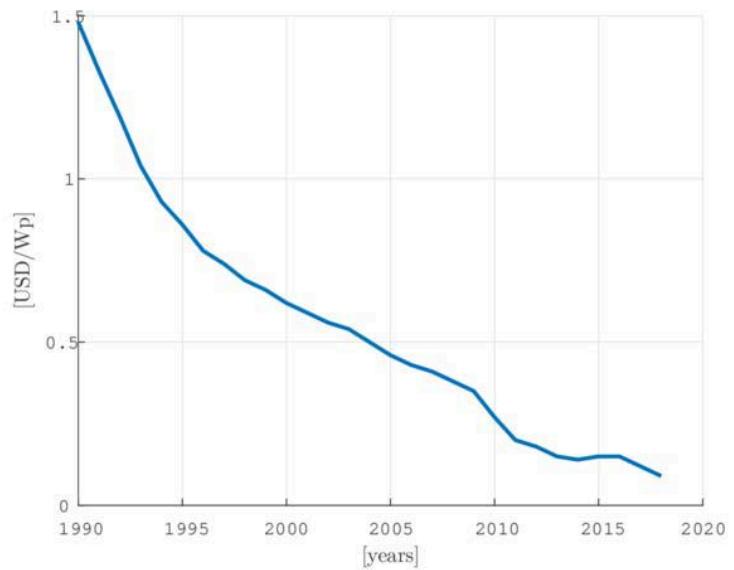 Credits: 2019 Renewable and Sustainable Energy Reviews and Franco Penizzotto Figure 8: PV system inverter price history
A breakthrough in power electronics in mid-20<sup>th</sup> century came with the invention of the MOSFET (metal-oxide-semiconductor field-effect transistor) by Bell Labs in 1959 [107]. Improvements in MOSFET technology made the power MOSFET available in the 1970s. In 1982, the insulated-gate bipolar transistor (IGBT) was introduced and became widely available in the 1990s. This "revolution" in power electronics, "quietly operating in the background - unseen and unheard" [106], brought to the market immediate applications for distributed generation, renewable energy systems, motor drives, electric vehicles, traction systems, marine systems. As an example, modular multilevel converters are replacing conventional voltage source inverters in HVDC applications and grid interconnection systems [110].
By 2030, it is expected that $80\%$ of all electric power will flow through power electronics [111]. Its speed of reaction, flexibility of control, and scalability are key attributes ensuring resiliency of the future grid [106].
## c. Generation: Renewable Sources
### A. Solar Photovoltaic Power
Solar photovoltaics, a direct conversion of sunlight into electricity, started being implemented in telecommunications in late 1950's for space satellite applications [112]. However, successful PV revolution in power industry commenced through upgrading solar cell technologies' efficiency and cost in mid -1970-ies,
bringing new markets for these technologies. In 1989, the first residential roof PV program was started in Germany, followed by a similar program in Japan. However, before 2000 PV was largely unknown by the general public [113, 114].
Changes on the market driven by Germany's Renewable Energy Sources Act triggered efficiencies in PV cells and modules. Best PV cell efficiencies of $13.9\%$ in 1977 were brought to $25\%$ in 1999 [115-117] and to $39.5\%$ in multijunction cells [118] in 2021. Photovoltaic Module Efficiencies followed their cell efficiencies, reaching $25\%$ for silicon modules [119]. Evolution of solar PV module cost demonstrated dramatic reductions: being 105.7 USD (2015) per Watt (W) in 1975, it reduced its cost in 2010 at 2.0 USD (2015) per W (50 times less!) and 0.2 USD (2015) per W in 2020 (10 times in the decade!) [120]. In the 2010-2020 decade there has been a $64\%$, $69\%$, and $82\%$ reduction in the cost of residential, commercial-rooftop, and utility-scale PV systems, respectively with a significant portion of the cost declines attributed to an $85\%$ cost decline in module pricing[121].
Starting from tens of megawatts of PV by 2000, the global PV base grew significantly reaching 1.2 TW of cumulative capacity in 2022, with 240 GW of new systems installed and commissioned, and nearly a dozen countries with penetration rates over $10\%$ [122,123].
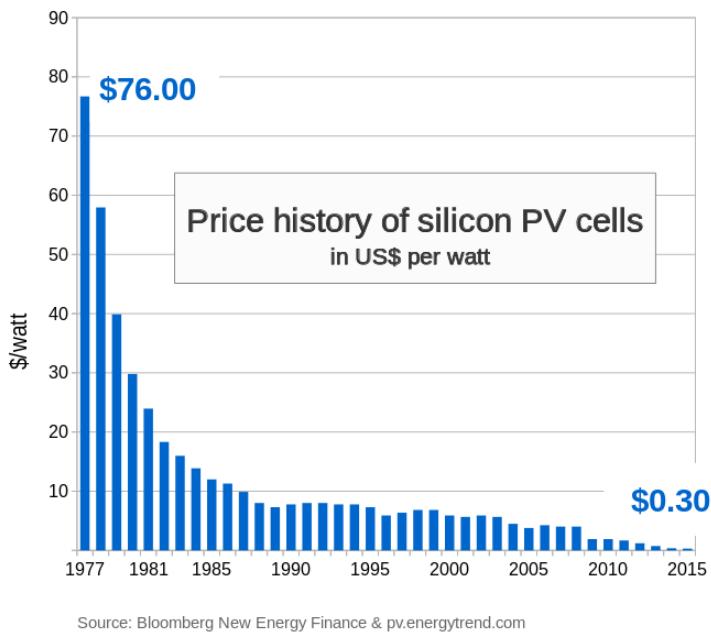 Figure 9: Silicon PV cells price history
The price of standard solar modules hit an all-time low of 16.5 US cents per watt in August 2023, expected to fall further by the end of the year to 14.5 cents per watt U.S.
Today, PV is a mainstream source of electricity at the core of the energy transition, addressing the challenges of climate change and presenting an immediate pathway to decarbonization [122].
### B. Utility-scale Wind Power
While windmills were seen as an electricity source for many years, an important advancement took place in 1978 when the world's first multi-megawatt wind turbine with a lightweight three-blade upwind design was constructed in Denmark [125].
Rising concerns over energy security and climate change in the beginning of the $21^{\text{st}}$ century led to expanding wind power industry due to abundance of wind resources and reducing utility-scale wind turbine costs [125].
Based on the northwest Europe's experience of the $20^{\text{th}}$ century, deployment of land-based utility-scale wind turbines in the $21^{\text{st}}$ century moved globally to offshore (fixed bottom) and later – to floating off-shore wind solutions [126,127].
Becoming taller and bigger in design, wind turbines increased its capacities. As an example, the average capacity of newly installed U.S. wind turbines in 2021 was 3 megawatts (MW), up $9\%$ since 2020 and $319\%$ since 1998–1999 [128]. The average 2021 capacity (rating) for each of land- based, off- shore fixed bottom and off- shore floating turbines was 3 MW, 8 MW and 8 MW correspondingly, with capital expenditure rates indicated at 1,501 $\$ /kW$, 3,871 $\$ /kW$, and 5,577 $\$ /kW$, and Levelized Cost of Energy at 34 $\$ /MWh$, 78 $\$ /MWh$ and 133 $\$ /MWh$ correspondingly [129].
Financial and other incentives for wind energy development resulted in a large expansion of deployment in many countries. While in 1990, 16 countries generated a total of about 3.6 billion kWh of wind electricity, in 2021 at least 128 countries generated about 1,808 billion kWh of wind electricity. By 2021 wind energy produced 4872 terawatts-hour, $2.8\%$ of the total primary energy production and $6.6\%$ of the total electricity production [130]. In the U.S. only, the share of U.S. electricity generation from wind energy has grown from less than $1\%$ in 1990 to about $10.2\%$ in 2022 [124, 131].
## d. Storage along the Chain: Batteries
Enabling power grids with battery energy storage systems across the entire electricity value chain is clearly seen as crucial for the power industry in energy transition [132,133]. The reason is simple - embedded in any part of the grid (in front-of-the-meter and/or behind-the-meter), battery storage is capable of continuously reducing/removing imbalances between electricity demand and supply within any time range required by the grid. [134]
Initial understanding of storing electrical energy in rechargeable batteries to address the needs of the grid came in very late $19^{\text{th}}$ – the beginning of $20^{\text{th}}$ century [135]. Since that time, many efforts were dedicated to battery storage chemistries and related applications in electricity consumption [135].
Today, the current market for grid-related battery storage globally is dominated by lithium-ion chemistries [136,137]. The Power Battery revolution led by lithium-ion batteries started with three important lithium batteries developments in the 1980s that allowed for building the first rechargeable lithium-ion battery prototype in 1985 and its commercialization by Sony in
1991. Due to technological innovations and improved manufacturing capacity, the price of lithium-ion batteries in three decades declined by $97\%$ [138] supporting their global use in leading markets such as telecom, power and automotive.
 Price and market size of lithium-ion batteries since 1992
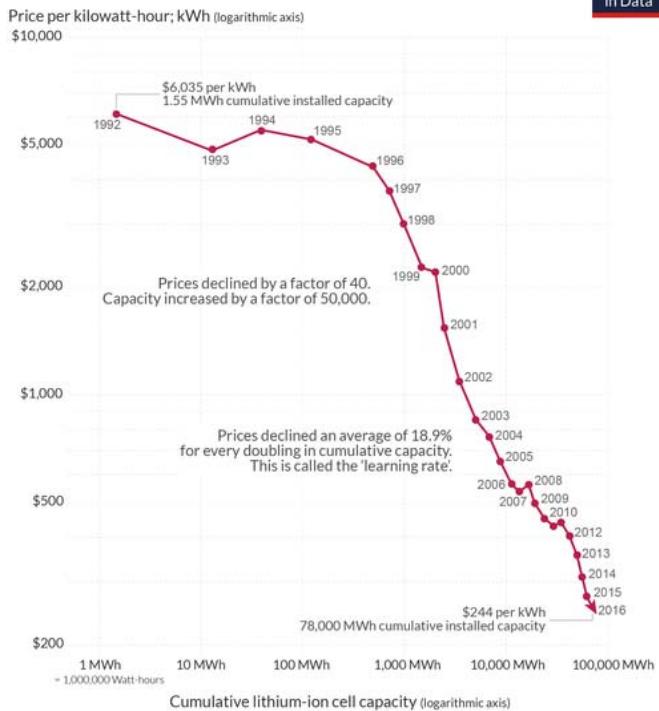 Figure 10: Lithium-ion batteries price history Prices are adjusted for inflation and given in 2018 US $ per kilowatt-hour (kWh). Source: Micah Ziegler and Jessica Tracik (2021). Re-examining rates of lithium-ion battery technology improvement and cost decline. OurWorldinData.org - Research and data to make progress against the world's largest problems. Licensee under CC-BY by the author Hannah Ritchie. Credits: OurWorldInData.org As an example, in electrical vehicles manufacturing and sales, automotive lithium-ion (Li-ion) battery demand increased by about $65%$ to 550 GWh in 2022, from about 330 GWh in 2021[139]. According to US Department of Energy estimates, Electric Vehicle Battery Pack Costs in 2022 were nearly $90%$ lower than in 2008 [140].
In the power industry, developments in battery storage demonstrated commercially viable battery systems to store energy during peak production and release during peak demand. They also supported slower responding electricity resources during unexpected production falls [141].
Battery energy storage systems are critical for addressing high renewable energy sources penetration. They can support voltage and frequency regulation to maintain grid's stability and reliability, due to their high energy efficiency, quick response time, and long lifecycles. They have the ability to keep up with sudden changes in generation and consumption, and have low environmental impact [142,143]. They also enable energy storage systems modularization and flexible installation. Lithium-ion batteries in energy storage systems also exhibit relatively high energy density [144].
The two immediate applications of grid-connected battery storage systems are energy arbitrage (storing surplus electricity at low cost and using it when demand is high and prices increase) and ancillary services (such as frequency and voltage regulation, peak shifting and shaving) to keep the grid stable. Expected volume-weighted lithium-ion battery pack price forecast for 2023 is (152/kWh and is continuing to decline. In power grid applications, stationary energy storage installation is expected at 28GW/69GWh levels, and turnkey battery storage system costs for 4-hr duration systems - at )300/kWh [145]. Recorded at 1.57 TWh level globally in 2022, lithium-ion battery manufacturing capacity is expected to reach 3.97 TWh in 2025 and 6.79 TWh in 2030 [146]. The cost and performance projections for utility-scale lithium-ion battery systems, with a focus on 4-hour duration systems, show the high-, mid- and low-level storage costs of )245/kWh, $326/kWh, and $403/kWh in 2030 and $159/kWh, $226/kWh, and $348/kWh in 2050 [147]. It is expected that utility-scale battery storage systems will grow around 29 percent per year for the rest of this decade [133]. The utility-scale installations forecast for 2030 (450 GWh to 620 GWh range) presents a share of over 85% of the total market.
## III. EXPECTED RESULTS AND OUTCOMES
### a) Psychological Tools at Hand
"...until we understand the individual states of mind as well as the multiple webs of culture, our attempts at designing and preserving a "sustainable planet" will be virtually impossible."
Don Beck
As a result of "soft revolutions" in the Electricity Value Chain, consistent movement toward Future Grid Development became possible. The next step was to accumulate human mind forces to make the leap towards the Future Grid.
As in all macro-scale evolutionary developments, it required the coordination of governments, academia, private sector, and civil sector to move forward, and to rely on people in all these sectors in leading this critically important work.
To ensure that this coordination on multiple levels was in place and the work was moving at defined or accelerated pace, socio-psychological tools for dedicated groups across all the four sectors also needed be in place to achieve the Future Grid Development within the 2025-2035 timeframe.
If a global search is currently under way to select the most proven socio-psychological tools at hand to address the envisioned changes, attention
should be paid to Spiral Dynamics Integral (SDi) [26, 27, 148], a socio-psychological toolset supporting and leveraging macro-scale projects.
Highly instrumental and well-known in the efforts of resolving geopolitical challenges, Spiral Dynamics Integral's conceptual system in the $21^{\text{st}}$ century was applied to civil society issues in general. It has been comprehensively field-tested in some of the most complex environments such as South Africa, and large-scale projects such as Palestine and the Netherlands. Dr. Don Beck (1937 - 2022), the coauthor of and major lead on SDi deployment, was engaged with major government agencies, banks, energy companies, and airlines as well as with international financial institutions such as the World Bank. Dr. Beck's commitment to SDi deployment, helping to reframe how we define human-related issues and understand the people involved in addressing these issues, brought its conceptual system over the globe. The Centers for Human Emergence built on the pillars of SDi with Dr. Beck's guidance were founded in many countries (e.g.,
in the Netherlands, Germany, the UK and the Middle East). Today these centers and related organizations contribute to the civil society leadership in Climate Change adaptation, low-carbon economy and energy security.
This Chapter summarizes the reasons for using Spiral Dynamics Integral's socio-psychological toolset as a very strong match for Energy Transition and the AC/DC merge in Future Grid Development for Total Electrification.
## i. Sustainable Culture Index
To maintain and strengthen Total Electrification objectives, and practices of learning, sharing and making decisions in National, Economic, Political, Professional and Epistemic areas, driven by the key sustainable cultures: Energy Security, Climate Change Adaptation, and Low Carbon Economy, dimensions and components of a Sustainable Culture Index structure based on the approaches in [28,31] may be useful:
Table 1: Sustainable Culture Index
<table><tr><td>Dimension:</td><td>Component</td><td>Brief Definition</td></tr><tr><td rowspan="5">Positioning Change</td><td>Culture Shift</td><td>Shift of the culture's center of gravity as conditions of existence change (evolutionary dynamics).</td></tr><tr><td>Vision</td><td>Compelling vision with a sense of transcendent purpose and superordinate goals to create common cause.</td></tr><tr><td>Domains</td><td>Economic, political, social, environmental, spiritual and educational domains integrated.</td></tr><tr><td>Bottom-line</td><td>Quadruple bottom-line: purpose, profit, people, and planet.</td></tr><tr><td>Timeline</td><td>Past-present-future completion timeline (for every issue, every function, every level).</td></tr><tr><td rowspan="4">Connections</td><td>Psychological Health</td><td>Systemic health and well-being at individual and collective levels.</td></tr><tr><td>Collective individuality</td><td>Sense of collective individuality (seen as a blend of individuality and collectivity ratios).</td></tr><tr><td>Dependency</td><td>Dissemination of self-reliance and responsible decision-making (at every level, in every function, and on every issue).</td></tr><tr><td>Tension Management</td><td>Dynamic tension in destructive or constructive conflict.</td></tr><tr><td rowspan="2">Dynamic Development</td><td>Cause Maintenance</td><td>Causes and symptoms of problems in the changes development (in a simultaneous, interdependent fashion) and their resolution.</td></tr><tr><td>Capacity Rebuilding</td><td>Capacity to re-build self-reliance and responsible decision-making if/when the problems of existence create greater complexity than available solutions.</td></tr><tr><td rowspan="3">Living open systems</td><td>Sharing</td><td>The culture codes transmitted to the present generation.</td></tr><tr><td>Transition</td><td>Preparation of the youth for different conditions in the near and far future.</td></tr><tr><td>Transcending</td><td>The culture transcended with previous ways of being included.</td></tr></table>
## ii. Spiral Dynamics Integral
Evolution of Power Grid as the key tool of Energy transition in the $21^{\mathrm{st}}$ century requires society to address this evolution at an advanced psychological level, using tested theories, skills and practices of human development used over the last sixty years. These internationally proven, cutting edge, theories,
skills and practices, enable humankind to make successful large-scale steps in evolution and are presented by Spiral Dynamics Integral thinking, publications and experiences [26, 27, 148, 149].
The Spiral Dynamics theory of the evolutionary development of individuals, organizations, and societies is based on many years of research by developmental
psychologist Clare W. Graves [150, 151]. Dr. Graves proposed to see the psychology of mature human beings and societies as "an unfolding, emergent, oscillating, spiralling process, marked by progressive subordination of older, lower-order behavior systems to newer, higher order systems as man's existential problems change".
The Spiral Dynamics theory was initially published by Don Beck and Christopher Cowan [26] and advanced later by collaboration of Don Beck and Ken Wilber in “A Theory of Everything: An Integral Vision for Business, Politics, Science, and Spirituality” [27].
## iii. Value Systems Approach
According to Spiral Dynamics, the human mind adapts to more complex thinking when faced with similarly complex life experiences. From this angle, the
Spiral Dynamics conception which leverages “a values system perspective on constructive dialogue and cooperative action” [28] presents a unique approach to major human developments such as the evolution of the Power Grid. Spiral Dynamics describes value systems as social stages of people, organisations and society as they move through their development.
# a. Tiers
According to the Spiral Dynamics theory [26], two tiers of value systems are seen over human history. First-tier value systems describe the various worldviews, mental attitudes, and cultures from history until the present moment. Second-tier value systems describe more advanced, enlightened, evolved, or aware value systems.
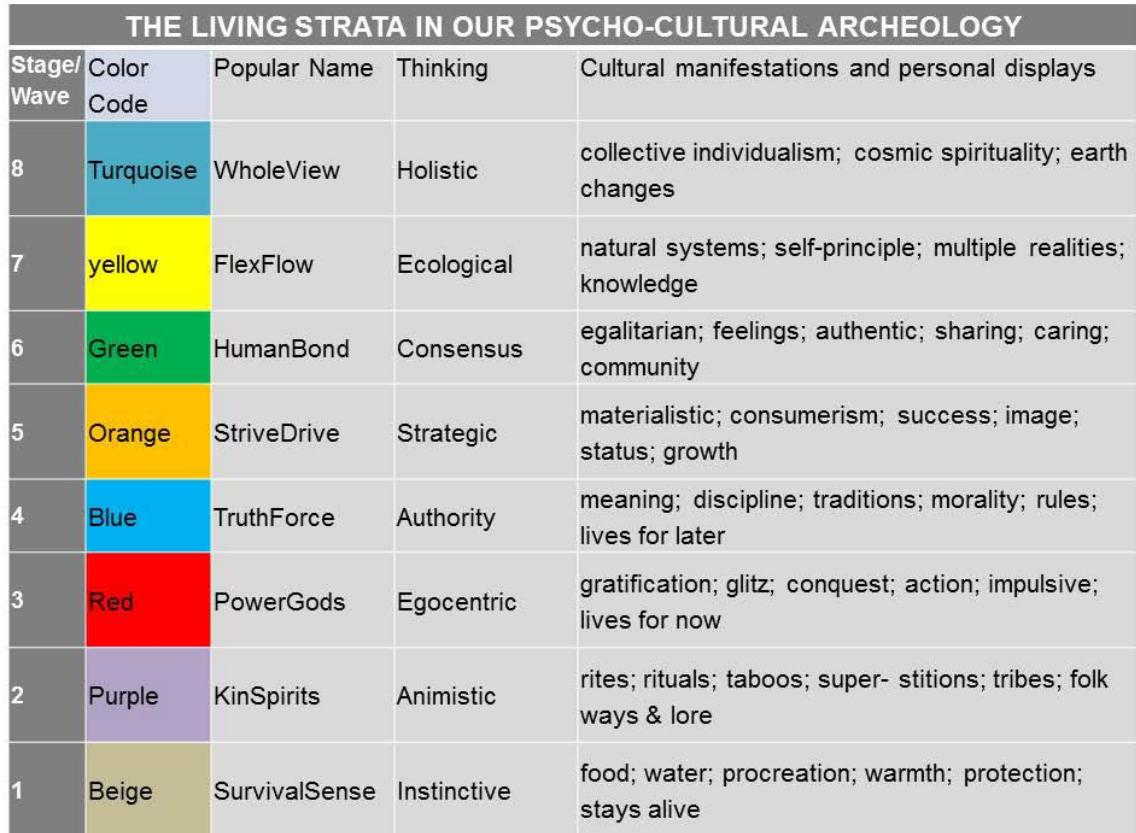 Credits: Don Beck 2014 Figure 11: Value Systems
Cultures are formed by the emergence of value systems defined as human responses to life conditions. As a complex adaptive intelligence, a value system "forms the glue that bonds a group together, defines who they are as a people, and reflects the place on the planet they inhabit" [28]. Any value system is a human undertaking: people requesting a change and people involved in defending this change and making it a success.
### b.Composite Value Systems
According to Don Beck, "social stages within cultures [have] the capacity to lay on new levels of
complexity (new value systems) when conditions warrant...Each emerging social stage or cultural wave contains a more expansive horizon, a more complex organizing principle, with newly calibrated priorities, mindsets, and specific bottom-lines...All of the previously acquired social stages remain in the composite value system to determine the unique texture of a given culture, country, or society" [28].
## c. Integral Theory
Ken Wilber's Integral Theory in Spiral Dynamics Integral concept presents a framework for understanding the relationship between the individual
and the collective, and between internal and external views. As a four-quadrant map (intentional, behavioral, cultural and social), that may change in time, the Integral Theory reflects the impact of people involved in any value system related changes. This allows for balancing
Diversity generators which promote individual initiatives and Conformity regulators that reward collective actions, as well as Internal ("about me or us") and External ("about them") thoughts. [149]
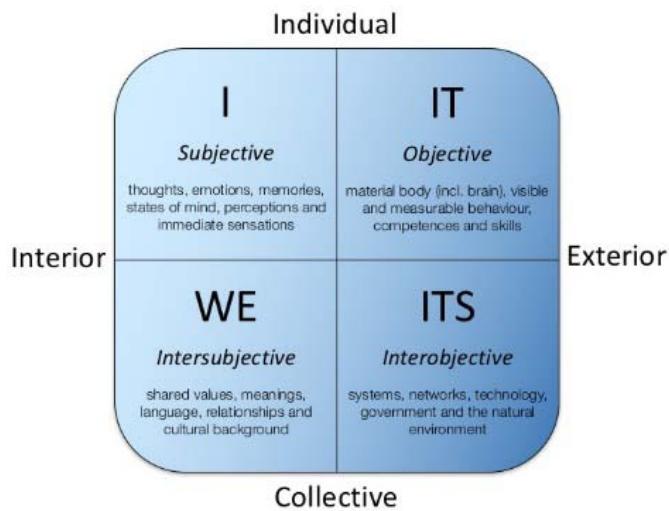
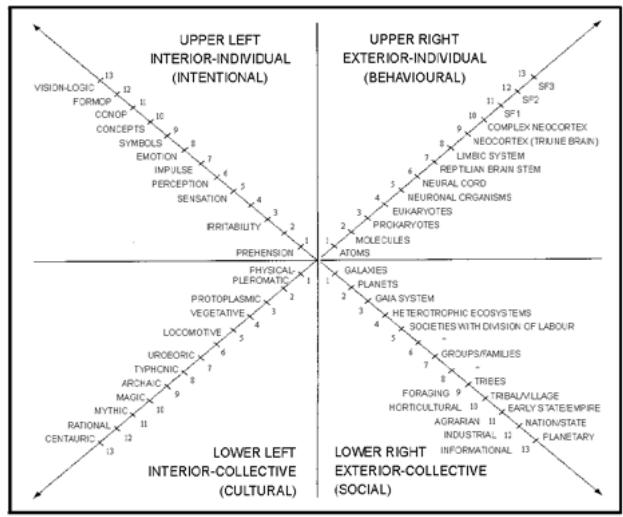 Figure 12: An Integral Theory of Consciousness (Ken Wilber, 1997)
## iv. Value System and Subsystems
As an evolutionary development, the Total Electrification culture in the $21^{\text{st}}$ centurybrings out value systems that "present ecological thinking, and rely on natural systems, self-principle, multiple realities and knowledge as cultural manifestations" [28]. These value systems (systemic, ecological, flexible, conceptual) emerged around 1950 and matured by early $21^{\text{st}}$ century. In Spiral Dynamics theory these value systems are often called by Yellow colour and/or by Flex Flow name (see Figure 11).
In the Total Electrification culture with current experience in all areas of life, Energy Transition based on clean energy solutions is seen as a value system providing response to life conditions on the planet, current and expected in the future.
The Future Grid approach to promptly and robustly upgrading electricity grids and achieving the grid performance objectives is a critical toolset for Energy Transition. It ensures this value system empowering the Electricity Value Chain will be very successful in relatively short period of time (within 2025-2035 timeframe). As such, the Future Grid presents itself as a value subsystem within the Energy Transition value system.
## v. Future Grid Value System Features
The changes expected through or experienced as a result of the Future Grid Development may be clearly seen through FlexFlow ("Yellow") value system features:
### SYSTEMIC:
#### Market Decentralization:
- Binding micromarkets to microgrids at any level of decentralization/distribution - from retail micromarkets to wholesale macromarkets.
- Micromarkets are a means to balance electricity supply and demand within a microgrid. Microgrids as smaller scale, "local" parts of larger power grids ensure reliability, cost and carbon footprint reduction, and DER diversification, and provide stability to larger grids [152]. Binding micromarkets to microgrids they serve enhances balance of electricity supply and demand. Micromarkets operate with multiple market participants within the microgrid [153].
- Microgrids are market participants in larger microgrid or grid markets they are a part of where they operate as buyers ("virtual users") or sellers ("virtual plants").
- Transactive Energy: micromarket participants' electricity procurementnegotiations based on real-time smart load operations\[154-156\]:
- Users' smart loads operate based on intra-day electricity price forecasting to meet electricity needs while reducing overall electricity demand and cost.
- The micromarket coordinates overall demand with a larger market.
- All parties negotiate energy procurement and consumption levels, cost, timing and delivery in a dynamic pricing scheme.


- Control Decentralization:
- Control Resolution: move from "centralized only" to "fully decentralized" microgrid control architecture, self-organization of any microgrids (no central control).
- Real-time micromarket control: Intra-day and intra-hour scheduling of Distributed Energy resources in microgrids, control solutions for micromarket management [157].
- Microgrid reliability and security optimization: self-contained autonomous system enabling self-control, protection, and management while meeting customers' demands for power quality and supply security [158, 159].
- Electricity User Control: rapid response, energy efficiency, user satisfaction [160].
ECOLOGICAL:
- Move from fossil fuel sources of energy to cleaner sources of electricity,
- Use of natural gas and nuclear as the electricity bridges to $100\%$ clean electricity practice,
- Consistent growth of renewable sources at utility-scale, community-scale and end-user scale levels
- Continuous growth of clean electricity resources beyond existing solutions on the market via new electricity generation (e.g., floating offshore wind, tidal, concentrating solar power, etc.) and electricity storage (electrochemical (e.g., hydrogen fuel cells), thermochemical (e.g., high temperature thermochemical), etc.) commercialization.
FLEXIBLE:
- Power Grid flexibility is completely based on power electronics used for electricity transmission and distribution.
- For transmission at high-voltage (HV) and medium-voltage (MV) grid levels, high power voltage source converter (VSC) technology and products are used by Flexible Alternating Current Transmission System (FACTS) and High Voltage Direct Current (HVDC) solutions. These solutions use Modular Multilevel Converter (MMC) and Solid State Transformer (SST) technologies and techniques.
- FACTS solutions are used in AC grid transmission to stabilize the grid; they include power electronics equipment and service for voltage, frequency and load flow control [161-166] enabling:
- Blackout prevention
- Grid forming capability.
- Inertial response to the transmission system from virtual and natural synchronous machines
- HVDC solutions are used in DC grid transmission; they include power electronics equipment and service for \[165\]:
- Integration of remote utility-scale renewable energy generation (e.g., PV and offshore wind farms) and consumption (e.g., mining plants).
- Interconnection of regional medium-voltage grids – interties (back-to-back stations) can be used to create an asynchronous interconnection between two AC networks.
- Interconnection of islands and other autonomous systems.
- Backup solution for existing local supply.
- For distribution at low-voltage (LV) level the following is used:
- Grid Forming Converters for DER Management [71,72]
- Operations in an electrical island ("forming" the grid voltage and frequency) or synchronization to an external grid,
- Immediate response to changes in the external system
- Stability during challenging network conditions
DC Microgrids [167]
- Operations in an electrical island,
- High utilization of on-site power generation,
- Optimization of heating, ventilation and air conditioning,
- High electric vehicle charging capacity,
- High reliability and resiliency during grid outages,
- Lower capital investment and grid interconnection costs, higher operational savings through increased efficiency.
CONCEPTUAL:
Grid Decentralization:
- Bringing electricity sources closer to electricity uses,
- Microgrid as the core unit of the grid,
- Micromarket decision-making in real time.
Grid Digitalization:
- Convergence into Cyber-physical-social systems [168]
- System-of-systems architecture
- Cutting-edge technologies (e.g., Industrial IoT, artificial intelligence, blockchain, cloud storage, etc.)
- Virtualization of operations [169]
- Enhanced utilization of the grid infrastructure
- Grid Decarbonization \[170,171\]:
- Generation and Transmission: reducing carbon footprint by operating carbon-free baseload generation, retiring carbon-intensive generation, adding new renewables and storage, facilitating
grid modernization including HVDC transmission lines,
- Distribution: reducing carbon footprint by reducing line losses through grid infrastructure upgrade and demand flexibility capabilities, pursuing customer-centric decarbonization opportunities focused on energy efficiency, customer-sited distributed generation and storage, and electrified transport [172],
- Consumption: low-carbon supply to all commercial and industrial customers.
- Environmental, social, and corporate governance (ESG) in the grid
- Grid Sustainability,
- Biodiversity: net-positive biodiversity impact,
- Circular Economy: reusing, recycling, avoiding waste.
- Climate Change Adaptation:
- Proactive risk management as a business imperative [173],
- Impacts on grid infrastructure,
- Adaptation paths\[174\]:
- Hardening the Grid
- Decentralizing Electricity Sources
- Strengthening resilience through Microgrids
- Growing Energy Storage
- Adaptation management planning.
### b) Conditions for Change
$$
"Commonsities = Commons + Communities"
$$
$$
\mathsf {S o r e n H e r m a n s e n} ^ {5}
$$
Society's ability to understand and successfully make the changes towards the Future Grid, based on Spiral Dynamics Integral model, are based on six conditions for change \[176\]:
## i. Subsistence Solutions
In general terms, at any social stage of development the target level of subsistence is achieved by earlier or current generations. After many efforts, over time, the problems preventing desired activities are resolved/removed, and the target results achieved.
From electrification and power grid history we know that the electrification effort started at the end of 19th century, and that AC-based grid practices and operations were established in 1930's. From that period and until 2010's, the existing AC power grid had been covering most of the electricity value chain needs, and technical problems in the grid maintenance and balanced operations had been resolved. One important feature of the AC power grid was infrastructure aging which, through close to 100 years of AC grid operations, brought growing capital investment requirements. It also made clear deeper understanding of possible limitations of AC grid if dramatic changes in electricity supply and/or demand occur.
## ii. Dissonance
To recognize any reasons leading to dissonance in the current value system, we have to be aware of and accept a clear and growing gap between the already changing conditions and the current ways we have been dealing with these changes. We need to understand that something is wrong with the current value system and that solutions we are trying to apply to emerging problems could be destructive and lead to "dead ends".
Applying this approach to the Future Grid value system, we see that a clean electricity gap in the grid is growing with the growth of renewable sources. The current approaches to manage the stability of the grid are limited to increasing renewable electricity curtailment (this means - keeping clean electricity at low transmission, distribution and consumption levels) and investment in additional transmission equipment, expensive and time-consuming to install [177].
Inevitable investment in growth and deployment of renewable resources in energy transition, on one hand, and their curtailment in daily practices on the other hand, has already created a strong turbulence, indicating that something is wrong with the grid.
The limits imposed on renewable energy to be installed/interconnected while society is strongly requiring their rapid growth are demonstrating that solutions applied to the grid of the $20^{\text{th}}$ century have been failing when confronted with the experience and thinking of the 2020's.
## iii. The Potential of Thinking
Collective and Individual thinking has to ensure that the way to change is open:
- Integrated history and conditions for openness are present,
- Strong forces creating turbulence are understood,
- Ability of organization(s)/people to participate in the intended direction is determined/Potential for functioning at a higher level of complexity is available,
- Decision to move is made.
Defining this condition in terms of the Future Grid, we see the following.
- Integrated history and conditions for openness in terms of Future Grid are clearly present - see Chapters 1 and 2 of this essay. Integrated history of power grid is well understood by electricity/power industry, and all the four major sectors in the society: government, academic, private industry and civil sector are open for immediate change related to energy transition including clean electricity from solar and wind, power conversion, and electricity storage.
- The three strong cultures creating turbulence for Energy Transition and the Future Grid - energy security, low carbon life cycle, and climate change adaptation - are clearly seen in and felt by society.
- Ability of organization(s)/people in each of the four society sectors to participate in the intended direction to reach the expected Future Grid level within 2025-2035 time frame is determined. Good examples of leadership commitments in the U.S. are presented by organizations at federal (e.g., [78]) and state (e.g., [85,178]) levels, by academia (e.g., [77]), and by all multinational enterprises involved in power industry in the country. Highly growing residential solar and battery markets contribute to Energy Transition, and human resources related to these sectors (e.g., system installation, electricians involved) match this growth.
- Human potential for functioning at a higher level of complexity in the Future Grid leap is available, however understanding of DC grids and AC/DC merge, specifically in relation to utilities and contractors' services and practices, has not been publicly discussed and promoted.
- Decision to move to Future Grid has been made in all the government, academia and private sectors (see the USDOE Future Grid publication [78] as an example).
- The potential of collective and individual thinking in these sectors is available, people are skilled and ready so the way to change is open.
## iv. Barriers to Change
Speaking about the Future Grid development we should look at two levels of barriers to change: technical and organizational. We also have to include the change completion timeline, which in the case of Future Grid is rather prompt and has to be deployed in an efficient and timely manner.
In terms of technical barriers, the starting point for change deployment is well defined in Future Grid vision and planning documents, specifically by governmental departments of energy/electricity, system operators and regulatory organizations, and the industry. These documents define the next steps in moving to Future Grid. Based on this documentation,
the barriers for moving to the Future Grid can make changes difficult, but not impossible.
Technically and technologically, the AC/DC merge can be successfully achieved in a very timely manner.
However, the AC/DC merge is still in very early phase administratively. A critical first step for its deployment - close national and international coordination - is still in progress. An important example of this step for acceleration of deployment of new products, such as MVDC or Grid Forming Converters, is the implementation of harmonized grid codes - technical specifications defining the parameters and conditions for access to the electric system that an asset connected to a grid has to meet to ensure safe, secure and economic operations of the system, and related standards development & technology adoption [177, 179, 180]. The administrative barriers for change should be recognized and clearly identified. This is most critical for low-voltage (LV) and medium voltage (MV) grid forming converters and related LVDC/MVDC grids in terms of AC/DC grid merge.
The complete representation of the electricity value chain participants has to be involved in each step of development with their internal and external positions aligned.
The leading groups coordinating development activities/operations in the Future Grid development should be approved and followed by the development participants.
These leading groups will continuously provide information about the costs of "not moving forward" as well as identify possible "dead ends" in the development and methodologies needed to resolve the problems/ issues and/or finding the constructive ways forward.
## v. Problems Causes and Alternatives
It is expected that the Future Grid development curve may inadvertently step into possible "dead ends" because of mistakes being made. It is critical to see the results of these mistakes in advance, and here Future Grid Digital Twin approaches [181, 182] will help everyone stay on track and return to the successful development curve. Advancements in the Industrial Internet of Things (IIoT) techniques and smart measurement solutions already in progress (such as [183]) will leverage this development process. Additions/adjustments in Grid Codes covering the changes in Electricity Value Chain will reflect the response of the society at large and is expected the mistakes/problems will be fixed at very early stages.
Continuing advancements in professional expertise and experience and standardization of power grid through globally leading associations such as the Institute of Electrical and Electronics Engineers (IEEE), and the International Council on Large Electric Systems (CIGRE) has been and will continue to leverage the


AC/DC merge development. This will allow for better defining and achieving the Future Grid development curve milestones and consideration of several alternatives to keep at hand should a problem be identified at every grid development milestone.
## vi. Consolidation and Support during Transition
To ensure the AC/DC merge is successful and Future Grid milestones and achievements are in place, a supportive culture for the Future Grid deployment is needed.
One of the objectives of this supportive culture is to search for "innovative ways and skillful means"[28] to convey information and knowledge about AC/DC merge across the society and leverage the constant interplay of personal, organizational, and societal developments [149].
A key component of this culture is the Coalescing Authority, Power, and Influence (CAPI) approach [184, 185] to AC/DC merge. Authority here refers to those who represent the system; Power indicates those who can support or sabotage; and Influence involves those with expert views or insights.
An important example of creating this supportive culture in AC/DC merge is presented by the Global Power System Transformation (G-PST) Consortium founded by the six leading electricity system operators in energy transition: National Grid ESO (Great Britain), Ireland's EirGrid, Denmark's Energinet, The Australian Energy Market Operator (AEMO), California's Independent System Operator (CAISO), and The Electric Reliability Council of Texas (ERCOT).
The G-PST Consortium acts as a force multiplier to achieve "a century's worth of energy transition progress this decade" [186]. It "...convenes expertise across a network of system operators, manufacturers, utilities, standards bodies, and research institutions" bringing together "key actors to foment a rapid clean energy transition at unprecedented scope and scale" and provide "coordinated and holistic "end-to-end" support and knowledge infusion to power system operators" globally [187].
The G-PST Consortium operates across five key areas ("pillars") and implementation councils.
Pillar 1 - "System Operator Research & Peer Learning" - is led by The Energy Systems Integration Group (ESIG), the leading source of global expertise for energy systems integration and operations and the only non-profit educational association [188].
The Grid Forming (GFM) Converters Implementation Council, being a key driver for AC/DC merge, is focused on GFM field test & demonstrations, and cross-cutting standards development & technology adoption [180]. Today ESIG acts as a global lead in Grid Codes alignment for Grid Forming Converters.
The efforts presented by ESIG and its collaborators contribute to developing a constructive
dialogue focused on the nature of problems and their unique solutions in AC/DC merge, and cooperative action to "mobilize quickly and skillfully all of the resources necessary" [28] and meet the AC/DC merge objectives in energy transition and energy security to the global target level.
## IV. CONCLUSION
The total electrification of our society is being forced by the most critical sustainable cultures in the world: Energy Security, Climate Change Adaptation and Low Carbon Economy led in early $21^{\text{st}}$ century by Energy Transition. "Soft revolutions" in clean electricity generation and consumption, battery storage, and power electronics technologically enabled this transition.
Today, the key driver of Energy Transition empowering the electricity value chain is the rapid transformation of existing electricity (power) grid into the Future Grid. This global evolutionary development with high-pace transformational efforts based on a combination of techno-economical and psycho-social understanding of human systems is accelerated in the current decade.
A strong leap is being done towards the Future Grid architecture and deployment necessary to have energy transition succeed, and the core of this leap is an AC/DC grids merge. The key insights characterizing the AC/DC grids merge are as follows:
- Dynamic Spiral nature of power grids: What was seen and experienced in DC and AC grids in 1880's and 1890's kept human mind continuously focused on finding the best of AC and DC, and successfully fixing the problems, thus bringing AC/DC grids merge concept in 2020's to a qualitatively and quantitatively new level.
This concept has been strongly driven by dramatic changes in electricity generation (e.g., renewables), transmission and distribution (e.g., solid state transformers) and consumption (e.g., electric vehicles) in the total electrification process.
- Commitment to the AC/DC grids merge in society: There is a growing public understanding that the AC/DC grids merge in the Future Grid being currently developed is becoming a must. This understanding is based on expected increase in electrification increasing Energy Security and related Quality of Life. It's also based on achievements in Climate Change Adaptation such as hardening the grid, decentralizing electricity sources, strengthening resilience through microgrids and growing energy storage. Finally, this understanding is based on the expectation that AC/DC grid merge completely based on power electronics will leverage the strength of the low carbon economy.
The significance of the Future Grid with the AC/DC grids merge as its core, and related
commitments of society are also very important for the broader societal goals addressing low carbon economy and sustainability, such as many of the United Nations' Sustainable Development Goals.
- Grids Merge Resolution: AC/DC grids merging is expected at all transmission and distribution levels. To ensure this, DC equipment will be manufactured and microgrids deployed at low voltage direct current (LVDC) and medium voltage direct current (MVDC) grid levels. It also means that Grid Forming converters will be manufactured and deployed to connect to and support AC grids.
Immediate steps in paving the way for the Future Grid, encouraging the market to request necessary equipment and the industry to promptly invest in its manufacturing, are being currently fast tracked to harmonize the requirements to grid codes for DC grids and Grid Forming converters.
- Constructive Dialogue and Cooperative Action: Participation and close collaboration of all the government, academic, private and civil sectors of society in decision-making and deployment of AC/DC grid merge is critical from the very beginning of this process.
Today's ability to meet the Future Grid target is currently demonstrated by technical, business and research expertise [186, 188]; it shows a detailed level of conditions to make the changes required for successful deployment. A powerful starting point already exists for developing a constructive dialogue focused on the nature of problems and their unique solutions in AC/DC merge. This starting point also allows for a cooperative action to "mobilize quickly and skillfully all of the resources necessary" [28] and promptly engage the civil sector that has not yet been fully involved, to leverage personal, organizational, and societal developments. This will allow for meeting the AC/DC merge objectives for the Future Grid, and for bringing energy transition and energy security to a higher global level.
An important aim of this manuscript is to bring attention of possible readers to the Future Grid development and to encourage them to contribute to a timely and successful AC/DC grid merge at any personal or/and professional level. It is anticipated that individuals, organizations, and policymakers can contribute to the success of the Future Grid via existing or new Future Grid Forums and Networks. The Author warmly hopes that many members of the civil sector representing communities or individual groups at local level will participate in this important work.
- Socio-psychological tools at hand: Using known and available methodologies and practices to address
macro-scale problems and solutions of the AC/DC grid merge.
To ensure that this coordination on multiple levels for government, academic, private and civil sectors is in place, that the planned work is moving at accelerated pace, and the Future Grid milestones are met on time, socio-psychological tools for dedicated groups across all the four sectors should be used to achieve Future Grid Development within the timeframe required by a goal of $100\%$ clean electricity by 2035.
These socio-psychological tools can leverage efforts in managing and advancing multi-stakeholder collaboration, help establishing and maintaining sustainable ties, and ensure all stakeholder forces are joined to succeed. As a positive example, Spiral Dynamics Integral methodology and practice is recommended as a socio-psychological toolset for all the four society sectors involved supporting and leveraging a global macro-scale Future Grid Development. This practice is based on multi-stakeholder collaboration; it starts from a deep understanding the backgrounds of the stakeholders' historical thinking and emerging needs to develop strategies, clarify and strengthen the unique role of each stakeholder, and guide various stakeholders towards a common, overarching goal [189].
Overall, the implications of successful Future Grid Development based on the AC/DC grids merge demonstrate its very positive impact on high-scale clean energy adoption and energy transition to achieve the total electrification targets. These implications also show a strong positive impact made by the AC/DC grids merge on environmental sustainability, and economic growth within the low carbon economy.
## ACKNOWLEDGMENTS AND CONFLICTS OF INTEREST
Acknowledgments
The author is extremely grateful to Marlene Moore for the concept discussions supporting the vision expressed in the manuscript, and for detailed review and thoughtful editing. The author is very thankful to John Crace who helped improve the manuscript and make the author's thinking more streamlined. The author is also much obliged to John Harker for his strategic review of the manuscript.
### Conflicts of Interest
The author declares no conflict of interest.
[^1]: Carney, M. (2021). Value(s): Building a Better World for All. William Collins. _(p.2)_
[^2]: UWECEmedia. (2019b, May 29). Low inertia PGW2019 - Ahlstrom [Video]. YouTube. https://www.youtube.com/watch?v=alAaYvN6Nvg _(p.4)_
[^3]: Rifkin, J. (2011). The third Industrial Revolution: How Lateral Power Is Transforming Energy, the Economy, and the World. Macmillan. _(p.8)_
[^4]: Beck, D. (2014, September 24). Sustainable Cultures, Sustainable Planet: A Values System Perspective on Constructive Dialogue and Cooperative Action. Integral Leadership Review. _(p.13)_
Generating HTML Viewer...
References
115 Cites in Article
(2018). Electricity capacity.
Hannah Bijlsma,Sebastian Röhl (2009). Fostering Effective Teaching at Schools Through Measurements of Student Perceptions: Processes, Risks and Chances.
(2023). Energy transition.
(2022). EERA.
T Cavina,L Milanesi,H Samandari,H Tai,R Winter (2023). Five key action areas to put Europe's energy transition on a more orderly path.
G Brown,B Houghton,J Noffsinger,H Samandari,H Tai (2023). Toward a more orderly US energy transition: Six key action areas.
Natalie Frick,Juan Carvallo,Lisa Schwartz (2021). Quantifying grid reliability and resilience impacts of energy efficiency: Examples and opportunities.
Aleh Cherp,Jessica Jewell (2014). The concept of energy security: Beyond the four As.
A Cherp,J Jewell (2011). The three perspectives on energy security: intellectual history, disciplinary roots and the potential for integration.
(2007). 7. China’s Global Quest for Energy Security.
(2014). Energy Supply Security 2014.
Energy security in energy transitions -World Energy Outlook 2022 -Analysis -IEA.
G Kowalski,S Vilogorac (2008). Risk Assessment and Risk Mitigation Activities in the SDLC.
D Clark,A Kanduth,J Dion,C Lee,R Ness,R Street (2022). https://inass.org/wp-content/uploads/2022/05/2022083131-2.pdf.
Daoping Wang (2022). Digitalization and Climate Change Adaptation in China.
(2016). Carbon Footprint -Life Cycle initiative.
N Popovich,B Plumer (2009). 7 Why We Follow the Slow Transition Road Map.
Travis Carpenter (2023). Health Policy Trends: Regulations and Hospital Capacity.
D Beck,C Cowan (2005). Spiral dynamics: mastering values, leadership and change.
K Wilber (2001). A Theory of Everything: An Integral Vision for Business.
D Beck (2014). Sustainable Cultures, Sustainable Planet: A Values System Perspective on Constructive Dialogue and Cooperative Action -Integral Leadership Review. Integral Leadership Review.
E Holwerda (2022). About SDI⋅ Spiral Dynamics integral.
B Sovacool (2016). Differing cultures of energy security: An international comparison of public perceptions.
B Sovacool (2013). An international assessment of energy security performance.
(2023). Energy poverty.
Energy poverty.
(2006). Habitat for Humanity.
Dominic Bednar,Tony Reames (2020). Recognition of and response to energy poverty in the United States.
K Crofton,E Wanless,D Wetzel (2015). http://ljournal.ru/wp-content/uploads/2017/03/a-2017-023.pdf.
Chankook Park,Wangyu Heo (2020). Review of the changing electricity industry value chain in the ICT convergence era.
Richard Hoggett (2014). Technology scale and supply chains in a secure, affordable and low carbon energy transition.
M Motyka,J Thomson,J Nagdeo,K Hardin (2022). Unknown Title.
Liu Jicheng,Yu Jing,Yan Suli (2018). ENVIRONMENTAL VALUE ANALYSIS OF WIND ENERGY CURTAILMENT-HYDROGEN ENERGY STORAGE- ELECTRIC VEHICLES ENERGY USE SYSTEM BASED ON VALUE CHAIN.
Joseph Rand,Mark Bolinger,Ryan Wiser,Seongeun Jeong,Bentham Paulos (2021). Queued Up: Characteristics of Power Plants Seeking Transmission Interconnection As of the End of 2020.
M Stefano Tesla vs Edison: The Rivalry of the Ages.
Archana Pawar Ganesh Jadhav (2023). DC-DC vs. AC-AC Wireless Power Transfer Systems for Electric Vehicles.
Edison Vs,Tesla Diffen.
Scott (2019). The Worlds Fair at Chicago.
Roderic Page (2023). Linking NCBI to Wikipedia: a wiki-based approach.
Lorenzo Prieto,L (2023). The future of transforming energy.
Abdulgafor Alfares (null). A Ćuk-based modular DC-DC converter for medium-voltage direct-current (MVDC) grid applications.
Peng Wang,Xianzhong Chen,Chaonan Tong,Xiaoguang Zhang,Pengyu Jia,Chunxue Wen (2021). High‐frequency‐link DC solid state transformer based on voltage self‐balancing control for MVDC power distribution application.
Olga Strizhitskaya,Tatiana Konovalchik (2016). 1. Cisternas, Y.C. Aging of balance and risk of falls in elderly. MOJ Gerontol Geriatr. 2019;4(6):255–7. https://doi.org/10.15406/mojgg.2019.04.00216 2. Sorock, G.S. Falls among the elderly: Epidemiology and Prevention. Am J Prev Med. 1988;4(5):282–288. https://doi.org/10.1016/s0749-3797(18)31162-0 3. Van Dieën, J.H., Pijnappels, M., Bobbert, M.F. Age-related intrinsic limitations in preventing a trip and regaining balance after a trip. Saf Sci. 2005;43(7):437–453. https://doi.org/10.1016/j.ssci.2005.08.008 4. Akyol, A.D. Falls in the elderly: what can be done? Int Nurs Rev. 2007;54(2):191–196. https://doi.org/10.1111/j.1466-7657.2007.00505.x 5. World Population Prospects 2019: Highlights. Available online: https://www.un.org/en/desa/world-population-prospects-2019-highlights 6. Pingping Wang: Population Decline Slows While Quality Continues to Improve. Available online: https://www.stats.gov.cn/xxgk/jd/sjjd2020/202501/t20250117_1958337.html 7. Stevens, J.A., Thomas, K.E., Sogolow, E.D. Seasonal patterns of fatal and nonfatal falls among older adults in the U.S. Accid Anal Prev. 2007;39(6):1239–1244. https://doi.org/10.1016/j.aap.2007.03.011 8. National Cause-of-Death Surveillance Dataset of China (2021). Available online: https://ncncd.chinacdc.cn/jcysj/siyinjcx/syfxbg/202403/W020230317353700905354.pdf 9. Prevent Falls, Stay Away from the “Last Fracture” in Life. Available online: https://ncrcgdxy.csu.edu.cn/info/1042/2886.htm 10. Key Statistics from the Seventh National Population Census. Available online: https://www.stats.gov.cn/sj/pcsj/rkpc/d7c/ 11. Arias-Fernández, L., Carcedo-Argüelles, L., García-Esquinas, E., et al. Association of neighborhood physical environment with falls and fear of falling in older adults: A prospective cohort study. Arch Gerontol Geriatr. 2025;133:105831. https://doi.org/10.1016/j.archger.2025.105831 12. Reider, L., Falvey, J.R., Okoye, S.M., et al. Cost of U.S emergency department and inpatient visits for fall injuries in older adults. Injury. 2024;55(2):111199. https://doi.org/10.1016/j.injury.2023.111199 13. Climate Change 2021: The Physical Science Basis. Available online: https://www.ipcc.ch/report/ar6/wg1/ 14. The impact of disasters and crises on agriculture and food security: 2021. Available online: https://openknowledge.fao.org/items/e5a5771a-6127-4e4a-ae1c-9f26fe8aa770 15. Dube, O., Vargas, J.F. Commodity price shocks and civil conflict: evidence from Colombia. Rev Econ Stud. 2013;80(4):1384–1421. https://doi.org/10.1093/restud/rdt009 16. Climatic Variation. Available online: https://www.who.int/zh/news-room/fact-sheets/detail/climate-change-and-health 17. Mertz, K.J., Lee, D.C., Sui, X., et al. Falls among adults: the association of cardiorespiratory fitness and physical activity with walking-related falls. Am J Prev Med. 2010;39(1):15-24. https://doi.org/10.1016/j.amepre.2010.03.013 18. Mondor, L., Charland, K., Verma, A., et al. Weather warnings predict fall-related injuries among older adults. Age Ageing. 2015;44(3):403–408. https://doi.org/10.1093/ageing/afu199 19. Nguyen, A.T., Nguyen, L.H., Nguyen, T.X., et al. Frailty Prevalence and Association with Health-Related Quality of Life Impairment among Rural Community-Dwelling Older Adults in Vietnam. Int J Environ Res Public Health. 2019;16(20):3869. https://doi.org/10.3390/ijerph16203869 20. Porto Gautério, D., Zortea, B., Costa Santos, S.S., et al. Risk Factors for new accidental falls in elderly patients at traumatology ambulatory center. Invest Educ Enferm. 2015;33(1):35–43. https://doi.org/10.17533/udea.iee.v33n1a05 21. Chang, V.C., Do, M.T. Risk factors for falls among seniors: implications of gender. Am J Epidemiol. 2015;181(7):521–531. https://doi.org/10.1093/aje/kwu268 22. Tsai, L.Y., Tsay, S.L., Hsieh, R.K., et al. Fall injuries and related factors of elderly patients at a medical center in Taiwan. Int J Gerontol. 2014;8(4):203–208. https://doi.org/10.1016/j.ijge.2013.10.007 23. Gyllencreutz, L., Björnstig, J., Rolfsman, E., et al. Outdoor pedestrian fall-related injuries among Swedish senior citizens--injuries and preventive strategies. Scand J Caring Sci. 2015;29(2):225–233. https://doi.org/10.1111/scs.12153 24. de Almeida, S.T., Soldera, C.L.C., de Carli, G.A., et al. Analysis of extrinsic and intrinsic factors that predispose elderly individuals to fall. Rev Assoc Med Bras. 2012;58(4):427–433. https://doi.org/10.1016/s2255-4823(12)70224-2 25. Lawlor, D.A., Patel, R., Ebrahim, S. Association between falls in elderly women and chronic diseases and drug use: cross sectional study. BMJ. 2003;327(7417):712–717. https://doi.org/10.1136/bmj.327.7417.712 26. Yoo, J.S., Kim, C.G., Yim, J., et al. Factors influencing falls in the frail elderly individuals in urban and rural areas. Aging Clin Exp Res. 2016;28(4):687–697. https://doi.org/10.1007/s40520-015-0469-2 27. Lin, W.Q., Lin, L., Yuan, L.X., et al. Association between meteorological factors and elderly falls in injury surveillance from 2014 to 2018 in Guangzhou, China. Heliyon. 2022;8(10):e10863. https://doi.org/10.1016/j.heliyon.2022.e10863 28. Lin, Y., Qi, J., Hu, J., et al. Age inequality in temperature-related fall mortality among old people in China in a warming climate. npj Clim Atmos Sci. 2025;8(1):58. https://doi.org/10.1038/s41612-025-00939-8 29. Gevitz, K., Madera, R., Newbern, C., et al. Risk of Fall-Related Injury due to Adverse Weather Events, Philadelphia, Pennsylvania, 2006-2011. Public Health Rep. 2017;132(1_suppl):53S–58S. https://doi.org/10.1177/0033354917706968 30. Driedger, M.R., Gupta, A., Wells, B., et al. “Oh the weather outside is frightful”: severe injury secondary to falls while installing residential Christmas lights. Injury. 2016;47(1):277–279. https://doi.org/10.1016/j.injury.2015.09.014 31. Collins, K.J., Easton, J.C., Belfield-Smith, H., et al. Effects of age on body temperature and blood pressure in cold environments. Clin Sci (Lond). 1985;69(4):465–470. https://doi.org/10.1042/cs0690465 32. Keatinge, W.R., Coleshaw, S.R., Cotter, F., et al. Increases in platelet and red cell counts, blood viscosity, and arterial pressure during mild surface cooling: factors in mortality from coronary and cerebral thrombosis in winter. Br Med J. 1984;289(6456):1405–1408. https://doi.org/10.1136/bmj.289.6456.1405 33. Kenney, W.L., Munce, T.A. Invited review: aging and human temperature regulation. J Appl Physiol (1985). 2003;95(6):2598–2603. https://doi.org/10.1152/japplphysiol.00202.2003 34. Su, X., Cheng, Y., Wang, Y., et al. Regional Temperature-Sensitive Diseases and Attributable Fractions in China. Int J Environ Res Public Health. 2019;17(1):184. https://doi.org/10.3390/ijerph17010184 35. Arbuthnott, K., Hajat. S., Heaviside, C., et al. Years of life lost and mortality due to heat and cold in the three largest English cities. Environ Int. 2020;144:105966. https://doi.org/10.1016/j.envint.2020.105966 36. Lai, D.W.L., Ou, X., Jin, J. A Quasi-Experimental Study on the Effect of an Outdoor Physical Activity Program on the Well-Being of Older Chinese People in Hong Kong. Int J Environ Res Public Health. 2022;19(15):8950. https://doi.org/10.3390/ijerph19158950 37. Akehurst, E., Scott, D., Rodriguez, J.P., et al. Associations of sarcopenia components with physical activity and nutrition in Australian older adults performing exercise training. BMC Geriatr. 2021;21(1):276. https://doi.org/10.1186/s12877-021-02212-y 38. Yu, R., Leung, J., Woo, J. Housework reduces all-cause and cancer mortality in Chinese men. PLoS One. 2013;8(5):e61529. https://doi.org/10.1371/journal.pone.0061529 39. Stahl, S.T., Albert, S.M. Gender differences in physical activity patterns among older adults who fall. Prev Med. 2015;71:94–100. https://doi.org/10.1016/j.ypmed.2014.12.016 40. Cheng, H., Yang, Z., Ren, Y. Understanding elderly rural stayers in China: a new model for active ageing. Tour Manag Perspect. 2022;43:100995. https://doi.org/10.1016/j.tmp.2022.100995 41. Huber, D., Milne, S., Hyde, K.F. Constraints and facilitators for senior tourism. Tour Manag Perspect. 2018;27:55–67. https://doi.org/10.1016/j.tmp.2018.04.003 42. Wijlhuizen, G.J., de Jong, R., Hopman-Rock, M. Older persons afraid of falling reduce physical activity to prevent outdoor falls. Prev Med. 2007;44(3):260–264. https://doi.org/10.1016/j.ypmed.2006.11.003 43. Cheuvront, S.N., Kenefick, R.W. Dehydration: physiology, assessment, and performance effects. Compr Physiol. 2014;4(1):257–285. https://doi.org/10.1002/cphy.c130017 44. Arbes, S., Berzlanovich, A. Injury pattern in correlation with the height of fatal falls. Wien Klin Wochenschr. 2015;127(1–2):57–61. https://doi.org/10.1007/s00508-014-0639-9 45. Sophonratanapokin, B., Sawangdee, Y., Soonthorndhada, K. Effect of the living environment on falls among the elderly in Thailand. Southeast Asian J Trop Med Public Health. 2012;43(6):1537–1547. Available online: https://pubmed.ncbi.nlm.nih.gov/23413718/ 46. Meijering, L., Osborne, T., van Doorne, M., et al. Seasonal differences in mobility and activity space in later life: a case study of older adults in the Northern Netherlands. Mobilities. 2023;19(4):736–755. https://doi.org/10.1080/17450101.2023.2289453 47. Meade, R.D., Akerman, A.P., Notley, S.R., et al. Physiological factors characterizing heat-vulnerable older adults: A narrative review. Environ Int. 2020;144:105909. https://doi.org/10.1016/j.envint.2020.105909 48. Morency, P., Voyer, C., Burrows, S., et al. Outdoor falls in an urban context: winter weather impacts and geographical variations. Can J Public Health. 2012;103(3):218–222. https://doi.org/10.1007/BF03403816 49. Modarres, R., Ouarda, T.B., Vanasse, A., et al. Modeling seasonal variation of hip fracture in Montreal, Canada. Bone. 2012;50(4):909–916. https://doi.org/10.1016/j.bone.2012.01.004.
M Champion (2009). Future of world energy lies in UHVDC transmission lines.
Ali Raza,Ali Mustafa,Umar Alqasemi,Kumars Rouzbehi,Raheel Muzzammel,Song Guobing,Ghulam Abbas (2021). HVdc Circuit Breakers: Prospects and Challenges.
(2020). PRESS RELEASE: NGOs call on the EU Commission to clarify the legal framework for corporate sustainability reporting.
(2012). ABB solves 100-year-old electrical puzzle -new technology to enable future DC grid.
Hvdc Light® (2018). Unknown Title.
HVDC PLUS -the decisive step ahead.
Farid Merahi,El Berkouk (2013). Back-to-back five-level converters for wind energy conversion system with DC-bus imbalance minimization.
(2021). Map of the Muskrat Falls Hydroelectric Project..
Christine Briggs (2021). Liver Landscape project (HCA) publication link v1.
Sean Morash,Obadiah Bartholomy,Derek Stenclik,Jeff Deason,Eric Wilson,Jon Bradshaw,Kenji Takahashi,Claire Coleman,Rhys Davis,Ari Gold-Parker,Priya Sreedharan,John Agan,Erin Boedecker,Kevin Jarzomski,Eli Font,Jeremy Laundergan,Scott Spielman (2022). Grid Planning for Building Electrification: A Report by the Energy Systems Integration Group’s Grid Planning for Building Electrification Task Force.
Nicholas Maurer (2021). The impact of increased IBR penetration on power system frequency stability.
A Prasanna,K Mccabe,B Sigrin,N Blair (2021). Storage Futures Study: Distributed Solar and Storage Outlook: Methodology and Scenarios.
Paul Denholm,Wesley Cole,A Frazier,Kara Podkaminer,Nate Blair (2021). Storage Futures Study: The Four Phases of Storage Deployment: A Framework for the Expanding Role of Storage in the U.S. Power System.
(2014). DNV GL announces wind turbine ‘Joint Industry Project’.
Severin Borenstein,Ryan Kellogg (2023). Carbon Pricing, Clean Electricity Standards, and Clean Electricity Subsidies on the Path to Zero Emissions.
(2019). The future of the electric grid.
Unknown Title.
Yuanxiong Guo,Chaoyue Zhao (2018). Islanding-Aware Robust Energy Management for Microgrids.
(2023). -statement-policy-modernization-electricity-grid 80. Energy transition to become a.
Enlit (2023). What does this mean for our people and talent?.
Enel Grids (null). The Evolution of Enel.
Kaiden Sookdar,Juan Montoya-Rincon,Harold Gamarro,Nour Elgalad,Jorge Gonzalez-Cruz,Tung Nguyen,Rahul Kadavil,Hossein Hooshyar (2025). The Growing Adoption of Electric Vehicles in New York State: Scenario-Based Future Annual and Diurnal Demand Across the NYISO Transmission Grid.
B Corbett (2022). Chapter 4. KISSINGER, JOBERT, AND THE OIL SHOCK.
(2022). Conclusion SOVEREIGNTY IN CRISIS AND THE OIL CRISIS IN CONTEMPORARY HISTORY.
A Hayes (1973). Energy Crisis: causes and effects.
Drfawkes (2016). A brief history of energy efficiency|Only Eleven Percent. Only Eleven Percent.
Energy efficiency is the first fuel, and demand for it needs to grow.
(2022). IEA Energy Efficiency Indicators.
(2022). ACEEE 2025 TOC.
Volker Presser (2021). Reflecting on a year of innovation and looking ahead: the exciting future of energy materials and green energy.
(2021). Prospects for electric vehicle deployment -Global EV Outlook 2023 -Analysis -IEA.
(null). Electric vehicle conductive charging system.
B Maisonnier,T Longstaff,J Vilchez,T Longstaff,B Maisonnier,J Vilchez (2022). Power Electronics: Revolutionizing the world's future energy systems | Hitachi Energy.
Natalja Bednarsjka (2015). Wikipedia at school and university – future teachers about wikipedia.
L James (2023). Unknown Title.
I Professionals (2021). Power Electronics-the past, present, and future.
B Chalamala (2018). Grid modernization energy storage and the role of power electronics.
V Smil (2021). Photovoltaics in satellites.
Tom Acker (1970). IEA Wind Task 24 Integration of Wind and Hydropower Systems: Volume 2: Participant Case Studies.
Tyler Stehly,Patrick Duffy,Daniel Mulas Hernando (2022). Cost of Wind Energy Review: 2024 Edition [Slides].
None None (2023). 20% Wind Energy by 2030: Increasing Wind Energy's Contribution to U.S. Electricity Supply (Executive Summary).
Energy storage.
G Jarbratt,S Jautelat,M Linder,E Sparre,A Van De Rijt,Q Wong (2023). Enabling renewable energy with battery energy storage systems.
Anupam Parlikar,Holger Hesse,Andreas Jossen (2021). Topology and Efficiency Analysis of Utility-Scale Battery Energy Storage Systems.
N Kumari,A Sharma,B Tran,N Chilamkurti,D Alahakoon (2023). A Comprehensive Review of Digital twin Technology for Grid-Connected Microgrid Systems: state of the art, potential and Challenges faced.
J Flores (2019). WE NEED TO MAKE SURE THAT YOU BELONG HERE.
G-Pst Consortium (2023). The Global Power System Transformation Consortium (G-PST). Global Power System Transformation Consortium.
No ethics committee approval was required for this article type.
Data Availability
Not applicable for this article.
How to Cite This Article
Alexandre Pavlovski. 2026. \u201cThe Future Grid in a Dynamic Spiral\u201d. Global Journal of Research in Engineering - F: Electrical & Electronic GJRE-F Volume 23 (GJRE Volume 23 Issue F4): .
Explore published articles in an immersive Augmented Reality environment. Our platform converts research papers into interactive 3D books, allowing readers to view and interact with content using AR and VR compatible devices.
Your published article is automatically converted into a realistic 3D book. Flip through pages and read research papers in a more engaging and interactive format.
Our website is actively being updated, and changes may occur frequently. Please clear your browser cache if needed. For feedback or error reporting, please email [email protected]
Thank you for connecting with us. We will respond to you shortly.