Animal Assisted Therapy (AAT) the therapy that use animals to help in the treatment of humans, has been shown to be an important tool to help to improve quality of life, self-steem, self-image, emotional awareness, developed communication skills, reducing anxiety and aggressivity 1,2,3,4,5. Hippotherapy (called Equoteraphy in Brazil) is one therapy that used a horse to enhance mechanical and neurological improvements on patients with neurological diseases or orthopedical problems 6,7,8. In this case AAT with pony was used for children to brush, caress, holder and take a little time of pony riding (5-10mins) once a week, with excellent results in three children with CP, who were able to remain seated after three weeks of therapy; and the tetraplegic teenager in a wheelchair began to move his limbs and react to the sensation of pain in them, after two months of practice. In this practice, two techniques were used with the principles of Acupuncture-deficiency/stagnation of Yang Qi, and Chiropractic-unblocking of joints-especially vertebrae, and improvement of the movement of the Cerebrospinal fluid. Would it be the sum of the techniques used that allowed a tetraplegic patient to acquire sensitivity to pain and movement of limbs?
## I. INTRODUCTION
So, what really is AAT?
It is the use of animals to help to treat people!
In the author experience, the most part of people that work at "Horse's Industry" are being treated by the horses without have no idea of that...
Since ancient Greece, animals were used as a health treatment tool for humans. Horses were ridden by patients with behavioral problems, aggression, chronic and incurable illnesses. Hippocrates advised riding to regenerate health and preserve the Human Being from many diseases.[7,9] Asclepiades of Prussia recommended
Nightingale observed benefits of pets in the individual treatment of illnesses (Velde, Cipriani, & Fisher, 2005) $^{11}$.
Animal-assisted therapy is a form of treatment that uses animals as a tool to help in the physical, motor, cognitive, psychological, mental and energetic development of human beings $^{1,2,6}$. At the real world, AAT has been used and scientifically proven in several countries around the world such as Italy, Sweden, Australia, Brazil, Belgium, United States, and among others. According to work carried out in Sweden (Carlsson, 2014), Animal Assisted Therapy with horses in children and teenager abused seen that reestablishes self-esteem and self-image, as well as developing communication tools, emotional knowledge and reducing anxiety. (Beck & Katcher, 2003; Dell Et Al 2011; Holmes, Goodwin, Redhead, & Goymour, 2011). In the same work, there was also evidence that AAT with horses benefited patients with problems with food intake disorders, self-aggression and suicidal behavior $^{2}$. Pets, that is, dogs, cats, and other small animals, have proven to be valuable socialization tools for adults with Alzheimer's (Wilson & Turner, 1998, p. 204), as well as an increase in social interaction and communication among autistic children, after working with animal-assisted therapy (O'HAIRE, 2013) $^{6}$, horses are often used as a mechanism of engagement and development for autistic children and adolescents $^{12}$. Hippotherapy also known as Equoteraphy\* in Brazil, is the therapeutic use of horses with the aim of benefiting patients with neurological diseases and orthopedic symptoms, improving posture, mobility and balance (Wilson & Turner, 1998, p. 43) $^{3}$. Children with CP have atypical posture and gait patterns due to abnormal muscle tone, reduced control of their muscles, static and dynamic imbalance, incoordination and asymmetry between agonist and antagonist muscles and poor equilibrium reflexes (Krivickas, L.S., Gage, JR) $^{8}$ in rare cases can be paraplegic.
## II. DEVELOPMENT
Animal Assisted Therapy is a therapy that helps people in a lot of ways, the opportunity to have contact with horses is an extreme enrichment moment, since horses can feel the feelings of person. Horses are able to connect with the emotions of the persons around and identify what they are feeling, it was demonstrated first by research leading by dr McComb, an animal physicologist at Sussex University\[^13\](SMITH, 2016), and after by the Hearth and Maths Institute where Dr. Gehrke applied a technique called Heart Lock-in[^14] where they discovered that the horse focus on the feelings that the person feel, perceiving, connecting to the energetical field of the person's heart and responding with them, this was proved by the observation and alteration of the energetic waves of the horse and the human that it connected. In this study, was observed an increase in VLF or Very Low Frequency, this is an intrinsic rhythm of the heart between that represent a pivotal role in our health and wellbeing, increased of VLF had been correlated with an increased risk for major health challenges, like stroke and heart attack[^14]. The contact with animals promotes increased relaxation of the body with improved cardiovascular functioning, motor function, and increased physical and mental capacity and improved social relationship<sup>10,15</sup>. Psychological aspects and self-esteem have an improvement, as well as the reduction of stress, anxiety and loneliness. Patients show better relationships with others, sociability, and self-care[^12]. There is an increase in verbal capacity, memorization, concentration and their perception of their size and shape[^16]. The horse serves as a dynamic basis of support (Haehl, Giuliani, & Lewis, 1999), on which children do not have any control over but allows to be moved by it. Horses offer a unique opportunity for interaction as the child or adolescent can physically ride and interact with the animal, thus creating a therapy that involves contact that is different to other animals[^12]. Horse-assisted activities have demonstrated an increase in balance, coordination, and sitting posture on the horse (Fox, Lawlor, & Luttges, 1984)[^11], important tools for a CP child specially the ones that this paper will talk that had any control of their trunk or movements of the body – all them are spastic and the teenager one tetraplegic. In the emotional aspects, horses represent a better experience when in a group, in interaction with others, in receptivity, in the desire to practice sports, in the sense of usefulness and ability to control the expression of feelings<sup>16,17</sup>. Hippotherapy promotes development and motor control and sensory sensitivity, which together form a system that "builds" the practitioner's body posture (Wilson & Turner, 1998, P. 53-4). Hippo patients or Equine Therapy, are mounted on a horse properly prepared for that activity, where they are pulled by a handler-that could be a professional groomer or a voluntary trained, with the work of a multidisciplinary therapeutic team, made up of a riding instructor, a physiotherapist, an occupational therapist/physicologist, depending on the objective of therapy performance, for 30 minutes. These sessions occur once or twice a week, with a defined period of 12 sessions or three months minimal, always with medical
and psychological indication and evaluation and, being the animal - horse used, periodically monitored by a veterinarian regarding its health conditions (Basic Riding Therapy Course, ANDE, Brazil 2019; 1st Extension Course in Riding Therapy in Brazil, 1991, Granja Do Torto, Brasília) $^{10,15}$. In this paper, that represent almost ten years of experience in a voluntary work at a public hospital in Rio de Janeiro, Brazil design to enhance the happiness for children with Cancer treated at the hospital, where children with Cerebral Palsy, Down Syndrome, Autism, DHDA was referred by another center of treatment (ABBR) and received a weekly treatment at the Garden of the hospital. The therapy helped children that was hospitalized in the hospital to feel happier with the presence of the ponies and the visit to the garden, but in a special way had an important result in other children, specially three CP ones. The term cerebral palsy is used to describe a permanent group of movement and posture disorders that cause active limitation and are attributed to non-progressive disorders that occur in fetal development of the brain (Rosenbaum ET AL 2007). Equestrian sports require the ability to stabilize the spine of the patient, or rider, in the face of disturbances arising from the translation and rotation of the horse's body, due to the three-dimensional movement of the horse's spine that resembles the human gait (Riede, 1988). Riding a horse provides people with cerebral palsy with a sensorimotor experience, which simulates the movement of the human pelvis during ambulation $^6$. Hippotherapy provides the patient with the effect of balance, coordination, orientation and rhythm, which facilitate the activation of muscle groups, decrease in tonic reflexes, associated reactions and the acquisition of motor skills $^{18}$. A very gentle ponies were used for these children, with no more than 115cms height, remembering what was said by dr. Danielle Citterio $^{15}$ - the little horses had more frequency gait - this contributed to the quantity of movements that these children's body are affected by.
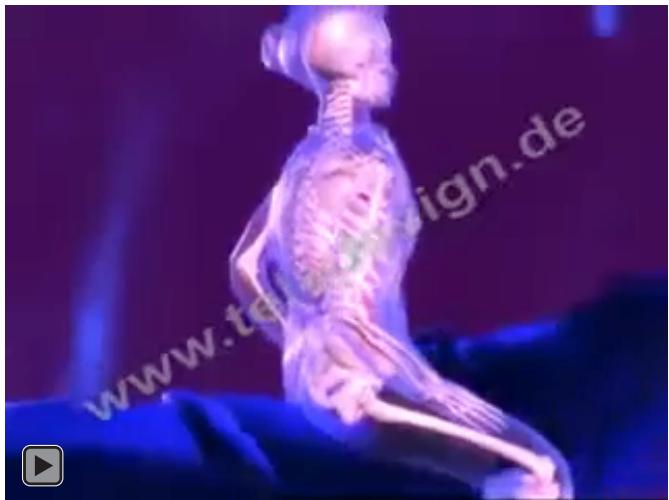
For the ones that cannot imagine the tridimensional movement, is possible to watch it at the link. https://www.youtube.com/watch?v=U_tkiCQ8j9c&t=4s
The Motor Function classification system (Palisano ET AL, 1997) $^{10}$ is a method of grading the severity of loss in people with cerebral palsy. Grades I and II include people who can walk without assistance, people with Grades III-IV have an incredible decrease in their own mobility. People who are more severely affected have a loss of extensor capacity and muscle tone ability and, consequently, poor control of trunk movement $^{6}$, exactly what happened with these three cases showed in this paper. In a systematic review of 1584 studies made with research from Australia and US about the ways of prevention and treatment of children with CP, showed that Hippotherapy is the technique that more help for acquired balance of the patient, has an important result on Gross Motor Skills, hand stimulation as well as to decrease the spasticity in the patients $^{19}$. Physiotherapy is an important part of treatment, and may include hypnotherapy, which uses the movement of the horse to stimulate the sensorial, neuromotor and cognitive systems to obtain functional results $^{20}$. In a Systematic Review and Meta-Analysis Study (2020) made by researches from Spain, in the use of Hypnotherapy to treat CP children was shown that the most part of the studies showed significant results with the therapy 1-2 times a week for 30 minutes, were they have improvement of spasticity after 5 weeks of practice, GMFM66 after 16-20 weeks, improved body balance after 30 mins of therapy in 12 weeks and only one that work 8mins in barrel (obligate the horse made repetitive curves enhancing the activity of the muscles corresponding to the alignment of the back and hold on the horse - legs function), showed improved of paravertebral, hip, adductors and abductor muscles, this result was measured by $\mathsf{EMG}^{21}$ (Eletromiography - a neurological study that show the electrical activity of the muscles). In this work, three patients with cerebral palsy of different ages were monitored, and classified as grade IV, according to the Motor Function classification (Palisano ET AL., 1997) $^{10}$, with bilateral spasticity,
The two children, and a teenager were sent to the volunteer therapy with Pony which has been carried out in the Jardim do Hospital Federal da Lagoa, for almost ten years guided by two health professionals. The work only takes place - thanks - to the extremely gentle and well - cared ponies, owned by Belgian Françoise Dennis, owner of the Riding School - Ponei Clube do Brasil, located at the Sociedade Hipica Brasileira; who lends two of her animals weekly. They literally "cross the street" and head to the Burle Marx Garden, located at the back of the Hospital. The work takes place under the direction of the Lagoa Voluntary Sector, coordinated by the physician Dr. Paulo Cerdeira, and by the veterinarian, equestrian and hippotherapist Dr. Ana Stela Fonseca; children who were undergoing a medical consultation (haematopediatric sector leaded by other physician and collaborator with the project Dr. Soraia Rouxinal), or who are about to undergo treatment, are taken by their guardians to the Hospital Garden, where they spend around 15-20 minutes with the ponies. In some cases, children are referred from ABBR (Brazilian Beneficial Rehabilitation Association), as in the case of the patients in this study. In this case of animal assisted therapy with ponies, the children remain mounted, a very short time compared to what is used in Hippotherapy, about 5 minutes only (children with special motor skill needs like CP used 7-10mins), the other part of the time, they brush the ponies, caress, hug them, they help to pull the "little friends" that are mounted together with the handler. This mounting is performed on the skin, directly on the back's skin of the animal, based on the theory within Traditional Chinese Veterinary Medicine, that the horse (equine) is the most Yang animal in nature (Reddick, Florida, US, 2010) $^{22}$, with the Yang energy being the most important energy regard to movement, immunological system, back, brain and medulla - the once that flow on the spine of all animals - include humans (this treatment was first designed for children with cancer). The largest channel of this energy in the body, passes through the spine of all animals, in the Du Mai meridian or Governor Vessel, and there being this energetic connection with the child's body, as the VG1, or the first point of the Du Mai meridian that is located exactly in the region between the coccyx and anus(in direct contact on a horse sitting position), making this the first reason of riding bareback(with no saddle) directly in the skin of the horse; the second reason is that with no saddle, the horse, or pony, moves in a more natural way, and this greater range of movement generated, acts directly on the rider, making that the rider's body be affected by a most expand movement. Where the position of the center of mass of the rider's trunk, is controlled mainly by the abdominal and paravertebral muscles, $^{17}$ at two functional levels. The first consists of a specific direction of adjustment, when the balance of the body is in danger, which generates a specific direction of postural adjustment, $^{23}$ which is altered in patients with cerebral palsy $^{6}$, and which when riding a pony without a saddle, due to the increase in range of movement requires more of the aforementioned muscles, as if undergoing "intensive treatment", since for a shorter period of time, add to the fact that are "horses with no more than $115\mathrm{cm}$ " what make they have a more frequency gait(upper intensity). These patients also make use of a small turn lying on their back (as in the photo), with their head on the horse's bump, where the entire spine is on the horizontal axis, suffering the direct influence of the horse's movement $^{6}$, now no longer on the back, vertical; an exercise of mobility and consequent unlocking occurs in the various osteo-tendinous-muscular structures of the spine, specially the vertebras which will cause greater mobility in terms of the structures of the vertebral complex; unlocking it, and in consequence providing a greater influx of cerebrospinal fluid into the Nervous System to the Spinal Cord, (Basic Course of Chiropraxis in Animals, 2010) $^{24}$ and towards the tissues (nerves) - the Chiropractic principle; the sum of both techniques with the increase of the movement impacted on human body by the horse gait, should provide the liberation in extreme intensity of "Superradiance, produced by the cerebral vesicles and being spread in a Quantic tunnels through the spine to all body" following the studies of the great Brazilian Neuroscientist Gran PhD and honor professor at Albert Schweitzer International University in Switzerland, Dr. Dibiase (BIASI, 2013) $^{25}$. This superradiance carries with it its characteristic electromagnetism, known by the Hindu or Vedas how the energy that comes from the Universe attached in the body by the chakras (mainly coronary at the top of the head - and supply the Chi/Qi in the body, following the principles of Traditional Chinese Medicine about the deficiency or stagnation of Qi/Chi, that is responsible for the most part of diseases in life bodies.
The rhythmic movements during the horse's walk cause increased contraction and relaxation, joint stability, changes in balance and posture in patients with cerebral palsy. Responses to therapeutic riding activities are related to improved posture (Bertoti, 1998); and in walking, running and jumping in the GMFCS (Gross Motor Function Classification System) Dimension E score (Mcgibbon, Andrade, Widener & Cintas,1998) $^6$; and dynamic stabilization posture, the ability to recover from disturbances, and anticipatory and control postural feedback (Sterba, 2007). In a study carried out to measure the action forces of the horse's spine and the tracing of the movements of the center of pressure (COP - Center of Pressure) in the horse's spine, exerted by the rider or equestrian, during mounting, there was an indication that, experienced riders have a characteristic path for a full step at each gait (Fruehwirth et al., 2004) $^6$, one of the riders' goals is to be able to control these movements of the center of pressure, minimizing them, which facilitates the horse's swing and reduces the energy released by it. (Sloet Van Oldruitenborgh-Oosterbaan, Barneveld, & Schamhardt, 1996). The ability of riders to maintain the center of pressure of movement depends on the rider's ability to have sufficient elasticity in the trunk control center of the muscles to control trunk movements in the face of disturbances induced by the horse's mobility, combined with a learning, which allows experienced riders to be able to reduce the center of pressure of the movement, aiming for the muscles to anticipate the rhythmic movement of the horse. (Pantall, Barton, & Collins, 2009; Terada, Mullineaux, Kiyotada, & Clayton, 2004) $^6$. Dr. Hilary Clayton (2011), a veterinary doctor and English rider, based in the USA, who stood out in the practice of training and studying the biomechanics of the horse, carried out a study, comparing the effect of controlling the Pressure Center, directly on the spine of horses, exerted by the weight of the rider, in experienced riders and in patients with cerebral palsy undergoing Equine Animal Therapy, show that riders with cerebral palsy have increased anteroposterior (AP) and mediolateral movement speed compared to experienced riders, because as mentioned above, experienced riders anticipate the horse's rhythmic movement. Furthermore, patients with cerebral palsy do not have control over their muscle tone, and will also have impaired proprioceptive response, causing them to "dance" more when riding a horse - reason why was necessary three holders to hold the young PC at the first and second time of practice. (Macphail and Colleagues, 1998). The movements of a horse's spine follow a consistent pattern with each step, a set of body movement through the transverse axis occurring twice during each step and combined with movement rotated around the vertical axial axis (Galloux et al., 1994), in response to the horse's movement, the center of pressure of the rider's body makes a turn on the right side and another on the left side in relation to the horse's midline with each step (Fruehwirth et al., 2004) $^6$.
## III. METHOD
Once a week, two extremely docile ponies are taken to the Hospital da Lagoa Garden, pulled by two handlers – in this case professional groomers that have all the skills to manage them in a safe way for the work. Gardens provides a therapeutic function in according to a work done in US (Ulrich, 1984, Ulrich, 2001). These ponies, upon arriving at the garden, are touched, caressed, brushed and are even ridden by the children, who after a medical appointment at the Federal Hospital of Lagoa, they go down to the garden. For security reasons, all of them must use helmets when riding the pony, they were holding by volunteers - normal person that wants to make others happy - that offer to be a voluntary at the section in the hospital. All volunteers receive brief training where they learn where to hold the child, the side of the horse/pony that they stay, and the measures to protect the child in case there is a situation where the pony gets scared and gets out of control. One of the volunteers, normally the most experienced one stay at the left side of the pony (side were used to mounted), hold the child on the hip bones, to make the hips stayed on the right place and not interfering on the movement action on the back muscles and abdominal muscles of the child. In case of any alteration or attempt with the pony, the volunteers were instructed to let the person that was located at the left side of the pony to hold the child at the time that other ones – in case of have more the one holding the child – go out of the pony side immediately. The volunteers are instructed to for reasons that pony, and horses have "no eyes in the limbs" they must pay attention where the pony put their limbs to not be stepped on. Because the work takes place within the hospital area, any need for evacuation in the event of an accident with a victim would be simplified. However, in almost 10 years of work, there has been no need for this. This voluntary work was developed with the aim of bringing happiness to children with cancer, who are treated in the hospital's Pediatric Hematology, and children with other pathologies such as cerebral palsy, autism, hyperactivity, among others, also use the therapy. The ponies remain in place for about an hour or one and half hour depending how many children are that day. Each child can ride the pony without a blanket and saddle for about 3-5 minutes, directly on the fur. Children with serious neurological disorders, such as cerebral palsy, walk a little longer, and can even stay for about 7-10 minutes on the pony; these ones, after walking normally sitting, are made to walk lying down on the pony's back, which provides more mobility, in addition to the vertical axial mobility (Galloux et al., 1994), also mobility in the horizontal axial axis of the entire body spine, and a horizontal transverse mobility, in addition to transverse mobility, (described by Fruehwirth et al., 2004) $^6$, where the rider's body turns, both on the right and on the left side in relation to the horse's midline, in this new diagram lying down directly in the "fur-coat".
## IV. RESULTS
How this therapy was not exactly tailored to the PC children, was for cancer ones, the results of the three CP participants in this study, where observed specially by the family that lived with then, and related the improvement in the mental state of them like not be so anxious, less cry attempt and slept well. In relation to the physical skills the improvement was already noticeable both by the family and by the volunteers who hold the participants, since the $2^{\text{nd}}$ session, when they got on the pony. The first time these were placed on the pony, there were two people, one on each side, holding them, as they were completely incapable of supporting their body while sitting alone. It was also observed that these were "thrown" to the sides, unable to balance themselves when the pony moved, and their bodies did not have the ability to return to the starting point, the translation movement was made, but there was no rotation of the trunk to back to the initial point. The volunteers related that at the first time the teenager weighed a lot on their arms, he who weighed around 55 kg, three volunteers were needed to initially hold him and when it finished at the first day, all of them related be with pain on their arms to hold the body of the boy. The mother of the three children related that they were able to stay sat after the third week of the practice of the therapy.
## V. CONCLUSION
Since the focus of this work with AAT was about promote happiness, relaxation of the children living in a hospital for Cancer treatment and acquire the benefits with nature, through animals, in the garden in a therapeutic way[26,27], this pony therapeutic work represent the possibility of touch, the affection, the caress, the exchange of energy, that patients with serious illnesses need, having this possibility inside a hospital, to forget the real reason why they are there, was really and incredible achievement. In this case, of this practice where the results of the therapy had an increase in quality of life in children with CP where two children and a teenager shown enhance of motor skills that make them able to be sat, and in one case the teenager had related movements talked by his tutor, reaction to pain expressed by movements of the limbs, as well as facial expressions related to pain, that comprises movement of twenty muscles[28] of the face, with a therapy that occurred once a week for 8 weeks, (the therapy was stopped by the Covid and backed during this time, but the teenager didn't back with his tutor). The therapeutic function of AAT with horse riding in this case, with the patients with CP riding pony for about 7-10 min compared with Hippotherapy mentioned by reviewed papers and metanalyses, were necessary 30 minutes of riding, 1-2 a week and at least 5-12 weeks to increase motor skills, with no one mentioned ability of movement of the limbs, or reaction of pain, or facial expressions - make the author believe in the effectivity of the use of the sum of the ancient knowledge of Traditional Chinese Medicine (TCM)- Yang Qi Theory - deficiency and blockage, with the healing principles of Chiropractic - unblocked vertebra and movement of CS fluid, resulting in the explanation of the Neuroscience Quantum Theory - about the movement of CS fluid carrying and been able for the superradiance $^{25}$ or the energy - the Chi/Qi know by the TCM 4.000 years ago and the Hindus at Ayurveda Medicine.
Should this experience be effective in another place, with other children? More studies must be carried out to determine the real degree of efficiency of the sum of this therapies with Animal Assisted Therapy in riding horses for CP children.
- The limbs movements of the teenager can be seen on the follow link https://youtu.be/2_FzgGx FxxQ?si=1uxgD-YeW04d722\_ not the facial expressions for no licensed permission for that.
[^1]: Acupuncture: Specialized in Acupuncture in Humans (Abaco, Brazil); Horses -Xie Institute, US; Animals - Lanzhou Institute of Animal Science, China. _(p.1)_
[^2]: Chiropractic: by Options for Animals, Kansas, US and IAVC, Sittensen, Germany. _(p.1)_
[^3]: Hippotherapy: by ANDE - Brazil with Dr. Daniele Cittaro (Italy). _(p.1)_
[^4]: AAT: Animal Assisted Therapy -Instituto Saber Animal. _(p.1)_
[^5]: Founder/Board Member for 10 years of WATCVM: World Association of Traditional Chinese Veterinary Medicine, US. _(p.1)_
Generating HTML Viewer...
Funding
No external funding was declared for this work.
Conflict of Interest
The authors declare no conflict of interest.
Ethical Approval
No ethics committee approval was required for this article type.
Data Availability
Not applicable for this article.
How to Cite This Article
Ana Stela Fonseca. 2026. \u201cImproving Quality of Life in Children with Cerebral Palsy Through Animal Assisted Therapy With Ponies\u201d. Global Journal of Medical Research - K: Interdisciplinary GJMR-K Volume 25 (GJMR Volume 25 Issue K2): .
Explore published articles in an immersive Augmented Reality environment. Our platform converts research papers into interactive 3D books, allowing readers to view and interact with content using AR and VR compatible devices.
Your published article is automatically converted into a realistic 3D book. Flip through pages and read research papers in a more engaging and interactive format.
Animal Assisted Therapy (AAT) the therapy that use animals to help in the treatment of humans, has been shown to be an important tool to help to improve quality of life, self-steem, self-image, emotional awareness, developed communication skills, reducing anxiety and aggressivity 1,2,3,4,5. Hippotherapy (called Equoteraphy in Brazil) is one therapy that used a horse to enhance mechanical and neurological improvements on patients with neurological diseases or orthopedical problems 6,7,8. In this case AAT with pony was used for children to brush, caress, holder and take a little time of pony riding (5-10mins) once a week, with excellent results in three children with CP, who were able to remain seated after three weeks of therapy; and the tetraplegic teenager in a wheelchair began to move his limbs and react to the sensation of pain in them, after two months of practice. In this practice, two techniques were used with the principles of Acupuncture-deficiency/stagnation of Yang Qi, and Chiropractic-unblocking of joints-especially vertebrae, and improvement of the movement of the Cerebrospinal fluid. Would it be the sum of the techniques used that allowed a tetraplegic patient to acquire sensitivity to pain and movement of limbs?
Our website is actively being updated, and changes may occur frequently. Please clear your browser cache if needed. For feedback or error reporting, please email [email protected]
Thank you for connecting with us. We will respond to you shortly.