Learner-centred curriculum reforms in ‘developing’ countries have a long classroom history of non-implementation. The need is to better understand teachers’ perspectives on such reforms. A Typology of Teacher Reactions to Curriculum Reforms provides a nuanced framework to interpret teachers’ knowledge, attitudes and behaviour. Divided into three domains and seven categories, the typology encompasses the Cognitive Domain (ranging from Lack of Awareness to Recognition to Understanding), the Affective Domain (Espoused Belief and Actual Belief), and the Behavioral Domain (Surface Practice and Deep Practice). The evidence from wide-ranging school effectiveness and classroom improvement literature reviews that illustrate the Typology is that, typically, interview and questionnaire studies find teachers in primary and secondary schools are aware of learner-centred curriculum policies mandated at higher levels, can articulate knowledge about them, and express positive attitudes.
## I. INTRODUCTION
Why do learner-centred curriculum reforms in 'developing' countries have a long history of non-implementation in the classroom? In top-down educational systems in such countries, considerable worldwide curriculum reform efforts encompassing Learner-Centred Pedagogy (LCP) date back decades. Teachers in primary and secondary schools often claim support for progressive, student-centred, knowledge construction curricula mandated at higher-levels; however, they overwhelmingly continue to use formalistic Teacher-Centred Pedagogy (TCP) with knowledge transmission methods that build on memorization of given knowledge. The contradiction between stated beliefs and classroom practice leads to varying interpretations in the comparative education literature. Studies often include optimistic assumptions that teachers' knowledge of and seemingly positive opinions about progressive curriculum reforms indicate that implementation is on a path to classroom success. This article provides a Typology of Teacher Reactions to Curriculum Reforms intended to help interpretation of research findings by distinguishing between teacher knowledge, attitudes and behaviour in relation to curriculum reforms.
Terminology: The terminology for LCP has been criticized strongly as wide and ill-defined (Abadzi 2006; Bremner 2021; Guthrie 2021). Here, LCP is a general term for a variety of labels based on a foundation of knowledge construction epistemology. Various labels in the research literature include 'action learning', 'active learning', 'child-centred', 'competency-based', 'constructivist', 'cooperative', 'democratic', 'discovery', 'enquiry', 'learner-centred', 'learning-centred', 'liberal', 'outcomes-based', 'participative', 'problem solving', 'progressive', and 'student-centred'. Similarly, TCP refers to various labels founded on epistemology involving given knowledge, including 'didactic', 'direct instruction', 'expository', 'instructivist', 'knowledge transmission', 'performance mode', 'traditional', and 'whole class' pedagogy.
Evidence: The evidence from wide-ranging school effectiveness and classroom improvement literature reviews that will illustrate the Typology is that, typically, interview and questionnaire studies find teachers in primary and secondary schools in developing countries are aware of LCP curriculum policies mandated at higher levels, can articulate knowledge about them, and express positive attitudes. However, triangulation with classroom observation commonly shows TCP continues. While some teachers in developing countries do add surface student-centred techniques to their knowledge transmission classroom practice, examples of teachers who incorporate deeper elements of knowledge construction epistemology in their lessons are extremely rare in the classroom research literature. Even rarer are any cases of sustained implementation or wider diffusion in schools.
Consolidation of such evidence occurred in a variety of quantitative and qualitative analyses of the research literature during the 2010s (Glewwe et al. 2011;
Tabulawa 2013; Westbrook 2013; Nag et al. 2014; Wedell & Grassick 2018; Nsengimana et al. 2020; Guthrie 2021; Sakata et al. 2022). For example, Nsengimana et al. (2020) reviewed 27 articles with research findings on the implementation in 11 countries in Sub-Saharan Africa of competency-based curricula with LCP in science subjects. The studies showed that the curricula (which the authors supported) were still implemented in traditional ways. Most teachers continued to rely on lectures and chalk-and-talk promoting memorization. An unchallenged statement in a qualitative review of 72 studies spanning 20 years and 39 countries, by a supporter of LCP on human rights grounds, was that the literature was 'riddled with stories of failures grand and small' (Schweisfurth 2011: 425).
Adoption of Innovation: An interpretation in the present article, based on Simon's (1963, 2003) sociological analysis of adoption of innovation, is that teachers' reluctance to maintain progressive reforms as routine classroom behaviour can be rational decision-making that is not just conservative resistance to change. Non-implementation of top-down curricula prevalent in international policy discourse can be embedded in teachers' authentic cultural constructs, consistent with Sternberg's (2007: 5) definition of culture as the set of attitudes, values, beliefs, and behaviours shared by groups and communicated from generation to generation. Building on culturally intuitive pedagogy, 'reverse engineering' can focus on working bottom-up to improve the effectiveness of existing TCP paradigms rather than requiring paradigm shift to LCP. Thus the Typology does not necessarily lead to identifying how to improve teachers' knowledge of LCP and change their attitudes to it with the aim of persuading them to shift paradigms to LCP. Rather, the Typology can also direct attention to treating TCP as authentic and encouraging teachers to improve it.
Scope: This article briefly outlines the history of progressive curriculum reforms in developing countries. Section III then discusses cultural constructs and the differences between espoused beliefs and actual behaviour and why teacher non-adoption can be a rational response to inappropriate reforms. The Typology that follows in a long Section IV is intended to help resolve interpretation of teacher beliefs and behaviour. While objective conditions do inhibit implementation of LCP, lack of clarity about deeper cultural issues can contribute to confirmation bias in the research, to which some methodological limitations contribute (Sections V & VI). Finally, Section VII outlines a research design for reverse engineering successful classroom methods as a basis for improving teacher performance.
## II. CURRICULUM REFORMS IN DEVELOPING COUNTRIES
During the decades of decolonization that followed World War II, an entrenched belief among international academics and policy-makers was that investment in education was the most important factor in national development (Hawkins 2007). The following synthesis draws on a considerable body of literature from the comparative education field to identify some broad patterns that occurred in developing country education systems during the rest of the century. This literature includes Crossley (1984a; 2019) on policy transfer; Guthrie (1986) on curriculum reform impacts; Tabulawa (2003; 2013) on internationally-influenced pedagogical reforms in Africa; Barrett et al. (2006) on international influences on 'quality'; Riddell & Nino-Zarazua (2016) on the effectiveness of foreign aid; Reagan (2018) on non-Western educational traditions; and Tikly (2020) on post-colonial Africa.
Early Development Efforts: The pre-colonial starting point was the many cultural traditions across the world. During the colonial era, curricula were transferred from the imperial countries, mainly to provide for the children of colonial elites. Colonial rule and direct policy transfer variously ended around the 1820s in South America, the 1940s-1970s across Asia and Africa, and in the early 1990s in the former Soviet Bloc in Central Asia. However, neo-colonial influences have long continued.
In the early post-colonial years, especially during the 1950s through to the 1970s, national governments usually focussed on expansion of primary schooling and provision of basic equipment and materials as reflected in the goal of Universal Primary Education (Bray 1981). Evolutionary curriculum reforms began around independence in countries such as Ghana in the late 1950s (Zimmerman 2011) and Papua New Guinea in the 1960s (Guthrie 2014), often starting with changes to syllabus content to make subjects such as history and geography more relevant. Expansion of schooling and subject content changes were often supported by international aid projects that included institution strengthening components such as printshops for textbook production (Heyneman et al. 1978). The associated curriculum development, textbook and pre- and in-service teacher education activities became vehicles through which international staff, consultants, advisers and their counterparts (often including overseas-educated citizens) projected student-centred changes to traditional teacher-centred styles.
Emergence of Learner-Centred Approaches: Variously from the 1970s, and mainly in former British colonies, textbooks and syllabuses often showed neo-colonial soft power influences when they targeted traditional TCP, which was often perceived as authoritarian (Harber
2002). Changes to official curricula could also borrow progressive educational theory that disparaged the memorization associated with knowledge transmission (Abadzi 2006). Departmental policies typically aimed to improve education quality, address local needs and align with national development goals. Such changes had limited and uneven effects that were highly dependent on context. Any initial successes often occurred in well-funded and staffed pilot projects (Crossley 1984b). Additionally, some governments, such as in South Africa in 1998 after the end of apartheid, borrowed Outcomes-Based Education in the political belief that they could transform society (Jansen & Taylor 2003). Progressive policy borrowings were uncommon in former French colonies and Islamic countries, however.
The many strands in LCP essentially derive from Anglo-American educational philosophy that embodies individualistic values different from the collectivism and communalism usual in developing countries (Alexander 2000). By the early 1980s, progressivism was central to international policy thinking about education in developing countries (Lockheed & Verspoor 1991). The assumption was that 'quality' and 'modernization' required student-centred classrooms (Burkhalter & Shegebayev 2012; Arreman et al. 2016; Altinyelkin & Sozeri 2018). Other progressive concerns with democratization, human rights and gender, as well as sustainable development and global warming, were added to the mix during subsequent decades (Barrett et al. 2006).
Capture by Neo-liberalism: During the 1990s, neo-liberal economic reforms to education system management came actively into play, especially through the increasing educational influence of the World Bank (Klees et al. 2012; Auld & Morris 2014; Tikly 2014). Neo-liberal packages occurred in Africa (Zavale 2013), the Americas (Makino 2017) and Asia (Casinader & Sheik 2021). In the former USSR following its breakup in 1991, most developing countries in Central Asia borrowed education policies voluntarily out of fear of falling behind internationally; other countries had educational reform packages imposed through the neo-liberal structural adjustment loan policies of the World Bank (Silova 2011). In adopter countries, competency-based curricula were often associated with Outcomes-Based Education and qualifications frameworks that were intended to improve how credentials were oriented to the labour market by generating skilled labour forces to attract industry as part of globalization and the 'knowledge economy' (Al-Daami & Wallace 2007; Allais 2014). Teaching methods, such as 'active learning', reinforced the earlier progressive curricula during the 1990s and 2000s.
Global Best Practice: Policy convergence occurred by the turn of the century. Neo-liberal economic managerialism and 'democratization' now encapsulated LCP as 'global best practice' (Verger et al. 2013; Klees et al. 2020; Edwards 2021). LCP was now part of 'travelling policy' that became aligned in international organization, regional and national policy arenas generating extensive educational transfer and borrowing (Ozga & Jones 2006; Phillips 2009; Heyneman & Lee 2016). One effect was that developing countries sometimes adopted foreign pedagogies simply because they were widely promoted as best practice. One case was Rwanda, where LCP policies were adopted in a policy environment where foreign aid agencies, African regional agencies and the Rwandan government all had an unquestioned belief that LCP was world best practice (van de Kuilen et al. 2019). Not uncommonly, part of the motivation for developing countries to adopt such policies was to facilitate aid funding. However, as a literature review by Nguyen et al. (2009) of cooperative learning across Asia identified, a complex web of cultural conflicts and mismatches could occur with traditional teaching styles. Educational policymakers in non-Western countries, they wrote, were often prone to cherry-pick Western practices and neglect detailed consideration of differences in cultural heritage. The risk, as Dar (2021: 311) aptly put it, is of 'pedagogy for its own sake'.
Extent of Curriculum Policy Adoption: Although curriculum policies encompassing LCP became widespread in developing countries, they were not universal among them. An estimate was that official policy adoption occurred in some $68\%$ of 142 countries (Guthrie 2021). Adoption occurred especially in Confucian Asia, Latin America, the Indo-Pacific, and in 'Anglophone' parts of Sub-Saharan Africa. Conversely, progressive policies were not adopted in an estimated $32\%$ of the countries: notably in Southwest Asia and northern parts of Africa with strong Islamic and 'Francophone' influences as well as countries affected by conflict and/or poverty. Post-colonial Mali illustrates interaction among these elements (Diarra 2015; Boyle 2019). After independence in 1960, local French schools became the basis of the public school system but parental preference led to increasing numbers of Arabic schools. Increased access to schooling from the 1990s was still accompanied by teacher shortages, low standards and major social disparities with no indication that LCP curricula were adopted.
Some adopter countries took a nation-wide political approach to progressive curriculum and classroom policies, as with the Curriculum 2005 in South Africa (Hoadley 2017). Whether or not broader political direction occurred, education policy-makers could officially adopt LCP curricula, for example in Turkey, where they were influenced by potential harmonization with the European Union (Altinyelken & Sozeri 2018). Whether or not official policies existed, individual teacher education institutions might adopt progressive methods, e.g., a teachers' college in Tanzania (Vavrus 2009). Contracted aid project managers could strongly influence the introduction of progressive approaches as in an Australian curriculum reform project in Papua New Guinea (Guthrie 2012). Non-government organizations could also be very active, such as the Soros Foundation in Central Asia in the 1990s (Silova & Steiner-Khamsi 2008). Despite all such efforts, the outcome of the curriculum reforms was failure to generate sustained classroom adoption of deep progressive practices, i.e., of paradigm shift from TCP to LCP. Policy is one thing; implementation is a different matter.
## III. CULTURAL COMPLEXITIES
Where direct classroom observation occurs in developing countries, the overwhelming evidence in the analyses of the research literature cited in the Introduction and in the examples in Typology Category 4 below is that progressive curriculum reforms have not achieved fundamental, systematic, widespread or long-lasting changes in teachers' classroom behaviour despite plentiful examples of teachers who expressed positive attitudes.
Cultural Constructs: Why is LCP not implemented in classroom practice? As discussed in Section V below, many objective classroom, school and system constraints inhibit implementation. However, a more fundamental explanation goes to teachers' deep-rooted cultural constructs, which can undercut system-level change agents who assume incorrectly that teachers will passively implement inappropriate reforms in the classroom even if facilities are suitable. Rogers' (2003) influential sociological analysis of the adoption of innovation, first published in 1962, provides a coherent explanation. Rogers delineated five distinct attributes of innovations that are weighed up by potential adopters in an organization: relative advantage (the degree to which innovations offer advantages over other innovations or present circumstance); compatibility (the extent to which innovations align with prevalent values, previous experiences or ideas, and the needs of clients in the social system); complexity (the extent to which innovations are considered difficult to learn and apply); trialability (the degree to which innovations can be tried on a small scale); and observability (the degree to which outcomes from adoption are visible to clients). The effect is that classroom changes are more likely to be adopted as long-term practice if they fit teachers' constructs and are successful in their own terms.
Consistent with such analysis, a study of attempted curriculum change in Hong Kong did not treat formalistic teachers as resistors of change (Morris 1985). Rather, teachers weighed innovations according to classroom practicality, fit with existing conditions and professional costs. Teachers' decisions not to use LCP were rational choices between alternatives in a society where people regarded exams and their selection functions as normal. Exams gave purpose and a framework for TCP in a social and economic context of very unequal distribution of income where exam success was crucial to pupils' life chances. Teachers perceived LCP as inefficient for achieving such important ends. Conversely, an example from Malawi indicated that formalistic teachers could adopt changes compatible with existing methods. Gwayi (2009) used Rogers' attributes to investigate implementation of an innovation that required teachers to use locally-sourced materials but did not otherwise attempt to change TCP. Significant correlations occurred between reported implementation and perceived relative advantage, compatibility with prior experience, ease of use, communicability, measurability, trialability, and professional image.
Espoused Beliefs and Theories-in-Use: In top-down educational systems in developing countries, teachers often claim support for progressive curricula decreed at higher levels. However, they rarely change deeper aspects of their classroom practice. A relevant distinction that shapes the Typology is between two types of mental construct. Espoused beliefs are defined as those we state when asked; theories-in-use are deeper beliefs and opinions governing our actual behaviour (Argyris & Schon 1974; Borg 2018). Based in management theory, the approach considers that the effectiveness of an organization depends on how well the actual behavior of its members aligns with the organization's stated goals and values. However, there can be a disconnect between members' stated beliefs and actual practices. Typology Category 4 (below) refers to studies from 35 countries that showed teachers in interviews stating conformity with organizational goals (i.e., official curriculum policies on LCP) but triangulation with classroom observation found the same people actually used TCP. An illustration relevant to LCP comes from a mixed methods study in Pakistan. Hashmi et al. (2023) sampled 170 elementary teachers. In questionnaires, teachers espoused positive beliefs about providing timely, significant, relevant feedback to students to improve their learning. However, triangulation using oral and written checklists found the teachers' actual feedback practices - their theories-in-use - were either non-existent or nominal.
Why the disconnects between espoused beliefs supporting LCP and TCP as theory-in-action? One interpretation involves research methodology. Participants in research studies can be prone to state the views that they think researchers want or are politic to express (Guthrie 2011: 90-2). Espoused beliefs commonly are identified from questionnaires, interviews and focus groups. These can provide valid data about teacher's attitudes and cultural constructs but they provide only proxy, second-hand measures of classroom behaviour. Teachers can espouse pictures of their classrooms to researchers that are more consistent with reform ideologies than their real classroom behaviours. While researchers routinely and genuinely state that answers in questionnaires and interviews are confidential, this may carry little weight with respondents. Teachers may repeat progressive jargon and report that they conform with policy from fear of negative feedback to headteachers and inspectors. Focus groups can add to such pressures, especially when groups contain members in positions of authority. Teachers may perceive the role of the educational researcher as embodying a power relationship that could operate to their disadvantage, particularly when the research is evaluating official policies. Scientific values about truth can be less important than social status and authority, especially in communal and collective cultures.
## IV. TYPLOGY OF TEACHER REACTIONS TO CURRICULUM REFORMS
How can contradictions in evidence about teachers' knowledge, attitudes and actual practice be identified? Apparent in the extensive literature searches for Guthrie (2021) was that classroom studies in the comparative education literature usually focussed more on the educational substance in theories behind LCP reforms (such as those of Bernstein and Vygotsky) than on theories about adoption of innovation by sociologists and management theorists (such as Rogers and Argyris & Schon) that inform the Typology of Teacher Reactions to Curriculum Reforms in Figure 1. The Typology provides a system of classification to assist interpretation of findings in the classroom literature on LCP in developing countries. The Typology's categories derive from the three domains in the standard educational classification in Bloom's Revised Taxonomy of Educational Objectives (Anderson & Krathwohl 2001). Bloom's three domains are divided here into seven categories. The examples below that illustrate the categories are presented in chronological order, indicating stability of the categories over time.
<table><tr><td colspan="3">COGNITIVE DOMAIN</td><td colspan="2">AFFECTIVE DOMAIN</td><td colspan="2">BEHAVIOURAL DOMAIN</td></tr><tr><td>(1)
LACK OF
AWARNESS</td><td>(2)
RECOGNITION</td><td>(3)
UNDERSTANDING</td><td>(4)
ESPoused BELIEF</td><td>(5)
ACTUAL BELIEF</td><td>(6)
SURFACE PRACTICE</td><td>(7)
DEEP PRACTICE</td></tr><tr><td>Teachers are unaware of progressive classroom methods and educational philosophies, e.g., because they are isolated from information or there are no such reforms.</td><td>Teachers are aware that progressive reforms in methods and philosophies exist but have little understanding of them, e.g., because they have not received in-service training.</td><td>Teachers can articulate basic elements of reform methods and philosophies, e.g., that desks are grouped, the approach is student-centred.</td><td>Teachers make expedient claims of belief in progressive methods and philosophies, e.g., in the presence of superiors or when interviewers are perceived as connected to authority.</td><td>Teachers demonstrate genuine commitment to progressive methods and philosophies, e.g., they consistently articulate them to colleagues over time.</td><td>Teachers use visible elements of progressive methods in their classrooms (e.g., wall displays, seating in groups) but operate in knowledge transmission mode.</td><td>Teachers use classroom methods to promote engagement with progressive educational philosophy, i.e., lesson planning and classroom methods attempt to implement knowledge construction.</td></tr></table>
 Source:Author. Figure 1: Typology of Teacher Reactions to Curriculum Reforms
Cognitive Domain: The Cognitive Domain here refers to knowledge and understanding of curriculum reforms. Figure 1 introduces three categories. Lack of Awareness identifies teachers who are unaware of LCP classroom methods and educational philosophies. The Recognition category is a category for teachers who are aware that
LCP reforms exist but have little understanding of them. Understanding classifies teachers who can articulate basic elements of reform methods and philosophies, perhaps following in-service. Knowledge of an innovation is a necessary precondition for attitudes to it whether positive, negative or mixed.
Affective Domain: The Affective Domain incorporates attitudes and opinions about reforms. The category Espoused Belief identifies teachers who make professionally expedient claims supporting LCP in interviews, questionnaires and focus groups even though their genuine beliefs are different. Actual Belief is a category for teachers who demonstrate genuine commitment to LCP methods and philosophies over time. Positive or negative attitudes do not necessarily predict classroom practice. A teacher with positive attitudes to LCP may not implement it fully, while a teacher with negative attitudes may implement aspects because of organizational pressures.
Behavioural Domain: The Behavioural Domain is of observable classroom practices, whether through ethnography or classroom observation schedules. Surface Practice identifies visible but superficial LCP classroom techniques for knowledge transmission rather than knowledge construction. Deep Practice teachers use classroom methods to promote engagement with progressive educational epistemology involving student construction of knowledge.
Research Applications: Understanding of the interplay between teachers' knowledge, attitudes and behavior is crucial for interpreting research findings on LCP reforms. The disconnects that are possible (indeed prevalent) between teachers espoused attitudes and their theories-in-use indicate the need for caution about interpreting espoused attitudes towards LCP as indications that reforms are on a path to successful adoption.
As the categories move from left to right in Figure 1, the underlying dimension is likelihood that reforms will be implemented. Application of the Typology in a research study that identifies successful implementation of an LCP curriculum would necessarily find adopters who have knowledge of the reform, espouse positive attitudes, are committed to it as a theory-in-use, and implement both surface and deep elements (i.e., fit all the categories 2-7). However, the examples that illustrate the Typology indicate alternative scenarios. The research might also find formalistic teachers who understand a reform and espouse positive beliefs but retain TCP as the actual belief guiding their deep classroom practice as knowledge transmitters although they implement surface aspects of LCP because of higher-level pressures. These teachers fit categories 2, 3, 4 and 6 but not 5 and 7 because of disconnects between their espoused beliefs and theories-in-use. The research might also identify teachers with do articulate negative attitudes but nonetheless implement surface aspects of LCP to conform with organizational directions (i.e., they fit categories 2, 3 and 6 but not 4, 5 and 7). The examples that illustrate the Typology indicate that the likelihood of deep practice of LCP can be very low.
Limitations: A limitation deriving from possible disconnects between attitudes and behavior is that each category in the Typology has binary measurement properties, i.e., teachers do or do not fit a particular category (Guthrie 2023: 54-7). Because teachers can fit more than one category, the categories are not mutually exclusive (a further requirement of the nominal measurement scale) and the categories may not be transitive because teachers may fit some but not all those in the affective and behavioural domains (a further requirement of the ordinal measurement scale). Another limitation stems from the focus on the effects of curriculum reforms on teachers: no attempt is made to incorporate the effectiveness of different teaching styles on student learning. Nor does the Typology identify how educational institutions can use this framework to design more effective professional development or support system to change teachers' attitudes to LCP in order to persuade them to shift from the TCP paradigm.
Examples: The evidence that illustrates the Typology makes use of findings from the two most recent analyses of the research literature on developing country classrooms referred to in the Introduction (Guthrie 2021; Sakata et al. 2022). The Guthrie textbook was based on extensive open-ended literature searches where the sample frame was the 142 countries identified by the OECD as eligible for foreign aid. A $100\%$ coverage of the countries identified 422 studies about school systems and another 424 research reports and evaluations directly on classrooms, including many studies from chapters, books, research reports and the grey literature. Sakata et al. conducted a narrower formal literature search where the sample frame was journal articles published from 2001-2020. Articles on 38 countries were identified through eight international indexes, further delimited by three search terms from among the many labels for LCP. The search identified 461 classroom related articles which were filtered for methodological rigour to provide 94 texts then systematically classified by several variables. The types of comparative education research identified in both analyses usually were case studies and small-scale surveys using teacher interviews and questionnaires, sometimes combined in mixed methods studies using documentary analysis and/or ethnographic or structured classroom observation. The textbook's analyses included the extent of adoption of progressive curricula; the Sakata et al. review more systematically documented classroom studies. Between them, they provide comprehensive analyses of the literature, on which the following draws.
Category 1, Lack of Awareness, is in the cognitive domain. This is a baseline representing teachers without knowledge of curricular reforms.
The estimate in Guthrie (2021, Vol. 1: 244-8) – albeit derived from secondary, English-language sources – was that some one-third of developing countries were without official progressive curriculum policies. The clearest national example of no such policies and teachers cut off from outside influences was North Korea, where no room exists for discretion by schools or teachers and they must adhere rigidly to the nationally prescribed curriculum (Cho et al. 2013). In Sub-Saharan Africa, $83\%$ of Francophone countries did not appear to have such policies (e.g., Burkina Faso, Chad and Mali). In some Islamic countries, progressive policies did not occur (e.g., Iran and Turkmenistan). In other Islamic countries, token polices announced under international pressure following 9/11 could be implemented unevenly under competition from religious traditions and increasingly authoritarian governments (e.g., Azerbaijan and Uzbekistan).
In the estimated two-thirds of developing countries that officially adopted such curricula, some teachers might have no knowledge of them, perhaps because they did not receive formal teacher training, received only basic training long ago, or were in remote areas with scarce professional information. An example of limited training came from large mixed method studies of primary teacher training in Ghana, Kenya, Tanzania and Uganda, which had LCP policies. Documentary analysis, interviews and observation in teachers' colleges in all four countries found that training amounted to apprenticeship systems using didactic teaching without modelling LCP (Akyeampong et al. 2013). Similarly, textbooks may not model policy for teachers: a review by UNESCO (2012) found wide gaps between official curriculum policy documents and school textbooks in developing countries.
Category 2, Recognition, has teachers who have heard about curricular reforms but have little understanding of them, for example when policies have been announced but rollout has not yet provided in-service training.
Two examples illustrate this situation. Sargent's (2009) study in rural China included a mixed method survey in 15 primary schools. Teachers in schools that had not yet begun implementation of curriculum reform policies stated they did not know much about them. Against a long background of progressive policies in Tanzania, a mixed methods study by Anney & Bulayi (2019) used a case study approach to assess knowledge about the use of learner-centred approaches by four experienced maths teachers. The teachers demonstrated little knowledge about the approaches leading to difficulties putting learners at the centre of lessons.
Category 3, Understanding, still in the cognitive domain, involves teachers who are sufficiently aware of progressive curriculum reforms to articulate basic elements of LCP classroom methods (e.g., about simple aspects of classroom organization such as wall displays and grouped desks) or basic elements of the philosophy (e.g., that reforms are student-centred).
This sort of understanding commonly is found in evaluations following in-service training, although Sakata et al. (2022) found 28 studies that identified difficulties understanding LCP reforms even after in-service. Guthrie (2021) identified studies from Albania, Maldives, India, Malaysia, Nepal, Kosovo, and Tanzania with findings that fitted this category. However, understanding of the principles does not necessarily indicate commitment or implementation.
For example, in India Sriprakash (2012) conducted an ethnographic case study of the introduction of child-centred education in two projects in 16 rural primary school communities, including in-depth interviews with 22 teachers. Teachers were unpersuaded that child-centred approaches would help students learn syllabus content. Otherwise in India, Padwad & Dixit (2018) and Mukherjee (2018) reported on recent changes in two different Indian states to English language curricula from TCP transmission to LCP constructivism. Both reports were case studies of one motivated, experienced teacher. Both teachers showed partial understanding of the changes and did implement some aspects, but many contextual factors – such as exams – restricted implementation. In Albania, Vampa (2017) conducted a mixed methods study with 300 educationalists. $90\%$ of teachers interviewed about the student-centred teaching model expressed uncertainty about understanding the philosophy. School leaders and teachers understood it simply as a new technique for putting students chairs in a circle rather than in the classical form where the teacher stood in front of the class. In Kosovo, Zabeli et al. (2018) surveyed 36 in-service teachers about their understanding and use of contemporary and traditional teaching methodologies. Teachers understood the student role in learner-centred education but appeared to have a more teacher-centred than learner-centred understanding of it. Teachers self-report indicated 'a rather superficial view' (49) on classroom implementation.
Explicit examples occur of passive resistance to progressive reforms. In the Dominican Republic, teachers struggled to implement complex curriculum changes. Most teachers reverted to the old curriculum and pedagogy with which they were most comfortable:
while teachers and the teachers' unions have not organized actively against the reforms, this passive resistance has complicated the ability of the reforms to show success at the local level (Hamm & Martinez 2017: 293).
In Turkey, teachers were aware of and starting to use some different classroom methods. However, because of concern about pupils' exam success, teachers had many positive reasons for covert resistance to curriculum reforms, which Altinyelken (2013: 111) labelled 'principled resistance to change'.
Category 4, Espoused Belief, is in the affective domain. The category has teachers who, when asked, espouse beliefs that are inconsistent with their classroom actions. Many teachers claim in interviews, questionnaires and focus groups that progressive change occurs but triangulation with classroom observation often finds the same people actually use TCP.
This is another category with many examples. Guthrie (2021) identified studies from 35 diverse countries of teachers who expressed knowledge, understanding and/or support for progressive policies but their actual classroom behaviour was teacher-centred. The studies came from Afghanistan, Argentina, Armenia, Bhutan, India, Botswana, Brazil, Cambodia, China, the Commonwealth of Dominica, Egypt, Indonesia, Kiribati, Kosovo, Kyrgyzstan, Laos, Lesotho, Libya, Malawi, Malaysia, Maldives, Mauritius, Mongolia, Namibia, Nepal, Philippines, Senegal, South Africa, Sri Lanka, Tanzania, Timor-Leste, Turkey, Uganda, Vietnam, and Zimbabwe.
In Tanzania, for example, Barrett (2007) interviewed 32 teachers in 18 primary schools, observed 28 lessons and compared what teachers said was good classroom practice with their actual practice. Teachers' professed beliefs reflected official reform policy but they actually taught much more formalistically. Song (2015) reported that Cambodia and its aid partners had promoted LCP for almost two decades. Drawing on questionnaire and interview surveys with primary school teachers in two districts, the study analyzed teachers' beliefs in and classroom implementation of LCP. Teachers professed change but classroom instruction remained predominantly front-oriented and textbook-based. Zahid's (2019) questionnaires with 100 teachers in Afghanistan found they often claimed to have some variety in their methods however classroom observation found they only read from the textbook and then asked the students to read. The textbooks had an active teaching approach; the classes did not. Omar (2019) studied the English curriculum in Libya through a detailed mixed methods study of 10 secondary teachers. Although the teachers reported positive views about learner-centred teaching, this was not consistent with their practice. Classrooms remained teacher-centred and cooperative learning was almost nonexistent. The findings suggested that the Libyan school culture tended to be incompatible with the curriculum principles. A different approach was used in other curricular areas, especially Arabic language learning, where teachers were not expected to use new pedagogy. In Tanzania, a study involving 30 teachers in four schools found national and international education policies influenced what teachers believed they should value about participatory methods and learning (Sakata 2021; Sakata et al. 2021). However, this was not in accord with what they genuinely did value. The teachers were also affected by the structure of the country's assessment system, leading them to regard memorization as a notable goal.
Category 5, Actual Belief, is still in the affective domain. This involves teachers articulating reform methods and philosophy in sufficient depth and over time to indicate genuine commitment, especially talking with their peers. In contrast to questionnaire studies, information about teachers' deeper beliefs is more likely to be identified from in-depth ethnographic case studies where researchers can have on-going conversations with teachers and observe their interactions with other teachers in a variety of situations. Even so, the teachers may not be able to implement their beliefs fully or practice them regularly.
This type of case study is infrequent in the literature. Two thorough interview studies were in a collection about teachers of English faced with new communicative curricula (Wedell & Grassick 2018). In Argentina, a teacher who supported the spirit of the new language approach became frustrated with it as impractical, in part because it did not fit the longstanding cultural tradition among students and the community of rote learning and summative evaluation (Soto 2018). Another case indicated that committed teachers may reverse their beliefs over time. In China, Yan (2018) detailed a secondary school teacher who, over a 10-year period, went from initial acceptance of reform goals to acceptance of the prevailing culturally-appropriate exam-oriented education because of its importance to students' life chances.
An unusual reformist curriculum not based on Western concepts was the Bhutan government's introduction of a unique Buddhist philosophy, known as Gross National Happiness. The effect of mixed methods studies by Kezang Sherab & Phuntsho Dorji (2013) and Deki Gyamtso et al. (2017) was strong support for the policy in principle by teachers, an indication of adoption in extracurricular activities, but little evidence of change in classroom practice. Over $80\%$ of teachers in one of the studies expressed views in favour of student-centred teaching and learning, however classroom observation found, it appeared that they knew the jargon and even believed it, but had not been able to translate their ideas into practice (Kezang Sherab & Phuntsho Dorji 2013: 23).
Category 6, Surface Practice, is in the behavioural domain. Here, teachers demonstrate in their classrooms visible but surface elements of student-centred methods, either because they believe in them or are following instructions. Such methods might involve arranging furniture into groups rather than rows or using teaching aids and wall displays. Teachers in this category nonetheless typically demonstrate a hierarchical role in the classroom being clearly in charge of formalistic transmission of knowledge rather than progressive construction of it.
This is an area where the literature has wide ranging interpretations of LCP implementation. Sakata et al. (2022) identified 71 texts that discussed the extent to which LCP or TCP was implemented in a reform context. The clear tendency was for 'Predominately TCP' (48% of the studies) to remain in place, followed by 'Balance between LCP and TCP' (34%), with the fewest texts identifying 'Predominately LCP' (18%). 'Balance' referred to reports of a mixture of unspecified LCP and TCP approaches where neither dominated. Other studies refer to 'balance' as 'hybridization' (e.g., Barrett 2007). More specifically, the Typology distinguishes between surface uses of pedagogy and deep uses of epistemology. Dozens of examples of classroom use of LCP methods in Guthrie (2021) were almost invariably of surface features of classroom management. Deeper elements (involving student knowledge construction rather than teacher knowledge transmission) were very rare.
In Mongolia, group work was a minor adaption to student-centred learning in a common formalistic lesson pattern. Instead of having students ask questions individually, most teachers made students gather questions in small groups first and then had group monitors present the questions to the class, which reflected deep Mongolian social structure rather than democratic individualism (Steiner-Khamsi & Stolpe 2006). A sample of 63 teachers in 30 rural secondary schools in Peru occurred after a new national curriculum shifted from highly specified content to outcomes-based constructivist competencies. Observation found changes in teachers' practices but they affected class work and learning at a rather superficial level such as teacher questions involving low cognitive content (Balarin & Benavides 2010). In Tanzania, teachers in general enacted 'more of the form than the substance' of learner-centred activities (Bartlett & Mogusu 2013: 72). In Belize, a mixed methods study of implementation of applied secondary science course in one secondary school found that teachers organized hands-on group investigations in the classroom and field but other classroom methods usually involved didactic note taking (Waight et al. 2018). In China, LCP was well accepted in rhetoric leading to more time on pupil activities, however teaching and learning practices continued to reflect traditional Confucianism (You 2019). In Maldives, classroom observation of 172 teachers in 18 primary schools found the curriculum was adapted to the school settings but teachers did not alter their usual classroom practice. While activity-based lessons such as group work were observed in $70\%$ of the classrooms, all the activities focussed on delivering and assessing content and did not encourage students to develop critical thinking (Shibana et al. 2019). A mixed methods case study of a primary school in Ethiopia found a peer leadership system seating classes in groups of five or six with academically successful 'network leaders' facilitating group work and supporting the other group members' learning. However,
the delegation of teaching responsibilities to students does not alter the fundamental relationship between students and the curriculum: schooling is still understood as the transmission of knowledge embodied in the state-authorized textbook (Mitchell 2017: 111).
Other insights into apparent classroom use of LCP came from Indonesia. where PAKEM (in English, active, creative, effective, joyful, and innovative learning) was an educational philosophy incorporated in several donor projects (Cannon 2020). PAKEM was widely implemented by teachers, with consistent reports of improved learning outcomes, motivation and behaviour. However, close observation of PAKEM classrooms suggested it was not commonly implemented in full.
Classrooms consistently show evidence of improved learning environments. There are displays of teaching materials and student work, reading corners with collections of appropriate books, students sometimes working actively in small groups or working alone on a specified task with a variety of materials or worksheets. But this changed environment is one where teachers can also be observed using didactic methods, asking closed questions, directing student activity and following formal classroom and school routines. It is apparent that many teachers are using more flexible methods, require more student activity, but they are still typically dominant in their classrooms. In other words, teachers have a greater range of teaching behaviours to use flexibly and with confidence. Students certainly have a more active role in class. But their activity is within clear constraints defined by the teacher. Observation suggests that full implementation of PAKEM as intended is not common. However, partial implementation of a more flexible approach to teaching and learning is increasingly common (100-1).
Teachers in this category can also put on artificial demonstrations for outsiders. In Indonesia, Sopantini (2014) found from classroom observation in 10 schools in eight provincial urban and rural locations that teaching was traditional, didactic and teacher-directed. In the two cases observed where teachers made efforts to implement active learning, the changes were mainly cosmetic, consisting of changing furniture to allow for group work and occasionally taking children out of the classroom for activities such as observing plants in the playground:
it was also clear that these approaches... were not yet integrated into daily practice and were implemented only on certain occasions and for specific lessons - for example when a visiting specialist was observing the class (269).
Bold et al. (2017) compared whether teachers worked harder when observed by researchers inside the classroom. In Senegal, time teaching was $30\%$ higher when observers were inside compared to when teachers did not know observers were watching from outside the classroom. In Tanzania, teaching time was $10\%$ higher. In China, Yan's (2018) case study found that any adoption of the progressive practices in a secondary school was a pretence during school inspections. In Uganda, Wenske & Ssentanda (2021) found that teachers often disregarded new child-centred teaching methods or used them only when being supervised.
Category 7, Deep Practice, is the final category. It identifies classroom use of LCP to promote engagement with progressive educational philosophy. Lesson planning and classroom methods implement deeper elements of reform philosophy that aim to induct students to scientific epistemology, e.g., teachers might consistently use open questions to encourage students to construct knowledge rather than just receive it. More broadly, such approaches can encourage 'democratization' in the classroom.
Very few examples of this category were identified is a collection of case studies (Wedell & Grassick 2018) or by Guthrie (2021), being of innovative individuals who acted on their own initiative but lacked support from colleagues and students. A very rare successful example was a brilliant innovative teacher who developed and continued to use group learning techniques in his grossly overcrowded classroom in Cameroon (Kuchah & Smith 2011). Kuchah had over 100 students in the class, some crammed into a very hot classroom and others standing outside at the windows, and with very limited access to textbooks, but he managed to develop a process of group learning in which students were active collaborators. This involved them working outside in groups of ten with elected monitors and rules of conduct developed democratically by the students themselves. One of the features of the peer leadership approach was that it developed experientially as a grounded solution to a problem of limited resources. Although this is an inspiring story, no evidence was provided about learning outcomes as a product, nor was there any suggestion that other teachers adopted the methods.
Otherwise, in Pakistan Shamim (1996) wrote up a reflective case study of an attempt to introduce LCP in his own classroom. Students shared community perceptions of teaching as hierarchical and based on transmission of knowledge and did not accept some equalization of power in the classroom. The attempt to innovate met student resistance manifested overtly as boycottin classes and covertly as silent noncooperation in class. In the Philippines, an 'exceptional and dedicated teacher' (Vilches 2018: 15) believed in the overall approach in a new communicative English curriculum and successfully dealt with it as an experienced master teacher involved in textbook writing, but offered traditional grammar lessons on the side. The teacher was involved in in-service teams and mentoring colleagues, which met some resistance from the other teachers and the report did not contain any evidence that they adopted the approach. In Maldives, an action research case study was of a single, one-off field study lesson out of normal school hours by a teacher keen to be involved in problem-based learning. The somewhat artificial lesson was successful and had a positive reaction from the students. There was no indication whether the teacher subsequently practiced the approach (Shafeeqa & Shiyama 2019). Otherwise, Willsher's (2013: 263) observation in Laos is relevant:
... a 'formalistic' approach to teaching is part of the tradition of teaching... where knowledge is primarily 'transmitted'. In those uncommon instances where knowledge is 'constructed' it is always constrained by the over-riding concerns to get on with the 'proper' teaching of textbook content.
Summary of Evidence: The examples that illustrate the Typology were drawn from extensive literature searches and were consistent with the general pattern of findings in Guthrie (2021). Attempts to introduce progressive classroom reforms through top-down curricula policies have occurred in some two-thirds of the developing countries. Under trial conditions some surface appearances of initial classroom implementation can appear. However, any initial impressions of paradigm shift do not survive. Teachers typically were aware of official curriculum policies decreed at higher levels and could articulate knowledge about them, especially following in-service training. Teachers could espouse belief in LCP but did not implement deeper knowledge generation aspects in the classroom; rather, teachers' theories-in-use involved TCP and knowledge transmission. Considerable evidence of increasing surface use of LCP techniques did not demonstrate a likelihood of wide, deep or sustained adoption, i.e., of paradigm change among classroom teachers.
The effect can be interpreted in terms of the Guthrie Teaching Styles Model (Guthrie 2011: 202-8). This Model presents five teaching styles from more to less teacher-centred. No one style is defined as 'better' than another, with such evaluations excluded as an external matter. The Authoritarian, Formalistic and Flexible teaching styles are all founded in revelatory epistemology and intergenerational knowledge transmission. The main role of the Authoritarian teacher is to enforce obedience to organizational norms (e.g., school rules). The Formalistic teacher is also hierarchical, formal and dominant but TCP is a route to transmittal of knowledge rather than to obedience as such. The Flexible style teacher uses limited variation in methods to transmit given knowledge while retaining a hierarchical role. The Liberal and Democratic styles are founded in scientific epistemology and knowledge construction. Liberal teachers are essentially student-centred and base classroom activities around student needs. The Democratic teacher's role is to coordinate activities that promote students' self-concepts. Students are encouraged to make their own decisions and take responsibility for their own actions.
Teachers in the Cognitive and Affective Domains in the Typology continued to use the Authoritarian or Formalistic styles. In the Behavioural Domain, Surface Practice teachers in Category 6 used minor elements of LCP consistent with the Flexible style and knowledge transmission but deep elements of knowledge construction were not evident. A very few innovative individuals in Deep Practice Category 7 attempted to implement aspects of the progressive Liberal style but usually could not sustain them. Only the Cameroon example by Kuchah & Smith (2011) had elements of the Democratic style.
## V. IMPLEMENTATION CONSTRAINTS
When teachers and teacher educators reported on difficulties facing implementation, they commonly and realistically implicated difficulties from systemic classroom, school and contextual conditions beyond their control. In the 94 articles that Sakata et al. (2022: 10) cross-tabulated, thematic analysis identified a total of 718 LCP implementation enablers and constraints. The constraints, at $77\%$, far outweighed the enablers at $23\%$.
The numerous examples of constraints in the literature include a study in Nepal that used questionnaires with 327 primary teachers' and follow-up with 25 teachers in focus groups. Teachers claimed close alignment between their beliefs about classroom pedagogy and progressive reform goals but blamed endemic issues of instability and inequity for limited implementation (Ham 2020). In Eritrea, a qualitative study investigated 12 experienced secondary teachers' perceptions of LCP. The teachers expressed positive attitudes but identified many implementation barriers including a strong authoritarian culture, a content-laden curriculum, large class sizes, exam orientation by the students, lack of professional training, and lack of teacher knowledge about individual students as a barrier to identifying their individual needs (Tadesse et al. 2021). A formative evaluation of a well-supported NGO in-service training programme in five secondary schools in Malawi found from 24 teacher and head teacher interviews that all participants knew key concepts about active learning. Nearly all the teachers claimed they were competent to implement active learning and were doing so. However, all interviews identified key implementation challenges, including large classes, lack of materials, the use of English, long distances to school, and poverty (Altinyelkin & Hoeksma 2021). Claims about practical barriers that classrooms, schools and systems generate for curricular changes are realistic responses to objective conditions.
Blame-shifting: One qualification comes from Jordan, where internationally influenced neo-liberal curricula included competency-based approaches to change from teacher-centred transmission and memorization to international models of student-centred and active learning to develop a knowledge economy. Al-Daami & Wallace (2007) surveyed 500 primary teachers about their involvement. Tight central control failed to engage allegiance to the changes. Tellingly, officials blamed failures on schools; head teachers blamed parents; and teachers criticized a curriculum that lacked relevance and failed to engage pupils. While practical barriers to classroom change are real issues, they can also provide a blame-shifting excuse for non-implementation of inappropriate reforms.
Conversely, a long-recognized pattern is for curriculum change agents to treat teachers as a constraint and blame them for non-implementation of inappropriate reforms (Vulliamy 1990). A case in point comes from Zabeli et al. (2018: 49), who found 'a rather superficial view' on classroom implementation in Kosovo and asserted that action should ensure, the existing but outdated values and practices are challenged in thoughtful but firm ways. Implementing a new philosophy...will not be sustained if previously held values are not changed to ensure that new practices are in congruence with the principles and practices of [LCP](55).
## VI. RESEARCH LITERATURE LIMITATIONS
While objective conditions do inhibit implementation of LCP, lack of clarity about deeper cultural issues can contribute to confirmation bias in the research, to which some methodological limitations contribute.
Confirmation Bias: Teachers' knowledge of progressive reforms in the cognitive domain in the Typology and their espoused positive attitudes in the affective domain are routinely written up in evaluations and research studies as justifying further implementation efforts to overcome systemic constraints. Optimistic interpretation of weak self-report data as supporting LCP can indicate a propensity to confirmation bias, the well-recognized tendency for researchers to reach positive conclusions and journals to publish positive results that support theories rather than negative results (Oswald & Grosjean 2004).
An example of confirmation bias was a contracted evaluation synthesized case studies of USAID teacher in-service projects in Cambodia, Egypt, Jordan, Kyrgyzstan, and Malawi that assessed teachers' classroom behaviour using data from interviews and focus groups (Ginsburg 2009). Teachers could articulate active learning policies, from which changes in classroom behaviour were inferred. Only the Egyptian study added systematic classroom observation, however changes were modest. The conclusion went beyond the data to claim that real classroom change did occur and that it should be supported by more targeted financial inputs. Despite lack of classroom take-up, Schweisfurth (2013) argued for an emancipatory role for progressivism on the grounds that human rights arguments rise above research evidence about reform failures so that the effort to implement LCP 'must go on' (5). A somewhat extreme example of optimism was based on the apparently successful introduction of LCP in Iraqi Kurdistan, which involved university researchers working with just three teachers (Burner et al. 2017). On this slim basis, the recommendation for the whole of Kurdistan was that LCP topics should be part of teacher education and in-service practicum, and textbooks and classroom furniture should be adapted to LCP to smooth a transition phase from traditional teaching.
Weak Data: Three research methodology limitations can contribute to confirmation bias. As discussed above in Section III, one limitation is that positive evidence about espoused beliefs can come from questionnaires, interviews and focus groups where teachers may perceive the role of the educational researcher as embodying a power relationship that could operate to their disadvantage, particularly when the research is evaluating official policies.
Lack of Triangulation: A related limitation can be lack of triangulation of claims about classroom implementation espoused by teachers outside the classroom with evidence collected inside their classrooms. When mixed methods research did triangulate teacher self-report data with classroom observation of the same teachers, extensive evidence was of teachers with knowledge of and/or espoused positive attitudes about LCP, however observation found the same teachers' classroom theories-in-use involved TCP (above, Typology Category 4 refers to examples in 35 countries). Even when observation finds teachers apparently use reform methods, caution is needed. Examples occurred of teachers changing their classroom behaviour when supervised or when observed by researchers, including in China (Yan 2018), Indonesia (Sopantini 2014), Senegal and Tanzania (Bold et al. 2017) and Uganda (Wenske 2021).
Hawthorne Effect: A third methodological limitation is that the Hawthorne Effect during pilot projects and curriculum trials can provide an initial appearance of success deriving from the attention the trial brings to participants rather than the substance of the trial itself. Lack of evidence about longer-term sustainability arises in part because the published literature has many formative evaluations of classroom change and few summative evaluations. A major exception was a review of grey literature in Indonesia by Cannon (2017), who identified completion reports on 91 education sector aid projects from 1971 to 2017 using evaluations commissioned by donors about their own projects and therefore vulnerable to positive bias. Even so, only about half the projects were considered sustainable or likely to be (i.e., had identifiable outcomes continuing at or near the completion of donor inputs). The projects that targeted primary or secondary schooling were no more successful than those targeting other sub-sectors. One school example was an ex post facto evaluation of a UK project on active learning by Malcolm et al. (2001), which found some adoption of active learning principles but only in superficial ways, such as arrangement of desks. There was little or no evidence of deeper adoption, change from teacher transmission of knowledge, or sustained usage. Overall, the figures that Cannon identified were highly consistent. With a sustainability rate of only half, different types of project had no more than a random 50:50 chance of long-term success or failure.
## VII. REVERSE ENGINEERING
Teachers' constructs classify their reality under the influence of their cultural, social and educational environments. The classroom evidence that illustrated the Typology is consistent with Rogers' analysis of adoption of innovation. While espousing progressive attitudes can be professionally expedient for teachers, and while there are real systemic constraints, non-adoption as theories-in-use can be a reasoned response to complex changes that offer no relative advantage, are not compatible with existing methods, are complex, and offer no observable outcomes for clients, such as students and parents concerned about exam results. One implication is that teachers are more likely to adopt classroom methods consistent with their own cultural values rather than foreign ones.
Positive Deviance: The 'reverse engineering' analogy is with engineers who take a product apart to see how it was built and then copy it. The underlying concept is 'positive deviance'. The basic assumption is that better local practices will be more easily adopted than those from elsewhere. The concept came originally from public health (Zeitlin 1991) and was taken up in business studies (Pascale & Sternim 2005), although a study in Palestine that triggered the analysis in this section is rare in education. Yarrow et al. (2014) used a grounded approach to identify successful teaching practices in Palestine. Using data on 122 primary and secondary schools, and after controlling for student, school and community characteristics, teachers with high-performing classes used a different mix of practices compared to teachers with low performing classes. The practical aim of reverse engineering is as a form of action research to identify which teaching methods are associated with high student results and then to spread those methods to other teachers through in-service training.
Research Design: The starting point for reverse engineering is student learning. The next step is to work backwards to identify which teaching practices correlate positively with student learning in a particular context. This knowledge can then help generate culturally-informed in-service and curriculum development. A research design for field experiments in Figure 2 conceptualizes separating classes into high- and low-achieving ones to establish which teacher practices are associated with high student outcomes compared to other teachers with similar resources but low outcomes. A control group of classes is identified with low learning results, for example classes where mean results are in the lowest quartile on high stakes public exams. An experimental group is identified with mean results in the top quartile. The two groups are otherwise matched as much as possible on other variables (e.g., school location, student socio-economic status, teacher qualifications and experience).
Classroom observation identifies teaching methods in as much detail as possible, especially time-on-task, percentage of teacher talk, type of questions, types and extent of student activities, and amount and types of assessment and feedback. The teaching methods in both groups are correlated with student results to identify which techniques are and are not associated with higher results. This information can provide the basis for in-service programmes that encourage teachers to use the techniques that do improve student performance and to lessen use of techniques that do not contribute.
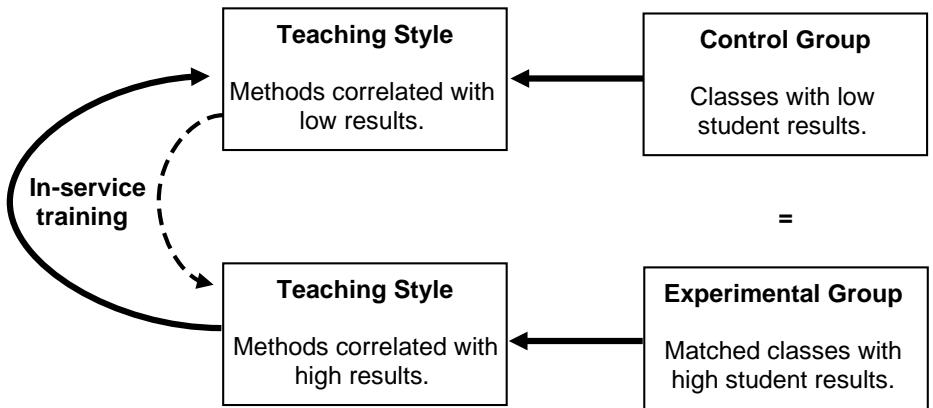 Figure 2: Research Design for Reverse Engineered Field Experiment
Source: Guthrie (2021, Vol.2: 209).
The effect for practical classroom research is a synthesis that takes account of the failure of 'global best practice' LCP policies to generate top-down classroom change in developing countries and recognition that improvements to local versions of TCP are more likely to be adopted by teachers in formalistic systems than are progressive imports.
## VIII. CONCLUSION
The Typology of Teacher Reactions to Curriculum Reforms helps interpretation of the many complexities in the research evidence about curriculum adoption or non-adoption by classroom teachers. While knowledge of a reform is a necessary precondition for attitudes and implementation, conformity espoused in the affective domain may not interface neatly with theories-in-use or classroom practice in the behavioural domain. Expedient responses by teachers to perceived professional pressures may not predict classroom adoption. Objective constraints may provide a blame-shifting excuse for non-implementation. Even genuine commitment by teachers may not be a predictor of successful implementation in the face of overriding objective realities provided by schools, classrooms, communities and education systems, as well as underlying cultural values. Surface classroom adoption may not reflect teachers' underlying antithetical beliefs, while deep practice may not be sustained.
Serious mismatches often occur between the progressive curriculum paradigm of change agents (with which teachers may find it expedient to express support) and teachers' formalistic paradigm (founded in deeply engrained cultural values and cultural epistemologies that provide foundations for their classroom behaviour). The potential for paradigm shift by teachers becomes mediated through attributes such as Rogers' (2003) perceived relative advantage, compatibility, complexity, trialability, and observability to clients. The effect is that classroom changes are more likely to be adopted as long-term practice if they fit teachers' constructs and are successful in their own terms. The effect seen in the examples that illustrated the Typology was that teachers rarely did more than add minor elements of LCP to their existing TCP. The longer-term perspective is that traditional formalistic paradigm behaviour usually overwhelms the progressive curriculum paradigm and any initial appearances of paradigm shift do not survive. In contrast, improved formalistic techniques, such as identified through the research design for reverse engineered field experiments could have a relatively easy path to adoption because they are compatible with teachers' constructs.
One effect is a failure for paradigm reversal to occur among adherents to the progressive paradigm despite the widespread evidence of its failure to generate paradigm shift from formalism in developing country classrooms (Guthrie 2015; 2017). Formalistic teachers in developing countries can have culturally-valid reasons not to maintain LCP reforms as routine practice. Any reluctance to change may be heightened when curricula involving LCP require teachers to make fundamental changes to long-standing cultural constructs that value TCP. Such constructs can provide stability in education systems marked by inappropriate curriculum reforms. Lattimer (2019) summarized this perspective:
rather than criticize the often-blamed 'lack of resources' or 'systems that are resistant to change' or 'teacher intransigence' for reform failures,... the blame [is] squarely on the cultural hegemony of the reforms themselves... the priorities and expectations that guide progressive educational reforms are inconsistent with the traditional and current values of many of the cultures and communities where they are being imposed.
Rather, the Typology can direct attention to treating TCP as authentic and encouraging teachers to improve it.
A sceptical approach to claims about the relevance of and progress on implementation of LCP curriculum reforms seems justified. The need is to understand how teachers and students perceive innovation so that change efforts are consistent with their beliefs about education and how to improve teaching. As Chafi et al. (2016: 135) wrote, 'cultural models are not true or false, may or may not be logical or rationale, may not be realized or conscious, but are very real and instrumental in guiding thought and behavior'.
Generating HTML Viewer...
References
121 Cites in Article
K Abadzi (2006). Efficient Learning for the Poor.
Kwame Akyeampong,Kattie Lussier,John Pryor,Jo Westbrook (2013). Improving teaching and learning of basic maths and reading in Africa: Does teacher preparation count?.
K Al-Daami,G Wallace (2007). Curriculum reform in a global context: a study of teachers in Jordan.
R Alexander (2000). Culture and Pedagogy: International Comparisons in Primary Education.
S Allais (2014). Selling Out Education: National Qualifications Frameworks and the Neglect of Knowledge.
H Altinyelken (2013). Teachers' principled resistance to curriculum change: A compelling case from Turkey.
H Altinyelkin,M Hoeksma (2021). Improving educational quality through active learning: Perspectives from secondary school teachers in Malawi.
Hülya Altinyelken,Semiha Sözeri (2018). Assumptions and Implications of Adopting Educational Ideas from the West.
(2001). Appendix B: Taxonomy of educational objectives (Bloom 1956; Krathwohl, Bloom and Masia 1964).
V Anney,M Bulayi (2019). Experienced mathematics teachers PCK in the use of learnercentred approaches in Tanzania's secondary schools.
C Argyris,D Schon (1974). Chris Argyris, Donald A. Schon, Theory in practice–increasing professional effectiveness. Jossey-Bass Inc., San Francisco, California, 1992/1974, 224 pages. ISBN-55542-446-5 (paperback).
I Arreman (2016). Postcolonial teacher education reform in Namibia: Travelling of policies and ideas.
Euan Auld,Paul Morris (2014). Comparative education, the ‘New Paradigm’ and policy borrowing: constructing knowledge for educational reform.
M Balarin,M Benavides (2010). Curriculum reform and the displacement of knowledge in Peruvian rural secondary schools: Exploring the unintended local consequences of global education policies.
Rather the Typology can direct attention to treating TCP as authentic and encouraging teachers to improve it.
Angeline Barrett (2007). Beyond the polarization of pedagogy: models of classroom practice in Tanzanian primary schools.
Angeline Barrett,Michael Crossley,Hillary Dachi (2006). International collaboration and research capacity building: learning from the EdQual experience.
L Bartlett,E Mogusu (2013). Teachers' understandings and implementation of learnercentered pedagogy.
Tessa Bold,Deon Filmer,Gayle Martin,Ezequiel Molina,Christophe Rockmore,Brian Stacy,Jakob Svensson,Waly Wane (2017). What Do Teachers Know and Do? Does It Matter? Evidence from Primary Schools in Africa.
Simon Borg (2018). Teachers’ Beliefs and Classroom Practices.
Helen Boyle (2019). Registered Medersas in Mali: Effectively Integrating Islamic and Western Educational Epistemologies in Practice.
M Bray (1981). Polices and progress to Universal Primary Education.
Nicholas Bremner (2021). The multiple meanings of ‘student-centred’ or ‘learner-centred’ education, and the case for a more flexible approach to defining it.
Nancy Burkhalter,Maganat Shegebayev (2012). Critical thinking as culture: Teaching post-Soviet teachers in Kazakhstan.
Tony Burner,Janne Madsen,Nadia Zako,Adham Ismail (2017). Three secondary school teachers implementing student-centred learning in Iraqi Kurdistan.
R Cannon (2017). The Sustainability of Benefits from Educational Development Projects in Indonesia: What Do the Donors Say?.
R Cannon (2020). Continuing Professional Development and Sustainability.
Niranjan Casinader,Ayub Sheik (2021). Educational Neoliberalism and the Annexation of Literacy: A Cautionary Tale in the Asia-Pacific Context.
My Chafi,Elmostapha Elkhouzai (2016). The Use of Feedback in Classroom Interaction in Moroccan Primary School.
J Cho (2013). North Korea: An overview.
M Crossley (1984). Strategies for curriculum change and the question of international transfer.
Michael Crossley (1984). Relevance education, strategies for curriculum change and pilot projects: A cautionary note.
Michael Crossley (2019). Policy transfer, sustainable development and the context <i>s</i> of education.
Wahid Dar (2021). Pedagogy for its own sake: teacher’s beliefs about activity-based learning in rural government schools of Kashmir.
Deki Gyamtso (2017). Teacher learning in changing professional contexts: Bhutanese teacher educators and the Educating for GNH initiative.
Mohamed Diarra (2015). Mali: An Overview, Trends and Futures.
Charl Wolhuter (2021). Anti-globalisation in comparative and international education.
M Ginsburg (2009). Active-learning Pedagogies as a Reform Initiative: Synthesis of Case Studies.
P Glewwe (2011). School Resources and Educational Outcomes in Developing Countries: A Review of the Literature from 1990 to 2010.
G Guthrie (1986). Current research in developing countries: The impact of curriculum reform on teaching.
Gerard Guthrie (2011). The Progressive Education Fallacy.
G Guthrie (2012). The failure of progressive classroom reform: Lessons from the Curriculum Reform Implementation Project in Papua New Guinea.
G Guthrie (2014). The failure of progressive paradigm shift in Papua New Guinea.
G Guthrie (2015). Figure 3.14. Public spending on social safety net programmes in Southern African countries.
G Guthrie (2021). Foundations of Classroom Change in Developing Countries.
G Guthrie (2023). Basic Research Methods: An Entry to Social Science Research.
S Gwayi (2009). Perceptions of Innovations as Predictors of TALULAR Implementation Levels among Secondary School Science Teachers in Malawi: A Diffusion of Innovations Perspective.
Miriam Ham (2020). Nepali primary school teachers’ response to national educational reform.
M Hamm,R Martinez (2017). Dominican Republic: An Overview.
Clive Harber (2002). Schooling as Violence: An exploratory overview.
I Hashmi (2023). Teachers' beliefs and practices regarding their feedback to students at elementary level.
J Hawkins (2007). The intractable dominant educational paradigm.
Stephen Heyneman,Bommi Lee (2016). International organizations and the future of education assistance.
S Heyneman (1978). Textbooks and Achievement: What We Know.
U Hoadley (2017). Pedagogy in Poverty: Lessons from Twenty Years of Curriculum Reform in South Africa.
J Jansen,N Taylor (2003). Educational change in South Africa 1994-2003: Case studies in largescale education reform.
Kezang Sherab,Phuntsho Dorji (2013). Bhutanese teachers' pedagogical orientation in the primary classes (PP-VI): A factor on quality education.
(2012). The World Bank and Education: Critiques and Alternatives.
Steven Klees,Mark Ginsburg,Hiba Anwar,Melanie Robbins,Heidi Bloom,Cameron Busacca,Anne Corwith,Brendan Decoster,Amanda Fiore,Stephanie Gasior,Hang Le,L Primo,Timothy Reedy (2020). The World Bank’s SABER: A Critical Analysis.
Kuchah Kuchah,Richard Smith (2011). Pedagogy of autonomy for difficult circumstances: from practice to principles.
H Lattimer (2019). Book review: Classroom Change in Developing Countries: From Progressive Cage to Formalistic Frame.
M Lockheed,A Verspoor (1991). Improving Primary Education in Developing Countries.
Rogério Makino (2017). Multilateral development banks and state capacity: the IDB, Brazil and Argentina in the neoliberal era (1990-2002).
H Malcolm (2001). Active Learning through Professional Support (ALPS) Project, Indonesia.
R Mitchell (2017). Radical student participation: Lessons from an urban government primary school in Tigray, Ethiopia.
Paul Morris (1985). Teachers' perceptions of the barriers to the implementation of a pedagogic innovation: A South East Asian case study.
K Mukherjee (2018). An English teacher's perspective on curriculum change in West Bengal.
(2018). International Perspectives on Teachers Living with Curriculum Change.
S Nag (2014). Literacy, Foundation Learning and Assessment in Developing Countries: Final Report (Education Rigorous Literature Review).
Phuong‐mai Nguyen,Julian Elliott,Cees Terlouw,Albert Pilot (2009). Neocolonialism in education: Cooperative Learning in an Asian context.
T Nsengimana (2017). Mathematics and science teachers' understanding and practices of learner-centred education in nine secondary schools from three districts in Rwanda.
T Omar (2019). From Curriculum Reform to Classroom Practice: Intentions, Perceptions, and Actual Implementation in English Secondary Schools in Libya.
M Oswald,S Grosjean (2004). Cognitive Illusions: A Handbook on Fallacies and Biases in Thinking, Judgement and Memory.
Jenny Ozga,Robert Jones (2006). Travelling and embedded policy: the case of knowledge transfer.
A Padwad,K Dixit (2018). Coping with curricular change with limited support: An Indian English teacher's perspective.
R Pascale,J Sternim (2005). Your company's secret change agents.
David Phillips (2009). Aspects of Educational Transfer.
Abby Riddell,Miguel Niño-Zarazúa (2016). The effectiveness of foreign aid to education.
T Reagan (2018). Non-Western Educational Traditions: Local Approaches to Thought and Practice.
E Rogers (1962). Diffusion of Innovation.
Nozomi Sakata (2021). Capability Approach to Valued Pedagogical Practices in Tanzania: An Alternative to Learner-Centred Pedagogy?.
Nozomi Sakata,Moses Oketch,Mano Candappa (2021). Pedagogy and History: <i>Ujamaa</i> and Learner-Centered Pedagogy in Tanzania.
Nozomi Sakata,Nicholas Bremner,Leanne Cameron (2022). A systematic review of the implementation of <scp>learner‐centred</scp> pedagogy in low‐ and <scp>middle‐income</scp> countries.
T Sargent (2009). Revolutionizing Ritual Interaction in the Classroom: Constructing the Chinese Renaissance of the 21st Century (Gansu Survey of Children and Families Papers).
Michele Schweisfurth (2011). Learner-centred education in developing country contexts: From solution to problem?.
M Schweisfurth (2013). Learner-centred education in international perspective.
F Shafeeqa,A Shiyama (2019). Implementing problem-based learning in primary science education in the Maldives. In Curriculum, Pedagogy & Assessment: Innovative Visions to Foster Effective Learning.
F Shamim (1996). Learner resistance to innovation in classroom methodology.
A Shibana (2019). See Emily play: A National Curriculum case study at Key Stage 4.
I Silova (2011). Education and post-socialist transformations in Central Asia -Exploring margins and marginalities.
I Silova,G Steiner-Khamsi (2008). Unwrapping the post-socialist education reform package.
S Song (2015). Cambodian teachers' responses to child-centred instructional policies: A mismatch between beliefs and practices.
Sopantini (2014). Reforming Teaching Practice in Indonesia: A Case Study of the Implementation of Active Learning in Primary Schools in North Maluku.
M Soto (2018). Imaginary realities: Curriculum change that ignores classroom contexts.
Arathi Sriprakash (2012). Pedagogies for Development.
R Sternberg (2007). Culture, instruction, and assessment.
G Steiner-Khamsi,I Stolpe (2006). Educational Import: Local Encounters with Global Forces in Mongolia.
Richard Tabulawa (2003). International Aid Agencies, Learner-centred Pedagogy and Political Democratisation: A critique.
R Tabulawa (2013). Teaching and Learning in Context: Why Pedagogical Reforms Fail in Sub-Saharan Africa.
A Tadesse (2021). Eritrean teachers' perceptions of learner-centred interactive pedagogy.
Leon Tikly (2014). The World Bank and Education<i>Learning for All: Investing in People’s Knowledge and Skills to Promote Development</i>by the World Bank. World Bank Group Education Strategy 2020. Washington, DC: World Bank, 2011. Available for download at http://siteresources.worldbank.org/EDUCATION/Resources/ESSU/Education_Strategy_4_12_2011.pdf.<i>The World Bank and Education: Critiques and Alternatives</i>edited by Steven J. Klees, Joel Samoff, and Nelly P. Stromquist. Rotterdam: Sense Publishers, 2012. 268 pp. $99.00 (cloth); $21.00 (paper).<i>Education Strategy in the Developing World: Revising the World Bank’s Education Policy</i>edited by Christopher S. Collins and Alexander W. Wiseman. Bingley: Emerald Publishers, 2012. 475 pp. $130.45..
Leon Tikly (2020). Towards a transformative agenda.
M Vampa (2017). Cultural influence on educational leadership in Albania.
Hester Van De Kuilen,Hulya Altinyelken,Joke Voogt,Wenceslas Nzabalirwa (2019). Policy adoption of learner-centred pedagogy in Rwanda: A case study of its rationale and transfer mechanisms.
Frances Vavrus (2009). The cultural politics of constructivist pedagogies: Teacher education reform in the United Republic of Tanzania.
M Vilches (2018). Involving teachers in the change process: One English teacher's account of implementing curricular change in Philippine basic education.
G Vulliamy (1990). Research outcomes: Postscript.
G Vulliamy (2013). Qualitative Educational Research in Developing Countries.
N Waight (2018). School leadership and STEM enactment in a high needs secondary school in Belize.
(2018). International Perspectives on Teachers Living with Curriculum Change.
Ruth Wenske,Medadi Ssentanda (2021). “I think it was a trick to fail Eastern”: A multi-level analysis of teachers’ views on the implementation of the SHRP Program in Uganda.
J Westbrook (2013). Conclusion: Enacting a pedagogy of teacher education.
Sivilay Phommachanh,Michele Willsher (2013). Beginning teacher experiences in Lao PDR: From research to the development of a professional development program.
C Yan (2018). Balancing tradition and change: A Chinese English teacher's experiences of curriculum reform.
N Yarrow (2014). Learning from Local Practices: Improving Student Performance in West Bank and Gaza (P143564 Final Report).
Yun You (2019). The seeming ‘round trip’ of learner-centred education: a ‘best practice’ derived from China’s New Curriculum Reform?.
N Zabeli (2018). Towards development and implementation of learner-centred education in Kosovo.
Z Zahid (2019). The current situation of teaching and learning Pashto and Dari languages at primary level in Afghanistan.
Nelson Zavale (2013). Using Michael Young's Analysis on Curriculum Studies to Examine the Effects of Neoliberalism on Curricula in Mozambique.
Marian Zeitlin (1991). Nutritional Resilience in a Hostile Environment: Positive Deviance in Child Nutrition.
J Zimmerman (2011). Money, materials, and manpower': Ghanaian in-service teacher education and the political economy of failure, 1961-1971.
Explore published articles in an immersive Augmented Reality environment. Our platform converts research papers into interactive 3D books, allowing readers to view and interact with content using AR and VR compatible devices.
Your published article is automatically converted into a realistic 3D book. Flip through pages and read research papers in a more engaging and interactive format.
Learner-centred curriculum reforms in ‘developing’ countries have a long classroom history of non-implementation. The need is to better understand teachers’ perspectives on such reforms. A Typology of Teacher Reactions to Curriculum Reforms provides a nuanced framework to interpret teachers’ knowledge, attitudes and behaviour. Divided into three domains and seven categories, the typology encompasses the Cognitive Domain (ranging from Lack of Awareness to Recognition to Understanding), the Affective Domain (Espoused Belief and Actual Belief), and the Behavioral Domain (Surface Practice and Deep Practice). The evidence from wide-ranging school effectiveness and classroom improvement literature reviews that illustrate the Typology is that, typically, interview and questionnaire studies find teachers in primary and secondary schools are aware of learner-centred curriculum policies mandated at higher levels, can articulate knowledge about them, and express positive attitudes.
Our website is actively being updated, and changes may occur frequently. Please clear your browser cache if needed. For feedback or error reporting, please email [email protected]
Thank you for connecting with us. We will respond to you shortly.