The highly toxic materials appearing in the food processing effluents are persistent on the natural ecosystem. The resultant effect is magnifying throughout the food chain and adversely affecting both public health and environmental health. So, effluent from food processing industries havereceived extensive research awareness. This review examines the adapted engineering bio-treatment methods for effluent and their treatment mitigations. Effluents from various food processing industries are also discussed. Volatile organic compounds (VOC) are emitted from this effluent and differ in chemical formation, amount, and possible threat. Natural methods used for their reduction have definite advantages and disadvantages. Risk reduction evaluations are the basic step for the treatment methods. Different physical, chemical, and biological treatment technologies have been applied to remove microorganisms from effluent,each having inherent merits and limitations. The simultaneous novelty of bio-energy and bio-treatment of effluent made this work outstanding.
## I. INTRODUCTION
Land and water bodies in almost the world are affected by eutrophication, contamination, and exhaustion. Urbanization encroachment in every nook and cranny of the world has increased contamination due to human and industrial activities. These activities affect agricultural soils and waters by way of contamination. However, because the world has shown more interest in the present environmental issues and sustainable solutions, scientists and engineers face the task of using waste and weak small soil locations. These can realize when the soil locations and water bodies are balanced using bio-treatment methods (1-4). Numerous adverse effects witnessed from these contaminations are from food processing industries.
These affect aquatic life negatively. The dissolved substances volatilize into the atmosphere, contribute to acid rain, pose a significant health issue to humans, and cause rust to materials (5-6). Recently, efforts to treat contaminants from gaseous, solid, and wastewater become a major concern. The techniques commonly include engineering bio-treatment (7), chemical methods [8], and biological methods (9-10). Today, the engineering bio-treatment technique is the most widely used for contaminants removal due to its low cost compared to other methods (11-12).
Engineering bio-treatment system (EBS), combined with chemical and biological treatment, has been observed as a successful method for contaminants removal. Liang et al. (13) used a bioelectrochemical system (BES) to remove sulfate from wastewater. Other researchers have also combined several methods for contaminant removal (14-15). Some treatment techniques add another impurity to the treated medium (16), and the impact can harm humans and aquatic life. Therefore, efforts to ensure that adulterations are not observed after treatment guarantee the environment's total safety. Briefly, numerous prerequisites accessible for effluent treatments are summarised in (Fig. 1). PAHs seem to exist in several natural environments, so their influence on the ecosystem is growing due to their toxic impact on humans and aquatic life. Among the numerous PAHs, benzo(a)pyrene is the most dangerous contaminant observed in effluent chiefly from the petrochemical industries and unleashes carcinogenic substances (17). The notable pollutants in the effluent from food industries elucidate in (Table1). Numerous sources of contamination involved the unleashing of unrefined or processed liquid from cities and villages, discharge from processing or industrial plants, flow from farmland, and leachates from waste disposal locations. Insufficiency of water, population growth, energy, and the development of new material technologies have forced researchers to probe into viable effluent treatment and waste recycling (18-20). The fundamental alterable to be observed for the effluent disposal are the odour, colour, oil, grease, pH, nitrogen content, phosphorus content, biological and chemical oxygen demand (BOD & COD), and suspended solids, dissolved solids, and metal ion absorption(21-22).
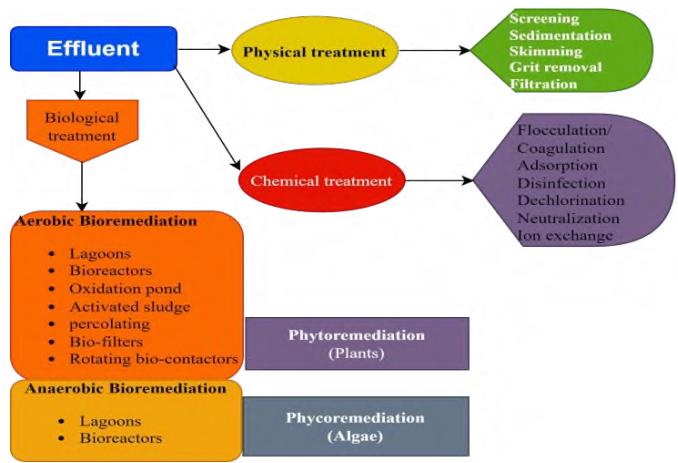 Figure 1: Numerous Prerequisites Accessible for Effluent Treatments
Table 1: Different Types of Environmental Pollutants
<table><tr><td>Pollutant type</td><td>Contaminants name</td><td>Reference</td></tr><tr><td>POPs</td><td>Pesticides, DDT, PCBs, nitrogen oxides, and ozone</td><td>[23][24]</td></tr><tr><td>PAHs</td><td>Naphthalene, acenaphthylene, acenaphthene, fluorene, phenanthrene, pyrene, benzo(a)anthracene, benzo(a)pyrene, benzo(b)fluoranthene, etc.</td><td>[25][26]</td></tr><tr><td>Antibiotics</td><td>Trimethoprim, ciprofloxacin, sulfamethoxazole</td><td>[27][28]</td></tr><tr><td>Metal ions</td><td>Arsenic, cadmium, chromium, mercury, lead.</td><td>[29][30]</td></tr><tr><td>Chlorinated disinfection by-products</td><td>Haloacetic acids, trihalomethanes, ketones, hydroxyl, carboxylic acids, nitrosamines, oxoacids, and aldehydes.</td><td>[30][31]</td></tr><tr><td>Perfluorinated compounds</td><td>Perfluorooctane sulphonate, Perfluorooctanoic acid.</td><td>[32][33]</td></tr></table>
## II. CURRENT STATUS OF FOOD PROCESSING EFFLUENTS IN OUR ENVIRONMENT
The rising recalcitrant to microbial degradation from food processing effluents (FPEs) in our environment is a source of worry. The data gotten from the web of science papers' reference register of 'Science Direct' and 'SCOPUS' by defining the keywords 'effluents' and 'contaminants' as a subject matter between the year 2004-2022 led to over 800 research articles on emerging pollutants. The large quantity of waste produced during food processing is rich in nutrients and this wastewater can also be recycled to produce value-added goods. These goods include ethanol, 1-butanol, methanol, propanol, and isobutanol which are gotten from food waste via the fermentation process (34). A greater volume of the waste is discarded into landfill after treatment to reduce toxicity (35). The transformation of food waste into organic fertilizer can mitigate its environment effect, enhance nutrient levels of the soil and decrease direct chemical fertilizer application. The microalgae extracted after food waste treatment can be useful in animal feed, biofuel feedstock, and fertilizers (36). Single-cell proteins like bacteria, fungi, algae, and yeast are bred and collected to realize the food provision for man and animals (37- 38). The gentle decrease in water quality in Nigeria is due to the disposal of food processing effluents into natural water bodies which are sometimes mixed with faecal material and micro-pollutants.
## III. FOOD PROCESSING EFFLUENTS
Liquid wastes from various food processing industries vary in concentration and quantity. The nature of effluent lies in the source and technology of any industry(39-40). It is a mixture of domestic and industrial materials coupled with synthetic items. Existing effluents contaminant includes; fats and oil, sugars, and amino acids (proteins). Amino acids and sugar constitute a crucial portion of organic matter in effluent from food processing industries(41-42). A remarkable quantity of some inorganic materials like potassium, calcium, magnesium, arsenic, sulfur, sodium, phosphorus, ammonium salt, and other heavy metals are mainly found in industrial effluents(43-44). Persistent organic pollutants (POP) from domestic and industrial impurities (mainly from the petroleum industry) are not left out(45-47). Polycyclic aromatic hydrocarbons (PAHs) from POP are from the combustion of non-renewable fuels like petroleum, coal, household heating, biomass burning, emissions from operational industries, greenhouse gases, and landfills and wildfires. PAHs are organic contaminants mostly found in polymeric products and pollute the ecosystem(48-50).
### a) Effluent from the slaughterhouse
Activities like roasting and washing from the slaughterhouse (abattoir) are good sources of contaminants. Disposal of this waste from the abattoir is a worrisome environmental challenge all over the globe. Using waste rubber in roasting slaughtered animals increased pollution in terrestrial, aquatic, and groundwater (51-52). The chemical properties of abattoir wastes are the same as that of municipal sewages, though the former is highly concentrated wastewater with soluble and suspended organic formations. Waste blood from the abattoir contains high chemical oxygen demand (COD) of about $375000\mathrm{mg / L}$, and it is one of the highly dissolved adulterants in abattoir wastewater (53-55). In Nigeria, there is no master plan for the disposal of effluents generated from abattoirs. The solid waste from the abattoir is collected and dumped in the landfills or open fields while the liquid waste finds its way into the water bodies or municipal sewerage system. These activities jeopardize human health coupled with terrestrial and aquatic life (56-57). Effluent from an abattoir can lead to an increase in biochemical oxygen demand (BOD), COD, pH, temperature, and turbidity, which may even lead to a lack of oxygen in the water bodies (58-59).
### b) Effluent from the Cassava Industry
Cassava is known by its genus Manihot esculenta crantzcrantz and is mainly consumed in Africa, Asia, India, and South America (60-61). One of the processing methods include direct fermentation to get fufu (62-63), grating and fermentation to obtain garri flakes (64-65), grating and fermentation to obtain garri flakes (66-67), to obtain tapiocca (68). The liquid from cassava processing units contains a dangerous liquid called cyanide which is acidic in nature (69-70). Because of improper disposal of these effluents, the site is left to develop a foul odour while the effluents find their way to the water bodies and some percolates into the groundwater leading to another risk as elucidatedin (Fig. 2). The odour generated from the industry site cannot allow residents living near the factory to breath freely. The effluent from the cassava waste kills all the grasses along its parts due to the acidic content of the wastewater creating artificial soil erosion. Cassava effluent breeds various types of bacteria and fungi in the soil and affects public health when washed into the water(71-72). Some domestic animals and birds feed directly from this cassava effluent and when consumed leads to dangerous health problems. All these could pose an environmental problem shortly due to the lack of effluent treatment facilities.
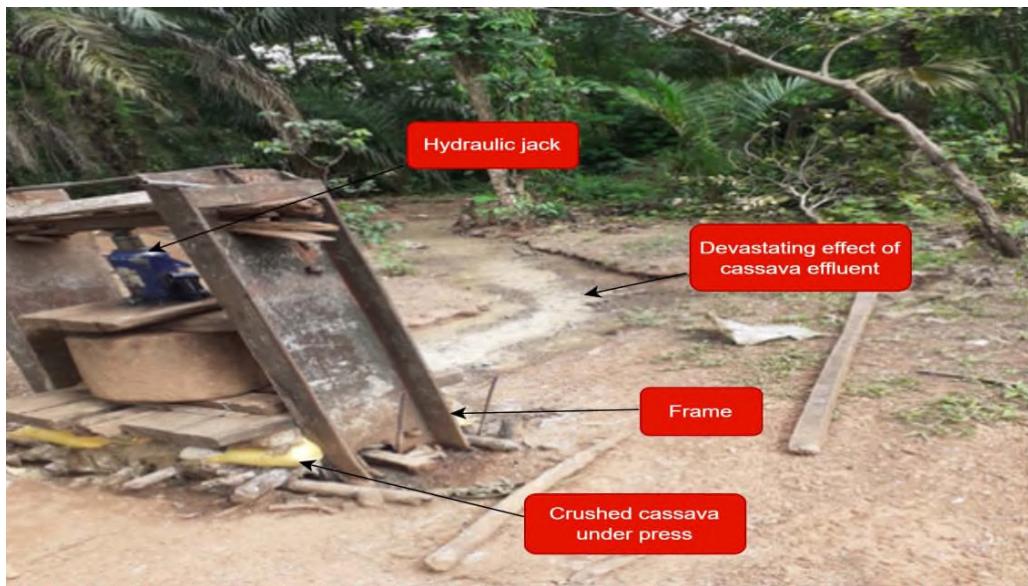 Figure 2: Effect of Cassava Effluent on the Environment
### c) Effluent from Fruit Juice Factory
Fruit is one of the essential nutrients required by man for the maintenance of the body. It is consumed by everybody in one form or the other. Some eat it as raw fruit, while others prefer consuming it as juice after processing. Fruits are the major sources of vitamin
C(73-74). A deficiency of vitamin C in our diet can cause scurvy in children and other health implications in adults(75). Effluent from fruit juice factories is a source of emerging contaminants that could pollute freshwater easily(76). It is also a breeding ground for mosquitoes, flies, and other dangerous insects. The odour from the factory wastewater attracts flies and perched in our food can cause dysentery in humans. Those emerging contaminant from the environment seems to be extremely difficult in the interim while trying to remove them. Wastewater from the fruit processing industry is highly polluted and cannot be discharged into the environment or reused without adequate treatment. The presence of COD and BOD needs an integrated chemical and biological treatment method in a bid to obtain the desired efficiency. Policymakers should also help ensure that good legislation on proper disposal of this effluent to avoid endangering the environment.
### d) Effluent from Brewery Industries
Beer is made of four components viz; water, malted grains, hops, and yeast. Other flavours as cherries and citrus fruits can be added to it. A good production of water intake during the production of beer will end up as effluent and can be discharged through the sewer system or discharged into the water bodies(22). Stages in the brewing process of beer production (Fig. 3) and summarized in equation 1. The main components of the effluent which contribute to total suspended solids (TSS) comprise spent grain, yeast, and hops (77). Effluent fluids from this factory bear an average COD of $5340.97 \, \text{mg/L}$ with pH values ranging from 4.0 to 6.7 (78). The disposal of these wastes creates numerous problems for the environment. Discharging the effluent into the water bodies without proper treatment can cause problems for man and aquatic animals. Hence, one of the methods of reduction includes the utilization of animal feed, biogas production, and treatment of the effluent before disposal.
$$
\mathrm {C} _ {6} \mathrm {H} _ {1 2} \mathrm {O} _ {6} \rightarrow 2 \mathrm {C} _ {2} \mathrm {H} _ {5} \mathrm {O H} + 2 \mathrm {C O} _ {2}. \tag {1}
$$
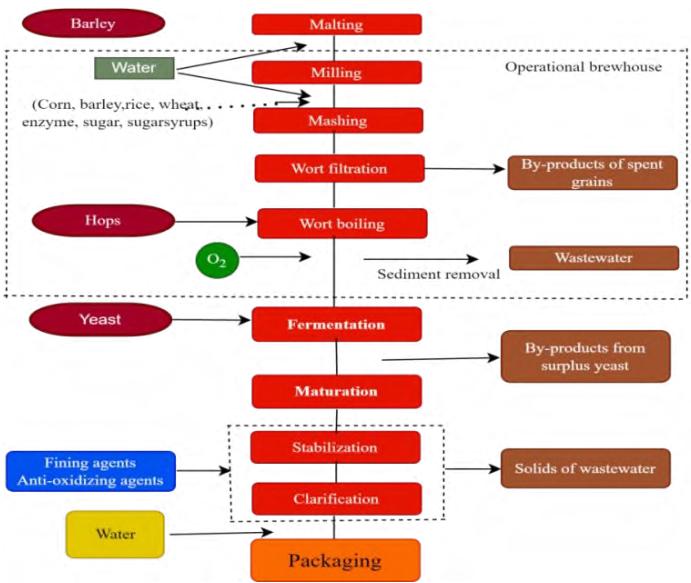 Figure 3: Brewing Process of Beer Production
### e) Effluent from Grain Mills Processing Industries
This industry comprises grain processing in many product segments including cereal grain (corn, wheat, guinea corn, rice, etcetera), dried plantain and tubers chips, animal feed, breakfast cereal production, wheat starch and gluten production. There is no form of protection from this factory when humans are predisposed to health risks (Fig. 4). Soaked (moist) grains are also processed in this factory and have implications on the environment and public health. The milling factory for grains generates dust and fine particles that cause air pollution. The polluting process includes washing, spent lube oil from a garage which generates wastewater containing biological oxygen demand (BOD), chemical oxygen demand (COD), total suspended solids (TSS), and total dissolved solids (TDS)(79). Noise as pollution is also generated by this industry. Wastewater from grain is harmless and amenable to enzymatic and microbiological bioconversion(80). Most of the effluent is discharged into open water bodies and this can affect the water quality which in turn affects aquatic animals and humans when consumed(81). Discharge of polluted wastewater high in BOD into rivers and oceans can cause eutrophication and adversely impact biodiversity(82). The organic material in wastewater stimulates the growth of bacteria and fungi naturally present in water, which then consume dissolved oxygen(83).
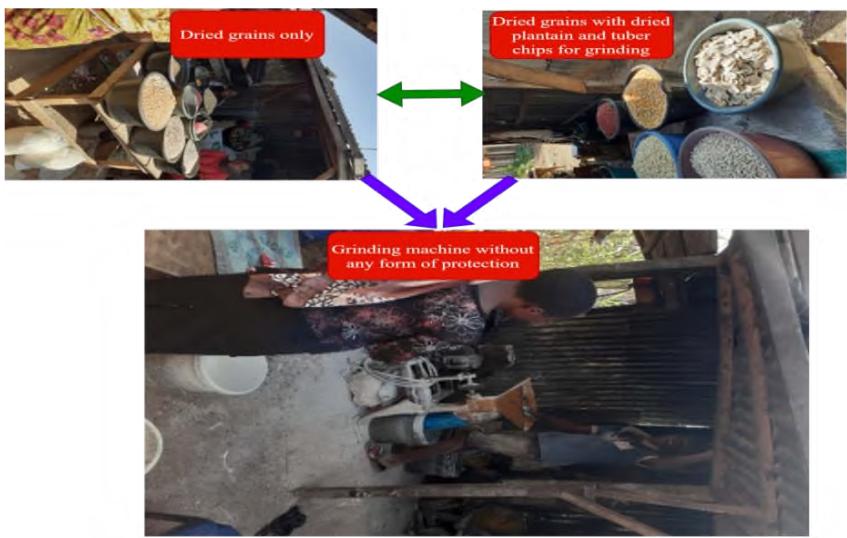 Figure 4: Unprotective Site of Grain Processing Factory in Abakaliki, Nigeria
### f) Effluent from the Palm Oil Mill Industry
Pollutant flowing with palm fruit effluent is the most noticeable in agro-industrial wastes (84). The palm oil mill effluent (POME) consists of a large number of suspended solids, organic carbon, oil, and grease. Chemical oxygen demand (COD) and Biological oxygen demand (BOD) values for POME are estimated to be as high as 100,000 mg/L, which risks the environment (85-86). Al Azad et al. investigated the simultaneous incubation period of a purple non-sulfur bacterium in decreasing COD, total nitrogen, and total phosphorus in resolved POME (87). The physicochemical characteristics of raw and treated palm oil mill effluent
(POME) as elucidating in (Table 2). The microalgae treatment of POME is essential but creates negative effects if not handled very well (88). Pre-treatment in POME is found effective as it converts lignin into sugar reducing supplement. Efficiencies for pollutant removal are found in different parameters, for instance, $62.07\%$ for total nitrogen (TN), $47.09\%$ for COD, and $30.77\%$ for total phosphorus (TP) (89). Further research indicated that immobilized microalgae cells exhibited a wonderful biomass concentration of $1.27~\mathrm{g / L}$ and a COD decrease of $71\%$ (90) than other suspended free cells. Dissolved oxygen is relatively higher in effluent from oil processing factories when compared to other industries (91).
Table 2: Physicochemical Characteristics of Raw and Treated Palm Oil Mill Effluent (POME) [87]
<table><tr><td>Parameter</td><td>Raw POME</td><td>Resolved POME</td><td>Reduction</td></tr><tr><td>pH</td><td>3.68</td><td>3.78</td><td>-</td></tr><tr><td>Chemical oxygen demand (mg/L)</td><td>39,900</td><td>21,540</td><td>46.2</td></tr><tr><td>Total solid (mg/L)</td><td>50,782 ± 1215</td><td>12,885 ± 40.86</td><td>74.6</td></tr><tr><td>Total volatile solid (mg/L)</td><td>43,099 ± 988</td><td>9510 ± 46.78</td><td>77.9</td></tr><tr><td>Total suspended solids (mg/L)</td><td>12,318 ± 265</td><td>1624 ± 146</td><td>86.8</td></tr><tr><td>Oil and grease (mg/L)</td><td>4132 ± 70.68</td><td>151 ± 26.03</td><td>96.3</td></tr><tr><td>Total nitrogen (mg/L)</td><td>804 ± 53.49</td><td>239 ± 100.75</td><td>70.3</td></tr><tr><td>Total phosphorus (mg/L)</td><td>120 ± 5.07</td><td>77 ± 3.96</td><td>35.8</td></tr></table>
## IV. ADAPTED BIO-TREATMENT METHODS
Water is a prime component in food processing, the beginning and midway cleaning of roots, an effective shipment of raw materials, and the lead actor for disinfecting plant machinery and work areas. Due to this substantial water usage, food production's main concern is that water and wastewater are controlled in the highest inexpensive method and reused in any way feasible to lower costs and remain environmentally acquiescent. The functional design for any food industry usage should match your plant requirements for the best efficacy. A pre-treatment form is often the most straightforward and inexpensive solution if the main concern is to lower adjusted parts to an acceptable discharge degree. Significant removal of suspended solids, oil, grease, and BOD is possible by executing a system based on the dissolved Air Flotation operation.
### a) Electric Discharge Plasma Methods
In foodstuff industries, many volatile organic compounds (VOC) are emitted, which differ in chemical formation, amount, and possible threat. Traditional methods used for their reduction have definite merits and demerits. The major stumbling block comprised pollutants carried into another stage, generating risk-taking waste and leading to a high cost of treatment. Different types of plasma methods exist for nanowires synthesis (92). Plasma fabricated with an electrical discharge in gases is functional in agriculture and biomedical applications (93). The best-developed VOC plasma treatment is the fusion of pulsed coronal discharge with catalytic and photocatalytic treatment (94). As described by the authors, the dielectric barrier is a reactor to generate non-thermal plasma for wastewater treatment (95). A streak camera furnished with a spectrograph has evaluated the optical emission of plasma acquired using machine learning algorithms which roughly calculated the plasma electron structure (96). A high-voltage pulse developed during hydrogen removal from water permits the distillation of wastewater and minimizes its chemical and biological occupation (97). Another research viewed high-voltage electrical discharge plasma reagents as encouraging effluent remediation and reduction of organic/polyphenol compounds (98). The trimming of polyphenol compounds of $60.32\%$ is at $60\mathrm{Hz}$ with air $\mathrm{FeCl}_3\times 6\mathrm{H}_2\mathrm{O}$. Also, the best COD removal of $50.98\%$ and $49.02\%$ is attained with the inclusion of $\mathrm{FeCl}_3\times 6\mathrm{H}_2\mathrm{O}$ at $120\mathrm{Hz}$. In closure, the most remarkable trimming in colour intensity was at $120\mathrm{Hz}$ with the addition of $\mathrm{FeCl}_3\times 6\mathrm{H}_2\mathrm{O}$ coupled with nitrogen and air. Mathematical modelling of high-voltage electrical discharge plasma automation has recently been used for pollutant removal (99-101) and seems the most inexpensive and efficient method in effluent treatment. Several other studies on the application of dielectric barrier discharge plasma in uncoupling minerals in wastewater are also making waves (102-103).
### b) Disinfection & Ozonation
The blend of chemical disinfectants in food processing apparatus is significant for checking a foodborne disease epidemic. As good as drinking water disinfection, food mills will need to evaluate disinfectant vulnerabilities to stabilize disease discharge upon display to likely toxic disinfection by-products. The growing non-thermal treatment automation novelty has replaced thermal technologies in food industries to manufacture healthy, nutritious, safe, and prolonged shelf-life foods (104). The clarification of several farm-to-fork disease reduction master plans at separate steps in food quality assurance was extensively evaluated (105). The activities that led to the spread of disease infection summarizes in (Fig. 5). Alchemical disinfection has grown in today's research, leading to a growth in scientific publications (106). Cold plasma revealed its efficacy in disinfecting methods for the inactivation of bacteria, viruses, diseases, and other hazardous microorganisms (107). The reduction of biofilm formation requires exceptional strategies by biochemical agents in the food industry while enhancing food quality and safety (108-109). Dripping ozone has displayed effectiveness in foodstuff disinfection, pesticide degradation, and seed germination (110). Water reuse in food processing firms helps to reduce the impact created by water scarcity in some localities (111). The fluid ozone treatment is efficient in dropping a microbial size, keeping standard variables, and growing shelf life in fresh-cut slices of onion (112). The disinfecting capacity of liquid ozone was comparable to 100 ppm chlorine. These show that ozone is a safe disinfecting agent in food processing firms. The effectiveness of ozone treatment capacity on usual microorganisms proved that ozone concentration is adequate, and the time exhibition needed to surrender total microbial removal is 20 ppm and 4 minutes, independently (113). However, the opposition to the tested organisms with ozone gas is in the order of effectiveness. This result is necessary for applying ozone concentration and exposure duration in a large-garment firm for rapid disinfection. The cost of ozone generation integrated with a short-lived period of ozone could lead to wasteful working for the utilization of ozone solo in extensive effluent treatment use (114). Overcoming this barrier means that more research in this area is required to ensure the large-scale application of ozonation.
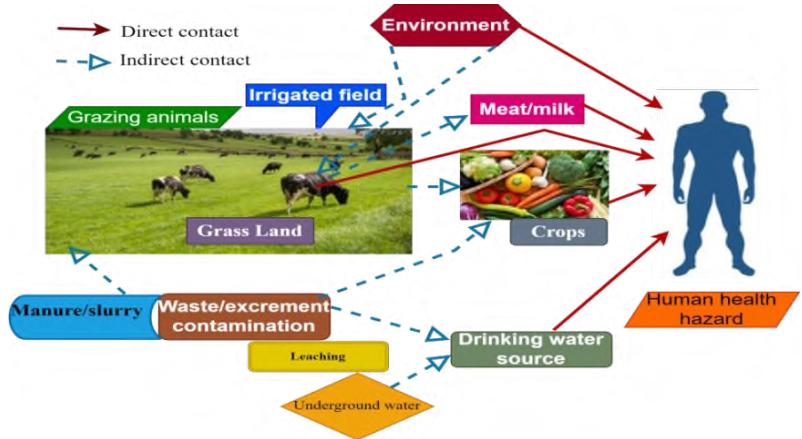 Figure 5: Route to Disease Infection
### c) Membrane Bioreactor
Membrane bioreactor (MBR) is a novel and efficient automation that is fast expanding and increasingly applied in municipal and industrial effluent treatment all over the globe. It is also a wastewater treatment process where a perm-selective membrane, for example, microfiltration or ultrafiltration, is combined with biological operation, particularly a suspended advance bioreactor. Most food industries' wastewater contains a lot of oil and grease that require adequate cleaning using various techniques to enhance reuse. By so doing, many scientists have developed an intense use of membrane automation in the tenable recycling of phytochemicals from the agri-food zone (115). For instance, synthetic purification of membranes in food production sewerage chemically improved backwash carried out in an experiment with $6\mathrm{Lm}^{-2}$ of 2000 ppm (116). NaClO attained an effectiveness of $56.8\%$ inlet unblocking and $60.7\%$ all-inclusive resistance in the absence of these concentrations undergoing any negative outcome on the biomass project. Highly effective removal of fundamental material from high-power food processing effluent showed that $90\%$ of the total COD was removed at an organic loading rate (OLR) of $5.0\mathrm{gCOD / L}$ day (117). A tiny expansion in trans-membrane pressure was noticed, with the growth of volatile fatty acids inside the test span. Virgin membrane took 57 days before fouling and another 75 days to get to dynamic membrane number of years following four cycles with an expanded OLR ranging from 3.5 to $7.5\mathrm{gCOD / L}$ day (Fig 6).
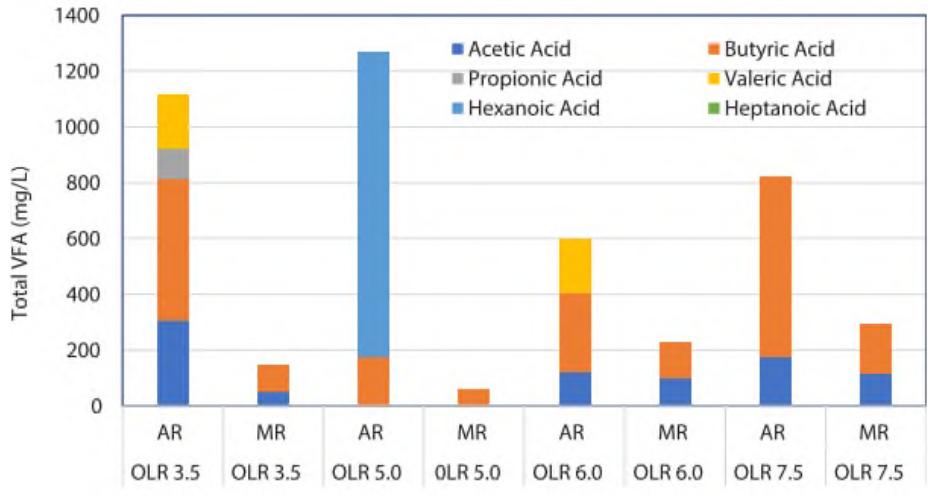 Figure 6: Volatile Fatty Acid Accumulation in the Acidogenic Reactor (AR) and Methanogenic Reactor (MR) at Different Olrs During the Treatment Operation [117]
Inexpensive material support and biogas energy creation made the dynamic anaerobic membrane bioreactor possible operation for force effluent. Meat processing effluent has intensely undergone examination using an anaerobic membrane reactor (118). The technique realized a COD withdrawal of 88 - $95\%$ for $0.4 - 3.2\mathrm{kgCOD / m^3}$ per day. The outcome of methane gas was moderately low at $0.13 - 0.18\mathrm{LCH_4g^{-1}}$ COD removal, showing the existence of nonbiodegradable organics in the effluent. At low OLR, membrane variability is firm but declinesto $3.2\mathrm{kgCOD / m^3}$ per day. At the highest OLR, the minimum gathering of dissolved methane and saturation index discerns. The organic matter removal and methane manufacturing from food waste-reuse with household wasteshowed a tremendous COD and TOC removal attains during the treatment at a very high organic loading rate of $2.95\mathrm{kgCOD / m^3}$ d (119). Food wasterecycling incorporation correlates with a mean methane manufacturing of $0.21 \pm 0.1\mathrm{LCH_4 / g}$ of COD removal. Incorporating polyvinyl alcohol-gel donated emphatically by cutting off the cake from the exterior membrane led to a reduction in the fouling index value of deep-rooted working. A significant elucidation of organic carbon detection identification and particular grouping of dissolved organic matter (DOM) during the treatment revealed that ceramic membranes are strong for DOMs removal. While variant parts in the DOMs donated to the membrane are dirty, oligomers would assume to be the crucial dirt. The tenable flux at variant high solid clusters showed that the best filtration-to-relaxation ratios were 3:1, 3:1, 3:1, and 3:6.
This agrees with the considerable tenable flux increment at mixed liquor total solid (MLTS) clusters of 10, 15, 20, and $25\mathrm{g / L}$, respectively (120). The ultimate MLTS cluster proposes to be about $20\mathrm{g / L}$ to keep a high tenable flux through the anaerobic digestion of food waste. The achieved regression equation linking the excessive tenable alteration and MLTS cluster applied to forecast the tenable variability at future MLTS cluster, acting as a reference for full-size AnMBR blueprint and functioning. A combination of a micro- aerobic reactor and membrane bioreactor improved the degradation of extracellular polymeric substances (121). The use of livestock waste for the production of methane and treatment of the same wastewater showed that methane yield was recorded as highest at a hydraulic retention time of 15 days because of the higher microbial operation (122). Some other researchers have investigated the use of membrane bioreactors in food processing industries (123-125). This method can also be applied in pharmaceutical effluent treatment (126) to reduce the growing pathogens in hospitals.
### d) Electrochemical Treatment Method
The electrochemical method for treating food-industry effluent generally lowers the concentration of organic pollutants. Effluent from food and beverage factories has a greater drawback on the economy and environment. Tackling this problem means that the impact created should be solved with immediately available technologies. Boron-doped diamond is the best-utilized anode material because of its high performance in discharging hydroxyl radicals and this pushes for higher pollutant removal in the chloride presence (127). The electrochemical process is gaining more popularity because of its effective pollutant removal within a lesser period compared to normal biological treatment (128). Though ultra-stable electrolyte is needed to degrade and avert the build-up of undesired outgrowth (129). This method is also used in the water recycling operation of dissolved air flotation from the food industry (130). Wastewater from maize processing industries can be harvested for cleaner production of electricity (131-132). A study by (133)used integrated technology for sugar factory effluent treatment. The outcome indicated that the single use of ultrasonication and electrocoagulation processes of treatment did not show a promising result in terms of COD removal. Meanwhile, the combination of the dual processes shows better efficiency. This process is purely inexpensive compared to other technologies. A good example of integrating more than one treatment technology is reported (134-135).
### e) Bio-Removal of Dyes
The agro-based bio-treatment process could be utilized for the direct removal of dyes and can also act as a co-substrate to invigorate the decolorization of dyes by fungi and bacteria (136). The utilization of biologically activated banana peel waste has demonstrated a great adsorbent for the removal of methylene blue dye at a low cost in a green environment (137). Another bio-removal of methylene blue was successful using yeast with a removal percentage of over $70\%$ at standard conditions under the highest temperature of $35^{\circ}\mathrm{C}$ (138). The application of the Langmuir equation helps to homogenize adsorption on the tops of absorbate and absorbent charge to possess the same proportion of sorption stimulus energy. Under high temperatures, betaine laccase displayed higher decolorization of some recalcitrant organic dyes in wastewater and aqueous solution (139). Other studies have been performed relating to the biosorption of various dyes using leaf-based biosorbents and very reliable findings are reported in the literature, elucidated in Table 3. For example, Alhajali et al. (140) have examined the removal of phosphate and nitrate ions from an aqueous solution using pistacia leave powder as a biosorbent. The authors reported high removal potential at a powder dose of $2\mathrm{g / L}$ and temperature of $25^{\circ}\mathrm{C}$. Characterization using SEM, FTIR, and EDX confirmed the efficacy of this natural method. Nonselective utilization of dyes adulterates water bodies and this poses a dangerous threat to public health. The good carbon content of eucalyptus leaves shows its best removal efficiency of adsorbent (methylene blue dye from water) at a higher $\mathsf{pH}$ range (141). While the adsorption adopts pseudo-second-order kinetics, the method is inexpensive, available, and eco-friendly.
Table 3: Studies Relating to the Adsorption of Dyes from Aqueous Medium using Leaf-Derived Biosorbents
<table><tr><td>Source</td><td>Adsorbent pties</td><td>Dye</td><td>The optimal condition of the experiment(IDC, dose, pH, Temp, rpm, CT.</td><td>Removal efficiency/ad sorption capacity</td><td>Desorption efficiency</td><td>Isotherm model</td><td>Kinetic model</td><td>Ref.</td></tr><tr><td>Lemongrass leaf</td><td>NaOH</td><td>Methylene blue/crystal violet</td><td>200 mg/L, 0.005-0.05, 2-9, 25-50 °C, 60 rpm</td><td>76.92 & 35.84 mg g-1</td><td>64.35±0.88% for CV and 92.90±1.70% for MB.</td><td>Langmuir</td><td>Pseudo-second-order</td><td>[142]</td></tr><tr><td>Cucumis sativus peel</td><td>Sodium chloride</td><td>Crystal violet</td><td>5.0 g/L, 160 - 900 °C, 1 h</td><td>149.25 mg g-1</td><td>17.14%</td><td>Langmuir</td><td>Pseudo-second-order</td><td>[143]</td></tr><tr><td>Nigella sativa L. herb</td><td>Sodium hydroxide</td><td>Synthetic dye</td><td>1000 mg/L, 30 mg/L, 8, 360 min</td><td>136.2 mg g-1</td><td>-</td><td>Langmuir</td><td>PSO</td><td>[144]</td></tr><tr><td>Seed of Artocarpus heterophyllus &</td><td>NaOH & hydrochloric acid</td><td>Lead</td><td>2 μg/mL, 60 mg, 5.8, 300 rpm, 70 min.</td><td>96% for SBAh & 93% for SBSc/4.93 for SBAh & 3.95</td><td>-</td><td>Temkin</td><td>Inter-particle diffusion</td><td>[145]</td></tr><tr><td>Syzygium cumini</td><td></td><td></td><td></td><td>mg/g for SBSc</td><td></td><td></td><td></td><td></td></tr><tr><td>Sugarcane bagasse</td><td>-</td><td>Methylene blue</td><td>100 mg/L, 45 °C, 24 h</td><td>98.32%/9.41 mg g-1</td><td>-</td><td>Sips's three-para te ter</td><td>Pseudo-second-order</td><td>[146]</td></tr><tr><td>Rice husk, cow dung & sludge biochar</td><td>-</td><td>Methylene blue</td><td>1000 gm, 0.6-6.0 g/100 mL,2.0 - 11.0, 500 °C, 3 h,</td><td>99.0% for all the sources</td><td>-</td><td>Langmuir</td><td>Pseudo-first & second-order</td><td>[147]</td></tr><tr><td>Fique plant</td><td>HCI & NaOH</td><td>Textile dye</td><td>50 mL, 0.5 g, 2.4 - 3.8, 45 °C, 24 h</td><td>66.29%</td><td>-</td><td>Exponentia I decay</td><td>-</td><td>[148]</td></tr><tr><td>Bilberry leaves</td><td>-</td><td>Cationic dye</td><td>53.34% pH, 12.00% Temp, 22.11% CT,</td><td>200.4 mg g-1</td><td>-</td><td>Sips</td><td>General order</td><td>[149]</td></tr><tr><td>Lemon grass</td><td>Activated carbon</td><td>Remazol brilliant violet 5R</td><td>25 - 500 mg/L, 2-12, 30 - 60 °C, 0 - 24 h,</td><td>125 & 342.9 mg g-1</td><td>-</td><td>Langmuir & Koble Corrigan</td><td>PFO</td><td>[150]</td></tr><tr><td>Waste wood biomass</td><td>-</td><td>Congo red</td><td>10 -100 mg dm-3, 4 - 9, 5 - 360 min,</td><td>71.8%/3.3 mg g-1</td><td>18.6%</td><td>Langmuir</td><td>Pseudo-second-order</td><td>[151]</td></tr><tr><td>Peels of Trapa natans & citrullus lanatus</td><td>Citric acid treated</td><td>Cationic dyes</td><td>250 mL, 100 g, 30 °C, 150 rpm, 6 - 10 h</td><td>128 & 189 mg g-1</td><td>-</td><td>Langmuir</td><td>Pseudo-second-order</td><td>[152]</td></tr></table>
### f) Bio-Recalcitrant Pollutant Removal
The destructive recalcitrant of organic pollutants from industrial effluent is a major public health challenge to the world. A lot of these contaminants are available in every space of our environment (153). Green-grey technologies amount to a promising pathway for instigating first-hand wastewater treatment and recycling in our cities (154). Fe(III) coagulant-treated colloidal gas aphrons (CGA) are adjudged the most efficient in the removal of bio-recalcitrant colour and dissolved organic carbon (DOC) in cassava distillery wastewater (155). Photocatalytic reactors have helped in the degradation of bio-recalcitrant organics from pharmaceuticals, pesticides, surfactants, and dyes which may escape with treated water (156). Though this method can only be effective in the laboratory setup, effortsto industrialize it are being employed. Combined efforts of hybrid microbial electrochemical systems and photocatalysis exhibited substantial prospects for the degradation of bio-recalcitrant pollutants and improved system production (157). The study to integrate the microbial electrochemical systemwith electro-Fenton oxidation leads to an efficient process to deal with recalcitrant compounds (158). Nitrogen pollution is a major threat to aquatic life. Reduction of this nitrate pollutant could be made possible via a novel system of informally coupled photocatalysis and biodegradation (159). This novelty showed a removal efficiency of $40.3\%$ after a few hours.
### g) Photofermentation Using Purple Non-Sulfur Bacteria
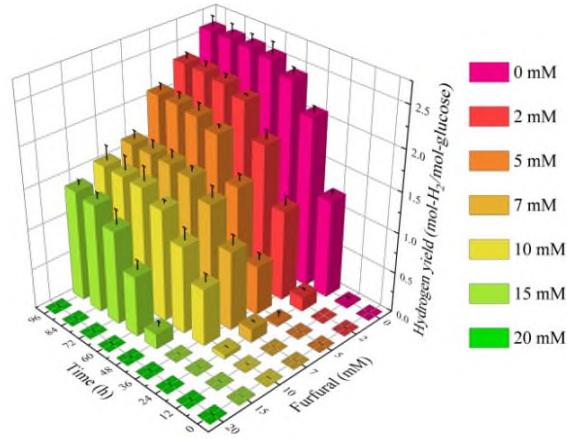
Photofermentation is observed virtually in every solid waste and wastewater of numerous food and beverage processing industries. Solid waste and wastewater from food industries are converted to bio- hydrogen via photofermentation using purple non-sulfur bacteria as biocatalysts(160). Two enzymes of nitrogenase and hydrogenase are utilized in the creation of bio-hydrogen (161). The utilization of purple nonsulfur bacteria (PNSB) for single-cell protein is of great help in mainstream protein sources for the production of feed for aquaculture and poultry (162-37). The two-phase bio-refinery operation to waste substrates building ethanol-rich effluents is examined (163). The process allowed microbial consortia held in the winery wastewater to advance through a fermentative ethanol corridor. It is difficult to produce bio-hydrogen due to the metabolic route changes involved but the identification of lignocellulosic feedstock using microbes-dependent to crash the operational cost and reduce waste produced has made it feasible (164). This process is efficient enough to cater to succeeding energy demands. The use of nanomaterial and bioelectrochemical technology is confirmed to be appropriate for fermentative hydrogen production (165). A by-product called furfural is detrimental to the photofermentation production of hydrogen when lignocellulose biomass is undergoing hydrolysis. A better result of hydrogen production is obtained when furfural is in total absence from the production chain (166). A top hydrogen yield of $2.59 \pm 0.13 \, \text{mol} \cdot \text{H}_2 / \text{mol}$ -glucose while a top production rate of $100.64 \pm 3.12 \, \text{mmol} \cdot \text{H}_2 / (\text{h}. \, \text{mol}$ -glucose) are gotten in the absence of furfural but a noticeable barrier is recorded in the presence of furfural (Fig. 7). The application of thermosiphon photobioreactor in the production of bio-hydrogen is examined using rhodopseudomonas palustris (167). The result of the response surface methodology models indicated topmost specific hydrogen production rates of $0.17 \, \text{mol} \, \text{m} - 3 \, \text{h} - 1$ and $0.21 \, \text{mmol} \, \text{Gcdw} - 1 \, \text{h} - 1$ at R. palustris concentrations of $1.21$ and $0.4 \, \text{g/L}$. The computed hydrogen yield falls within the range of 45 to $77\%$ and the glycerol consumption is 8 to $19\%$, respectively.
 (a)
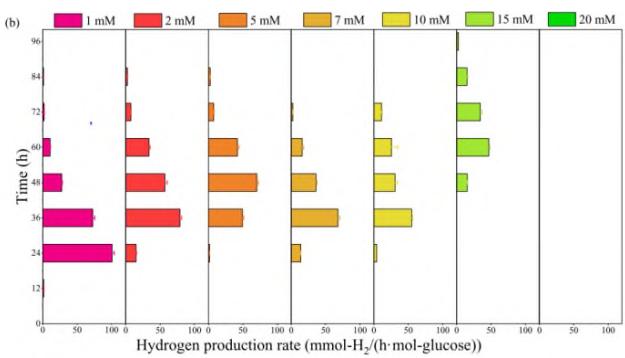 Figure 7: Hydrogen Production from Glucose in the Presence of Furfural (A) Accumulative Hydrogen Yield (B) Hydrogen Production Rate [166]
### h) Integrated Treatment Strategies of Effluent in Food Processing Industries
Explosive chemicals get into the environment during manufacturing, firing, loading, assembling, and packaging operations. Contaminated effluent from those operations if released untreated, becomes a threat to the standard of most important environmental constituents of the lithosphere, hydrosphere, and biosphere. Treatment of these hazardous materials from the wastewater before release to the environment is important. A single method may not wholly achieve much but integrated treatment where two or more techniques are employed may go a long way in obtaining adequate results (168). Wastewater from the food processing industry is a good source of energy and a primary source for getting valuable items. The characteristic of food waste effluents is summarized in (Table 4). Reuse and recovery in food processing firms are aimed at enhancing food productivity while reducing operational costs and avoiding environmental calamity through an integrated approach (169). Tannery effluents contain some chromium materials and their wastewater can be reusable through an integrated process of treatment. The treatment removal efficiency of this chromium-contaminated effluent ranges from 82 to $99.9\%$ which is now safe for irrigation (170). A study by (171) required at least a minimal quantity of microalgae to keep operational stability and expand methane production. A Continuous stirred reactor is the most efficient type of reactor used for the conversion of wastewater to biogas though with challenges (172).
Table 4: Removal Efficiency from Food Processing Effluents
<table><tr><td>Food firm wastewater</td><td>BOD</td><td>COD</td><td>TSS</td><td>pH</td><td>Total nitrogen (TN)</td><td>Total phosphorus (TP)</td><td>Ref.</td></tr><tr><td>Cassava</td><td>-</td><td>88.7±1.2%</td><td>-</td><td>9.0</td><td>72.4±3.2%</td><td>74.1±10.8%</td><td>[173]</td></tr><tr><td>Slaughterhouse</td><td>-</td><td>97.1%</td><td>-</td><td>-</td><td>90.8%</td><td>90.1%</td><td>[174]</td></tr><tr><td>Fruit juice</td><td>99.7%</td><td>99%</td><td>98.4%</td><td>-</td><td>-</td><td>-</td><td>[175]</td></tr><tr><td>Brewery</td><td>93%</td><td>77%</td><td>90%</td><td>-</td><td>87%</td><td>89%</td><td>[176]</td></tr><tr><td>Palm oil</td><td>-</td><td>90.20%</td><td>-</td><td>4.3</td><td>94.44%</td><td>94.24%</td><td>[177]</td></tr></table>
### i) E-Beam Radiation of Effluent in Food Processing Industries
The application of e-beam and gamma irradiation to treat food industrial effluents is gaining momentum in recent times. The current challenge of a global health crisis in association with fresh and groundwater pollution demands for safe disposal of effluents. Effluent is made up of heterogeneous suspended particles, dissolved organic, inorganic solids, salt, and some phenolic compound that are recalcitrant to microbial degradation (178). Electron beam treatment of any type of food effluent is noticed to be very efficient in reducing the biological oxygen demand and chemical oxygen demand (79). Remediation of wastewater from the food processing industry using e-beam irradiation is a key to viable smart and green cities across the world (179). For example, a 13 kGy dose of e-beam is used for the reduction of human adenovirus type-5 aggressive titres by almost $100\%$ (180). This shows how effective e-beam technology is while deploying it for wastewater disinfection. Also, a $35\mathrm{kGy}$ dose of e-beam irradiation is efficient for the reduction of toxic materials from slaughterhouse effluent (181). Meanwhile, possible organic carbon content after irradiation removal could further be investigated. The use of e-beam irradiation for the post-harvest treatment of cherry tomatoes is investigated (182). The result showed that a $3.6\mathrm{kGy}$ dose of e-beam irradiation is effective in reducing bacterial population, free filamentous fungi, and foodborne injected pathogens. A high-powered e-beam accelerator is designed to treat not less than 12 million gallons per day of wastewater using $13.5\phi/\mathrm{ton}/\mathrm{kGy}$ during irradiation processing (183). This method can also be extended to pharmaceutical wastewater treatment in real-time (184). For instance, the integration of Gamma rays and E-beam irradiation showcased an assessment of efficiency as aggressive indicators for better healthcare effluent quality control. The irradiation of healthcare effluent with Gamma and E-beam ionizing irradiation indicated that E-beam technology is more efficient but spores of Clostridium perfringens exhibited the most resistance among studied microorganisms (185). The authors submitted that lower doses of E-beam irradiation are needed for the inactivation of bacteria and bacteriophages than those needed for Gamma rays inactivation. However, a dose of $7\mathrm{kGy}$ is enough for the total inactivation of bacteria and viruses during inactivation patterns.
### j) Electro-Bio Process of Effluent in Food Processing Industries
This is another method of effluent treatment found useful in food processing industries. It involves the integration of electrochemical and biological processes in treatment management. Excellent integration of working variables could give a categorical realization of pollutant removal gotten from the experimental models of apiece procedure. The reduction of COD up to $80\%$ from bleach effluent appears to be inexpensive by using electrocoagulation and biological treatment (186). A hybrid of electrokinetic is effectively used to remove heavy metals, organic and inorganic from the agricultural soil (187-188). Meanwhile, the electro-bio-simulation treatment improved the fertility of agricultural soil while reducing the electrical conductivity drastically lower than $2.0~\mathrm{dS / m}$ (188). Another efficient use of bio-electricity is the developing route for $\mathrm{CO}_{2}$ consumption and reserved hydrogen fuelwhich involves the combination of microbial blend with renewable electricity (189-190). Microalgae exhibited a suitable pathway for the production of biohydrogen which aid in carbon neutrality and bioenergy viability (191-192). In another work by (193), a ternary mixture of electrochemical techniques is used as a procedure for the treatment of canola oil refinery effluents. The efficiency of the processes is encouraging. However, regression modelling evaluation demonstrated that a binary mixture of electrocoagulation and electrooxidation exhibited superiority compared with electrochemical peroxidation in terms of soluble chemical oxygen demand (sCOD) and dissolved organic carbon (DOC) removal in canola oil refinery effluents. This shows that the efficiency removal of sCOD and DOC has been obtained at $98.6\%$ and $95.28\%$ under EC and EO methods. It should be noted that the degradation of sCOD lowered from $6403~\mathrm{mg / L}$ to $72.40~\mathrm{mg / L}$ concentrations within $13.66~\mathrm{mA / cm^2}$ of current density after treatment (Fig. 8). A complex pollutant generated from textile industry effluents could be treated using binary electrocoagulation and organic coagulation mixture technology (194-195). The result showed that the application of an artificial neural network in the treatment of hybrid textile effluent is effective. However, the line dye concentration quantification in the reactor achievement flow may be a setback to the system.
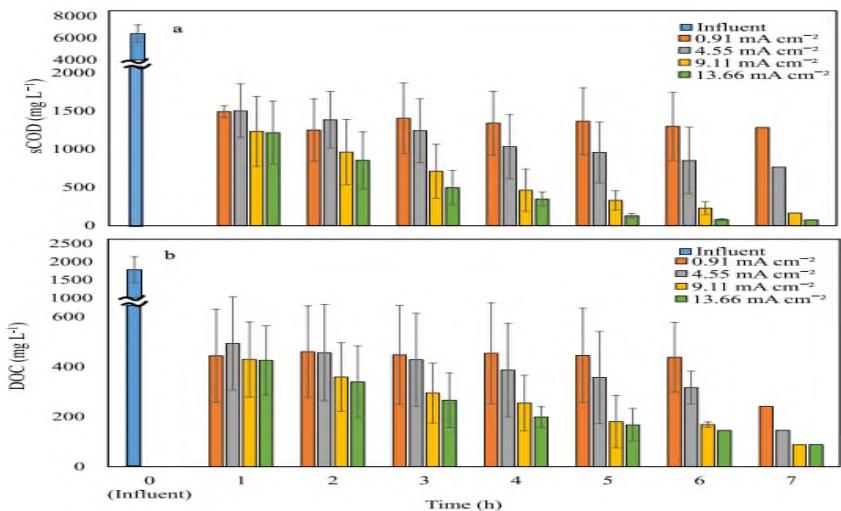 Figure 8: a) sCOD and b) DOC Removal from Canola Oil Refinery Wastewater using EC and EO Method [193]
### k) Use of Bacillus Organismsin Effluent Treatment
Machines used for food processing harbour contaminated microorganisms on the machine surfaces before and after cleaning processes. The removal of such microorganisms from equipment surfaces is more tedious on stainless steel due to its rough surface nature (196). This tediousness occurs due to the exopolysaccharide's protective sheath against harsh conditions (197). Bacillus cereus variants exhibited efficient bioremediation possibilities during the degradation of fats, oils, greases, and odours reduction (198). But various probiotics strain of bacillus is beneficial to human health. Valuable substrates from agricultural effluent are used as a high efficient cellulase production (199). The authors concluded that bacterial strain is effective to degrade the coconut mesocarp which carries a high quantity of lignin and hemicelluloses without preliminary treatment. These features make it significant as an effective degrader for numerous other agricultural effluents. Similarly, normal antimicrobial lipopeptides discharged from bacillus spp acted as a food bio-preservative (200). This technique enhances the shelf life of numerous perishable foods like vegetables, fruits, drinks, and aquatic goods. This type of research is also conducted on a commercial scale in comparison with a laboratory setup (201). For example, commercial crop probiotic is examined using bacillus subtilis CW-S in closed vessel fermentation (202). The authors summarized that molasses and urea medium dished out an acceptable cell density of $7.19 \times 10^{8}$ CFU/mL in comparison to the control of $1.51 \times 10^{7}$ CFU/mL with expensive media of $1.84 \times 10^{7} - 1.37 \times 10^{9}$ CFU/mL. Metabolites produced from bacillus spp improve crop yield by providing the plant with several micronutrients, volatile compounds, and antimicrobial earmarking pathogens (203). Other species of the bacillus display opposition to pathogens by generating growth hormones such as cytokinins, gibberellin, and spermidines leading to root and shoot growth. The presence of bacillus in the soil shows great protection against harsh environmental stimuli like droughts, heavy metals, and salinity in the plants. It can decontaminate metal-contaminated soil and enhance the carbon segregation procedure when used in a controlled concentration (204). It can act efficiently as a denitrifying agent in an agricultural environment and ensure soil health balance by green remediating automation. A strain of bacillus velezensis CE 100 is used to inhibit plant phytopathogenic fungi and its gain improves strawberry production (205). Also, the production of indole-3-acetic acid from the above bacillus enhances crop nutrient uptake while promoting cell division and distinctness. This particular strain is helpful in the organic matter removal and impedes the development of harmful bacteria from slaughterhouse effluent (206). The benefit of this method is that it acts as an antioxidant and angiotensin-converting enzyme that performs barrier occupation (207).
### i) Eichhorniacrassipes (Water Hyacinth) and Panicum Maximum Treatment Method
Effluents from various food processing factories consist of high levels of chemical oxygen demand, suspended solids, biochemical oxygen demand, nitrate, and phosphate. Their value in the wastewater composition is above the standard recommended by World Health Organization (WHO). These effluents if discharged into fresh water without treatment can lead to public health catastrophes. By so doing, the removal of these parameters by Eichhorniacrassipes and Panicum maximum displayed high performance (41). The authors concluded that both Eichhorniacrassipes and Panicum maximum decrease pollutant loads of effluent undergoing fermentation. Another study by (208) investigated the best conditions for organic matter removal using Eichhornia crassipes. A factorial design denoted by X1, X2, and X3 is used to ascertain the impact of residence time, plant density, and COD concentration while process efficiency is evaluated with Y1 for COD, Y2 for $\mathrm{NH^{4+}}$ and Y3 for $\mathrm{PO_4^{3-}}$, respectively. In summary, the optimal removal rate for COD is $81\%$, $\mathrm{NH^{4+}}$ is $95\%$ and $\mathrm{PO_4^{3-}}$ is $99.35\%$. Phytoremediation drive in vetiver grass is utilized to decontaminate polluted water and industrial effluent due to its physiological and morphological attributes (209). Some other plants which perform a similar function as Eichhornia crassipes include Seaweed (210) and macrophytes (211).
### j) Antibiotic Resistance Treatment of Food Processing Effluents
The issue of antibiotic resistance is fast growing into a global health calamity. The overuse or misuse of this antibiotic is a major factor in the exposure of bacterial resistance to antimicrobial organisms. This problem is not eradicable but can be managed through the treatment of infections. Improving the use of antibiotics in food processing factories should be a prime concern to avoid the spread and disclosure of resistance across the food chain (212). Most of these treatment methods can cause selective elimination and alter the proportion of phenotypes or genotypesunder bacterial growth in the effluent. The ineffective elimination of antibiotic-resistant bacteria (ARB) and antibiotic-resistant genes (ARGs) from wastewater treatment plants and effluent lead to the active rollout of resistance genes to native microorganisms (213). The ecology of enterococci and associated bacteria in treated and untreated wastewater is examined on the widespread presence of antibiotic resistance phenotypes within the bacteria group (214). The result showed that the principal species of enterococcus are found in untreated wastewater while the associated quantities of enterococcus faecalis continue to exist in treated and untreated wastewater. Furthermore, the antibiotic-resistant strains of enterococci are not removed through wastewater treatment. The use of reclaimed wastewater to irrigate farms with edible crops constitutes a big risk linked to the composition of antibiotic bacteria, antibiotic-resistant bacteria, and antibiotic-resistant genes (215).
A study of different effluent samples from two seafood processing industries are investigated between 2021 and 2022 (216). The result showed that from the samples, different bacterial species are identified with different bacterial loads. Because of a high level of recurrence of this antimicrobial resistant, urgent measures should be adopted across other industrial sectors to inhibit the increase and spread of this antimicrobial resistance. The use of nanoparticles also played a vital role in this regard (217). A novel use of mild heat and sonication is profitably developed to sanitize bacteria in fresh foods (218). The result showed that the integrated methods improved deactivation, leading to 5.58-log depletion in E. coli at 4 min. Furthermore, an increment in treatment time from 4 to 8 min ensued in absolute antibiotic resistance genes degeneration and constrained the horizontal gene transfer of ARGs. This study summarized that the synergistic impact of mild heat and sonication is opposed to ARB and ARGs. An attempt to obtain high efficient anaerobic digestion of swine wastewater through $\mathrm{CH}_4$ production and ARG attenuation is carried out (219). The authors summarized that the dewatered swine manure-derived biochar-300 (DSMB-300) displayed the best performance. Besides, DSMB adapted from DSM and DSMB-assisted anaerobic digestion displayed a high possibility of resistance gene attenuation. The effluent discharged from fish processing plant help to spread antibiotic-resistant bacteria into our natural environments (220). Proper management practices and legislation can protect the environment and regulate seafood processing plants' hygiene.
### k) Anaerobic/Aerobic Treatment in Food Processing Industries
Anaerobic wastewater treatment started full-scale operation in 1958 and its efficiency is highly encouraging (221). Inexpensive approaches are designed for food processing wastewater management. A study by (222) examined the impact of the anaerobic-aerobic treatment system of a potato processing factory. The result showed that the integrated anaerobic-aerobic system removal efficiency for TSS is $93\%$, for BOD is $90\%$ and for COD is $80\%$, respectively. The average effluent concentrations of TSS, BOD, and COD increased in volume, and the wastewater treatment plant pleased National Environmental Quality Standard (NEQS) for TSS $(200\mathrm{mg / L})$, NEQS for BOD $(80\mathrm{mg / L})$ and NEQS for COD $(150\mathrm{mg / L})$. Assessment and maximization of textile wastewater using a hybrid anaerobic-aerobic system are carried out in two phases (223). The result shows that a single treatment of anaerobic exhibited low performance in the removal of COD, Total Nitrogen (TN), and dyes. Meanwhile, an integrated system of anaerobic-aerobic offers a better removal efficiency of $99.5\%$ for COD, $99.3\%$ for TN, and $78.4\%$ for dyes. Combined anaerobic-aerobic sequencing batch reactor treated high-strength effluent (wastewater from poultry slaughterhouse) and displayed percentage removal of total COD (TCOD) at $97\% \pm 2\%$, soluble COD (SCOD) at $95\% \pm 3\%$, NH3-N at $98\% \pm 1.3\%$, fat, oil and grease (FOG) at $90\% \pm 11\%$ and total suspended solids (TSS) at $96\% \pm 3\%$ (224). Value-added products are increasingly gotten from dairy, slaughterhouses, and brewery influents as vital resources. Then, extensive anaerobic treatment automation of this can yield average methane of 487 $\mathrm{Nm}^3/\mathrm{day}$ (225-226). Another study by (227) integrated an anaerobic-aerobic fixed bed reactor for the treatment of waste water, and the removal efficiency of organic matter content got to $83 \pm 5\%$, and Nitrogen got to $73 \pm 3\%$ without the incorporation of electron donor.
The performance of aerobic and anaerobic membrane bioreactors is used as an alternative for water, energy, and fertilizer retrieval (228). The result showed that for organic matter treatment, anaerobic membrane displayed a better removal efficiency of $97\%$ while aerobic membrane treatment showed better nitrogen removal efficiency of $80\%$. Recovery of 527 m3/h of permeate could be used in the cane-washing process or as feedstock for fertilizer procurement. Soybean molasses is a viscous liquid with high volumes of soluble carbohydrates, lipids, and proteins. Anaerobic-aerobic baffled reactor is used in organic matter degradation from soybean molasses for possible biogas generation (229). From the result, $\mathrm{COD}_{\mathrm{total}}$ removal is efficient with average values between 88 and $98\%$ while final effluent concentration is between 34 and $764~\mathrm{mgO}_2 / \mathrm{L}$. This shows that an anaerobic-aerobic baffled reactor possesses a great possibility for the biological degradation of soybean molasses. It further shows that the method produces an estimated $180000\mathrm{m}^3 /$ year with a concentration of methane high at $86\%$. An integrated anaerobic-anoxic-aerobic rector technique is utilized for nitrogen removal from poultry slaughterhouse effluent (230). The outcome indicated that the best-performed reactor is witnessed in step III with a recirculation rate of 2 and hydraulic retention time of 11 hr. On this particular performance, the $\mathrm{NH_4^+}$ and TN removal efficiencies are $84\%$ and $65\%$, respectively. Without much opposition, the $65\%$ removal efficiency of TN is pronounced adequate because the conceptual denitrification efficiency anticipated for this situation is a recirculation rate of 2 $67\%$, which occurred under no external carbon source. Slaughterhouse effluent treatment undergoes a two-stage procedure with integrated anaerobic digestion and electrocoagulation to determine its efficiency (231). Both anaerobic digester and electrocoagulation serve as primary and secondary treatments, respectively. The result of the study showed that the integration of anaerobic digestion and electrocoagulation simultaneously enhances untreated slaughterhouse wastewater treatment. This indicated that the combined process exhibited removal efficiencies greater than $79\%$ for COD, $95\%$ for nitrate, and $90\%$ for turbidity, respectively. A similar study is carried out by (232) but this time, an anaerobic filter and constructed wetland is used for the same poultry slaughterhouse effluent. The result showed that this system has efficient removal of organic matter of $\mathrm{BOD}_5$ at $88.9\%$, COD at $92.9\%$, TSS at $93.4\%$, and FOG at $87.3\%$, respectively.
### l) Microbial Electrolysis Cells Treatment of Food Processing Effluents
Microbial electrolysis cells(MECs) are one of the most favorable contraptions amid bio-electrochemical systems for the production of biohydrogen. A large collection of wastewater and organic wastes can be used as substrates in microbial electrolysis cells as they allow for the production of valuable chemicals like hydrogen gas. MECs can obtain clean and viable hydrogen production from a large collection of renewable biomass to displace fossil fuel (233). Cross- feeding is a possible design for treating industrial food processing wastewater samples (234). The study shows that reactor inoculated with domestic wastewater attained identical removal at a remarkably lesser time than MECs which is accustomed only to industrial wastewater, then possessing a lower wastewater treatment. Microbial electrolysis cell is used for the treatment of methanol-rich and food-processing industrial wastewaters under inexpensive cathode catalysts (235). The outcome indicated that molybdenum disulfide catalyst exhibited a better result than stainless cathode for the dual wastewater, while platinum catalyst usage displayed the best result during biogas production. This shows that molybdenum disulfide is in the best position to undergo cathode catalyst in MECs utilized for effluent treatment. Similar research showed that nickel-foam exhibited the best result (Table 5) for inexpensive electrodes during hydrogen production in the MEC system together with the treatment of food processing industrial effluents (236). Microbial electrolysis cell is simultaneously used to treat sugar factory wastewater and produce bio-hydrogen with electrodeposited cathodes (40). The result indicated that constructed cathodes exhibited better efficiency and Ni-co-p co-deposit displays the best cathode in both situations. This method generally transforms organic waste into hydrogen gas and further degrades microorganisms(237-233).
Table 5: Rundown of Results from Mecs at the Applied Voltage 1.0 V for the 3 Cathodes in the 2 Sugar Industrial Effluents [236]
<table><tr><td>Substrate</td><td>Cathode</td><td>COD removal (%)</td><td>CE (%)</td><td>CHR (%)</td><td>OHR (%)</td><td>HPR (%)</td><td>\({\mathbf{N}}_{\varepsilon}\left(\% \right) \)</td></tr><tr><td>CSW</td><td>SS mesh</td><td>40.59</td><td>45.11</td><td>13.86</td><td>6.25</td><td>0.817</td><td>121.26</td></tr><tr><td></td><td>Ni plate</td><td>48.11</td><td>54.52</td><td>15.73</td><td>8.57</td><td>1.329</td><td>124.49</td></tr><tr><td></td><td>Ni foam</td><td>49.56</td><td>59.18</td><td>16.88</td><td>9.99</td><td>1.594</td><td>126.76</td></tr><tr><td>RSW</td><td>SS mesh</td><td>30.43</td><td>44.09</td><td>8.95</td><td>3.95</td><td>0.613</td><td>113.54</td></tr><tr><td></td><td>Ni plate</td><td>38.99</td><td>54.67</td><td>9.39</td><td>5.13</td><td>1.022</td><td>114.54</td></tr><tr><td></td><td>Ni foam</td><td>40.06</td><td>56.64</td><td>12.35</td><td>6.99</td><td>1.431</td><td>119.20</td></tr></table>
As part of this study to contribute to the 2030 United Nations sustainable development goals (SDGs), primarily to SDG 6 (ensure availability and sustainable management of water and sanitation for all) and SDG 7 (ensure access to affordable, reliable, sustainable and modern energy for all), efficient management of wastewater and generation of green energy from this effluent can ensure the target of these two goals. Utilizing untreated wastewater to irrigate farms with edible crops constitutes a risk to the agricultural production system and humans. By so doing, SDG 2 (end hunger, achieve food security, improve nutrition and promote sustainable agriculture) is under threat. Also, generating wealth (value-added byproducts) from the waste dump contributes immensely to SDG 2. In
Nigeria, most of these SDGs are hard to achieve due to the government's attitude towards ameliorating the poverty level of its citizens. For instance, the government has not adopted any known engineering bio-treatment technologies to solve the problem of effluent disposal treatment from food processing industries. All effluents from food processing industries are channelled into fresh waters and sometimes into dumpsites, and the destruction is unprecedented in both environmental and groundwater pollution (SDG 7 not achievable in the near future). Utilizing untreated wastewater to irrigate farms with edible crops constitutes a risk to the agricultural production system and humans. By so doing, SDG 2 (end hunger, achieve food security, improve nutrition and promote sustainable agriculture) is under threat.
Also, generating wealth (value-added byproducts) from the waste dump contributes immensely to SDG 2. In Nigeria, most of these SDGs are hard to achieve due to the government's attitude towards ameliorating the poverty level of its citizens. For instance, the government has not adopted any known engineering bio-treatment technologies to solve the problem of effluent disposal treatment from food processing industries. All effluents from food processing industries are channelled into fresh waters and sometimes into dumpsites, and the destruction is unprecedented in both environmental and groundwater pollution (SDG 7 not achievable in the near future).
## V. CONCLUSIONS AND FUTURE PROSPECTIVES
Effluents from food processing industries contain a high level of microorganisms and many of these organisms are recalcitrant pollutants. Agroindustrial wastes are a major threat to the soil and water resources, though contribute to greenhouse gas generation. The use of engineering bio-treatment methods to remove these microorganisms from food processing effluent is receiving a major boost. Effluents from various food processing industries are a major contributor to these environmental threats. The performance of each treatment method concerning the removal efficiency of the microorganism is discussed. No individual method is generally efficient for the removal of these microorganisms from agro-industrial effluents. Integrating different technological methods can help to achieve greater efficiency in terms of organic load removal. This may provide an opportunity to carryout inter-governmental, cross-border microorganism eradication and monitoring while controlling anthropogenic pollution sources. Efficient and commercially workable scale-up microorganism treatment methods will produce huge benefits to public and environmental health, while economic benefits are not left out.
In this review, we have outlined the importance of various technological treatments of food processing effluents for their organic pollutant removal and biodegradability. Various treatment methods of food effluents are noticed to be very efficient in reducing the biological oxygen demand, chemical oxygen demand, total nitrogen, total phosphorus, total suspended solids, etc. Some of these treatment technologies act as a preservative to our food and it is capable of sanitizing bacteria from fresh foods. The drawback to this treatment method is: (a) Most of the processes do not undergo large-scale commercialization. (b) Much cost and energy consumption during the treatment processes scare many stakeholders from effectively adopting the novelty. (c) Recalcitrant from microorganisms also limits the effort of these technologies. Optimum treatment conditions should be adopted to limit the cost and energy consumption during the treatment processes. Urgent measures should be created across other industrial sectors to inhibit the increase and spread of this antimicrobial resistance. An aggressive awareness campaign should be carried out to discourage the direct dumping of agroindustrial effluent into fresh waters and other ecosystem spaces.
Viable waste management is a panacea for achieving multiple Sustainable Development Goals created by the United Nations for the year 2030. This means that waste management can decrease the degradation of surface water sources and donate to the objective of these goals through the efficient use of resources. However, many countries limit the reuse of wastewater due to the legal framework, public health, and safety of its citizens.
Generating HTML Viewer...
References
154 Cites in Article
Cheng-Fang Lin,Shun-Shin Lo,Herng-Yuh Lin,Yichin Lee (1998). Stabilization of cadmium contaminated soils using synthesized zeolite.
Iziquiel Cecchin,Krishna Reddy,Antônio Thomé,Eloisa Tessaro,Fernando Schnaid (2017). Nanobioremediation: Integration of nanoparticles and bioremediation for sustainable remediation of chlorinated organic contaminants in soils.
M Meinel,R Krajmalnik-Brown,C Torres (2019). Coupled electrokinetic and biological remediation method leads to improved treatment of chlorinated solvents at high sulfate, transport limited sites.
R Singh,M Behera,S Kumar (2020). Bioremediation of Industrial Waste for Environmental Safety.
John Nduka,Vincent Okafor,Isaac Odiba (2016). Impact of Oil and Gas Activities on Acidity of Rain and Surface Water of Niger Delta, Nigeria: An Environmental and Public Health Review.
M Brusseau,J Artiola (2019). Chemical Contaminants.
Aamir Shah,Mehraj Din Dar,Rouf Bhat,J Singh,Kuldip Singh,Shakeel Bhat (2020). Prospectives and challenges of wastewater treatment technologies to combat contaminants of emerging concerns.
Anastasiya Kutuzova,Tetiana Dontsova,Witold Kwapinski (2021). Application of TiO2-Based Photocatalysts to Antibiotics Degradation: Cases of Sulfamethoxazole, Trimethoprim and Ciprofloxacin.
Amit Pratush,Ajay Kumar,Zhong Hu (2018). Adverse effect of heavy metals (As, Pb, Hg, and Cr) on health and their bioremediation strategies: a review.
Zeeshanur Rahman,Ved Singh (2019). The relative impact of toxic heavy metals (THMs) (arsenic (As), cadmium (Cd), chromium (Cr)(VI), mercury (Hg), and lead (Pb)) on the total environment: an overview.
Rama Pulicharla,François Proulx,Sonja Behmel,Null- Sérodes,Manuel Rodriguez (2020). Trends in Ozonation Disinfection By-Products—Occurrence, Analysis and Toxicity of Carboxylic Acids.
Bei Wen,Longfei Li,Yu Liu,Hongna Zhang,Xiaoyu Hu,Xiao-Quan Shan,Shuzhen Zhang (2013). Mechanistic studies of perfluorooctane sulfonate, perfluorooctanoic acid uptake by maize (Zea mays L. cv. TY2).
Hongfei Liu,Xiaomei Yang,Guobin Liu,Chutao Liang,Sha Xue,Hao Chen,Coen Ritsema,Violette Geissen (2017). Response of soil dissolved organic matter to microplastic addition in Chinese loess soil.
Debabrata Barik (2018). Energy Extraction From Toxic Waste Originating From Food Processing Industries.
M Thakur (2018). Paradigms in Pollution Prevention.
Mohd Udaiyappan,A Hasan,H Takriff,M Abdullah,Srs (2017). A review of the potentials, challenges and current status of microalgae biomass applications in industrial wastewater treatment.
Ojima Wada,Annette Vincent,Hamish Mackey (2022). Single-cell protein production from purple non-sulphur bacteria-based wastewater treatment.
A Tropea,A Ferracane,A Albergamo,A Potortì,V Turco,G Bella (2022). Single Cell Protein Production through Multi Food-Waste Substrate Fermentation.
K Rajeshwari,M Balakrishnan,A Kansal,Kusum Lata,Vvn Kishore (2000). State-of-the-art of anaerobic digestion technology for industrial wastewater treatment.
Amit Chaurasia,Prasenjit Mondal (2022). Enhancing biohydrogen production from sugar industry wastewater using Ni, Ni–Co and Ni–Co–P electrodeposits as cathodes in microbial electrolysis cells.
N Noukeu,I Gouado,R Priso,D Ndongo,V Taffouo,S Dibong,G Ekodeck (2016). Characterization of effluent from food processing industries and stillage treatment trial with Eichhornia crassipes (Mart.) and Panicum maximum (Jacq.).
F Rodríguez-Vidal,M García-Valverde,B Ortega-Azabache,A Gonz´alez-Martínez,A Bellido-Fern´andez,V Díez-Blanco,Ruíz-P´erez Mo (2022). Monitoring the performance of wastewater treatment plants for organic matter removal using excitation-emission matrix fluorescence.
Giorgio Giachetti,Luca Sebastiani (2006). Metal accumulation in poplar plant grown with industrial wastes.
Ajay Singh,Ram Chandra (2019). Pollutants released from the pulp paper industry: Aquatic toxicity and their health hazards.
Sunita Varjani,Edgard Gnansounou,Ashok Pandey (2017). Comprehensive review on toxicity of persistent organic pollutants from petroleum refinery waste and their degradation by microorganisms.
Fatima Titchou,Hicham Zazou,Hanane Afanga,Jamila El Gaayda,Rachid Akbour,Mohamed Hamdani (2021). Removal of Persistent Organic Pollutants (POPs) from water and wastewater by adsorption and electrocoagulation process.
K Chinnadurai,P Prema,V Veeramanikandan,K Kumar,Van-Huy Nguyen,Najat Marraiki,Nouf Zaghloul,P Balaji (2022). Toxicity evaluation and oxidative stress response of fumaronitrile, a persistent organic pollutant (POP) of industrial waste water on tilapia fish (Oreochromis mossambicus).
Jpgl Frias,P Sobral,A Ferreira (2010). Organic pollutants in microplastics from two beaches of the Portuguese coast.
Satie Taniguchi,Fernanda Colabuono,Patrick Dias,Renato Oliveira,Mara Fisner,Alexander Turra,Gabriel Izar,Denis Abessa,Mahua Saha,Junki Hosoda,Rei Yamashita,Hideshige Takada,Rafael Lourenço,Caio Magalhães,Márcia Bícego,Rosalinda Montone (2016). Spatial variability in persistent organic pollutants and polycyclic aromatic hydrocarbons found in beach-stranded pellets along the coast of the state of São Paulo, southeastern Brazil.
Claudia Campanale,Georg Dierkes,Carmine Massarelli,Giuseppe Bagnuolo,Vito Uricchio (2020). A Relevant Screening of Organic Contaminants Present on Freshwater and Pre-Production Microplastics.
T Weldeslassie,H Naz,B Singh (2017). Modern Age Environmental Problems and their Remediation.
E Kenneth,Eof Modestus,N Ofodum (2019). Impact of Abattoir Wastes on Groundwater Quality in the Fct, Abuja-Nigeria: A Case Study of Gwagwalada Satellite Town.
Osibanjo,Adie (2007). Impact of effluent from Bodija abattoir on the physico-chemical parameters of Oshunkaye stream in Ibadan City, Nigeria.
Al-Najar Husam,Abdelmajed Nassar (2019). Slaughterhouses Wastewater Characteristics in the Gaza Strip.
E Auma (2020). Anaerobic Co-Digestion of Water Hyacinth ( Eichhornia crassipes ) with Ruminal Slaughterhouse Waste under Mesophilic Conditions.
M Balogun,A Anumah,K Adegoke,N Maxakato (2022). Environmental health impacts and controlling measures of anthropogenic activities on groundwater quality in Southwestern Nigeria.
Aragaw Tesseme,Giovanni Vinti,Mentore Vaccari (2022). Pollution potential of dumping sites on surface water quality in Ethiopia using leachate and comprehensive pollution indices.
M Yaakob,Rmsr Mohamed,Aas Al-Gheethi,Ahm Kassim (2018). Characteristics of chicken slaughterhouse wastewater.
Godwin Asibor,Oghenekohwiroro Edjere,Christopher Azubuike (2020). STATUS OF DISCHARGED ABATTOIR EFFLUENT AND ITS EFFECTS ON THE PHYSICO-CHEMICAL CHARACTERISTICS OF OROGODO RIVER, DELTA STATE, NIGERIA.
Anwar Fathima,Mary Sanitha,Leena Tripathi,Samwel Muiruri (2022). Cassava (<i>Manihot esculenta</i>) dual use for food and bioenergy: A review.
Assefa Amelework,Michael Bairu (2022). Advances in Genetic Analysis and Breeding of Cassava (Manihot esculenta Crantz): A Review.
K Dike,C Okafor,B Ohabughiro,M Maduwuba,O Ezeokoli,K Ayeni,C Okafor,C Ezekiel (2022). Analysis of bacterial communities of three cassava‐based traditionally fermented Nigerian foods ( <i>abacha</i> , <i>fufu</i> and <i>garri</i> ).
Adebayo Abass,Wasiu Awoyale,Ademola Ogundapo,Olayemi Oluwasoga,Gregory Nwaoliwe,James Oyelekan,Luke Olarinde (2022). Adoption of improved cassava varieties by processors is linked to processing characteristics and products biophysical attributes.
Yemisi Obafemi,Solomon Oranusi,Kolawole Ajanaku,Paul Akinduti,John Leech,Paul Cotter (2022). African fermented foods: overview, emerging benefits, and novel approaches to microbiome profiling.
Vivian Polar,Béla Teeken,Janet Mwende,Pricilla Marimo,Hale Tufan,Jacqueline Ashby,Steven Cole,Sarah Mayanja,Julius Okello,Peter Kulakow,Graham Thiele (2019). Building Demand-Led and Gender-Responsive Breeding Programs.
Augustine Airaodion,Edith Airaodion,Ogbonnaya Ewa,Emmanuel Ogbuagu,Uloaku Ogbuagu (2019). Nutritional and Anti–Nutritional Evaluation of Garri Processed by Traditional and Instant Mechanical Methods.
Chidozie Nnaji,Chukwuebuka Akanno (2022). Assessment of Environmental Degradation due to Processing of Cassava into Garri Flakes Using Pollution Indices.
Alicia Quinn,Harry Myrans,Roslyn Gleadow (2022). Cyanide Content of Cassava Food Products Available in Australia.
Adewale Ogunyemi,Akeem Abayomi,Rachael Opawale,Titilola Samuel,Matthew Ilori,Olukayode Amund,Babajide Alo (2022). Alkaline-extracted cyanide from cassava wastewater and its sole induction of chromosomal aberrations in <i>Allium cepa</i> L. root tips.
A Nizzy,S Kannan (2022). A review on the conversion of cassava wastes into value-added products towards a sustainable environment.
W Ming,S Zhang,G Zhang,J Du,J Ma,W He,C Cao,K Liu (2022). Progress in modeling of electrical discharge machining process.
J Lou,G Lu,Y Wei,Y Zhang,An Jia,M Li,M (2022). Enhanced degradation of residual potassium ethyl xanthate in mineral separation wastewater by dielectric barrier discharge plasma and peroxymonosulfate.
E Konchekov,L Kolik,Y Danilejko,S Belov,Artem'ev,Kv,M Astashev,T Pavlik,V Lukanin,A Kutyrev,I Smirnov,S Gudkov (2022). Enhancement of the Plant Grafting Technique with Dielectric Barrier Discharge Cold Atmospheric Plasma and Plasma-Treated Solution.
M Sahoo,C Panigrahi,P Aradwad (2022). Management strategies emphasizing advanced food processing approaches to mitigate food borne zoonotic pathogens in food system.
Rebecca Bland,Stephanie Brown,Joy Waite‐cusic,Jovana Kovacevic (2021). Probing antimicrobial resistance and sanitizer tolerance themes and their implications for the food industry through the <i>Listeria monocytogenes</i> lens.
A Ansari,K Parmar,M Shah (2022). A comprehensive study on decontamination of foodborne microorganisms by cold plasma.
C Carrascosa,D Raheem,F Ramos,A Saraiva,A Raposo (2021). Microbial biofilms in the food industry-a comprehensive review.
S Mechmechani,S Khelissa,A Gharsallaoui,El Omari,K Hamze,M Chihib,N (2022). Hurdle technology using encapsulated enzymes and essential oils to fight bacterial biofilms.
Y Premjit,N Sruthi,R Pandiselvam,A Kothakota (2022). Aqueous ozone: Chemistry, physiochemical properties, microbial inactivation, factors influencing antimicrobial effectiveness, and application in food.
R Bailone,R Borra,Hcs Fukushima,L Aguiar (2022). Water reuse in the food industry.
R Aslam,M Alam,P Kaur (2021). Comparative Study on Efficacy of Sanitizing Potential of Aqueous Ozone and Chlorine on Keeping Quality and Shelflife of Minimally Processed Onion ( Allium Cepa L.) Comparative Study on Efficacy of Sanitizing Potential of Aqueous Ozone and Chlorine on Ke.
E Epelle,A Macfarlane,M Cusack,A Burns,B Thissera,W Mackay,M Rateb,M Yaseen (2022). Bacterial and fungal disinfection via ozonation in air.
C Amor,L March,M Lucas,J Peres (2019). Application of Advanced Oxidation Processes for the Treatment of Recalcitrant Agro-Industrial Wastewater: A Review.
E Papaioannou,E Mazzei,R Bazzarelli,F Piacentini,E Giannakopoulos,V Roberts,M Giorno,L (2022). Agri-Food Industry Waste as Resource of Chemicals: The Role of Membrane Technology in Their Sustainable Recycling.
C Ramos,F Zecchino,D Ezquerra,V Diez (2014). Chemical cleaning of membranes from an anaerobic membrane bioreactor treating food industry wastewater.
S Mahat,R Omar,H Man,Aim Idris,Smm Kamal,A Idris,C Shreeshivadasan,N Jamali,L Abdullah (2021). Performance of dynamic anaerobic membrane bioreactor (DAnMBR) with phase separation in treating high strength food processing wastewater.
M Galib,E Elbeshbishy,R Reid,A Hussain,H Lee (2016). Energy-positive food wastewater treatment using an anaerobic membrane bioreactor (AnMBR).
Y Jeong,S Hermanowicz,C Park (2017). Treatment of food waste recycling wastewater using anaerobic ceramic membrane bioreactor for biogas production in mainstream treatment process of domestic wastewater.
H Cheng,Y Li,H Kato,Y Li (2020). Enhancement of sustainable flux by optimizing filtration mode of a high-solid anaerobic membrane bioreactor during long-term continuous treatment of food waste.
Y Cheng,K Tian,P Xie,X Ren,Y Li,Y Kou,K Chon,M Hwang,M Ko (2022). Insights into the minimization of excess sludge production in microaerobic reactors coupled with a membrane bioreactor: Characteristics of extracellular polymeric substances.
J Tang,J Pu,Y Zeng,T Hu,Y Huang,J Pan,S Wang,X Li,Y Abomohra,A (2022). Enhanced methane production coupled with livestock wastewater treatment using anaerobic membrane bioreactor: Performance and membrane filtration properties.
M Ye,B Sun,A Zhu,L Song,J Ha,Y Qin,Y Li (2022). Bioresource Technology Characterization of electric power generation from live anaerobic digestion of sugar industry effluents using microbial fuel cells.
H Milhazes-Cunha,A Otero (2017). Valorisation of aquaculture effluents with microalgae: The Integrated Multi-Trophic Aquaculture concept.
M Kamali,M Costa,E Aminabhavi,T Capela,I (2019). Sustainability of treatment technologies for industrial biowastes effluents.
S Mishra,L Cheng,A Maiti (2021). The utilization of agro-biomass/byproducts for effective bio-removal of dyes from dyeing wastewater: A comprehensive review.
A Hashem,E Saied,M Hasanin (2020). Green and ecofriendly bio-removal of methylene blue dye from aqueous solution using biologically activated banana peel waste.
M Contreras,C Grande-Tovar,W Vallejo,C Chaves-López (2019). Bio-removal of methylene blue from aqueous solution by Galactomyces geotrichum KL20A.
S Mojtabavi,M Khoshayand,M Fazeli,N Samadi,M Faramarzi (2020). Combination of thermal and biological treatments for bio-removal and detoxification of some recalcitrant synthetic dyes by betaine-induced thermostabilized laccase.
O Alhajali,A Ali-Nizam,R Almostafa (2022). Application of Pistacia atlantica Leaves Powder as Natural Material To Remove Nitrate and Phosphate Ions From Domestic Wastewater by Characterization, Bio-removal, and Phytotoxicity Studies.
S Dey,P Bhagat,J Mohanta,B Dey (2022). Methylene blue removal using Eucalyptus Leaves: A Low Cost Protocol towards Environmental Sustainability.
Kna Putri,S Kaewpichai,A Keereerak,W Chinpa (2021). Facile Green Preparation of Lignocellulosic Biosorbent from Lemongrass Leaf for Cationic Dye Adsorption.
S Shakoor,A Nasar (2019). Utilization of Cucumis Sativus Peel as an Eco-Friendly Biosorbent for the Confiscation of Crystal Violet Dye from Artificially Contaminated Wastewater.
D Fatih (2022). Application of biorefinery by-product of Nigella sativa L. herb for green treatment of synthetic dye impurity in aquatic environment: a circular economy based approach to water purification.
D Dayal,A Alhazmi,A Mohammad,S Haque,N Srivastava (2022). Chemosphere Lead removal from synthetic wastewater by biosorbents prepared from seeds of Artocarpus Heterophyllus and Syzygium Cumini.
T Caroline,A Siqueira,I Zanette,A Rubio (2020). Sugarcane Bagasse as an E ffi cient Biosorbent for Methylene Blue Removal: Kinetics, Isotherms and Thermodynamics.
A Ahmad,N Khan,B Giri,P Chowdhary,P Chaturvedi (2020). Bioresource Technology Removal of methylene blue dye using rice husk, cow dung and sludge biochar: Characterization, application, and kinetic studies.
O Muñoz-Blandón,M Ramírez-Carmona,J Mendoza-Roca (2022). Evaluation of Original and Enzyme-Modified Fique Fibers as an Azo Dye Biosorbent Material.
G Mosoarca,C Vancea,S Popa,M Dan,S Boran (2022). Faculty The Use of Bilberry Leaves (Vaccinium myrtillus L.) as an Efficient Adsorbent for Cationic Dye Removal from Aqueous Solutions.
M Ahmad,N Ahmed,K Adegoke (2020). Trapping synthetic dye molecules using modified lemon grass adsorbent.
M Stjepanovi,A Gali,I Kosovi,T Jakovljevi,M Habudastani (2021). From Waste to Biosorbent: Removal of Congo Red from Water Waste Wood Biomass.
Muhammad Hussain,Rabia Rehman,Muhammad Imran (2022). Comparative Evaluation of the Adsorption Performance of Citric Acid-Treated Peels of Trapa natans and Citrullus lanatus for Cationic Dyes Degradation from Water.
P Nidheesh,C Couras,A Karim,H Nadais (2022). A review of integrated advanced oxidation processes and biological processes for organic pollutant removal.
Jac Castellar,A Torrens,G Buttiglieri,H Monclús,C Arias,P Carvalho,A Galvao,J ; Comas,Mzs Tonga,S Wang,Y Zhao,C Feng,B Xu (2018). Enhanced alure-type biological system (E-ATBS) for carbon, nitrogen and phosphorus removal from slaughterhouse wastewater: A case study.
A Tawfik,H El-Kamah (2012). Treatment of fruitjuice industry wastewater in a two-stage anaerobic hybrid reactor system followed by a sequencing batch reactor (SBR ).
M Manyuchi,C Mbohwa,E Muzenda (2018). South African Journal of Chemical Engineering Anaerobic treatment of opaque beer wastewater with enhanced biogas recovery through Acti-zyme bio augmentation.
Y Lim,Y Chan,F Hue,S Ng,H ; Hashma,Ao,E Omotola,O Olatunji (2020). Pharmaceuticals and personal care products in water and wastewater: a review of treatment processes and use of photocatalyst immobilized on functionalized carbon in AOP degradation.
K Hossain,Y Maruthi,N Das,K Rawat,Kss Sarma (2018). Irradiation of wastewater with electron beam is a key to sustainable smart/green cities: a review.
J Roque,P Santos,Fma Margaça,Filomena Sandra,C Verde,C (2022). Inactivation mechanisms of human adenovirus by ebeam irradiation in water environments.
J Madureira,R Melo,A Pimenta,S Verde,I Sueli (2018). Evaluation of e-beam irradiation effects on the toxicity of slaughterhouse wastewaters.
J Madureira,A Severino,M Cojocaru,S Garofalide,Pmp Santos,M Carolino (2019). E-beam treatment to guarantee the safety and quality of cherry tomatoes.
R Dhuley,R Gonin,I Kazakov,S Khabiboulline,T Sukhanov,A Yakovlev,V Saini,A Solyak,N Sauers,A Thangaraj,Jct Zeller,K Coriton,B (2022). Design of a 10 MeV , 1000 kW average power electron-beam accelerator for wastewater treatment.
R Changotra,H Rajput,J Paul,S Abdul,A Dhir (2020). Techno-economical evaluation of coupling ionizing radiation and biological treatment process for the remediation of real pharmaceutical wastewater.
S Jebri,M Yahya,F Rahmani,I Amri,M Hamdi,F Hmaied (2022). Inactivation of biohazards in healthcare wastewater by E -Beam and Gamma irradiation: a comparative study.
B Subramanian (2012). Optimization of Integrated Electro-Bio Process for Bleaching Effluent Treatment Related papers.
J Choi,S Maruthamuthu,H Lee,T Ha,J Bae (2009). Nitrate removal by electro-bioremediation technology in Korean soil.
S Annamalai,M Sundaram (2020). Electrobioremediation: An Advanced Remediation Technology for the Treatment and Management of Contaminated Soil.
D Jadhav,Ghosh Ray,S Ghangrekar,M (2017). Third generation in bio-electrochemical system research-A systematic review on mechanisms for recovery of valuable by-products from wastewater.
M Din,A Nabi,Z Hussain,R Khalid,M Iqbal,M Arshad,A Mujahid,T Hussain (2021). Institute Microbial fuel cells-A preferred technology to prevail energy crisis.
S Khan,P Fu (2020). Biotechnological perspectives on algae: a viable option for next generation biofuels.
R Srivastava,N Shetti,K Reddy,E Kwon,M Nadagouda,T Aminabhavi (2021). Biomass utilization and production of biofuels from carbon neutral materials.
S Sharma,H Simsek (2019). Treatment of canola-oil refinery effluent using electrochemical methods: A comparison between combined electrocoagulation+electrooxidation and electrochemical peroxidation methods.
S Garcia-Segura,Mmsg Eiband,J De Melo,Martínez-Huitle Ca (2017). review about the fundamentals, emerging applications and its association with other technologies.
M Behera,J Nayak,S Banerjee,S Chakrabortty,S Tripathy (2021). A review on the treatment of textile industry waste effluents towards the development of efficient mitigation strategy: An integrated system design approach.
G Wirtanen,U Husmark,T Mattila-Sandholm (1996). Microbial evaluation of the biotransfer potential from surfaces with Bacillus biofilms after rinsing and cleaning procedures in closed food-processing systems.
A Banerjee,Sjm Breig,A Gómez,I Sánchez-Arévalo,P González-Faune,S Sarkar,R Bandopadhyay,S Vuree,J Cornejo,J Tapia,G Bravo,G Cabrera-Barjas (2022). Optimization and Characterization of a Novel Exopolysaccharide from Bacillus haynesii CamB6 for Food Applications.
E Gayathiri,P Prakash,N Karmegam,S Varjani,M Awasthi,B Ravindran (2022). Biosurfactants: Potential and Eco-Friendly Material for Sustainable Agriculture and Environmental Safety-A Review.
Vht Pham,J Kim,J Shim,S Chang,Chung (2022). Coconut Mesocarp-Based Lignocellulosic Waste as a Substrate for Cellulase Production from High Promising Multienzyme-Producing Bacillus amyloliquefaciens FW2 without Pretreatments.
B Zhang,L Xu,J Ding,M Wang,R Ge,H Zhao,B Zhang,Fan (2015). Natural antimicrobial lipopeptides secreted by Bacillus spp . and their application in food preservation , a critical review.
C Leneveu-Jenvrin,F Charles,F Barba,F Remize (2020). Role of biological control agents and physical treatments in maintaining the quality of fresh and minimally-processed fruit and vegetables.
M Abuhena,J Al-Rashid1,M Azim1,Mnm Khan,M Kabir,N Barman,N Rasul,S Akter,Amdadul Huqm (2022). Optimization of industrial (3000 L) production of Bacillus subtilis CW-S and its novel application for minituber and industrial-grade potato cultivation.
K Alkindi,K Mukherjee,M Pandey,A Arora,S Janizadeh,Q Pham,D Anh,K Ahmadi (2022). Prediction of groundwater nitrate concentration in a semiarid region using hybrid Bayesian artificial intelligence approaches.
S Mahapatra,R Yadav,W Ramakrishna (2022). Bacillus subtilis impact on plant growth, soil health and environment: Dr. Jekyll and Mr. Hyde.
S Hong,T Kim,S Won,J Moon,H Ajuna,K Kim,Y Ahn (2022). Control of Fungal Diseases and Fruit Yield Improvement of Strawberry Using Bacillus velezensis CE 100.
J Deng,M Jia,Y Zeng,W Li,J He,J Ren,J Bai,L Zhang,J Li,S Yang (2022). Enhanced treatment of organic matter in slaughter wastewater through live Bacillus velezensis strain using nano zinc oxide microsphere.
Dominika Ciurko,Żaneta Czyżnikowska,Anna Kancelista,Wojciech Łaba,Tomasz Janek (2018). Sustainable Production of Biosurfactant from Agro-Industrial Oil Wastes by Bacillus subtilis and Its Potential Application as Antioxidant and ACE Inhibitor.
N Darajeh,P Truong,S Rezania,H Alizadeh,Dwm Leung (2019). Effectiveness of vetiver grass versus other plants for phytoremediation of contaminated water.
S Otari,J Jadhav (2021). Seaweed-Based Biodegradable Biopolymers, Composite, and Blends with Applications.
C Demarco,M Quadro,F Carlos,S Pieniz,Lbga Morselli,R Andreazza (2023). Bioremediation of Aquatic Environments Contaminated with Heavy Metals: A Review of Mechanisms, Solutions and Perspectives.
R Capita,Alonso-Calleja C (2013). Antibiotic-Resistant Bacteria: A Challenge for the Food Industry.
E Korzeniewska,M Harnisz (2018). Relationship between modification of activated sludge wastewater treatment and changes in antibiotic advanced electrocoagulation processes: A general resistance of bacteria.
Da Silva,M Tiago,I Veríssimo,A Boaventura,R Nunes,O Manaia,C (2006). Antibiotic resistance of enterococci and related bacteria in an urban wastewater treatment plant.
B Piña,J Bayona,A Christou,D Fatta-Kassinos,E Guillon,D Lambropoulou,C Michael,F Polesel,S Sayen (2018). On the contribution of reclaimed wastewater irrigation to the potential exposure of humans to antibiotics, antibiotic resistant bacteria and antibiotic resistance genes -NEREUS COST Action ES1403 position paper.
M Agyarkwa,Gsk Azaglo,H Kokofu,E Appah-Sampong,Nerquaye-Tetteh En,E Appoh,J Kudjawu,E Worlanyo,M Batong,A Akumwena,A Labi,M Osei,S Satyanarayana,R Terry,M Manzi,A Japheth (2022). OpintanSurveillance of WHO Priority Gram-Negative Pathogenic Bacteria in Effluents from Two Seafood Processing Facilities in Tema, Ghana, 2021 and 2022: A Descriptive Study.
E Okeke,K Chukwudozie,R Nyaruaba,R Ita (2022). Antibiotic resistance in aquaculture and aquatic organisms: a review of current nanotechnology applications for sustainable management.
E Ko,J Bai (2022). Effective control of antibiotic resistance using a sonication-based combinational treatment and its application to fresh food.
G Wang,J Zhu,Y Xing,Y Yin,Y Li,Q Li,Chenr (2022). When dewatered swine manure-derived biochar meets swine wastewater in anaerobic digestion: A win-win scenario towards highly efficient energy recovery and antibiotic resistance genes attenuation for swine manure management.
M Divyashree,D Kumar,K Ballamoole,A Shetty,A Chakraborty,I Karunasagar (2019). Occurrence of antibiotic resistance among Gram negative bacteria isolated from effluents of fish processing plants in and around Mangalore Occurrence of antibiotic resistance among gram-negative bacteria isolated from effluents of fish processing plants.
K Ergaieg,T Miled (2021). Full-scale hybrid constructed wetlands monitoring for decentralized tertiary treatment of municipal wastewater.
S Haydar,G Hussain,O Nadeem,H Haider,A Bari,A Hayee (2014). Performance Evaluation of Anaerobic-Aerobic Treatment for the Wastewater of Potato Processing Industry: A Case Study of a Local Chips Factory.
R Shoukat,S Khan,Y Jamal (2019). Hybrid anaerobic-aerobic biological treatment for real textile wastewater.
A Rajab,M Salim,J Sohaili,A Anuar,Salmiati,S Lakkaboyana (2017). Performance of integrated anaerobic/aerobic sequencing batch reactor treating poultry slaughterhouse wastewater.
E Alayu,Z Yirgu (2018). Advanced technologies for the treatment of wastewaters from agroprocessing industries and cogeneration of byproducts: a case of slaughterhouse, dairy and beverage industries.
M Tsehaye,A Assayie,A Besha,R Tufa,A Gebreyohannes (2022). Membrane Technology for Water and Wastewater Treatment in Ethiopia: Current Status and Future Prospects.
Natanna Melo,Simone Santos,Sávia Gavazza (2021). Organic matter and nutrient removal in a combined anaerobic–aerobic fixed-bed reactor treating digestate from anaerobic biodigester.
A Aslam,S Khan,Hma Shahzad (2022). Anaerobic membrane bioreactors (AnMBRs) for municipal wastewater treatment-potential benefits, constraints, and future perspectives: An updated review.
B De Mello,Bcg Rodrigues,A Sarti (2021). Comparative performance of high-rate anaerobic reactors for biodegradation of soybean molasses.
J Sanz,T Köchling (2019). Next-generation sequencing and waste/wastewater treatment: a comprehensive overview.
K Eric,A Rodrigue,A Donatien,R Dayal,P Drogui (2022). Coupling anaerobic digestion process and electrocoagulation using iron and aluminium electrodes for slaughterhouse wastewater treatment.
B Suwerda,H Kasjono,S Haryanti,P Yushananta (2022). Poultry Slaughterhouse Wastewater Treatment Using Combine Anaerobic Filter with Constructed Wetland Methods.
A Kadier,Y Simayi,M Sahaid (2021). A review of the substrates used in microbial electrolysis cells (MECs) for producing sustainable and clean hydrogen gas A review of the substrates used in microbial electrolysis cells ( MECs ) for producing sustainable and clean hydrogen gas.
I Ivanov,L Ren,M Siegert,B Logan (2013). A quantitative method to evaluate microbial electrolysis cell effectiveness for energy recovery and wastewater treatment.
T Tenca,R Cusick,A Schievano,R Oberti,B Logan (2013). Evaluation of low cost cathode materials for treatment of industrial and food processing wastewater using microbial electrolysis cells.
T Jayabalan,M Matheswaran,S Mohammed (2019). Biohydrogen production from sugar industry effluents using nickel based electrode materials in microbial electrolysis cell.
Poonam Sharma,Vivek Gaur,Sang-Hyoun Kim,Ashok Pandey (2020). RETRACTED: Microbial strategies for bio-transforming food waste into resources.
Explore published articles in an immersive Augmented Reality environment. Our platform converts research papers into interactive 3D books, allowing readers to view and interact with content using AR and VR compatible devices.
Your published article is automatically converted into a realistic 3D book. Flip through pages and read research papers in a more engaging and interactive format.
The highly toxic materials appearing in the food processing effluents are persistent on the natural ecosystem. The resultant effect is magnifying throughout the food chain and adversely affecting both public health and environmental health. So, effluent from food processing industries havereceived extensive research awareness. This review examines the adapted engineering bio-treatment methods for effluent and their treatment mitigations. Effluents from various food processing industries are also discussed. Volatile organic compounds (VOC) are emitted from this effluent and differ in chemical formation, amount, and possible threat. Natural methods used for their reduction have definite advantages and disadvantages. Risk reduction evaluations are the basic step for the treatment methods. Different physical, chemical, and biological treatment technologies have been applied to remove microorganisms from effluent,each having inherent merits and limitations. The simultaneous novelty of bio-energy and bio-treatment of effluent made this work outstanding.
Our website is actively being updated, and changes may occur frequently. Please clear your browser cache if needed. For feedback or error reporting, please email [email protected]
Thank you for connecting with us. We will respond to you shortly.